Surf legend makes boards in El Dorado County

By Debbie Arrington, Sacramento Bee

The Sierra foothills seem an unlikely place to find a surf legend. But an “Endless Summer” vibe fills the Rescue workshops of Floyd Smith.

Four converted sheds built in a El Dorado County hillside pasture – one for foam, one for wood, two for finishing – serve as Smith’s artistic studios. As he’s done most of his life, Smith transforms large, plain “blanks” of foam or balsa wood into wave-riding art.

By hand, he shapes them into surfboards and inlays intricate detail. His works are coveted for their beauty as well as their dynamics.

 Randall Benton / RBenton@sacbee.com Robbie Jeremica, left, watches as Floyd Smith uses a hand plane to shape a balsa wood surfboard at his home in Rescue . Read more here: http://www.sacbee.com/2013/04/01/5308377/surfboard-legend-still-making.html#storylink=misearch#storylink=cpy

Floyd Smith uses a hand plane to shape a balsa wood surfboard at his home in Rescue. Photo/Randall Benton/Sacramento Bee

World-renowned for his contributions to surfing, originally through his Gordon and Smith Surfboards and later with his signature brand, Smith is a shaper extraordinaire.

His relocation to the small town near Shingle Springs came as he tried to reshape his life.

After decades on the ocean, Smith brought his family inland for safety and sanity. That was 1985, and the San Diego beach scene – overrun at that time by what he remembers as thugs and drugs – was far from paradise. He bought a small country ranchette where he planned raise his children along with his family’s food.

Smith, now 73, said he intended to leave surfing behind him.

“I quit,” he recalled. “I wanted to do something else. But people wouldn’t let me. They kept asking me to make boards.”

So Smith complied. And he has continued making boards, enjoying every minute of it, never losing the love of his craft or the sea. Many consider his boards to be works of art, which he sees as a blessing and a curse.

“Most of the people who buy my boards now only ride them once,” he lamented. “They give them a christening in the ocean, then hang them on the wall.”

They’re too pretty and too valuable to risk to the waves. A new Floyd Smith board costs $1,500 to $5,000.

Longboards – the 9- to 10-foot “big guns” favored by big-wave riders – are his handcrafted specialty.

He has made almost 8,000 signature boards.

“All my life, I’ve tried to perfect the longboard,” said Smith, who makes at least one surfboard a month. “The longboard has a glide to it. When it goes over the water, there’s no friction, no sound. It’s just like riding on a sheet of ice, just sliding along, but with control.”

Since the 1970s, shortboards have dominated the waves. Averaging 6 feet in length, these boards are light and maneuverable.

“But you can’t slide on a short board; you just get that speed burst,” said Smith, whose original company helped usher in the shortboard revolution.

“Shortboards are fun. You get air. They’re made for aerials, for tricks. But that glide of a longboard, that’s real fun. It’s addictive.”

With six decades of shaping experience, Smith’s hands instinctively know the nuances of the board as he smooths it to perfection. A carpenter by trade, Smith still uses familiar tools such as wood planes and draw- knives that he started with as a teenager in San Diego.

“His work is fantastic,” said collector and fan Ed Bowman, who owns one of Smith’s boards along with a restored 1959 Ford woody. “He’s one of the best shapers around. He can close his eyes, run his hands along the sides of a board and just feel it, taking nothing – a blank – and making it really something.”

In the world of surfing, Smith is still revered. He pioneered the modern surfboard, molding greatness from slabs of foam and wood. In December, he was inducted into the International Surfboard Builders Hall of Fame.

At the surf festival during the recent Mavericks Invitational big wave contest at Half Moon Bay, hundreds of fans swarmed Smith as he demonstrated his old-school shaping skills. Frosty Hesson, the real-life surf mentor portrayed in the movie “Chasing Mavericks,” sought out Smith at the event.

“Both had the highest respect for each other,” recalled friend Robbie Jeremica, who helped at the demonstration. “Floyd is the most humble man. People just glom on to him. He really loves kids and will spend hours showing them how to shape. He wants to get every kid out there at the beach, surfing and shaping.”

At their home on 6 acres in the country, his wife, Sherry Smith, created a “surf room” for Floyd’s collection of memorabilia. It’s packed with beautiful boards including a 10-foot, 100-pound Hawaiian plank board like those used by the original surfers.

“It took a special wave to ride a board that heavy,” Floyd said. “You had to be a real good waterman to ride it.”

Posters and photos of famous surfers line the walls. A large collection of surf books fills a bookcase.

“To me, Floyd is like no one out there,” said Sherry Smith, who met him in church. They married in 1978.

“There’s a resurgence in interest (in his work),” she said. “The early people are passing away. He has so much history.”

A native of San Diego, Smith made his first board in 1955 when he was still a teen. In 1961, he founded Gordon and Smith Surfboards with partner Larry Gordon after making boards for a few years in Gordon’s garage.

By the mid-1960s, Smith was a major influence in surfing in both the United States and Australia, where he worked for many years.

Mike Hynson, star of “The Endless Summer,” the seminal 1966 surf safari film, rode Gordon and Smith boards. So did several of the top pro surfers of that era including Skip Frye, Dale Dobson, Billy Hamilton, Butch Van Artsdalen, Barry Kanaiaupuni and Australian legend Bobby Brown.

Today’s surfers owe their speed and grace to some of the innovations Smith and Gordon brought to the sport. They helped spearhead the board evolution from balsa to foam. Their innovative Hot Curl surfboard bridged the gap between longboards and shortboards (Gordon and Smith boards are still being made by the company).

Smith still makes his boards pretty much the way he’s always done it. He treasures the 40-pound planks of 10-foot balsa from Ecuador that he has stashed.

“Balsa wood has become too hard to get,” said Smith, noting the decline in tropical forests. “It takes a lot of skill to work it.”

A wooden custom board with inlays takes more than 40 hours to complete, he said. Foam boards can be finished in 10 hours, but require a special temperature-controlled environment.

Smith doesn’t get to the beach often these days, but the pull is still there.

Recently, he visited Santa Cruz with his two sons and four grandsons – “three generations, all in the water at the same time,” he said.

He’s spent more of his life making boards than riding them, but he still feels the same joy gliding over waves that he did when he was a teen.

“It’s like nothing else in the world,” he said. “It feels so good. You want to do it over and over again. It never gets old.”



SEC develops social media rules

By Dina ElBoghdady, Washington Post

Companies can use social media such as Facebook and Twitter to unveil key information about their operations as long as they’ve told investors where to look for it, the Securities and Exchange Commission announced Tuesday.

The decision averts a showdown between the SEC and Netflix. The Internet video streaming service got into trouble with the agency last year after chief executive Reed Hastings used his personal Facebook account to boast that his company had streamed more than 1 billion hours of content in June.

The SEC told Netflix that the July posting may have run afoul of a rule that requires companies to distribute important information broadly to the public, and avoid feeding it to a select group of shareholders who could trade on it ahead of other investors.

When the SEC warned that Netflix may face enforcement action, the agency was widely mocked as a plodding regulator unable to keep up with evolving technology.

The SEC said that its disclosure rule allows for such changes.

In 2008, the agency determined that companies can use Web sites to distribute material information as long as they’ve alerted investors that the sites would be used for the purpose. On Tuesday, the SEC issued guidance making it clear that the same principles apply to social media.

“Most social media are perfectly suitable methods for communicating with investors, but not if the access is restricted or if investors don’t know that’s where they need to turn to get the latest news,” George Canellos, acting director of the SEC’s enforcement division, said in a statement.

The SEC said it came to realize during the Netflix investigation that there was confusion about how the fair-disclosure rules apply to social media, so it decided not take legal action against Netflix.

But it also pointed out that Hastings had not previously used his Facebook page to announce company news, and Netflix never notified investors that Hastings’ personal Facebook page might be used to disseminate information about the company.

In a company filing, Hastings had said that the information he relayed on Facebook was not “material.” But the SEC suggested that it was, citing a rise in the share price, which jumped from $70.45 at the time of the Facebook posting to $81.72 at the close of trading the following day.

A Netflix spokesman said the company appreciated “the SEC’s careful consideration and resolution of this matter.”

Eugene Goldman, a former senior counsel in the SEC’s enforcement division, said in a statement that the SEC had cleared up the confusion about the use of social media. “Next time material information is disclosed on an executive’s Facebook page without the company alerting all shareholders to look there for information, the matter will likely be met with an SEC lawsuit,” said Goldman, a partner at McDermott Will & Emery.


Famous pilot now has a Truckee address

When Chesley “Sully” Sullenberger was in South Lake Tahoe last summer he told Lake Tahoe News his family spent a lot of time skiing at Northstar.

Chesley “Sully” Sullenberger just bought a house near Northstar. Photo/LTN file

Chesley “Sully” Sullenberger bought a house near Northstar. Photo/LTN file

Now it will be even easier for the family to do so. No longer do they have to make the 3½-hour drive from Danville. Sullenberger and his wife, Lorrie, have bought a place in Truckee.

The 4 bedroom, 4½ bath was listed for $2.85 million, but the Placer County Assessor’s Office said it sold for $2.4 million.

The couple owned a place in Incline Village at one time as well.

In the time since Sullenberger reached hero status for successfully landing US Airways Flight 1549 into the Hudson River in New York on Jan. 15, 2009, he has spent his time working on air safety, giving talks and getting kids interested in aviation.

— Lake Tahoe News staff report


Smart phones change how hotels do business

By Jessica Davies, ehotelier.com

Intercontinental Hotels Group’s mobile revenue will overtake web revenue in the next few years, according to VP of web and interactive marketing Michael Menis.

Speaking at Mobile World Congress in Barcelona Menis said the hotel group generated $40 million in mobile revenue last month, and although it accounts for a small percentage of overall revenue exponential growth in mobile revenue will see it top the hotel group’s web revenue in the next few years.

“In 2009 we booked $2 million through mobile for the year – at the time that was a really big number. Last month we generated over $40 million just for that month and I’m sure in five years we will look back and think that is small,” he said.

“It already represents 30 percent of our web traffic and we anticipate mobile will overtake web revenue in the two to three years,” he said.

The rapid evolution of mobile technology provides more opportunities for IHG to connect with its guests across their entire journey, according to Menis.

“The phone of yesterday is becoming extinct. Today’s smartphone can do almost anything. In the hotel space people expect to be able to research their hotel, check prices, check reviews, a hotel’s location, check-in and make bookings – they want to be able to do everything.

“We are exploring the role the smartphone can play within the guest journey. We must figure out the right ways to market and communicate with them via mobile and enhance the travel experience and overall customer satisfaction,” he said.

Part of its strategy to provide guests with a seamless mobile customer journey will include developing mobile check-in services. “One of the big things for us is how to bypass the front desk and enable guests to check in on mobile and go straight to their room. We are also looking at integrating in-hotel services like food and drinks and room service,” said Menis.

It is also exploring how to incorporate its loyalty schemes into its guests’ mobile experience. This includes a service it calls “micro burn” which lets customer redeem loyalty points for small purchases such as drinks they may order at a hotel bar, according to Menis.


College students teach LTUSD kids environmental lessons

By Aaron Hussmann

Students in Lake Tahoe Unified School District are getting a course in energy and resource efficiency this week from a group of college students who have eschewed normal spring break shenanigans to spread the word on environmentalism.

Members of the San Diego State University student group CALPIRG Energy Service Corps kicked off their alternative spring break by teaching youngsters about energy and how best to conserve it. Older children in the district got a more rigorous curriculum examining specific kinds of resource-conserving technologies and the origins and consequences of fossil fuels.

LTUSD youngsters learn about the environment from college students. Photo/Provided

LTUSD youngsters learn about the environment from college students. Photo/Provided

“This is a perfect tie-in to get them started,” Beth Quandt, science outreach coordinator for LTUSD, said while at the environmental elementary school. “We’ve been teaching environmental science education here for years and what we’ve found is that when you present to kids, they take it home to their parents. So it spreads. It’s part of the idea of the founding of this school.”

The effort is one of five trips run through the Energy Service Corps, a project of the California Public Interest Research Group — better known as CALPIRG — and AmeriCorps, a service organization that sends teams around America to complete community projects.

Ten students from San Diego State University will reach 1,700 children in LTUSD this week, teaching them how to save energy and cut down on home bills through simple swaps and practices. Those include making buildings, which account for roughly 30 percent of U.S. energy use, more efficient by making repairs to better insulate walls and windows, installing more efficient light bulbs and unplugging appliances when not in use.

That last one is a hidden power suck, which can account for between 5 and 10 percent of residential electricity used in developed countries and may account for 1 percent of global carbon dioxide emissions, according to the Lawrence Berkeley National Laboratory.

That’s because many devices — including televisions, audio receivers and even CD players — use standby energy, which means they’re constantly drawing power even when they’ve been turned off. The only way to bring their energy use to zero is to unplug. While it might not seem like much savings for all the hassle, consider this: The typical American has 40 such devices plugged in at any given time.

“Knowing now that you can save lots of money on electricity tends to inspire,” said Rafael Guerrero, a student AmeriCorps member with CALPIRG Energy Service Corps. “Numbers like that can really resonate.”

It’s important to reach children early because it’s more difficult to change those habits when they reach adulthood, she said.

The week of education kicked off at Bijou Community School and the Lake Tahoe Environmental Science Magnet School.

The Energy Service Corps volunteers will spend the rest of their time teaching classes in South Tahoe High School, Tahoe Valley Elementary, LTESMS, and Bijou. They’ll also be weatherizing local nonprofits and residences, including the League to Save Lake Tahoe and Tahoe Youth & Family Services. That process involves simple fixes that may seem overwhelming or expensive to families and nonprofits, but will, in the end, save them money on their energy bills.

Aaron Hussmann is the campus organizer for CALPIRG at San Diego State University. He was born and raised in South Lake Tahoe.


Ski report: Radar shows storm coming

ski report logoGet on the mountain today because a weather system is on its way to Lake Tahoe tonight.

Here is the April 3 ski report.

— Curtis Fong


South Tahoe names honorary mayor

David Kelly

David Kelly

There’s a new mayor in South Lake Tahoe starting today.

David Kelly on Tuesday was made the city’s honorary mayor for one week starting April 3.

In issuing the proclamation, Mayor Tom Davis spoke of Kelly’s dedication of time and energy to the community, most notable for seniors and those with disabilities.

While he wasn’t given a gavel or invited to sit with the rest of the council, Kelly said he was honored by the gesture.

 — Lake Tahoe News staff report


CalFire fee backlash gains momentum

By Kathryn Reed

This year’s rural fire bills have been delayed because CalFire is still trying to figure out who should receive them.

“CalFire found a number of problems with addresses that should no longer be in state responsibility areas,” George Runner, who is a member of the state Board of Equalization, said April 2 during a teleconference. His agency sends the bills based on the addresses provided by CalFire.

Runner is a strong opponent of the fee that charges people $115 for living in an area serviced by CalFire. Last month the Howard Jarvis Taxpayers Association formally served the California Board of Equalization, CalFire and state Department of Justice with a lawsuit challenging the constitutionality of the state’s Fire Prevention Fee. Runner plans to join the lawsuit by filing an amicus brief on behalf of the California taxpayers he represents.

CalFire at times has a truck at the Lake Valley station on Lake Tahoe Boulevard. Photo/CalFire

CalFire at times has a truck at the Lake Valley station on Lake Tahoe Boulevard. Photo/CalFire

Besides the lawsuit, there are six bills in the Legislature that would either alter who pays, how much is paid or repeal the fee completely. Three of those bills are sponsored by state Sen. Ted Gaines, R-Roseville, who represents Lake Tahoe.

On Tuesday night Runner said, “The problem is state responsibility areas were never well defined. They were never meant to be as an overlay for taxing. That is why (CalFire is) backing off a bit as they are doing this year’s review.”

In El Dorado County, Runner said 1,300 properties are supposed to be removed from the fee list.

Runner said the plan by CalFire is to clean up the list, but a removal does not mean a refund is forthcoming. It means no bill will come in future years.

The fee was initiated last year as a way for the state to backfill CalFire’s coffers. The $85 million that was supposed to be raised was never designed for new programs or fire prevention. The governor and Legislature took that sum to balance the state budget and used the fee to keep CalFire whole.

To date, $73.8 million has been collected. About $1 million of that has been refunded to people who protested.

Runner is hosting a series of meetings with constituents throughout the state, with a particular area’s lawmaker to be on the line as well.

In the inaugural call people from one end of the state to the other complained about how the fee is really a tax – which becomes taxation without representation.

Another issue brought up is how owners of dwellings are charged, not property owners. This has impacted mobile home owners and those with more than one structure on a parcel.

Susan, a disabled senior from Grass Valley, told Runner a collection agency came after her because she was paying the fee in installments and the money drastically cut into her food allowance.

Ronny lives on 40 acres in Cottonwood. He said he has no idea why he should be charged the fee when he uses a tractor to cut his own fire lines and has been taking care of his property for years.

Janelle in Santa Cruz said CalFire does nothing for her, which frustrates her considering she had to pay the fire fee.

Robert, a truck driver, called from the road. He spoke about how he pays a fee for the volunteer fire department that is less than a quarter mile from his house. He called it silly to pay the CalFire fee when the state services his area three or four months a year, and then it can take 90 minutes for crews to arrive in an emergency.

While Runner agrees with the callers believing the fee is absurd, he recommends everyone pay it because otherwise it could get messy. He also says everyone should protest it.

“There is a view in the Legislature that folks in rural areas are responsible for fire. I like to remind people about the whole concept of conservation,” Runner said. He said CalFire wasn’t set up to protect properties, but instead to protect watersheds – that’s why CalFire will go into the backcountry. “Watersheds are primarily for people who live in the cities, not for the people paying the fee.”

David, who lives in the town of El Dorado, said then he didn’t understand why he was being billed instead of others farther west of him in more metropolitan areas. Plus, he added, he has a fire hydrant on his street, lives six doors from a fire station, and pays for fire protection via other taxes.

“I don’t think the average legislator down the street understands watersheds,” Runner said from his Sacramento office. “They don’t understand the relationship of fire protection and watersheds. They just turn on the tap.”

—-

Notes:

• More info about the fire fee is online.

• State Sen. Ted Gaines will participate in a tele-townhall May 7 from 6-7pm with Runner. To register, call (916) 324.4970.

• Runner’s number: (916) 445.2181.


John Muir Trail subject of library talk

To kick off the new season of presentations, on April 16 at 6pm, the South Lake Tahoe Friends of the Library will present Suzanne Roberts.

Roberts is the author of the memoir “Almost Somewhere: Twenty-Eight Days on the John Muir Trail”, winner of the 2012 National Outdoor Book Award.

Learn about the John Muir Trail, told with humor, friendship and photos.

The event at the library (1000 Rufus Allen Blvd., South Lake Tahoe) is free.

There will be a reading, followed by a book signing with books available for purchase.

For more info, email Tahoe.Programs@gmail.com, or call (530) 573.3185.


STHS softball field almost ready

By Kathryn Reed

To the spectator’s eye, the South Tahoe High School softball field looks ready to play on.

But it’s also less than ideal from a spectator’s point-of-view.

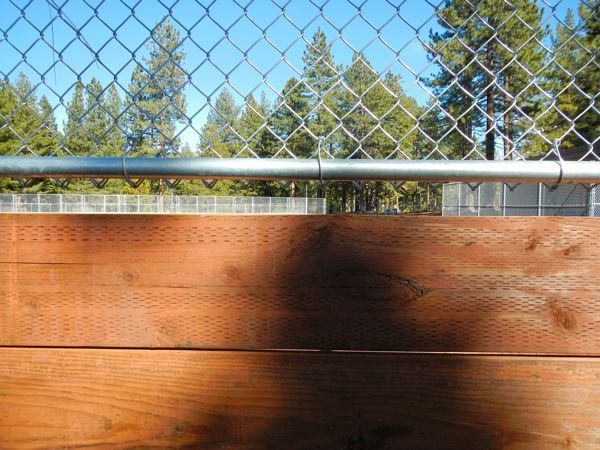
There is the matter of a gated fence, at least on Tuesday afternoon, not letting anyone in. And then when seated in the first couple rows of the five-row bleachers fans cannot to see action except in parts of the outfield.

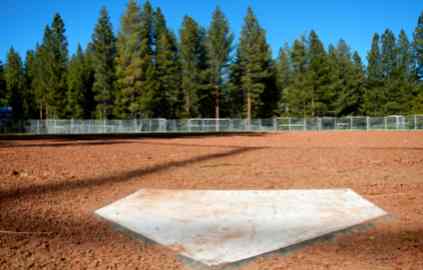
Softball may be played at South Tahoe High on April 6. Photos/Kathryn Reed

Softball may be played at South Tahoe High on April 6. Photos/Kathryn Reed

It’s the wetness of the field, though, that will force Wednesday’s home opener to be played at the South Tahoe Middle School field. The goal is to have the high school field ready for Saturday’s doubleheader. And with the lack of snow this year, this could be a record for how early the girls will be able to play at their school.

The high school softball field has been under a microscope for a couple years. In part it had to do with the Office of Civil Rights saying the field was out of compliance, then came Title IX issues, funding problems, bickering, disputes, name calling and finger pointing. From there, compromise, funding, resolution and progress came about.

Lake Tahoe Unified School District officials walked the field last week.

“Now that we can see the ground, the girls are out there practicing on it every day,” Doug Russell, STHS athletic director, told Lake Tahoe News. “We are trying to get the facility to match the needs we would need for a game situation.”

The removable outfield fence is installed, the scoreboard is working, and the dugouts are complete with bat racks, equipment boxes and benches.

The view of the field from the bottom bleacher seat.

The view of the field from the bottom bleacher seat.

But the wood on the lower part of the backstop is still there. This hinders people from being able to see the action. When that might be fixed, well, Russell said he hasn’t been told.

Facilities Director Steve Morales said, “The major item still outstanding that the district elected to do is the addition of two restrooms. We are expecting to get approved drawings out of the Division of State Architect in the next couple of weeks.”

Construction will start after the girls’ softball season is over. Morales said this is so the players won’t be impacted by the work.

Also still to be installed are the restroom fixtures in the one stall that is built, as well as setting the sinks and cabinets in the concession stand.

With a hard freeze possible this weekend, water for that structure has yet to be turned on.