Massive South Tahoe erosion project delayed

Publisher’s note: This is one of a few stories about construction planned for the Lake Tahoe Basin this summer.

By Kathryn Reed

An $11 million erosion control project in South Lake Tahoe has been delayed for at least one month because on Wednesday at a special meeting the City Council threw out all bids and will start the process all over.

Staff recommended this course of action because Disney Construction, the low bidder, had so many errors in its documents that other bidders protested the bid process. The next bid was $4 million higher. Only three bids were submitted.

“Disney during the council meeting (April 3) said they stand by their bid. I told them I appreciate that and that I expect to see the same bid, but cleaned up,” City Manager Nancy Kerry told Lake Tahoe News.

Disney said its numbers are spot on, but admitted the documents were a mess.

Other bids were so much higher because of the requirement to treat water during construction. But this is standard policy when working in the Lake Tahoe Basin. The city will spend time revising the bid docs to explain more thoroughly what this means so contractors understand the particulars.

The city expected the three-year project to be under way May 1. Now it won’t start until at least June. The bulk of the work was to happen this year. How the rebidding process will impact the actual work remains to be seen.
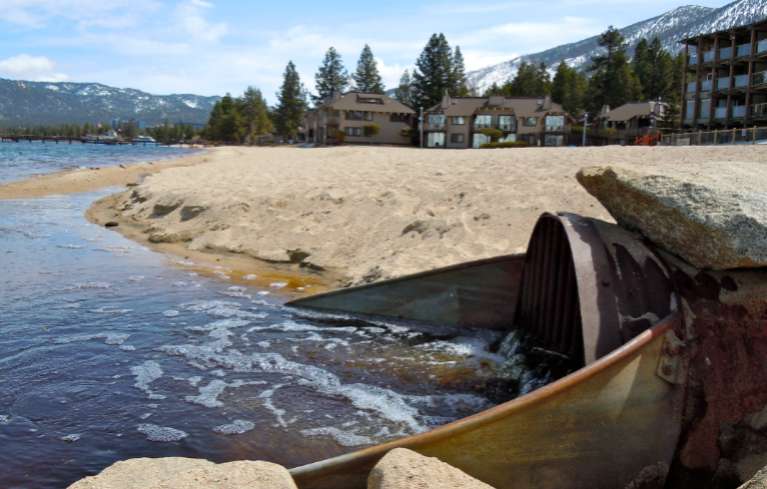
This storm pipe near Lakeshore Lodge and Spa in South Lake Tahoe is expected to be replace in the Bijou erosion control project. Photo/LTN file

This storm pipe near Lakeshore Lodge and Spa in South Lake Tahoe will be replaced in the Bijou erosion control project. Photo/LTN file

This year the work will be most visible to the public, with minor work in the commercial area in year two because most will be done in the meadow, and the final year will be establishing the vegetation and other work.

“This is the first pump and treat system in the basin,” Jim Marino, capital improvements project manager for the city, told Lake Tahoe News. “Normally it’s collected, treated and gravitationally goes to the lake.”

The project will collect the water flowing down from the 1,300-acre Bijou Creek watershed, treat it, pump it to sediment basins in the meadow off Glenwood Way, have sediment settle out there, so then the only thing being released into the lake is clean water.

The existing filtration system is 50-years-old and is ineffective in keeping sediment from the lake. This fine sediment is what scientists say is the primary reason the lake’s clarity has decreased.

With the Bijou area so developed, it’s not possible to build a detention basin in the commercial area to collect the water to filter out the fine sediment before it reaches Lake Tahoe.

Today water comes out of the meadow, crosses Highway 50, goes under the parking lot between CVS and Heidi’s restaurant and flows into the lake.

“We will remove that storm pipe. There will be a new headwall there. It will be a much nicer structure,” Marino said. “There will always be water going into the lake, but it will be treated.”

When Caltrans was doing work last year on the highway the city went forward with putting in its infrastructure so the road would not have to be dug up this year.

Still, this project is going to affect that area once works begins. Not only will the commercial area be impacted, but motorists driving through this section of town, as well as side streets will have experience traffic delays.



Activities book teaches kids safety issues

The Washoe County Sheriff’s Office has released a Safety Activity Book filled with activities for kids. The book does have an important mission — teaching young children how to stay safe.

“The activity book is definitely a great deal of fun,” Sheriff Mike Haley said. “But more importantly, it provides a format that will engage kids in learning about personal safety and their role in the overall safety of our community. The book provides a wonderful opportunity for the Sheriff’s Office to partner with parents, educators and caretakers to empower our children to stay safe.”

The activity book features information on stranger danger, staying safe at home, safety at school, and safety on the internet. It also features information on bike safety, gun safety, the dangers of drugs and alcohol, and much more.

The Sheriff’s Office safety activity book was inspired by a similar book created by cartoonist and columnist David Fitzsimmons for the Pima County Sheriff’s Office in Arizona.

Mike Griffus, a local Wells Fargo Bank employee, donated his services and spent six months going over the book page-by-page to give it local flair.

PDF copies of the new activity book are available to download from the sheriff’s website or by calling (775) 785.6205.


Opinion: Reservoirs should stay in water bond

By Dan Walters, Sacramento Bee

The bad news is that a dry winter means the Sierra snowpack is only half of its statistical normal as the annual spring runoff begins.

The good news is that we’re still living off the unusually wet winter we had two years ago and major reservoirs – Shasta, Trinity, Oroville and Folsom – on the Sacramento River and its tributaries, plus the off-stream San Luis Reservoir, have very healthy leftover supplies, thereby cushioning the effects of the current shortfall.

Dan Walters

Dan Walters

That’s what dams and reservoirs are supposed do, in case anyone has forgotten why water users and taxpayers spent billions of dollars to construct them decades ago.

California is not a desert, or at least most of it isn’t. In an average year, about 200 million acre-feet of water flow through the state. In a subpar year, flow might drop to 150 million acre-feet, but with total human use, including agriculture, only about 40 million acre-feet, the reservoirs allow us to even out the supply and keep water flowing to homes, fields and industry.

There are other benefits to reservoirs, such as flood control, fishing, water skiing and camping, but providing a dependable water supply for 38 million Californians is their primary purpose. Without them, 21st century life as we know it would be impossible.

Ironically, however, as those five big reservoirs, and dozens of smaller ones, do what they were designed to do – mitigate the negative effects of a dry winter – some Capitol politicians are talking about removing additional off-stream reservoirs from a controversial water bond issue.

The reservoirs were included to get Republican votes for the bond measure, but now that Democrats have two-thirds supermajorities in the Legislature, they don’t need GOP votes.

An election on that $11.1 billion bond issue has been postponed three times already because it’s loaded with pork, such as a quarter-billion-dollar handout to a power company owned by Warren Buffett and a park in the district of a former Assembly speaker, and politicians are worried that it would be rejected.

The pork should be removed and the bond issue reduced, as Gov. Jerry Brown wants.

However, two off-stream reservoirs to improve the reliability of California’s water supply are not pork, or at least shouldn’t be.

They shouldn’t be financed by taxpayers, as the current general obligation bond would do. They should be financed by water users, as dams and reservoirs have traditionally been financed. And if it makes more sense, surface storage reservoirs could be replaced with other forms of storage, such as underground.

However it’s done and however it’s financed, improving the reliability of California’s vital water supply through more storage makes sense now and will make even more sense if, as many believe, more of our precipitation falls as rain, rather than snow, due to global warming.


No resolution in T.J. Maxx water supply dilemma

By Kathryn Reed

Before Lukins Brothers Water Company pitches an idea about how to supply the T.J. Maxx building with adequate water to fight a fire, the company is asking the California Public Utility Commission whether all ratepayers can absorb the cost of an interconnection to South Tahoe Public Utility District.

“I think if I were in the shoes of customers of Lukins, I would wonder why that is appropriate,” STPUD board Chairman Eric Schafer said at Thursday’s meeting.

South Tahoe PUD staff gave the board an update April 4 on the situation that was supposed to be resolved the first of the month. It could be a couple more weeks before the board is presented with a possible solution.

A temporary agreement is in place between the water districts that allowed the clothing store to open last fall. (This story has more background on the quagmire.)

“My interest is merely that there be adequate water pressure. How they get there I don’t have an opinion,” South Lake Tahoe Fire Chief Bruce Martin told Lake Tahoe News. (He is also the fire marshal for the city. No longer is Lake Valley Fire responsible for those duties.)

Schafer also said he hopes one proposal is brought forward and not separate ones from Lukins and the Garfinkles. The Garfinkles own the building at the Y.

Hydraulic models need to be created to determine if South Tahoe Public Utility District could sustain water pressure if there were a major fire at the center that sent water into the entire Lukins’ system via the intertie.

No one from Lukins, T.J. Maxx or representing the landlord attended Thursday’s meeting. No one from the city was at the meeting either, and this, two days after Councilwoman Brooke Laine said how she would be regularly attending these meetings.


Big casinos want legislators to curtail slot arcades, sports betting kiosks

By Anjeanette Damon, Las Vegas Sun

CARSON CITY — Nevada’s biggest gaming companies went to the Legislature on Wednesday to ask lawmakers to protect them from strip mall slot machine parlors and barroom sports betting kiosks.

It’s a Goliath vs. David image.

But the big gamers say they need legislative intervention now to protect the state’s largest industry from a looming rock between the eyes.

Through a series of administrative decisions, the Nevada Gaming Control Board has allowed sports betting kiosks to creep into restricted gaming license establishments — taverns, slot parlors, sports bars.

Of the $170 million in sports pool win last year, the kiosks accounted for $600,000 — less than a third of a percent.

But that dollar figure should grow over time, and the Nevada Resort Association doesn’t want restricted license establishments to benefit.

“We’ve heard over the last few days: ‘What’s the harm, it’s only a $600,000 handle. We only have a few kiosks. We’re not hurting them,’” lobbyist Pete Ernaut told the Senate Judiciary Committee on Wednesday.

“Think about that for a second. You think these people go into this building to only drive $600,000 worth of sports book handle? Their entire business model is based on the proliferation of kiosks.”

Senate Bill 416 brought forward by the Nevada Resort Association calls into question the Legislature’s role as either field-leveler or industry protector.

It does two things aimed at restricted license establishments:

• Outlaws sports betting kiosks — and other sports betting activities;

• Implements new standards for “slot arcades” such as Dotty’s, which offer slot play but little other business activity.

Establishments such as Dotty’s proliferated in the wake of the statewide indoor smoking ban. One opened recently in Stateline. Critics argue they take advantage of restricted licenses available to businesses such as taverns, gas stations and grocery stores that want to offer slot machines as an ancillary activity to their main business.

Restrictions proposed by the Nevada Resort Association go beyond those passed by the Nevada Gaming Commission in 2011. They would require slot arcades to embed slot machines in standard bars, build larger kitchen and restaurant areas and take away the ability for slot arcades to apply for a waiver.

The NRA fully admits that its proposed legislation is protectionist. Ernaut argued protecting gaming is not just the Legislature’s job, but should be its highest priority.

“Protection of this industry: There can’t be a higher priority of this body than getting the No. 1 industry in this state right,” Ernaut said.

He stressed that Nevada law is designed to prevent competition among non-restricted licensees — the big casinos that are required, among other things, to build 200 hotel rooms — and the smaller restricted license operations that don’t need any comparable capital investment.

But tavern owners, bookmakers and kiosk companies scoffed at the idea their small slice of the market could pose a threat to Nevada’s casino resorts — both big and small.

“It doesn’t exist,” Joe Asher of William Hill, which operates 82 kiosks in Nevada, said of the contention kiosks are eating into the bottom lines of bigger casinos. “There is not one single shred of evidence that it does exist.”

In an ironic twist, kiosk sports betting evolved within what is supposed to be the state’s most regulated industry without any specific approval by the Nevada Gaming Commission.

Instead, the Gaming Control Board administratively approved the emerging technology step-by-step — from kiosks used simply as an information tool all the way to accepting wagers — under a provision that allows the board oversight over ancillary equipment.

Neither lawmakers nor gaming commissioners have had a say in whether taverns and other restricted licensees should be allowed to operate as sports books.

But is the Nevada Legislature really being asked to step in between Goliath and David?

The companies running small gaming operations aren’t exactly small companies.

William Hill is, according to the company’s website, “the world’s largest bookmaker,” employing more than 17,000 in eight countries.

Golden Gaming is Nevada’s largest slot route operator, with 8,500 machines in more than 600 locations. It also is the state’s largest tavern operator and owns three casinos in Pahrump.

Still, Golden is a far cry from the multinational corporations running casino resorts on the Las Vegas Strip.

On the other hand, the emerging kiosk industry plays an important role in Nevada’s economy, its lobbyists argued.

“When you become successful, you wind up on someone’s radar screen, and when you’re on the radar screen, you wind up here (at the Legislature) with people trying to stifle competition,” said Sean Higgins, lobbyist for Golden Gaming. “I guess the message is, ‘Be successful, but not too successful. Because if you’re too successful, we’ll try to push you back down.’”

Asher brought a human prop with him.

“Mark Keller, will you stand up please?” Asher said midway through his testimony. From the audience, Keller obliged. “This is a real kiosk man. He has a family. He has 3-year-old. If you kill kiosks, you take this man’s job away.”


Spaghetti feed benefits Tahoe Boys and Girls Club

The Boys and Girls Club Lake Tahoe is having a spaghetti feed April 18 from 5-6:30pm at the club’s main site (1100 Lyons Ave., South Lake Tahoe).

The cost is $5/person. Tickets can be purchased in advance or at the door. All proceed go to support programs and the services for the 900 members.

Each month the club is hosting a spaghetti feed.

It’s an opportunity to meet the kids and find out how your support impacts the future of our young people.


Editorial: Obama uses California as cash register

Publisher’s note: This editorial is from the April 4, 2013, Sacramento Bee.

Sometime today, a very fast jet carrying a very important man and his entourage will streak across the Central Valley sky.

That’s the closest President Obama will get to the part of California where mortgages are upside down, where unemployment is disgracefully high and where levees are in need of rebuilding.

We understand that Obama did the politically smart thing during the 2012 campaign. Knowing he had a lock on this blue state’s 55 electoral votes, he flew to the coast, picked the pockets of wealthy Californians and quickly left to stump for votes in battleground states. His only visit to the Valley was a photo op with Helen Chavez, widow of Cesar Chavez, in Kern County.

Now that the campaign is history and he never will have to run for office again, however, he should consider making a real visit to these parts.

The Central Valley has issues that are worthy of a president’s attention, like how to irrigate the richest agriculture region in the nation while maintaining and restoring healthy rivers and a Delta.

Perhaps he could see how a successful farm-to-fork program works and come up with some ideas for his administration’s crusade against childhood obesity. He definitely should see how decisions intended to help Indians are expanding gambling – a vice he used to oppose.

The president, who takes pride in having revamped the federal government’s ability to respond to emergencies, should figure out how to free up money to repair Natomas levees before they fail.

Apparently, Obama was too busy on this visit to the Golden State. The Fundraiser in Chief hopes to help Democrats retake the House, and was vacuuming up money for that effort from billionaires and multi-millionaires in Sea Cliff, Pacific Heights and Atherton.

Maybe as he flies back over, he will gaze out the window, and realize California is a big state. Perhaps one of his political advisers will whisper something about how there are several swing congressional seats in this part of the state. Maybe he’ll resolve that one of these days, he will stop by and learn a little bit about the other California.


Median price of houses going up in S. Tahoe

By Dan Spano

The median price of homes sold in March was $349,000, exactly $100,000 more than March 2012. This is also the highest monthly figure since March of 2009 when the median was $352,049. Just 30 days ago the median price was $295,000.

During the last 12 months, there were 763 closed sales of homes in South Lake Tahoe. This is up 14.2 percent from the same period last year when there were 668 sales.

When looking at the month of March, you’ll see 2013 had 54 closed sales which was 1.8 percent less than 2012’s 55 sales.

The number of homes for sale in South Lake Tahoe continues to dwindle, and there a few reasons why. There were just 226 homes for sale this past month which is a 44.5 percent drop from March 2012. The last 12 months have seen a 37.6 percent drop in inventory. To put these numbers into perspective, there were 829 homes for sale in August 2007 and 692 in July 2011.

We now have less than one-third of that number currently for sale.

One thing that we weren’t quite expecting was an increase in the new listings of homes for sale. We’ve been seeing a decrease in new listings, but March 2013 saw a 10 percent increase from March 2012 and was the third straight month with a increase. There were 77 new listings this month, 70 in March last year but an overall drop of 16.5 percent over the last 12 months. Over the last 12 months there were 908 new listings of homes for sale in South Lake Tahoe and there were 1,087 over the previous 12 month period.

If you divide up the South Lake Tahoe market into the four price ranges used by Realtors, you’ll see the the higher end homes saw the largest increase of new listings, while those homes priced below $435,000 saw decreases.

We saw some homes pulled off the market in March due to homeowners that don’t have to sell right away deciding to sit back and wait for the median sales price to go up. Will this month’s big increase cause them to re-enter the market? We’ll have to wait and see.

Dan Spano is with Paradise Real Estate.


William Scott served longest as Placer County sheriff

By Robert D. Dávila, Sacramento Bee

William “Bill” Scott, an innovative lawman who was Placer County’s longest-serving sheriff, died March 27 of lung cancer, his family said. He was 88.

Sheriff Scott was a war hero and Auburn police chief when he ran for Placer County’s top law enforcement job in 1954. At 29, he became the youngest elected sheriff in California history. He was re-elected five times before retiring from office in 1979.

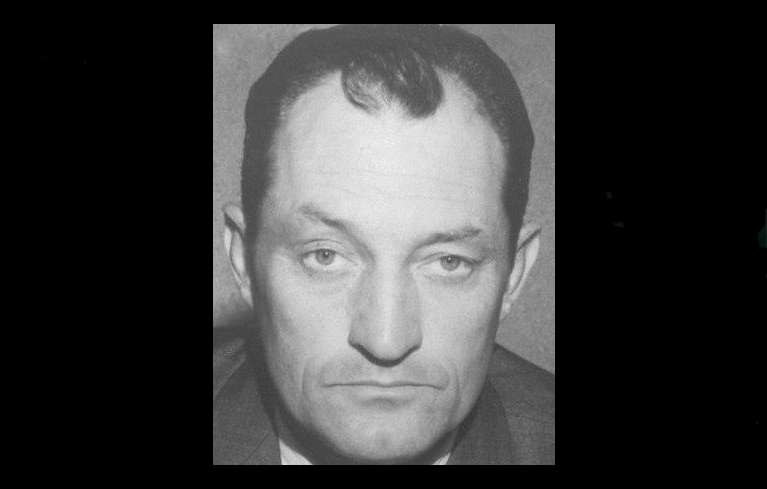
William Scott served at Placer County's sheriff. Photo/Sacramento Bee

William Scott served at Placer County’s sheriff. Photo/Sacramento Bee

He modernized the sheriff’s department, which was closed at night and had only 11 sworn officers and no patrols or in-house communications when he took office in 1955. He organized patrol beats, introduced radio communications and improved training for detectives. He added the coroner’s duties and introduced forensic pathology to the sheriff’s department.

In 1960, Sheriff Scott was in charge of security for the Winter Olympics at Squaw Valley. He established patrols in unincorporated communities and a substation in Tahoe City.

“That really opened up the mountains to skiing,” Placer County Sheriff Ed Bonner said. “They used to have just constables up there.”

Sheriff Scott, who helped arrest one of the FBI’s 10 “most wanted” suspects near Colfax, was widely known in law enforcement. In 1965, he was elected president of the California State Sheriffs’ Association. He belonged to the California Peace Officers Association and the California State Coroners’ Association.

“Sheriff Scott wasn’t provincial,” Bonner said. “He was always out meeting with law enforcement officials around the state for ideas and best practices to bring to Placer County.”

William Alexander Scott was born in 1924 in Auburn. He was the second of four children born to Ethe and Robert Scott, an opera tenor who gave up a performing career in the Bay Area to sell cars and raise a family in Auburn.

William Scott graduated from Placer High School in 1942 and served in the Army in France, Luxembourg and Belgium in World War II. Injured in the siege of Bastogne during the Battle of the Bulge, he received two Purple Hearts and two Bronze Stars.

He attended Placer Junior College and became an Auburn police officer in 1946. He joined the Placer County Sheriff’s Department as a criminal investigator in 1951 but returned to the Auburn Police Department as chief in 1953.

He lived in Auburn and had four children from two marriages. His 47-year marriage to his second wife, Jean, ended with her death in 1999.

Sheriff Scott “loved the men and women of law enforcement for their dedication and sacrifice,” son-in-law Jim Lott said. He was believed to be the only California sheriff to be photographed by the Soviet TASS news agency.

“During the Olympics, they wanted a picture of the head of security,” Lott said. “Bill didn’t wear a uniform. So he had to go out and get a plaid shirt and cowboy hat, and he stuck a couple of revolvers in his belt, so they’d have a photo of a real Western sheriff.”

He was born June 14, 1924.

Sheriff Scott is survived by children, Sharon Lott of Placerville, Richard of Pocatello, Idaho, Kim of Sacramento, and William Jr. of Antelope; 13 grandchildren; nine great-grandchildren.

Services will be at 10am April 12 at Parkside Church of the Nazarene, 3885 Richardson Drive, Auburn.

Donations may be made to the American Cancer Society or to the Placer County 10-35 Foundation, a nonprofit assistance group for law enforcement officers.


Silk painting topic of Tahoe Art League gathering

Artist demonstrator Addie Chernus will be discussing her technique of painting on silk on April 10 from 7-8:30pm.

Prior to the beginning of her demonstration, the Tahoe Art League will have a social get-together and a brief update on TAL business matters starting at 6pm.

All of the monthly Tahoe Art League meetings are free and open to the public.

The TAL meets in their facility on Highway 50 near the senior center.