Snippets about Lake Tahoe

joy rothschild• Rocky and Teri Rothschild have made a $10,000 donation for the Joy Rothschild Scholarship that helps students at Mt. Tallac School. Rothschild started the scholarship before she died two years ago. Rocky is her father and Teri her sister.

• The Smiling Tree Symposium is the topic of the free July 14, 5:30pm UCCE Master Gardener Green Thumb Series class at Lake Tahoe Community College’s demonstration garden.

• Truckee Fire Protection District’s 16th annual pancake breakfast is July 4 from 7-10am at Station 92. Adults are $7 and children are $5.

• Kimball Chatfield, a medicinal plants expert, will lead a walk starting at Sorensen’s in Hope Valley on July 6 from 10am-1pm. Cost is $35. For more info, call 800.423.9949.

• El Dorado County’s Charter Review Committee meets June 25, at 5pm in Conference Room A, 330 Fair Lane, Placerville.


Playing golf with a celeb benefits nonprofits

For $2,500 people have the opportunity to play with one of the ACC golf tournament celebrities. All but $100 goes to local nonprofits.

The July 17 event will be at Clear Creek Tahoe. It will include 12 celebrities each playing with three amateur partners.

The day includes: breakfast, tee prize, 18-hole scramble, lunch and two VIP tickets in the Lake Tahoe Visitors Authority skybox during the final round of the American Century Championship at Edgewood Tahoe.

To register, go online.

For more information, call Phil Weidinger at 775.588.2412.


People slipping through Nev.’s health exchange

By Kyle Roerink, Las Vegas Sun

Nevada’s Silver State Exchange was supposed to rescue people like Jill Parker.

Parker, a 35-year-old Las Vegas mother of three, needed health care. She was in constant pain, suffering from Graves’ and Hashimoto’s diseases and hypoglycemia.

She was relieved to see that Nevada planned to use the Affordable Care Act to help people such as her see doctors. In December, she signed onto the Nevada Health Link and paid $362 for an insurance premium.

The Silver State Exchange took Parker’s money. But for five months, despite phone calls and reassuring words from state officials, the exchange gave her nothing in return.

Read the whole story


Pain of California’s drought spreading

By Matt Weiser, Sacramento Bee

OUTINGDALE — In the small community of Outingdale in rugged El Dorado County, neighbors Mary Callahan and Steve White confess they used to leave the water running while brushing their teeth. No more.

Now, in addition to turning that tap off, they have stopped filling outdoor birdbaths and cut back on landscape watering. They bathe less and take “Navy showers” when they do, collecting the outflow in buckets and jugs as they wait for the water to heat up. They tell their visitors to live by these rules as well.

Outingdale is one of the first communities in Northern California to know what the worst drought since 1977 really feels like. Residents have been told by the El Dorado Irrigation District, their water provider, to consume no more than 68 gallons of water per person per day. That’s about one-third of the state average. Their use is being monitored by water meters at each home.

Millions more Californians could find themselves in a similar situation as the drought continues into the sweltering months of summer.

“It’s not a pleasant thing that’s going on here,” said Callahan, who retired to Outingdale with husband, Dennis, about 15 years ago. They recently asked their daughter and three young grandsons to cancel their annual summer visit because there isn’t enough water to go around. “It breaks my heart because I don’t get to see them very much.”

Outingdale, founded in the 1920s, consists of about 150 small homes on the flank of a forested canyon alongside the middle fork of the Cosumnes River. Residents enjoy more than a mile of riverfront access, including shaded beaches and deep, clear swimming holes that create a cool refuge amid the hot Sierra Nevada foothills.

That river is also their only source of tap water. Thanks to a state water right held by the El Dorado Irrigation District, the river is piped into two holding tanks, treated with chlorine, then delivered to homes and fire hydrants.

Read the whole story


Bagpiper to play for free in South Tahoe

Friends of the Library present Music on the Lawn with Sean Cummings.

“The Tahoe Bagpiper” brings more than 30 years performing experience and seven generations of clan tradition to tell the story and play the music of the Scottish Highland Bagpipe.

Bring a picnic dinner.

The July 23, 6pm concert is free at the South Lake Tahoe Library, 1000 Rufus Allen Blvd.


Human remains found near Spooner Summit

Human remains were found in the Kings Canyon area east of Spooner Summit.

Washoe County will be conducting the autopsy to determine the cause of death and identify the deceased. Douglas County is leading the investigation.

The remains were located approximately 300 yards to the north of Highway 50 near the top of Spooner Summit, between the Tahoe Rim Trail and Kings Canyon Road, in a remote wooded area.

Inmate work crews clearing brush in the area located the remains and contacted law enforcement.

— Lake Tahoe News staff report


Donner Party had issues beyond cannibalism

By Kathryn Reed

Successfully crossing the Sierra in the winter of 1847 was part survival of the fittest, part luck and part tenacity.

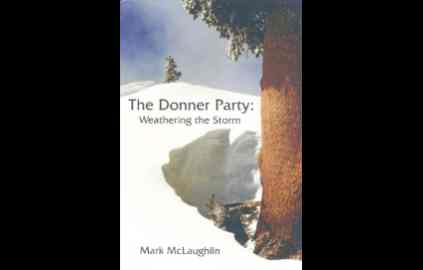
For the Donner Party, it was mostly tragic. And while much has been written about cannibalism that took place, that is not the focus of Mark McLaughlin’s book “The Donner Party: Weathering the Storm”.

McLaughlin spoke last week to a full room at the South Lake Tahoe Library. His book, published in 2007, centers much on the weather. It was one of those epic winters, where winter started in October.

donner party bookDuring the talk and slide presentation, McLaughlin delved into a bit of the legacy of lawyer Lansford Hastings. Hastings is important in the Donner story because he had created a shortcut.

The problem is the shortcut was ideal for men on horseback, not wagon trains full of families, with some who were not all that healthy.

Jim Reed (no relation), while he wasn’t the captain of the party, was the take-charge person in the group. It was George Donner who was captain, but he could be pushed around.

A seasoned mountain man had warned the Donner Party not to take the Hasting’s shortcut. But Reed said to heck with that advice. That one decision could be seen as their total undoing because it added three weeks to their journey.

The Donner clan had to hack their way through brush to make a road. It was roughing going through the Wasatch mountains.

“They nearly died of thirst in the Utah desert,” McLaughlin said.

By now the number of wagons in the party have been condensed. Goods are discarded. Some people are on foot. Half of the Donner Party was 18 years old or younger, according to McLaughlin.

Reed gets into a skirmish that ends with the death of a man, though self-defense is claimed.

Some have gone for help. Sutter’s Fort is known to provide supplies. Reed takes off, too, at about where Winnemucca is today.

But then the snow comes, and it keeps coming. Reed is trapped; unable to bring goods to his comrades – including his wife and four children. He tells John Sutter he needs to get supplies to the others. Sutter said they should be fine based on what Reed said they had.

What Reed didn’t know is the Paiute Indians had shot many of their animals and that people were ill. There were no fish to be had; lakes had been freezing.

Reed was finally successful in what was the second rescue party.

There are still descendants of the Donner Party who reunite every 10 years at Donner Lake.


Opinion: Score 1 for the state, -13 for homeowner

By Kathryn Reed

Thirteen inches. That’s how far our shed extends into the California Tahoe Conservancy lot. Altogether, it’s about 9 square feet.

We have to remove it, or cut it back. That was the conclusion of what has now become more than a yearlong dispute with the state.

Shawn Butler with the California Tahoe Conservancy goes over the lot encroachment diagram. Photos/Kathryn Reed

Shawn Butler with the California Tahoe Conservancy goes over the lot encroachment diagram. Photos/Kathryn Reed

A year ago this month, a rude CTC employee engaged me about the property line, which led to me to write a nasty column and to speak before the board.

At the time we had been here for more than 10 years and there had never been an issue. In fact, the shed in question came with the house. It looks a lot older than 11 years. Conservancy employees had been at their property multiple times. Not once was the property line mentioned.

In the past year a surveyor came out and marked the property line. No dispute now. The official boundary survey map we were given last week shows the stepping-stones going from the back gate to the shed are also on state property. (I removed those last weekend.)

While Shawn Butler, program supervisor of the land management program for CTC, was kind and professional, there was no way he was going to give us 13 inches.

“We want to be consistent with encroachments,” he said as he walked the property. Joining us was Tom Davis, the South Lake Tahoe city councilman who is on the CTC board.

Butler said the Conservancy wants to work with us and would help to remove the shed. We may take them up on that offer.

We’re researching whether it makes more sense to reconfigure the existing shed, buy a new one or some other option.

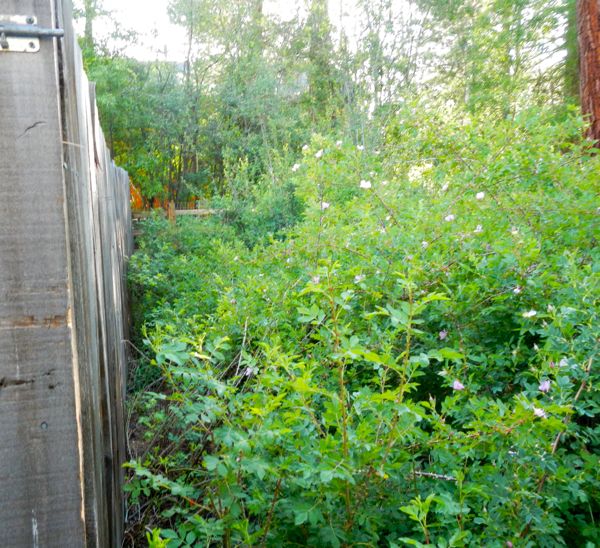
Wild wood rose abutting and taller than a 6-foot fence.

Wild wood rose abutting and taller than a 6-foot fence.

I need to start getting my wood split and stacked for next winter, so the decision will come soon.

What I’m left with, though, is feeling screwed. Where was our real estate agent? Shouldn’t he have known the property line? Did the previous owners know they had gone over the property line and didn’t disclose it? Why does the CTC care about this now?

It’s not that the shed is great. In fact, it’s pretty crappy. But it still does its job to keep our primary heat source dry until we need it.

Still to be resolved is who owns a large pine tree that seems to be in the middle of the property line. Butler said the forester from his agency would come take a look.

Another thing that needs to be done is cutting back all the wood rose that is growing against our fence. According to the South Lake Tahoe Fire Department, it’s a fire hazard. Some of these wild roses are more than 6-feet-tall.

And instead of immediately saying CTC would remove it, Butler said the forester likes this plant and would have to look at it. Davis took a look around and couldn’t believe how thick it is.

I’m not disputing the shed is on CTC property. But at the end of the day I’m still left scratching my head. It seems like that overgrown state lot that looks like a fire hazard should be more of a priority. But what do I know? Today, is only the seventh anniversary of the Angora Fire.


Snippets about Lake Tahoe

live at lakeview• North Lake Tahoe’s Peter Joseph Burtt and the Kingtide will kick off the third season of Live at Lakeview in South Lake Tahoe on June 26. Liquid Kactus opens the free event at 4:30pm.

• Beginning July 1, Harrah’s Lake Tahoe will present Tuesday Night Tributes, a summerlong series featuring tribute bands recreating the sights and sounds of America’s favorite rock and pop superstars.

• Beautiful Bunch Grasses is the topic of the free July 7, 5:30pm UCCE Master Gardener Green Thumb Series class at Lake Tahoe Community College.

• The Tahoe beaches app is available on Apple and Android phones and is available for free in their respective app stores.


NDOW wants Incline Lake filled

By AP

With the U.S. Forest Service seemingly on course to keep empty a scenic mountain lake acquired years ago for the public for more than $43 million, state wildlife officials continue to press the argument the lake should be refilled and established as a fishing destination.

Incline Lake, officials with the Nevada Department of Wildlife insist, could be turned into a valuable fishery for Lahontan cutthroat trout, providing an important recreational opportunity for the public while furthering goals to restore the threatened fish.

“We think there’s an opportunity there,” Jon Sjoberg, chief of fisheries for the Department of Wildlife, told the Reno Gazette-Journal.
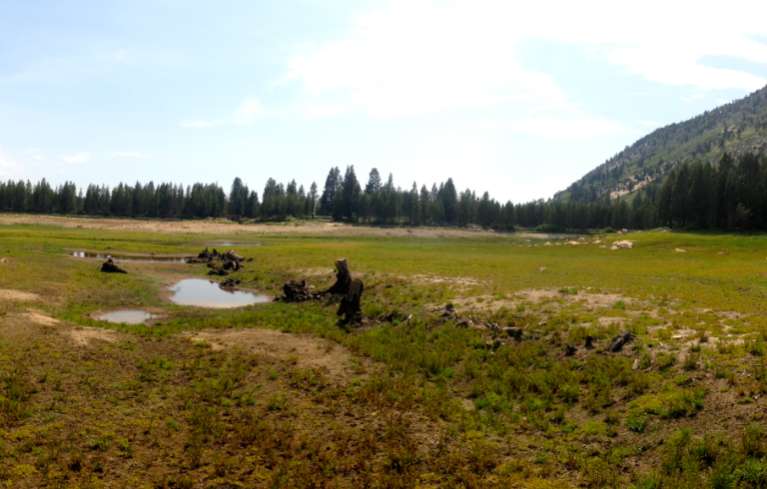
Ponds are naturally forming where Incline Lake used to be. Photo/Matt Dickinson

Ponds are naturally forming where Incline Lake used to be. Photo/Matt Dickinson

Once a private enclave for Nevada’s rich and famous, Incline Lake and 777 acres of surrounding land was acquired by the Forest Service in 2008 in a deal that ultimately paid its former owner, the Incline Lake Corp., $43.5 million. Supporters of the deal at the time touted the lake’s recreational as well as its environmental values.

But in 2009, Incline Lake Corp. drained the lake after experts determined its dam, now 72 years old, could fail during an earthquake and flood portions of nearby Incline Village. The lake has remained drained ever since as Forest Service officials worked to decide its future.

Early this month, the Forest Service closed the public comment period on an environmental assessment examining various options regarding future management of the Incline Lake property. While one alternative would reconstruct the dam and potentially allow the return of a lake there, the proposed action would remove the dam and restore the area to wetland meadows.

If that’s indeed the direction the government goes, it might be an unfortunate one, Sjoberg said.

“It could be a lost opportunity,” Sjoberg said. “It is their decision, ultimately.”

Last July, after the Forest Service released a management proposal to remove the dams and restore the 777 acres, Department of Wildlife supervisory habitat biologist Mark Freese wrote a letter to Nancy Gibson, supervisor of the service’s Tahoe unit, urging a reconsideration.

“We encourage the Forest Service to consider repairing the dam and spillway to bring it up to code so that public safety and water quality protection are in place,” Freese wrote. “Given its beautiful alpine setting and proximity to urban areas, we feel that this reservoir could be an extremely popular recreational area and sport fishery given the opportunity to develop it.”

Specifically, Freese proposed filling the lake so it could be used as a sport fishery for Lahontan cutthroat trout, Nevada’s state fish and categorized as a threatened species.

“The location and accessibility of Incline Lake offers a unique opportunity to showcase and educate the public about native sport fisheries in Nevada by providing what would be one of the few lakes across its range where people could have the opportunity to fish for native LCT (Lahontan cutthroat trout),” Freese wrote. “There is also the potential that this reservoir could facilitate recovery efforts and management of LCT throughout the region.”

The Department of Wildlife continues to stand by the position advocated in the July letter, Sjoberg said.

“We’re looking at an opportunity to use Lahontan cutthroat trout for recreational fishing and to build more support for moving forward with recovery (of cutthroat),” Sjoberg said.

When money was secured to buy the property in 2008, $5 million was set aside to repair the dam. That money remains available. In his July letter, Freese wrote of the possibility the Department of Wildlife could act as a partner in restoring the dam and lake, including through possible provision of additional funding.