S. Tahoe woman accused of selling drugs in Colo.

By Matt Stensland, Steamboat Today

A third person who is thought to have been involved with selling cocaine that later turned out to be methamphetamine was taken into custody this week in Steamboat Springs.

Margie “Maggie” A. Levin, 26, had a warrant for her arrest and was booked into Routt County Jail on Thursday on suspicion of conspiring to sell cocaine. Levin’s Craig attorney, Douglas Timmerman, arranged to have Levin return to Routt County from South Lake Tahoe, where she is living. Levin was released from custody after being given a $50,000 personal recognizance bond.

Timmerman said he still was gathering information about the case. She is due back in court May 8.

Margie “Maggie” A. Levin

Margie “Maggie” A. Levin

According to arrest warrant paperwork filed with the Routt County Courthouse, the All Crimes Enforcement Team drug task force used a confidential source to arrange for the purchase of 56.1 grams of cocaine from Levin on Aug. 24 for $2,500 plus a $500 fee.

The warrant states that the source placed the $2,500 inside the engine compartment of a snowmobile parked at a house in the 400 block of Sixth Street in downtown Steamboat. The $500 fee later was transferred to Levin’s bank account.

According to the warrant, the source was told to pick up the cocaine in a green shoe placed by a 20 mph speed-limit sign on Routt County Road 36 just north of Steamboat Springs. The source and ACET Commander Marvin Cameron retrieved the drugs from the shoe. The white substance later was tested by the Colorado Bureau of Investigation and identified as methamphetamine.

Cameron later reviewed the surveillance video of a man retrieving the money from the snowmobile. According to the warrant, the man was Trevor Rice, who was arrested March 7 after a separate controlled buy that was organized by ACET and took place Jan. 25 at the downtown post office, according to his arrest warrant. The warrant states Rice sold the ACET source 3 ounces of cocaine for $4,000.

ACET thinks Rice was Levin’s supplier.

Rice was charged with a single count of unlawful distribution, manufacturing, dispensing, sale or possession of a Schedule 2 controlled substance, a Class 3 felony, related to the Jan. 25 controlled buy. Rice is due back in court April 12.

The third person arrested by ACET was Levin’s boyfriend, Conor Barrett. He was arrested March 8. According to his warrant, Barrett gave 28 grams of cocaine, which also turned out to be methamphetamine, to an ACET source on Levin’s behalf Oct. 12. Money did not exchange hands during the transaction.

Barrett was charged with a single count of unlawful distribution, manufacturing, dispensing, sale or possession of a Schedule 2 controlled substance, a Class 3 felony. Barrett is due back in court April 17.



Nevada unveils latest tourism campaign

By Richard N. Velotta, Las Vegas Sun

Virginia “is for lovers.”

Kentucky has “unbridled spirit.”

And now, Nevada is “A World Within. A State Apart.”

State tourism leaders today unveiled the state’s new slogan, which has been almost two years in the making and cost close to $9 million. Officials also debuted the first television commercial to use the branding.

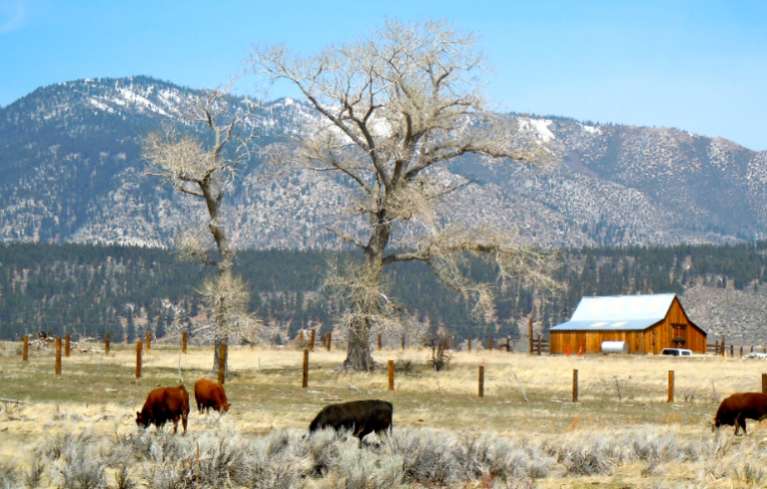
Nevada tourism officials try to balance rural places like Genoa with the urban appeal of Las Vegas. Photo/LTN file

Nevada tourism officials try to balance rural places like Genoa with the urban appeal of Las Vegas. Photo/LTN file

The slogan conveys the uniqueness of the state, residents’ independent spirit and the variety of experiences and opportunities Nevada provides, Gov. Brian Sandoval said. The state plans to use the mark on documents from all of its departments.

Nevada began its quest to create a brand and slogan in 2001. It hired GreenRubino, a Seattle company, to research what aspects of the state best resonated with residents and visitors.

The company tinkered with several proposals. The taglines included “ReiNVent,” which included the state’s postal code; “All in Nevada,” a play on poker terminology; and “Nevada is for Doers,” which referred to the variety of things to see and do here. All were soundly criticized by the public and members of the Nevada Tourism Commission.

Claudia Vecchio became the state director of tourism and cultural affairs in October 2011, took GreenRubino’s research and handed it off to a new agency, New York-based Burson-Marsteller. It was a controversial choice.

The company again was an out-of-state vendor, and its two-year contract with Nevada cost $3.2 million. GreenRubino, by comparison, charged $250,000.

To date, the total cost of Nevada’s tagline project, including the work by GreenRubino and Burson-Marsteller, the development of the television ad, ad buys in several California markets and development of a mobile app is about $8.5 million.

“A brand is more than a tagline,” Vecchio said. “It’s a full collection of expectations, experiences and characteristics. It’s the full breadth of language and the way we communicate with our audiences.”

Burson-Marsteller explains the slogan like this: “We are unwavering, we go about things our own way. We’re a hearty bunch, unyielding and diverse like the land itself. We’re mountains and snow and valleys of fire. We’re characters. We live in our own world. When other states restrict, we allow. We’re silver mines and pickups on long, lonely roads. But we’re also artists and oddballs and one-liner kings. Yes, we’re Vegas, but we’re also Tahoe and the Hoover Dam and wide-open country. We are enterprising. We are future focused. We’re unlike any other state in the union. We are Nevada. A world within. A state apart.”

Sandoval asked Burson-Marsteller to develop a brand that all state departments could use, much the way Kentucky uses its “unbridled spirit” brand.

“We wanted to put a clear personality around the state that we could all collectively rally behind,” Vecchio said. “That did change and broaden our challenge a little bit. Instead of having something that appealed just to travelers, we needed it to appeal to Nevadans, because they are the ones that are going to be our brand ambassadors.”

Vecchio said the concept celebrates the dualities of the state.

“One of the greatest challenges, when I thought about how we would develop a statewide brand, was overcoming some of these boundaries we had,” she said. “We’re north, we’re south. We’re urban, we’re rural. We’re this, we’re that, when we are in fact one state. So instead of fighting these boundaries, we’re celebrating them, saying we are a world within with a lot to do here, but then, we do things differently than anyone else does.”

Burson-Marsteller tested the slogan with 800 people in Nevada, Los Angeles, San Francisco, Sacramento, Fresno, San Diego, Phoenix and Salt Lake City. About 78 percent liked it, the company said.

The public will get its first look at the branding in a television commercial launching the state’s summer tourism campaign. It incorporates a distinct Nevada vibe. The soundtrack is performed by the Killers, who come from Las Vegas.

The band covers the classic western song, “Don’t Fence Me In,” written in 1934 by Cole Porter and Robert Fletcher. It has been performed by Bing Crosby, the Andrews Sisters, Eddie Arnold, Roy Rogers, Gene Autry, Ella Fitzgerald and Willie Nelson.

But Vecchio had only one band in mind for the commercial – the Killers.

When she contacted front man Brandon Flowers, the band was on tour in Europe. They recorded it while on the road.

“They took the time out of this crazy tour schedule to record the song,” Vecchio said. “They’ve been a great, great partner and when people hear it, I think they’ll agree that they nailed it.”

The commercial features actors singing with the band while a montage of local sites and activities flash in the background – hiking at the Valley of Fire State Park, riding jet skis on the Colorado River, riding ziplines in Boulder City.

The ad directs people to the state’s website where they can find more information about the places shown. The Killers’ version of “Don’t Fence Me In” also can be downloaded from the website.


Ex-El Dorado County DA arrested on DUI charges

By Village Life

A former El Dorado County district attorney was arrested March 30 for allegedly driving while under the influence.

At 3:45am, an El Dorado County sheriff’s deputy stopped a black Hyundai Sonata for impeding traffic on El Dorado Hills Boulevard south of Highway 50 in El Dorado Hills, a press release from the California Highway Patrol states. When the deputy made contact with the driver, he allegedly detected a strong smell of alcohol from within the vehicle, and CHP was requested to make a DUI evaluation.

Gary Lacy

Gary Lacy

The deputy was able to identify the driver as Gary Lacy, 59, El Dorado County district attorney from 1994 to 2006. Lacy reportedly exhibited symptoms of intoxication. Lacy also allegedly admitted to drinking prior to driving. The former DA subsequently failed the field sobriety tests.

Lacy was arrested on charges related to DUI. He was not booked into the county jail. Officer Quinn Cuthbertson confirmed that Lacy’s blood alcohol level was at least 0.08.

According to the sheriff’s department daily logs, Lacy had been impeding traffic while being yelled at by a female; Cuthbertson believed her to be a passenger in the car. The female, Kimberly Alander-Hunt, 27, was arrested on suspicion of public intoxication and later released.


Climate change may impact winemaking

By Rachel Tepper, Huffington Post

Amid growing concerns that climate change may be negatively impacting agriculture and food industry operations worldwide, a new study suggests that the winemaking industry as we known it may soon be forever altered.

Rising temperatures and changes in rainfall are already rendering traditional grape-growing regions in the Mediterranean, such as areas in southern France and Tuscany, Italy, less suitable for producing quality crops, according to the study, published Monday in Proceedings of the National Academies of Sciences.

Climate change threatens the wine industry. Photo/LTN file

Climate change threatens the wine industry. Photo/LTN file

“The numbers that came back were so mind-boggling,” said Lee Hannah, lead author of the study, which was conducted by Conservation International and the Environmental Defense Fund.

The study predicts that by 2050, areas suitable for grape cultivation will decrease between 25 and 73 percent in major wine-producing regions. Some wineries may be forced to move to higher elevations, which could have negative environmental consequences for native wildlife. Those that stay put may resort to using irrigation techniques to maintain production levels, which the study’s authors worry may have problematic consequences for freshwater conservation.

Wines from traditional regions may also be more difficult to find in coming years. “It’s going to become more expensive to grow wine in those regions,” Hannah said.

Wine is very susceptible to changes in climate and temperature, Hannah said, because climate changes affect terroir, or the environmental conditions in which grapes are grown. This in turn influences the taste of wine.

On the flip side, some areas are experiencing better conditions for making wine. In New Jersey, winemakers shocked industry professionals last year at a storied tasting dubbed the “Judgment of Princeton.” There, wines from the so-called “Armpit of America” held their own against much more established and celebrated French wines.

Although that’s good news for some people — could New Jersey be home to the next Sonoma or Napa? — the study’s authors question what the shifting landscape may mean for other regions. Areas near Yellowstone National Park and the mountains of central China will become suitable for grape growth, they say, and that could be detrimental to local wildlife. Areas expected to enjoy improved terroir in China fall mainly in giant panda habitats.

Wine consumption in China has expanded exponentially in recent years. Earlier this year, the Wall Street Journal reported that sales of wine in China increased by 20 percent to about $41 billion in 2012, compared to the year before.

“Future conservation efforts for the giant panda need to incorporate consideration of viticulture as a potential land use and viticultural suitability trends in response to climate change,” the study says.

But climate change itself may not present the gravest threat to wildlife.

“It’s likely that the indirect impacts of the agriculture sector adapting to climate change as crops begin to move … will be bigger on wildlife than the direct effects of climate change,” said Rebecca Shaw, an author of the study who is also a senior scientist at the Environmental Defense Fund. “That, particularly in places like China, is going to have implications for wildlife.”


‘Angora’ woodpecker may find federal protection

By AP

GRANTS PASS, Ore. — A woodpecker that depends on intense wildfires for the standing dead trees where it feeds on insects is being considered for protection under the Endangered Species Act.

This is the same woodpecker that affected the U.S. Forest Service’s rehab project in the Angora burn area.

The U.S. Fish and Wildlife Service said Monday it will take a closer look at the black-backed woodpecker. A decision is due in a year but could take longer due to budget cuts.

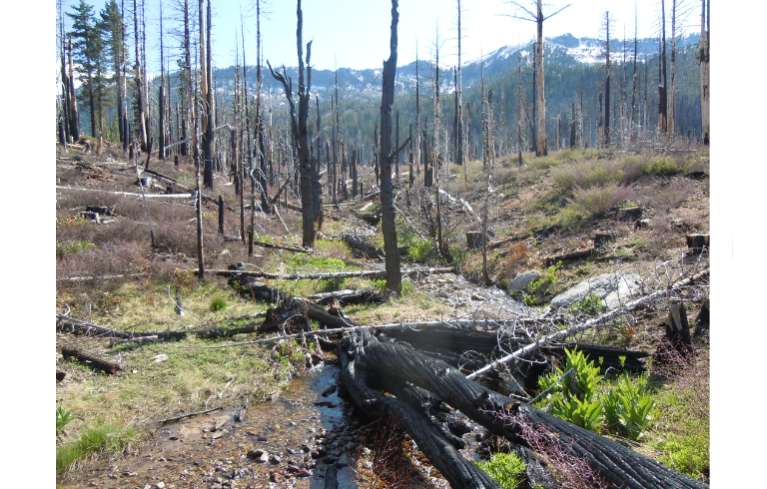
The black-backed woodpecker affected U.S. Forest Service plans for parts of the Angora burn area in Tahoe. Photo/LTN file

The black-backed woodpecker affected U.S. Forest Service plans for parts of the Angora burn area. Photo/LTN file

Fish and Wildlife is considering two populations of the woodpecker — one inhabiting the Sierra of California and eastern Cascade Range of Oregon, and another in the Black Hills of South Dakota and Wyoming. Another Northern Rockies population is not under consideration.

The agency said conservation groups that petitioned to protect the birds presented substantial scientific information that they were suffering a loss of habitat because of fire suppression, salvage logging that removes fire-killed trees, and thinning to reduce the intensity of wildfires.

The decision is giving conservation groups hope the bird can force changes in national wildfire policy the same way the northern spotted owl overhauled the idea of logging old-growth forests.

Chad Hanson, staff ecologist of the John Muir Project of the Earth Island Institute, said the woodpecker has already figured in lawsuits to stop salvage logging.

“We hope as a result of this, the Forest Service will in fact not only pay more attention to species like this, but do a proactive job of educating people that when fire happens, it is not a bad thing, wildlife rely upon it,” Hanson said. “These notions of catastrophic wildfire are really just politics and ignorance, and reflect outdated thinking.”

Forest Service spokesman Larry Chambers said the agency’s wildfire policy was not changing because the bird was not yet listed as a threatened or endangered species. He added that the agency already took “science-based actions to protect its habitat.”

The agency has also said budget cuts this year will force it to let more fires burn — a prospect Hanson said would benefit the woodpecker and a broad range of species.

Tom Partin, president of the American Forest Resources Council, a timber industry group, said the bird didn’t need any Endangered Species Act protection, because it was already getting plenty of new habitat each year from millions of acres that burn but are not harvested as salvage. He added there is a major debate going on over the role of the Forest Service on the national forests.

“Are they going to be a firefighting agency, or a land management agency?” he said. “Right now, half the budget is going to firefighting. A tenth of it is going to forest management.”

Hanson noted that major salvage logging is being planned for two areas that burned last year in prime black-backed woodpecker habitat, one on the Plumas National Forest in the Sierras, and another on the Winema-Fremont and Modoc national forests near Lakeview, Ore.


More bad news for red meat eaters

By Elizabeth Lopatto, Bloomberg News

The fat and cholesterol found in steak may not be the only components bad for the heart, according to researchers who have found another substance in red meat that can clog the arteries.

The substance is called carnitine, and as bacteria in the gut breaks it down, it turns into a compound known to harden arteries, according to a study published Sunday in Nature Medicine.

What’s more, people who eat a lot of meat allow more of the bacteria that convert carnitine to the harmful compound to grow, increasing its effect.

Previous research has shown that high levels of meat-eating are linked to cardiovascular risk, partly because of the saturated fats and cholesterol in meat. However, the higher levels of these ingredients aren’t enough to explain the difference in heart disease between meat eaters and vegans or vegetarians. The study, which takes into account the differences in the stomach’s inhabitants, may begin to explain the difference.

“The bacteria living in our digestive tracts are dictated by our long-term dietary patterns,” study author Stanley Hazen, the section head of Preventive Cardiology and Rehabilitation at the Cleveland Clinic, said in a statement. “A diet high in carnitine actually shifts our gut microbe composition to those that like carnitine, making meat eaters even more susceptible.”

The study followed 2,595 people and measured carnitine levels, as well as those of its byproduct, TMAO. Omnivores produced more TMAO than vegetarians and vegans after eating carnitine, the researchers found.

Although carnitine is also found in fish, poultry, wheat and some vegetables, its main food source is red meat, especially lamb, according to the University of Maryland. Because vegetarians and vegans eat fewer foods that contain it, their gut bacteria doesn’t process it as easily, which may explain some of the health benefits of meatless diets.

After feeding mice diets that would produce high levels of TMAO, researchers found that the animals had higher levels of hardened arteries. However, if the researchers suppressed the bacteria living in the mouse’s guts, the effects dissipated.

“The role of gut microbiota in this pathway suggests new potential therapeutic targets for preventing cardiovascular disease,” the authors wrote in the paper.

Some people use carnitine as a dietary supplement. Sunday’s research suggests that the safety of that supplementation should be studied more closely to make sure it’s not fostering bacteria that might promote heart disease, researchers said.


Wood cutting permits in TNF available

Woodcutting permits for the Tahoe National Forest may be purchased beginning May 1.

The price for permits is $15 per cord with a two-cord minimum and an annual 10-cord maximum per household. Permits can be obtained at all TNF Ranger Stations, the Forest Headquarters or by mail. Firewood season will extend through Dec. 1 or until rain and snow make the roads impassable.

In general, the woodcutting permit allows removal of dead or down wood on TNF system lands unless otherwise designated. It does not allow cutting on private land. Trees may not be cut if marked with paint, wildlife signs, boundary signs, and other official signs or in areas closed to woodcutting.

Wood cutters are also reminded that they are required to keep a serviceable shovel at least 46 inches long and an approved fire extinguisher (2 pound dry chemical or 1 pound foam type – ABC or greater) within 25 feet of where saws are being operated. All gasoline-powered saws and other internal combustion engines such as motorized splitters must have a USFS approved spark arrester installed. Transportation load tickets will be issued along with the permit.

For more information on the woodcutting program call the Truckee Ranger District at (530) 587.3558.


Ski report: Blue skies

ski report logoMostly clear with sunny skies and some fresh snow.

Here is the April 9 ski report.

— Curtis Fong


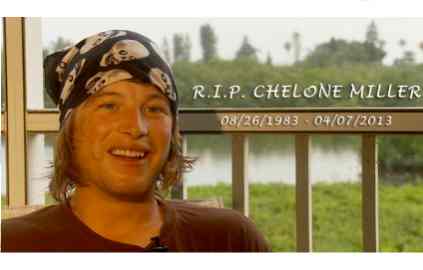
Olympic snowboarder hopeful Chelone Miller dies

By Devon O’Neil, ESPN

Chelone Miller, the younger brother of Olympic champion ski racer Bode Miller and a professional snowboarder who excelled in three disciplines, was found dead Sunday in his adopted hometown of Mammoth Lakes. He was 29.

A close friend discovered Miller unresponsive in the van in which Miller lived, outside his friend’s home, and the friend alerted authorities at 12:45pm.

According to the Mono County Sheriff’s Office, which confirmed Miller’s death on Monday, the cause of death is unknown pending an autopsy. Foul play is not suspected. Miller had a history of seizures since being badly injured in a 2005 motorcycle crash that left him in a coma for 11 days. Miller was well-known in Mammoth Lakes for his versatile riding talent, free spirit and fearless approach to big mountains. He was one of the few pros who could hit big jumps, ride precipitous natural terrain, and compete with the best snowboardcross racers in the world.

Snowboarder Chelone Miller died from an apparent seizure. Photo/Ski Channel

Snowboarder Chelone Miller died from an apparent seizure. Photo/Ski Channel

According to friends in Mammoth Lakes, Miller — affectionately known as “Chilly” — played golf Friday and spent Saturday lapping the resort’s terrain park. He had planned to fly to Alaska to compete in the Arctic Man race on Friday, an event that pairs snowmobilers with skiers and snowboarders who reach speeds in excess of 80 mph. “He was a very talented snowboarder and a great friend,” said John Teller, a Mammoth-based skicross racer who won X Games gold in 2011.

“Chilly always struck me as one to do things his way,” added Nate Holland of Squaw Valley, a seven-time X Games gold medalist who competed against Miller in snowboardcross. “He’d pop up here and there in his van as kind of a lone wolf, and throw down. He was a hard-charging snowboarder.”

Holland spoke from Alaska, where he was expecting to see Miller for the Arctic Man. Last year, Holland said, Miller suffered a seizure on the day of the event and was airlifted to a hospital. After stabilizing, Miller returned to the course and raced.

“I remember the organizer saying, ‘If Chilly says he’s racing, he’s racing, and we’re not going to finish this race until he gets back from the hospital,'” Holland recalled.

Most recently, Miller had taken steps to qualify for the 2014 Olympics in snowboardcross. He finished fourth at last month’s national championship in Utah, ahead of Holland and two-time Olympic gold medalist Seth Wescott. Miller also won the overall championship on the 2013 Rahlves Banzai Tour, clinching the title with a win at Sugar Bowl last month.

Born on the family’s land in Easton, N.H., in August 1983, Chelone was one of four Miller children who grew up without running water or electricity. They used kerosene lanterns for light.

“It was pretty much old-school livin’,” he said in a 2010 Snowboarder magazine interview. “I’m glad I had the opportunity to grow up that way.”

Miller suffered a traumatic brain injury in the 2005 dirt-bike crash near his hometown and later said he lost his memory for an entire month. After recovering, he suffered his first seizure while riding a chairlift at Mammoth Mountain and fell 25 feet, landing on his back.

Miller finished 28th in Snowboarder X in his only X Games appearance in 2010. He also was an alternate for Slopestyle that year.


S. Tahoe cops collecting prescription drugs

On April 27 from 10am-2pm the South Lake Tahoe Police Department and the Drug Enforcement Administration will give the public its sixth opportunity in three years to prevent pill abuse and theft by ridding their homes of potentially dangerous expired, unused, and unwanted prescription drugs.

Bring medications for disposal to Safeway at 1020 Johnson Blvd., South Lake Tahoe. The service is free and anonymous, no questions asked.

Last September, people throughout the country turned in 244 tons of prescription drugs at more than 5,200 sites operated by the DEA and its thousands of state and local law enforcement partners. In its five previous Take Back events, DEA and its partners took in over 2 million pounds — over a thousand tons — of pills.

Studies show that a majority of abused prescription drugs are obtained from family and friends, including from the home medicine cabinet. In addition, Americans are now advised that their usual methods for disposing of unused medicines — flushing them down the toilet or throwing them in the trash—both pose potential safety and health hazards.