Book giveaway gets light readers reading

On April 23, 25,000 volunteers from Berkley to Boston and Sitka to Sarasota will give away a half million books in more than 6,000 towns and cities across the country — including South Lake Tahoe.

World Book Night U.S. is an ambitious campaign to give free, specially-printed books to light or non-readers across America. Volunteer book lovers will help promote reading by handing out free copies of a book to those without means or access to a printed book.

Friends of the Library, South Lake Tahoe branch will be part of this effort.

The local chapter has chosen a few of the 32 WBN book titles to hand out.

Giveaway locations are not released ahead of time.


Dugard’s mom retells nightmare to teach others

By Jessica Heffner, Springfield News-Sun

SPRINGFIELD, Ohio — A million things run through Terry Probyn’s mind when she thinks about her daughter’s kidnapping.

She wished she would have kissed her daughter goodbye that day. She wishes the police would have made the connection between Jaycee Dugard’s disappearance and a similar case in South Lake Tahoe.

But mostly she wishes it didn’t take 18 years for her daughter to finally come home.

Jacyee Lee Dugard and her mom, Terry Probyn

Jacyee Lee Dugard and her mom, Terry Probyn

“She suffered and I suffered right along with her, and for 18 hellish years, I begged and I pleaded, I cried, I ranted, I raved,” Probyn said. “But the most important thing I did in all of this was I kept Jaycee in my heart.”

Jaycee Lee Dugard was abducted in 1991 at the age of 11 while waiting for the school bus. She was held by Phillip and Nancy Garrido in a makeshift shed in their Antioch backyard, where she gave birth to two children conceived by rape.

Probyn shared her experience with a group of about 160 law enforcement and child advocacy officials Monday as part of a workshop for National Child Abuse Awareness and Prevention Month. The event was sponsored by the Clark County Child Advocacy Center at the Hollenbeck Bayley Creative Arts and Conference Center.

During Dugard’s captivity, Garrido’s home was visited by parole officers, and neighbors called the sheriff’s office to report children were camping in the backyard. But it wasn’t until the University of California, Berkeley, did a background check on Garrido and the campus special events coordinator reported her suspicions to his parole officer that Dugard was discovered. Many times, Probyn said, her daughter could have been found.

“We all have to ask ourselves, does this make sense? Does this feel right? What am I missing here,” she said.

Probyn spoke through tears during much of her presentation. It’s her heartfelt message that CAC Director Wendy Holt said she hopes will stick with people.

“There may be just small indicators as Terry pointed out that give you what you need in a case,” she said. “If (we) see something, call children services, call law enforcement and let them be the ones to decide.”

The event is one of several the CAC is putting on this month.

On Friday, everyone is asked to wear blue to raise awareness about all forms of child abuse and its prevention.


Tree fruit farmers question FDA rules

By Brady Dennis, Washington Post

Blueberries and bananas are in, but black-eyed peas are out. Papaya is in, but plantains and pumpkins are out. Spinach and summer squash, in. Sweet potatoes and winter squash, out. Artichokes? Out. Apples? In.

And many apple farmers, as it turns out, aren’t too thrilled about that.

The Food and Drug Administration, wrestling to put in place a massive overhaul of the nation’s food safety system, drew a line this year when proposing which fruits and vegetables would be subject to strict new standards: Those usually consumed raw would be included, while those usually cooked or processed would be exempt.

Apples are big business in parts of El Dorado County. Photo/LTN file

Apples are big business in parts of El Dorado County. Photo/LTN file

Since then, few groups have expressed more frustration than tree fruit farmers, who grow apples, pears and a variety of other produce. They complain that the FDA’s approach, in some ways, defies common sense.

Those gripes offer a case study in the challenges of implementing the landmark 2010 Food Safety Modernization Act, which directed the FDA to prevent food-borne illnesses rather than simply react to outbreaks. It’s an easy idea to embrace. But when it gets down to apples and oranges, figuring out who should abide by which rules has proven anything but simple.

Growers subject to the new produce rules could face a variety of new responsibilities, including regular testing of irrigation water, sanitizing canvas fruit-picking bags and keeping animals away from crops. Many tree fruit farmers worry about the cost of such measures and say they would offer few safety benefits.

They argue that the FDA should focus more on foods that have caused deadly outbreaks, such as spinach and cantaloupes, and less on fruits that have a virtually flawless safety record, grow above the ground and, in some cases, have protective skins or rinds.

“Our product is quite safe,” said Phil Glaize, a third-generation farmer and owner of Glaize Apples in Winchester, Va. “We’re perfectly willing to look at ways to make it safer. However, what’s being proposed is very onerous and expensive. … [The costs] would end up getting passed on to the consumer, if we didn’t go out of business first.”

FDA officials say that the proposals offer a starting point and that they are open to making changes to create a science-based system that is adaptable to different growing conditions, different regions and different crops.

“It’s complicated. It’s a big, transformational thing that we’re doing. … We’re creating a whole new food-safety system here, so we accept that it will take some time to get the rules right,” Michael R. Taylor, the FDA’s top food-safety official, said in a recent interview. “The point is, we want to target our standards where they will make a practical difference.”

Despite such assurances, wariness persists on orchards from the Shenandoah Valley to the Yakima Valley.

“I’ve had a couple guys call and say, ‘I’m 55 years old. If this goes into effect, I just want to get out,’” said Chris Schlect, president of the Northwest Horticultural Council, which represents growers of apples and other tree fruits in Idaho, Oregon and Washington. “It’s hard enough to get by all that nature throws at you and to make some money at the end of the day.”

Leslie Judd, who with her husband and son oversees 350 acres of apples, cherries and pears in Washington’s Yakima Valley, says her family abides by state standards, industry best practices and detailed demands from major retailers such as Wal-Mart and Costco. She said the proposed federal rules are unnecessary and would further strain the resources of her family farm and many others like it.

“Somebody in an office in Washington, D.C., who’s never stepped foot off concrete has decided we need this rule and that rule. We’re starting to get to the point where it’s like, ‘Give me a break,’” Judd said. “We have a darn good product and a darn good industry. … The market has already taken care of this problem, if it’s a problem. Which it isn’t.”

Success of initiative will require finding noninvasive ways to record the firing of individual neurons.

The FDA is planning a slew of new rules that eventually will govern everything from U.S. farms to foreign imports to processing plants. But many domestic farmers doubt that their foreign competitors will face the kind of scrutiny that they will.

“The stuff that’s coming in from China is not subject to the kind of regulation that American food is,” said Diane Kearns, a fifth-generation farmer and president of Fruit Hill Orchards, one of Virginia’s largest apple growers with nearly 3,000 acres. “People are being priced out of the business. You can’t make money at it anymore.”

Tom Stenzel, president of the United Fresh Produce Association, which represents the produce industry, said he supports modernizing the food-safety system and doesn’t envy the FDA’s task of drawing up complex new regulations. But he said he hopes the agency will take a more nuanced approach in deciding which crops deserve tighter scrutiny — and which don’t.

“Part of our problem is that each commodity is different. We agree on what the big risk factors are — water, soil amendments, animal intrusion, worker hygiene. But there’s a question of whether the regulation ought to apply the same standards to every single commodity,” Stenzel said. “If you’re in the tree fruit industry — if you’re an apple guy or a citrus grower — you look at it and say, ‘What’s the public benefit of me doing water testing of irrigation water once a week? There’s never been a problem.’”

He also pointed out a dilemma facing many farmers. Some of those who grow crops that would be exempted, such as kale, already follow many of the proposed standards. They might end up asking the FDA to include them under the rules, in part because the regulations might be viewed as a safety stamp of approval.

FDA officials note that the new regulations would exempt farms with average annual sales of $25,000 or less and offer exemptions to certain other farms that bring in less than $500,000 a year and sell primarily to consumers within a 275-mile radius. Smaller farms also would have years longer to comply with the new rules.

Plenty of jockeying has taken place to shape the proposals. Comment letters have poured in, and the FDA has extended the public comment period through May. Think tanks and lawyers have parsed hundreds of pages of proposed regulations, and some groups have held seminars to explain the implications to their constituents.

Farmers, activists and industry representatives — including the Grocery Manufacturers Association and the Fresh Produce Association of the Americas — have lined up to make their voices heard during a nationwide listening tour by Taylor and other FDA officials that included small towns and cities such as Washington, Chicago and Portland.

At the recent meeting in Portland, several growers questioned the FDA’s estimate of the economic impact of the new requirements — the agency has said that the regulations would cost domestic farms a total of about $460 million annually, or $5,000 to $30,000 per farm, depending on size.

According to the agriculture trade publication Capital Press, one local farmer told officials that the new rules seemed like “overkill” for tree fruits, which, unlike some other crops, haven’t been linked to major outbreaks.

“If it ain’t broke, don’t fix it,” said Charles Lyall, a farmer from Mattawa, Wash.

“Rest assured, what you’re saying is being heard,” Taylor replied.

Judd, the Yakima Valley farmer, hopes that’s true. She said she knows other growers, wary of mounting regulations and weary of shrinking profits, who have either sold out to larger operations or simply stopped farming.

“All of these little things just keep piling up,” she said. “It’s just getting harder and harder. At some point, you just say, ‘To heck with it.’”



Tahoe casinos contribute to statewide gaming win

North Lake Tahoe casinos had a dramatic jump in revenues – 35.26 percent – in February from 2012.

South Lake Tahoe’s numbers were up, too – 7.8 percent.

The Nevada Gaming Control Board released the numbers Wednesday morning. Statewide, casinos collected $1.073 billion in gaming revenue. This is an increase of 15.1 percent from February 2012.

Casinos on the Las Vegas Strip set a single-month record with $696.1 million in revenues. And this was all done in the shortest month. The Chinese New Year being in February helped contribute to the spike.

 — Lake Tahoe News staff report


Ski report: Spring is back

ski report logoSpring conditions have returned.

Here is the April 10 ski report.

— Curtis Fong


S. Tahoe offering discounted lead safe classes

South Lake Tahoe’s Lead Safe Tahoe program has partnered with Lake Tahoe Community College to offer a Renovator, Repair, Painter course in English and Spanish.

The one-day class explains how to comply with the Environmental Protection Agency’s RRP rule. Subjects covered include: health effects, regulations, lead safe work practices, containment, cleaning and record keeping.

After passing an end-of-class exam, students receive RRP initial training certificates.

An English-language class is being offered April 19. A Spanish-language class is being offered April 20.

Classes will be at Lake Tahoe Community College at a discounted rate of $50.

Additional workshop fees are paid for by South Lake Tahoe grant funding. Scholarships covering the entire cost of the course are available for full-time city residents who meet HUD low income requirements.

Preregistration and prepayment are required and space is limited. Call (530) 542.6011 to register for the April 19 class and (530) 542.7417 for the April 20 class.


Expect delays on Tahoe roads starting now

Publisher’s note: This is one of a few stories about construction planned for the Lake Tahoe Basin this summer.

By Kathryn Reed

Work on Highway 89 between Tahoma and Tahoe City started Tuesday. And it won’t be done until October 2016.

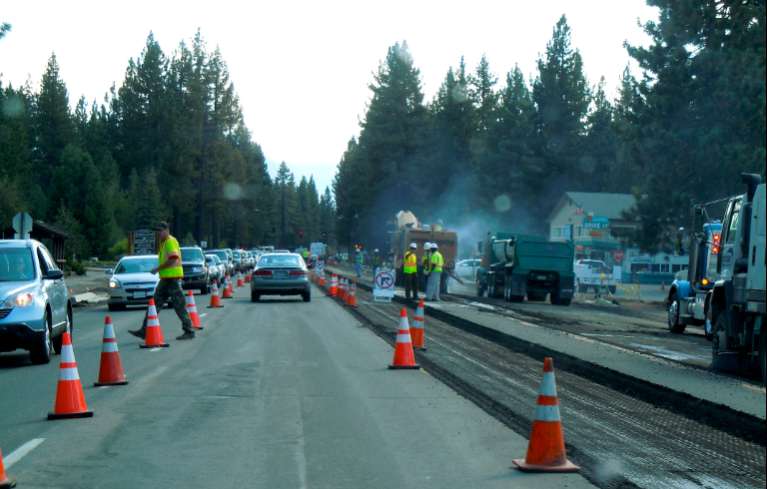
Caltrans will have many of the highways in the Lake Tahoe Basin torn up this construction season in what are mostly water quality projects. Besides putting in systems to keep sediment from reaching Lake Tahoe other benefits for motorists and cyclists are also part of the plans.

The work that started April 9 is Southwest Gas contractors moving the natural gas lines before Caltrans comes in to do its roadwork. The project started last year and came with a ton of complaints. Much of that had to do with the delays getting around the West Shore as well as the large metal plates in the road. Though, delays and metal plates will be seen this year, too.

Caltrans will be doing a number of projects in the Lake Tahoe Basin this season. Photo/LTN file

Caltrans will be doing a number of projects in the Lake Tahoe Basin this season. Photo/LTN file

That contractor from Texas had not worked in the basin before and is not coming back – at least on this project.

“We hope it goes smoother than last summer,” Steve Nelson with Caltrans said.

The Southwest crews will be working from Pine Street in Tahoma to Timberland Lane near Chambers Landing.

It’s possible between the two Southwest contractors and the Caltrans gang people could face three delays on this stretch of road. Nelson said the delays should not be more than 20 minutes at any given stop. (This is for all of the Department of Transportation’s Tahoe projects.) But if someone is stopped at each section of this project, that could add an hour to the trip.

“Each project has traffic-control specifications the contractor has to follow, but in general it’s accurate to say that night work will be conducted during the peak season from July 1 through Labor Day, but there will be daytime work during the non-peak months of May, June, September and October. No weekend work starting Friday at 9am (peak) or Friday at 11am (non-peak) and no holiday work,” Nelson told Lake Tahoe News.

Caltrans will be putting in nine sand vaults to collect and filter stormwater runoff. They will start on the south end of Highway 89 in May. By 2016, the work will culminate in Tahoe City.

The road will be widened and repaved, curbs and gutters installed, and some left turn lanes installed. This is a $34 million project that is federally funded.

Caltrans has a meeting set for April 18 with the West Shore Business Association to address any lingering concerns.

Tahoe City Public Utility District in 2015 will be the project leader for a multi-use trail adjacent to Highway 89 between Trout Street and Cherry Street.

South Shore projects

Landscaping is the last thing that remains to be done for the Trout Creek to Ski Run Boulevard project that tied up traffic in South Lake Tahoe for the last two summers. An official dedication of the project will be sometime this summer.

Caltrans will be back at work on Highway 50 from 1,200 feet west of Ski Run to Wildwood Avenue. This $7 million project will include widening the road to provide a 6-foot shoulder for cyclists.

Curbs, gutters, sidewalks and stormwater treatment systems will be installed.

Work should begin May 1 and is likely to be finished in one building season.

Starting at Lake Tahoe Airport and going to the Y is a $12.4 million project that is expected to take two summers to complete.

Where the road is two lanes it will be widened to provide 3- to 4-foot shoulders for bikes. Curbs and gutters will be added, along with storm filtration systems.

The section of highway that is four lanes will have sidewalks installed. This is the commercial area.

Other projects

The $21 million Meyers project is not expected to start until next year.

The same goes for the Y to Cascade Lakes work along Highway 89.

Work in Kings Beach on Highway 28 is a Placer County project, with oversight by Caltrans. Utility crews are already working.

More info about Caltrans’ Tahoe projects may be found online.


Craftsman turns distressed wood into art

Northern Nevadan Joe Donohue worked in the tech field until his retirement, when he switched gears and discovered a different passion: taking distressed pieces of wood and creating delicate works of art.

Those who are within driving distance of Reno may be interested to learn that this inspirational master craftsman shares his skill by teaching others the time-honored art of wood turning. His classes are on weekend days throughout the year.

Donohue is the only professional woodturner in Northern Nevada who imparts these skills to eager students on a regular basis.

Woodturning is a form of woodworking using lathes (machines that rotate the piece on its axis) to create various objects. Donohue teaches his classes at a facility occupied by the Nevada Woodchucks, where eight lathes are available for students.

Classes are once a month on weekend days from 8:30am-2:30pm and are tailored to meet each student’s ability.

Donohue’s next class is scheduled for April 28 and the class in May is slated for Memorial Day weekend, on May 26. The fee is $85 for a one-day session, and the fee for a private session is $300. To register, or learn more about the classes, call (775) 387.0123.


Letter: El Dorado sheriff recaps 2012

To the citizens of El Dorado County,

The year 2012 is wrapped up, and so is my second year as your sheriff. This year end update is to provide you, the community we serve, with information outlining some of the achievements by the men and women that make up the sheriff’s office. I believe it is my obligation to keep you, as the taxpayers of El Dorado County, informed as to the direction, and accomplishments of this office.

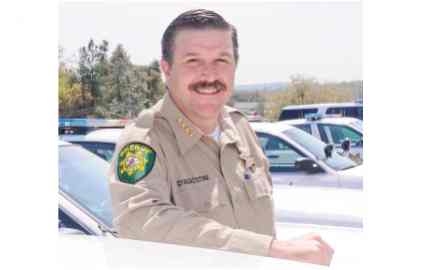
John D'Agostini

John D’Agostini

To recap all of the accomplishments of the last year would take up more space than I have, so I will simply highlight some of the more significant accomplishments. Please know that the accomplishments were a result of teamwork, leadership, and actions taken by all levels of employees of the sheriff’s office.

Employees and statistics

Your sheriff’s office employs 369 full-time staff members, including deputy sheriffs, correctional staff, Dispatchers, and professional staff. Our current approved budget is approximately $54 million. Your tax dollars support many service programs including operation of two correctional facilities, patrol of over 1,700 square miles, the Office of Emergency Services, coroner services, civil services, courts, bailiffs, transportation services, dispatch, radio communications, criminal records, boat patrol, public administrator, investigations, and property and evidence.

We are proud to have so many citizens who volunteer their time to make our county a better place. Our volunteer programs consist of over 600 volunteers supporting programs including search and rescue, S.T.A.R.S., Explorers, air squadron, and reserve deputies.

Concealed weapons

Our concealed weapons policy continues to increase the number of permits being issued.

I am a strong believer in the constitution and more specifically the Second Amendment regarding our right to keep and bear arms.

2010            2011          percent change           2012           percent change

Issued        225              514            128%                              728            42% increase

Renewed   n/a              530                                                    188            43% decrease

Community outreach

In order to be better informed of the issues facing our county, and informing our citizens of the hard work accomplished by our staff, in this last year I attended and/or took part in hundreds of individual meetings with citizens, service clubs, schools, and other community events. This year we will be having community meetings in each supervisory district.

In 2011 we published the first Sheriff’s Annual Report, which includes statistics and information concerning operations, services, and accomplishments. The statistics are eye-opening, but they also display the hard working being done every day by sheriff’s office employees, and frankly it highlights the services you — the taxpayer are receiving for your tax dollars. The 2012 Annual Report has been released and can be found online.

Community patrol

                                2010            2011         %          2012          %

Reports:              12,157         11,637        -4%      11,520        -1%

Service calls:      74,141          70,203       -5%      67,007         -5%

Info reports:           225               209        -7%          325        56%

Adult arrests:      3,651            3,507        -4%       3,685          5%

Juvenile arrests:    501               415       -17%          431          4%

Total arrests:      4,152            3,922         -6%       4,116          5%

Jail bookings:     7,226            6,889         -5%       6,858           0%

Internal processes

Working with the county Board of Supervisors, this last year we were able to secure two additional deputy sheriff positions. One position created an elder abuse detective. This detective working closely with adult protective services will concentrate on financial, physical, and emotional abuse of those who cannot care for themselves. The second position has been designated for a resident deputy to live and work in the Georgetown divide area, improving our level of service in those communities.

This last year we had many personnel changes. In our continuing goal to reach full, allocated staffing levels we processed 1,295 employment applications and hired 54 new employees to fill vacant positions. We had 12 employees retire at various levels and positions which resulted in many promotions including sergeants and lieutenants. I am confident that our new supervisors and managers will perform at a high level now and in the future.

Budget

Regarding the budget, my goals from day one have been to avoid employee layoffs and no reduction in public safety services in El Dorado County. We have made many changes in order to reduce costs, last year we ended the year in the black and actually returned $2.7 million as surplus funds to the county as a result of cost saving measures we have taken.

We have had to review each and every function we provide and decide whether it is something vital, important or just nice to have. We are focusing on our core functions and services. We continue to make significant reductions in overtime organization-wide, by changing schedules in our custody, patrol, and dispatch areas. We have continued weekly overtime reporting and justification, and have reduced non-mandated training.

Last year an outside management firm was hired to conduct a staffing and workload study of our 911 dispatch center. We had noticed a high amount of overtime being used on a regular basis. The study revealed that we needed to change the shift hours and fill vacant positions. A reorganization of the center was done, and we worked hard to recruit and fill vacant positions. This resulted in a significant reduction in overtime.

In order to improve effectiveness and efficiency in our property and evidence section, we contacted the California Commission on Peace Officers Standards and Training, and requested a study on our procedures and facility. The study revealed that we could improve in many areas, and that our property and evidence storage areas are at or near capacity. We have implemented many of the suggested procedural changes to improve effectiveness.

In addition to significantly reducing costs, we have brought income into the county. In the last year we noticed that the impact of state realignment, regarding state inmates was less here than in other counties. We discovered that we regularly have vacant beds in both of our jails. We started the process of contracting with other counties and currently contract with Alpine, Shasta, and Amador counties to house some of their overflow inmates. Since starting the contracts in late 2012 we have received approximately $160,000 in funds. These funds are used for unanticipated maintenance at the jails, unanticipated emergencies, and toward the costs of moving forward in planning and construction of a new headquarters facility.

The future

As you may be aware the state passed AB109, which will forever change the criminal justice system in this state. The state has passed on to the county their responsibility for housing certain inmates and supervising those released from custody. This is not a good thing for El Dorado County. Of most concern is that the state is not covering the actual costs of housing and supervising the inmates, and this has morphed into an unfunded or under-funded state mandate. It is very possible that at a point in the near future we will reach capacity at both of our custody facilities and be forced to release inmates before their sentences are completed, impacting public safety in our county. With the cooperation of the district attorney, courts and probation, we are continuously working to lengthen the time frame of this reality.

The sheriff’s office needs a new home. We are currently spread out in five different locations and spend over $300,000 a year on leased space for our staff. We are in the process of evaluating space needs with the goals of reducing or discontinuing the use of leased space, and housing most or all sheriff’s office employees within a new facility in the future. The sheriff’s office has outgrown the current facility, which was built over 40 years ago. This situation not only increases costs for leased property, but it reduces our span of control, fragments our operation, has a negative impact on morale, and requires that our staff work in less than ideal conditions. A new facility will reduce county costs, increase our level of customer service, and create one location where all of our public services will be available to our citizens.

As we move into a new year, your sheriff’s office is committed to providing you with high quality public safety service and we will be responsive to your concerns and safety needs.

I speak to many people in our great county, and I consistently hear that what people like most about living in El Dorado County is our quality of life. Public safety is the bedrock of our quality of life, and we take our responsibilities to you seriously. The hard working men and women of the sheriff’s office are on duty 24 hours a day, seven days a week to serve you.

As sheriff, I commit to work with you and faithfully honor my oath of office to support and defend the Constitution of the state of California and the Constitution of the United States. We must continue to work together to improve El Dorado County and to ensure we live a in a safe community. If you have community or public safety issues, or suggestions on how we can improve service, please do not hesitate to schedule a meeting with me or my staff.

In closing, I want you to know that I consider it a privilege to serve as your sheriff and I thank you for your continued support.

John D’Agostini, El Dorado County sheriff


SnowGlobe No. 3 in South Lake Tahoe? — maybe

By Kathryn Reed

Hear that sound?

It used to be a loud bass that rattled nerves. Now it’s the cha-ching of cash registers – in the literal sense of local businesses and the figurative sense of city coffers and college admissions.

The reason?

SnowGlobe.

SnowGlobe may return to South Lake Tahoe for a third year. Photo/LTN

SnowGlobe may return to South Lake Tahoe for a third year. Photo/LTN

Chad Donnelly wants to hear more of that cha-ching sound as well. He is the promoter of the three-day music festival that has been staged at the community ball fields next to Lake Tahoe Community College for the last two years.

His is a private business, so the actual amount of money the South Lake Tahoe venue has put into his pocket is unknown. But he wants more and he no longer wants to pay for the privilege to bring his eclectic line-up of techno musicians-disc jockeys to town during New Year’s Eve weekend. Donnelly wants to be paid $100,000. That’s what he is making at his other venues.

For the past two years he has paid the city and Lake Tahoe Community College to cover part of their expenses.

But now the North Shore wants part of what it sees as a lucrative event. It’s a bit of a bidding war that once again is pitting the North Shore against the South Shore.

Donnelly claims SnowGlobe brings $5 million to the South Shore. He is preparing an economic study that should be released April 18.  The city, college and business community will have something more to evaluate when it is released.

While it’s not public information what the North Shore has offered Donnelly, the presumption is $100,000 or less since that is what he is asking from the South Shore. He also wants a five-year contract.

The business community has expressed it is willing to pony up the $100,000 as an investment. The theory being that you need to spend money to make money. Plus, SnowGlobe gives people something to do other than stand in the cold on New Year’s Eve at casinos where nothing happens and it attracts people who might not have otherwise come to Tahoe.

At the Tuesday night LTCC board of education meeting it was agreed that the college should work with the city to keep the event in South Lake Tahoe. (Board member Fritz Wenck was absent.)

South Lake Tahoe City Manager Nancy Kerry, City Councilwoman Angela Swanson, Lake Tahoe Visitors Authority Executive Director Carol Chaplin, and Lakeside Inn Casino’s Mike Bradford all spoke April 9 in favor of 2013 being year three of the music festival.

Chaplin spoke both as LTVA’s head honcho and as a mom of two teenagers. She said how she let her boys attend the event and would do so again.

The biggest hurdle is how to protect the ball field that was built with Measure S money by taxpayers – an initiative that is still being paid off by those on the California side of the South Shore.

It is not definitively known how much life SnowGlobe is taking off the field, but those involved recognize the field was built for play, not music festivals. If those concerns can be mitigated, the city is ready to go forward with SnowGlobe 2013.

Donnelly is also in talks with Vail Resorts to bring a summer concert to Heavenly Mountain Resort.