Discussion about how to help Tahoe kids

Learn about Court Appointed Special Advocates and Foster Family Services in South Lake Tahoe on April 13.

The free meeting begins at 10:20am in the Aspen Room at Lake Tahoe Community College, 1 College Drive in South Lake Tahoe.

Every year hundreds of children from the Tahoe area are removed from their homes due to abuse. In fall 2012, 290 children from El Dorado County needed foster care and there were only eight families at the lake to help.

Speakers are Megan Ciampa, director of Foster Family Services, and Amanda Morozumi with CASA.


Harrison Ave. work delayed until 2014

By Kathryn Reed

The much talked about multimillion-dollar streetscape improvement to Harrison Avenue is not going to happen. At least not this year.

It was decided by South Lake Tahoe officials and property owners to push back the project to 2014 so everything can be completed in one year.

The thinking is that it would be better for businesses – and patrons – not to endure two construction seasons. This section of town has had work done to it for the last several years between Caltrans projects and Lakeview Commons.

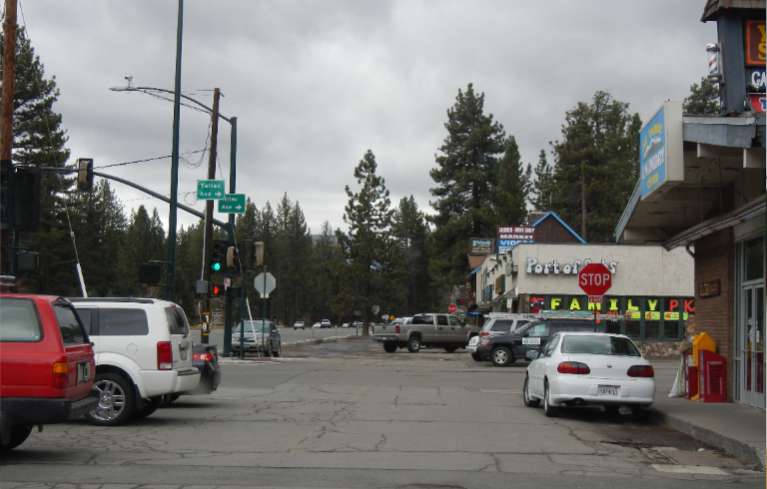
South Lake Tahoe's Harrison Avenue won't be overhauled this year. Photo/LTN

South Tahoe’s Harrison Avenue won’t be overhauled this year. Photo/LTN

With the consultant’s delay in completing the paperwork to get the federal money, the project could not start May 1 when the building season opens in the Lake Tahoe Basin. That meant starting later in the summer and finishing next year or holding off a year. Wait a year is what business owners opted for when they met with city staff March 28.

Coleen Shade, the consultant with R.O. Anderson, did not return a phone call.

The congestion mitigation air quality dollars are $510,000 of the total $3.2 million project. But the project cannot be bid until they are released.

The bulk of the remainder of the money comes from city issuing a bond, some U.S. Forest Service money for water quality, and property owners creating an assessment district. The latter also ensures this frontage street to Highway 50 and the side streets also meet the erosion control requirements of the Tahoe Regional Planning Agency.

Essentially a district stormwater collection system will be created instead of each property owner individually dealing with the runoff.

The project will be bid in August or September, with the City Council expected to award the contract in November.

The plans are set and the TRPA permit is in hand. The city is still awaiting some documents from R.O. Anderson.

Rehabbing this area of town next to Lakeview Commons has been talked about since 1995. The scope of work goes from San Jose Avenue to Los Angeles Avenue, and then down the side streets.

AT&T needs to move phone banks and Southwest Gas has to lower gas mains. That could still occur this year.

Some of the streets in the area are going to be one-way and in some cases one lane, diagonal parking will increase the number of spots, paving stones will be used for the sidewalks, crosswalks will be colored concrete, a multi-use Class 1 bike path will go along Riverside Avenue, light standards similar to Ski Run will be erected, and a gateway sign near the boat ramp will be installed.

The vacant lot across from Sno-Flake Drive-In is now owned by the city. In this project it will be paved over for parking. Lights will also be installed.


Citizens should know their rights

By Ted Long

Session four of the citizens’ academy was to be about search and seizure laws and procedure, however the assistant district attorney who was scheduled to lead the class had to leave early and so what we heard was a brief description of basic rights and the role of the DA’s Office and the sheriff.

While the session was useful, it failed to fully look at this important area. I am sure that for many it was a welcome short session, ending in only about an hour, however for those of use who drove for over and hour each way, it was disappointing.

Ted Long

Ted Long

The most interesting aspect was the relationship between the right to counsel and others, known as the Miranda warning and the rights of the citizens regarding a search. The question was, it is one thing to have a right, it is another to know it. The Miranda warning lets a person know that they do have a right to silence etc., however at a request for a search, which may not be in your best interest, you are not told that you have a right to say “no.”

The circumstances make it often sound like you must be guilty if you say no, when in fact to be free of warrantless searches and seizures is as basic to our Constitution as any right. So why would and honest, law biding citizen say no? Well, because it’s his right, a right that was created not to test your honor, but to ensure that those with power, that control the process, are held in check. Every day it seems we hear of some misuse of the police power, from the extremes of a Rodney King to a sex scandal. Those with the guns have incredible power and we as citizens need to occasionally challenge that to reveal the flaws in the system.

As we learned, it is relatively easy to get a warrant, a judge to sign off, so why not ensure that oversight? One thing that seems clear in this adventure is that everyone in law enforcement seems like a nice person, or at least in the circumstance of a controlled meeting with the public. This contradicts my real life experience of the same people in real life situations. In part their standoffish-ness is because of the unknown dangers, the traffic stop where the person has a gun, the domestic violence call that has a truly crazed person to deal with. I do understand, however, we can work toward a greater understanding of the fact that we are not all bad guys, a better system of discrimination toward the honest citizen.

In my recent ride along with Officer Mark I saw a good example. Mark waived to people and expressed to me that he knew certain folks as we passed their homes, a kind of “cop on the beat” knowing his residence.

Many years ago police were required to live in the community they served, the reason, to know people, to be a part of the community. In resident life your kids play on the same fields, you shop at the same stores. This is no longer the case. Mark, for example, lives in Carson, and only really see’s South Lake Tahoe on patrol, or a burglary call.

Ted Long is a South Lake Tahoe resident participating in the El Dorado County Sheriff’s Citizens Academy.



Letter: Praise for Barton Auxiliary

To the community,

I would like to take a moment to recognize Barton Memorial Hospital’s Auxiliary members. Without their determination and perseverance, Barton Memorial would not be what it is today – 50 years strong.

In 1960 the hospital was an idea and a community need. Just three years later, on Nov. 23, 1963, Barton Memorial opened its doors. After endless work and fundraising, Barton Memorial Hospital became a reality. A large portion of the first year of the hospital’s operating expenses ($600,000) was generated by the auxiliary.

John Williams

John Williams

These dedicated auxiliary members provide vital support to our patients and staff – from a smile to a delivery of flowers, they are part of our backbone. These dedicated volunteers help staff the hospital’s front desk, assist in the skilled nursing facility and organize local blood drives and events. In addition to assisting with staffing of the gift shop in the hospital lobby, the auxiliary also manages and operates the Attic Thrift Store.

Today, there are more than 100 members who give their time and talents each year to the auxiliary’s many endeavors.

A lot has changed since 1960, but the dedication of Barton’s Auxiliary members remains steadfast. Thank you on behalf of everyone at Barton and our community for all you do. In honor of National Volunteer Week, April 21-27, I encourage everyone to take a moment to thank these amazing individuals for their support.

Sincerely,

John Williams, Barton Health president and CEO


Fewer community college students transfer, get degrees

By Carla Rivera, Los Angeles Times

Fewer than half of California’s community college students transferred to a four-year school or earned an associate’s degree in 2011-12, the lowest level of completion in five years, according to data released Tuesday by the chancellor’s office.

Statewide, 49.2 percent of students who enrolled in 2006 achieved those goals after six years, compared with 52.3 percent of students who enrolled in 2002.

The completion rate for students needing remedial math and English was about 41 percent. By comparison, 71 percent of students who entered prepared to do college-level work in those subjects earned degrees or transferred.

Students in an LTCC food class. Photo/LTN file

Students in an LTCC food class. Photo/LTN file

The figures are among a raft of information available on the system’s newly released Student Success Score Cards, which highlight student performance statewide and at all 112 campuses.

The score cards are available on the college chancellor’s website and on those of individual campuses. They include other measures such as retention of students and job training success, in an easy-to-use format.

The numbers are also broken down by age, sex, race and ethnicity.

During a telephone media briefing, community colleges Chancellor Brice Harris said the “softening” of completion rates reflected a financial crisis that resulted in more than $1 billion in state funding cuts, slashed course schedules, a 17 percent increase in class size and other pressures.

“These have been five of the most stressful years California community colleges have suffered in decades,” Harris said. “It doesn’t surprise me we’ve seen the numbers soften as a result. It’s a clarion call that in spite of the difficult financial times we’ve had, we have to redouble our efforts and focus on student success.”

Harris said he hoped that students paid particular heed to the stark differences in success for those prepared and unprepared for college work.

“We’re frankly very pleased by that 70 percent-plus number, but we have to make clear to students and their parents the importance of being prepared … to come to college,” he said.

Harris said the score cards were not designed as a method of ranking institutions — which have different mixes of programs, student bodies and locations — although comparisons are inevitable, he conceded.


Snippets about Lake Tahoe

poetry• The Lake Tahoe Community College Writers’ Series celebrates National Poetry Month April 12 at 7pm in the LTCC Library. Three award-winning poets — Kelle Groom, Lexa Hillyer and Krista Lukas — will read from their works, engage the audience with a Q&A, and sign books. The event is free. Books will be available for purchase.

• Although it received bi-partisan support, state Sen. Ted Gaines’ bill to repeal the fire fee failed April 9 in the Senate Committee on Natural Resources and Water.

• The 23rd annual Lake Cushing Crossing (aka pond skimming) is April 13 at 1pm at Squaw Valley.

• An open house to celebrate the life of Bob Bender will be April 13 at 1pm at 2136 Shawnee in South Lake Tahoe. Mr. Bender died March 8.

• The U.S. Postal Service’s plan to cut Saturday delivery in August has been delayed because of Congress.


Event raises money for Heavenly Foundation

The Heavenly Ski and Snowboard Foundation will host the 12th annual Grapes and Gates wine tasting event on May 8 at Edgewood Tahoe’s North Room beginning at 6pm.

This year’s event will feature tastings from local restaurants Café Fiore, Cork and More, Latin Soul, Naked Fish and MacDuffs. Tastings will be offered by more than 12 wineries: Caymus Winery, Silver Oak Winery, Rombauer Winery, Vine Cliff, Jeremy Wine Co., Red Poets & Skyhawk Lane, Toasted Head, C.G. Di Arie, Renwood, Un Po’ Pazzo Italian wines, Silkwood and Southern Wine and Spirits. Dance to the music of the David Patrone Jazz Band, enjoy Alpen Sierra coffee and Sugar Pine Bakery desserts.

The evening’s highlight will be the award presented by Bill Killebrew to Dick and Nancy Gardner for their continued dedication to providing youth in the region the opportunity to participate in snowsports. The ceremony will begin at 7:15pm.

Tickets are limited and may be purchased online or by calling Foundation director Aimi Xistra-Rich at (530) 314.9285. Tickets are $75, $65 for foundation alumni. Proceeds benefit the Heavenly Foundation’s Scholarship Program.


Graffiti closes parts of Joshua Tree

By National Parks Traveler

A recent spate of vandalism has prompted Joshua Tree National Park officials to close the Rattlesnake Canyon area to the public for the near term.

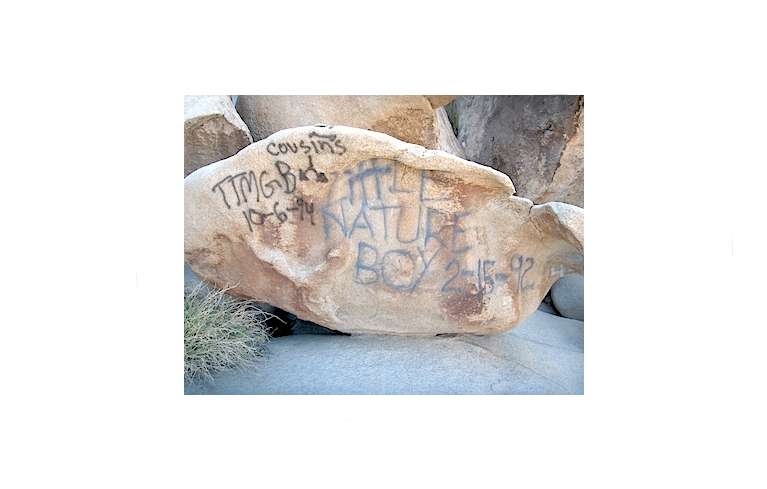
Since January, individuals have defaced the day use and canyon area of Rattlesnake Canyon with graffiti. While this started as a few markings, the use of social media has appeared to spark numerous individuals’ interest in adding to the vandalism of this scenic canyon.

Vandals have forced parts of Joshua Tree to close. Photo/National Parks Traveler

Vandals have forced parts of Joshua Tree to close. Photo/National Parks Traveler

The continued malicious desecration of the national park has now impacted archeological sites, according to park officials. Limits to fiscal and personnel resources restrict the immediate remediation of the area. Therefore, to prevent continued damage to scenic, natural, and cultural resources, the entire day use area of Rattlesnake Canyon from the day use closure gate to the top of the canyon is closed to public entry.

The closure is in effect through midnight April 30 to allow evaluation and restoration of the site. This closure will be reevaluated after April 30.

Last fall there was another episode of vandalism in the park, in an area of Queen Mountain known as “the Underground Chasm.” At the time, park officials discovered approach steps gouged into the rock, some climbing routes appeared to have been “enhanced and overly bolted,” and there were “hundreds of illegally placed bolts, fixed rope, burnt Joshua trees, (and) stashed camping and climbing gear,” an Access Fund release noted at the time.

While park officials could have moved to close the area to climbers, instead they reached out to the Access Fund and Friends of Joshua Tree to help right things at the Underground Chasm. The outcome was that officials decided to 1) Use the incident to educate climbers about proper wilderness ethics; 2) Evaluate the illegally established routes under the park’s permit application protocol; and, 3) Only remove those routes that would not have been granted a permit.

Joshua Tree National Park reminds visitors that they appreciate your assistance in watching for and reporting acts of vandalism or suspicious activity to the nearest park personnel.


Poetry slam in Incline

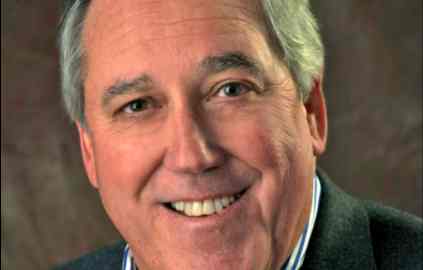
Denise Jolly

Denise Jolly

The Tahoe Slam at Sierra Nevada College is April 26 at 7pm.

It will be hosted by poetry slam champion Denise Jolly.

In addition to the cash prize purse, the winner of the competition is crowned Tahoe Slam Champion of the Year. Contestants will be limited to the first 10 people to sign up prior to the event. Sign ups begin at 6:30pm in Patterson Hall. Competitors should bring at least two poems in preparation for advancing on to the second round.


Series of QuickBook classes to be offered

Lake Tahoe South Shore Chamber of Commerce is partnering with Connect Community Education at Lake Tahoe Community College to offer a certified QuickBooks workshop series.

This three-part series will be taught by nationally certified QuickBooks instructor Christa Peterson.

Beginning QuickBooks – Part One: Set Up — May 8, 2-5pm

In this workshop, participants will learn how to create and customize a chart of accounts, enter and pay bills, use a check register, apply payments, make deposits and reconcile bank statements.

Beginning QuickBooks – Part Two: Data Entry — May 15, 2-5pm

In this workshop, participants will learn how to fill out sales forms, create memorized transactions, record customer payments and record deposits, enter and pay bills, write checks, use registers, transfer money between accounts, and reconcile bank accounts.

QuickBooks – Part Three: Putting it to Use — May 22, 2-5pm

This workshop advances beyond the standard reports provided by QuickBooks to teach participants how to modify such reports so they are more meaningful for businesses. Learn to export critical reports to Microsoft Excel for further modification and application. Participants will learn how to group memorized reports, making end of the month reporting much easier.

The courses will be at Lake Tahoe Community College in room D121, and are $49 each or all three workshops for $120. For more information, or to register for all three workshops, call (530) 541.4660, ext. 717, or email connect@ltcc.edu. Register for individual workshops online.