Rainy day fund lacking for most in U.S.

By Aimee Picchi, MoneyWatch

An often-heard rule of thumb for financial health is to keep an emergency savings fund to cover unexpected events like a job loss. But if you’re like most Americans, you’ve fallen behind in tucking money away for that rainy day.

By some measures, the economy is showing improvement, with unemployment falling and the stock market hitting new highs this year. But a stubborn problem for Americans is stagnant wage growth, which makes it increasingly difficult to put away money, especially as prices for everything from food to clothing keeps climbing.

No wonder 26 percent of U.S. consumers lack any emergency savings, according to a new Bankrate survey. On top of that, two-thirds of Americans have saved less than the recommended six months’ worth of expenses, the survey found.

While the recession ended five years ago this month, many Americans are still living paycheck-to-paycheck, making it difficult to put money aside in an emergency savings fund. About 25 million middle-class Americans live “hand-to-mouth,” a recent study out of the Brookings Institution found.

Even the middle class is finding it difficult to put money away for an emergency, Bankrate found. For Americans with average household income of $75,000 or more, only 46 percent have a six-month savings cushion, the report notes.

Read the whole story


Squaw studies water; incorporation moves forward

With Squaw Valley wanting to dramatically expand its commercial and recreation offerings at the base area, the availability of water is a concern.

Last week the Squaw Valley Public Services District released the draft of the water supply assessment for the valley. The study is designed to look at how much water the project would use, what is available and how to meet future demand in dry and wet years.

“The total projected water demand represents a 43 percent increase over the average annual volume of 843 [acre-feet per year] currently used in the Olympic Valley, and a 47 percent increase over the current annual average groundwater,” the report states.

The Olympic Valley area uses groundwater. Today, SVPSD supplies 1,569 residential connections and 20 large commercial entities from four wells.

In coming up with data, the study looked at current use, and projected use for the project in addition to other proposed projects and needs for snowmaking. The findings are that four wells are needed for the Squaw expansion and two for other projects.

The state water code triggers this type of analysis based on the size of a project. On the 94 acres proposed for development, thousands of lodging units in the form of condos and hotels are likely, in addition to retail, a mountain adventure center and other components.

“We are pleased with and confident in the thoroughness of the PSD and their water resource experts’ analysis of the aquifer in the valley,” Andy Wirth, president and CEO of Squaw Valley Ski Holdings, said in a statement. “We look forward to the county issuing the EIR as part of the required CEQA process, giving everyone the ability to ask thoughtful questions and provide meaningful comments.”

Here is a copy of the 175-page document.

But all the proposed development is the overriding reason a group of Olympic Valley residents wants to incorporate. They want more of a say in what goes on instead of letting Placer County supervisors in Auburn dictate the rules.

They have gone to Placer County Local Agency Formation Commission seeking to be incorporated. LAFCo has selected Folsom-based Citygate Associates Inc. to perform the comprehensive fiscal analysis (CFA) for the town of Olympic Valley.

“We are excited to take the next step towards incorporation,” Fred Ilfeld, Incorporate Olympic Valley chairman, said in a statement. “We expect the CFA to show if whether or not the new town is financially viable. We are optimistic the analysis will prove positive for the prospect of incorporation.”

— Lake Tahoe News staff report


Hagar restaurant to reopen in Roseville

By Richard Chang, Sacramento Bee

Roseville’s Sammy Hagar-themed restaurant is set to reopen in the fall after the legendary rock star’s two sons agreed to take over operations.

Aaron Hagar, a resident of South Lake Tahoe, has worked for nearly nine years in various positions at Cabo Wabo Cantina of Harveys Lake Tahoe. Cabo Wabo is a chain founded by Sammy Hagar but licensed to other corporations.

“I started as a runner and moved up to middle management,” said Hagar, who met with business partners and local officials in Roseville last week.

Sammy Hagar, 66, is expected to take a hands-on approach to managing the restaurant and will perform there on occasion

The popular downtown eatery closed in November after then-owner Steve Pease unexpectedly disappeared and was later found dead.

Read the whole story


Little sun, small space no problem for gardener

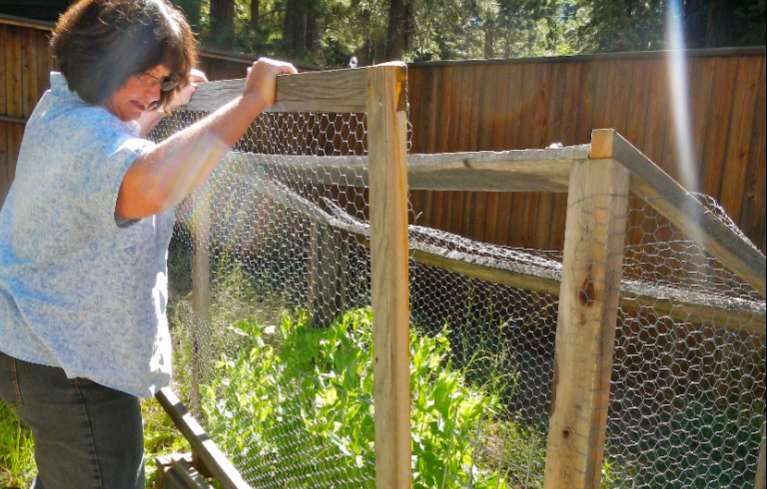
Toni Sopocko closes the bin to her vegetable garden. Photos/Kathryn Reed

Toni Sopocko closes the bin to her vegetable garden. Photos/Kathryn Reed

Publisher’s note: This is one in a random series of stories about gardening in Lake Tahoe.

By Kathryn Reed

Growing vegetables doesn’t require a large plot or a ton of hours each day. Just ask Toni Sopocko.

Her husband, Steve, built her two structures that sit in the sunniest spot of their Tahoe Mountain backyard.

To keep the rodents out – which have been more of a problem since the 2007 Angora Fire – mesh was first put on the ground. Then Steve Sopocko used scrap wood from projects – mostly old decks he tore up – as the frame for the two gardening boxes. Chicken wire covers the four sides and top. Even though it’s enclosed, voles can squeeze through the wire.
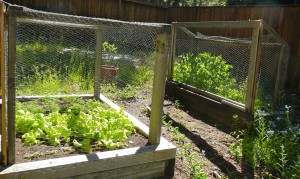
Enclosed veggie boxes help keep out critters.

Enclosed veggie boxes help keep out critters.

Toni Sopocko got into gardening somewhat on a whim about three years ago.

“It sounded like fun and I wanted to grow stuff,” she said.

Sometimes not all of the lettuce makes it inside for the daily salad. It’s sweet right out of the ground. Tender to the touch, it almost seems like a delicate flower that should be treated with kid gloves, even revered. It would be easy to sit and munch the morning away.

“I pinch off the leaves as I need them,” Sopocko said of the lettuce. She said the key is to snip off the flowers so the lettuce will keep growing.

Nothing goes to waste. Eventually some of it will end up in their mulch pile.

Good soil is a common thread among those who garden successfully in the Lake Tahoe Basin. The Sopockos have a connection where they can get horse manure in the fall that is added to the soil.

Still, Sopocko says their gardening is more trial and error than science.

She tried peppers, but they didn’t work. Not enough intense sun where she lives on the South Shore. Zucchini has done well in the past, but it’s not something they both enjoy.

Sopocko admits the warm spring led her to start planting sooner than she should have. The lettuce is from seeds that she put in rows. When some didn’t come up she added more seeds.

Next to the lettuce are carrots. The green stalks are well above ground, but the edible orange part is in the formative stage. She pulls one out to show just how tiny it is at this stage. If the recognizable stalk weren’t there, it would be hard to know that was a carrot at the other end.

It will be a little while before they have fresh carrots in their salads. This is much to the chagrin of her dogs who like carrots right out of the ground.

Carrots and lettuce will be harvested at different times.

Carrots and lettuce will be harvested at different times.

The snow peas will be ready in the next couple weeks. They are creeping up the devices she has stuck in the dirt so they don’t just lay on the ground. Stir fries are a common use for these edibles. She also has English peas in this box. But like the other produce, sometimes it never makes it into the kitchen.

In a nearby planter blueberries are being grown. This is a first for Sopocko. She figured she could risk the $1.99 it cost her to see if it would bear fruit.

Sopocko chooses what to plant based in part on what will grow in the limited sunlight her beds get each day, veggies without potassium for health reasons, and things she knows will be successful in Tahoe’s climate.

In the fall she plans to plant garlic that will then be ready in the spring.

To make things easy she has a timer on a hose that sits between the two veggie boxes. Each day it comes on for 10 minutes.

“Every other day or so I pull weeds. I don’t do anything other than pick (veggies) now,” Sopocko told Lake Tahoe News. “It’s not a lot of work when it’s this small.”

Even these two boxes, which aren’t more than 4 feet by 2 feet, produce enough lettuce that the Sopockos are giving it away because it’s too much for the two of them.



Letter: Heavenly helps at Bread & Broth

To the community,

Representing Heavenly Mountain Resort, Heavenly Tahoe Vacations sent a crew from its reservations office to work side by side with Bread & Broth volunteers to help serve 108 meals to the guests attending the evening dinner on June 16.

Returning for another Adopt A Day dinner serving were Kari Natividad, Connie Yee, Michele Beall, Trace Kment and Mary Hajdas.

These experienced sponsor volunteers were “glad to come back and have this opportunity to serve” according to Kment. Natividad also added, “It’s fun to come in together from the office.”

The reservations crew members kept busy and helpful with bagging “give aways”, line serving, setting up and handing out desserts and drinks, and cleanup.

Bread & Broth would like to acknowledge and thank Heavenly Mountain Resort for their financial sponsorship and providing excellent volunteers who are always helpful, positive and enthusiastic. Our B&B volunteers and our grateful dinner guests are truly thankful for Heavenly’s monthly sponsorships which on average feed over 90 needy members of the Lake Tahoe South Shore community.

To help B&B as a donor or sponsor, contact me at 530.542.2876 or carolsgerard@aol.com.

Carol Gerard, Bread & Broth


‘Crazy Club’ authors hosting event at library

“Crazy Club” authors Christie Higman Rassuchine and Robyn Lindner, two gals who grew up in Tahoe and wrote the books based on their own Crazy Club in elementary school, will be having a Crazy Club Open Mic Morning on Aug. 2 starting at 10:30am.

They will read a portion of their newest book, “Larry’s Lucky Charm”.

Come dressed in a creative costume. Performing by yourself, with your friend, sister or brother is also encouraged. Sing a song, tell a joke, dance a jig, recite a poem, play an instrument — whatever.

The event is free at the South Lake Tahoe Library, 1000 Rufus Allen Blvd.

For more info, email tahoe.programs@gmail.com.


More options for buyers of high-end housing

By Hudson Sangree, Sacramento Bee

For home buyers in the region, it’s better at the top.

Anyone shopping for a home today under $500,000 is likely to find frustratingly few choices. Although inventory has doubled from historic lows last year, the region’s most popular price range – roughly $200,000 to $450,000 – remains a strong seller’s market with scant supply compared to demand.

Buyers who can afford a home priced at more than $500,000 are apt to encounter better selection, time to shop and room to negotiate. That’s because supply in the higher price ranges is much greater relative to the number of purchasers.

What’s different today is the extremely tight supply of homes at prices most people can afford.

In May, Sacramento, Placer, El Dorado and Yolo counties combined had only about 1.6 months’ worth of inventory in the $200,000 to $300,000 price range. By contrast, there were 3.8 months of inventory in the $500,000 to $750,000 category and a year’s worth in the $1 million-plus bracket.

The figures reflect the time it would take to sell all homes on the market in those price ranges. Anything less than three months of inventory is considered a seller’s market, while four to six months of inventory signals a more balanced and healthy market.

Read the whole story


Seniors turning to social media coaches

By Anita Creamer, Sacramento Bee

Jim Patterson needed help. His granddaughter had tagged him in a photo of the two of them that she posted on his Facebook account, and he didn’t know what to do. So the 92-year-old retired carpenter, who lives in a Placerville retirement community, checked in with a social networking coach.

“If you’ll just scroll down,” said Blair Gregorvich, a Visiting Angels caregiver who has given computer skills classes to older adults in El Dorado County. “Now click on ‘Write a comment,’ and we’ll add one.”

“I never put any comments in, because I forget how to work it,” said Patterson.

Patterson was seated at the desktop computer in the corner of his living room, with Gregorvich peering over his shoulder while he typed in a few words.

“Now hit ‘Enter’,” said Gregorvich.

“That’s what I forget all the time,” said Patterson.

A growing list of the region’s seniors centers and church groups offer computer classes so older adults can learn to log on to the Internet, set up email accounts, research genealogy and even sign up for Facebook or use Skype to converse with faraway relatives. But what happens when seniors go home and sit down in front of their own computers, alone?

Read the whole story


Report: Climate change to cost U.S. billions

By Sharon Begley, Reuters

NEW YORK — Annual property losses from hurricanes and other coastal storms of $35 billion; a decline in crop yields of 14 percent, costing corn and wheat farmers tens of billions of dollars; heat wave-driven demand for electricity costing utility customers up to $12 billion per year.

These are among the economic costs that climate change is expected to exact in the United States over the next 25 years, according to a bipartisan report released on Tuesday. And that’s just for starters: The price tag could soar to hundreds of billions by 2100.

Commissioned by a group chaired by former New York City Mayor Michael Bloomberg, former Secretary of the Treasury and Goldman Sachs alum Henry Paulson, and environmentalist and financier Tom Steyer, the analysis “is the most detailed ever of the potential economic effects of climate change on the U.S.,” said climatologist Michael Oppenheimer of Princeton University.

The report lands three weeks after President Obama ordered U.S. regulators to take their strongest steps ever to reduce greenhouse gas emissions, including requiring power plants to cut carbon dioxide emissions to 30 percent below 2005 levels by 2030.

Read the whole story


Winery looking for artists to turn barrels into art

Truckee River Winery is calling artists to turn retired barrels into works of art.

We painted barrels will be auctioned off at the end of the summer, with the proceeds going to local charities. Artists interested in the Cask as Canvas project have until July 4 to fill out an application.

Registration is free and each contestant will be provided with a 55 gallon oak barrel. Artists are encouraged to paint the barrel on site. Barrels must not be modified from their original shape. Each artist will have an unveiling reception at the tasting room; the barrel and additional works by the artist will be on display for one week. Barrels will remain at the tasting room.

All contestants will receive a $400 gift certificate good for any item on sale at Truckee River Winery.