Ski report: Final turns

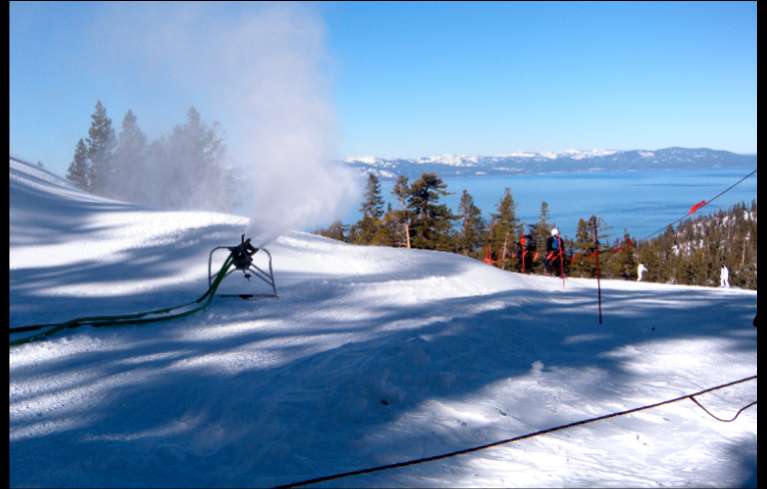
ski report logoSpring conditions prevail on this final weekend of winter operation for a few remaining resorts.

Kirkwood, Mt. Rose and Squaw are open through Sunday.

Apline will close next weekend. Mammoth is open into May.

Here is the April 20 ski report.

— Curtis Fong


NHP cracking down on drivers using phones

April is National Distracted Driving Month and the Nevada Highway Patrol will be implementing a zero-tolerance enforcement period April 22-26.

Troopers around the Silver State continue to observe motorists texting, talking, and reading non-voice communications despite the fact this behavior became illegal more than 15 months ago.

In 2012, the Nevada Highway Patrol issued 12,275 citations statewide to motorists observed breaking this law. The enforcement activity for the first quarter of 2013 appears to be similar to last year’s statistics’ 2,851 citations have already been issued statewide during the first three months of this year.


Ski resorts would sue USFS for water rights

By Anne Knowles

Only a handful of people showed up for a local open house conducted this week by the U.S. Forest Service to get feedback on its controversial stance on water rights for ski resorts.

The Thursday afternoon meeting in the Forest Service office in South Lake Tahoe followed earlier and similarly attended meetings this week in Denver and Salt Lake City. A fourth open house is scheduled next week in Washington, D.C.

The water rights issue came to a head last year in Colorado after the National Ski Areas Association filed suit against the federal agency, saying that a clause in its permits to operate ski resorts on Forest Service land resulted in an unconstitutional seizure of property.

Heavenly's robust snowmaking requires several acre-feet of water each year. Photo/LTN file

Heavenly’s robust snowmaking requires several acre-feet of water each year. Photo/LTN file

The clause requires that water rights acquired by the business to operate the ski resort to be held in the name of the United States.

“The industry says water rights are a state issue and a significant asset,” Jim Pena, associate deputy chief with the Forest Service, told Lake Tahoe News at the open house. “We see it as an issue of permit compliance.”

In December, the U.S. District Court in Colorado decided the case and threw out clauses included in 2011 and 2012 permits, saying the Forest Service failed to follow administrative procedure while developing them, which requires a public comment process.

Those permit clauses follow a series of evolving provisions starting in 1982 that have resulted in a mishmash of water rights – 168 owned by the ski resort operators, 65 owned by the Forest Service and 10 owned jointly — throughout the 116 Western ski resorts located on Forest Service land.

The issue is most significant in Colorado where 22 ski resorts own 112 water rights. In California, 25 resorts own three water rights, the Forest Service owns 14 and one is jointly owned. In Nevada, there are three resorts with one right each owned by the ski resorts and Forest Service, according to the USFS.

So the Forest Service is now trying to follow procedure and craft a new clause that would still require water rights to be placed under Forest Service control because the agency says it’s important to keep the water connected to the land.

“Our objective is to find a way to make sure that the water is available through the life of the permit,” said Pena. “The local community is dependent on the ski area and we want to make sure they are viable.”

The agency’s concern is if ski resorts change hands or go bankrupt, the water rights, which can be sold separately and may not be available for future operators.

The NSAA says those concerns can be addressed without transferring water rights to the government.

“First, the ski area can be required for any future project to demonstrate it has sufficient water or will obtain sufficient water,” said Geraldine Link, director of public policy for the Lakewood, Colo., association. “Second, upon sale, the current owner would offer an option that water rights would go to the buyer.”

The option, the exact details of which is to be determined, would provide that the resort buyer have the first shot at buying the seller’s water rights at fair market value. In the case of a bankruptcy or liquidation of the business, the option would be offered first to the local community or government and if it declined then to the USFS.

“That’s the way to keep water with ski resort without taking property,” said Link.

The ski resorts, which are affected in varying ways, are standing with the NSAA.

“We’ve been following the lead of the NSAA,” said John Rice, general manager at Sierra-at-Tahoe, which is located on Forest Service land. “It isn’t a big issue for us. We have the right for recreational use and for fire protection and domestic use. We have three wells. … We don’t have much of a snowmaking operation so it’s just not much of an issue here.”

Representatives from Vail Resorts and Squaw-Alpine did not return phone calls.

The USFS is taking public comment now via email at skiareawaterrights@fs.fed.us. The agency plans to publish a proposed clause in the Federal Register in August, followed by a 60-day public comment period. A final clause will be published in February 2014 and included in permits thereafter.

“I’m optimistic we’ll craft a proposal that’s different and clear and easy to implement,” said Pena.

But if it still requires water rights to be acquired in the name of the United States, the industry won’t be happy.

“If the Forest Service issues a clause that requires giving up water rights, the association will challenge it in court,” said Link.


Robert Plant to headline High Sierra Music Fest

The 23rd annual High Sierra Music Festival announces a headliner whose legendary status is unprecedented in the history of the festival. The voice of Led Zeppelin and a member of the Rock & Roll Hall of Fame, Robert Plant will appear with his latest outfit, the Sensational Space Shifters.

The band will draw from Plant’s long career and focus on his years with Led Zeppelin. With a career spanning more than 40 years, Plant is regarded as one of the most important and influential singers and artists in the history of music.

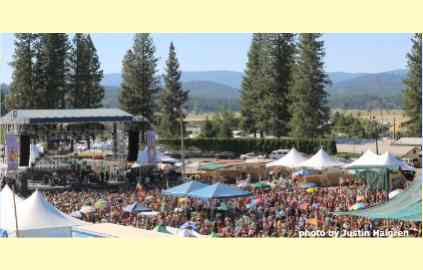
This will be the 23rd High Sierra Music Festival. Photo/Justin Halgren

This will be the 23rd High Sierra Music Festival in Quincy. Photo/Justin Halgren

This performance will be on the first night of the Festival, July 4. The festival is July 4-7 at the Plumas-Sierra County Fairgrounds in Quincy.

The festival lineup includes Primus, Thievery Corporation, moe., Steel Pulse, Leftover Salmon, The Greyboy Allstars, Gramatik, Emancipator, The John Scofield Überjam Band, The Infamous Stringdusters, Lee Fields & The Expressions, Allen Stone, North Mississippi Allstars, Pimps of Joytime, Lord Huron, White Denim, Carolyn Wonderland, Rubblebucket, The Barr Brothers, Papadosio, The M Machine (Live), Moksha Featuring Skerik & Jennifer Hartswick, Orgone, Peter Apfelbaum & Sparkler, Sarah Jarosz, Anders Osborne, The Hot 8 Brass Band, Mike Dillon Band, Aoife O’Donovan, Houndmouth, Lukas Nelson & Promise of the Real, The Revivalists, Futurebirds, Nataly Dawn, Silent Frisco, Tumbleweed Warriors, The Melodic, The Whiskey Sisters, Miner, Octopus Nebula, The David Mayfield Parade, Fruition, The California Honeydrops, Jelly Bread, Scott Pemberton, Living Folklore, Artists-at-large Skerik and Jennifer Hartswick, and more to be announced.

For all details on tickets, camping and parking, go online.


Opinion: Legislators attempting to bankrupt taxpayers

By Lloyd Billingsley

Now that they have filed their income tax returns and written their checks, many Californians are starting to realize that government greed is no laughing matter.

In November, California voters approved Proposition 30, raising the state’s top income tax rate to 13.3 percent, an increase of more than 29 percent. The state sales tax now ranges from 7.5 percent to 10 percent, the highest statewide rate in the nation.

The tax increases are supposed to raise an additional $6 billion in revenue. But that’s not enough for California politicians. They want more.

The California State Board of Equalization, for example — a government agency that collects sales, fuel, alcohol, tobacco and “use” taxes — recently approved a 9 percent increase in the excise tax on gasoline, raising it to 39.5 cents a gallon effective July 1. That’s a large increase in a state where businesses and workers depend heavily on their cars and gas prices already average more than $4 a gallon.

There’s more coming from the Legislature. Assembly Bill 1002 would raise the $46 basic annual vehicle registration and renewal fee by $6, supposedly to encourage greater use of bicycles, buses and other transportation modes with smaller carbon footprints than cars.

Senate Bill 700 would require Californians to pay 5 cents for every paper and plastic shopping bag they get at the store, supposedly to raise money for cities and parks.

SB622 would tax consumers a penny an ounce when they purchase bottled tea, sport drinks, energy drinks and other beverages. That would add nearly $1 to the price of a six-pack of 16-ounce sodas. The excuse for this is to fight childhood obesity and dental disease.

SB391 would impose an additional $75 state fee on top of existing county charges for recording various legal documents in real estate transactions, such as deeds, liens and so forth. This measure will supposedly support affordable housing.

In the war against gun violence, AB760 would impose a 5 cents a bullet sales tax on ammunition purchases, on top of the existing sales tax. The supposed purpose of this new tax is to fund expanded mental health services.

Under SB782, bars and restaurants that serve alcoholic beverages and offer adult entertainment, such as exotic dancing, would get slapped with a $10 a person fun tax — or is it a sin tax? These funds supposedly would be used to prevent sexual assault and provide treatment for victims.

California politicians also are intent on making it more expensive and cumbersome to operate businesses in the Golden State, even as the state’s unemployment rate stands at 9.6 percent, one of the highest in the nation.

SB254, the Used Mattress Recovery and Recycling Act, seeks to eliminate the blight of illegally dumped mattresses. It would do so by requiring mattress manufacturers to submit recovery and recycling plans to the state, with the goal of a 75 percent compliance rate by 2020. The bill would require mattress retailers to pick up the old mattress when they deliver a new one, and would be funded by a “quarterly administrative fee” paid by manufacturers (which, of course, in the real world would undoubtedly be passed on to consumers).

The authors of these proposed measures are unable to predict with any certainty how much revenue they would bring in if they became law. But the proposals make it clear that the hundreds of millions of dollars that California already spends on affordable-housing, mental health and other government programs will never be enough. The politicians will always want more.

Onerous regulations, false promises of fiscal responsibility and the relentless quest for more revenue have become hallmarks of California government.

Lloyd Billingsley is communications counsel for the Independent Institute in Oakland. This column first appeared in the Los Angeles Times.


Truckee meeting about trail connection

There will be a meeting May 6 from 5:30-7pm to talk about the Tahoe Donner Trail.

Town officials want the public’s input about the final alignment to connect Tahoe Donner at Northwoods Boulevard by Coyote Moon Golf course to downtown Truckee at Bridge Street.

The meeting will be at the Tahoe Donner Club House, 11509 Northwoods Blvd., Truckee.

For more info, call Jessica Thompson at (530) 582.2938.


West Shore traffic delays likely this weekend

Caltrans is alerting motorists to expect some short delays this weekend on Highway 89 on the West Shore for utility relocation work.

Caltrans granted a request by a contractor for Southwest Gas to continue work this weekend from Pine Street in Tahoma to Grimsel Pass Road in the Tahoe Pines area in order to stay on schedule with the project. The work is scheduled to go on around the clock.

Motorists can expect delays of about 5 minutes in one-way traffic control areas.


Both Boston bombing suspects in custody

By Katharine Q. Seely, William K. Rashbaum and Michael Cooper, New York Times

BOSTON — The teenage suspect in the marathon bombings, whose flight from the police after a furious gunfight early Friday morning sparked an intense manhunt that virtually shut down the entire Boston metropolitan area all day, was taken into custody Friday night after the police found him hiding in a boat in the backyard of a house in Watertown, Mass., a senior law enforcement official said.

Two law enforcement officials said that the suspect, Dzhokhar A. Tsarnaev, 19, was found in a boat parked behind a house there. It was not immediately clear what condition he was in.

A police officer at the scene said that the man was covered in blood when he was captured. An ambulance was already there. The Boston Police Department announced on Twitter: “Suspect in custody. Officers sweeping the area.”

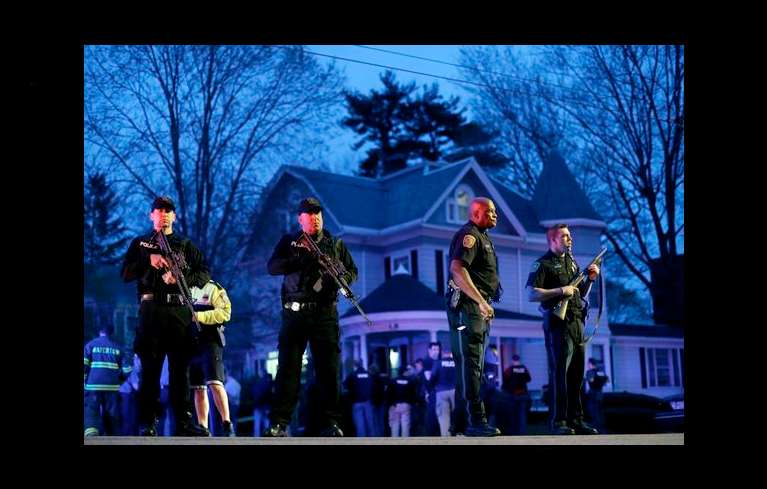
Police officers guard the entrance to Franklin Street where there was an active crime scene search for the suspect in the Boston Marathon bombings. Photo/Matt Rourke/Associated Press

Police guard the entrance to Franklin Street where there was an active search for the suspect in the Boston Marathon bombings. Photo/Matt Rourke/Associated Press

And Mayor Thomas M. Menino posted, “We got him.”

As around 30 law enforcement officers — wearing helmets — walked away from the scene of what had been a tense standoff only minutes earlier, neighbors who had gathered on an adjacent street applauded and shouted, “Thank you! Thank you!”

The apparent discovery of Dzhokhar Tsarnaev came just over 26 hours after the FBI circulated pictures of him and his brother and called them suspects in Monday’s bombings, which killed three people and wounded more than 170. The case unfolded quickly — and lethally — after that. Law-enforcement officials said that within hours of the release of the pictures, the two men shot and killed a campus police officer at the Massachusetts Institute of Technology, carjacked a sport utility vehicle, and led police on a chase, tossing several pipe bombs from their vehicle.

Then, early Friday morning, the men got into a pitched gun battle with the police in Watertown in which more than 200 rounds were fired, and a transit police officer was critically wounded. When the shootout ended one of the suspects, Tamerlan Tsarnaev, 26, a former boxer, had been shot and fatally wounded. He was wearing explosives when he was killed, several law enforcement officials said. But his younger brother, Dzhokhar Tsarnaev, managed to escape — running over his brother as he sped away, the officials said.

The disappearance of Dzhokhar Tsarnaev, and fears that he could be armed with more explosives, set off one of the most intense manhunts in recent memory. Swat teams and Humvees rolled through quiet residential streets. Military helicopters hovered overhead. Bomb squads were called to several locations. And Boston — New England’s largest city — was essentially shut down.

Transit service was suspended all day. Classes at Harvard University, the Massachusetts Institute of Technology, Boston University and other area colleges were canceled. Amtrak canceled service into Boston. The Red Sox game at Fenway Park was postponed, as was a concert at Symphony Hall. Gov. Deval Patrick of Massachusetts urged residents to stay behind locked doors all day — not lifting the request until shortly after 6pm, when transit service in the shaken, seemingly deserted region was finally restored.

As the hundreds of police officers fanned out across New England looking for Dzhokhar Tsarnaev, investigators tried to piece together a fuller picture of the two brothers, to determine more about the bombing at the Boston marathon.

The older brother, Tamerlan Tsarnaev, was interviewed by the FBI in 2011 when a foreign government asked the bureau to determine whether he had extremist ties, according to a senior law enforcement official. The government knew that he was planning to travel there and was afraid that he might be a risk, the official said.

The official would not say which government made the request, but his father said that he had traveled to Russia in 2012.

“They had something on him and were concerned about him and him traveling to their region,” said the official. The F.B.I. conducted a review, examining Web sites that he had visited, trying to determine whether he was spending time with extremists and ultimately interviewing him. The FBI concluded that he was not a threat. “We didn’t find anything on him that was derogatory,” the official said.

Now officials are scrutinizing that trip, to see if he might have met with extremists while abroad.

The rapid developments began Thursday night, when the two men, of Chechen background, are believed to have fatally shot a Massachusetts Institute of Technology police officer, Sean Collier, 26, in his patrol car, the Middlesex County district attorney’s office said. Soon after that, a man was carjacked nearby by two armed men; when he was released he told investigators that the men who took his vehicle said they were responsible for marathon bombings, a law enforcement official said. The police went off in search of his car, and a frenzied chase began.

The police and the suspects traded gunfire and “explosive devices were reportedly thrown” from the car by the suspects, the district attorney’s office said. A transit police officer, Richard H. Donohue, was shot and critically wounded. After a pitched gun battle with the police, the older brother, Tamerlan Tsarnaev, was fatally shot; the younger brother, Dzhokhar, managed to get away.

One law enforcement official said Dzhokhar Tsarnaev was wounded, and two other officials said the authorities had tracked him at some point during the manhunt by his blood trail.

An uncle of the men, Ruslan Tsarni, who lives in Montgomery Village, Md., told reporters that he was ashamed of their actions, bitterly calling them “losers” and sternly denouncing the bombings. And he urged the surviving brother to turn himself into the authorities.

“I say Dzhokhar, if you’re alive, turn yourself in and ask for forgiveness,” said Tsarni, who said that his family had been estranged from theirs, and that their father, who recently moved back to Russia, had worked “fixing cars” in America.

Tsarni said that the family had moved to Cambridge in 2003 from Kyrgyzstan.

For much of Friday a virtual army of heavily armed law enforcement officers went through houses in Watertown, outside of Boston, one by one in a search for Dzhokhar Tsarnaev. The police had blocked off a 20-block residential area and emphatically urged people there to stay inside their homes and not answer their doors.

The Boston police commissioner, Edward Davis, said, “We believe this to be a man who’s come here to kill people, and we need to get him in custody.”

In Washington, as well as in the Boston area, law enforcement and counterterrorism officials were struggling to determine whether the two brothers had any accomplices still at large and whether they had any connections to foreign or domestic terrorist organizations. One law enforcement official said that the FBI and police were seeking “a number of people with whom we would like to speak in furtherance of the investigation.” Asked if any were suspected accomplices or co-conspirators, the official would say only that investigators were “not ready to classify anyone yet.”

Several law-enforcement officials, asked about the tactics apparently employed by the brothers, said that despite the devastation they are suspected of causing at the marathon, the death of one police officer and grievous wounding of another, their planning appeared, at least at this point, to be flawed. “They didn’t practice tradecraft,” said one official, a veteran counterterrorism investigator who has been briefed on the case. “Listen, I just don’t understand how anybody could do something like that and basically go home and expect that they wouldn’t get caught.”

As the manhunt grew in intensity, law enforcement officials throughout New England tried to chase down leads. After the authorities in Boston notified transit police officials that there was a possibility that Dzhokhar Tsarnaev had boarded the last Amtrak train from Boston bound for New York City early Friday, the train was searched between stations in Connecticut, according to an official with knowledge of the matter. Investigators reviewed video surveillance footage from the stations in Providence, R.I., New Haven and New London, Conn., to make sure that he had not gotten off the train before it was stopped.

The last place he was seen was Watertown, where the two men got into a pitched gun battle with the police.

During that exchange, a transit police officer was shot and critically wounded. The injured officer, identified as Richard H. Donohue, was taken to Mount Auburn Hospital, where he was listed in critical condition Friday morning.

When he arrived at the hospital, the officer had nearly bled to death from a gunshot wound to his right leg, said a person familiar with his treatment. The hospital’s trauma team gave him a blood transfusion and cardiopulmonary resuscitation, and got his blood pressure back up, but he was still on a ventilator, the person said.

A Watertown resident, Andrew Kitzenberg, 29, said he had looked out his third-floor window to see two young men of slight build in jackets engaged in “constant gunfire” with police officers. A police S.U.V. “drove towards the shooters,” he said, and was shot at until it was severely damaged. It rolled out of control, Mr. Kitzenberg said, and crashed into two cars in his driveway.

The two shooters, he said, had a large, unwieldy bomb that he said looked “like a pressure cooker.”

“They lit it, still in the middle of the gunfire, and threw it,” he said. “But it went 20 yards at most.” It exploded, he said, and one man ran toward the gathered police officers. He was tackled, but it was not clear if he was shot, Kitzenberg said.

The explosions, said another resident, Loretta Kehayias, 65, “lit up the whole house.” She said, “I screamed. I’ve never seen anything like this, never, never, never.”

Meanwhile, Kitzenberg said the other man got back into his car, turned it toward officers and “put the pedal to the metal.” The car “went right through the cops, broke right through and continued west.”

The two men left “a few backpacks right by the car, and there is a bomb robot out there now,” he said.

Tamerlan Tsarnaev was critically injured with multiple gunshot wounds and taken to Beth Israel Deaconess hospital in Boston, where he was pronounced dead at 1:35am, officials said.



USFS prepping Tahoe sites for summer

The U.S. Forest Service Lake Tahoe Basin Management Unit will soon begin the annual process of opening recreational facilities around the Lake Tahoe Basin. Campgrounds, beaches, and forest roads generally open in mid-May, weather permitting. The Taylor Creek Visitor Center and the Tallac Historic Site open Memorial Day weekend.

Before recreation sites can open to the public, the Forest Service must hire staff and clean up from winter, remove safety hazards and wait for the danger of a freeze to pass before turning on water systems.

The Forest Service is also working to repair damage from recent copper thefts at 15 recreation sites around the basin. Although crews are working hard to avoid public impact, the costly crime may cause a delay in opening some sites. The agency is replacing the stolen pipes with a non-copper material to eliminate the potential for vandalism in the future.

As a reminder, there is no parking, trash removal, or restroom facilities available until the recreation sites officially open. Until the parking lots open, please park vehicles off the roadway, avoid parking on vegetation, and do not block access gates. Pack out all trash and where pets are allowed, clean up after your animal.

For a complete list of projected opening dates go online or call (530) 543.2694.


Mountain lion spotted in S. Tahoe meadow

A mountain lion has twice been seen this week in the meadow area between Black Bart Avenue and Al Tahoe Boulevard in South Lake Tahoe.

“In both instances, the mountain lion appeared to be calm and did not exhibit any aggressive behavior,” Lt. Robert Gerat with El Dorado County Animal Services said in a statement.

The first sighting was April 16 at approximately 2pm when an individual saw the mountain lion walking across the meadow from a South Tahoe Public Utility District building toward Lake Tahoe Community College. The second sighting was reported in the meadow April 18 at approximately 4:30pm when an individual was walking their dogs and saw the mountain lion lying in the field about 60 yards away.

In neither case did the mountain lion approach the individuals.

The California Department of Fish and Wildlife recommends the following regarding mountain lions:

• Do not hike, bike or jog alone. Go in groups, with adults supervising children.

• Avoid hiking or jogging when mountain lions are most active – dawn, dusk and at night.

• Do not leave small children or pets outside unattended.

• Do not approach a mountain lion.

• If you encounter a mountain lion, do not run; instead, face the animal, make noise and try to look bigger by waving your arms or other objects. Pick up small children.

• If attacked, fight back.

• If a mountain lion attacks a person, immediately call 911.