LTCC has momentum to alter tuition rates

By Kathryn Reed

Lake Tahoe Community College officials have one week to come up with ideas that would satisfy the state Senate Committee on Education’s concerns regarding the college’s quest to allow some Nevada students to pay tuition at California rates.

The first hearing before the senate committee was April 24, with a return trip to Sacramento planned for May 1.

“I am encouraged that the Senate Committee on Education is willing to work with me on this important issue and will look forward to exploring legislative and non-legislative options for extending in-state tuition costs to all Lake Tahoe Community College District students in the Lake Tahoe Basin,” state Sen. Ted Gaines, R-Rocklin, told Lake Tahoe News. “I will do all I can to work on a bipartisan basis to satisfy my colleagues’ concerns when Senate Bill 329 is up for a vote next week.”

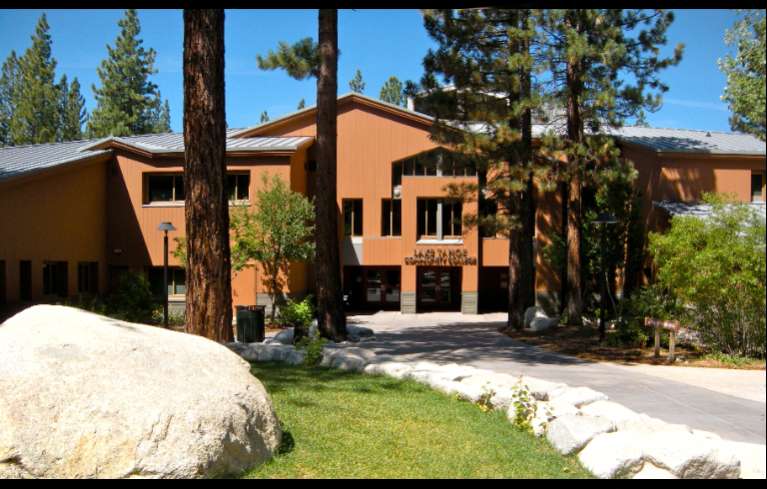
Lake Tahoe Community College would like to create a good neighbor tuition policy for Nevadans at Lake Tahoe. Photo/LTN file

Lake Tahoe Community College would like to create a good neighbor tuition policy for Nevadans at Lake Tahoe. Photo/LTN file

Gaines authored the legislation.

This all came about when in June 2011 Nevada’s board of regents rescinded the good neighbor policy that allowed some California students not to pay out of state tuition. They did this because it was determined it was costing Nevada $6 million a year.

California then said no discounts for Nevada students.

A full-time student at LTCC pays about $1,370 a year, while a non-California resident pays $7,600 for that same education. While it’s normal for all institutions to charge more for out-of-state or foreign students, the problem comes when colleges are in border towns like South Lake Tahoe.

The state line is 3.2 miles from LTCC and Whittell High School in Zephyr Cove is about eight miles away. For an area that keeps touting itself as one community, one economy, the varied education expenses for the local college contradict those beliefs.

“They understand Tahoe is a unique community and we want to educate our citizenry,” LTCC President Kindred Murillo said of the lawmakers. “We want fairness.”

Only Nevada students living inside the Lake Tahoe Basin would be allowed the discounted rated. And the legislation is specific to LTCC.

Murillo told Lake Tahoe News she hopes to get SB329 through the Legislature so on July 1 the college would have new rates for some Nevada students.


Data ties human illness to farm antibiotics

By Eliza Barclay, NPR

Are the antibiotics the livestock industry uses on animals responsible for antibiotic-resistant infections in people? Bacteria are notoriously hard to follow from farm to fork, but more pieces of the puzzle are coming together that suggest the answer is yes.

Earlier this year, government researchers published data on tests conducted on supermarket meat samples gathered in 2011 by the National Antimicrobial Resistance Monitoring System. The tests detected several nasty bugs that cause disease in humans — salmonella, Campylobacter and E. coli.

As if the presence of these microbes weren’t enough, the researchers found that a lot of the bacteria were strains resistant to antibiotics, making them even more dangerous for humans. The implications were significant — that the bacteria had become resistant to antibiotics back at the farm because farmers were overusing them.

The findings, released through the joint program of the Food and Drug Administration, the Department of Agriculture and the Centers for Disease Control and Prevention, got little attention when they were published in February. But this week, the Environmental Working Group, which opposes some of the livestock industry’s use of antibiotics, analyzed the government data and highlighted some of their startling implications in a report.

EWG researchers found that 53 percent of raw chicken samples were contaminated with antibiotic-resistant E. coli. Resistant salmonella was also common on the meat samples: Of all the salmonella found on the chicken samples, some 74 percent were antibiotic-resistant. And 26 percent of the chicken tested positive for resistant Campylobacter.

“Not all of the salmonella or E. coli that makes us sick is coming from meat,” says Dawn Undurraga, a nutritionist at EWG and the lead author of the report. “But a large portion of it is coming from the meat.”

Lance Price, an expert on antibiotic resistance and a professor at George Washington University who reviewed the EWG report, concurs.

“This report isn’t fear mongering,” says Price. “Food is an underappreciated potential route of exposure to drug-resistant bacteria. And it’s a huge potential source for emergence of the next true superbug.”

Mike Apley, a veterinarian at Kansas State University who specializes in cattle raised in feedlots, has frequently defended the livestock industry’s use of antibiotics for disease prevention and treatment. But he agrees that the new data suggest that the appearance of drug-resistant strains of harmful bacteria on meat is a problem.

“We need to continue to look at how resistant E. coli, salmonella and Campylobacter are making people sick,” he tells NPR. “It would be very reasonable to look at that from the use of antibiotics for food animals.”

Advocacy groups like EWG say the biggest problem is the industry’s use of antibiotics for growth promotion, feed efficiency and prevention of disease.

As Andrew Gunther, program director for Animal Welfare Approved, wrote this month: “The problem for humans is that by allowing intensive livestock farms to routinely expose bacteria to regular sub-therapeutic levels of antibiotics … we are actually providing the ideal conditions for bacteria to mutate and become resistant to their effects.”

And resistance can jump from animal pathogens to human pathogens.

Many scientists and food advocacy groups are pushing for tighter regulations on the industry and more details about how it uses antibiotics. That includes Price, who says that the meat production system has grown too dependent on antibiotics to keep animals healthy. Ultimately, he says, antibiotics are a crutch for a system that relies on confining large numbers of animals in a way that increases their susceptibility to disease.

“If you have a food animal production system that makes animals sick in a predictable way, you need to change the system,” says Price.


Writing contest winner receives 2-week trip

Teens from across the country may enter “My Epic Adventure” essay contest for a chance to receive an all expenses paid 14-day Epic Sierra Adventure.

Two winners will be chosen.

Royal Robbins is funding the prize for the American River Conservancy contest.

More information is online.


University jazz band to play at STHS

The University of the Pacific Jazz Band will be performing a free concert at South Tahoe High School on Friday afternoon.

This ensemble, under the direction of Patrick Langham the head of the Dave Brubeck Institute, is stopping off on their way to compete at the Reno Jazz Festival.

They are a top quality band playing world class jazz. Stop on by for what will be a GREAT concert.

The free concert in the student union starts at 3pm.


Caesars restructuring operations to stay solvent

By Devin Banerjee and James Callan, Bloomberg

Caesars Entertainment Corp., the largest owner of U.S. casinos, said it’s creating a venture that will raise as much as $1.2 billion to finance growth investments and bolster the parent company’s balance sheet.

The venture, Caesars Growth Partners LLC, intends to buy a stake in Planet Hollywood Resort & Casino in Las Vegas and interests in the Horseshoe Baltimore casino project currently under development, according to a statement released April 23. Apollo Global Management LLC and TPG Capital plan to invest $500 million in the entity, combining the new investment with well-performing holdings in a structure less constrained by debt. Caesars said it expects to own a stake of at least 57 percent in the venture’s earnings.

Caesars Entertainment Corp. Chief Executive Officer Gary Loveman said, “The transaction is an important step in our ongoing efforts to improve the company’s balance sheet and position ourselves to make strategic investments.”

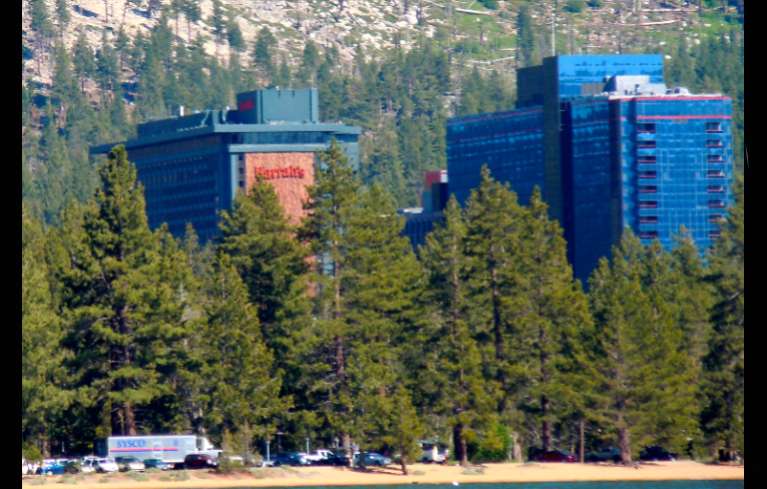
Caesars Entertainment, which owns two properties in Stateline, has had financial problems for years. Photo/LTN file

Caesars Entertainment, which owns two Statelin properties, has had financial problems for years. Photo/LTN file

Caesars is the parent company of Harrah’s Lake Tahoe and Harveys in Stateline.

Caesars, burdened by more than $20 billion in debt after the 2008 leveraged buyout by Apollo and TPG, has considered moves to strengthen its capital structure for the past five years. The Las Vegas-based company, which went public in 2012, didn’t want to sell more stock because it would dilute shareholders’ interests, and instead decided to sell growth-oriented holdings to raise immediate cash while still retaining a stake in those assets.

“The transaction is an important step in our ongoing efforts to improve the company’s balance sheet and position ourselves to make strategic investments,” Loveman said in the statement.

Caesars stock has more than doubled in value this year.

Caesars, bought by Apollo and TPG for $30.7 billion, has been losing money since the global credit crisis as a glut of hotel rooms led to the biggest Las Vegas gambling slump on record. The company earlier this year had its debt rating cut by Moody’s Investors Service to Caa2, as little as two levels above default. The casino operator may seek to extend its maturities at the expense of lenders, the ratings company said, giving some creditors a choice of immediate losses or the risk of default.

The company said in February that its fourth-quarter loss more than doubled because of costs related to Hurricane Sandy and a write-off at an Atlantic City property. In Atlantic City, where the company is the largest owner of casinos, gambling revenue fell 28 percent in November after Sandy forced casinos in the seaside resort to close for six days.

The new investment in the growth venture may increase to $1.2 billion if Caesars stockholders opt to buy a stake in the entity overseeing it, Caesars said. The company will receive the option to buy back all of the venture’s assets in the future, according to the statement.

Caesars was one of several jumbo-sized deals struck during a debt-fueled buyout spree from 2004 to 2007. Many of them, including Caesars, Texas utility Energy Future Holdings Corp. and media company Clear Channel Communications Inc., struggled with high debt and depressed earnings in the aftermath of the financial crisis. Some, including hospital chain HCA Holdings Inc. and retailer Dollar General Corp., have registered big gains for the buyout firms.

Apollo’s sixth flagship fund was carrying Caesars at one-fifth of its $1.34 billion investment as of Sept. 30, according to a marketing document obtained by Bloomberg News. Caesars had returned $158.8 million to the private-equity firm, the document shows.

While Caesars has dedicated $1.1 billion this year to sprucing up its properties, including the construction of the world’s second-biggest Ferris wheel, the payroll tax increase felt by many U.S. consumers is contributing to an estimated $300 million cash burn before capital expenditures, Moody’s said in an April 5 statement.

A business in which Caesars stands to benefit is Internet gambling, which was legalized in New Jersey, Delaware and Nevada in the last two years. Online gaming could generate as much as $210 million in revenue for the company and $84 million in earnings before interest, taxes, depreciation and amortization, according to Susan Berliner, an analyst at JPMorgan Chase & Co.

Mitch Garber, CEO of Caesars’s online gaming business, will be CEO of the new growth venture.


Snippets about Lake Tahoe

edgewood• Edgewood Tahoe Golf Course opens May 9.

• South Lake Tahoe Public Utility District’s board is having a public hearing on the 2013-14 budget May 2 at 6pm at 1275 Meadow Crest Drive in South Lake Tahoe.

• According to figures from Smith Travel Research, South Lake Tahoe’s hotel market came in second in California with a 17.1 percent increase in hotel room revenue from 2011 to 2012. The Santa Clara County market had the biggest increase at 20.8 percent.

• The Los Angeles Times reports that when Gov. Jerry Brown was in China, Lt. Gov. Gavin Newsom deputized the artichoke and avocado, respectively, as the state’s official vegetable and fruit. He also made the almond the state nut and rice the state’s official grain.

• After dominating the competition in five canoe races and winning two of three academic categories, the UNR concrete canoe team took the overall win in the annual Mid-Pac Concrete Canoe Competition on April 19-20 in San Jose.


Non-locals deciding what is best for Tahoe

By Kathryn Reed

Politics vs. policy. Silver State vs. Golden State. Environment vs. economics. Control vs. compromise. Locals vs. outsiders.

Pick a battle. Pick a side. That’s what lawmakers in Sacramento and Carson City are doing. The prize – control of Lake Tahoe. The winners – hard to say. The losers – likely the people who call Lake Tahoe home.

Bills floating in the California and Nevada legislatures could dictate the future of Lake Tahoe, with the locals having less of a say in what goes on.

“I hope leadership and statesmanship will prevail over brinkmanship. Withdrawal is not in anyone’s interest,” Steve Teshara told Lake Tahoe News. He heads Sustainable Community Advocates and represents a number of clients in the basin.
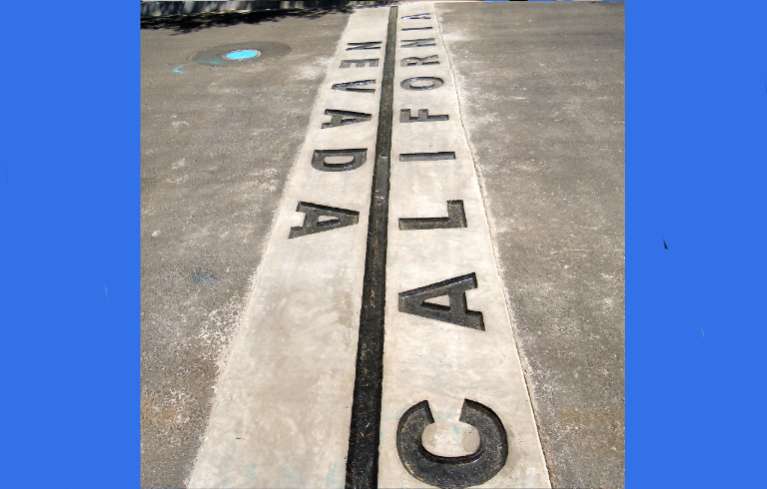
The state line is evident at Van Sickle Bi-state Park, but the environment doesn't come with a line. Photo/LTN

The state line is evident at Van Sickle Bi-state Park, but the environment doesn’t come with a line. Photo/LTN

Teshara does not want either state to withdraw from the bi-state Compact that created the Tahoe Regional Planning Agency. But both states are threatening to do just that.

Nevada threw the first volley with Senate Bill 271. As originally written, it would have meant pulling out of the Compact by 2015 and returning matters at the lake to the Nevada Tahoe Regional Planning Agency, which still exists. It came with some other threats/mandates to California, too, like changing the voting structure of the Governing Board.

What SB271 ultimately did was get both states to start to talk about the region. It inspired both governors to be at the August 2012 annual environmental summit. It spurred the TRPA’s updated Regional Plan to be finalized and then adopted in December 2012.

Many thought SB271 would be repealed.

Senate Bill 229 has been introduced to do just that. But Gov. Brian Sandoval has vowed to veto it, saying he wants to see how the Sierra Club’s lawsuit against the Regional Plan shakes out and if California will compromise on some other issues. (The Senate on April 22 approved SB229 on an 11-10 vote. It now goes to the Assembly.)

Winding its ways through the halls of Sacramento is Senate Bill 630 that is authored by Sens. Fran Pavley, D-Agoura Hills, and Sen. President Pro Tem Darrel Steinberg, D-Sacramento.

(It moved to a state of suspension on April 22, which happens when a bill costs more than $100,000 to implement. Appropriations will study the fiscal implications.)

Pavley, in a statement provided to Lake Tahoe News, said, “I am pleased by the Nevada Senate’s vote to remain a part of the Tahoe Regional Planning Agency, but it’s important that we continue with a backup plan to protect Lake Tahoe until a bi-state agreement is reached.”

The question to her was: “What do you hope to accomplish with SB630?”

Without being allowed to speak with the senator directly it’s not known why she thinks a bi-state agreement doesn’t exist, when in fact it does. Nor could she be asked to actually answer the question.

Components of SB630

The bill when first introduced earlier this year was intended to provide California with a contingency plan if Nevada were to withdraw from the Compact. It would re-establish the California Tahoe Regional Planning Agency, which was dissolved in favor of the bi-state TRPA.

But then came amendments that have local representatives coming unglued.

The CTRPA board would be made up of nine people – all appointed by the governor of California, with approval by the Senate. One person would come from South Lake Tahoe, one from either El Dorado or Placer counties.

“We oppose that because the city should be able to maintain the right to self-governance,” South Lake Tahoe City Manager Nancy Kerry said.

As it stands now, all three local jurisdictions have a representative on the TRPA board. While that person does not have to be an elected official, such as Placer County has done with Larry Sevinson, it is the elected body that appoints the person.

Kerry was in Sacramento earlier this month with three councilmembers, Teshara and Carl Hasty of Tahoe Transportation District to speak out against SB630.

“First of all, it disenfranchises local governments and the people they represent,” Teshara said of the bill. “I lived here in the days with CTRPA in place. They didn’t solve any environmental problems. They irritated people and that is putting it mildly. This version of CTRPA would be more Draconian because it basically goes back to the old adage that local government and local people cannot be stewards of Lake Tahoe.”

Teshara went on to say, “I have said 630 creates Lake Tahoe on the California side as a ward of the state. Look at what the state has done. State Parks is a ward of the state and look how well they’ve done with that. It’s a very dark future for Lake Tahoe.”

LTN posed this question to Pavley: “Why would you want to create a government body where the locals don’t have a voice?”

Her response: “Local residents should have a say, which is why my bill includes a county supervisor and a member of the South Lake Tahoe City Council the governing body. I would [be] willing to include more local voices in the process, but it is also important to include input from other stakeholders.”

Again, there was no opportunity for follow-up questions.

But the Governing Board today has outside reps who are appointed by leaders in the two state Capitols. The latest appointment is by Steinberg, co-author of SB630, who named attorney Bill Yeates. (Yeates won’t be at today’s TRPA Governing Board meeting and has not said when he will actually be able to attend his first meeting.) Yeates has done extensive work for the Sierra Club, the same group suing the TRPA over the Regional Plan.

Steinberg’s office was asked why this appointment was made and why the senator likes SB630. No answers were provided.

State Sen. Ted Gaines, R-Rocklin, represents Lake Tahoe in California. He didn’t mince words when talking to Lake Tahoe News about his opposition to SB630. And he for years has been a staunch critic of TRPA.

“I’m in opposition because it’s a power grab by state government,” Gaines said. “It takes away local power and puts it in the hands of bureaucracies. I would argue we are in a much better situation in terms of the status quo than in terms of what SB630 would offer.”

He doesn’t like that the bill would give more power to the California Tahoe Conservancy.

(Pavley chairs the Senate Committee on Natural Resources. Bill Craven, consultant to that committee, did not return Lake Tahoe News’ call. Todd Ferrara, deputy secretary for external affairs for California Natural Resources, sits on the CTC board as Secretary John Laird’s representative. Ferrara did not return a phone call, either.)

Gaines said he has been speaking with his counterparts in Nevada and that he sees compromise as being possible. He said not to compromise is “unacceptable.”

“We ought to be looking at what is the best for the community at large, not what is best for a narrow special interest,” Gaines said. “We need to change the matrix of how TRPA functions. You’ve got to get cooler minds who will prevail on both sides of the border and political spectrum.”

Another amendment to SB630 is that is has California withdrawing from the Compact on Jan. 1, 2014.

Pavley’s office was asked why this was going to happen when Nevada has a trigger date of 2015. No answer was provided.

South Shore attorney Lew Feldman wrote a letter to Pavley opposing her bill as amended. He wrote, “While it is evident California has taken offense at Nevada’s adoption of SB271, SB630 punishes Californians by diminishing democratic representation without local voice, reducing incentives to redevelop the plethora of blight, jeopardizing TRPA’s attainment of thresholds, and eroding the region’s ability to compete for much needed dollars for regional transportation solutions and water quality projects necessary to meet the recently adopted (by both states) total maximum daily load requirements.”

SB630 as amended would prevent any redevelopment or development from occurring, would require a whole new Regional Plan or the like to be created. It would potentially mean the loss of federal money and would cost California possibly millions of dollars to start things from scratch.

Darcy Goodman Collins, executive director of the League to Save Lake Tahoe, was at the April 9 hearing in support of the bill. She deferred comment to the No. 2 in charge of the conservation group.

“Our team has spent dozens of hours at the Nevada Legislature this year advocating to overturn SB271 because we believe a unified bi-state agency is the best thing for Lake Tahoe. At the same time, we are supporting SB630 because California must have a backup plan in case the Compact dissolves,” Jesse Patterson, the League’s deputy director, said.

Dan Siegel has long been a supporter of the League and Sierra Club, often sitting with their reps at TRPA meetings, as well as eating lunch with them during breaks at those meeting.

Siegel is a supervising deputy attorney general for California.

At the April 26, 2012, TRPA meeting that dealt with the Regional Plan update, Siegel said, “I believe the draft has serious legal defects.” In particular he took issue with delegating authority to local jurisdictions, coverage rules, and the allowance of new development.

While today he is toeing the company line, so to speak, since he is not actually the attorney general, he is not showing his true colors. Those were more on display earlier this month at the Senate hearing where he was cozy with the League and the lobbyist from the Sierra Club who was in attendance.

This week he told LTN, “We support (SB630) in concept. We have no position on the details at this point. We only support it as a backup plan. We strongly support the bi-state Compact between California and Nevada. We feel that is the best approach to protect Lake Tahoe.”

Siegel added that he hopes SB630 never takes effect, that instead Nevada takes SB271 off the table.

But people who spoke to LTN off the record said Siegel’s comments after this month’s hearing were disturbing. In the halls of the Capitol he was not parroting his department’s stance, but instead that of conservation groups.

Siegel has been a party to lawsuits against TRPA.

TRPA reps opted to watch this month’s hearing from their offices.

“The agency is officially neutral on the two states’ legislation. We remain committed to the partners of both states,” Julie Regan, who handles external affairs for the bi-state regulatory agency, told Lake Tahoe News. “We believe the health of the lake is best with a functioning bi-state Compact.”

The future

Some say what is going on is all political gamesmanship with the people of Lake Tahoe as the muted pawns.

Others call it a power grab.

Today Sandoval will be in Sacramento to discuss a variety of matters with Gov. Jerry Brown. Those in the know have told Lake Tahoe News that Lake Tahoe and the bills swirling around the two legislatures are now on the agenda for the states’ leaders.

Another issue Nevada has is all the litigation that goes on at the lake. Legislators would like some sort of criteria in place that if all sides are at the bargaining table when a resolution is agreed to, then a lawsuit is not an option.

“If you have the Sierra Club at the table and they are negotiating and all parties are working together to achieve a solution, that decision should stand and you don’t get a second bite at the apple with litigation,” Gaines said. “That is working in bad faith.”

While regional government such as TRPA has often been criticized, the general consensus is that today it is the correct structure of governance.

Teshara equated the situation to an old married couple – that it’s time the two states renew their vows.

It’s too soon to know if the August environmental summit will delve into today’s issues. By then Nevada legislators should have adjourned for two years and the California delegates should be on their long summer recess.

Sen. Harry Reid, D-Nev., is the host of this year’s summit and he gets to set the agenda. It’s possible a compromise to today’s issues could be showcased at the event. And if there is no resolution in four months, it could be swept under the table.

Those who were asked to look into their crystal balls did not see clarity – at least when it comes to Lake Tahoe politics.

Tahoe book publisher looking for writers

Bona Fide Books is seeking submissions for “Tahoe Sepia,” a collection of true historical stories or vignettes about life at Lake Tahoe.

Submissions should be no more than 1,000 words. Any subject is welcome, including family history. The deadline is Sept. 1.

Contributors will receive a copy of the collection.

Send stories to submissions@bonafidebooks.com with Tahoe Sepia in the subject line, or to Bona Fide Books, P.O. Box 550278, South Lake Tahoe, CA 96155., or drop it off at Bona Fide Books in Meyers.

For more information, contact editor@bonafidebooks.com or (530) 573.1513.


Editorial: Stop California’s spread of Indian gaming

Publisher’s note: This editorial is from the April 18, 2013, Sacramento Bee.

Indian gambling in California has exploded well beyond the “modest increase” voters were promised when they approved casino gambling just 13 years ago. While most casinos are still in remote locations, a new push by tribes to purchase additional land at lucrative freeway locations threatens to kick off a whole new Indian casino land rush. The Legislature should reduce that threat by rejecting a pair of ill-conceived gambling compacts.

As the Bee’s Laurel Rosenhall reported on Sunday, two tribes, the Enterprise Rancheria near Marysville and the North Fork Rancheria near Fresno, won approval from President Obama’s interior secretary last year to acquire land more than 30 miles from their original reservations. Gov. Jerry Brown unwisely concurred in that decision and has negotiated gambling compacts with the tribes.

The Enterprise Indians seek to build their new gambling hall just off Highway 65 in Yuba County next to the Sleep Train Amphitheatre. The North Fork Indians want to build a casino on Highway 99, about 25 miles north of downtown Fresno.

At this point in the process, the only thing standing between the tribes and their dreams of gambling riches is the California Legislature. The compacts that Brown negotiated with the tribes must be approved by lawmakers.

Powerful opponents and proponents are lining up on both sides. Deep-pocketed investors from Nevada and Chicago are bankrolling the Enterprise and North Fork efforts. Meanwhile, existing gambling tribes oppose them, angered that their own gambling enterprises will be placed at a competitive disadvantage.

The Enterprise and North Fork tribes are engaged in reservation shopping at its most blatant. It breaks faith with voters who were told that gambling would be confined to existing Indian lands – remote areas of the state for the most part, not plopped down near cities.

Why should established gambling tribes who’ve played by the rules continue to live up to their agreements, to make mitigation payments to state and local governments or share their proceeds with non-gambling tribes if the state breaks the spirit of the initiative and allows the competition to be much closer to their customer base?How long before existing gambling tribes use their considerable clout and wealth to persuade authorities to let them build casinos in or near urban areas too?

Every time the U.S. government takes land into trust for an Indian tribe, it creates a semi-sovereign ministate within a state’s borders. There are 110 federally recognized Indian tribes in California, and 70 or so more are seeking recognition. How many ministates, all with the right to build lucrative casinos, can California accommodate?

A story in the Bee on Tuesday reported that the Graton Resort and Casino expects to hire 2,000 workers by the time it opens in Rohnert Park later this year. But many of those jobs will simply be taken from somewhere else.

There is only so much disposable income for gambling in California, and the state is already saturated with casinos. Each one that is added takes from another. It’s a zero-sum game.


Sting snares unlicensed contractors in El Dorado County

By Cathy Locke, Sacramento Bee

Eleven people have been accused of contracting without a license following an undercover sting operation Saturday at a house in El Dorado Hills.

The operation was conducted by the Contractors State License Board’s Statewide Investigative Fraud Team with assistance from the El Dorado County District Attorney’s Office and the Department of Consumer Affairs Division of Investigation. Of the 11 alleged offenders netted in Saturday’ sting, three had a record of previous citations, according to a Contractors State License Board news release.

The suspects were found through advertisements in local pamphlets, on Craigslist and from business cards posted on bulletin boards at local business, officials said. Undercover CSLB investigators solicited bids for exterior painting, landscaping, tree removal and fence replacement.

In addition to allegations of contracting without a license, 10 of the 11 suspects in Saturday’s sting also are accused of illegal advertising. State law requires that contractors include their license number in all print, broadcast and online advertisements. Those without a license can advertise as long as the ad states that they are not state-licensed contractors, and the combined total of a project’s labor and materials costs is less than $500.

Receiving notices to appear in El Dorado Superior Court regarding illegal contracting charges are Brandon Michael Blubaugh of Cameron Park, painting and decorating; Thomas Domenic Harris of Mountain Ranch, tree service; Miguel Angel Mota Carrera of Carmichael, landscaping; Brent Byron Hylton of Cameron Park, painting and decorating; Marty Fredrick Koulax of Auburn, tree service; Macario Ramirez Cortez of Placerville, tree service; Chin Maui Padilla of Somerset, tree service; Byron Rickey Ford of Rancho Cordova, fencing; Alan Wayne Winter of Sacramento, cabinet, millwork and finish cabinetry; Richard Alejander Larsen Jr. of Sacramento, painting and decorating; and Jonathan Alexander Tyler of Sacramento, painting and decorating.

The Contractors State License Board conducts sting operations statewide in an effort to protect consumers, help level the playing field for legitimate contractors and to curb the underground economy, according to the news release.

Before hiring anyone to work on their property, consumers are advised to:

• Ask to see a contractor’s license and photo ID to verify identity.

• Check the license number on the CSLB’s website at www.cslb.ca.gov or www.CheckTheLicenseFirst.com to make sure the license is in good standing and that employees are covered by workers’ compensation insurance.

• Don’t pay more than 10 percent or $1,000, whichever is less, as a down payment. Exceptions exist for about two dozen licensees who carry special bonds to protect consumers, and these exceptions are noted on CSLB’s website.