2 nights of bingo in South Lake Tahoe in May

The next bingo nights at the South Lake Tahoe Senior Center are May 4 and May 18.

Anyone older than 18 is invited to play.

Doors open at 4pm, at 4:30pm game packs are sold, at 5pm is early bird bingo, and at 5:30pm are the regular games.

The center is at 3050 Lake Tahoe Blvd.

For more info, call Sandra or Mike at (530) 600.0131.


Kirkwood in no hurry to be more than it is

By Jessie Marchesseau

KIRKWOOD – When Vail Resorts bought Kirkwood in April 2012, the company did not get all of Kirkwood. What the Colorado-based company bought were the rights to run the actual ski resort, the associated restaurants and retail, and the overnight lodging. Kirkwood Mountain Development retained all real estate development rights.

What this means for Kirkwood is there is one entity, Vail Resorts, completely focused on improving the skiing experience. While the other one, Kirkwood Mountain Development, is completely focused on the real estate side of things. If each of these entities can allocate 100 percent of its time and money to its respective area of expertise, Kirkwood, in theory, should reap the benefits.
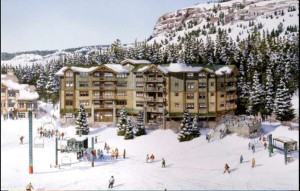
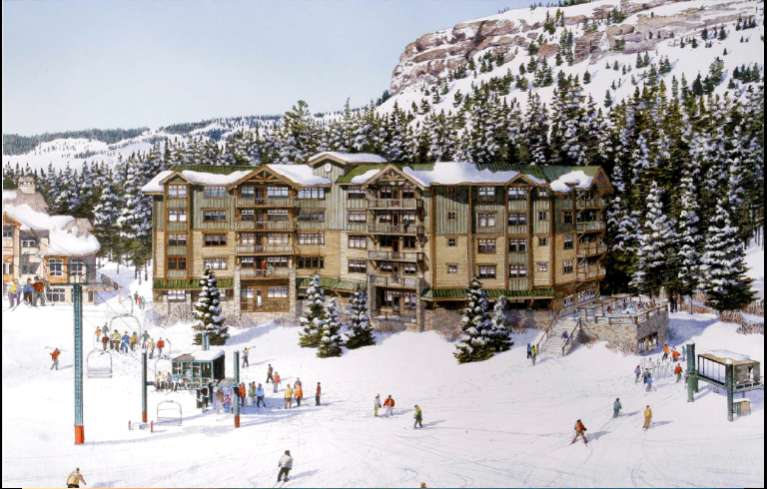
Rendering of Expedition Lodge, the project in the center of the village at base of Chair 11 currently soliciting investors to develop the project.

This is a rendering of Expedition Lodge, the project in the center of the village at base of Chair 11.

With April being the one-year anniversary of Vail’s involvement with Kirkwood, here are a few highlights of what changes The Wood has seen so far, and what is coming up from both sides.

In real estate

This season, Kirkwood has seen an upswing in real estate that nearly rivals 2006. The average transaction price is up more than 35 percent from last season. Nate Whaley, managing broker for Kirkwood Mountain Realty and president of Kirkwood Resort Development, said he is seeing an increase in real estate demand especially in the high-end. Two $1 million-plus homes have sold this year, one of them the fourth highest sale in Kirkwood history.

Whaley attributes this partly to improvements in the economy as a whole, and partly to people seeing the success of other Vail resorts such as Northstar and its nearby Martis Camp development. Buyers see an opportunity to own at what is already a great mountain, and, under Vail’s direction, stands to become a world-class resort.

So is Kirkwood going to turn into another Northstar?

“No,” Whaley tells Lake Tahoe News. “Kirkwood is a very different experience from Northstar. The mountain is very different, and the village experience is very different. It will always be a much more intimate village than Northstar.”

This increased demand is not driving any immediate real estate development either. KMD has had a Mountain Master Development Plan in place for years, including a complete redevelopment of the Red Cliffs area and the new Expedition Lodge at the base of Chair 11. However, they have few building plans in the very near future. Currently, just one project is in the pipeline that could start as early as the end of this summer or summer 2014.

What that project is, well, they aren’t saying at this time.

Regardless of Vail’s involvement, Kirkwood will still max out at 1,400 residential units, about half of which are already built. That number was reaffirmed in 2003, but was set long before then. All of the remaining development at Kirkwood will be what Whaley calls “right in Times Square,” meaning it will be ski in, ski out slated for the base of the mountain.

As far as commercial development, a lot of skiers are anticipating the “tent” at Timber Creek coming down and a more permanent structure taking its place. This is entirely up to Vail, as they own the development rights for that area. However, there are currently no plans for that happening. Many assume the empty foundation sitting next door to the temporary building is the unfinished attempt at a lodge. In reality, that foundation is the beginning of 67-unit condominium project by a private developer.

Real estate in a place like Kirkwood is closely tied to mountain operations. If a new lodge goes in at Timber Creek, chances are, residences will too.

On the mountain

Vail Resorts recently announced it would be spending a record amount of money on ski resort improvements for the 2013-14 season: $140 million across all of its resorts. How much of that money is Kirkwood getting? They won’t say.

What they will say is Kirkwood will not be seeing any new chairlifts or new lodges just yet. Kirkwood Vice President and General Manager Casey Blann said Vail is still feeling Kirkwood out, learning how the mountain works and what it needs. A few things were obvious right off the bat: snow safety, customer service, food and bathrooms.

These four items received most of the attention this last year and will continue to eat up most of the capital improvement dollars for next season. These types of changes are not as sexy as new chairlifts, and new visitors may not even notice the changes, but long-time passholders will, and have.

“It’s been fun to have those folks that were fearful and turn them into supporters,” Blann told Lake Tahoe News.

Time and again Kirkwood locals noted the lifts opening on time this year, even on storm days. They also noticed shorter lift lines and more on-mountain security.

“There were less crowds,” commented Doug Severn, who has been skiing and driving a snowcat at Kirkwood for more than a decade, “but that’s not good either. They scared everybody away!”

The two security guards at the bottom of Chair 6 on closing day did look like they might arrest someone at any moment.

Snow safety, on the other hand, is less visible to the public. A new avalanche bomb launching device makes shooting the bombs faster and more accurate, allowing ski patrol to open areas for skiing quicker on storm days. Also helping chairlifts open earlier will be the new patrol shack/snowcat garage at the top of Chair 10.

While this may not seem important to the average skier, Severn calls this plan “brilliant.”

“It’s one of the best things Kirkwood could do for itself. The reason they can’t get 10 open is they don’t have a working cat up there,” he said.

Currently, Blann explained, during storm cycles, a ski patroller will spend the night in the patrol shack at the top of Chair 10, getting up every few hours to start up the snow cat and clear the snow away from the top of the lift. The problem is, the cat gets frozen, full of snow and breaks down. If the top of the chair is not clear, other patrollers cannot get up there in the morning to start snow safety measures. A working cat equals an open Chair 10.

In addition to the new structure at the top of 10 for next season, Vail will be putting in a new bar in the Mountain Club plaza, adding more bathrooms, increasing food and beverage options, and expanding the Expedition Kirkwood program with a new snowcat for backcountry tours.

When asked what changes they would like to see for next season, Kirkwood skiers requested everything from new chairlifts and the opening of the Cirque to cheaper food and paved parking lots.

For South Lake Tahoe resident and Kirkwood skier and snowskater Ryan Palmer, the answer is simple: “Doughnuts.”

—-

This is a map from 2007 that has some of Kirkwood’s future plans on it, though some of the items are already in the ground.


Nutrient-rich food will help with weight loss

By Mandy Kendall

Now that summer is round the corner, some of us may be thinking ahead about getting in shape for all those activities and, dare I say it, more revealing wardrobes. The winter may have encouraged us to gain a little insulation over the past few months that we no longer need. So how should we go about releasing those unnecessary inches?

We are all probably familiar with the “calories in, calories out” view on weight loss and how we need to burn more calories than we consume in order to lose weight. However, all calories are not created equal. Our bodies respond differently to different food groups. For example, protein calories need more energy than fats and carbohydrates to digest and our bodies will respond differently to 200 calories of ice cream versus 200 calories of broccoli.

Mandy Kendall

Mandy Kendall

Even calories from within the same food group will elicit very different responses in the body. Trans fats, from cakes and muffins produce a totally different response than say the fat from fish, avocado and nuts. Processed foods and alcohol all contain a lot of empty calories and offer very little to the body other than material that is often eventually just stored as fat.

Conversely, nutrient rich foods tend to be lower in calories, so they help you remain satisfied for longer while consuming fewer calories. As a guideline, the less a food is processed the more nutrient rich it is likely to be.

The National Weight Control Registry reports that the majority of their most “successful (weight loss) losers” all have something in common; they eat breakfast. Eating shortly after you wake helps jumpstart your metabolism (“breaking the fast” you were in while you were sleeping), helps prevent snacking during the morning or making bad food choices for lunch because of hunger.

Recent studies have suggested that instead of a meal of breads and cereals (often laden with sugar), a breakfast based on higher proportions of protein and fiber (for example an omelet with mushrooms and bell peppers) is the better option. This combination helps to moderate blood sugar levels throughout the morning and prompts fat burning instead of fat storing.

Call it what you may … exercise, training, working out … our bodies need movement to maintain strength and integrity. However, even if we were to be perfectly still all day our bodies still need a certain number of calories every day to maintain our internal systems like temperature control, heartbeat, breathing, etc. This is called our testing metabolic rate. Any calories we take in, above that number, need to be used up otherwise they will be stored in fat cells for future use. Fat cells require little or no calories to maintain themselves, whereas muscle cells burn energy (using calories). So a great way to increase your RMR is to increase the amount of muscle tissue you have. The more muscle tissue you have, the more calories you will burn every day. Eating protein rich foods is a great way to encourage muscle growth. Another reason to increase your protein intake.

One of the most recent trends in weight loss research surrounds something we all do every day, (or should I say every night) — sleeping. There is growing evidence that there are strong links between sleep and weight. A study in 2011, published in the International Journal of Obesity discovered that people trying to lose weight were more successful if they slept between six to eight hours a night. According to research, a lack of sleep decreases levels of leptin (the hormone that tells you when you are full) and increases levels of ghrelin (the hormone that tells you when you’re hungry). So, basically, when you’re tired, you will feel hungry and not know when you’re full. A dangerous combination.

So here are our Qwik-e tips for helping you to shape up and release some unwanted weight:

Quality rather than quantity — Before you eat something, try and ask yourself what nutrition is this going to give my body? The great thing about nutrient rich food is that more often than not it is low in calories and incredibly filling so you can have quality and quantity.

The most important meal of the day — Try and eat within an hour of waking and make the first meal of the day high in protein and fiber. Protein and fiber at every meal makes losing weight no big deal.

Exercise — It is important to include strength training (using weights for example) into your daily exercise in order to maintain a good percentage of muscle mass.

Sleep it off — A good night’s sleep is essential to help balance your “eating” hormones to make sure you are not trying to “eat yourself awake”.

Health Connective is running a group Nutrition, Energy boosting, Cleansing and Weight Release program in May. Each participant will also receive additional vouchers to be used with Health Connective holistic health professionals in our community. Email connect@healthconnective.com for more details.

Mandy Kendall operates Health Connective in South Lake Tahoe, which aligns wellness seekers with their ideal wellness provider. If you have questions, would like some advice, or would like to request some Qwik-e tips on any health and well-being topic, drop her an email at connect@healthconnective.com or keep an eye out on Lake Tahoe News for regular Qwik-e tips on how to make healthy changes one Quick and Easy step at a time.


Opinion: Legislation could shutter Barton’s skilled nursing

By Mary Bittner

In recent months, Barton Memorial Hospital’s Skilled Nursing Facility has been challenged with keeping patients, staff and the facility in its entirety safe from the effects of California Assembly Bill 97. If passed, this bill would create devastating cuts to reimbursement for Medi-Cal services provided by distinct part skilled nursing facilities (DP/SNFs) throughout the state, including South Lake Tahoe’s only long- term care facility located at Barton Memorial.

This bill requires a two-thirds vote in the Assembly and Senate before it goes to Gov. Jerry Brown for action. It will first be heard in the Assembly Health Committee on April 30.

Mary Bittner

Mary Bittner

Since Assembly Bill 900 is considered an “urgency” bill, it would take effect immediately if Brown signs it into law by July 1. Barton Health is hopeful the state Assembly and Senate seriously consider this bill. In reality, to sustain continued operations of our high-quality long-term-care services AB900 must pass on Tuesday.

AB900 would stop the proposed budget cuts to Medi-Cal reimbursement (that are called for in AB97) for medical services provided by hospital-based skilled-nursing facilities. Barton Memorial’s Skilled Nursing Facility is of-that-type and predominately has a population of Medi-Cal patients. At present, our licensed 48-bed skilled-nursing and short-stay rehabilitation facility often runs at full capacity. It provides care for aging adults, offering private and semi-private rooms, 24-hour care, activities, and programs that maintain and/or improve independence. In 2012, our Skilled Nursing Facility was awarded five-stars from Medicare, which is only given to the top 10 percent of nursing homes in the nation.

Cuts in reimbursement would force Barton Memorial to reduce capacity or close services completely as the acute-care reimbursement simultaneously declines with health care reform. 2011’s AB97 reduced Medi-Cal reimbursement rates for DP/SNF to rates applicable in the 2008-09 rate year, less 10 percent, effective June 1, 2011, resulting in an effective rate decrease for most facilities of 25 percent. Cuts of this magnitude will have a devastating impact on the access of Medi-Cal beneficiaries to medically necessary skilled-nursing services.

If AB900 does not pass, our skilled nursing facility may not only face cut-backs or closure, but will have to pay to the state of California (retroactive to June 2011) the amount of reduced reimbursement. Barton has been setting aside money for this very issue, however, losing those funds will impact our overall operations, drive up cost for the provision of acute-care and possibly jeopardize the future viability of Barton as the sole community health care provider for our community.

Part of the most vulnerable population Barton serves is the elderly and those with severe chronic disease. According to Barton’s 2012 Community Health Needs Assessment Report, 13.7 percent of the community in Barton Health’s primary service area are 65 years and older. Of this population, 76.9 percent are Medicare supplement insurance dependent (compared to the U.S. benchmark of 75.5 percent), which does not provide coverage for long-term care needs.

Surrounding facilities on the West Slope have in recent years decreased their long-term care bed capacity and California residents do not qualify for Nevada Medicaid.

Barriers to long term-care access would impact family members of elderly patients, forcing elderly residents to be removed from their loved ones and housed in facilities miles away from home. The distance disparity is complicated by geography (surrounded by four mountain passes), weather/road condition variability, and transportation challenges within the local community. Per the 2012 Barton Community Health Needs Assessment, 9.8 percent of primary service area adults lack transportation compared to 7.7 percent nationally.

If long term-care services were forced to close, unemployment rates would rise, (current local unemployment is at 16.7 percent) adding to the ongoing threat of departure of local residents on the South Shore. This would negatively impact the fiscal landscape of our local economy, which already suffers from a $5.2 million deficit. Reduction of services could impose further erosion of our rural community resources, imposing a trickle-down effect to local businesses relying on tourism.

Barton Health is dedicated to educating our community on the effects of health care reform and its impact on Lake Tahoe residents and our surrounding areas. As the safety-net provider of health care for the South Lake Tahoe community, we rely on our local residents to make their voice heard on these concerns and issues. It is imperative that our state legislative representatives become educated about the importance of AB900 and understand how vital the Barton Skilled Nursing Facility is to our community. We plan to keep you informed of the progress of AB900 and other changes related to health care reform.

We encourage you to contact our local legislators and urge them to vote for AB900: Sen. Ted Gaines, email senator.gaines@senate.ca.gov and Assemblyman Frank Bigelow, email.

Mary Bittner is vice president of Nursing and Ancillary Services for Barton Health.


Letter: TRPA policy killing Tahoe’s economy

To the community,

The Tahoe Regional Planning Agency recently completed their Regional Plan update.

Possibly influenced by other environmental agencies — TRPA created a new 20-year build-out plan to dramatically cut residential building allocations for Tahoe by 57 percent — 300 to 130 total — for the Tahoe region.

This harsh new number (130/year) was conceived using a completely “fabricated calculation — designed to achieve a desired result”.

For El Dorado County, allocations were cut by 73 percent — from 119 to 29 this year.

The city of South Lake Tahoe allocations also severely cut — only nine this year.

On the TRPA website they proudly boast, “The Best Lake Tahoe Clarity in Ten Years”.

They also are preparing to offer homeowners a new and unprecedented relaxed Deck/Driveway Coverage Program with simple permitting stating, “We want to share our great environmental progress with homeowners.”

What TRPA is not advertising is their “silent slaughter” of an entire local economy, construction industry, and revenue for local county agencies, businesses, utilities, schools and fire departments, and thousands of local jobs.

Until this year we had a residential allocation system that achieved both TRPA’s goals and building industry for over 12 years. One can only speculate TRPA is slaying the allocation program because they have failed to enforce a mandated BMP program.

One consistency we can always count on is the “inconsistency” of TRPA.

This agency needs to find a “balance” between protecting our beautiful lake and allowing a local business economy to survive.

This severe restriction of land use truly rides the fence for litigation by parcel owners who lose their right to use their property.

John Adamski, Meyers


Pyramid Lake fishing stories getting bigger

By Nate Schweber, New York Times

PYRAMID LAKE — For most fishermen a 20-pound trout is a trophy, but for Paiute tribe members and fish biologists here the one Matt Ceccarelli caught was a victory.

That Lahontan cutthroat trout he caught last year, a remnant of a strain that is possibly the largest native trout in North America, is the first confirmed catch of a fish that was once believed to have gone extinct. The fish has been the focus of an intense and improbable federal and tribal effort to restore it to its home waters.

“I was in awe,” said Ceccarelli, 32, an engineer from Sparks, of the speckled trout with hues of olive and rose.

Early settlers told stories of Pyramid Lake Lahontan cutthroats that weighed more than 60 pounds, though the official world record was a 41-pounder caught by a Paiute man in 1925. The explorer who discovered this electric-blue oasis in 1844, John Fremont, called them “salmon trout.” Mark Twain raved about their flavor. Clark Gable, the actor, chased them. President Bill Clinton and tribe members called for their restoration.

“When I heard about them I was like, man, I want to see these guys,” said Desmond Mitchell, 40, a fish supervisor for the Pyramid Lake Paiute Tribe.

Lahontan cutthroats, Nevada’s state fish, evolved in the Great Basin, which was flooded under a giant inland sea called Lake Lahontan during the last ice age. Pyramid Lake, which today lies on a Paiute Indian reservation, was part of that ancient lake, and inside its unique inland water system, which includes the Truckee River and Lake Tahoe, a giant strain of trout evolved.

“Our fish have deep meaning for us, spiritually,” said Albert John, executive director of fisheries for the tribe. “And if they could get to 40 pounds again, whoa, that’d be awesome.”

In the late 19th and early 20th centuries, fishermen netted scores of Lahontan cutthroats to feed miners and loggers gnawing at the Sierra Nevada Mountains. But the Truckee River, where the fish spawned, was dammed, and its level dropped as water was taken for irrigation. It was also polluted with chemicals and sawdust. And Lake Tahoe was stocked with a nonnative char called lake trout, which gobble baby cutthroat. By the mid-1940s, all the native trout in Pyramid Lake and Lake Tahoe were dead and the strain was declared extinct.

“They never should have gone in the first place,” said Fred Crosby, 66, owner of Crosby Lodge, the only bar, restaurant, gas station and tackle shop in tiny Sutcliffe, a poor reservation town on the west shore of Pyramid Lake.

In the mid-1970s, the Paiute Tribe opened a fish hatchery in Sutcliffe and stocked Pyramid Lake with strains of Lahontan cutthroat from nearby lakes. The water in Pyramid Lake is saltier than Lake Tahoe, and that kept out the lake trout. The tribe re-established a Lahontan cutthroat sport fishery and saved Pyramid Lake’s endangered Cui-ui sucker from extinction. Anglers bought tribal licenses, hauled ladders out into the lake’s bracing water and considered any catch that weighed 10 pounds or more a trophy.

In the late 1970s, a fish biologist identified what he thought were surviving specimens of the vanished Pyramid Lake strain of Lahontan cutthroat in a small creek near a 10,000-foot mountain on the border of Nevada and Utah called Pilot Peak. A Utah man used buckets to stock the rugged stream with trout in the early 1900s, but made no record, federal biologists say. Geneticists recently compared cutthroats from the Pilot Peak stream with mounts of giant Pyramid Lake trout and discovered an exact DNA match.

“They are the originals,” said Corene Jones, 39, the broodstock coordinator for the Lahontan National Fish Hatchery in Gardnerville.

In 1995, United States Fish and Wildlife Service biologists harvested cutthroat eggs from Pilot Peak and brought them to the Gardnerville hatchery, just a few years before a devastating wildfire scorched the mountain and killed off the creek. In 2006 federal officials, in cooperation with the tribe, began stocking Pyramid Lake with what many now call Pilot Peak cutthroats. They waited to see how the fish might readapt to its ancestral home.

The answer came from ecstatic anglers. Late last year, a Reno man caught and released a 24-pounder. David Hamel, 27, of Reno, just did the same with a pair of 20-pound cutthroats.

“Biggest fish of my life,” he said. “Amazing.”

Since November, dozens of anglers have reported catching Pilot Peak cutthroats weighing 15 pounds or more. Biologists are astounded because inside Pyramid Lake these powerful fish, now adolescents, grew five times as fast as other trout species and are only a third of the way through their expected life span.

Around this arid reservation of burnt sienna mountains and sagebrush tufts, workers from the gas station clerk in the windblown town of Nixon to the bartender who sells fishing licenses in Sutcliffe say they have seen a spike in revenue because of the big fish.

“The lake is basically the bread and butter for the tribe,” said Elwood Lowery, the tribal chairman. The reservation has no casinos because of competition from nearby Reno, he said.

Biologists and Paiute officials are calling the return of Pyramid Lake’s original cutthroats a rare win-win-win for native wildlife restoration, the tribe’s economy and anglers.

“The fish is now telling its own story,” said Lisa Heki, 51, complex manager at the Lahontan National Fish Hatchery. “Along with the fishermen who get to catch them.”


South Shore dancers to perform at Harrah’s

Lake Tahoe’s Shining Stars celebrate the joy and beauty of dance in their 30th annual recitals on the stage of the South Shore Room at Harrahs’ Lake Tahoe on April 28.

The dancers, who are from the Marcia Sarosik Dance Studio, will put on two performances – 1pm and 5:30pm.

The recitals are to showcase the talent and hard work of the dancers who range in age from 2½ to “young at heart” adults. They will be performing an array of dance styles including classical ballet, tap, traditional jazz, contemporary jazz, musical theater, partnering and hip hop.

The show features favorite songs, old and new, with songs from recitals over the past 30 years and some current hits.

Tickets can be obtained online. There will be some tickets available at the door 30 minutes prior to each show.


State: Plenty of inmates to fight fires

By KCRA-TV

The state expects to have nearly as many inmates available to help during this year’s firefighting season as it did before a 2-year-old law began sending lower-level felons to county jails instead of state prisons, officials said Wednesday.

Currently, 3,820 inmates are training in the state’s 44 fire camps, said state corrections department spokeswoman Dana Simas.

The Riverside County Board of Supervisors this week approved a five-year contract sending up to 200 of its offenders to the state-run camps as an alternative to keeping them in jail. The contract will cost the county $46 a day per inmate.

That would boost the camp population to more than 4,000 inmate firefighters, about the same as before the law enforcement realignment law took effect in October 2011.

California relies heavily on inmate firefighters to dig fire lines and cut brush to halt the spread of wildfires. In a typical year, the inmates work more than 2.5 million hours fighting fires and responding to floods, earthquakes and other disasters. The state projects that it saves more than $80 million annually over what it would cost to hire employees to do the same work.

But officials had feared the program would be endangered by the state law enacted in response to federal court orders to reduce prison crowding.

The population of California’s 33 adult prisons has dropped by about 25,000 inmates, but Simas said a sufficient number of camp-eligible inmates are still serving lengthy prison sentences that were imposed before the new law took effect.

Moreover, the department re-evaluated its security classifications, so more lower-security offenders are now eligible for the camps. By 2015, a projected 7,000 additional inmates will be at the lower security level required of inmate firefighters. Inmates who are convicted of arson, violent or sexual crimes are ineligible.

The state had more than 4,500 inmate firefighters when the prison population was at its peak in 2006.


LTCC may field intercollegiate soccer teams

Lake Tahoe Community College is putting on a community forum April 30 from 6:30-7:30pm to discuss the possibility of intercollegiate men’s and women’s soccer programs.

The college is researching developing a program in an effort to serve the community’s and students’ interests, and to create a more connected campus and a more vibrant sense of community spirit.

LTCC wants to hear from the community about their thoughts on this potential athletic program, and to answer questions about it.

The meeting will be in the Aspen Room.

For more information about this forum, contact Tim Johnson at (530) 541.4660, ext. 557 or Johnson@ltcc.edu.


Cause of Truckee fire ruled ‘suspicious’

Truckee officials are calling the April 11 fire at the C.B. White House “suspicious” in nature.

Officials are hoping the public can help with the investigation by providing information if they saw anyone near the 1874 Victorian mansion before the fire erupted.

The fire caused extensive damage to the restaurant at the back of the building. But no further details about how it started have been released.

Anyone with information, should call Detective Arnie Lopez at (530) 550.2336.

— Lake Tahoe News staff report