Travel clients told to bring their own bottles

By Terry Gardner, Los Angeles Times

Two Seattle tour companies have launched Travelers Against Plastic to motivate travelers and tour operators to say “no” to disposable plastic water bottles and choose other methods of ensuring their water is safe to drink.

Crooked Trails and Wildland Adventures launched the website, which allows travelers to make a no-plastic-bottle pledge, on March 22. By last week, 136 people and 10 tour operators had signed the pledge.

Eight of 10 single-serving plastic water bottles wind up in landfills, according to the Recycling Institute. About 34.6 billion bottles are emptied annually in the U.S.

Chris Mackay, co-founder of TAP and executive director of Crooked Trails, says her guests are told to be prepared to clean their own water on their travels. In 2008, a guide to Machu Picchu in Peru watched in disbelief, Mackay says, as her group filled their water bottles from a waterfall, then cleaned the water.

Mackay says the surprised guide said, “On behalf of my country, I want to thank you for doing this, because we have plastic water bottles everywhere and along the rivers. You are the first people I’ve seen clean their own water.”

Water is easily cleaned, Mackay says. She likes the Klean Kanteen’s bottle because it has a wide mouth that easily accommodates a SteriPEN. The pen uses UV light (rather than chemicals) to quickly kill 99.9 percent of bacteria, viruses and protozoa that cause water-borne illness.

REI lists a variety of methods for treating water.

For travelers without a good reusable bottle, a custom TAP bottle is available from Kleen Kanteen for $21.95; 25% of the proceeds will be donated to TAP.


South Tahoe to explain parking program

There will be a community meeting to learn the facts about the South Lake Tahoe residential parking permit program on May 6.

City staff will be in attendance to answer questions about this program.

It will be at the senior center, 3050 Lake Tahoe Blvd., from 5:30-7pm.

More info about the program may be found online.


Farmers’ market season arrives in Lake Tahoe

By Kathryn Reed

Fresh produce is about to arrive on the South Shore – and it doesn’t involve a grocery store.

The farmers’ market season begins Friday at Kahle Community Park in Stateline. This is the first market to open in the area. It will be one of three on the South Shore.

Markets throughout the region are gearing up to bring seasonal vegetables and fruit to consumers from California and Nevada. Most of the markets are still working on locking in all of their vendors. While produce is the focus of the events, most also have another component – whether it’s prepared food, arts and crafts, entertainment or alcohol.

“I treat this one like a boutique farmers market,” Steve Rozier said of the Kahle market. “When I look at this market, I think of our community.”

Farmers' market season about to begin in Lake Tahoe. Photo/LTN file

Farmers’ market season is about to begin in Lake Tahoe. Photo/LTN file

He owns this market, while this year he will also run the Lampe Park market in Gardnerville that is owned by Douglas County Parks.

(The Kahle market is Fridays through October from 4-7pm starting May 3. Lampe starts June 12 and is then every Wednesday from 8am-4pm.)

Kahle had a market years ago, but for about a decade was non-existent. Rozier, who is assisted by his wife, resurrected this market last year.

Rozier told Lake Tahoe News he starts with farmers from California and then brings in Nevada growers when their crops are ripe – which usually starts in June.

“We focus on farmers and markets. We will bring entertainment over time,” Rozier said.

Cheese created from a dairy farmer in Nevada will be for sale. Olive oil, craftsmen from Carson Valley and Carson City will sell their wares, a woman from Gardnerville will return to sell her cupcakes. Eggs and flowers are also going to be for sale.

The second South Shore market to open this year is the oldest one. This will be the 19th season for the El Dorado County Certified Farmers Market Association to operate every Tuesday from 8am-1pm at the American Legion parking lot in South Lake Tahoe. The market runs from June 4-Oct. 8.

Jim and Lois Coalwell, who own a farm on the West Slope of El Dorado County, are the longtime operators of this market.

“Everyone is hopeful this will be a good, strong spring,” Lois Coalwell told Lake Tahoe News.

Expect to see cherries from Day 1 at this market. Stone fruit from growers in Stockton and Fresno will come early.

Potatoes and tomatoes are in the ground in El Dorado County soil, but won’t be seen at the market right away.

Despite a still sluggish economy last year, Coalwell said the farmers did fairly well.

Besides fresh produce, this market also has prepared food vendors, but a minimal number of crafts people.

The produce changes each week, as it does at each market, as the crops come in. It’s a true testament to buying, and therefore eating, what the land produces locally. Imperfections in the product are normal when it comes to what it looks like. This is nature and normal.

What is sold at any market is usually picked at zero-dark thirty that morning to be able to be sold as fresh as possible.

The other South Shore market is on Ski Run Boulevard between Larch and Birch avenues. It will be each Friday beginning June 21. It starts at 3pm, and goes to dusk – about 8pm in the heart of summer.

“It’s more of a street fair atmosphere than strictly a farmers’ market,” said Alex Mellon, who runs the market. This will be the fourth year for the Ski Run market.

He expects about one-third of the vendors to be agriculture, one-third crafts and one-third prepared foods.

Dogs won’t be allowed this year except on the sides of the market – but not where the vendors are. And alcohol cannot be consumed in the market area.

This market wants to distinguish itself by being more kid friendly.

Many of the markets have Facebook pages as a way to reach clients.

Here is a list of some of the markets in the region:

Tuesday:

• Truckee: Truckee River Regional Park

10500 Brockway Road off Highway 267

8am-1pm, June 4-Oct 8

• Kings Beach: Kings Beach SRA

Highway 28 at Bear Street

9am-1pm, June 25-Aug. 27

Thursday:

• Tahoe City: Commons Beach

Commons Beach Road and North Lake Boulevard

8am-1pm, May 23-Sept. 26

• Tahoe City: Tahoe Lake Elementary School

375 Grove St.

June 27-Aug 22

• Truckee Thursday Nights: Donner Pass near the train station

5-8pm, June 13-Aug. 22

Saturday:

• Carson City: Downtown

Third Street and Curry Parking Lot

8:30am-1pm, opens June 9

Sunday:

• Homewood Farmers Market

Homewood Mountain Resort on Highway 89

8am-1pm. Opens June 20.


Tahoe Tails — Adoptable Pets in South Lake Tahoe

Mallow and Orchid are back. These beautiful siblings were adopted a few months ago, but one member of the family became very allergic to them.

catsOne good outcome of their short stay in a new home is that they are now more relaxed and confident than when they were first in the shelter. They are great cats, about 1 year old, and very affectionate with each other and with people.

Mallow and Orchid are spayed and neutered, microchipped, and vaccinated. They are at the El Dorado County Animal Services shelter in Meyers, along with many other dogs and cats who are waiting for their new homes.

Go online to see photos and description of all pets at the shelter.

Call (530) 573.7925 for directions, hours, and other information on adopting a pet.

For spay-neuter assistance for South Tahoe residents, go online.

— Karen Kuentz


Editorial: Community college transparency welcome

Publisher’s note: This editorial is from the April 14, 2013 Contra Costa Times.

When it comes to California’s 112 community colleges, is the glass half-full or half-empty?

After careful study of the state’s Student Success Scorecard for the community colleges, we are inclined to opt for the former.

We willingly admit that we have long seen California’s community colleges as an undervalued jewel in the education system.

There was a good deal of hyperventilating from some quarters about the news that the overall completion rate for those who had entered community college in 2006 was clearly lower than the class that had entered in 2002. While we agree that is disappointing, it was expected and we caution against putting too much stock in this single finding, especially without some context.

The score card compared how well community college students reached their goals of transferring to a four-year school or earning a certificate or an associate degree within six years. We see that drop between the 2002 and 2006 groups as the “glass-is-half-empty” finding in the study.

Overall, the 2006 cohort recorded 49.2 percent of its students had earned a certificate, an associate degree or transferred to a four-year school within six years. The 2002 cohort had registered a 52.3 percent rate.

But one must consider that the 2006 group entered community college just before the extreme crash of the nation’s economy. It is critical to remember that these students saw monumental changes in community

colleges, higher education and the overall job market during the measured period.

As jobs became more scarce, four-year college costs continued to soar. Meanwhile, financial aid became more scarce and suddenly community colleges were deluged with students.

At the same time, community colleges had to absorb $1.5 billion in budget cuts, which dramatically altered the classes and opportunities offered at those colleges.

On top of all that, the four-year schools faced their own financial challenges partly by accepting fewer transfer students.

Given this conspiracy of events, it is a wonder that the completion rate dropped only 3 percent.

Which leads us to the half-full part of the equation. The study seems to indicate that the community college system is doing a good job reaching and improving the unprepared students, which is a critical mandate. These students who were not ready for college-level work when they arrived are making it through their first year and enrolling in a third straight semester at greater rates than students who needed no remedial courses.

And while the completion rate of both black and Latino students is under 40 percent, it is on the rise. Latino students are demonstrating persistence rates of about 66 percent, which is roughly equal to their white counterparts.

This is an important measure because about 36 percent of all community college students in the state are Latino.

But, by far, the most encouraging aspect is the score card itself. In an education system often mired in mystery, the score card is a legitimate attempt at accountability. We applaud its use and hope that administrators and students can learn much from its findings.


Placer County sets dates to discuss Tahoe plans

Placer County Board of Supervisors received a progress report last week about the Lake Tahoe Basin Community Plans.

Primary efforts include consolidating the nine current Tahoe Basin Plans with one overarching community plan and four local area plans.

In consolidating the existing community plans into a single policy document, the update is addressing planning documents developed 20 years ago by the county and the TRPA. The single document will be the overarching Tahoe Basin Community Plan.

The four consolidated planning areas are:

North Tahoe East, which covers Kings Beach and the Stateline community;

Greater Tahoe City, which includes Tahoe City, Tahoe City Gateway, Lake Forest, and Dollar Hill;

North Tahoe West, which includes Carnelian Bay and Tahoe Vista; and

West Shore, which includes Sunnyside, Homewood and Tahoma.

The next steps will include preparation of the actual documents that will be used in the updated community plan. Staff will conduct a three-day public workshop in late June in Kings Beach. The focus will be on the beach and commercial core area behind it. Information gathered will be integrated into the policy document.

In addition, a meeting will also be conducted for the Greater Tahoe City plan area team on May 8 from 4-8pm at the Gaterkeeper’s museum, 130 West Lake Blvd., Tahoe City.

Meetings for the North Tahoe West and North Tahoe East planning area teams will be May 14. Both meetings will be at the same location and time, from 4-8pm at the North Tahoe Event Center, 8318 North Lake Blvd., Kings Beach.

The West Shore plan area team will meet May 16 from 5:30-7:30pm at the Placer County Tahoe City Offices, 775 North Lake Blvd., Tahoe City.

For more information, contact Supervising Planner Crystal Jacobsen at (530) 745.3000.


Foreign exchange student to give talk

On April 30 from 3:30-5pm, the World Explorers Club at the South Lake Tahoe Public Library will be hosting a student from Germany, Rebekka Kuehnapfel.

All are invited to come and meet Rebekka and learn about life in Germany and her adventures as a foreign exchange student at South Tahoe High School.

At 3:15pm, Deborah Malone from International Student Exchange will talk to families interested in hosting an international student. Applications will be available at the meeting.


Interest groups often write legislation

By Laurel Rosenhall, Sacramento Bee

At first glance, the role interest groups play in crafting laws in California seems easy to spot.

Unlike in many states, legislative analyses list “sponsors” for many bills, indicating that a lobbyist suggested – perhaps even wrote – and martialed forces for the measure.

But a Bee review of sponsored bills found that the forces behind legislation are often masked, leaving the public in the dark about the interests driving the creation of some new laws.

No rule requires disclosing when a bill is sponsored. Legislative committees are inconsistent about listing sponsors in legislative reports. Lobbyists and lawmakers decide privately whether to highlight or hide an interest group’s involvement.

“If the firefighters or the nurses or small-business owners support your bill, then you trumpet that support,” said Dan Schnur, director of the Unruh Institute of Politics at USC.

“If it’s tobacco companies, probably less so.”

The Bee worked with Capitol Track, a company that monitors legislation, to assess how pervasive sponsorship is in California’s Legislature. The organizations analyzed data from the 2011-12 legislative session – the most recent completed session – and found that 27 percent of the roughly 4,800 bills introduced list a sponsoring interest group.

In the Democrat-controlled Legislature, labor unions and liberal public interest groups, such as those that advocate for the poor, civil liberties, gay rights or animal welfare, are most commonly identified as bill sponsors. Local governments, state agencies and trade associations also appear frequently.

But the number of bills written by lobbyists, or at their request, is higher than the data reflects. Some bills do not show up because legislative staff did not flag them as sponsored when writing bill analyses, or because lawmakers completely rewrote the bill in the final days of the session. Some lawmakers are reluctant to describe the bills they carry as sponsored by outside interests.

A bill making its way through the Legislature illustrates the confusing state of sponsorship. Senate Bill 598 by Sen. Jerry Hill, D-San Mateo, establishes a protocol for dispensing a new type of drugs called “biosimilars” once they are approved by the federal government.

Unlike generic cold medicine or pain relievers, biosimilars are not identical to the brand-name drug they replace. Already used in Europe, they are substitutes for more complex medications that are injected into the body, such as those used in treating cancer.

A legislative analysis says the bill is supported by several drug companies, including Amgen and Merck, and opposed by pharmacies and makers of generic drugs. It also says the bill is not sponsored by any interest group, a point Hill reiterated in an interview with the Bee.

“I’ve certainly met with Genentech. I’ve met with Amgen. I’ve met with many drug companies, and they all have some input into this process,” Hill said.

“But I don’t take sponsored bills.”

Yet California’s SB598 contains several key paragraphs that are almost identical to passages in similar bills introduced this year in Indiana, North Dakota and Virginia. Lawmakers in those states told the New York Times that Genentech and Amgen brought them the bills.

Across the country, bills about biosimilars have pitted drug companies against makers of generic drugs.

At a hearing earlier this month on the California bill, an Amgen representative and Genentech lobbyist flanked Hill as the three answered questions from lawmakers on the Senate’s Business and Professions Committee.

The drug companies argued that the bill would protect consumers who receive biosimilars, while makers of generic drugs said it would make it harder for patients to get the lower-cost replacements.

In the last election cycle, Hill received almost $55,000 in campaign contributions from pharmaceutical companies and their industry groups. He told the Bee that SB598 stems from his experience on the Assembly Committee on Biotechnology and knowledge gained through representing South San Francisco, a biotech industry hub where Genentech is headquartered.

The bill was written by California’s legislative counsel’s office, Hill said, adding that any similarities to bills in other states come from a desire to be consistent in crafting health policy.

“I’ve never seen a bill from Amgen or Genentech,” he said. “Nobody handed me a bill and said, ‘Here.'”

One interest group is trying to do just that with another piece of legislation. The San Manuel Indian tribe is drafting an Internet poker bill it expects to be carried by Sen. Lou Correa, D-Santa Ana.

Look in the Legislature’s public record for Senate Bill 678 and you’ll find a “spot bill” just five sentences long. No mention is made of a sponsoring interest group, nor is there any detail on how a legal Internet poker system would work.

The gambling interests that want Internet poker to become legal, however, have plenty of proposed content. In April, a representative of the California Nations Indian Gaming Association sent an email to member tribes containing a draft of SB678. It is 53 pages long.

“The San Manuel Band of Mission Indians is asking California’s Tribal Governments to review the attached working draft for an Internet Poker bill and provide comment as soon as possible,” said the April 4 email from Susan Jensen, the group’s director of communications.

“Please note that the proposed language has not been submitted to the Legislature. This is purely a working draft.”

Correa declined to talk to the Bee about the bill.

Whether or not it’s disclosed, sponsoring bills is big business in the capital city, where there are more than 10 registered lobbyists for every state lawmaker.

When a group sponsors a bill, its lobbyists frequently serve as pseudo-staff to legislators – drafting bill language, researching issues and rounding up people to testify at hearings. Many times, the sponsoring interest group has drafted a bill before a lawmaker has even signed on.

“We write a fact sheet, we go knocking door to door to legislators, to those we think might have an interest in the issue – committee chairs if possible,” said Michelle Castro, a lobbyist for the Service Employees International Union. “If they don’t want to be associated with a union bill, then they decline, they don’t do our bill.”

SEIU was listed in legislative records as sponsoring two dozen bills last session, more than any other interest group. They included measures to take away fingerprinting requirements for recipients of in-home care and a resolution creating a special day honoring “justice for janitors.”

Lobbyists sometimes know the bills they sponsor better than lawmakers do. It is not uncommon for legislators to send out news releases directing media to call a sponsoring interest group for more information on a bill.

One example: A news release about a bill by Sen. Kevin de León, D-Los Angeles, that would put new breastfeeding protocols in place at hospitals that deliver babies lists the sponsoring interest group, the California WIC Association, as a resource for reporters seeking interviews and information.

But political need, more than the public’s right to know, guides how much lawmakers say about the interest groups for whom they carry legislation.

Earlier this year, Correa called a news conference to tout his Senate Bill 289, which would make it easier to prosecute people who drive under the influence of drugs. The event put Correa, who is raising money for a 2018 run for attorney general, on the podium alongside the police chiefs, sheriffs and narcotics officers sponsoring the bill.

He allowed them to answer questions from a reporter who asked how the measure proposed to punish drivers under the influence of drugs.

“It will be very similar, on par, with drunk driving,” Scott Seaman, president of the California Police Chiefs Association, said from the stage.

“There will be actions against your license, there will be criminal prosecution.”

“And treatment programs,” the group’s lobbyist, John Lovell, called out from the audience.

In an interview afterward, Correa said the bill’s sponsors help boost its odds of success.

“Carrying a bill like this is going to be a heavy lift. And by myself I think it would be very difficult to do it,” he said. “But having sponsors such as these individuals really gives the effort credibility.”

The Bee‘s analysis supports the contention that sponsored bills are more likely to become law. During the 2011-12 session, about 60 percent of the bills identified as having sponsors were signed into law, roughly double the success rate of bills without interest group sponsorship.

Sen. Mark Leno, a San Francisco Democrat, said politicians who have already written bills sometimes seek sponsors to increase the likelihood it will be signed into law.

For example, he said, a current bill that would reduce punishment for drug possession addresses an issue that heavily affects black and Latino communities.

For that reason, Leno said he asked the NAACP to sign on as a sponsor. The group is one of seven sponsoring organizations touted on a news release for SB649.

Although Democrats dominate the Legislature, they are not the only ones who carry bills sponsored by groups popular with their constituencies.

Last August, as the Senate prepared to vote on a bill to extend the length of race car-carrying trucks permissible on state roads, two GOP senators ribbed each other about their ties to the racing industry.

“I wondered how you got this bill, because I’m the NASCAR guy,” then-Sen. Doug La Malfa, a Richvale Republican, said to Sen. Mimi Walters, who was carrying the bill sponsored by the National Hot Rod Association and two other motorsports groups.

Walters, R-Laguna Niguel, smiled across the chamber and replied: “Well, I hate to break the news to you, but the NASCAR people like me better.”

The Senate approved SB1174 without a single “no” vote, and Gov. Jerry Brown signed it into law less than three weeks later.

California’s culture of listing interest-group sponsors in bill analyses is rare among statehouses nationwide, said Brenda Erickson, a senior research analyst at the National Conference of State Legislatures.

Most states do not ask lawmakers to disclose who wrote the bills they introduce, though some provide a place for them to say who requested the legislation.

“But that’s only in a few states and a few occasions where they do that,” Erickson said. “The majority of bills, you don’t know.”

Still, California should do a better job of informing the public about the interest groups backing legislation, said Phillip Ung, an advocate with California Common Cause, a government watchdog group that also sponsors bills.

Ung said lobbyists should be required to disclose bills they sponsor in the quarterly reports they file with the secretary of state. He said legislative staff should be required to list sponsors in the bill analyses they write, eliminating inconsistencies among committees.

“Being able to get that disclosure helps bring some transparency to the sponsorship process,” he said.

But lawmakers seem disinterested in changing.

Three years ago, after the San Jose Mercury News wrote a series of stories about sponsored bills, legislators discussed ideas to both limit the practice and require more disclosure.

Nothing came of it in the end.

“People have the right to advocate their position,” said Senate President Pro Tem Darrell Steinberg, D-Sacramento.

“Where they give money to candidates, where they give money to a ballot measure, where they provide any kind of support to an elected or appointed official – all that must be reported. But beyond that, I don’t know how you regulate the fact that some company or entity might be gathering a group of like-minded entities to talk about what their position may be on a bill.”

Veteran lobbyist Jim Gross, who represents Genentech as well as other health industry clients, said labeling a bill “sponsored” is more of an advocacy tool than a technical definition.

“Here’s the thing about sponsorship: It’s a term that has no legal meaning,” Gross said. “An author can say, ‘I want to call somebody a sponsor,’ or ‘I don’t.'”



3-day workshop with guitarist

Sorensen’s Resort in Hope Valley is offering a three-day workshop and benefit concert with world-renowned acoustic guitarist Alex DeGrassi.

All levels are welcome to participate in a casual atmosphere as DeGrassi offers insight into techniques, arranging, and his extensive performing experience. Instruction will be in the mornings.

Workshop attendees receive free admission to the concert.

The workshop is May 24-26. It starts with a Friday evening reception with wine and hors d’oeuvres, classes are Saturday-Sunday from 9am-1pm. The concert is Saturday night at the Valhalla Grand Hall. (Tickets just for that may be obtained by calling 530.542.4546, ext. 305.)

Cost for the three days is $275 guests/$325 non-guests. Lodging and meals extra.

For more info, call 800.423.9949.


Snippets about Lake Tahoe

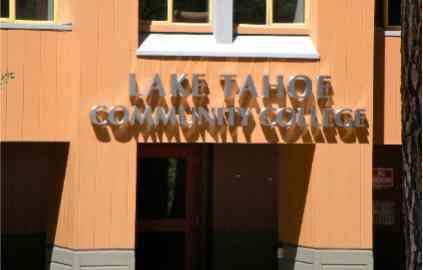
ltcc• Lake Tahoe Community College is having a career fair May 14 from 10am-1pm.

• Tahoe Expedition Academy in Kings Beach will launch its first ninth-grade class in the fall, and will add a grade level each year so it goes through grade 12.

• Liberty Utilities took a survey of customers. The results are online.

• The May issue of Bon Appetit magazine says when it comes to natural wines. Donkey & Goat’s 2011 El Dorado Grenache Blanc is a good gone.

• On April 30 at 6pm the Friends of the Library is hosting The Humane Movement: Past, Present, and Future presented by the Lake Tahoe Humane Society and S.P.C.A. The event is free and is at the South Lake Tahoe library.