Collecting art — work of a different kind

By Robert Schimmel

A funny thing happened on the way to the reception. The good news is that “funny” things are happening all the time, right, especially when we are willing to notice? Wanting to see the latest (three) exhibits opening at South Lake Tahoe’s Lake Tahoe Community College on April 18, I hustled but missed the art talk given by the Haldan Gallery’s featured collection’s co-owner, Hanna Porter, so my mind took a detour to anxiousness.

What if she had a real gem to relate or various insights into collecting (the talk’s theme) I’d never considered? What if …?

Then my nerves calmed as the overall collection came into view and I “bumped” into a friend who gave me a brief summary. Immediately I settled into some veggies and dip to calm the dinner-hour pangs and began to take my usual quick, first impression stroll through the Haldan’s open and inviting space.

Art comes in many forms at LTCC. Photo/LTN file

Art comes in many forms at LTCC. Photo/LTN file

The collection is definitely as billed, “…an array of different mediums, content, and styles from an assortment of national and international artists,” and not halfway around my initial loop I bumped into two friends of differing views regarding the collection. Although each was armed with a unique and relevant background for said opinion, I was once again reminded of how true the adage “you can’t please everyone” really is. As for me, I enjoyed my first look and began seeking ways to educate myself regarding how such a mix of artworks came to be. Then, as serendipity would have it, I met Hanna Porter just as a lull occurred in the reception’s traffic. What a blessing this was, and our encounter lasted a solid, stimulating 15-20 minutes as she graciously shared some of her history.

Like most endeavors in this world, there is no right or wrong way to collect art. This collection of diverse work evolved under the loving and discriminating eye of Porter, German born art lover and widow who professes not being an artist but rather a passionately involved lover of creativity and, therefore, all kinds of artistic expression.

As we conversed, this charming and engaging lady with a wonderful German accent, revealed three core principles I was able to isolate: 1) the artwork had to grab and hold her such that she knew she loved it and wanted to own it; 2) she wouldn’t spend over $2,000 for one piece of work under any circumstance; and 3) there needed to be a “story” or relationship connected to the artist that she could feel and/or experience. Mind you, these rules may not have been the only criteria in every case but clearly laid the groundwork for this assemblage. She expressed how at times a piece was acquired through a strategically planned purchase or a serendipitous opportunity. And like most of us, Porter has her favorites and has evolved over time in the styles, techniques, and themes or messages about which she feels most passionate.
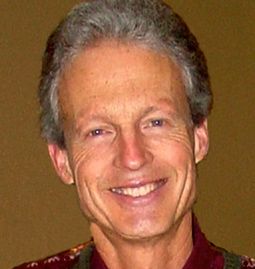
Robert Schimmel

Robert Schimmel

At some point in our conversation I was struck at how fascinating and insightful it might be for her to arrange her exhibitions in chronological order of her purchases. This would more concisely represent the fruits of her own values and changing tastes and give a thread for the viewer to follow and reflect upon re his/her own discriminating notes. I was pleasantly surprised to see her eyes light up with a genuine smile and acknowledgement that the idea indeed had merit and she’d like to try it.

As I left the Haldan, my appreciation for such exhibits and what they bring to our community was heightened. Receptions are not always so personal, and I was very fortunate, but the Haldan staff consistently does a fine job of giving us the chance to meet artist(s) and hear presentations or talks during the reception evenings. And don’t forget that the Haldan usually has an audio tour or interview available. Getting some personal notes on “why and how” to collect art is another welcomed contribution to our edification and how this college and its Art Department seeks to improve life in Tahoe.

My sincere thanks to Phyllis Shafer and her staff for all their superlative efforts in bringing us exhibitions of diverse themes, unknown to nationally prominent artists, varied cultures, etc., not to mention the rotating exhibitions in the Foyer and Student Commons Galleries. No small feat under the best of circumstances, so be sure to attend these three concurrent exhibits and take advantage of our tax dollars and private donations serving us in concrete and rewarding ways.

Robert Schimmel is a professional artist in South Lake Tahoe as well as host of “Lake Tahoe Art Scene” on KTHO radio on Thursdays at 5:15pm.



Golf event raises money in Gene Upshaw’s name

More than 25 NFL players and other sports celebrities will pay tribute to football great Gene Upshaw on July 14-15 during the 5th annual Gene Upshaw Memorial Golf Classic at Gray’s Crossing in Truckee.

Proceeds from the celebrity tournament go to the Gene Upshaw Memorial Fund held at Tahoe Forest Health System Foundation. The fund benefits the Gene Upshaw Memorial Tahoe Forest Cancer Center and the Tahoe Institute for Rural Health Research.

Since 2009, the event has raised nearly $500,000 for pancreatic cancer research, medical treatment and care for cancer patients and their families, sustainability and advancement of medical technology, and funding for research in areas such as traumatic brain injury. Support care programs at the Cancer Center are considered among the best in the country along with the latest in technology and treatment options, including access to clinical trials through its affiliation with the UC Davis Cancer Care Network.

Upshaw died in August 2008 of pancreatic cancer at the age of 63. He was a founding member of the Golf Club at Gray’s Crossing.

For more information, go online.


Parade honors law enforcement

The 4th annual Police Memorial Week Parade is May 4 at noon.

The only such event known to take place in the West, pays tribute to officers killed in the line of duty while celebrating professional law enforcement.

The Silver State National Peace Officers Museum is proud to present our parade in Virginia City. Law enforcement from three states will gather there to pay tribute to their fellow officers who have had their lives taken from them while protecting all of us. They will gather to celebrate a profession like no other; an honorable and very necessary but dangerous life mission. Bagpipers, honor guards, vintage emergency vehicles, mounted officers, and law enforcement from hundreds of miles away.

The parade grand marshal is Soledad police Sgt. Tom Marchese, the driving force behind a feature documentary called “Fallen”.


Stressed? Your body has the answer

stress

We all know the face of stress: the clenched jaw, the furrowed brow, the intense stare. And, really, it’s not a bad look. We all do some of our best work under pressure. Adrenaline and other stress hormones give us the kick start we need to meet deadlines and generally get ahead in life.

But when stress runs too hot for too long, the look changes. People who are stressed for years don’t merely appear driven or focused. They look beaten down. In large doses, stress can wear the body and speed up the clock on aging.

The wear and tear of stress can show up in every part of the body: individual cells, bones, skin. You can even see it in photographs. A Dutch study from 2012 asked volunteers to guess the age of nearly 300 people from photos. The researchers also checked all of the photo subjects for cortisol, a key stress hormone. The results were telling: People with high levels of cortisol almost always looked older than they really were. The researchers estimated that each tiny increase in cortisol — each micromole per liter, to be exact — aged a person by about half a year.

Ronald Nathan, an author and psychologist who runs a men’s-only practice in Albany, N.Y., says he can see the telltale signs of stress in his clients. Wrinkles are one giveaway. “They have the No. 11 between their eyebrows,” he says. “I think the Botox industry is largely based on trying to erase the signs of stress.”

Why does stress leave so many marks? As Nathan explains, cortisol and other stress hormones trigger a “fight or flight” mind-set—something that was very helpful when our species was competing with lions and cave bears. “But in modern life, we don’t have a lot of fights, and there’s no place to run,” he says. The body turns that tension inward, sometimes with disastrous results.

Here are just a few ways that stress can wear down the body. As Nathan frequently tells his patients, stress-related problems can often be avoided. Lifestyle changes, counseling and relaxation exercises can take much of the sting out of stress, he says.

Grinding teeth. Lots of people take out their stress on their teeth, says Eugene Antenucci, a fellow of the American Academy of General Dentistry who has a practice in Huntington, N.Y. As he explains, teeth grinding, or bruxism, is a natural extension of the clenched jaw that most people have in times of stress. When patients come in with newly chipped or worn-down teeth, they’re usually going through a rough patch in their lives. “I hear it all the time. Their jobs are tough. They have money issues. Someone has passed away. They need to deal with stress to stop the grinding.”

Gum disease. Studies have found that people with the most cortisol in their blood, an unmistakable sign of stress, are especially likely to suffer from periodontal disease. And that leads to tooth loss and root canals, as if they didn’t already have enough stress in their lives. It’s not entirely clear how trouble at work or home can lead to unhealthy gums, but Antenucci says that stressed-out people often have dry mouths, one of the major causes of gum disease. “They also don’t take very good care of themselves. When you’re under stress, brushing every day is something that might not happen.”

Inflammation. Lots of people are literally inflamed with stress, says Sheldon Cohen, professor of psychology at Carnegie Mellon University. He explains that cortisol and other stress hormones trigger inflammation all over the body. In small doses, that’s OK, because a little inflammation can help fight infections and speed up healing from injury. But when people are too stressed out for too long, inflammation can get out of control, setting the stage for a long list of potential problems, including pain, heart disease and a weakened immune system. Cohen’s own research has found that stressed people get more than their fair share of colds.

Thinning hair. Most people dealing with hair loss can put the bulk of the blame on their genes. But stress certainly doesn’t help. A 2012 study of 98 pairs of identical female twins found that sisters who reported the most stress in their lives also had the most hair loss. Perhaps not entirely coincidentally, thinning hair was also especially common in women who had the most children.

Thinning bones. One of the pernicious side effects of cortisol is that it keeps bones from absorbing calcium. A 2012 Israeli study of 135 post-menopausal women found that depression, anxiety and stress were all associated with low bone mineral density.

Weight gain. Recent studies have found that stress can upset the balance of hormones that help control appetite. But it’s no secret that stressed people often turn to food for comfort. A 2012 study of 457 women by researchers at UC San Francisco found that women with the most stressful lives also had the biggest problems with overeating.


Letter: SNC thankful for support

To the community,

I want to thank everyone in the entire Sierra Nevada College extended community for their incredible participation during last week’s 24-hour period of Nevada’s Big Give. The official tally on the Big Give website shows that $61,296 was raised in support of SNC.

Your phenomenal efforts made SNC No. 1 statewide for the cumulative dollars raised among the 397 participating nonprofits stretching from Reno to Las Vegas to Elko. Over 80 individuals contributed during this fund drive. We actually raised $62,896 when we include several additional contributions made outside of the Big Give website.

The energy level and enthusiasm on Thursday was absolutely outstanding. We had donations from every sector: alumni, faculty, staff, parents, graduating seniors, members of our Board of Trustees, and of course, a number of individuals here in the community. Most significantly, contributions ranged from $10 to $20,000 – a testament to the importance of gifts of every size. ver half of the gifts received were at the level of $10-$25 and that made all the difference in terms of our overall level of participation. It gives credence our belief that every gift, of every size, makes a difference.

Our efforts were kicked off on Thursday morning with a $20,000 challenge contribution from SNC board member Bridge Stuart. Thanks to all of you, we were able to meet Bridge’s incredibly generous offer. Our board Vice Chair Atam Lalchandani added to the challenge amount, and I joined Ben and Margaret Solomon in constructing a special challenge aimed at our alumni, graduating seniors, parents, faculty, and staff.

We think and talk a lot about the philanthropy of the next generation, so I am extremely pleased to let you know that SNC Alumni and graduating seniors made a very strong showing with a combined total of 32 gifts – approximately a third of the total number of contributions. Graduating seniors logged in as a part of a special Senior Class “$19.69” effort – challenging them to give an amount recognizing the year of the college’s founding for the opportunity to see me dance the hula at the luau two days prior to graduation.

Again, I can’t thank you enough for your support of the college. Your contributions will help us to continue to strengthen SNC and make it great. We have come a long way: achieving unprecedented financial stability for the college; increasing academic excellence and academic rigor; and enhancing opportunities for our students to engage in the kind of active learning – inside and outside of the classroom – that ensures that they will graduate with the higher order critical thinking skills and the leadership and teamwork abilities that are required for success in our rapidly changing world.

Thank you for all that you did to make it such a spectacular day.

Sincerely,

Lynn G. Gillette, Sierra Nevada College president


Douglas County library book sale

The Douglas County Public Library annual book sale is May 18 from 9am-5pm and May 19 fro 9am-2pm.

The sale will be at the C.V.I.C. Hall, 1602 Esmeralda Ave. in Minden.

Hundreds of used books and audio books will be for sale; DVDs, VHS tapes, and music CDs will also be available.

A special preview will be May 17 from 5-8pm for members of The Friends of the Douglas County Public Library. Attend the preview by joining the friends at the door on Friday night.

For more info, call the library at (775) 782.9841.


Guitarist DeGrassi to put on benefit show in Tahoe

Valhalla Grand Hall on May 25 will be the site of a solo guitar performance by Alex DeGrassi.

The concert, co-sponsored by Sorensen’s Resort, is a benefit for the Sierra Nevada Alliance and the Sierra Fund, nonprofits working to protect the Sierra Nevada.

For more information and tickets, call the Alliance at (530) 542.4546, ext. 305.

A VIP reception starts at 6pm, with the concert at 7:30pm. General admission is $25, and VIP tickets are $100.

Valhalla is on the South Shore on Highway 89, just north of Camp Richardson.


Calif. keeps tweaking pot policies

By Peter Hecht, Sacramento Bee

Colorado has the nation’s most meticulously regulated medical marijuana industry. Washington has the first-ever blood-level standard for driving while high.

But in the birthplace of America’s medical cannabis movement and home of the most robust pot economy, California lawmakers can’t seem to figure out what they want to do about marijuana.

The governance of marijuana in California remains hazy as many legislators are skittish over California’s medical cannabis industry, over an unfolding federal crackdown and over risking disapproval of law enforcement interests.

An Assembly committee this month advanced a bill to have the state agency that regulates bars and liquor stores oversee medical cannabis dispensaries.

The bill’s author argued that state regulation could discourage ongoing federal raids on California marijuana businesses. But law enforcement hates the proposal, and marijuana advocates are divided.

A cop-driven bill in the Senate faces furious resistance from cannabis advocates who complain that it will criminalize sick people relying on marijuana. The bill would punish drivers for any detectable level of nonprescription drugs, including marijuana.

Though voters made California the first state to legalize marijuana for medical use by passing Proposition 215 in 1996, California lags behind in setting the rules.

“Proposition 215 called for the Legislature to come up with regulations and they never have,” said Sacramento lawyer George Mull, whose California Cannabis Industry Association last year pushed for a licensing bill for marijuana businesses and is trying again this year.

State Senate leader Darrell Steinberg said it may take two years for the Legislature to agree on how – or whether – to license hundreds of dispensaries and govern an industry providing marijuana to as many as a million Californians with physicians’ recommendations for cannabis.

Steinberg, a Sacramento Democrat, has co-sponsored a regulatory bill in the Senate that he says will be heavily rewritten before getting a vote. He said he is troubled by pot stores that sprouted long after Proposition 215 legalized use for people with ailments such as AIDS or cancer or “any other illnesses for which marijuana provides relief.”

“I don’t think there is any secret that, with the dispensary system, there has been a lot of license taken and there is very little distinction between those who suffer from serious illnesses … and those who can easily get a piece of paper to get the marijuana,” Steinberg said.

Steinberg said he wants to regulate pot businesses and protect access by sick people to marijuana. But he said, “I do not support the legalization of marijuana.”

In Colorado, where voters approved marijuana for medical use in 2000, a for-profit industry thrives under 2010 legislation that licenses marijuana stores and commercial cultivation. The law requires video surveillance of operations and state registration and background checks for medical marijuana workers.

Last year, voters in Colorado and Washington legalized marijuana for recreational use. While California advocates plan a similar measure in 2016, they’re still struggling to persuade lawmakers to deal with medical marijuana.

A California cannabis industry, once valued at $1.5 billion, hangs on a nebulous 2003 state bill that says people with diagnosed illnesses have legal protection “to cooperatively and collectively cultivate marijuana for medical purposes.”

Police and prosecutors in some jurisdictions argue that retail-style dispensaries are not legal under California law, and state courts have issued conflicting rulings. The state Supreme Court is weighing whether cities can ban pot outlets or be forced to accept them.

Amid the ambiguity, federal prosecutors have brought criminal charges against California marijuana businesses, asserting that pot profiteers are operating in “an unregulated free-for-all.”

Colorado’s regulated marijuana industry has seen far less federal enforcement. With that in mind, the Assembly public safety committee Tuesday passed a bill to set a California licensing and oversight program for businesses selling, growing, baking, transporting or lab-testing medical marijuana.

“We have a state of urgency on this issue,” said Assemblyman Tom Ammiano, D-San Francisco, the bill sponsor and committee chair. “People who are obeying the law are currently being heavily prosecuted and having their bank accounts seized. … It’s crying out for regulation.”

Ammiano’s Assembly Bill 473 was blasted by law enforcement interests, signaling a difficult road ahead.

“What this bill does is go beyond Proposition 215 and authorize dispensaries throughout California,” said John Lovell, a lobbyist for the California Narcotic Officers’ and California Police Chiefs associations. “Dispensaries are a blight on communities.”

Mull said many lawmakers are intimidated by police lobbying against perceived pro-pot legislation. He said fears of more federal raids in California, even if legislators act, are another reason “for the lack of energy” on marijuana.

Last year, the Assembly passed an Ammiano bill that would have created a medical marijuana policing division in the state Department of Consumer Affairs, overseen by a committee laden with cannabis business interests and advocates. It stalled in the state Senate.

Don Duncan, California director of the medical cannabis advocacy group Americans for Safe Access, supports Ammiano’s new bill. But he is uncomfortable with the agency picked to oversee dispensaries – the state Department of Alcoholic Beverage Control.

“ABC is better than not moving forward,” Duncan said. “But I really do find it an inappropriate place for regulating medicine.”

Medical marijuana advocates are out to kill separate legislation – Senate Bill 289 by Sen. Lou Correa, D-Anaheim. Backed by law enforcement as “zero tolerance” for “drugged driving,” it would make it illegal to drive with any detectable level of narcotics.

While SB289 exempts prescription medications, the legislation provides no waiver for people with a physician’s recommendation for marijuana.

The bill, to be heard Tuesday, contrasts with the nation’s first-ever driving under the influence standard for marijuana in Washington. Passed by voters as part of that state’s 2012 pot legalization initiative, it sets a blood-level standard for impaired driving based on a specific measurement of pot’s psychoactive component, THC.

The California State Sheriffs’ Association said in a letter that the “any detectable amount” standard in the Correa bill “would provide law enforcement the necessary tools to prosecute drugged drivers.”

“This bill was designed to placate lobbyists for law enforcement,” protested Duncan. “It’s not OK to pass a law that jeopardizes legal medical cannabis patients.”


Calif. medical board open to some prescription-drug-abuse reforms

By Lisa Girion and Scott Glover, Los Angeles Times

The Medical Board of California on Friday embraced a host of reforms aimed at combating prescription drug abuse and reducing overdose deaths but balked at a proposal to strip it of its authority to investigate physician misconduct.

The board, meeting in Los Angeles, voted to support proposed legislation that would upgrade the state’s prescription drug monitoring system, require coroners to report prescription drug overdose deaths to the board, and give the panel new power to halt a doctor’s prescribing in some cases.

The pending legislation was inspired by an investigative series published in The Times last year that revealed that nearly half of the prescription drug deaths in four Southern California counties from 2006 through 2011 included at least one drug that had been prescribed by a doctor. The medical board was unaware of the vast majority of the deaths. In some cases, patients died while investigations into their doctors dragged on for months or years.

Although the board was supportive of those reforms, a proposal by two state legislators to transfer its investigators to the state attorney general’s office was met with more resistance. Sen. Curren Price (D-Los Angeles) and Assemblyman Richard Gordon (D-Menlo Park) said they think shifting investigative responsibilities to the state attorney general would foster cooperation between investigators and prosecutors and streamline the process.

Board members labeled the proposal “drastic” and “radical,” though ultimately decided they did not have sufficient information to take a vote on the matter. Some members struck a defensive tone, blaming lawmakers and the media for failing to grasp the complexity of investigating and disciplining the state’s 100,000-plus doctors.

“It’s easy to assault us,” said board member Reginald Low, adding, “there’s no way the attorney general could take our investigators or hire their own and do what we do.”

When it came to the board’s performance, Low said, “I see the cup as half full, not half empty.”

Fellow board member Gerrie Schipske seemed to agree.

“There’s nobody who would say we can’t improve,” Schipske said. “But there’s a witch hunt going on right now.”

Others seemed to take a more introspective view.

Michael Bishop said he thought Price and Gordon were motivated by a sense of frustration with the status quo — the pair wrote a letter to the board earlier this month threatening to dissolve the panel if it did not become more proactive and show significant progress in its oversight role.

“What they are telling us is: This is your last chance. We’ve given you a lot of rope and you’ve hung yourself,” Bishop told his colleagues.

“So far, the board just hasn’t gotten it,” Bishop added. “We need to get it.”

The idea of placing investigators in the attorney general’s office is not a new one.

A similar plan was proposed in 2004 by Julianne D’Angelo Fellmeth, a public interest lawyer who was appointed by the Legislature to examine the medical board’s oversight of physicians. The plan was supported by then-Atty. Gen. Bill Lockyer, the medical board, the California Medical Assn. and other key players. Ultimately, however, there was political opposition to the idea and it was dropped from proposed legislation.

On Friday, Fellmeth told the board she still considers the transfer “the last best hope” for more timely investigations.

Board members agreed to further study the issues before taking an official position. They also discussed the need to better communicate with the public — and lawmakers — about what they do and how they do it.

To that end, they asked a top staff member to set up a meeting between Price and Gordon and board president Sharon Levine so they could discuss issues, including the proposed transfer of investigators, face to face.

Board member David Serrano Sewell told Levine he thought she needed to personally tell lawmakers of the board’s plan for the future and to assure them of the board’s commitment to seeing it through.

“It think that’s what it’s going to take,” Sewell said.

In other business Friday, the board voted unanimously to create a task force to develop guidelines for the treatment of pain and the prescription of narcotic painkillers.

Notably absent from the board’s discussion was the question of whether it would support the use of CURES, the state’s prescription drug monitoring system, to look for problem doctors as well as drug-abusing patients.

The Centers for Disease Control and Prevention has called on state medical boards to use prescription data to do so, but the idea has been controversial among physician groups that fear it could have a chilling effect on legitimate prescribing.

Board member Barbara Yaroslavsky appeared to touch on the topic, talking about “the technology out there that allows us to know who is prescribing what to whom.”

But the matter was dropped without further discussion.


Nevada taking input on recreation rates

The Nevada Division of State Parks is having Recreational Trails Committee meetings May 8-9 to hear and rate applications for 2013 federal funding.

The meetings will be at 901 S. Stewart St., Carson City, on the fifth floor starting at 8am each day.

Public comment periods will be at 9:30am May 8 and at 8:20am May 9.

For an agenda, email jscanland@parks.state.nv.gov.