Business travelers boost Marriott’s earnings

By Bloomberg News

Marriott International, the largest publicly traded U.S. hotel chain, said first-quarter earnings rose 31 percent as demand increased from business travelers in such U.S. cities as New York.

Net income climbed to $136 million, or 43 cents a share, from $104 million, or 30 cents, a year earlier, the Bethesda-based company said Wednesday in a statement. Analysts’ average estimate was 41 cents a share.

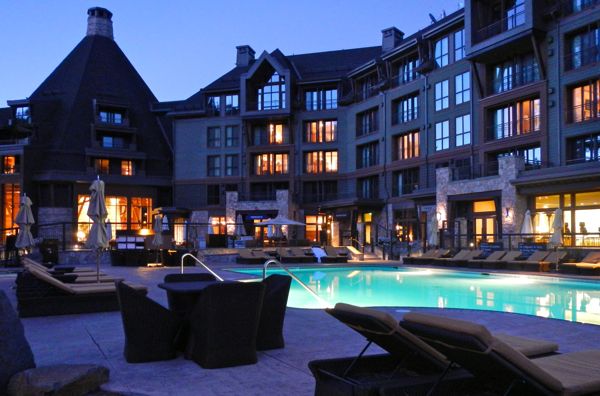
The Ritz-Carlton, Lake Tahoe is part of the Marriott family. Photo/LTN

The Ritz-Carlton, Lake Tahoe is part of the Marriott family. Photo/LTN file

Marriott, whose brands include Ritz-Carlton, benefited from demand in the United States, buoyed by an improving economy and business-travel spending, said Patrick Scholes, an analyst at SunTrust Robinson Humphrey in New York.

“Domestically, the individual business traveler is doing well, particularly in cities like New York,” Scholes said before the results were announced. The greater New York area contributes about 10 percent of Marriott’s earnings, he said.

Revenue per available room (revpar), an industry measure of occupancies and rates, climbed 5.8 percent at company-operated hotels in North America. Worldwide, the measure increased 4.6 percent in the first quarter, excluding currency fluctuations.

“Our first-quarter fee revenue exceeded our expectations,” President and Chief Executive Officer Arne Sorenson said.


U.S. skier visits soar in 2012-13 season

The National Ski Areas Association announced today that U.S. ski areas tallied an estimated 56.6 million skier and snowboarder visits during the 2012-13 season. The results represent an 11 percent increase over the previous season, and the largest year-over-year gain in 30 years.

Despite a slow start to the winter season in parts of the country, many ski areas experienced a strong Christmas holiday period, and also reported strong visitation during Presidents Day and throughout March, helping to propel the industry back into a more typical visit volumes.

People line up for Vail's gondola that opened this season. Photo/LTN file

People line up for Vail’s gondola that opened this season. Photo/LTN file

In another indication of the widespread rebound this season, 78 percent of reporting ski areas posted increases in visits. The median resort experienced a 10.6 percent gain in visits.

Visits were up in all regions, with the biggest rebounds seen for the Pacific Southwest, up 20.5 percent. Meanwhile the Northeast was up 20.3 percent, and the Southeast was up 17.2 percent. Impressive gains were also recorded in the Midwest, up 11.5 percent, and Pacific Northwest, up 7.5 percent. The Rocky Mountain was up 1.9 percent over the 2011-12 season.

On an overall national basis, visitation was up in every period of the season, with the most substantial increases recorded at the end of the season. Specifically, visits were estimated to be up 2 percent in the early season; up 16 percent during the Christmas and New Year’s holidays; up 7 percent during the January 7 to Feb. 18 period; up 14 percent in the Feb. 19 to March 24 period; and up 25 percent during the March 26 to closing period.


Hotel guests not turning on in-room entertainment

By Jane L. Levere, New York Times

Len Markidan, a 26-year-old marketing consultant based in San Francisco, is the type of business traveler who forced LodgeNet, the hotel guest-room entertainment provider, to file recently for Chapter 11 bankruptcy protection.

Markidan, who spends 40 percent of his time traveling on business and is an elite participant in the Hilton and Hyatt loyalty programs, takes his MacBook Pro and iPad with him on the road and watches all television programs by streaming them on his laptop, using a portable router to extend the Wi-Fi signal in his hotel room.

“For a lot of people my age and a lot of people in general, the way we consume entertainment at home is changing,” he said. “I no longer have a cable subscription — the way I watch entertainment at home is the same way I watch it on the road. I have a Hulu subscription, Amazon Prime and Netflix.”

Guest-room entertainment “is not an amenity that will drive my decision to stay at a hotel,” he said, adding, “I’m a lot more concerned with loyalty program perks.”

James Lingle of Highlands Ranch, Colo., a consultant to hotel companies and guest-room entertainment service providers like LodgeNet’s competitor iBahn, observed: “If you look back, typically the first thing a guest would do when they walked into the door of a hotel room would be to turn on the TV. Now people bring their entertainment with them, tablet-based devices like an iPad, accounts and memberships like Netflix, Amazon Prime and Hulu Plus, and they want to be able to use them.”

LodgeNet’s decline directly reflects these changes. According to its bankruptcy filing, the number of hotel rooms it served globally dropped to 1.5 million in 2011 from 2 million in 2009. It provided guest-room entertainment services to most major hotel chains, usually by installing and maintaining free televisions and offering video-on-demand entertainment, for which it and the hotels received fees. LodgeNet’s sales in 2011 were $421.3 million, a 21 percent drop from a high of $533.9 million in 2008.

Colony Capital, a real estate and hotel investment firm in Los Angeles, led a group that invested $70 million in a controlling interest in LodgeNet, based in Sioux Falls, S.D., and brought in a management team of former Starwood, Fairmont and Hilton executives. LodgeNet, which emerged from bankruptcy in late March, also signed an agreement with DirecTV to jointly offer entertainment to hotels and hospitals.

The revamped LodgeNet faces strong competition from companies including Swisscom Hospitality Services, based in Geneva; iBahn, based in Salt Lake City; Guest-Tek, of Calgary, Alberta; and Roomlinx, based in Broomfield, Colo. All are developing systems that let travelers consume entertainment the way Markidan does — via the Internet, frequently through subscriptions they already have and use at home, either through Wi-Fi or a direct cable connection between their laptop or tablet and the guest-room television set.

Different types of hotels have different policies regarding Internet access. Many less expensive hotels offer it free, while more expensive ones often charge for it. What’s expected to happen next, speaking broadly, is that using the Internet for e-mail will be free, while many hotels will charge for uses requiring a lot of bandwidth, like downloading or streaming videos, with the cost tied to the amount of bandwidth required.

“We will give customers more short-form content at very attractive prices, affinity packages of sports channels, just-missed TV, video games, as well as movies currently in theaters,” said Michael Ribero, Lodgenet’s new chief executive. “We want to give them the opportunity to watch what they want, even if it’s through Netflix and Amazon Prime.” He said LodgeNet will no longer provide television equipment in hotel guest rooms in exchange for video-on-demand fees. Instead, DirecTV will offer hotel owners lease financing for TVs, freeing capital that LodgeNet can invest in product and service improvements.

C. Scott Hansen, director of guest technology for Marriott International, said his company’s objective over the next several years was to connect every guest-room TV to the Internet. Marriott International also plans to limit the number of TV channels its brands offer to a targeted, all-high-definition lineup and to augment these with Internet-based, streaming content, via services like Netflix and YouTube.

Bandwidth capacity at many Marriott International hotels will need to be increased to support these services, an expense Mr. Hansen said would be offset by guests’ purchases of Internet access, commissions paid by services like Netflix for signing up new members and advertising revenue from companies that could use the TV or guest’s laptop or tablet screen for messages.

Josh Weiss, vice president of brand and guest technology for Hilton Worldwide, said his company offered a broad range of short, low-price TV programs, similar to those available from Netflix or iTunes, in many hotels, provided by LodgeNet and others. This content costs $2 to $5, far less than a full-length movie. Hilton Worldwide also offers a free, DirecTV service similar to DirecTV’s residential service at over 150 hotels across most of its brands and plans to expand this service this year.

Mike Blake, chief information officer of Commune Hotels and Resorts, said the company was considering keeping track of guests’ channel preferences, which would automatically come up whenever a guest turned on the TV in the hotel room. He said this service, which guests could opt in for, should be available by the fourth quarter of this year. Other new services under consideration include the ability to customize music playlists for guests and to stream personal photos on guest room TVs.

Apple TV in hotel rooms at the Aloft Cupertino, a Starwood hotel, lets guests play video and music and display photos from any Apple device on their television set. Starwood is evaluating offering this system and additional entertainment options at other Aloft and Starwood hotels.

CitizenM, a Dutch chain of what it calls “affordable luxury” hotels — now all in Europe, with two slated to open in Manhattan this year and next — provides a Samsung tablet in each guest room, with technology from Swisscom that provides a music library and free video-on-demand TV and also controls the blinds, lighting and temperature.

The 85-year-old Peninsula Hong Kong this month will finish installation of a guest-room entertainment system that Ingvar Herland, Peninsula Hotels’ general manager of research and technology, said costs $10,000 to $25,000 a room. This proprietary system features fully customizable bedside and desk tablets preset in a choice of five languages, with six more to follow this year. The tablet allows the guest to order room, concierge and housekeeping services, and to control lighting, curtains, the temperature and privacy options. It also provides — via a flat-screen, Blu-ray, LED television — terrestrial programming, 90 international television channels, 450 Internet radio stations, free HD and 3-D movies, as well as free international voice-over-Internet protocol telephone calls.

Herland said the new system would be offered at the Peninsula Paris, opening next year, and would eventually replace existing systems at other Peninsula hotels.

Travelers should not expect a proliferation of new services like the Peninsula’s, said Bjorn Hanson, divisional dean of the Preston Robert Tisch Center for Hospitality, Tourism and Sports Management at New York University.

He said that although hotels in the United States this year were expected to spend a record percentage of profits on capital expenditures — like entertainment systems — profits per room also were expected to remain well below their 2006 peak. Companies offering new systems “that are expensive for hotel owners are doing so at a challenging time,” he said, adding that many hotel owners would consider premium cable service as an alternative.

One vanishing option is sex-related entertainment. Omni banned such programs in 1999, citing its support of “pro-family issues,” while Marriott International stopped offering it last year. “If you want it, you can access it online on your own,” said Hansen of Marriott.




Caesars Entertainment revenue declines

By Richard N. Velotta, Las Vegas Sun

Caesars Entertainment narrowed its losses during the first quarter but still saw revenue fall 2.9 percent, from $2.21 billion to $2.14 billion, and experienced a net loss of $216.7 million.

The company, which operates 13 Nevada casinos, including two in Stateline, and eight in Las Vegas that are open and a ninth that’s being renovated, said income from its Nevada properties fell 13.2 percent, while revenue was off 2.6 percent.

Executives reported a net loss of $1.74 a share. During the same quarter last year, the company reported a net loss of $2.24 a share, or $281.1 million.

Caesars is the world’s most geographically diverse casino company. It operates commercial and tribal casinos, racinos and riverboats in 13 states and a Canadian province and on three continents.


El Dorado County needs foster families

May is Foster Parent Appreciation Month. There are currently 42 licensed foster family homes in El Dorado County.

Foster parents provide temporary, loving homes for children, ensuring that each child’s physical and emotional needs are met. The foster parent makes sure the child is clothed, fed, taken to school and to medical and counseling appointments, and other needed activities. Foster family homes receive a reimbursement to help pay for the care of the child.

Children of all ages, from newborns to teens, and from all walks of life, enter foster care.

Specific criteria must be met to become a licensed foster home. Foster parents must complete a health screening and criminal background check, must maintain certification in CPR and first aid, and complete a series of trainings. Once they are licensed, foster family homes may take in one or more children, depending upon the home situation and needs of the child or children.

The El Dorado County Foster Family Home Licensing Program licenses families and individual homes. The program also offers trainings, meetings and support services to foster parents as part of a collaborative effort with local colleges and other partnering agencies. According to Goucher, additional caring adults in El Dorado County are needed to consider foster parenting.

People are encouraged to call and ask questions. For more information about the Foster Family Home Licensing Program, call Debra Brown at (530) 642.7122.


Snippets about Lake Tahoe

rascal flatts• Rascal Flatts has teamed up with CMT to help country fans honor their mothers this Mother’s Day with a Mother’s Day ecard and a contest with a grand prize trip to see the Flatts in concert in Lake Tahoe on July 19 at Harveys. Go online for contest details.

• Lake Tahoe Resort Hotel Senior Sales Manager Kris Keesling was recognized by the California Society of Association Executives as the Associate Member of the Year for 2012-13.

• The Bicycle Advisory Committee of the South Lake Tahoe Recreation Facilities Joint Powers Authority will meet May 3 from 9-11am at the upstairs conference Room at Lake Tahoe Airport.

• The Fields Advisory Committee of the South Lake Tahoe Recreation Facilities Joint Powers Authority will meet May 6 from 4–6pm in the board room at the Lake Tahoe Unified School District office.

• The Spring Lake Tahoe Articulation meeting is May 21 from 4-6pm in the board room at the Lake Tahoe Unified School District office. It will focus on bridging preschool foundations and the Common Core.


Placerville suspect may be connected to Calaveras kidnapping

By Cathy Locke, Sacramento Bee

Placerville police are investigating a possible link between an alleged kidnapping in the city this morning and Saturday’s fatal stabbing of a an 8-year-old girl in Calaveras County.

“We have no confirmed nexus to the Calaveras County case,” said Placerville police Capt. Mike Scott. But he said Placerville officers have been in communication with Calaveras County law enforcement officials following the arrest of 44-year-old Jason Wayrynen. Scott said a DNA sample also has been collected from Wayrynen.

Wayrynen, whose last known address was off Paul Bunyon Road in Camino, allegedly entered a Placerville apartment uninvited this morning and took a 15-month-old girl from her mother.

Jason Wayrynen

Jason Wayrynen

Police were called to an apartment in the 2800 block of Schnell School Road at 8:03am. The caller said that a man she did not know was inside her apartment and threatening to take a child who was in the residence. Dispatchers were told that the child’s mother was struggling with the suspect, according to a police department news release.

When police officers and El Dorado County sheriff’s deputies arrived, they found the man, later identified as Wayrynen, still inside the apartment and took him into custody.

They were told that Wayrynen, who was not known to any of the apartment occupants, had followed the original caller into the apartment uninvited. He reportedly focused his attention on the 15-month-old girl, forcibly taking her from her mother and holding the child to the ground.

The mother was able to wrestle her daughter away from Wayrynen and put her in a bedroom where other children were hiding. The mother reportedly closed the door and fought with Wayrynen to prevent him from entering the bedroom until officers arrived.

Scott said there are some similarities between Wayrynen and the description of the suspect in the death of Leila Fowler of Valley Springs. The girl’s 12-year-old brother reportedly came upon an intruder in the house about noon while the parents were away, Calaveras County sheriff’s deputies said. The intruder then fled and the brother found his sister with stab wounds.

Wayrynen was booked into El Dorado County Jail on suspicion of kidnapping and burglary. Anyone who has had recent contact with Wayrynen or who has information pertaining to the case is asked to call the Placerville Police Department at (530) 642.5280 and refer to case No. 13-540.


Learn how not to be a victim of phone, Internet scams

South Lake Tahoe police Detective Nick Carlquist and Lt. David Stevenson will be at the senior center May 10 to talk about phone and Internet scams.

The discussion will be during the 5:30pm potluck.

For those attending, bring a plate and utensils, and either a salad, side dish, fruit or dessert for six to eight people. Tamale pies and quesadillas will be provided.

The center is at 3050 Lake Tahoe Blvd. Guests are welcome to this free event.

For more info, call Arline at (530) 545.1277 or Francine at (530) 541.8380.


NDOT gives Tahoe roads a pass in 2013

Publisher’s note: This is one of a few stories about construction planned for the Lake Tahoe Basin this summer.

By Kathryn Reed

While Nevada state highway officials are well aware of the condition of Kingsbury Grade, it’s going to be another year before that stretch of road in Lake Tahoe gets any more attention.

Also known as Highway 207, this South Shore artery that links Tahoe and the Carson Valley was torn up during the last four years for an erosion control project that took much longer than it was supposed to. Not touched were the numerous potholes and other hindrances with the asphalt.

Work continues at the Kahle Drive portion of the Stateline-to-Stateline bike path. Photo/LTN

Work continues at the Kahle Drive portion of the Stateline-to-Stateline bike path. Photo/LTN

Starting in 2014 and possibly going into 2015 will be a $7.5 million project to overlay the highway from the basin at the juncture of Highway 50 and going up 3.7 miles.

“No one will argue it’s needed. It’s falling apart,” Scott MacGruder, spokesman for Nevada Department of Transportation, told Lake Tahoe News.

MacGruder call this a “pretty low-key year for NDOT” when it comes to work in the Lake Tahoe Basin.

In less than 20 years, NDOT has put in about $30 million worth of erosion control work in the basin.

NDOT and Caltrans talk to each other, as well as the local jurisdictions, to try not to have every highway in the basin torn up at the same. With dirt only supposed to be moved from May 1 to Oct. 15 based on Tahoe Regional Planning Agency rules, the window to do work is limited for all concerned. With dry years like this, though, exemptions are often granted to start work sooner.

Caltrans has projects on most of the California routes in the basin.

To help get NDOT projects wrapped up last year, there was an incentive clause in the contract for the roundabout on Highway 28 in Incline Village to be finished last year. It could have stretched into this year.

NDOT crews will be doing some maintenance to highways, but no big projects.

The department is overseeing the $900,000 completion of what is called Phase 1C of the Stateline-to-Stateline bike path. The first section of the South Shore route was laid down last year starting at Rabe Meadow in Stateline at the Lam Watah Trailhead parking lot on Kahle Drive.

This year the section of trail linking the bike path to Round Hill Pines Beach will be completed.

The three South Shore segments are broken up as follows:

• Casino area to Kahle Drive

• Kahle Drive to Elks Point Road

• Elks Point Road to Round Hill Pines.

The middle section was built first because it is all on Forest Service land..

When completely built, the 30-mile bike path will go the Crystal Bay.


‘Farewell to Manzanar’ author coming to Tahoe

Jeanne Wakatsuki Houston, award-winning author of “Farewell to Manzanar”, will be in South Lake Tahoe to speak about how the story of her family’s life in an internment camp became a cautionary tale about civil rights violations.

She is one of five authors selected for the Cal Humanities Searching for Democracy California Reads Program.

A reception and book signing will follow.

The event is May 14 at 5pm at the South Lake Tahoe Library, 1000 Rufus Allen Blvd.

For questions, contact Tahoe.Programs@gmail.com or (530) 573.3185.