Bulletproof whiteboards and marketing school safety

By Liz Halloran, NPR

A recent news item out of Minnesota: “Bulletproof Whiteboards Unveiled at Rocori Schools.”

Bulletproof what? Where?

That would be whiteboards, at the small central Minnesota Rocori School District, which will spend upward of $25,000 for the protective devices produced by a company better known for its military armor products.

“The timing was right,” Rocori school board Chairwoman Nadine Schnettler tells us. “The company is making these in response to the Newtown shooting, and has been making similar products for our soldiers in Iraq and Afghanistan.”

The $300, 18-by-20-inch whiteboards, produced by Maryland-based Hardwire LLC, “will be an additional layer of protection” for students and teachers, she says.
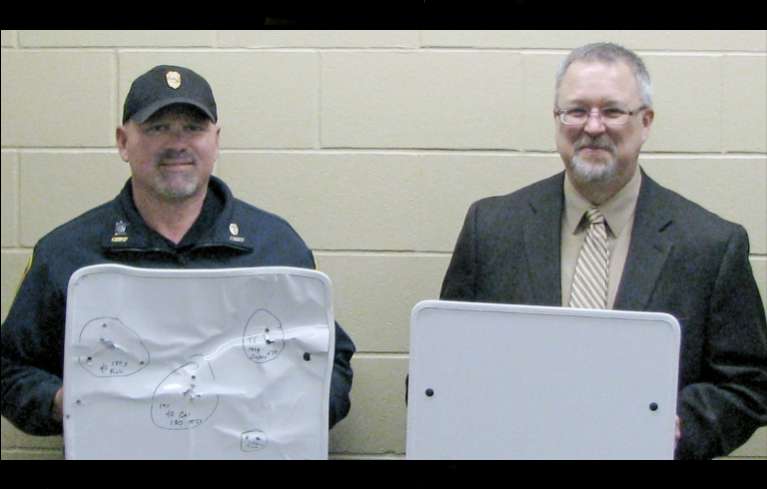
Cold Spring, Minn., Police Chief Phil Jones (left) and Rocori School District Superintendent Scott Staska hold bulletproof whiteboards in April while announcing the school system's $25,000 investment in the shields.

Cold Spring, Minn., Police Chief Phil Jones, left, and Rocori School District Superintendent Scott Staska hold bulletproof whiteboards. Photo/Hardwire

It’s not just the conversation about guns and school safety that’s changed since Adam Lanza gunned down 20 students and six adult staff members at Sandy Hook Elementary School in Newtown, Conn., in December. It’s also the plethora of products, including training programs that in some instances advocate fighting back, that are being marketed to school districts that are typically cash-strapped but desperate to prove they’re doing something to provide better security.

Bulletproof whiteboards and clipboards. Bulletproof wall panels. Bulletproof backpack inserts. Bullet “resistant” window film. Specialized locks. Training that turns the emergency lockdown, “shelter in place” response on its head.

While proponents of the school safety items and training say their products provide more than just a psychological fix, critics say they need a lot more persuading.

“After every high-profile school shooting, we have an explosion of gadgets, gurus and charlatans,” says Kenneth Trump, who is openly disdainful of the bulletproof items, but more so of training programs that advocate confrontation. “Corporations see dollar signs,” he says, “and believe that schools have huge budgets to buy new products and services.”

But school budgets are far tighter now than in recent memory, he says, with precious little to spend for whiteboards or training.

“Federal and state school safety grants have been hacked at, if not eliminated,” Trump says. “The pool of dollars that many vendors envision doesn’t really exist.”

His unvarnished take: “The vendors may be opportunistic, but the people on the purchasing end aren’t thinking it through, either.”

A post-Newtown measure that will be considered by the U.S. Senate would authorize $40 million in grants that must be matched by local school systems for improving security with measures including lights, locks and surveillance equipment, as well as for security training for teachers and administrators.

The U.S. Education Department is also developing an emergency guide for schools, and the Department of Homeland Security is writing a similar one on securing school buildings. The Education Department’s Readiness and Emergency Management for Schools has been a victim of budget cuts, unfunded since 2011.

When Hardwire LLC, traditionally a manufacturer of armor and shields for the military and law enforcement, wanted some attention for its new bulletproof school products, it’s not surprising it zeroed in on Rocori.

A decade ago at Rocori High School in Cold Spring, Minn., 15-year-old John Jason McLaughlin to kill two fellow students.

And Hardwire already had a working relationship with a local company, Cold Spring Granite, which provides material that the armor company uses in its products for bridge and building infrastructure protection.

The town’s police chief made the whiteboard pitch to the school board, says Schnettler. And members were pressed to act quickly, she says, to take advantage of a special offer: The granite company would donate 75 whiteboards to the district’s public and parochial schools if the board agreed to match the purchase.

“It wasn’t a unanimous vote,” Schnettler says, “primarily because Hardwire had a bit of a sense of urgency. They wanted Rocori to be the first district to have these, and if we didn’t take the offer, they were going to move on.”

Schnettler, who voted in favor of using $25,000 from a capital improvement fund to purchase the whiteboards, says that in hindsight she would still do the same.

“I don’t believe it’s a waste of money,” she says. “The chief showed us how to use it offensively — to block penetration of bullets through door windows, or to knock the gun out of the intruder’s hands.

“It buys time for your local law enforcement to get there,” she says.

Emily Heinauer, senior director of advanced programs for Hardwire, agrees that the whiteboards should be viewed as tools to buy time before help arrives.

“During the Virginia Tech shootings and at Sandy Hook, people were throwing themselves in front of their students to protect them,” she says. “The whiteboard is meant to be defensive,” used by teachers potentially in the line of fire.

Hardwire has created a nonprofit “adopt-a-school” organization through which tax-deductable donations may be made for the purchase of the bulletproof products. Heinauer says that the parents of the students killed at Rocori High School a decade ago also donated money to purchase additional whiteboards.

Schools Superintendent Scott Staska did not return calls for comment.

Cathy Paine speaks with authority about school security, and with good reason.

She was the school psychologist at Thurston High School in Springfield, Ore., when in 1998 student Kip Kinkel and wounded 25 others.

Paine, still a school psychologist in Springfield, is chairwoman of the National Association of School Psychologists’ emergency assistance team.

She says that though she understands the fear that is driving the school security market, she views bulletproof whiteboards and the like as “a knee-jerk reaction to a problem that doesn’t exist.”

“It’s such a rare event that an armed intruder will come in — there’s a 1 in 2.5 million chance it will happen,” she says. “We want to have comprehensive safety programs, we want to be prepared, but we should be looking at what are the likely crises.”

Her tack is to encourage school districts to balance the physical safety of their campuses with what she called the “psychological safety of the campus.” A bigger risk to safety in schools is kids being bullied and harassed, she says.

After the shooting at her school, there was a push by some for metal detectors, which the school ended up not installing. But the district did receive a federal grant through a program called the , which was used for crisis planning, looking at physical safety and the school environment.

The school system installed perimeter fencing, she says, redesigned some school entrances, and closed up others. The high school already had security cameras, which documented the shooter, gun hidden, as he approached the school.

That money, however, has dried up, Paine says, as has much of the other federal money once available for school safety measures, including school resource officers.

Paine and Trump, the school security expert, say they are particularly concerned with training programs that encourage, in certain circumstances, confronting armed intruders.

One of the programs receiving the most attention is known as, for Alert, Lockdown, Inform, Counter, Evacuate. It’s not a new concept, Trump says, and is similar to other training — except for elements that encourage students to “distract” and “confuse” an armed suspect by throwing things at him or her, and then potentially launching a physical attack.

“You put lipstick on a pig, but you still have a pig,” Trump says of the training, which he and some school experts argue has been discredited before in K-12 situations, and could place children in more danger both physically and psychologically.

Says Paine: “The main thing that’s disturbing about it is trying to have our children understand and execute this kind of a plan. I don’t think that’s a situation we want them in. … We’re better off teaching our kids to evacuate quickly and safely, or to shelter in place.”

ALiCE and programs like it have supporters — many of whom use the example of the passengers who fought back against hijackers on Sept. 11.

One of its advocates is Ridgemont, Ohio, schools Superintendent Emmy Davis, featured on the website of Response Options, which came up with the training program. She says it provides a “proactive approach, rather than hiding or waiting” when there’s a gunman in a school building.

Rob Slattery, a retired police officer who is director of operations at in Ohio, says the school protection products they make (including bulletproof whiteboards and backpack inserts) are just tools.

“I wish there wasn’t a need for this product,” he says. “And by no means are we saying this is a solution to the problem. This is an option. To have something between you and an assailant? Anything is a positive.”

He says he sees it as akin to the auto industry coming up with air bags.

His company has done a lot of business with lawyers, providing bulletproof clipboards and briefcases, but school products are now about 65 percent of its market.

Trump, who argues that the best practices in place at Sandy Hook got a lot of children out of the building safely, says he advises schools not to waste money on whiteboards or ALiCE, but rather to invest money on resource officers, counselors, radios and cameras.

“Focus on fundamentals and get back to the basics,” he says. “There is a security product for every possible need that your budget will buy. The question is, is that the best use of limited resources?”

But in Cold Spring, Minn., Schnettler, the school board president, says that the district was responding to parents who were concerned after Newtown.

“We installed a buzzer system and locks in the elementary schools that we didn’t have before,” she says. “And we looked at our other security measures and other things that had to be tightened up.”

And they purchased the whiteboards, which will be hung on the walls, the superintendent says, if or until they are needed.


Do you have a plan in case of a fire?

If a fire broke out tonight while you were sleeping, would you and your family get out alive?

Today is a great time to develop a home fire escape plan. Teach it to and practice it with your family on a regular basis.

Check your smoke detector and replace the battery at least once a year.

And finally, remember, if there is a fire, teach everyone to get out and stay out, It’s your best fire- safe response.

— Sallie Ross-Filgo, South Lake Tahoe Fire Department


Hot dogs are not all the same

By Dan Myers, TheDailyMeal.com

The hot dog is one of the few foods that’s nearly impossible to screw up. You heat it through, tuck it into a bun, squirt on some mustard, and call it lunch. But there’s a big difference between not screwing something up and turning it into a paradigm-shifting, transcendental dining experience. And there are lots of hot dog stands, restaurants, and drive-ins out there that have the power to change your life.

The perennial grill mate to hamburgers, the hot dog sometimes gets the short end of the stick, charring at the back of the grill while juicy burgers are snatched up as soon as they hit the right temperature. But there’s a science, if not an art form, behind constructing the perfect hot-dog-eating experience.

Hot dogs and toppings are not always ordinary. Photo/Food Network

Hot dogs and their toppings are not always ordinary. Photo/Food Network

That experience was introduced more than 100 years ago, when German immigrants first brought over their frankfurters and started selling them on the cheap at amusement centers like Coney Island, arguably the epicenter for American hot dog consumption. Charles Feltman is widely considered to be the first person to have applied hot dog to bun, in order to avoid needing to supply plates and silverware to customers at his sprawling Coney Island restaurant. Employee Nathan Handwerker opened his own hot dog stand a few blocks away in 1916 and sold them for less than Feltman, and became wildly popular (and remains so to this day).

The hot dog diaspora then began to take on a life of its own, as people began developing their own spice mixes and making their own hot dogs, and every region and group of people soon put its unique stamp on the snack. Greek immigrants in Michigan concocted a cinnamon-rich beef chili that came to be known as Coney sauce, but it has nothing to do with Coney Island, while “michigans” are big in Upstate New York but have nothing to do with the state. In Chicago they top all-beef dogs with mustard, fresh tomatoes, onions, sport peppers, bright green relish, dill pickles, and celery salt. Spicy Texas Red Hots are popular in New Jersey, but not in Texas, and the uncured, unsmoked White Hot is popular in upstate New York. And the regional variations go on and on.

According to a recent study by GrubHub, the country’s most popular hot dog topping is cheese, followed by chili, mustard, onion, and Chicago-style. Ketchup is further down on the list, and, surprisingly, sauerkraut is down toward the bottom.

On our quest to find America’s best hot dogs, we kept an eye out for drive-ins, restaurants, and roadside stands with a definitive style of hot dog and topping, one which embodies not only the region’s quirks but the particular tastes and culinary traditions of its people. We judged these hot dogs based on several criteria: the quality of the ingredients (sourcing the franks from well-known regional producers and using fresh-chopped onions, for example), the entire hot dog-eating experience, from driving up to placing your order to taking that first bite, as well as reputation among professional critics and online reviewers.

In order to be included in our list, the vendor needed to have a trademark dog, with toppings that are unique and renowned. For example, Ben’s Chili Bowl in Washington, D.C., doesn’t just have a trademark frank (the half-smoke), it has a trademark topping (chili), is well-regarded by locals and professional eaters alike, and eating there is a memorable experience unto itself. For those reasons, it’s high on our list.

Sadly, there were some popular favorites that didn’t make the cut. While Lafayette Coney Island in Detroit ranks high, its modernized neighbor, American Coney Island, didn’t, because it lost much of its charm in the renovation. And while the pretzel dog at chain Auntie Anne’s has its loyal devotees, the experience isn’t exactly sublime.

Our list runs the gamut from ancient stands that have been serving the same exact product day in and day out for decades to gastropubs putting their unique stamp on the hot dog to a place where people wait in line for more than an hour for one topped with foie gras. There’s one constant thread between them, though: they’re the country’s best.

America’s best hot dogs:

1) Fat Johnnie’s Famous Red Hots, Chicago: Mighty Dog

2) Rutt’s Hut, Clifton, N.J.: The Ripper with Relish

3) Hot Doug’s, Chicago: Foie Gras and Sauternes Duck Sausage

4) Schaller’s Drive-In, Rochester, N.Y.: Meat Sauce, Mustard, Onions

5) Olneyville N.Y. System, North Providence, R.I.: NY System Dog

6) Superdawg, Chicago: Superdawg

7) Rawley’s Drive-In, Fairfield, Conn.: “The Works”

8) Katz’s Delicatessen, New York City: Mustard and Sauerkraut

9) Flo’s, Camp Neddick, Maine: Hot Dog with Mayo, Celery Salt, Relish

10) Dew Drop Inn, Mobile, Ala.: Dew Drop Dog.


Nevada beefing up motorcycle safety

Thirty-seven motorcycle fatalities occurred in Nevada in 2012, according to the Nevada Office of Traffic Safety. With a continuing goal of zero fatalities, Gov. Brian Sandoval proclaims May 2013 Motorcycle Safety Awareness Month.

The proclamation calls on motorcyclists and motorists to be vigilant in their efforts to share the road to ensure the safety of everyone on Nevada’s roadways.

“Respect my space. Respect my life. Share the Road” will be communicated throughout Nevada on outdoor bulletins and on radio.

Specific Share the Road guidelines for both motorists and motorcyclists to reach the goal of zero fatalities include:

– Give motorcyclists a full lane of travel

– Keep three to four seconds behind a motorcycle

– Remain alert and look for motorcyclists on the roadway, especially before making a left turn

– Always wear a properly fitting helmet and eye safety gear

– Be visible; wear proper clothing or reflective decals and ride with your headlight on

– Remain alert and give yourself time to react

– Participate in rider education programs.


LTCC looking for community to define next 40 years

As Lake Tahoe Community College gears up to celebrate its 40th birthday it is taking the time to focus on what the college is and what it can become over the next 40 years.

The community is invited to a visions session to help define the college’s future, and by extension, the region’s future.

The event is June 8 from 8am-1pm in the college board room.

To RSVP to LTCC 2020 Vision, call (530) 541.4660, ext. 210 or email booth@ltcc.edu.


Snippets about Lake Tahoe

tap• Tahoe Arts Project’s spaghetti benefit is May 23 from 5:30-7:30pm at Bert’s Cafe, 1146 Emerald Bay Road, South Lake Tahoe. Cost is $10 per person. Purchase tickets at Bert’s or call (530) 542.3632.

BASSmaster magazine has ranked Clear Lake as the third best bass lake in the country. Other Northern California waters on the list are: Delta No. 9, Lake Oroville No. 24, Lake Shasta No. 33, Bullards Bar No. 37, and Lake Berryessa No. 53. The top spot is Lake St. Clair in Michigan.

• At the April National Rural Water Association conference in Stateline there was a blind tasting with Incline Village General Improvement District awarded the Best Tasting Water in Nevada. IVGID’s water comes from Lake Tahoe.

• Truckee High School Principal Greg Dettinger has resigned after having the job for one year.

• Here is the Caltrans El Dorado-Tahoe roadwork schedule.


Then and now: Burgers for better than 50 years

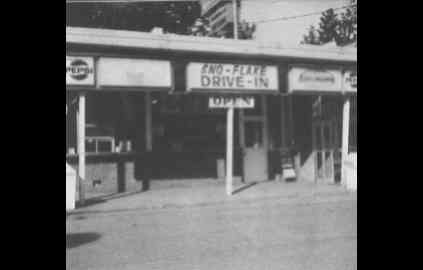
Sno-Flake has been serving burgers since 1961. Photo/Bob Rockwell

Sno-Flake has been serving burgers since 1961. Photo/Bob Rockwell

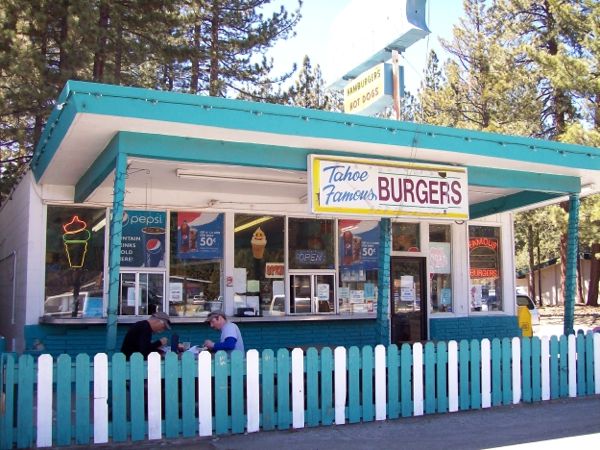
It's common to see lines for soft serve cones. Photo/Bill Kingman

It’s common to see lines for soft serve cones. Photo/Bill Kingman

Sno-Flake Drive-In — a Highway 50 landmark in the Al Tahoe area. A burger joint first started there in the 1950s.

And at one time, it was purple.

It has been Sno-Flake since July 1961. Here is a Lake Tahoe News story about the burger joint turning 50.

— Bill Kingman


Calif. monastery — a link between old and new

By Kathryn Reed

VINA – Wine and religion have long been partners. One only needs to think of the Last Supper or today’s communion. Franciscan monks have been cultivating grapes in California since the 1800s. But it’s the Trappist monks who are the newcomers to the wine business – at least in California.

New Clairvaux Winery first planted grapes in 1990. However, the 580-acre spread north of Chico has some famous names associated with the land and structures on it – like those of Leland Stanford, Peter Lassen and William Randolph Hearst.

It was Lassen who in 1846 first planted grapes here. Stanford bought the land in 1881 and then turned it into the world’s largest winery and vineyard at 4,000 acres of wine grapes and 55,000 acres in total. In 1919, 23 years after Stanford’s death, the Great Vina Ranch was sold.

The Chapter House at the Abbey of New Clairvaux is a window to from the old world to the new world. Photos/Kathryn Reed

The Chapter House at the Abbey of New Clairvaux is a window from the old world to the new world. Photos/Kathryn Reed

The Abbey of New Clairvaux started in 1955.

The monks and their winemaker use the 100-year-old brick wine cellar today.

New Clairvaux winemaker Aimee Sunseri comes from some impressive pedigree. Her family’s Nichelini Winery in St. Helena is the oldest family-owned winery in Napa County. She is also the winemaker there; making her the fifth generation to be part of Nichelini.

Sunseri has roots in El Dorado County, too, having worked at Boeger Winery in Placerville.

(Besides wine, the monastery also has a partnership with nearby Sierra Nevada Brewery to produce Ovila beer in the Belgian tradition.)

While the winery is a draw for many, the entire monastery is worth a visit even if one is not religious or is of a different faith. The Ovila Chapter House is being constructed from stones from the Ovila monastery in Spain. Hearst bought the Spanish Chapter House in 1931 with plans to use the stones at his property in Wyntoon. That never happened and he eventually gave the stones to the city of San Francisco with the intent the Chapter House would be reconstructed in Golden Gate Park. That also never happened.

The Abbey of New Clairvaux was given the stones in 1994 by the Fine Arts Museums of San Francisco with the agreement they only be used for a Chapter House.

It is now a work in progress. The Ovila Chapter House is the only place to see Cistercian-Gothic architecture in the United States.

Walking through the vacant structure under construction it’s like being transported back in time. The craftsmanship of the hand-carved stone is exquisite, the arches providing views onto vineyards and open space, the nuances of light and space creating a sense of serenity.

It is purely spiritual.

Notes:

• More info about the abbey may be found online.

• New Clairvaux Vineyard info is also online.

• The winery is open seven days a week from 11am-5pm except for holy days.

• This is a link to directions. Vina is 20 miles north of Chico and 20 miles south of Red Bluff.

ngg_shortcode_0_placeholder (Click on photos to enlarge.)


Southwest Gas profits inch up

By Eli Segall, Las Vegas Sun

Southwest Gas Corp. narrowly raised its first-quarter profit after seeing a turnaround in its pipeline construction services unit.

The Las Vegas-based natural gas provider on Friday reported earning $80.8 million of net income, or $1.75 a share, for the three months ending March 31.

That compares to a profit of $78.9 million, or $1.71 per share, in the same period last year.

The company’s operating margin, or revenue minus the cost of selling gas, was $293 million last quarter, up from $288 million a year earlier. Also, its NPL Construction Co. unit accounted for almost $1.5 million of the company’s total profit. A year earlier, NPL lost the company $447,000.

Southwest Gas has almost 1.9 million customers in Arizona, Nevada and California.


Opinion: Obama’s betrayal of women

By Robin Abcarian, Los Angeles Times

President Obama spit his game, as the kids say, when he spoke to an enthusiastic crowd at a Planned Parenthood conference a little over a week ago: “You’re making me blush,” he cooed to their thunderous applause. “I love you back.”

Oh, how he wooed them: “Forty years after the Supreme Court affirmed a woman’s constitutional right to privacy, including the right to choose, we shouldn’t have to remind people that when it comes to a woman’s health, no politician should get to decide what’s best for you.”

A week later, he spit in their eye.

His administration is fighting a federal judge’s ruling that the emergency contraception pill known as Plan B should be available to teenagers and girls of all ages without a prescription. Obama’s Justice Department appealed the ruling Wednesday.

Planned Parenthood is probably getting used to this shabby treatment from a president who loves them to their face but dallies with the right behind their backs.

In a news conference during his visit to Mexico on Thursday, Obama defended the appeal, noting that the FDA had just recommended lowering the age at which a teenager can purchase the pill without a prescription from 17 to 15.

“I’m very comfortable with the decision they’ve made right now based on solid scientific evidence for girls 15 and older,” he told reporters, according to Politico.

But medical groups like the American Academy of Pediatrics operating on solid scientific evidence, and U.S. District Judge Edward Korman, also operating on solid scientific evidence, agreed that the pill is safe for all girls of reproductive age.

Last month, in his ruling, Korman rapped the disingenuous claim by Health and Human Services Secretary Kathleen Sebelius that the drug’s availability could pose dangers if used by 11-year-olds.

“This case is not about the potential misuse of Plan B by 11-year-olds,” Korman wrote. “These emergency contraceptives would be among the safest drugs sold over-the-counter, the number of 11-year-olds using these drugs is likely to be miniscule. … Instead, the invocation of the adverse effect of Plan B on 11-year-olds is an excuse to deprive the overwhelming majority of women of their right to obtain contraceptives without unjustified and burdensome restrictions.”

If an 11-year-old can buy an aspirin, wrote Korman, then by the FDA’s own logic, she should be able to buy Plan B.

We all agree that adolescents have no business having sex. Even older teenagers who engage in sex are often playing with fire. But we all live in the real world. It’s a place where kids have sex and face dire consequences. They need to be helped, not hindered.

You’d think the pro-choice father of two adolescent girls would have a more progressive stance on this important issue. He can couch his language in concerned-parent strains all he wants, but it’s the political heat he’s trying to avoid.

Obama’s relationship with Planned Parenthood is like a bad marriage where the put-upon spouse has nowhere else to go.

But he shouldn’t be let off the hook for abandoning the kids.