Boys & Girls Club offers kids summer fun

For as little as $500 (does not include annual membership of $100), a child can go to the Boys & Girls Club in South Lake Tahoe for the entire summer.

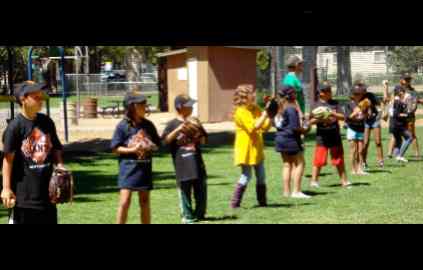
Coach Phil helps kids learn softball skills during the popular Jr. Giants program at the club last summer. Photo/Provided

Coach Phil helps kids learn softball skills during the Junior Giants program at the club last summer. Photo/Provided

The club is open Monday-Friday, 8am-6pm.

To get started, go online to download the information packet and the 2013-14 membership application. There are discounts if you have more than one child attending.

Age-appropriate activities include performing arts, technology, leadership, culinary, sports, art, and more. The main site is located at 1100 Lyons Ave.  — the former Al Tahoe Elementary School.


4 minor lightning caused fires in TNF

Four fires on the Tahoe National Forest were burning Monday that were caused by lightning strikes over the weekend.

All are contained or controlled.

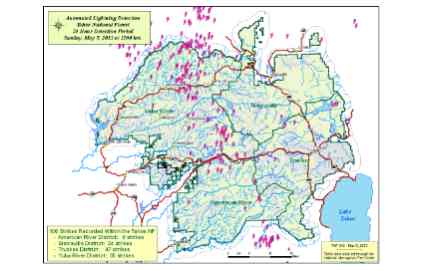
Tahoe National Forest lightning strikes map.

Tahoe National Forest lightning strikes map.

Two are on the east side – small spots – one south of Loyalton on TV Hill and one east of Stampede Reservoir. Two other fires on the west side near Bullards Bar are contained with crews mopping up. Bar Fire burned 15 acres and the Pendola fire 1 acre.

U.S. Forest Service crews and equipment worked the fires with assistance from North San Juan and Camptonville fire departments and CalFire air tanker drops.

Crews expect to pick up “sleeper” fires throughout the week as temperatures warm up. Additional showers and thunderstorms are expected today before tapering off through the week.


Court: Cities don’t have to allow pot shops

By Howard Mintz, San Jose Mercury News

SAN FRANCISCO — The California Supreme Court on Monday upheld the right of local governments to ban medical marijuana dispensaries, leaving intact a growing movement by political officials to outlaw the pot businesses despite a 1996 state law that permits the use of weed for medical purposes.

In a 7-0 decision, the state’s high court concluded that cities and counties have a right to restrict the dispensaries within their boundaries, rejecting the arguments of medical marijuana advocates who maintain local governments cannot bar activity that is legal in California. The ruling could now be used to further bolster local efforts to place stricter regulatory rules on medical pot dispensaries that are allowed to operate.

“Nothing in the (1996 law) expressly or impliedly limits the inherent authority of a local jurisdiction, by its own ordinances, to regulate the use of its land, including the authority to provide that facilities for the distribution of medical marijuana will not be permitted to operate within its borders,” Justice Marvin Baxter wrote for the court.

At least 180 cities across the state and Bay Area have enacted bans in recent years, from Hollister to Petaluma to Moraga. But the region’s largest cities, San Jose, San Francisco and Oakland, have permitted the dispensaries, taxing the revenues while communities in-between increasingly become dispensary-free zones.

South Lake Tahoe limits dispensaries to three at any one time, but any new ones beyond the one pot shop that exists must have City Council approval.

Many local governments have opted to ban the dispensaries

due to worries about problems surrounding them, such as lax control over the distribution of a drug that remains illegal under federal law. The Supreme Court case is the latest legal struggle over the issue, which has repeatedly tested the limits of the voter-approved law that allows the use of marijuana to treat illnesses such as cancer, glaucoma and AIDS.

The Supreme Court decision came in a challenge to Riverside’s dispensary ban. Riverside, backed by groups such as the League of California Cities, argued that local governments have strong rights to regulate land uses within their boundaries, particularly an unusual land use such as a medical pot dispensary.

Medical marijuana advocates, however, say the bans undermine the intent of the state law, which they argue was meant to provide uniform access to medical cannabis across the state for patients who need it most. With the bans in place, many patients are forced to drive long distances to obtain the drug — for example, Peninsula patients now for the most part must travel to either San Jose or San Francisco to get to a dispensary.

The Supreme Court’s decision was not unexpected. Legal experts have predicted the justices would be reluctant to strip cities of the right to enact the bans.


ZCES teacher publishes poetry collection

Krista Lukas of Minden has published her debut poetry collection “Fans of My Unconscious”.

She describes the work as putting a microscope’s eye view to the poignancy and absurdity in everyday life by observing the meaning and the meaninglessness in the mundane like the post office, a campfire, and a bulletin board.

bookThis poetry collection is designed for a seasoned reader of poetry as well as someone who has yet to take up the genre.

Born in Truckee, Lukas grew up in the Lake Tahoe area. She did the coursework for her K-12 teaching credentials at Sierra Nevada College. She has taught English and English as a second language at various levels. Currently, she serves as the gifted and talented specialist at Zephyr Cove and Jacks Valley elementary schools.

Lukas has published poems in “The Best American Poetry 2006”,” Creative Writer’s Handbook”, “New Poets of the American West” and literary magazines including 5am and New Millennium Writings.

Lukas will read from her collection at two venues in June: the Mile High Jazz Band’s Jazz and Poetry event at Comma Coffee in Carson City on June 11, 7:30pm, and the Ventana Sierra Advanced Writers Conference at Western Nevada College in Carson City on June 14 at 6:30pm.


Snippets about Lake Tahoe

ltcc• To demonstrate the financial commitment of local businesses and individuals in the community, Lake Tahoe Community College has launched Friends of LTCC Soccer. The goal is to raise $25,000 prior to the June 18 board of trustees meeting to show the desire to create an intercollegiate soccer program. Click here to donate.

• Now through June 30 Truckee residents may drop off yard waste for free at the Eastern Regional Landfill.

• Tahoe Art League meets May 10 at 6pm at the South Lake Tahoe Senior Center. Painter Luverne Lightfoot will give a demonstration at 7pm.

• Placer County’s Tahoe City Transit Center has won its third national award. The American Public Works Association declared the Center as one of its Public Works Projects of the Year for 2013.

• Bard Lower has been hired by El Dorado County to be the Transportation Division director.


TV series delves into the world of terrain parks

By Kathryn Reed

It’s easy to name athletes who make doing tricks on skis and snowboards seem either like child’s play or death defying feats depending on one’s perspective. But how did the terrain park or half pipe come to be?

There’s a good chance Chris Gunnarson had something to do with it. Better known as Gunny, he’s been leaving his mark on the industry for more than 17 years.

It was 17 years ago that Snow Summit in Big Bear in Southern California hosted the first Winter X Games. Gunnarson designed that park and has done so for each X Games since then. His company also does work on the summer games.

“I guess I had all the right skill sets and the right kind of passion and enthusiasm. They put me in charge of the terrain park at Snow Summit. I was right there on the forefront of this whole niche industry as it was being developed,” Gunnarson told Lake Tahoe News.

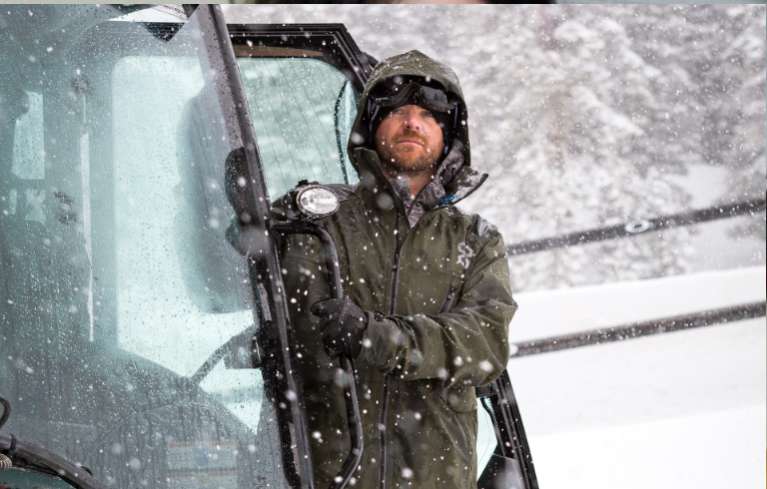
Chris "Gunny" Gunnarson is the man behind the X Games parks. Photo/Provided

Chris “Gunny” Gunnarson is the man behind the X Games terrain parks as well as many of Lake Tahoe’s parks. Photo/Provided

His story and that of his company Snow Park Technologies will be the subject of an eight-part series to air on the National Geographic channel starting May 9.

He says the episodes are designed to appeal to people who’ve never been in a terrain park or might not even know what one is. Five are in the can, with three still needing final edits.

The show was Gunnarson’s idea. Not one to watch much reality TV, he had the television on to something he wouldn’t name and said how bogus it was.

“I thought what we do is more interesting, more different, it’s in remote locations, and with elite athletes,” Gunnarson said. He started talking to people, the shows got taped and the network secured to air them.

Filming started in mid-October and ended in mid-March.

Tahoe connection

Gunnarson is well known around Lake Tahoe. He has close partnerships with Squaw Valley, Alpine Meadows, Northstar, Heavenly Mountain Resort, and Sierra-at-Tahoe.

For the TV series, Squaw, Alpine and Sierra will be featured. One episode involves Jaime Anderson who is from South Lake Tahoe and rides at Sierra.

Gunnarson says Anderson is “unequivocally the best female freestyle snowboarder on the planet.”

Like Shaun White, who rides at Northstar and has a half pipe built for him each season, Gunnarson grew up skateboarding and then took up snowboarding.

“I would love to see the X Games come to Tahoe. So many resorts are doing a great job embracing the action sports culture,” he said.

While Gunnarson has not worked for the Olympics, he looks forward to 2014 being the first time slopestyle will be a medal event – and not just because it was his sport.

“Slopestyle is a condensed terrain park being judged,” Gunnarson said. “Kids relate more to slopestyle than pipe.”

The average athlete

But parks that Gunnarson designs are not all for the elite athlete.

“I get to create very unique fields of play out of nature,” Gunnarson said.

Gunnarson has noticed it’s not just twentysomething males in the parks. It’s skiers and boarders, guys and gals, and parents of those twentysomethings.

“First and foremost it starts with creating something that is appropriate for that particular resort,” he said.

Terrain, snow conditions and natural features all play a role. But who the customer is is even more important. Resorts attracting families wouldn’t want the gnarly terrain park, while the resort attracting adrenaline junkies would want some extreme features.

“Most conventional sports are very fixed. With terrain parks, it is very much open to interpretation,” Gunnarson said. “We can try to dictate a line, but everyone interprets it differently. Only they can experience it personally.”

Notes:

• Here is a little video teaser for the show.

• “Mountain Movers” begins May 9, 8pm on National Geographic channel.


Tahoe Tails — Adoptable Pets in South Lake Tahoe

Bernadette

Bernadette

Bernadette is a nice 9-year-old Husky mix with one blue eye and one brown eye. She is house trained and likes to play with other dogs.

Even though she is a little older and very well-behaved, as a Husky mix, she is great at escaping and needs to be on a runner when left outside alone.

Bernadette needs a home without children as they scare her.

Bernadette is spayed, microchipped, and vaccinated. She is at the El Dorado County Animal Services shelter in Meyers, along with many other dogs and cats who are waiting for their new homes. Go online to see photos and description of all pets at the shelter.

Call (530) 573.7925 for directions, hours, and other information on adopting a pet.

For spay-neuter assistance for South Tahoe residents, go online.

— Karen Kuentz


Editorial: Calif. slow to prepare for curriculum changes

Publisher’s note: This editorial is from the April 22, 2013, Los Angeles Times.

While education reformers in Sacramento continue to obsess about how easy it should be to fire teachers and how important tests should be in evaluating their performance, almost no one is talking about the central issue of what students are supposed to be learning in the near future.

A sea change is coming to schools in California, one of the 45 states that have adopted what are known as the Common Core State Standards. The idea of the new standards is to bring some consistency to education from state to state, and to better prepare students for the work they’ll be expected to do in college and their jobs. Though the Obama administration couldn’t legally force new standards on states, it threatened to deny grant money under the federal Race to the Top program if they didn’t create and adopt common standards.

The standards are designed to push students to deeper levels of understanding and analysis. They call on teachers to cover fewer topics but to delve into each more thoroughly, and they discourage rote learning in favor of fuller understanding of the material. In math, for example, it might be less important for students to give the correct answer to a problem than to be able to describe the best process for reaching the solution. In California, the curriculum standards and the new tests that go with them are supposed to be implemented in the 2014-15 school year.

That’s soon, and at the rate California is going, it won’t be ready. The core curriculum standards lay out extensive guidelines about the knowledge and skills that students should master in each grade of public school, in both reading and math. But there are many complicated steps involved in turning those guidelines into a day-to-day educational plan for California schools, and the state isn’t even close to halfway through them. It hasn’t figured out how to go about training teachers, and won’t begin to adopt new textbooks — a slow and politically rancorous process — for at least two years.

What’s more, common core is expensive, requiring extensive new training for teachers, new textbooks and computers on which the new tests must be taken. It’s unclear where the state will find the money.

At the rate the state is going, teachers will end up being trained before the English curriculum is even in place, and instruction would start before the new textbooks are in anyone’s hands. Yet if the school reform movement has its way, teachers will be evaluated in part based on how well their students do on the very different standardized tests that go with the new curriculum. Reflecting the concern that teachers throughout the state have been expressing, one California teacher recently tweeted that within a couple of years, “we start testing on standards we’re not teaching with curriculum we don’t have on computers that don’t exist.”

Teachers justifiably fret that they’re being set up for failure. Schools worry about finding the money to make all this happen.

The situation led Arun Ramanathan, director of the reform organization Education Trust-West, to write a recent commentary for an education website saying: “Is this the best time for reformers to focus so much attention in Sacramento on teacher evaluation legislation incorporating student growth? Or should we be working to focus policymakers on the investments necessary to prepare all teachers to successfully teach the new standards in order to accelerate student growth?” Considering that one of Education Trust-West’s major objectives has been to include test scores in teacher evaluations, these are remarkable — and crucially important — questions.

Experts are divided over the value of the new curriculum standards, which might or might not lead students to the deeper reading, reasoning and writing skills that were intended. But on this much they agree: The curriculum will fail if it isn’t carefully implemented with meaningful tests that are aligned with what the students are supposed to learn. Legislators and education leaders should be putting more emphasis on helping teachers get ready for common core and giving them a significant voice in how it is implemented. And if the state can’t get the right elements in place to do that by 2014, it would be better off delaying the new curriculum a couple of years and doing it right, rather than allowing common core to become yet another educational flash in the pan that never lives up to its promise.


Senior center hosting Spring Fling Dance

Everyone of every age is invited to the Spring Fling Dance on May 31 at the South Lake Tahoe Senior Center.

Music will be provided by the 17-piece Tahoe Dance Band from 7:30-10pm.

It is not necessary to come with a partner. Wearing dressy clothing is optional.

Admission includes appetizers, desserts, wine, other beverages and a free door prize ticket – all for $10. Those 20 and under are not served wine, but only pay $5. The center is at 3050 Lake Tahoe Blvd.

For more information, call Francine (530) 541.8380 or Arline (530) 545.1277.


Busing psych patients bothered some Nev. workers

By Cynthia Hubert and Phillip Reese, Sacramento Bee

LAS VEGAS – In the darkness of early mornings during his graveyard shift at Nevada’s primary state psychiatric hospital, Gilbert Degala regularly walked patients outside and watched them climb into taxis bound for the Greyhound bus station on Main Street.

The scene made him uneasy.

Many of the patients, burdened with mental illnesses that caused them to become delusional, suicidal or violent, were being discharged from Rawson-Neal Psychiatric Hospital in Las Vegas to buses that would ferry them hundreds of miles away. They carried their discharge paperwork, enough medication to last them a few days, and up to a case of Ensure nutritional supplement for the journey.

Some of the men and women knew why they were traveling to places like Miami or Sacramento or Los Angeles, Degala said. They were returning to family or friends. But for a troubling number “there was no one to pick them up,” he said.

Some patients, he and other current and former workers told the Bee, appeared disoriented or unstable and not ready to leave the hospital.

“I felt bad for these patients,” said Degala, who as a mental health technician helped social workers and nurses manage clients. He wondered whether the men and women ever got on their assigned buses, he said, and what happened to them if they did.

He resigned last year along with many of his colleagues, he said, as working conditions became more stressful.

Patient care at Rawson-Neal – and its discharge practices specifically – have come under scrutiny in recent weeks amid revelations that the hospital has bused roughly 1,500 patients to states across the nation over the past five years, a third of them to California.

Since mid-2008, as the economy worsened and Nevada slashed mental health spending, the number of psychiatric patients getting one-way tickets out of Rawson-Neal steadily rose, according to a Bee review of Greyhound bus receipts purchased by the state agency that oversees the hospital. By last year, Rawson-Neal was busing patients out of Las Vegas at a pace of more than one per day, shipping nearly 400 patients to 176 cities in 45 states, according to the Bee‘s review.

The sheer scope of the busing program has raised questions in California and elsewhere about whether Nevada was systematically “dumping” indigent mentally ill patients across state lines, prompting criminal probes in Los Angeles and San Francisco, as well as federal regulatory investigations.

In the weeks since the Bee published its findings, Nevada health officials have revised and largely defended the unusual busing practice, saying Las Vegas is an international destination that attracts more than its share of visitors. They maintain the vast majority of the patients transported out of state were being sent back to their “home communities,” where they had support systems or family to meet them.

Nevada’s Health and Human Services chief has said that the increased pace of busing over the five-year period was not related to state funding cuts, and instead stemmed from a change in the hospital’s internal approval process that has since been remedied.

Several current and former Rawson-Neal staff members interviewed tell a different story.

Though the employees offered different perspectives on the wisdom of sending psychiatric patients alone on bus trips across state lines, most described increased pressure in recent years to move patients out. And budget cuts, they said, were a driving factor.

“There is so much pressure now to get people out as soon as possible,” said one longtime Rawson-Neal nurse, who requested anonymity for fear of losing her job.

“The administration has a meeting every week to talk about length of stay,” she said. “Doctors are told, ‘You need to get these patients out of the hospital.'”

According to the nurse, the pressure is most acute within the hospital’s psychiatric observation unit, where patients are assessed to determine whether they need to be admitted for inpatient care.

Nevada cut mental health spending 28 percent between 2009 and 2012, cuts that brought furlough days, staffing shortages and widespread reductions in outpatient services and housing for the mentally ill, according to employees and area social services workers.

“The problem is that we don’t have a place to send people,” said the nurse. Mentally ill patients are filling hospital emergency rooms all over town, she said, and the ERs are sending patients to Rawson-Neal.

Many of Rawson-Neal’s patients, she said, are chronically ill “frequent fliers” whose faces are familiar to staff members. Others are one-time visitors who had a mental break or abused drugs and “went off” while on their trip to Vegas.

At least once per shift, the nurse said, patients are so out of control that “we need to take them down” by force.

“Patients are being jammed down our throats,” she said. “Sometimes the psychiatric observation unit will take in 10 patients all at once. You’ll have ambulances backed up with patients. It’s extremely stressful.”

As pressures have mounted, busing patients from Rawson-Neal to locations out of state has become more common, workers said.

Toward the end of his tenure at Rawson-Neal, Degala said, “they were seeing too many patients coming in.”

“They could pay the Greyhound bus station, set up a treatment plan and ship,” he said. “It would be cheaper to give them a bus ticket than to keep them in the facility.”

Busing policy born

Rawson-Neal, a collection of squat brick and stucco buildings in an arid landscape a few miles from Las Vegas’ glittering Strip, opened in 2006 to great expectations for improving care for mentally ill people in Southern Nevada.

The hospital has four 40-bed inpatient units along with the 30-bed observation unit. The buildings surround a large, open courtyard with basketball hoops and patches of grass. Patients typically arrive via the ambulance bay at the side of the facility.

Interviews with state officials have left unclear exactly when the hospital put in place its patient busing policy. A long-standing written policy calls for transporting patients back to their “home community in order to provide more appropriate care and to remove the burden of treatment from the State of Nevada.”

The wording was revised in recent weeks, as concern over the busing practice spread, to remove the phrase “burden of treatment,” and the state announced late last month that patients no longer would be bused without chaperones.

Whatever the origins, Rawson-Neal clearly was issuing bus tickets to patients in earnest by 2008. Its umbrella agency, Southern Nevada Adult Mental Health Services, has had a standing contract with Greyhound since 2009, said a spokesman for the bus company. That year, the hospital bused 238 people. By 2012, the number had grown to 396.

By hospital policy, social workers and doctors are supposed to work together to come up with a plan for discharging patients, with a psychiatrist signing off on the discharge. But in recent years, as budget pressures increased, the process became more haphazard, according to some current and former employees, with staff members employing a loose definition of friends or family when deciding where to send patients.

Bryan Peralta worked as a mental health technician at Rawson-Neal for eight months, ending in November of last year. One of the reasons he left the hospital was its discharge of patients “who were not ready” to be released, he said.

Peralta recalled one young woman who was sent to the Greyhound station while “she was still foaming” at the mouth and talking to herself. She had a ticket to California, but was sent back to Rawson-Neal by a bus driver before she crossed the state border, he said.

Staffers typically made a cursory effort to connect patients with relatives or friends, Peralta said. But “half the time it’s not a mother or a sister, it’s a friend or a distant relative,” he said.

Krystal Chadwick is another former technician who left Rawson-Neal three years ago. Patients discharged to the bus station used to get fresh fruit, juice and other snacks to sustain them for the trip, she recalled. Now they receive bottles of Ensure.

“I didn’t want to give them Ensure,” she said. “They had a lot of travel ahead of them. Some person is going to Florida and all they have to eat is Ensure?”

Chadwick said she often worried that patients would relapse during their trips.

“These people are lost,” she said. “They can’t take care of themselves.”

In reporting this story, the Bee reached out to dozens of current employees to get their perspective on operations at Rawson-Neal. The vast majority did not respond or declined to comment. Those who did talk asked for anonymity for fear of being fired.

One current technician who spoke anonymously echoed Degala’s description of patients leaving without a treatment plan in place.

“Sometimes they say, ‘I’m just going,'” he said. “It’s wrong.”

Brian Little, who left the hospital in 2012 after eight months, had a different recollection. He said that in his “limited experience” patients “were not shipped off without a plan.”

The longtime nurse who requested anonymity said she also believed most patients bused out of state were stable enough to leave the hospital and had some kind of help waiting at their destination.

Her concern was what might happen along the way.

“A lot of them are not going to stay on the bus,” she said. “They’re going to get off and be on the streets, and maybe end up here again.”

Criminal probes launched

The spotlight turned on Rawson-Neal after one of its patients, James Flavy Coy Brown, showed up suicidal and confused at a Sacramento homeless services complex earlier this year. Brown, who is 48 and suffers from schizophrenia, had been living in Las Vegas shelters for years.

He ended up in Rawson-Neal’s psychiatric observation unit in February with symptoms of psychosis that suggested he was a danger to himself or others. After 72 hours, he was discharged to the Las Vegas Greyhound station with a one-way ticket to Sacramento, where he knew no one. He said Rawson-Neal doctors suggested he might like “sunny California” and told him to call 911 once he arrived.

He arrived in Sacramento out of medication and food. With the help of police and homeless services workers, he landed in the UC Davis Medical Center emergency room. He has since reunited with his daughter from North Carolina.

Nevada officials have acknowledged making mistakes in Brown’s case, saying the hospital “blew it” in busing him to Sacramento. But they insist his case was an exception and that the problems are not systemic.

“The most concerning thing to me is a narrative that we are dumping people,” said Dr. Tracey Green, Nevada’s state health officer. “We don’t dump people.”

Green defended the state of care at Rawson-Neal and said staffing ratios have remained consistent during her tenure. The hospital’s staffing levels are subject to independent and federal review, she said, and have not been found lacking.

“I believe we do excellent work here,” she said. “The bottom line is we will continue to do better.”

Since the April policy change requiring that all patients bused out of state now be accompanied by an escort, no patients have been bused from the hospital, Green said last week.

“We think the transportation policy is right where it needs to be,” she said.

As the furor over the busing policy has spread, Nevada state health officials conducted an internal investigation, which they say found 10 of 1,500 patients may have been placed on buses without support during the past five years. Two employees were fired following the investigation, and several others disciplined, said Mary Woods, spokeswoman for the Nevada Department of Health and Human Services.

The hospital’s discharge policies remain under scrutiny. City attorneys in Los Angeles and San Francisco have launched criminal probes to determine whether Nevada has been dumping its indigent psychiatric patients across state lines. They, along with Sacramento’s city attorney and county counsels from Alameda and Santa Clara, have demanded a meeting with Nevada’s attorney general to get more information on the patients bused to their jurisdictions in recent years.

In a letter to Attorney General Catherine Cortez Masto last week, the attorneys said their preliminary investigations have found that Brown’s case was not isolated.

The investigations “have confirmed that Nevada’s practice of transferring mentally ill patients to California without an escort and without prior arrangement for an institution or responsible person to receive the patient is more widespread,” the letter stated.

Late last week, an independent accreditation agency dispatched a team of investigators to Rawson-Neal in response to concerns about patient care. Its report will determine whether the state hospital can keep its federal funding and “gold star” accreditation status.

Patients through revolving door

Several former administrators and staffers blame the controversial busing practices on a lack of oversight, caused in part by instability at the top.

In its short lifetime, Rawson-Neal has had five administrators, one of whom lasted less than a week and another a few months. The turnover has created confusion about policies for admitting and discharging patients, current and former staffers said. The hospital’s current administrator, Chelsea Szklany, is an occupational therapist who has been on the job since January 2012.

Jonna Triggs, who served as director of Southern Nevada Mental Health Services between 2002 and 2006, said busing patients “was never a standard or routine” on her watch. “Certainly we did send some people back home, but not hundreds a year and not the way it’s being done now,” she said.

Others say Rawson-Neal’s problems reflect a broader fraying of the safety net for the mentally ill in southern Nevada.

Cuts to programs funded by the government have had a trickle-down effect on hospital emergency rooms and private agencies that run programs for needy people, observers said.

Last September, the Salvation Army in Las Vegas closed a 42-bed group home for chronically mentally ill people after grant funding was slashed, said spokeswoman Leslee Rogers.

A recent survey counted more than 14,000 homeless people living in Las Vegas, up from about 9,000 four years ago, she said. Many of the men and women living on the streets are mentally ill and end up in hospitals including Rawson-Neal, said Rogers.

“Yes, we get people all the time who have been dumped,” she said. Some arrive by taxi wearing hospital gowns and slippers.

Maj. Robert Lloyd, the Salvation Army’s Clark County coordinator, said the number of mentally ill people that the agency serves has risen dramatically during the past three or four years.

“We have folks show up from hospitals, completely unable to take care of their basic needs,” Lloyd said. “When we get someone who is self-mutilating, who is eating glass or pounding their head against the wall, we are in over our head. We’re not capable of dealing with it.”

Lloyd said he understands the plight of hospitals that are overextended.

“They can only hold someone for so long and then they’ve got to do something with them. But if they’re releasing them into a situation that’s not stable, it’s unacceptable.”

Lloyd said staffers have tried to get such patients readmitted to hospitals but usually are unsuccessful.

“So we call the police, and the next thing you know they’re out on the street again,” he said.

“It’s a revolving door.”