Unity to begin book study

Starting May 15 and then every Wednesday for 10-weeks Unity at the Lake will be conducting a book study from 6:30-8pm.

Brene Brown’s book “The Gifts of Imperfection” will be studied.

For more info, call (530) 544.2266.

Unity is at 1195 Rufus Allen Blvd., South Lake Tahoe.


No more free beach parking in South Tahoe

By Kathryn Reed

While paid parking has been a reality in some areas of the South Shore for decades, it will be coming to new locations in mid-June.

It was a fairly hostile crowd that gathered Monday night at the South Lake Tahoe Senior Center to hear the city’s plans. The few who are fine with paid parking could barely be heard because others were disrespectful by talking over them.

The nearly 80 people in attendance were mostly well older than 50, completely resistant to change, and believe because the majority in the room were against paid parking that the other 20,000 people who live in South Lake Tahoe must be on their side and therefore the city should do as they say. Many believe the amount of revenue is not worth the angst.

South Lake Tahoe City Manager Nancy Kerry addresses a question from resident John Cefalu at the May 6 parking meeting at the senior center. Photo/Kathryn Reed

South Lake Tahoe City Manager Nancy Kerry addresses a question from resident John Cefalu at the May 6 parking meeting at the senior center. Photo/Kathryn Reed

City Manager Nancy Kerry made it clear no one is a cheerleader for paid parking, but the reality is this could be a revenue stream for the city. Projections are the sites where paid parking will go in will net $150,000 a year. This is from the fee and tickets given to those who don’t comply with the regulations.

Kiosks – which are how meters are now installed instead of a stand at each parking spot – are slated to go in on Venice Drive and near Lakeside Beach. Based on feedback from the May 6 meeting Kerry is going to propose to the City Council on May 21 that instead of meters at Regan Beach they go in at the Lakeview Commons area. Venice will be free in the winter.

While all the money had been designated to go in the general fund, meaning the cash could be spent on anything the city desires, that would not be true of money collected at Lakeview Commons. State Boating and Waterways mandates that parking money be reinvested in that area. That could mean improvements to the boat ramp, putting in a viable pier and other upgrades.

It will cost $2 an hour, with a maximum of $10 a day. The fee will be seven days a week from 8am to 10pm. It is possible holidays will be more expensive. Altering the rates or waiving the fee during special events like Live at Lakeview concerts on Thursdays is being talked about.

Some people think parking is a new topic around city hall. They are wrong. Parking has been on a City Council agenda four times since Nov. 20, 2012.

This is from an Oct. 22, 2010, Lake Tahoe News story:

“Metered street parking, parking garages, reconfiguring streets, changing public perception about paid parking, paying attention to public transit-walkers-cyclists, and approving future projects with adequate parking were all broached in the daytime meeting.

“Most in the audience agreed more parking and paid parking are likely to be more prevalent in South Tahoe in the near future. And they agreed it would be the locals, who are used to free parking, who will probably be the hardest to convince this is what’s needed.

“The consultants started work in July by speaking with nearly 300 people to gather their thoughts on parking in the city. They also have read the 10 or so parking studies the city has commissioned over the years.

“In the in-person survey, which mostly tourists answered, about 70 percent said they would be willing to pay for parking.”

This is from a March 2, 2011, Lake Tahoe News story:

“The other new source of revenue is via metered parking, especially near beaches. [City Attorney Tony] O’Rourke said most waterfront communities charge to park close to that body of water. The anticipation is this could bring in $450,000 a year.”

The projected revenue has been scaled back immensely because no longer is the city going to charge people for their permits – permanent ones or for guests. And the number of locations is not as great as once anticipated.

Residents on streets in about a two block area of where the kiosks will be located will be given free permits for their vehicles to let parking enforcement officers know they are allowed to park there.

Much of Monday’s meeting centered on people saying how they have all these friends who stop by, come to visit for days on end – and they need a place to park. Residents fear they won’t be able to get enough guest permits.

People believe the city will be limiting their guests’ activities. The city’s intent is to guarantee locals a place to park on their streets with the permits. If it were permit-only parking, then those who are looking to avoid using the kiosks would have to go several streets from the beaches to do so.

Other places that charge, usually on a seasonal basis, are the U.S. Forest Service beaches, California State Parks, Beacon Restaurant, Tahoe Keys Marina and Ski Run Marina.


It’s costing more to have a pet in the house

By Rod Block

Pet owners’ vet bills are growing, which may explain why fewer are taking their dogs and cats to the animal doctor although more Americans than ever have pets.

To make matters worse, a 2.3 percent tax on medical devices that kicked in Jan. 1 includes equipment that’s used for animals as well as people. Items as basic as IV pumps and scalpels are now subject to the tax, which is to help fund the Affordable Care Act.

Even before the tax, the latest survey showed spending for dog care alone rose 18.6 percent from 2006 to 2012. And even though cat vet visits dropped 4 percent in that time, cat owners paid 4 percent more.

It's important to pay attention to changes in your pet. Photo/LTN file

It’s important to pay attention to changes in your pet. Photo/LTN file

Add to that the new excise tax and I’m sure we’re going to see even more people torn between paying the light bill and taking their pet to the vet. But there are simple ways to keep veterinary costs down, while still providing excellent care for your pet – whether it’s a dog, cat, horse or guinea pig.

It’s important to always get appropriate care when your animal needs it, but you can easily prevent problems, or catch them early, by simply staying in tune with your pet’s physical, emotional and spiritual needs.

Here are tips for accomplishing that, and distress signals to watch for:

• Is your pet in pain?: Before X-rays and MRIs, health practitioners relied on these physical indications of pain: heat, redness, lumps or swelling, tremors, obvious discomfort. To recognize the first four, a pat on the head is not enough. Get used to taking some quiet time to place your hands on your pet, and work on honing your perceptive abilities. Being in a rush or having your mind on what you need to do next will impede your ability to perceive changes – use the time to simply be with your animal. If a joint feels warm, it may be inflamed. Mild localized tremors can indicate a problem in the area beneath your hand. Lumps or an asymmetrical feel when you have your hands on either side of the pet may indicate growths. Take your time and quiet your mind. Animals are keenly aware of intent, and they’ll work with you if feel your intent.

• Watch how your pet plays: It’s important that a pet gets physical and psychological stimulation, but those needs vary with temperament, age, and even how energetic the pet owner is. Pets tend to match their owners’ energy levels, for instance, very elderly owners will tend to have pets that like to nuzzle and curl up next to them. Take note of how your pet plays so you’ll be aware of changes. Is he becoming more aggressive? He may be telling you something’s bothering him. Has she stopped hopping up on the couch? Is he favoring a paw (or hoof)? Beyond the physical, your pet’s play can also communicate emotional distress. For instance, if he becomes fearful or timid, consider any changes in the home, routines, etc., that may be affecting him.

• Have a thorough neuro-muscular-skeletal exam done. A veterinary chiropractor can examine a pet’s frame, muscles and nerves for areas that may be pre-disposed to injury, and suggest ways you can help protect them. In dogs, cats and horses, joint injuries are common, with muscle and tendon strains and tears. Problems with the spine can lead to compressed or herniated discs, and neck issues can lead to mobility problems and even seizures. If you know your pet’s vulnerabilities, you can take steps to prevent injuries.

If you decide to take your pet to a chiropractor, make sure he or she is certified by the American Veterinary Chiropractic Association.

Find one who is in tune with animals – a host of technical skills does not compensate if the practitioner is not in tune with his patients.

Rod Block serves as a chiropractic consultant to numerous veterinary practices in Southern California and is an international lecturer on animal chiropractic.


Editorial: Worrisome water year in California

Publisher’s note: This editorial is from the May 2, 2013, Chico Enterprise-Record.

North State reservoirs may be higher than usual for this date, but that’s not going to last.

Some optimistic media outlets in the state, particularly those from metropolitan markets, seem to want to report and believe statistics based on wishful thinking. They report optimistically that lakes are higher than normal for this time of year, and that’s true.

But those people need to get out a little — up where the water is. Or rather, where the water is supposed to be.

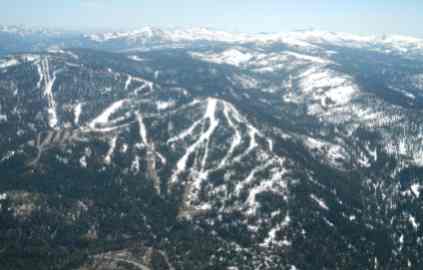
Sierra-at-Tahoe in late April shows how little snow is in the area. Photo/LTN

Sierra-at-Tahoe in late April shows how little snow is in the area. Photo/LTN

The High Sierra is nearly barren of snow. This is a time of year where there’s usually snow on the ground above 6,000 feet in Plumas, Alpine and Sierra counties. The rivers streaming out of the Sierra are usually flowing high and brown with snowmelt right now.

Instead, there is very little snow. Drive to Reno, Tahoe or Almanor right now and you have to crane your neck skyward to see any snow, only on the highest mountains. Ski resorts have long since closed, and even Donner Pass only has a hint of old, dirty snow. Rivers are running low and clear, the type of water conditions you usually see in July. Anglers out for the traditional late-April opening of trout season met summerlike conditions in the Sierra.

By the time those streams reach the valley, there’s not much of them left. That was obvious last weekend, as people played in knee-deep water on a 90-degree day at the Five-Mile. Big Chico Creek is barely moving. Usually at this time of year, we’re warning swimmers to be cautious around the high, cold water. Not this year. The air temperature and the river flow make it look like July.

If the spring-run salmon haven’t already made it up the canyons on Butte, Chico, Deer and Mill creeks, there’s a good chance they won’t. The water in the lower portions of the streams is too low.

It’s true that the lake levels are about normal. Heading into May, Lake Oroville was 104 percent of average for the date. Shasta was 96 percent of average. Folsom was 94 percent of average.

You have to be extremely uninformed to think that’s good news.

The problem is, usually water managers are releasing water from reservoirs at this time of year to make room for the snowmelt. The lakes continue to rise in a good water year till mid-June or July, all from the snowpack.

Not this year. Lakes are already dropping and will continue to do so. The high point for Oroville, Shasta and Folsom are usually sometime in June. This year, barring a May miracle, it appears the high point was reached sometime in April.

We hope people in other parts of the state don’t hear about our higher-than-normal lakes and think water is plentiful this summer. It’s not. And the sooner everybody starts conserving, the less likely it is that people will start tossing around the D-word.


Parking in South Lake Tahoe

John Cefalu, a former South Lake Tahoe City Council member and El Dorado County supervisor who lives on Lakeview Avenue in the city, talks parking with City Manager Nancy Kerry on May 6.


NDOT raising traffic safety awareness

With a rise in Nevada traffic deaths in 2012, the Nevada Department of Transportation will post traffic fatality numbers on digital freeway boards to remind motorists to always drive safely.

Freeway digital message signs, or DMS, across the state will periodically display updated statewide traffic death numbers. The messages will be followed by safety messages reminding drivers to always buckle up, never drive impaired and other safety reminders.

Preliminary numbers show that 258 traffic fatalities occurred on Nevada roads in 2012, an increase of 12 deaths compared to the previous year. Despite recent upticks, Nevada traffic fatalities have generally trended down after reaching an all-time high of 432 in 2006.

Under the Nevada Strategic Highway Safety Plan, Nevada traffic and safety advocates implement enforcement, engineering, emergency medical and educational strategies to cut yearly traffic fatality averages in half by 2030, with the ultimate goal of zero fatalities on Nevada roads.


Problem gamblers increase with proliferation of casinos

By Stephen Singer, AP

HARTFORD, Conn. — Tom Leksan lost nearly everything when gambling became an addiction with easy access to casinos.

Once an Ohio lawyer, Leksan lost his job and marriage because of gambling, specifically blackjack. He had been gambling for years, he said, but did not become a problem gambler until he became hooked on riverboat casinos in nearby Indiana.

“I think the casinos thrive off the compulsive gambler,” said Leksan, now a car salesman in northern California. “They pay lip service to treating problem gambling, but that’s their bread and butter.”

The unrelenting spread of casino gambling across America is reaping billions of dollars for the industry and government coffers but is also creating more compulsive gamblers. Addiction experts say the sums spent by states for treatment and counseling are too little to keep pace.

Even after the worst recession in decades and during a weak economic recovery, developers are building new casinos and adjoining attractions with the blessings of cash-hungry states. Ohio opened its first casinos last year, casino developers are vying for permission to build three casinos in Massachusetts, and New York City’s new Resorts World Casino at the Aqueduct racetrack is also shaking up casino gambling in the Northeast.

Advocates for an expansion of treatment services point to enormous gaps between the money states are taking in and what they are spending on compulsive gambling. For example, casinos and card rooms in Pennsylvania generated about $2.3 billion in revenue in 2010 and the state transferred $17.5 million in casino revenue into its Problem Gambling Treatment Fund between 2007 and last year.

Connecticut’s casinos, off-track betting and the state lottery generated nearly $659 million in state revenue in 2012 while problem gambling services that include counseling, treatment and a toll-free phone number for gamblers received $1.9 million.

“Even as you see an expansion of gambling you’re not seeing a level playing field in treatment,” said Mark Vander Linden, president of the Association of Problem Gambling Service Administrators.

Linden’s organization, in a 2010 report, found that 37 states were providing public funding for gambling programs — at a combined total level of just over $58 million. Nevada alone reported casino and card room gambling revenue that year of $10.4 billion, according to Casino City’s North American Gaming Almanac.

About 2.6 million gamblers characterized as pathological, or unable to resist the impulse to gamble, are estimated to need treatment each year, the Association of Problem Gambling Service Administrators says.

Problem gambling is defined as behavior that causes physical, psychological, social or job disruptions. It is progressively addictive as gamblers become preoccupied with betting and require more frequent bets with more money. It can be as mild as spending too much at a slot machine, card table or convenience store selling lottery tickets or taken to the extreme, compulsive gambling results in overwhelming debt, divorce and sometimes crime such as embezzlement to raise money to pay off gambling debts.

Ray Pineault, executive vice president and chief operating officer at Mohegan Sun in Connecticut, said Mohegan Sun and neighboring Foxwoods Resort Casino contribute plenty — nearly $326 million last year as required by their agreement with the state — but the state spends too little to treat problem gambling.

“I don’t think the state does significant funding,” he said.

Rep. Stephen Dargan, the House chairman of the Connecticut legislature’s public safety committee, which oversees the two casinos, said finding money is always a struggle.

“There’s only so many dollars out there,” he said.

In addition, without an expansion in gambling in Connecticut and no Internet gambling, no one is clamoring for more funding. “Everything is pretty much status quo,” he said.

Donald Weinbaum, executive director of the Council on Compulsive Gambling of New Jersey, where gambling has been legal for decades, said the state’s Internet gambling law signed by Gov. Chris Christie in February will lead to a big boost in financing problem gambling programs. Each casino that wins state approval to operate Internet betting will be required to pay $250,000 a year.

It’s the first time casinos are being forced to pitch in to help finance such services, he said, and will boost current funding of $850,000 a year for treatment, prevention, education and other services that has held steady for about three years.

Massachusetts state Sen. Stanley Rosenberg, a principal architect of legislation in 2011 allowing up to three resort casinos and a slot machine parlor, said gamblers from his state are spending money in casinos in neighboring states, leaving Massachusetts to treat problems related to their gambling troubles.

“If they’re addicted, they leave their money and come home with their problems,” he said.

Massachusetts nearly doubled its annual problem gambling budget from $1 million, to $1.8 million — even before opening the doors to their first gambling hall — but Gov. Deval Patrick cut funding to about $1.3 million as part of spending reductions across state government.

Keith Whyte, executive director, of the National Council on Problem Gambling, said prevention and education programs have succeeded in reducing problem gambling and keeping the number fairly stable.

“With expansion, I’m not sure we’ll ever be able to knock it back down,” he said. “This is an addiction where state government is intimately involved and quite complicit,” Whyte said.

Part of the challenge in getting funding to treat gambling addiction is its invisibility, advocates say.

“It’s a very hidden disease,” said Arnie Wexler, a onetime gambling addict and former head of the New Jersey Council on Compulsive Gambling. “You can’t see it. You can’t smell it. There are no track marks, no dilated pupils.”

Treatment options in various states include phone or in-person counseling and public education in schools and churches.

In Connecticut, gamblers can find help at more than a dozen outpatient clinics and in one 20-bed facility where they can stay for up to two weeks for individual and group counseling.

“It’s a respite for someone who needs to get out of their environment for a period of time,” said Jim Crean, director of outreach and community relations at the Midwest Connecticut Council on Alcoholism.

Gamblers also may have their names included on lists to be kept from entering casinos. In Pennsylvania, 5,111 people have asked to be on the list over the past six years, said Doug Harbach, spokesman for the state Gaming Control Board. Gamblers who are listed and are caught gambling when they try to cash out their winnings are charged with summary trespass, Harbach said. About 875 violations have been issued.

Another concern is that a rising number of problem gamblers are young. Industry leaders, law enforcement and New Jersey officials gathered in Trenton recently to consider new preventive and treatment ideas to expand services to young at-risk problem gamblers. They emphasized the need to use social media promoting preventive measures at grade school and high school levels.

Gambling therapist Stephen Garbarini said he sees more young people requiring treatment and expects that trend to continue with online betting.

The expansion in gambling in Massachusetts will come with some innovative steps to deal with addiction. One requirement calls for intervention treatment centers at the casinos, a first in the nation, according to Marlene Warner, executive director of the Massachusetts Council on Compulsive Gambling. Gamblers will be able to stop in for advice or referrals.

Casinos also will be required to pay 5 percent of their proceeds from the state’s 25 percent tax on gross gaming revenue into a trust fund for programs to prevent and treat addiction and other gambling problems.

“We took advantage of the opportunity to address problem gambling while everybody was paying attention to gambling,” Warner said. “There’s a lot of prevention work to be done.”




‘Motherhood Out Loud’ — a play uniting generations

By Ginger Nicolay-Davis

Two years ago, my mother-in-law, Joanne, called me from the East Coast to tell me about a new play that had just debuted in Hartford, Conn., called “Motherhood Out Loud”. She told me that I really needed to read it and that I would love it.

Like all difficult daughter-in-laws, I had to question the advice of my mother-in-law. After all, I have read many more scripts than she has, seen many more plays than she will ever see, and have studied acting for years. But I figured since she was not giving me advice on how to raise her grandchildren, maybe I should flatter her a bit, and find out more about play.

I learned that it was written by 13 women, including Beth Henley, one of my favorite Southern writers, and decided maybe Joanne was right. I should at least read it. I emailed the writers to ask for a copy of the script. I found out it was not available at the time.

Michelle Hirschfield, from left, Pam Taylor and Ginger Nicolay-Davis star in "Motherhood Out Loud" at MontBleu. Photo/Provided

Michelle Hirschfield, from left, Pam Taylor and Ginger Nicolay-Davis star in “Motherhood Out Loud” at MontBleu. Photo/Provided

Over the next couple years I kept my eye out for the script, and it finally became available in manuscript form last fall. I ordered a copy and read it no less than 15 times. I laughed, I cried and I called my mother-in-law to thank her for suggesting it to me. (She was shocked I called. I probably should call my mother-in-law more often.)

I called some of my favorite actor friends in town and invited them to do a reading of the script over a bottle of wine — the offer of wine will always get actors to a table reading. We read the script, laughed, cried, and discussed all of the amazing aspects of motherhood this play touches upon.

My friend, Michelle, without hesitation said, “We have to do this show.”

They were hooked on the script the way I was the first time I read it. The day the rights became available I snatched them up, making us the first theater group in Northern California to produce this important and relevant piece of work about motherhood. My theatre partner-in-crime, Diana Evans, decided we should try to find a space to do this show over Mother’s Day weekend. MontBleu agreed and we were on our way!

Through the rehearsal process we have had many discussions about parenting, our own parents, our grandparents and stepparents and how they have made us who we are. It has been a project of love. This play touches upon every aspect of motherhood – from birth to adulthood, the challenges of raising children and being a child, the challenges of raising teenagers and then watching them leave the home, seeing the adult child get married, go off to war, and, finally, being an adult child taking care of a sick parent.

“Motherhood Out Loud” reveals many of the raw emotions and rocky roads we experience in life.

“Motherhood Out Loud” is sure to challenge traditional norms and unite generations with its unpredictable comedy.

Notes:

• “Motherhood Out Loud” will be at MontBleu in Stateline on May 9 and 10 at 7:30pm and May 12 at 3pm.

• For tickets, go online, call (530) 541. 4975 or stop by the MontBleu box office.

• The proceeds from the shows will go to the nonprofit Tahoe Tallac Association that produces the annual summer Valhalla Arts & Music Festival.

Ginger Nicolay-Davis is president of the Tahoe Tallac Association.


K-9 group wants new logo for free

The South Lake Tahoe Police Canine Association is looking for someone to design a logo for October’s K-9 trials.

South Lake Tahoe K-9 Association wants someone to provide free artwork. Photo/LTN file

South Lake Tahoe Canine Association wants someone to provide free artwork. Photo/LTN file

The deadline is June 30.

The winning logo design will be printed on the backs of T-shirts, sweat shirts, trophies and other K9 Trial paraphernalia.

The winning designer will receive $100 and a sweat shirt and T-shirt with their logo. The winner will also be invited to attend the K9 Trial banquet on Oct. 5.

Go online to sign up for the contest and find out about the entry rules.


Made in California may take on new meaning

By Marc Lifsher, Los Angeles Times

SACRAMENTO — A “Made in USA” label has long been seen as an advantage in marketing a product.

Now there are in-state manufacturers that want to see the adoption of an official label that declares Made in California.

State Sen. Ellen M. Corbett, D-San Leandro, has introduced legislation to require Go-Biz, the governor’s business development office, to come up with a plan — including the new label — to promote California-manufactured products. The bill, now before the Senate Appropriations Committee, would enhance California’s reputation for making environmentally safe and energy efficient products, Corbett said.

Backers of the legislation include high-end electric-car maker Tesla Motors Inc., a group of San Francisco Bay Area green-tech firms and small-business advocates. But some business leaders see problems ahead for the Made in California concept. Deciding whether something is made in California could be tough considering how complex manufacturing can be today, warned Jock O’Connell, a Sacramento-based international trade expert with Beacon Economics. Look, for instance, at international supply chains, especially for high-tech products such as aircraft that use parts made on multiple continents.

“I really see a good intention here,” O’Connell said, “but it’s a piece of legislation that in practice is nearly impossible to implement.”

California cities increasing are using tax money to woo companies or to keep them, but some lawmakers are urging caution.

Amazon got a share of new sales taxes receipts collected by the cities of Patterson and San Bernardino when the giant Internet retailer agreed to put its distribution centers and new jobs there. In addition, the Bay Area city of Martinez agreed to share tax money with an industrial firm that threatened to leave town.

Last year, state Sen. Mark DeSaulnier, D-Concord, said he was contacted by the city manager of Martinez, who was concerned about such tax giveaways. The lawmaker recalls the manager pleaded, “We need you to save us from ourselves.”

As a result, DeSaulnier — a former city councilman and county supervisor — has a bill requiring local governments to make an independent cost analysis before granting any tax subsidy of more than $1 million to a proposed developer. “In today’s global economy,” he said, “it is imperative that our cities have the best possible data as they negotiate with large corporations.”

The bill, SB673, won approval from the Senate Governance and Finance Committee last month. But it still faces formidable opposition from the League of California Cities, which blasted the bill for having “a clear anti-development bias.”