S. Tahoe trying to not default on parking garage

By Kathryn Reed

South Lake Tahoe is about to extend how long it will take to pay off the parking garage debt at Heavenly Village as it attempts to refinance the bonds so the overall payment is less.

It’s not a straightforward transaction because the state Department of Finance is involved because the garage is in part an asset of the now-defunct city Redevelopment Agency. The garage had been owned by the city and RDA, while the land is the city’s. The revenue goes to the bondholders. With the state dissolving RDAs, the successor agency is the partner with the city in owning the garage.

The original bond was for $9 million. There are 14 years left to pay off the debt, which today is $7.3 million. That’s just the principal.

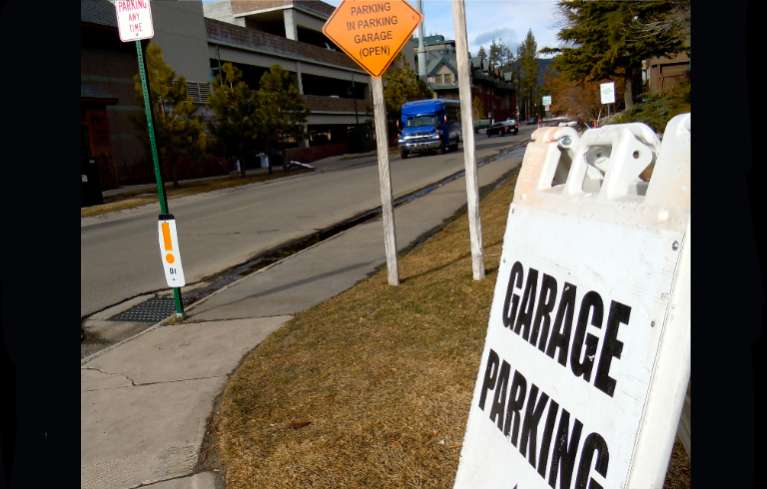
The parking garage at Heavenly Village is saddled with debt. Photo/LTN file

The parking garage at Heavenly Village is saddled with debt. Photo/LTN file

“It will likely have a longer life. Part of what we will try to do is not extend it any longer than is necessary even though the rates are low,” Bob Gamble told Lake Tahoe News. He estimates seven to 10 years will be added to the life of the bond.

Gamble works for PFM Group in San Francisco, the entity handling the refinancing of the bond. He was at last week’s City Council meeting to get that group’s approval to go forward. Councilwoman Brooke Laine was the lone vote against the plan. She preferred an option that would have the bond paid off sooner.

“We are trying to avoid defaulting or a general fund subsidy,” Gamble told the council as to why refinancing is necessary.

In 2007, the 2001 special tax bonds were refinanced. That five-year subsidy has run its course and is creating a greater urgency to finance the main bonds.

While the interest rates will be lower, to what extent remains to be seen. The overriding need to do this is to keep from defaulting on the loan.

The garage has been in technical default since Day 1 because there was never enough income to pay the debt.

The bond payment is about $550,000 a year. While the garage is taking in approximately $650,000 a year, it costs about $200,000 to manage and operate it. This means there is a gap of $100,000.

The community facility district, better known as PADMA, is mostly responsible for that shortfall. Park Avenue Development Maintenance Association is the organization formed in 2002 to maintain Heavenly Village. The two Marriott properties pay 55 percent collectively, Heavenly Mountain Resort 20 percent, South Lake Tahoe 20 percent, Trans Sierra Investments 2.5 percent, and Cecil’s 2.5 percent for the upkeep for the entire center.

However, according to the city staff report from May 7, projections are that without refinancing the bonds revenues would be short $200,000 to pay the debt.

One day all the debt will be paid. But no one knows who will own the garage because of the dissolution of the Redevelopment Agency.

“Statewide there are a lot of those assets in that situation,” Gamble said.


Tahoe Tails — Adoptable Pets in South Lake Tahoe

Balto

Balto

Balto is a 10-month-old Labrador-pit bull mix who is very sweet. He is house trained and has lived with small children.

Bonus: Balto understands English and Spanish.

He loves to play with other dogs, but he does play rough so he needs to meet your dogs before going home.

Balto is neutered, microchipped, and vaccinated. He is at the El Dorado County Animal Services shelter in Meyers, along with many other dogs and cats who are waiting for their new homes. Go online to see photos and description of all pets at the shelter.

Call (530) 573.7925 for directions, hours, and other information on adopting a pet.

For spay-neuter assistance for South Tahoe residents, go online.

— Karen Kuentz


Letter: Church members help at Bread & Broth

To the community,

On April 29, Hope Lutheran Church of the Sierra hosted the healthy and tasty Bread & Broth dinner served to over 90 members of the South Lake Tahoe community. The weekly meals are full course dinners with a meat entree, vegetables, fruit and or green salads, bread, dessert and beverages.

The dinner guests also receive bags of breads, produce, dairy products and canned goods provided by local stores.

Hope Lutheran Church sponsored the Adopt A Day of Nourishment by donating $250 to cover the cost of preparing the dinner and having church members donate their time from 3-6pm preparing desserts, beverages and giveaway bags, serving dinner and helping B&B volunteers with cleanup.

Church members Linda Amundson, Mark MacKenzie and Edna MacKenzie worked alongside fellow church members and regular B&B volunteers Juanita Brock, Bonnie Driscoll, Julia Martinez, Carolyn Meiers and Angie Peart. This group of experienced sponsor volunteers made the evening a fun and smooth running event for the dinner’s guests.

Bread & Broth is very grateful to the membership of Hope Lutheran Church of the Sierra for their recognition of the need of the Monday dinner service provided by B&B and their support in sponsoring the April 29 Adopt A Day dinner.

B&B is a nonprofit, all volunteer organization that is only able to meet their goal of feeding the hungry through the support of generous and socially conscious individuals and groups. Hope Lutheran Church of the Sierra is such a group.

For additional information on how you can support the Bread & Broth program, please contact me at (530) 542.2876 or carolsgerard@aol.com.

Carol Gerard, Bread & Broth


Report details golf as economic driver in Calif.

By Larry Bohannan, Desert Sun

There is plenty of important news in the latest 52-page report on the economic impact of golf in California.

According to the report, commissioned by Golf 20/20 for the California Alliance for Golf, the game has a $13.1 billion overall impact, direct and indirect, on the state. That includes numbers like $4.1 billion in wages for 128,000 golf-related jobs. There is also the $346 million the game generates for charities in the state.

It is a comprehensive report, covering everything from tourism to real estate sales to television revenues to the sale of golf clubs through the 2011 calendar year.

Bijou Golf Course in South Lake Tahoe. Photo/SLT

Bijou Golf Course in South Lake Tahoe. Photo/SLT

But as with pretty much any economic report these days, there is both good news and a little bad news in the document, the first of its kind since 2006 by the California Alliance for Golf. For instance, the total golf economy in the state in 2011 was $6.344 billion. That’s down from the $6.871 billion in 2006.

“The decline in the California golf economy was driven primarily by weakness in two industry segments: Golf real estates and golf course capital investment, which includes new course construction,” the report states.

Real estate accounted for $1.365 billion in the 2006 report, and just $372 million in the 2001 report. But other areas of the golf economy were up, including golf facility operations, and hospitality/tourism.

And in the last two years, since the numbers the report used were generated, most people in the golf industry will tell you the game has continued to climb from the depths of 2009 and 2010.

Why produce such a report? Because golf as an industry is fighting just like other industries for less intrusion from the state’s government and to maximize future revenues by understanding where the game stands now. The report also talks about golf’s environmental record, which it says is far better than the image of the sport as a big user of water and chemicals.

“Golf is more than a game. It is a business providing economic vitality for myriad California communities, jobs for thousands of residents, healthy outdoor recreation for families, necessary green space, and millions of dollars in charity to various local community causes,” state Sen. Ted Gaines, R-Rocklin, said as the report was released.

The game is important to California.

The California Alliance for Golf report puts hard and fast numbers to the game so state officials and other regulators will understand that the game is something to be fostered.


College administrators working on tuition deal

By Kathryn Reed

It is going to take longer than anticipated for Lake Tahoe Community College to be able to offer Nevada residents in the basin the same rate as Californians. But the end result may be a lower rate for Tahoe residents at Nevada colleges, too.

Senate Bill 329 is still alive – it’s just going to be a two-year process.

“We want to see if there is a small scale reciprocal agreement with Nevada on a very localized basis,” LTCC President Kindred Murillo told Lake Tahoe News.

The goal is for the Lake Tahoe Basin to be treated as a whole and not divided by the state line. LTCC is the closest college for South Shore students on the Nevada side to attend, but their fee is substantially higher because of that line.

The original plan just involved LTCC. Now UNR and Western Nevada College are being brought into the fold so there could be a lowering of tuition expenses for California students too, but only for a small geographic area.

UNR is the closest public four-year college for South Shore, and most Lake Tahoe Basin, residents to attend.

While the initial meeting with lawmakers in Sacramento went well, the reality is lawmakers in California may not be needed to make the deal happen.

If the college staffs are able to work out a deal, it’s possible approval would then be sought from the Nevada Board of Regents. California education code already has rules on the books about reciprocal agreements for colleges on state borders.

With Sierra Nevada College being private, it is not part of the current discussions. Plus, LTCC has a partnership with the Incline Village four-year school.


Nevada looks at naming mountain after Fremont

By Martin Griffith, AP

On his historic 1843-44 expedition across the West, John Fremont named some prominent features in what became Nevada, including Pyramid Lake and the Humboldt and Walker rivers.

Now the explorer known as the Pathfinder could have his first geographic feature in the state named after him.

The Historical Society of Dayton Valley is asking the Nevada State Board on Geographic Names to designate a low mountain along the Carson River about 25 miles east of Carson City as Fremont Lookout.

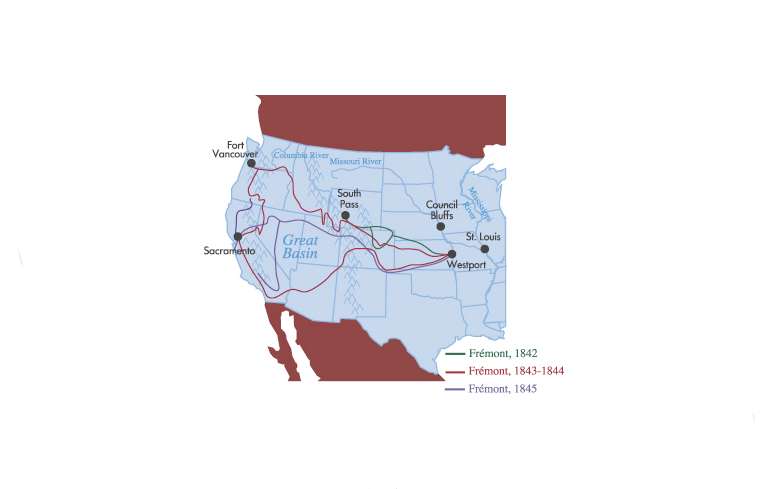
The routes of some of Fremont's expeditions. Map/Kansas Historical Foundation

The routes of some of Fremont’s expeditions. Map/Kansas Historical Foundation

Society members Guy Rocha and Stony Tennant said extensive research shows Fremont stood atop the mountain on Jan. 20, 1844, to gain a view west of the Dayton Valley and the Carson Range above Carson City.

Hoping to find less snow to the south, Fremont and his California-bound group then headed on a more indirect route to the Walker River near what is now Yerington before crossing the snowbound Sierra Nevada near Carson Pass a month later.

Rocha said while Nevada has streets and schools named after Fremont, a geographic feature that bears the adventurer’s name is long overdue.

In addition to leading several expeditions that helped pave the way for the West’s settlement, Fremont was one of the first two U.S. senators from California, the first presidential candidate of the Republican Party and a Union major general in the Civil War. Still, he’s viewed as a controversial figure by historians.

“I’m personally not a big fan of John C. Fremont,” said Rocha, Nevada’s former state archivist. “But he was bigger than life and quite the early explorer in American history.

“To come into the American Great Basin under some pretty tough conditions and survive that expedition (of 1843-44) is impressive. Despite how I feel personally, he deserves his rightful place in history,” he added.

Jack Hursh, executive secretary of the state board on geographic names, said he expects the request to win approval at the panel’s May 14 meeting. Before the name becomes official, it would have to be approved again at a subsequent board meeting and then by the U.S. Board on Geographic Names.

“I can’t imagine anyone opposing this,” Hursh said. “That’s a very appropriate spot to name after him because he stood at that location.”

The state board seeks to honor people who have had a significant impact on Nevada history, Hursh said, and Fremont qualifies as an early explorer who named so many prominent features. Fremont also came up with the name Great Basin for the vast region of interior drainage that includes most of Nevada and much of Utah.

Rocha and Tennant used mileages in Fremont’s journal and satellite imagery to locate the mountain that Fremont climbed. Tennant also climbed every mountain along a 12-mile section of the Carson River to pinpoint its location. Both the mountain and Fremont’s 1844 camp are located on the south side of the river, just west of Susan’s Bluff.

“I didn’t know what to expect when I walked up there, but the view from the top was identical to what he described in his diary,” Tennant said. “You can see the Carson River going out to a broad valley (around Dayton) and the Carson Range, which he described as the Sierra.

“I knew I was standing exactly in the spot where he stood and I felt a chill down my neck. There’s absolutely no doubt this is the right location,” he added.

The mountain is actually an ancient 5,003-foot volcanic cone at the northeastern end of the Pine Nut Mountains, Tennant said.


No one questioning Congress’ travel expenses

By Jeremy Wallace, Sarasota (Fla.) Herald-Tribune

As the nation hurtled from one fiscal crisis to the next last year, Democrats and Republicans argued bitterly over the best solution — tax increases or spending cuts. But members of the U.S. House did agree on one thing: There was enough money for them to travel the globe at taxpayers’ expense.

At least 172 House members spent more than $1.5 million in 2012, visiting more than 90 countries and every continent but Antarctica, a Herald-Tribune investigation has found.

In all, House members spent more on 864 international stops last year than in either of the two previous years, congressional records show.

And the actual costs are much higher than Congress reported.

U.S. House members’ trip reports do not include costs for flights by often-used military transports, which run more than $10,000 per hour. Instead, only commercial flight expenses are documented.

The reports also do not detail expenses for spouses, who often accompany congressional members on trips at taxpayer expense.

Nearly 20 percent of the recorded travel costs last year — $260,000 — were incurred by 20 House members no longer in Congress. Most of those members traveled after announcing they were retiring, lost re-election bids or declared they wouldn’t seek office again.

House members typically defend travel as a necessary part of their jobs, especially on defense, foreign affairs, intelligence or emerging trade zones.

But the Herald-Tribune investigation found that in 2012, France, Ireland and Spain were among the five most frequently reported destinations for House members. Seventy-three members visited one of those countries, while just 35 made stops in Afghanistan.

And no House member reported visiting Iraq.

Other destinations included the Mediterranean island of Malta; Monaco, a city-state on the French Riviera; and the East African tourism hubs of Tanzania and Madagascar.

“If you think there are members abusing it — there are,” said Rep. Tom Rooney, a Florida Republican who says he only travels when it’s relevant to the committees on which he serves.

The Herald-Tribune’s investigation showed that:

• Former Rep. David Dreier, R-Calif., was the most traveled, spending 58 days overseas visiting at least 18 countries at a minimum cost of $67,000 to taxpayers.

• A month after returning from Monaco, Democrat Dennis Cardoza, also of California — who announced in 2011 he was leaving Congress — spent seven days in Ireland, Greece, Italy, Spain and Portugal, then abruptly quit the House three days after returning to the U.S.

• California Republican Dana Rohrabacher billed the government for the single most expensive trip, a seven-day excursion to Germany in January 2012 that cost taxpayers $38,382.

The amount spent on Congress’ international travel is not a vast sum, given the $3.8 trillion federal budget. But the spending appears to contradict pleas for fiscal restraint by congressmen, who have an approval rate of just 16 percent from voters, according to a May 9 Gallup poll.

Bill would limit travel

Even some House members say the travel has gotten out of hand in a time of deep cutbacks.

Rep. Walter Jones, R-N.C., reintroduced a bill early this year to limit foreign travel to only the most critical needs.

“I know too many times they are taking trips to European countries or Southeast Asia where we don’t even have troops,” said Jones, who made no international trips at taxpayer expense last year.

As with other bills aimed at restricting travel or increasing disclosure, Jones’ legislation has gone nowhere.

Tracking congressional travel remains notoriously difficult. House records often include general numbers and are typically filed months after the trips. They do not disclose when spouses go along, or what costs are incurred by the Defense Department for ferrying House members on more than 300 VIP planes.

And they don’t detail what, if anything, was gained during a given trip.

The Herald-Tribune investigation did not include travel by members of the U.S. Senate, which provides less detailed and accessible disclosure online than the House.

House leaders are showing more sensitivity to international travel. House Speaker John Boehner, following budget fights with President Obama, told members he would not approve international trips using military transports.

The result is more commercial airfare costs in 2013. When nine members of the House and seven staffers flew to Vatican City in March for the new pope’s Installation Mass, they reported spending $32,768 in commercial airfare costs.

Since January of this year, dozens of members have traveled to locations including Switzerland, Belgium, the U.K., Germany, Israel and Afghanistan.

There are two primary ways members of Congress and their staff are allowed to travel internationally, with the reporting requirements varying for each.

Members can accept international trips paid for by various special interest groups — examples include the American Israel Education Foundation and the Turkish Coalition of America — to promote better relations.

In 2012, 78 House members traveled to 30 nations on such trips, according to the regular disclosure reports Congress requires for such travel. The reports do not include trip costs.

Less transparent is international travel by Congress paid for by taxpayers. To travel, members need only secure approval from their committee chair or the House speaker. Those trips are reported by each committee in the Congressional Record, a near-daily publication by Congress.

Even congressional researchers are stymied in trying to assess the amount of overall travel.

“There is no single source that identifies all international travel undertaken by the House or Senate, and no means to identify the number of trips taken, destinations visited, travelers, total costs, or costs paid for by funds appropriated to government entities other than Congress,” says a report prepared by the Congressional Research Service and released in March 2012.

Departing members travel

Few trips raise more questions of value to taxpayers than those made by departing members of Congress.

The Herald-Tribune found that the most prolific traveler last year was Dreier, the former California representative. He announced in February 2012 that he would not seek re-election after California’s redistricting process essentially eliminated his district.

Following the announcement, Dreier, who chaired the Rules Committee, took seven trips to at least 18 countries over 58 days.

As a committee chairman, Dreier could travel without seeking approval from anyone else in Congress.

He did not respond to repeated attempts to reach him for comment.

Dreier, who served in Congress for 32 years, made his final trip in October, a nine-day excursion to Africa, according to a report filed with Congress one month after he was officially retired.

The Congressional Record does not specify where he went in Africa, but he billed taxpayers for $6,441 in transportation costs.

Rep. Dan Burton, R-Indiana, announced his retirement in January 2012 after 30 years in Congress. He then traveled to 14 countries during four trips taken from February to September. Burton, a member of the House Foreign Affairs Committee, made his last trip in September to Azerbaijan, Georgia and Armenia. He reported spending $10,033 on commercial flights for the five-day trip.

One month after he left Congress in January 2013, Burton was named chairman of the Azerbaijan American Alliance board. That group is a U.S.-based nonprofit that says in its mission statement it aims to promote understanding between the two nations.

In all, 14 members of Congress announced their retirement, resigned or ran for another office in 2012, yet traveled at a cost of at least $230,000 to taxpayers, according to the Congressional Record.

Five members lost their primary elections early in the year, then traveled internationally at taxpayer expense.

One was Pennsylvania Democrat Tim Holden, a member of the Agriculture Committee; he lost his primary election in April, and took four international trips between May and August, hitting 17 countries.

Government watchdog groups say that because of poor recordkeeping, it’s hard to know if travel by “lame duck” members is legitimate.

“It’s an area that is ripe for abuse,” said Bill Allison of the Sunlight Foundation, which aims to bring transparency to Congress and has pushed for greater public disclosure concerning trips.

Some government watchdog groups say they expect members to build expertise by traveling.

Melanie Sloan, executive director of Citizens for Responsibility and Ethics in Washington, said she would be more concerned if members never left their districts or D.C., yet still tried to weigh in on complex global issues.

Still, Sloan acknowledged it raises eyebrows when France, Ireland and Spain are regular landing spots for many.

“When there are a lot of stops in Western Europe,” Sloan said, “it looks a lot like a vacation.”


Accomplished hiker, author to give talk in Tahoe

Justin Lichter, aka Trauma, has hiked more 35,000 miles since 2002. He has completed the Appalachian Trail, Pacific Crest Trail, Continental Divide Trail, and the Hayduke Trail.

On May 23 at 7pm he will be in South Lake Tahoe showing slides of his most recent trip to the Himalayas and sharing stories of his adventures.

Lichter is also the author of “Trail Tested” a through-hikers handbook. Copies will be available for purchase by cash or check the evening of the event.

The free talk is co-hosted by Lake of the Sky Outfitters and Tahoe Area Sierra Club.

It will be at Unity at the Lake, 1195 Rufus Allen Blvd. RSVP to (530) 541.1027.


Truckee embracing its roots with restoration

By Shanna Kuhlemier

During the late 19th century and with the completion of the transcontinental railroad, new local industries started to emerge in Truckee.

At this time, the local dairy industry was established due to the ease of transporting products to lucrative markets. This area in the Sierra was a dairyman’s heaven. The region provided summer pasture for herds brought in from Central California, and in earlier years, there were reportedly 15 to 20 dairy farms close to Truckee that yielded enormous quantities (60,000 pounds) of “premium quality” butter that, in turn, was sold at “premium” prices throughout the west’s urban markets.

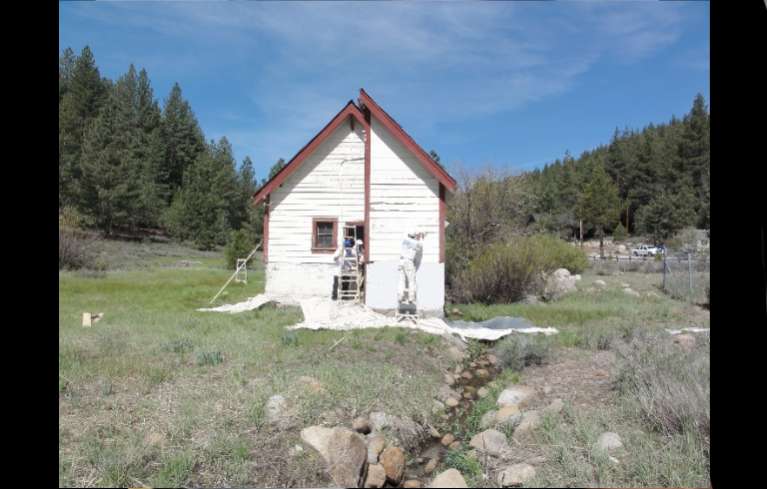
The McIver dairy in Truckee is getting new paint. Photo/Provided

The McIver dairy in Truckee is getting new paint. Photo/Provided

Two dairies are occasionally alluded to around historic Truckee. The Von Flue dairy was originally located on the south side of the Truckee River, occupying the lands around present-day River Street. The McIver Dairy was located along Donner Pass Road just north of Interstate 80. Both were significant contributors to early community development and the economic growth of our region.

In 1998 Truckee purchased the McIver property. A year later, the Town Council approved “Paint the Dairy Day” — a collaborative project between the Contractors Association of Truckee Tahoe Community Project, the Truckee Donner Historical Society and the town. The project provided for the repair and painting of all three of the historical buildings.

In 2013, CATT Community Project has been kind enough to grant the project another painting and repair. Project leaders include Mike Nethersole, MD Construction, Kelly Brothers Painting, Kelly Moore, and Josh Root, Root Design Electric.

The interpretive sign is being developed by the Sierra Expeditionary Learning School, 4th- and 5th-grade crew and the Brisbin Crew as part of their history learning curriculum and as a service learning project. And the Donner Summit Historical Society (Bill Oudegeest) is building the sign as part of their Highway 40 Scenic Bypass Project.

On May 24 at 1pm will be the unveiling of the interpretive sign.

Other community partners include: Rotary of Truckee, Village Nursery, and the Truckee Donner Historical Society.

Shanna Kuhlemier works for the town of Truckee.


TAMBA raising money to build flow trail

Tahoe Area Mountain Bike Association is looking for donations to build Corral Trail into a flow trail.

The folks with the Salesforce Foundation will be matching all donations up to $15,000.

TAMBA has collected $7,000 to date.

Donate online or mail a check with “Build Corral” in the memo line to: TAMBA, P.O. Box 13712, South Lake Tahoe, CA 96151.

All donations are tax-deductible.