WNC graduates include 8 Tahoe residents

For the fourth consecutive year, Western Nevada College will graduate its largest class in history. The class of 2013 is 505 students strong, with 530 degrees and certificates being issued.

The graduates span 60 years, from the youngest at age 17 and the eldest at 77.

Commencement ceremonies are May 20, 11am in Carson City at the Pony Express Pavilion, 888 N. Saliman Road and May 21, 7pm in Fallon at the Barkley Theatre at Oats Park Art Center, 151 Park St.

Nursing graduates will participate in a Pinning Ceremony on May 20, 3pm at the Carson Nugget.

The following are 2013 WNC graduates from Lake Tahoe:

• Whitney M. Gielow, Stateline, Associate of Applied Science – Nursing

• Faith Bechtol, Stateline, Associate of Arts – Deaf Studies

• Christopher L. Chorn, Zephyr Cove, Associate of Applied Science – Management

• Dana Rachael Nott, Zephyr Cove, Associate of Arts

• Eric Gower, Casey Marie Rise, Caitlin Ann Robinson, Tihisha Rachel Vaccaiah, all from South Lake Tahoe, Associate of Applied Science – Nursing.


Tahoe Olympic ski museum to open

The Museum of Sierra Ski History and 1960 Winter Olympics will open May 25.

The collection includes official Olympic items such as skis, racing bibs, official results, promotional literature and participation mementos. Exhibits will show rarely seen conceptual drawings prepared by Walt Disney for planning of the VIII Olympic Winter Games.

Walt Disney’s realization of the artistic centerpiece of the Olympic Park was the elevated stage of the Tribune of Honor. It was backed by the 80 feet tall Tower of Nations displaying the crests of all 30 participating nations and flanked by statues of athletes in the style of snow sculptures. At its center, the flame symbolizing the Olympic spirit burned in its elevated cauldron. (Courtesy of Bill Briner.)

Walt Disney’s artistic centerpiece of the Olympic Park was the elevated stage of the Tribune of Honor. It was backed by an 80-foot tall Tower of Nations displaying the crests of the 30 participating nations and flanked by statues of athletes in the style of snow sculptures. Photo/Bill Briner

Selections from the photographic collection of official Olympic photographer Bill Briner will be a central feature. Dozens of never before exhibited banners, souvenirs and spectator memorabilia from the Batiste Family Collection will be on display. The collection includes items from the pre-Olympic days of Squaw Valley Ski Area.

Special displays will honor local ski industry pioneers Wayne Poulsen and Alexander Cushing.

The exhibits will eventually include tributes to current and past Tahoe-area Winter Olympians and prominent skiers.

Visitors will learn the history of skiing in the Sierra and the story of the 1960 Olympic Winter Games. Interpretive posters will present excerpts from two recent ski history books, “From Longboards to the Olympics” by Mark McLaughlin and “Snowball’s Chance – The Story of the 1960 Olympic Winter Games” by David C. Antonucci.

The new exhibit is presented by Tahoe Museum LLC, a public benefit organization founded by Sacramento-area physician Stan Batiste and Antonucci. The Auburn Ski Club, Squaw Valley Museum Foundation and private Olympic memorabilia collections from Wendall Broomhall, Martin Hollay, and Dave Newton are contributing rare artifacts and photos to the displays.

Channel Properties, owner of the Boatworks Mall, is hosting the museum as a public benefit and at no cost to the exhibitors.

The museum will be open from 10am-6pm on the second floor of the Boatworks Mall, 760 North Lake Blvd., Tahoe City. A grand opening ceremony is planned for early summer 2013.

Admission is free, with donations accepted.


Winery to host ‘Mark Twain’

For the past 25 years, in more than 2,000 performances from Leningrad University in Russia to Piper’s Opera House in Virginia City, McAvoy Layne has been preeminent in preserving the wit & wisdom of “The Wild Humorist of the Pacific Slope,” Mark Twain.

Now Mark Twain is coming to the Truckee River Winery tasting room.

On May 18 from 5-6pm The Wit & Wisdom of Mark Twain will be performed by Layne. Socializing and wine tasting with Layne will follow.

Tickets are $20. Call (530) 587.4626 to reserve a spot.

The winery is at 11467 Brockway Road, Truckee.


Thunderbird Lodge looking for donations

The Thunderbird is occasionally seen on Lake Tahoe. Photo/LTN file

The Thunderbird is occasionally seen on Lake Tahoe. Photo/LTN file

Having raised $260,000 to date, the nonprofit Thunderbird Lodge Preservation Society needs only $40,000 to begin restoration of the Whittell Waterfalls at Lake Tahoe’s Castle-in-the-Sky: the Thunderbird Lodge.

The Preservation Society’s final push is a for an exclusive evening of fine dining at Thunderbird Lodge, including an elegant cocktail cruise on the 55-foot mahogany speedboat Thunderbird.

Tickets are $100 and must be purchased by June 30. Two winning tickets will be drawn July 1.

A minimum of 100 tickets must be sold for the drawing to take place. No more than 400 entries will be permitted.

They winners may each invite five friends for a “Secrets of the Castle Tour” followed by an East Shore cocktail cruise, and then a three-course dinner on the terrace with wine pairings.

Go online or call (775) 832.8752 to make a donation and purchase raffle tickets.


TRPA allocations quashing residential building

By Anne Knowles

Now that the economy is picking up, local jurisdictions and the building industry are counting on the Tahoe Regional Planning Agency to revamp its controversial system for doling out residential building allocations.

Architects and builders says business is beginning to rebound, and local officials say demand for the allocations needed to build on vacant lots is back after languishing for the last four or five years.

At the same time, though, TRPA has cut its maximum allotment of allocations by more than half as part of the many changes made in the Regional Plan update last year.

The contentious topic will get another airing next week when the agency’s Governing Board takes it up again at a public meeting in the Chateau at Incline Village.
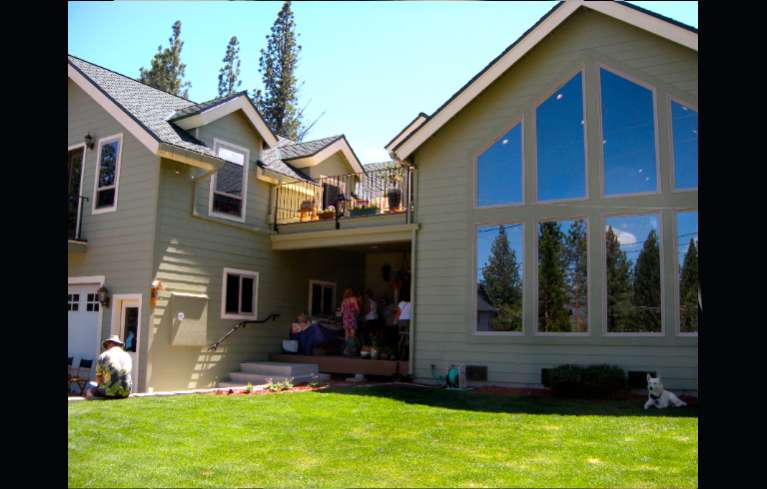
One of El Dorado County's biggest building seasons was just after the 2007 Angora Fire. Photo/LTN file

One of El Dorado County’s biggest building seasons was just after the 2007 Angora Fire. Photo/LTN file

“That May 22 meeting is pretty important,” said Pat Davison, executive director of the Contractors Association of Tahoe Truckee in Truckee.

Davison and others hope to convince the TRPA that tests used to determine how many allocations the five counties and city of South Lake Tahoe receive is unfair and is keeping the area from getting the economic shot in the arm it needs.

“The frustration is the economy is showing signs of recovery,” Davison told Lake Tahoe News. “The building industry was hit so hard and not to see the full release (of allocations) was surprising and disappointing.”

Last month the board approved the 2013 allocations; the first set since the RPU became official in December. Previously, the TRPA gave out a maximum of 300 annual allocations to the jurisdictions, but this year that was cut by 55 percent to 130.

And the TRPA ended up releasing only 86 of those 130 based on the same system of environmental benchmarks it has used in the past.

“We didn’t get any allocations on our EIP (environmental improvement program) compliance or transit level of service. It’s very difficult to increase that number,” Mimi Moss, community development director for Douglas County, told Lake Tahoe News. “The TRPA needs to revisit the allocation process. We’ve all done so much over the year and we’re still penalized.”

The jurisdictions are scored by the TRPA based on four criteria: permit issuance and compliance, best management practices retrofit, EIP implementation and increase in transit level of service.

Douglas County, for example, has a base allocation of five and can receive as many as nine by earning up to four additional enhancement allocations by scoring well on the four criteria. For 2013, the county received six allocations, garnering just one extra for permit compliance.

Douglas isn’t alone, though. All the jurisdictions exceeded their base allocations through permit compliance, but only Washoe County earned allocations in another category, BMP retrofit. None received bonuses for EIP or local transit improvements.

Douglas County’s Moss would like to see the counties and city assessed based on other measurements.

“If the jurisdiction is meeting the total daily maximum load, then we should be getting credit of lake clarity,” she said.

Davison, the builders’ representative, is hoping to convince the board to release all of the allocations and even to consider an advance on next year’s pool.

Jeff Cowen, TRPA public information officer, said under the RPU, “We are still on an annual cycle of allocation distribution and do not have any rules that we could distribute in larger amounts or periods.”

The performance review system is likely to be re-evaluated next year.

The TRPA, which is dealing with a number of other matters including a lawsuit filed over the RPU, has a long to-do list.

“I know how the bureaucracy works,” said Roger Trout, development services division director with El Dorado County. “I’m all behind getting the process updated to be, I wouldn’t call it more fair, but maybe more streamlined.”

Trout said El Dorado County probably has as many people waiting for allocations as the county received, which is 32. But he, like others, said demand is starting to tick up.

“The economy is changing so I’m sure that list will get longer,” he said.

Douglas County in the early 2000s issued an average of 500 building permits a year countywide, said Moss. That dropped dramatically during the recession, and was down to two or three allocation applications at the lake for the last few years. Last year, 40 permits were issued for the entire county, she said, and 48 have been given out this year, with another six weeks left in its fiscal year.

Moss said there are 57 people on the waiting list for lake allocations.

South Lake Tahoe, which received 13 allocations out of a possible 21, did not respond to a request for a comment. But at last week’s City Council meeting, Nancy Kerry, city manager, said there was a waiting list of about 100 for the allocations.

“A couple of years ago you could not give them away,” she said.

Demand won’t be letting up if architects are a harbinger. Dan Munsterman, with the Munsterman Group LLC in Tahoe Vista, said work is definitely returning, mostly on higher-end, lakefront properties, but it is starting to trickle down, too.

“The jobs I’m getting are tear downs. I don’t have one single job on a vacant lot,” said Munsterman. “I’m busier than I’ve been in eight to 10 years.”


Workshop focuses on difficult customers

The Sierra Human Resources Association is presenting Dealing with Difficult Customers, Service Recovery Strategies on May 23 from 9am to noon.

This is in partnership with the North Lake Tahoe and Truckee Donner Chambers of Commerce.

Business plans, promotional and advertising campaigns, and sales and marketing initiatives are wasted efforts if poor customer experience is driving away people because they are not getting what they want. It costs up to five times more to attract new customers than it does to retain existing customers.

In this interactive workshop, guest and customer facing staff will learn to avoid indifference and diffuse tension build up from three stages of increasingly difficult customers using a proven and powerful service recovery formula.

The cost is $29 for SHRA/SHRM members, $39 for chamber members, $49 for non-members. Volume discounts for four or more from the same company apply. Register online.

Beverages and snacks will be provided at 8:30am.

For more information, call Laura Moriarty at (530) 573.0224 or go online.

The event is at at the Hampton Inn located at 11951 Highway 267 in Truckee.


Opinion: TRPA allocations are good policy

By Joanne Marchetta

With spring and a new building season having arrived, many are imagining their Tahoe dream home again, so questions about the Tahoe Regional Planning Agency’s method of annual development allocation deserve some attention. As you will see, with Lake Tahoe nearing what is called “full buildout,” this year’s residential allocation distribution is the beginning of a new way forward for the finite amount of vacant land remaining at Lake Tahoe.

More than 40 years ago, TRPA was called on to put the brakes on the rampant over-development and residential subdivisions that were threatening Lake Tahoe’s pristine environment. One way TRPA achieved that was to slow the rate and pace of new home building at Lake Tahoe so that environmental improvement and restoration projects could keep pace with growth. With limits on new subdivisions came a cap on the number of developable parcels region-wide and an allocation system was started. An allocation is basically the right to build or create a new “unit of use” which could be a home or an apartment. TRPA created different types of allocations, such as for tourist accommodations and commercial space, as well.

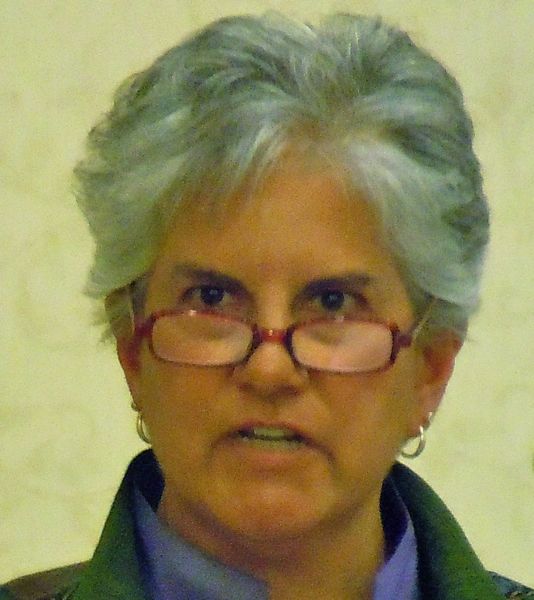
Joanne Marchetta

Joanne Marchetta

Today, the remaining vacant land at Lake Tahoe is nearing the point when there will be no more vacant parcels to build on, what we call full buildout. Out of the total 43,000 private parcels that exist today, only around 4,000 are still vacant. This means that, depending on the rate of allocation, Lake Tahoe could see an end of new development on vacant land within the next two decades.

Having a limited number of new residential building allocations means there is less pressure on the Lake and there is more time for environmental restoration projects to respond to the impacts of development. It also means new home construction can continue for a longer period of time before all the vacant parcels disappear. Ultimately, this all leads to a healthier environment and a clearer Lake because what happens on the land at Lake Tahoe affects the water.

The building allocation system opens more opportunities to remodeling and redevelopment. Improvements to existing structures are needed to add environmental upgrades to more than 25,000 properties throughout the region. That is the number of properties that have not completed stormwater best management practices (BMPs), which are required to stop fine sediment and other pollutants from entering the lake. Permits to remodel or rebuild are only issued if BMPs and other environmental upgrades are included in the project. So, a more robust redevelopment market means improved water quality as well as extended job security for many in the construction trades.

With these facts in mind, the updated Lake Tahoe Regional Plan last year reduced the rate of annual residential allocation by 55 percent — to a maximum of 130 per year versus the historic maximum of 300. With private land at Lake Tahoe at 90 percent buildout today, the 2012 Regional Plan changed the maximum allocation rate to reflect changing dynamics on land and the continued need for environmental improvements throughout the region. For the 4,000 remaining vacant lots, the Regional Plan authorized 2,600 new residential allocations to be distributed over the next 20 years and 600 residential bonus units to be available only for environmental redevelopment projects in town centers. The 2,600 allocations will be distributed to local governments at the maximum rate of 130 per year, but some years it may be less. A faster rate of allocation would not bring the desired environmental benefits and would force the region to reach buildout more quickly—bringing an earlier end of this as a ways to seed the economy and construction trades.

This method of residential allocation answers the spirit of the Tahoe Bi-State Compact that calls for TRPA to create an orderly system for growth while protecting and improving the environment. Certain environmental improvements happen in-step with a limited amount of new growth, and a healthy market exists for environmental improvements to existing buildings. This method is also considered a cutting-edge sustainability measure and it along with other TRPA programs are studied by land use professionals around the nation and the world for resource protection. Keeping Tahoe at the forefront of global resource protection is a status that befits the Jewel of the Sierra.

Joanne Marchetta is executive director of the Tahoe Regional Planning Agency.


Calif. doesn’t screen drug counselors

By Nannette Miranda, KABC-TV

SACRAMENTO — A California Senate investigation found felons like J.M., who did time for sex crimes against 12-year-old and 15-year-old girls, was able to be a drug and alcohol counselor after his release.

Senate researcher John Hill spent seven months looking at the loophole that allows criminals like J.M. to treat addicts.

“The concern is counseling, drug and alcohol counseling, or any kind of counseling, involves a high level of trust and the honoring of boundaries, including sexual boundaries,” Hill said.

Hill found at least 23 sex offenders were able to work as rehab counselors. He concludes there are probably more because he was only able to cross-check databases for unusual names.

His research highlights the shortcomings of California’s system for overseeing 36,000 registered or certified substance abuse counselors who don’t have to go through fingerprinted computer checks.

California and Pennsylvania are the only states that don’t require one.

The report also noted that while being counselors, some would be charged for more crimes yet were still allowed to practice by simply going to someplace else — remember, no background checks.

“I think it’s hard to coordinate all of these,” Hill said. “The organizations certify the drug counselors. But then the state investigates when there’s misconduct. So it’s kind of a confusing and fragmented system.”

Calls and emails to the state Department and Alcohol Programs were not returned.

There have been two attempts to close this loophole at the state Legislature, but both of the measures never got anywhere.

Sen. Mark DeSaulnier, D-Concord, led that effort after a constituent’s son died at the hands of one of those counselors … but found resistance.

“My belief is that there are a lot of people who make a lot of money selling these services,” said DeSaulnier. “There are people in this building who have influence in this building who want to keep the status quo.”

Thousands of Californians are expected to flood drug and alcohol programs as the services begin to be covered under the federal Affordable Care Act next year. Many will not know if their counselors have a criminal past.


Photographer to talk about wildflowers

Wildflower photographer Roger Rosenberger will present an evening devoted to the upcoming wildflower season.

He will review the beauty of native wildflowers and talk about the best way to enjoy wildflower hiking in the coming months.

Friends of the Library is sponsoring the June 18, 6pm event at the South Lake Tahoe library, 1000 Rufus Allen Blvd.

For questions, email Tahoe.Programs@gmail.com or call (530) 573.3185.


Protecting outdoors is big business

By Julie Cart, Los Angeles Times

Some say that you can’t put a price on precious natural resources. As of this week, you can.

The public and private tab for conserving the nation’s fish, wildlife and natural resources is close to $40 billion a year, according to a study released this week.

The analysis, commissioned by the National Fish and Wildlife Foundation, considered the jobs, tax revenue and other economic effects from federal state and private investment in conservation.

The total — $38.8 billion — stimulates as much as $93.2 billion in economic activity, the study found.

A coalition of more than 1,200 conservation groups extrapolated the numbers from the new study and came up with another set of economic indicators.

According to the group, America’s Voice for Conservation, Recreation and Preservation, the economic impact from resource conservation, outdoor recreation and historic preservation in the United States is $1.7 trillion a year, which produces $211 billion in tax revenue and 12.8 million jobs.