Snippets about Lake Tahoe

horse• Tahoe Donner Equestrian Center is offering guided trail rides Thursday through Monday, as well as daily pony rides for children ages 2-6. The center opens June 15.

• Parasol Foundation is having an open house June 20 from 4:30-7pm at its offices at 948 Incline Way, Incline Village. For more info, call (775) 298.0184.

• A Lake Tahoe ski resort employee with the first name of Diogo (no last name given) is one of 25 men competing on “The Bachelorette” starting May 27.

• The Nevada System of Higher Education was awarded a $20 million grant for green energy research from the National Science Foundation.

• Meyers-based publishing house Bona Fide Books has signed its first novelist, Ann Gelder. “Bigfoot and the Baby” will be released in spring 2014.


Crime scene work nothing like what’s on TV

By Ted Long

Crime scene investigation was the focus of this week’s sheriff’s citizen group. We were educated on the role and procedures of the El Dorado County sheriff’s crime scene team. We saw everything from beginning of an investigation to the use of evidence in the courtroom.

El Dorado County does not have a dedicated crime scene team, it instead has deputies trained in CSI, and they perform normal patrol functions until there is a need for at crime scene investigation. Some counties, we were told, contract out CSI, or use civilian trained investigators. This way they only pay them when they are working.

The first thing we were told is that the reality is nothing like television, other than the crime scene taping. One might get the impression from the drama shows that it is an exciting, hands-on operation that makes or breaks most cases. The description we heard is more of a detailed, take your time kind of a job where much of the results are generated in a lab a long way away, with the dramatic results disclosed in months not hours.

Ted Long

Ted Long

They have a van dedicated to their use, which carries all their equipment. They must identify the scene, protect it, and then painstakingly search it including a high-tech vacuum cleaner. The obvious are the shell casings, the knife or other weapon and the victim. They photograph everything and carefully mark locations and time.

Unlike TV, evidence is put in paper bags, not envelopes or plastic bags; the reason is that the paper breaths and controls the determination and condition of the evidence. We did a fingerprint taking exercise, which went poorly for me, demonstrating the need for training and practice.

As usual, the officers were friendly and answered questions. We saw pictures of the process of investigating, collecting of evidence and even the examination of a dead body. The need for a “chain of custody” to allow admissibility of evidence was demonstrated and the need for a careful, accurate handling was underlined.

Contrary to popular belief, it is not a speedy process, fingerprints and DNA evidence as well as fibers and other particular evidence must be sent to Sacramento for processing and identification. We were told that physical crimes come first and property crimes may never get done. The officer explained that all property crime evidence goes to the back of the line, to the point where they may get a phone call four or five months later from the lab asking if they still need the work done. Given that defendants have a right to a speedy trial it may be useless to ever expect processing and use in a court case in property cases, such as burglary.

Another interesting evening in Placerville, learning that television crime shows make be just drama and not much reality.

Ted Long is a South Lake Tahoe resident participating in the El Dorado County Sheriff’s Citizens Academy.


Tahoe residents serve their country with pride

By Kathryn Reed

STATELINE – Ask someone what Armed Forces Day is and they’ll probably respond with a puzzled look.

It was created in August 1949 to have one day dedicated to the men (mostly at that time) and women serving in every branch of the U.S. military. At the same time, it was also instituted to replace the separate days of recognition the various branches had in place. And while the Marines take part in Armed Forces Day, they have also retained a day unto themselves.

Memorial Day is to honor those who have died serving their country, while Veterans Day recognizes all former members of the military.

armed forces dayArmed Forces Day is always the third Saturday in May – which is May 18 this year.

A few women from the Lake Tahoe area who have served in the military spoke at the May 15 Soroptimist International South Lake Tahoe meeting at Harrah’s Lake Tahoe.

Throughout the Lake Tahoe Basin there are about 4,000 veterans.

Carol Olivas, who is the secretary for the American Legion Auxiliary in South Lake Tahoe, described a veteran as someone who wrote a blank check to the military that could be paid with their life.

One of the things Auxiliary members do is spend time with the vets who are living at the Barton Skilled Nursing Facility. Two are there now, while last year nine called the South Tahoe center home.

Olivas said four vets who have served in Afghanistan are now attending Lake Tahoe Community College.

“All come back with post-traumatic stress,” Olivas said. “You don’t go to war and come back the same.”

Pat Bailey, who lives in Gardnerville and served in the Army as a dental specialist from 1975-78, told the group, “When people thank me for my service, I thank them for my college education.”

The GI Bill, which pays for college tuition, has long been one of the benefits of serving in the military.

All of the women who spoke Wednesday had positive things to say about their time in uniform. None got into the nitty-gritty of what life was really like, though.

Communication is one of the big things that has changed. There was a time when letters would be months apart between the service member and their loved ones who were in the States. Now computers allow for instantaneous emails and at times Skyping is available. And while this isn’t possible for all of the men and women serving overseas, it is a modern convenience even in times of war.

Francine Turner was in the Air Force during the Vietnam era. She was one of the first women to go through the jet mechanics course.

Locally, though, what she is known for is playing “Taps” on her bugle. She says it’s an honor. It’s also something Turner has done since was she a teen on a base in Texas.

Veronica Hawkins moved to Tahoe in 1978 with her parents. She graduated high school from the Carson Valley in 1995. From there she went right into the Air Force. She got out in 2000.

Hawkins served in Operation Desert Storm and was in the Bosnia conflict. One of her jobs was to tell people about their next deployment; which she said did not make her popular.

Patience Wenck, who is now a nurse practitioner with Barton Health, joined the Army Reserves in 1983. Her one weekend a month and two-week summer commitment grew as her rank and time served increased.

She was on active duty from 1987-90 before joining the Reserves again. From January 2005 to March 2006 she was in Germany helping wounded soldiers.

And while she met her husband, Fritz, through the military, he spent less time on a ship as a member of the Navy than she did going from island to island in Fiji administering medical care.

—-

Notes:

• The annual Memorial Day service is at Happy Homestead Cemetery in South Lake Tahoe on May 27 at 11am.


Letter: Barton Auxiliary deserves thanks

To the community,

Barton Memorial Hospital’s Auxiliary members provide vital support to our patients and staff. Without their determination and perseverance, Barton Memorial would not be what it is today – 50 years strong.

From the beginning (1960), many of the hospital and health care system’s strengths have been attributed to the thousands of dollars and hours the Auxiliary gives each year. These volunteers help in the hospital’s gift shop, at the front desk and assist in the skilled nursing facility. They also organize and help at local events and manage and operate one of their primary means of fundraising the Attic Thrift Store.

Barton Health recently held a celebration in honor of the 100-plus Auxiliary members. The event was not only an occasion to get everyone together to honor their hard work, but to see a check in the amount of $210,251.90 (total funds raised in 2012) be handed over to Barton CEO and President John G. Williams. This money, all made by the Auxiliary, will be donated to the Community Clinic project which treats the area’s underserved population.

A lot has changed since 1960, but the dedication of Barton’s Auxiliary members remains steadfast.

Thank you on behalf of everyone at Barton and our community for all you do.

Sincerely,

Barton Health board of directors and administration


Names in fatal I-80 accident released

By Barbara Barte Osborn, Sacramento Bee

TRUCKEE — The California Highway Patrol has identified a man who died following a high-speed chase near Donner Summit on Monday as William Orr, 55, of Penn Valley.

After receiving a report of a reckless driver, a CHP officer pursued Orr’s vehicle after he refused to pull over near Yuba Gap. Orr’s car reached speeds beyond 100 mph.

Orr died after losing control of his BMW convertible, which overturned several times after striking a dirt embankment near a construction zone on westbound Interstate 80, west of Soda Springs.

Two Calfiornia Conservation Corps workers, both from Fresno, were injured when the BMW overturned and struck them as they attempted to flee.

Linda Heuangpaseud, 23, was flown to a Reno hospital with head injuries. Jose Gabriel Garcia, 19, was taken to Tahoe Forest Hospital in Truckee complaining of pain.


UNR putting on engineering camp just for girls

UNR’s College of Engineering is hosting its inaugural Girls in Engineering camp this summer. The weeklong camp, designed for ages 13-15, aims to encourage more area girls to consider engineering as a career path.

The camp is designed to provide an introduction to a range of engineering disciplines through hands-on, interactive lessons such as bridge building, bottle rockets and chemical engineering experiments.

Engineering campers make small boats out of concrete. Photo/Provided

Engineering campers make small boats out of concrete. Photo/Provided

In addition to introductory engineering activities, the girls’ camp has a number of specially designed components. Female engineers, including College of Engineering faculty and graduate students as well as local professionals through the Society of Women Engineers, will provide the bulk of the instruction.

Other events include a field trip to GE to visit women employed in prominent engineering roles and a career panel and mentoring luncheon where campers will be seated with professional engineers to provide one-on-one advice.

Nationwide, women received just over 18 percent of all bachelor’s degrees in engineering in 2011, a number that has remained relatively flat over the past few years, according to research from the American Society for Engineering Education.

The camp will be on the UNR campus from 9am to 3 m, June 24-29. Registration fee is $250, and scholarships and financial aid are available.

For complete registration details, go online. Contact Elyse Bozsik at ebozsik@unr.edu with questions.


Rat Pack coming to Tahoe in July

The Rat Pack will be alive and well when the Cal Neva Resort in Crystal Bay hosts a tribute to the original kings of cool.

Two performances are scheduled July 6 – featuring “Frank”, “Dean” and “Sammy” in the illustrious Frank Sinatra Showroom – where Sinatra himself performed.

The show is co-produced by Sinatra Nation LLC and Rat Pack Events as a salute to Frank Sinatra, Sammy Davis Jr. and Dean Martin. The show features Dave Halston as Frank, Nicholas Brooks as Sammy and Bob Caudle as Dean.

Tickets for the 5:30pm and 8:30pm performances may be purchased online. Tickets are $28 in advance.


Justice Dept. secretly obtained journalists’ phone records

By Sari Horwitz, Washington Post

In a sweeping and unusual move, the Justice Department secretly obtained two months’ worth of telephone records of journalists working for the Associated Press as part of a year-long investigation into the disclosure of classified information about a failed al-Qaeda plot last year.

The AP’s president said Monday that federal authorities obtained cellular, office and home telephone records of individual reporters and an editor; AP general office numbers in Washington, New York and Hartford, Conn.; and the main number for AP reporters covering Congress. He called the Justice Department’s actions a “massive and unprecedented intrusion” into newsgathering activities.

The aggressive investigation into the possible disclosure of classified information to the AP is part of a pattern in which the Obama administration has pursued current and former government officials suspected of releasing secret material. Six officials have been prosecuted, more than under all previous administrations combined.
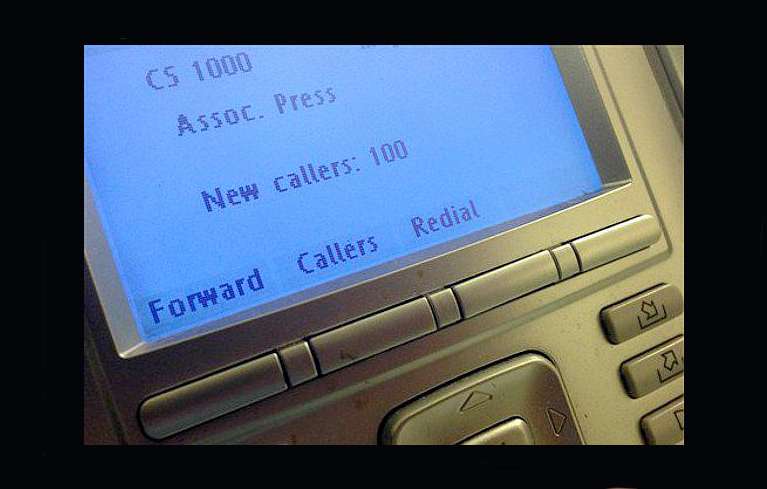
The Justice Department defends its taking of AP phone records. Graphic/Christian Science Monitor

The Justice Department defends its taking of AP phone records. Graphic/Christian Science Monitor

In a letter to Attorney General Eric H. Holder Jr., the AP’s president and chief executive, Gary B. Pruitt, said that the Justice Department sought information beyond what could be justified by any specific probe and demanded that the government return the phone records and destroy all copies.

“There can be no possible justification for such an overbroad collection of the telephone communications of the Associated Press and its reporters,” Pruitt wrote to Holder. “These records potentially reveal communications with confidential sources across all of the newsgathering activities undertaken by the AP during a two-month period, provide a road map to AP’s newsgathering operations, and disclose information about AP’s activities and operations that the government has no conceivable right to know.”

The inquiry is one of two leak investigations ordered last June by Holder. The second involves a New York Times report about the Stuxnet computer worm, which was developed jointly by the United States and Israel to damage nuclear centrifuges at Iran’s main uranium-enrichment plant.

The two leak inquiries were started after Republicans in Congress accused the Obama administration of orchestrating news stories intended to demonstrate the president’s toughness on terrorism and improve his chance for reelection. The Republicans sought a special prosecutor, but Holder instead named two veteran prosecutors to handle the inquiries.

In the AP case, the news organization and its reporters and editors are not the likely targets of the investigation. Rather, the inquiry is probably aimed at current or former government officials who divulged classified information.

But experts said the scope of the records secretly seized from the AP and its reporters goes beyond the known scale of previous leak probes.

“This investigation is broader and less focused on an individual source or reporter than any of the others we’ve seen,” said Steven Aftergood, a government secrecy expert at the Federation of American Scientists. “They have swept up an entire collection of press communications. It’s an astonishing assault on core values of our society.”

The office of the U.S. attorney for the District of Columbia on Monday released a statement saying it is not required to notify a media organization in advance of issuing such subpoenas if doing so “would pose a substantial threat to the integrity of the investigation.”

“We take seriously our obligations to follow all applicable laws, federal regulations, and Department of Justice policies when issuing subpoenas for phone records of media organizations,” said a statement from Bill Miller, spokesman for the office. “Those regulations require us to make every reasonable effort to obtain information through alternative means before even considering a subpoena for the phone records of a member of the media.”

Justice Department guidelines require that subpoenas of records from news organizations must be approved personally by the attorney general. Holder’s office did not reply to repeated requests for comment.

Lucy A. Dalglish, dean of the journalism school at the University of Maryland, said she thought the scope of the seizure was unprecedented. “Unfortunately, the Justice Department does this now and again,” said Dalglish, former executive director of the Reporters Committee for Freedom of the Press. “What’s very unusual is the scope of the subpoenas.”

Republicans also quickly condemned the targeting of journalists and sought to portray the Justice Department’s actions as part of a pattern of Obama administration overreach, noting that the Internal Revenue Service was already enmeshed in a scandal over the reported targeting of conservative groups.

“Coming within a week of revelations that the White House lied to the American people about the Benghazi attacks and the IRS targeted conservative Americans for their political beliefs, Americans should take notice that top Obama administration officials increasingly see themselves as above the law and emboldened by the belief that they don’t have to answer to anyone,” said Rep. Darrell Issa, R-Vista, chairman of the House Oversight and Government Reform Committee.

Senate Judiciary Committee Chairman Patrick J. Leahy, D-Vt., said in a statement that he is “very troubled by these allegations” and wants to hear the government’s explanation. “The burden is always on the government when they go after private information — especially information regarding the press or its confidential sources,” Leahy said. “I want to know more about this case, but on the face of it, I am concerned that the government may not have met that burden.”

In the AP investigation, Pruitt said, the Justice Department obtained the records without notifying his news organization or narrowing the scope of its subpoenas to specific matters relevant to an ongoing investigation.

The story at issue included details of a CIA operation in Yemen that foiled an al-Qaeda plot in the spring of 2012 to set off a bomb on an airplane headed to the United States. The April and May 2012 phone records of the reporters and editor of the story were among the material seized by the Justice Department.

Pruitt said that on Friday, the AP’s general counsel, Laura Malone, received a letter from Ronald C. Machen Jr., the U.S. attorney for the District of Columbia, who was appointed by Holder to lead the AP inquiry. He said that last year, the Justice Department obtained telephone records for more than 20 separate phone lines assigned to the AP and its journalists.

A grand jury based in Washington’s federal court has been investigating the possible leak of classified information to the AP for several months, according to a government official familiar with the probe who spoke on the condition of anonymity to discuss an ongoing case.

In most cases when investigators seek information about a media organization’s source, the news organization moves to quash any subpoena for its records. But in this case, the AP was not aware that the records had been obtained.

Law enforcement officials say leak cases are difficult because hundreds of people often have access to the classified information. In the AP case, knowledge of the details of the al-Qaeda plot would have been highly compartmentalized, which would limit the number of people with access to it. A former government investigator said telephone records could be valuable in narrowing the pool of suspected leakers.

Numerous senior government officials have been interviewed in connection with the investigation into the AP story. Among those questioned was John O. Brennan, who served as Obama’s counterterrorism adviser before becoming CIA director this year.

In his confirmation hearing in February, Brennan said he had cooperated voluntarily with the Justice Department and had been interviewed. He acknowledged speaking to former U.S. government officials who work as commentators on television news, but he denied sharing any classified information.

Greg Miller, Carol D. Leonnig and Julie Tate contributed to this report.



3 people survive plane crash near Carson City

By KTVN-TV

The FAA is investigating why a small Cessna crashed south of Reno in King’s Canyon near Carson City this afternoon.

Carson City Sheriff Ken Furlong says the call came in about 2:45pm Wednesday in upper Kings Canyon, about three miles northeast of Spooner Summit.

Three people were aboard the plane when it crashed, and are not hurt.

Furlong says the plane had departed the Carson City Airport earlier with a pilot and two passengers on a regional area tour.

The details of the flight and cause of the accident are being investigated by the FAA.

The NTSB is en route to the crash to begin the investigation.

The names of the people on board are not being released at this time.


Study: Too little salt could be bad

By Allison Aubrey, NPR

Americans are repeatedly told to cut back on salt to reduce the risk of heart disease. But there are new questions being raised about the possible risks of reducing sodium too much.

So, how low should we go? Currently, the government recommends that Americans should aim for 2,300 milligrams per day. And people older than 50, as well as those with high blood pressure, diabetes or kidney disease are advised to reduce sodium even further, down to 1,500 mg per day.

But a panel of experts convened by the Institute of Medicine concludes in a new report that “the evidence on direct health outcomes does not support recommendations to lower sodium intake … to or even below 1,500 mg per day.”

Why? We asked the committee chairman, Brian Strom, a dean and professor of public health at the University of Pennsylvania, to summarize the panel’s findings for us. “The net conclusion is that people who are eating too much sodium should lower their sodium, but it is possible that if you lower it too much you may do harm.”

Strom says a lot more research is needed to better understand how ultra-low-sodium diets may be beneficial or harmful. Strom pointed to an Italian study of people with congestive heart failure as an example of research that has hinted that diets too low in sodium may be problematic for certain people.

“The people on the low-sodium diet actually did worse [compared to those on medium-sodium diets],” says Strom. “They had more hospital re-admissions and they had a higher mortality rate.” He says it’s unclear if the results would be the same for Americans with congestive heart failure, since treatments here are different than they are in Italy. But, he says, the findings raise questions.

The American Heart Association, which recommends a low-sodium (1,500 mg) diet for all Americans, released a statement stating that it disagrees with the key findings of the new report.

And some preventive health experts are critical, too. The World Health Organization has concluded that elevated blood pressure is the leading cause of preventable death, which suggests that staving off high blood pressure with low-sodium diets is an important strategy.

“Sodium reduction remains a critically important component of public health efforts designed to … prevent cardiovascular disease,” Lawrence Appel of Johns Hopkins University writes in an email.

Appel points out that the studies that suggest that low-sodium diets are harmful tend to focus on “sick populations in which illness leads to low sodium intake rather than the reverse.”

Some groups of Americans, including older adults and African-Americans, are especially sensitive to the blood-pressure lowering effects of cutting sodium, Appel says. So the strategy of aiming for low-salt diets has “tremendous potential to reduce racial disparities in blood pressure-related cardiovascular disease.”

The bottom line, according to Bonnie Liebman, director of nutrition for the Center for Science in the Public Interest, is that Americans are eating way too much salt, on average about 3,400 milligrams a day.

“And we know that much is harmful,” she says. “It increases blood pressure, which increases the risk of heart attack and stroke.”

And she says focusing on the potential risks of a very-low-sodium diet distracts from the more important conversation about how to get Americans to start consuming less.

To better understand just how much salt is found in the typical lunch out, I met Liebman at a food court.

Our first stop was McDonalds, where it turns out burgers about twice as much salst as the fries: 1,000 mg, and up to 2,000 if you get the Angus bacon burger, Liebman says.

Put the burger and fries together and you’ve already reached the recommended daily sodium intake. Liebman says it’s a similar story at every chain, from Subway to Chipotle to Pizzeria Uno. (McDonalds has pledged to reduce sodium 15 percent across its menu by 2015.)

So even though the new study raises questions about potential harms of ultra-low-sodium diets, with a food supply like ours, most of us consume way too much salt, not too little.