Washoe County looking for Citizen Corps volunteers

The Washoe County Sheriff’s Office Citizen Corps is offering a free emergency preparedness and response training academy beginning June 6.

The Community Emergency Response Team Academy provides residents with the information they need to help save lives and reduce trauma in the event of an emergency. CERT Academy training includes disaster preparedness, emergency medical techniques, fire safety, search and rescue, disaster psychology, and terrorism awareness education.

Training is conducted by Citizen Corps staff and volunteers along with appropriate subject matter experts. The training is free and trainees are not required to become a Citizen Corps volunteer to participate.

The CERT Academy offers 24 hours of training during six sessions over two consecutive weekends. Training takes place at the Regional Public Safety Training Center located at 5190 Spectrum Blvd., Reno.

Children 12-15 may participate with parent’s supervision, teens 16-17 with parent’s permission. To sign up for training, call CERT Program Coordinator Derek Russell at (775) 325.6928 or email drussell@washoecounty.us

For more information about the Washoe County Citizen Corps, go online.


Reading program returns to Douglas County libraries

Dig Into Reading is the theme of this year’s Summer Reading Program for kids at the Douglas County Public Library.

Registration starts June 3 at the Minden and Zephyr Cove libraries. The program continues through July 31.

Go to the library’s website and fill out a registration form. Bring your printed form to the library to receive a special raffle ticket.

The kick-off event is June 11 at 4pm at the C.V.I.C. Hall. Usborne Books will present a book fair. Books for all ages will be available.

Magician Larry Wilson will present his Top Secrets for Wizards in Training magic show at 6:30pm. He will use audience volunteers for hands-on learning. Afterward children will be able to perform magic tricks at home using items such as pencils and paper clips.

The Douglas County Library Foundation will host an Ice Cream Social from 7:15 to 8pm.

For more information, call (775) 782.9841.


Food map details what people in U.S. eat

By Mary Clare Jalonick, AP

CHAPEL HILL, N.C. — Do your kids love chocolate milk? It may have more calories on average than you thought.

Same goes for soda.

Until now, the only way to find out what people in the United States eat and how many calories they consume has been government data, which can lag behind the rapidly expanding and changing food marketplace.

Researchers from the University of North Carolina at Chapel Hill are trying to change that by creating a gargantuan map of what foods Americans are buying and eating.

Part of the uniqueness of the database is its ability to sort one product into what it really is – thousands of brands and variations.

Take the chocolate milk.

The government long has long classified chocolate milk with 2 percent fat as one item. But the UNC researchers, using scanner data from grocery stores and other commercial data, found thousands of different brands and variations of 2 percent chocolate milk and averaged them out. The results show that chocolate milk has about 11 calories per cup more than the government thought.

The researchers led by Professor Barry Popkin at the UNC School of Public Health, are figuring out that chocolate milk equation over and over, with every single item in the grocery store. It’s a massive project that could be the first evidence of how rapidly the marketplace is changing, and the best data yet on what exact ingredients and nutrients people are consuming.

That kind of information could be used to better target nutritional guidelines, push companies to cut down on certain ingredients and even help with disease research.

Just call it “mapping the food genome.”

“The country needs something like this, given all of the questions about our food supply,” says Popkin, the head of the UNC Food Research Program. “We’re interested in improving the public’s health and it really takes this kind of knowledge.”

The project first came together in 2010 after a group of 16 major food companies pledged, as part of first lady Michelle Obama’s campaign to combat obesity, to reduce the calories they sell to the public by 1.5 trillion. The Robert Wood Johnson Foundation agreed to fund a study to hold the companies accountable, eventually turning to UNC with grants totaling $6.7 million.

Aided by supercomputers on campus, Popkin and his team have taken existing commercial databases of food items in stores and people’s homes, including the store-based scanner data of 600,000 different foods, and matched that information with the nutrition facts panels on the back of packages and government data on individuals’ dietary intake.

The result is an enormous database that has taken almost three years so far to construct and includes more detail than researchers have ever had on grocery store items – their individual nutritional content, who is buying them and their part in consumers’ diets.

The study will fill gaps in current data about the choices available to consumers and whether they are healthy, says Susan Krebs-Smith, who researches diet and other risk factors related to cancer at the National Cancer Institute.

Government data, long the only source of information about American eating habits, can have a lag of several years and neglect entire categories of new types of products – Greek yogurt or energy drinks, for example.

With those significant gaps, the government information fails to account for the rapid change now seen in the marketplace. Now more than ever, companies are reformulating products on the fly as they try to make them healthier or better tasting.

While consumers may not notice changes in the ingredient panel on the back of the package, the UNC study will pick up small variations in individual items and also begin to be able to tell how much the marketplace as a whole is evolving.

“When we are done we will probably see 20 percent change in the food supply in a year,” Popkin says. “The food supply is changing and no one really knows how.”

For example, the researchers have found that there has been an increase in using fruit concentrate as a sweetener in foods and beverages because of a propensity toward natural foods, even though it isn’t necessarily healthier than other sugars. While the soda and chocolate milk have more calories on average than the government thought, the federal numbers were more accurate on the calories in milk and cereals.

Popkin and his researchers are hoping their project will only be the beginning of a map that consumers, companies, researchers and even the government can use, breaking the data down to find out who is eating what and where they shop. Is there a racial divide in the brand of potato chips purchased, for example, and what could that mean for health? Does diet depend on where you buy your food – the grocery store or the convenience store? How has the recession affected dietary intake?

“It’s only since I’ve really started digging into this that I have realized how little we know about what we are eating,” says Meghan Slining, a UNC nutrition professor and researcher on the project.

Steven Gortmaker, director of the Harvard School of Public Health Prevention Research Center, says the data could help researchers figure out how people are eating in certain communities and then how to address problems in those diets that could lead to obesity or disease.

“The more information we have, the more scientists can be brainstorming about what kinds of interventions or policy changes we could engage in,” Gortmaker said.

But the information doesn’t include restaurant meals and some prepared foods, about one-third of what Americans eat. If the project receives continued funding, those foods eventually could be added to the study, a prospect that would be made easier by pending menu labeling regulations that will force chain restaurants to post calories for every item.

Popkin and his researchers say that packaged foods have long been the hardest to monitor because of the sheer volume and rapid change in the marketplace.

The Healthy Weight Commitment Foundation, an industry group representing the 16 companies that made the pledge to reduce 1.5 trillion calories, says it will report this summer on how successful they’ve been, according to Lisa Gable, the group’s president. The first results from Popkin’s study aren’t expected until later this year.

Marion Nestle, a New York University professor of nutrition, food studies and public health, says the data could be useful in pressuring companies to make more changes for the better. Companies often use “the research isn’t there” as a defense against making changes recommended by public health groups, she notes, and it can be hard to prove them wrong.

“What people eat is the great mystery of nutrition,” Nestle says. “It would be wonderful to have a handle on it.”
N. Nevada tourism guru focuses on gear heads

By Chris Ciarlo, KTVN-TV

As the economy continues to recover, every state is fighting for tourism dollars.

Here, at home, the Reno-Sparks Convention and Visitors Authority is launching a new campaign it hopes will bring in the next wave of tourists called Northern Nevada Motor Madness.

“When I arrived in Reno, I was really delighted to see all the cool, special events we had all summer long,” said Chris Baum, CEO of the RSCVA. “What I noticed was a lot of those are what I call piston powered; motorcycle, car, airplane, even Jet Skis. When you put it all together, we really have about a dozen world class activities that appeal to the gear head.”

The idea is if there’s an audience for Hot August Nights and there’s an audience for off-road racing out at Mustang, why not cross-promote?

Baum said cross-promotion gives every event exposure and a boost in attendance.

He also said this series is all about repackaging Nevada to the rest of the nation and no longer focusing on just gaming.

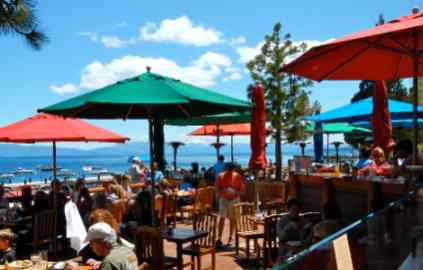
“We will always have gaming here, it just can’t be the lead offer anymore. We have to take something else and put it out front as what Reno-Sparks and North Lake Tahoe are today. Fortunately, we have a lot to go with because unlike a lot of other destinations that might be a one trick pony, we’ve got incredible, natural surroundings.”


Kings Beach assembles musicians for summer concerts

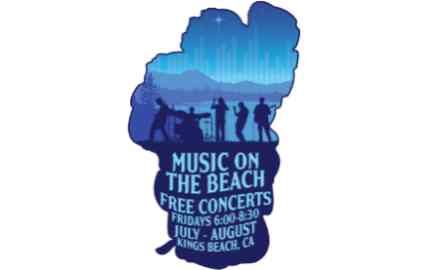
The North Tahoe Business Association is ready for this summer’s Music on the Beach.

Music on the Beach, a free nine-week outdoor concert series, begins July 5 and will run every Friday from 6-8:30pm through Aug. 30 at the Kings Beach State Recreation Area.

kings beach musicHere is the line up:

July 5 – Peter Joseph Burtt & The King Tide

July 12 – Sneaky Creatures

July 19 – Tracorum

July 26 – Mojo Green

Aug. 2 – Flannel Fish

Aug. 9 – Mama’s Cookin’

Aug. 16 – The Northstar Sessions

Aug. 23 – McCoy Tyler Band

(Benefit in support of Boys & Girls Club of North Lake Tahoe)

Aug. 30 – Terraplane.

New this year, food will be available for sale by the Souper Wagon. Beverages will also be available from 6-8:30pm. The concerts begin at 6:30pm.

For more information, call (530) 546.9000.


Plane crash survivor relives his story

By Tom Hauser, KSTP-TV

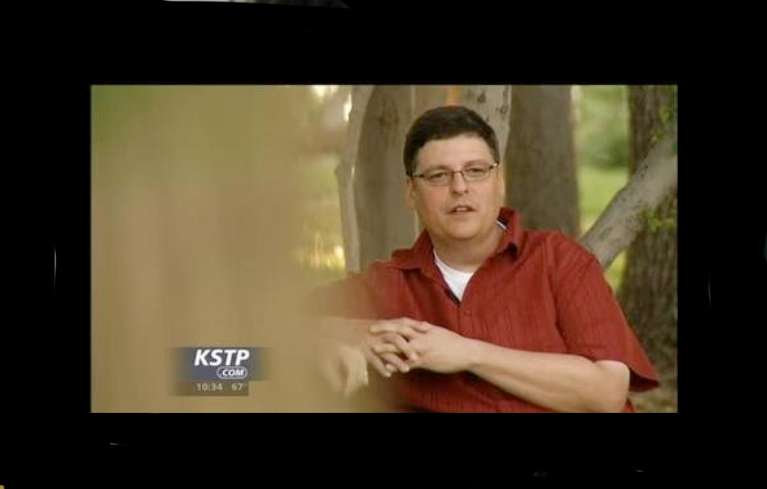
For George Lamson Jr., every day since Jan. 21, 1985, is a gift.

Galaxy Airlines Flight 203 crashed shortly after take-off just after 1am that day.

Lamson was the only one of 71 people on board who survived that crash a short distance from the airport in Reno.

George Lamson Jr. will be part of a documentary about plane crash survivors. Photo/KSTP-TV

George Lamson Jr. will be part of a documentary about plane crash survivors. Photo/KSTP-TV

He’s one of 14 people to be the sole survivor of a commercial plane crash.

“What I remember is hitting the ground, waking up seeing the sky, thinking I was dead,” Lamson told me recently in Reno. “I feel gratitude for having a second chance to live.”

What makes the crash all the more difficult to deal with is the fact his dad, George Lamson Sr., survived just over a week before he died.

The younger Lamson was just 17 years old when he and his dad flew to the Lake Tahoe/Reno area for a Super Bowl trip on a chartered plane. Most of the people on the trip were from Minnesota and western Wisconsin.

Immediately after the crash there were three survivors. Seventeen-year-old George Lamson and his dad both survived along with Robert Miggins of Wayzata. Lamson, Sr. and Miggins later died of their injuries.

In fact, a National Transportation Safety Board report indicates 16 people survived the initial crash impact, but most immediately died in a huge fireball.

George and his dad were sitting near the front of the plane by a bulkhead. The plane broke apart near them and they were thrown about 40 feet from the plane away from the explosion and fire.

The cause of the crash, according to the NTSB report, was a series of tragic events. A ground worker at the Reno airport improperly closed an “air start access door” that came open shortly after take-off.

The small open door beneath a wing caused strong vibrations in the plane. That, in turn, caused a series of pilot errors as they tried to troubleshoot the problem.

The plane crashed just a couple miles from the airport. “When I looked out the window I saw the ground,” Lamson recalls about the moments before the crash.

“So our plane was tilted this way, I’m looking out the window and I’m still seeing the ground. I should be looking up at the stars or wherever. Then we knew something was wrong. It got very quiet in the cabin.”

Lamson came back to Minnesota and finished his senior year at Cretin High School. About five years later he moved to Reno and now lives just minutes from the crash site. “I didn’t come here consciously to be near my dad,” he told me last week. “But I realize that by being here I do feel closer to him.”

There’s a memorial to the Galaxy plane crash victims several miles from the crash site in a public park. When Lamson is having a bad day, he’ll sometimes visit the memorial to remind himself how fortunate he really is. There’s not a day that goes by that he doesn’t think of his dad and all the others who died.

“I carry them around with me all the time. They’re with me 24/7.”

George will be in Minneapolis May 30 for the premiere of “Sole Survivor,” a documentary film about some of the sole survivors of plane crashes. He admits he was initially reluctant to get involved, but decided it was time to open up.

“I wanted to do something that would explain what I went through and maybe teach somebody that may be going through a difficult time they could learn from my experience.”


Fundraiser benefits Tahoe Institute for Natural Science

Will Richardson will present The Tahoe Natural Year: a Journey Through the Season. This talk will cover a variety of natural history topics as Richardson takes guests through the calendar year at Lake Tahoe illustrated with his photography.

This presentation on June 8 is a fundraiser for the Tahoe Institute for Natural Science. TINS is a member-supported nonprofit organization seeking to advance the natural history, conservation, and ecosystem knowledge of the Tahoe region.

TINS’ long-term goal is to bring a world-class interpretive nature center and educational facility to the Tahoe area. In the meantime, the group engages in a diverse research, education and outreach programs.

In the past two years, TINS has been in most K-5 classrooms in Lake Tahoe Unified School District and has participated in many field trips, including a bird-banding trip to Pope Beach for South Tahoe Middle School. TINS has been an active member in the South Tahoe Environmental Education Coalition for three years. As a part of STEEC, TINS has helped develop content for and participated in Children’s Forest, Outdoor Explore, and WOWEE programs during the 2012-13 school year that has reached K-6 in LTUSD.

The event is at Lake Tahoe Golf Course, 2500 Emerald Bay Road, Meyers. The $30 tickets includes dinner and cash bar. Mixer and silent auction is at 6:30pm, dinner at 7pm, and program at 7:30pm.

Tickets must be purchased in advance by contacting Carinne at (775) 298.0066 or carinne@tinsweb.org or Kelly Lancellotti at (530) 416.2735 or laketahoehiker@yahoo.com.


Snippets about Lake Tahoe

sunnyside• Sunnyside in Tahoe City is having a deck opening party May 24. Mountain Grill opens at 11:30am, live music is from 3-9pm.

• On May 26 at 11am is the annual Patriotic Service honoring all veterans and troops at First Baptist Church, 1053 Wildwood Ave. in South Lake Tahoe. All veterans, current service members and family are welcome. Uniforms or memorabilia are encouraged. Potluck follows the service.

• Employees from the Sparks Galleria Branch of AAA Insurance Nevada presented a $5,000 check to the Washoe County Sheriff’s Office that will be used to purchase ballistic shields for patrol vehicles.

• Here is Caltrans’ El Dorado-Tahoe roadwork schedule for the coming week.

• Findings from the independent panel at this month’s Upper Truckee River workshop are online. Scroll down to about the middle of the webpage to find the links to the collective and individual findings on the right side of the project map.


Work at Washoe Meadows set for this summer

By Kathryn Reed

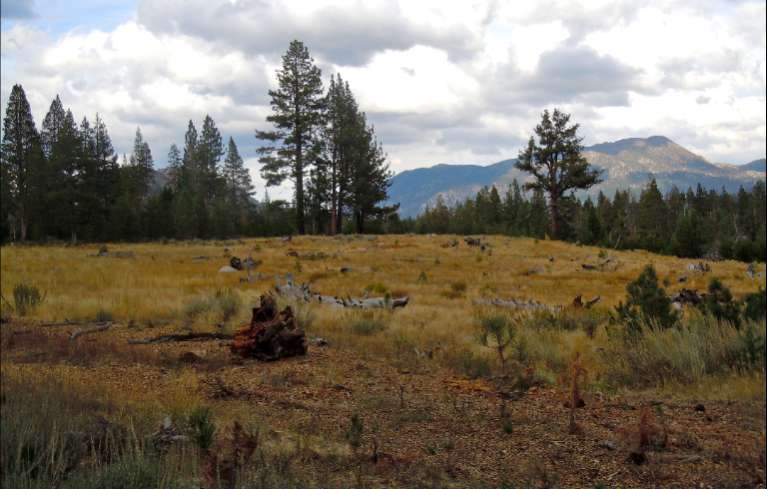
Despite an ongoing 1½-year-old lawsuit involving Washoe Meadows State Park, improvements at the South Shore park are expected to begin this summer.

The bridge crossing Angora Creek is slated for replacement, along with work on the channel so it flows better.

Comments for the CEQA documents are being taken until June 5. Project specs are available for review at the El Dorado County library in South Lake Tahoe.

Cyndie Walck with State Parks told Lake Tahoe News the plan is to work on the bridge and channel starting in August. The goal is to have everything wrapped up this season, with some possible vegetation work needed next year.

A lawsuit involving Washoe Meadows State Park is not preventing environmental upgrades taking place this summer. Photo/LTN file

A lawsuit involving Washoe Meadows State Park will not stop upgrades from happening this summer. Photo/LTN file

“The bridge will be redwood. It will have 30-foot long stringers,” Walck said.

This bridge is not near the golf course.

Once the comment period closes, the park system will begin securing necessary permits from Lahontan Regional Water Quality Control Board, Tahoe Regional Planning Agency and others.

“For the Angora Creek project, we are reviewing the recently received documents to see if we have any questions or comments. We appreciate that the project goals are to improve meadow habitat and improve park visitor experience in Washoe Meadows State Park,” Lynne Paulson told Lake Tahoe News.

Paulson is part of the Washoe Meadows Community that in November 2011 sued State Parks regarding its swapping land between the state park with neighboring Lake Valley Recreation Area.

State Parks, as all land owners along the Upper Truckee River are being mandated by Lahontan and TRPA, must reduce the amount of sediment flowing from the river to Lake Tahoe. Rerouting the river so it has a more natural meander is the most common way to achieve this goal. Proposed improvements to this section of river also come with reconfiguring the holes of Lake Tahoe Golf Course that sits on the state recreation land. Originally nine holes were to be moved. That has been revised to five.

Walck said until the lawsuit is resolved, the river restoration, the park’s first general plan and other recreation issues cannot be dealt with.

“For the Upper Truckee River and golf course project, Washoe Meadows Community’s lawsuits — and the concerns that prompted the action — remain unresolved but are active in the court system with motions, case updates and other actions on the court calendar during the coming months. It is important to continue to protect Washoe Meadows State Park’s resources and hold government agencies accountable for following the law,” Paulson said.

The other project this summer is working on the creek. It can range in depth from less than 6 inches to 3½-foot gullies. The deep part means water is not flowing into the meadow and therefore it is drying out.

“That access is from the west side off Lake Tahoe Boulevard,” Walck explained. “(The project) is to maintain the water table and spread water off the sewer line.”

Both projects are expected to cost about $150,000. State Parks will pay for part of it, with Tahoe Fund money expected as well.


Tahoe Tails — Adoptable Pets in South Lake Tahoe

Kisses

Kisses

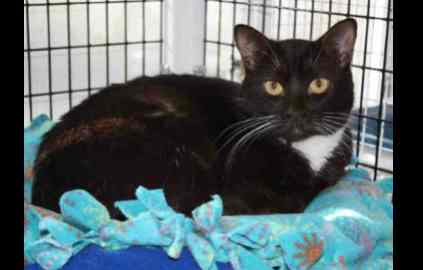
Kisses is an unusual chocolate brown shorthair cat who is about 20 months old.

She came to the shelter when her owner became too sick to look after her. Kisses is a nice cat who has always lived inside.

Kisses is spayed, microchipped, and vaccinated. She is at the El Dorado County Animal Services shelter in Meyers, along with many other dogs and cats who are waiting for their new homes.

Go online to see photos and description of all pets at the shelter.

Call (530) 573.7925 for directions, hours, and other information on adopting a pet.

For spay-neuter assistance for South Tahoe residents, go online.

— Karen Kuentz