Douglas County’s push to lure businesses is working

Douglas County is reaping the benefits of a marketing campaign the Board of Commissioners approved nearly two years ago.

In June 2011, commissioners approved a contract with Northern Nevada Development Authority to support recruitment of energy, science and advanced engineering businesses. The campaign is structured to target Sacramento, Stockton, San Francisco, Modesto, San Jose, Merced, Santa Cruz, Monterey and Oakland.

New businesses added to the region include Franklin Armory specializing in producing local firearms; Cristek Interconnects — an aerospace and defense industry manufacturer; Global Aqua Solutions — a manufacturer of proprietary organic, biodegradable, non-toxic chemicals; and Eastbiz — a mail forwarding and small packaging shipping company.

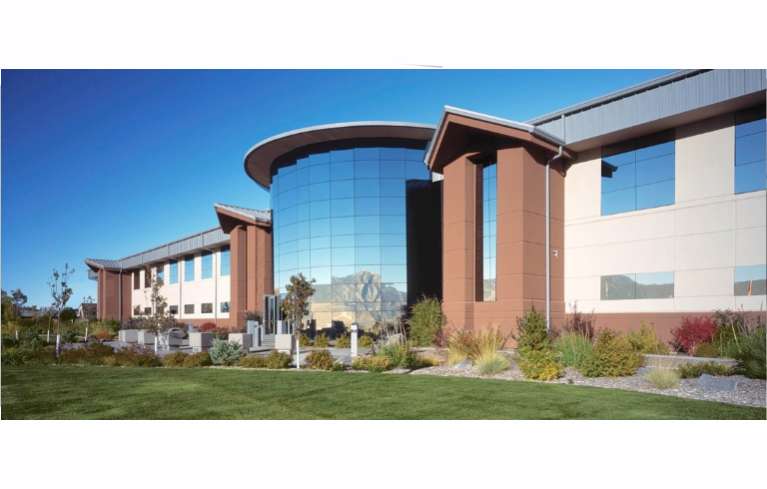
General Electric has an office in Douglas County. Photo/NNDA

General Electric has an office in Douglas County. Photo/NNDA

Since the contract was approved in 2011 NNDA’s efforts from the campaign have brought 10 companies to Douglas County and three expansions. This translates to 250 jobs, with more jobs pending in the area.

Douglas County staff has also assisted in working with the newly relocated businesses and the public to provide adequate job placement.

“We want to continue to grow the number of jobs and continue to diversify the types of businesses in Douglas County, growing our overall wealth to the community,” said Lisa Granahan, economic vitality manager for Douglas County, said in a statement.

Stockton was the initial test market. The campaign recently dispersed Douglas County specific marketing materials including mailers, email, digital ads and a national press release announcing the launch of the . The campaign includes material specific to Douglas County.

The website helps companies make a case for the transition and has brought national media attention to the county and Nevada as a whole.

— Lake Tahoe News staff report


Helicopter rescue necessary in Washoe County backcountry

An injured hiker had to be airlifted from the Hunter Creek Trail on Memorial Day after sh fell and hurt her back and neck.

The name and hometown of the woman who is in her 20s have not been releaseed.

Washoe County Sheriff’s Office search and rescue team as well as the Regional Aviation Enforcement Unit (RAVEN) were called out about 2pm May 27.

Due to the extremely rough terrain and distance from the trailhead the HH-1H Huey helicopter was called in to hoist the victim out of the canyon.

“Without RAVEN, transporting the victim off the trail would have taken at least two hours, and could have easily resulted in additional injuries to Search and Rescue or Fire personnel,” Deputy Jereme Wormington said in a press release.

Wormington said the Hunter Creek Canyon has more calls for service for rescues than any other hiking area his department serves.

The victim was taken by ambulance from the trailhead to Renown Medical Center in Reno.

 — Lake Tahoe News staff report


Workshops in Truckee focus on women

Change from the Inside Out coach Coleen Akiko Jackson helps women reconnect with their core wisdom and experience the fullness of who they are.

The workshops are presented in English and Spanish.

Next group sessions are June 5 and June 19 and will continue the first and third Wednesdays each month from 6-7:30pm. Workshops are in the “Living Room” downstairs at Church of the Mountains, 10079 Church St., across from the old rec center in downtown Truckee.

Suggested donation $5.

More information in Spanish call Reyna Lopez at (530) 386.2148, for English call Colleen Jackson at (530) 308.5053.


Nevada selling building allocation for Washoe County

Nevada Division of State Lands will take sealed bids for one Washoe County residential building allocation until May 29 at 3pm.

The minimum bid is $15,000 and the successful bidder will be responsible for costs associated with the transfer of the allocation from the Division of State Lands. These costs may include application fees, preliminary title reports and escrow costs.

A deposit equaling 10 percent of the bid must be submitted with the bid in the form of a money order or cashier’s check made out to First American Title Company in an envelope marked “Sealed Bid-Residential Allocation.” The successful bidder must also submit an application to purchase the allocation by June 14.

An application form is available by contacting Elyse Randles at (775) 684.2735.


Study: Medical bills vary based on patient involvement

By Erin Brown, Los Angeles Times

Many patients like having a say in their medical care. But according to a new survey, the people who say they want to take a relatively aggressive, hands-on approach may also wind up with longer hospital stays and higher bills than their peers who leave the decision making up to their doctors.

A team of researchers from the University of Chicago School of Medicine reported on the survey’s findings Monday in the journal JAMA Internal Medicine.

In the background section of their report, the team noted that shared decision making has been widely endorsed as a model for making complex medical decisions and may have many advantages, including improved patient satisfaction and health outcomes.

But researchers don’t understand how shared decision making affects costs, they added. Would patients who participated in the process actually use fewer resources and have lower bills, because they might decline interventions they don’t want? Or would they opt for more, and more expensive, medical services?

The University of Chicago study aimed to answer those questions by examining findings of a survey offered to patients who were admitted to the university’s medical center between July 1, 2003, and Aug. 31, 2011. In all, 21,754 people completed the survey shortly after their arrival at the hospital. Participants were asked about their race and ethnicity and educational level, and how healthy they thought themselves to be. The survey also gauged their preferences for gathering medical information and participating in medical decisions. The researchers then linked the survey responses to information from the patients’ administrative records.

Analyzing the data, the researchers found that nearly all — 96.3 percent — wanted to receive information about their illnesses and treatment options, but that only 28.9% said they had a strong preference for making their own decisions about their care.

Those patients had longer hospital stays, by about a quarter of a day on average, than patients who preferred let their doctors take the lead. They also had greater hospital costs ($865 less, on average.) By and large, people who were more likely to participate in medical decisions were better educated, and more likely to have private insurance coverage, than the rest of the patients who were surveyed.

To put the finding in perspective, the team calculated that multiplying the 28.9 percent of patients by the 35 million hospitalizations in the U.S. each year yielded 10 million hospitalizations. If each represented an additional quarter of a day and $865, the impact would total 2.6 million hospital days and about $8.7 billion in costs.


Snippets about Lake Tahoe

An effort is under way to entice people to visit Heavenly Village. Photos/Kathryn Reed

• The Heavenly Village Summer Concert Series will run Fridays through July 20. Concerts are scheduled from 2–9pm, with the opening act performing at 2pm and the headlining band performing from 5–9pm.

• Here is Caltrans’ El Dorado-Tahoe and Sierra roadwork schedules for the week.

• Parents of current fifth-graders are invited to an orientation on May 28 from 5:30-6:30pm in the South Tahoe Middle School multipurpose room.

• Hot August Nights will feature old cars at MontBleu in Stateline on Aug. 2-3.

• Local author Saylor Storm is launching her fourth novel at Apres Wine Co. (3668 Lake Tahoe Blvd., South Lake Tahoe) on May 30 from 6-9pm. She will be signing all four books.


STHS sports med center rivals college facility

By Kathryn Reed

High school or physical therapist’s office? The latter is what it looks like, the former is what it is.

The newest building at South Tahoe High School is more like a medical facility than a traditional high school classroom. The professional nature of all of the recent construction at the school makes it look like a college campus, with equipment and programs that rival and surpass some businesses.

While all the equipment isn’t in at the Sports Medicine building, it will be by the time the 2013-14 school year starts in August. (The school board is getting a tour of the site this afternoon before its regular meeting at 6pm.)

STHS sports med students will have a therapy pool as part of their learning experience. Photos/Kathryn Reed

STHS sports med students will have a therapy pool as part of their learning experience. Photos/Kathryn Reed

When complete, this will wrap up the multi-year construction project at the school. This campus received the bulk of the $64.5 million facilities bond that voters passed a few years ago and that was subsequently matched with more than $30 million in state grant funds.

While students who go through this career pathway could take enough classes to test to be a physical trainer at age 18, the slate of coursework is not solely for someone pursuing a career or college track related to sports medicine.

STHS Principal Ivone Larson says all of the specialty programs have something for everyone to try so they can get exposure to a variety of disciplines beyond math, English, science and social studies. And, yet, the work ties into those basic disciplines.

With California transitioning to Common Core framework, it involves more critical thinking.

All skill levels are expected to learn something in this facility. For instance, special education students can be taught how to do laundry onsite.

Earlier this year the school board approved hiring someone who will essentially be the director of the program. That person is expected to be hired at tonight’s meeting.

Teachers already at the school can teach most of the classes. But experts in disciplines like massage therapy will be brought in when appropriate.

“There is a particular need for this up here,” Larson told Lake Tahoe News while touring the facility this month. “If you are going into the health field, there is relevance.”

Beyond STHS

In designing what the nearly $8 million facility and program would be like, the school and district reached out to professionals in the community and beyond.

Sports medicine will not be taught in a silo at South Tahoe High.

Sports med at STHS is a community endeavor.

Larson, Chris Proctor (director of Tahoe Center for Orthopedics) and Tim Johnson (Lake Tahoe Community College instructor) toured Stanford University’s sports medicine facility to get ideas for what STHS could have.

Proctor told Lake Tahoe News it is difficult finding qualified people for entry-level jobs, so having training in town is attractive to him and his associates with Barton Health.

Johnson is working on developing an associate of arts degree at LTCC in sports medicine-kinesiology.

“The program will augment the physical therapy aide and personal trainer short-term certificates currently in place at LTCC and will provide a pathway for high school students to continue their education and possibly continue on to a bachelor or master’s degree program,” Virginia Boyar, LTCC dean of Career and Technical Education, told Lake Tahoe News.

It’s rare for a community college to have a physical therapy program.

Proctor said, “It could be a medical clinic like what we saw at Stanford.” This could be where all high school students and staff get their medical care in the future.

Larson, Boyar and Proctor all envision the facility being used when STHS is not in session. Who would use it, well, that remains to be seen. It could be conferences, training or something that no one has yet imagined.

Proctor, who has coached basketball at the high school, said, “To handle injuries from diagnostics to treatment is a challenge for all high schools.” He said he would have loved to have sent a player through the double doors for pre- or post-competition assessment.

“There will be equipment in there that is collegiate level,” Proctor said.

High-caliber facilities

The therapy pool has cameras in the water to study body mechanics.

There will be two whirlpools – one cold, one hot.

The facility is designed as a teaching medical facility.

The facility is designed as a teaching medical facility.

An area that looks like most any medical office is in many ways just that – an office. But it doubles as a teaching facility. Students will learn medical coding. The dental teacher already teaches a medical office class.

Three therapy rooms make one forget they are at a school.

Barton and Emerald Bay Physical Therapy personnel gave input as to what the hand therapy room should be like.

A large room could be to be divided into multiple classrooms.

A bank of computers still needs to be installed.

The building connects to the gym and weight room that already existed.

“This replicates a college environment,” Larson said of the entire transformation of the school site. Students are changing classes in an orderly manner, seldom are they late because they want to be part of what is going on inside, they aren’t ruining what’s there because they are proud of their school.

“We have unique education opportunities you won’t find anywhere else,” Larson said.

—-

Note:

There will be a grand opening of the Sports Medicine building on Aug. 23 at 10am. This is open to the public. It will also be a time to tour the other facilities at South Tahoe High School.


Letter: Austin’s House thankful for generosity

To the community,

There were three recent events in the Carson Valley that produced donations to Austin’s House from our generous neighbors.

The Carson Valley Middle School Drama Club performed the play “Goldilocks on Trial: at the CVIC Hall in Minden. This “Kids Helping Kids” event was a rousing success and raised a total of $2,150.

Ella Dillwith, 13, who started the Carson Valley Middle School Drama Club with her mother, Jen Dillwith, presented the money to Patty Clark, founder of the Austin Kirby Foundation.

Austin’s House is named in honor of Austin Kirby and the Austin Kirby Foundation has been the largest donor to Austin’s House every year.

Patty Clark also organized a “Parking Lot Sale for Austin’s House” at her business, Century 21 Clark Properties. Nearly $2,000 was raised selling donated items in one day with the assistance of the real estate agents and generous community members.

Keri Sheering, owner of the O2 Yoga & Wellness Center and the “Dharma Zephyr Insight Meditation Community” held a yoga and meditation workshop in Minden. Patty Clark’s granddaughter, Taylor Allmett, made a presentation about Austin’s House. As a result, the people at the workshop donated almost $700 for Austin’s House. It was a terrific outpouring of generosity for one afternoon.

Austin’s House is the only emergency children’s shelter in rural Northern Nevada. Austin’s House provides services and care for up to 10 children from infants to age 18. The children are placed at Austin’s House after being removed from their homes due to abuse or neglect. Austin’s House provides the basic living necessities including proper nutrition, hygiene, rest, nurturing, recreation, companionship, life skills training and education. The facility depends on continued generous support from the community to keep the doors open.

If you would like more information or would like to make a donation to Austin’s House, call (775) 267.6711.

Conrad Buedel, Austin’s House


Pesticides on pot crops a growing concern

By Lynne Peeples, Huffington Post

BELFAIR, Wash. — Other than a skunky aroma, the waiting room at the Cannabis Care Foundation in Belfair, Wash., resembles your typical pharmacy. Chairs line walls next to stacks of magazines — in this case, issues of Rolling Stone — and a steady stream of patients step up to the counter with doctor’s notes.

One by one, salesman Adam Dempsey leads them to the back of the shop, where they can choose from an extensive weed menu — products with names such as Frankenstein, Garbage, Snoops Dream and Sour Diesel.

“I take it every day myself,” said Dempsey, sporting a black hat with a green embroidered marijuana leaf and a plain white T-shirt over his tattooed arms. He works security and customer service at the nonprofit store, which through a cooperative arrangement gets much of its cannabis crop from patients themselves.

Marijuana’s primary mind-bending ingredient, tetrahydrocannabinol (THC), Dempsey suggested, helps tame his attention deficit disorder.

But experts warn that unwelcome chemicals, including pesticides, may be tagging along with the THC and threatening the health of marijuana users.

“There’s a pretty considerable amount of contaminated cannabis,” said Jeff Raber of The Werc Shop, a Pasadena-based lab that tests products primarily for California dispensaries.

“There are no application standards,” he added. “Since we’re not telling growers that they’re allowed to use anything, they often use whatever they can get their hands on. And that’s a lot of bad things.”

Many of the chemicals applied to pot plants are intended only for lawns and other non-edibles. Medical cannabis samples collected in Los Angeles have been found to contain pesticide residues at levels 1,600 times the legal digestible amount.

Because the product is generally inhaled rather than eaten, any toxins it carries have an even more direct route into the lungs and blood stream. Raber noted the situation is all the more concerning for patients smoking medical cannabis, whose health problems could make them more vulnerable to the risks pesticide exposure brings — especially if they suffer from a liver disease.

Still illegal in the eyes of the federal government, marijuana use is condoned by a growing number of states. Eighteen states and the District of Columbia now allow the medical use of cannabis, and Colorado and Washington recently approved pot for recreational use. Many of the states where some form of marijuana use is legal, including Washington, have begun drafting regulations that would require independent labs to test products before they are sold.

While efforts to legalize both medical and recreational cannabis could lead to “a greater awareness of and demand for clean, pesticide-free marijuana,” said Raber, the burgeoning market remains troublesome.

Raber published a study this month that attempted to answer some lingering questions about pot and pesticide exposure. He and his colleagues investigated pesticides they’d commonly detected on marijuana products in their lab — bifenthrin, diazinon, and permethrin — as well as a plant growth regulator called paclobutrazol. One concern was whether those pesticides could actually get into a user’s body.

The short answer: yes. However, amounts varied depending on how the pot was smoked.

The researchers determined that as much as 60.3 percent to 69.5 percent of chemical residues would be inhaled with a hand-held glass pipe, but as little as 0.08 percent to 10.9 percent got through with a filtered water pipe.

“When you filter, you see a dramatic reduction in the amount of pesticides,” said Raber.

Not all cannabis is the same, of course. Each strain comes with its own unique combination of chemical compounds, and scientists have yet to get a handle on how any of the chemicals applied to the plant might interact with those natural chemicals, especially when burned and inhaled together. Then there are all of the other forms in which cannabis is consumed — from oils to teas to candies.

“This raises a lot of questions on how to set up better structures to provide clean, regulated supplies,” Raber said.

Public health experts interviewed by The Huffington Post lamented the dearth of data on the subject. Some research has been done on pesticides and smoking tobacco, but since tobacco is not a food crop, the U.S. Environmental Protection Agency has not set tolerances on pesticide residue levels.

Tobacco is also generally smoked through filtered cigarettes, and for the most part not targeted for use by already unhealthy adults, as medical marijuana is.

“If the pesticide is inhaled, then this is quite worrisome,” said Beate Ritz, an environmental health epidemiologist at the UCLA School of Pubic Health. “And these patients might be much more vulnerable.”

“Pesticides affect the nervous systems of insects. Our nervous systems are similar to theirs,” added Ritz, noting that for patients with terminal illnesses, the benefits of smoking marijuana might outweigh long-term risks of pesticide exposure, such as cancer and heart disease. But acute risks such as flu-like illnesses and respiratory problems, she said, would still be a serious concern.

Given all this, it seems reasonable to ask whether pesticides are even necessary to grow marijuana plants. The answer depends on whom you ask.

James Dill, a pest management specialist with the University of Maine’s Cooperative Extension, explained that pests create difficulties in managing the crop. Too much moisture and growers face a fungus or mildew problem; too much dryness and spider mites can take over.

“All of the sudden you could be smoking a mold,” said Dill. “That’s not meant to be ingested.”

It can be easy to see why growers motivated to fend off these foes, and by constraints on time and space to grow plants faster and taller, might resort to chemical help.

There are some alternatives.

“If they’re smart, they use companion planting like garlic and onion chives to provide a natural barrier,” said Dempsey, the Washington marijuana dispensary salesman.

Still, he admitted that his suppliers, many of whom are also his customers, are still just “learning how to grow.”

The Cannabis Care Foundation doesn’t have any special testing equipment, nor does it send marijuana out to a lab for analysis. But Dempsey suggested that he and his coworkers can “tell pesticides right away” by smell, taste, touch or by using a microscope. He added that they reject a good amount of cannabis due to mold, pests or pesticide contamination.

But Raber expressed doubt that such surface-level analysis would be sufficient.

“There is no way they could detect pesticide molecules inside of the plant that were put there through the roots,” he said. “Nor could they smell the tens to hundreds of compounds you’d like to look for that could potentially be put on there by a cultivator.”

Pesticides can be dangerous even at levels far lower than someone would be able to see with a microscope, he added. But he also emphasized that most dispensaries and cultivators want to provide a clean, safe product. In many cases, both seller and grower are unaware that a crop has become contaminated.

“Cannabis is well known to pull up a lot of crap out of the ground,” he said.

Evan Mascagni stumbled across the issue of contaminated cannabis while filming his upcoming documentary, “Toxic Profits,” which highlights the global sale of pesticides banned in the U.S. He noted concern among many in California that because marijuana remains illegal under federal law, the U.S. Department of Agriculture doesn’t allow any organic certification for its products.

Some independent efforts such as Clean Green Certified have sprouted, but even crops from growers who think they are complying with organic standards sometimes test positive for pesticides.

“You can only imagine the pesticides that are being used on marijuana grown elsewhere by profit-driven farmers” who may not care about the health of consumers or the environment, Mascagni told HuffPost in an email.

Pot-smokers aren’t the only ones at risk from the application of pesticides on marijuana crops. Also potentially in danger are the people spraying the chemicals — especially if the practice takes place indoors — and others that may eat, drink or breathe downwind.

Dempsey maintained that growers can produce cannabis without using pesticides.

“This is a pharmacy,” he said. “We need something that helps a patient get healthier, not something that kills them.”




Study: So much sitting is not a good thing

By Karen Ravn, Los Angeles Times

“Prolonged sitting is not what nature intended for us,” says Camelia Davtyan, clinical professor of medicine and director of women’s health at the UCLA Comprehensive Health Program.

“The chair is out to kill us,” says James Levine, an endocrinologist at the Mayo Graduate School of Medicine.

Most of us have years of sitting experience, consider ourselves quite good at it and would swear that nature intended us to do it as much as possible.

But unfortunately, a good deal of data suggest that we’re off our rockers to spend so much time on our rockers — as well as the vast variety of other seats where we’re fond of parking our duffs. Here’s a sampling of what scientists have learned about the insidious nature of sitting.

The human body was designed for walking, and people did a whole lot of that for millenniums. But lately, not so much. In general, scientists believe, Americans now sit for more than half of their waking hours. Sadly, the sitting position exerts forces on the body that it’s not built to accommodate, Davtyan says, and so, as comfy as it may seem, couch potato-hood can lead to a host of woes, including poor circulation and assorted aches and pains.

We’re not using much energy when we’re sitting still, which is no doubt part of its appeal. But, of course, “not using much energy” is just another way of saying “not burning many calories,” which is just another way of saying “watch out for extra pounds.” “There is debate as to whether it is the chair or the knife and fork that have caused the increase in obesity rates,” Levine writes in a 2012 article. A person with a desk job may burn 300 calories a day at work, he reports, but that same person might burn 2,300 calories a day in a job that requires considerable physical effort.

Sitting at your desk for hours on end, slaving away diligently, can increase your chances of getting a promotion — but also diabetes, heart disease or even an early grave. A study published in the journal Diabetologia in November 2012 analyzed the results of 18 studies with a total of nearly 800,000 participants. When comparing people who spent the most time sitting with those who spent the least time, researchers found increases in the risks of diabetes (112 percent), cardiovascular events (147 percent), death from cardiovascular causes (90 percent) and death from all causes (49 percent).

“Sitting is the new smoking,” says Anup Kanodia, a physician and researcher at the Center for Personalized Health Care at Ohio State University’s Wexner Medical Center. As evidence, he cites an Australian study published in October 2012 in the British Journal of Sports Medicine that compared the two pastimes. Every hour of TV that people watch, presumably while sitting, cuts about 22 minutes from their life span, the study’s authors calculated. By contrast, it’s estimated that smokers shorten their lives by about 11 minutes per cigarette.

How can this happen? Not only is sitting lousy at calorie burning, but it has been shown to suppress the production of an enzyme called lipoprotein lipase, which is essential for turning bad cholesterol into good. Sitting can also lead to insulin resistance and, therefore, trouble metabolizing sugar. All these strikes against it help to explain, at least in part, its association with heart disease and diabetes.

Is exercise the solution? Suppose you do 100 sit-ups every morning. Can you safely sit back and rest on your laurels the rest of the day? Research says no. Despite the good it does for you in many ways, exercise is not a vaccine against the ills of sitting. Once you burn a bunch of calories, they’re gone, of course. But it doesn’t take long for some of the other beneficial effects of exercise to wear off and the detrimental effects of sitting to set in. For instance, lipase production can go down by 90% within hours, a 2008 study in the journal Diabetes found.

Is there any hope? There are ways of outwitting our penchant for sitting. Levine has a treadmill at his desk that he strolls on all day long. He made his own, but many models are commercially available. Indeed, whole lines of furniture have been developed to facilitate what David Kahl calls “active sitting.”

It can take a while for people to adjust to this new way of sitting, says Kahl, who owns the Ergo Depot in Portland, Ore. “But in the end I haven’t had anybody say, ‘I can’t do it.'”

There are simpler steps to take too — e.g., merely increasing the number of steps you take during the day. But can such small things really make a difference? A study published last year in Diabetes Care showed you can improve your glucose metabolism with a two-minute walk every 20 minutes.

Considerable anecdotal evidence points in the same direction. True, many — perhaps including you yourself — have done some of their best work while sitting at their desks. “That’s where I shine,” the late writer Robert Benchley once said. But many others have achieved remarkable success while standing up on the job, including Winston Churchill, Charles Dickens, Benjamin Franklin, Ernest Hemingway and Mark Twain.

And then there was Einstein, Levine notes: “He was riding a bike when he came up with e = mc².”