Vail Resorts enters the Utah ski market
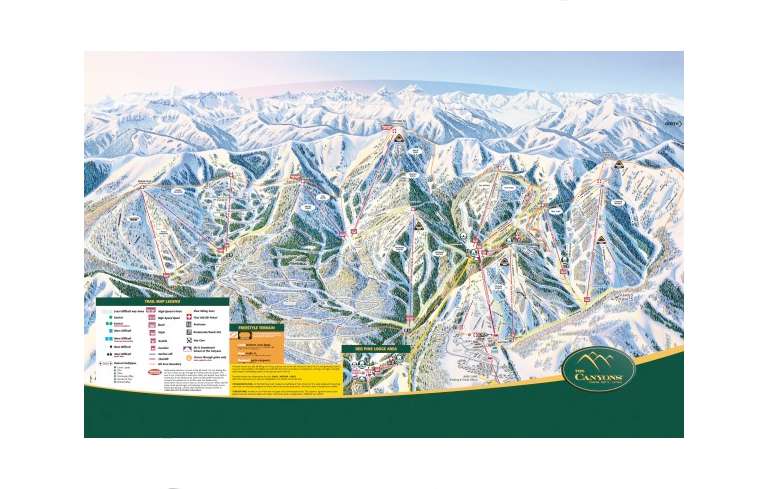
The Canyons is first Utah resort for Vail Resorts to operate.

The Canyons is the first Utah resort Vail Resorts will operate.

By Kathryn Reed

While Vail Resorts has not had a presence in the Utah ski market until today, the president of the company’s mountain division used to run The Canyons.

Blaise Carrig, who was also the top guy at Heavenly Mountain Resort, was at the Park City resort when some of the Olympic events were staged at the Utah mountain in 2002.

Now The Canyons is part of the Colorado-based company’s portfolio. The 4,000-acre resort will be part of the Epic Pass for the 2013-14 season. The management team has not been named.

This brings the number of Vail Resorts ski areas to 10, which include: Heavenly, Northstar and Kirkwood in California; Vail, Breckenridge, Beaver Creek and Keystone in Colorado; Afton Alps in Minnesota; and Mt. Brighton in Michigan.

In the deal announced today, Vail entered a 50-year lease agreement with Talisker, a Toronto-based privately held real estate firm, to operate the ski area. There is an option for six 50-year renewals.

Vail will pay Talisker a $25 million annual base payment, which will grow with the consumer price index, plus 42 percent of earnings over $35 million. Vail expects earnings of about $15 million in fiscal year 2014, with that increasing to $25 million in 2017.

Vail Resorts CEO Rob Katz said during a May 29 conference call that the structure is similar to what it entered into at Northstar in Truckee in 2010.

He anticipates being able to tap into the Los Angeles and Salt Lake City markets, which have historically not been big players for Vail Resorts. Katz called Los Angeles “the most underserved market.”

“We do feel The Canyons is on a higher growth projector than other resorts,” Katz said.

The Canyons has about 450,000 skier visits a season, which Katz described as being “traditionally hard to make a profit.” Vail Resorts anticipates through its pass programs and centralizing some operations, that The Canyons’ skiers and bottom line will increase.

Talisker retains the rights to the 4 million-square-feet of developable real estate.

“The Canyons has more real estate opportunities than any other resort in the country,” Katz said. “Because of the recession it has not monetized in the six or seven years.”

Katz also added that this arrangement is similar to Northstar in Vail not having real estate rights, but expecting to benefit from it in terms of people accessing the mountain.

Another caveat to the deal in Utah is Vail Resorts has the rights to the potential lease of the land on which Park City Mountain Resort sits. That ski resort is owned by Powdr Corp., the same company that owns Boreal and Soda Springs on Interstate 80, Copper Mountain in Colorado, Mt. Bachelor in Oregon and other resorts.

Talisker and Powdr Corp. are involved in litigation regarding the 2011 lease renewal. That must be resolved before Vail Resorts would be more of a player with that acreage. But in the meantime, Vail is assuming responsibility of Talisker’s side of the lawsuit.

Vail Resorts first looked at The Canyons six years ago, but the Park City resort land was not part of the equation then.

Park City Ski Resort sits next to The Canyons, which could open the opportunity to linking the resorts.




Scientist to talk about lakes and global warming

Renowned limnologist Charles Goldman will be talking about climate change and global warming effects on lakes of the world on June 7.

UC Davis research at Lake Tahoe began with Goldman. In 1959, Goldman formed the Tahoe Research Group and began regularly monitoring Lake Tahoe.

Goldman retired from UC Davis where he had been a professor since 1958. He developed the first courses in limnology (the study of fresh waters) and oceanography at UC Davis.

At 5:30pm the no-host bar opens, with the presentation at 6pm at the Tahoe Center for Environmental Sciences, 291 Country Club Drive, Incline Village (on the campus of Sierra Nevada College).

A $5 donation is suggested.


Time to dump waste for reduced price

Clean Tahoe’s annual dump day is June 1 for El Dorado County residents who live in Lake Tahoe to dispose of electronics, furniture, mattresses, appliances, tires and other large trash items.

Drop off furniture, tires and appliances to the South Tahoe Refuse Transfer Station (2140 Ruth Ave.) for a discounted price of $5 per truckload.

Refrigerators are accepted at the reduced price of $15 per refrigerator.

The event is also open to Nevada residents, who can dump their junk for $10 a truckload.

Free secure document shredding and e-waste disposal is also being offered.

The event is from 8am-4pm.


Access provided to Vikingsholm for disabled

Vikingsholm is accessible for people who need a ride to the Lake Tahoe shoreline castle.

Reservations to access Vikingsholm by vehicle must be booked at least 24 hours in advance by calling (530) 525.9529. Access is available when volunteers are able to provide the service.

One person in each group must have an ADA placard with them and give the placard number when making the reservation. Only one vehicle allowed per ADA placard.

Meet at D.L. Bliss visitors’ center between 12:30-12:45pm, purchase a $10 parking permit, then a docent will lead in their vehicle, and guests will follow. Return up the hill at 3pm.


State budget not good news for LTUSD

By Kathryn Reed

While much of the news that comes out of Sacramento is school districts will fare better in the next fiscal year, this is not the message Lake Tahoe Unified School District Chief Financial Officer Deb Yates presented Tuesday night to the board of education.

Yes, there is more money. In large part the additional $4.5 billion comes from November’s voter-approved Proposition 30. But what changes for school districts is how the state will distribute the money. That is why LTUSD could be hurt.

Gone in the governor’s budget is the $1.4 million the district has flexibility with for categorical programs. Those dollars will be under the supplemental and concentration grants categories.

“That’s a real problem for our district,” Yates told the board May 28.

After the meeting, Yates told Lake Tahoe News when the initial budget came out in January using the Local Control Funding Formula (LCFF); it looked like the district would benefit from the new spending mechanism.

She said now it appears districts like LTUSD that have a high percentage of English language learners, foster youth and those receiving a free or reduced lunch will be hurt. This is because of the formula for how the money can be spent, not that the overall pot is necessarily different between districts. Most education dollars come with strings attached, thus giving individual districts little discretion.

“Under LCFF we are not whole and we can’t spend it the same way,” Yates said.

The LCFF also proposes reimbursing districts $723 per student for K-3 class-size reduction. Right now LTUSD receives $1,000.

The state Senate has proposed implementing LCFF in 2014-15.

What is on the table is the funding levels would be restored to 2007-08 allocations. This means districts are still owed millions of promised funds by Sacramento lawmakers.

And with projections for revenue growth expected to be less in 2013-14, the financial picture is not getting brighter.

It’s possible some of this year’s “surplus” could be a one-time payment to help pay back what is owed districts instead of being sustained dollars.

Gov. Jerry Brown and the Legislature have until the end of June to figure out a compromise and pass a budget that takes effect July 1. The California Teachers Association is backing the governor’s plan.


Put the fork down — it will lead to weight loss

By Robert S. Wood

I’ve found an easy offbeat painless strategy for losing weight and staying slim without dieting. If you’ve tried everything else — with poor results — you might give this a whirl.

I credit a simple combination of often overlooked strategies to satisfy hunger, but avoid the overeating that puts on pounds. Plus, I’ve discovered a devilish hidden psychological barrier to weight loss — and found a way to sneak around it.

Nutritionists tell us flat out that we eat too much and too fast. Overeating results in weight gain. So why do we do it? Shrinks say overeating is a powerful lifelong habit, instilled at infancy by well-meaning parents who were afraid our tiny bodies wouldn’t grow up strong and healthy if they didn’t make us eat and eat.

Paying attention to food intake can help keep pounds off. Photo/CNN

Paying attention to food intake can help keep pounds off. Photo/CNN

As we grew older, their pleading, bribing and cajoling turned to hounding, bullying and threatening. They thought that was their job, inherited from their parents. As impressionable kids, we were shamed into cleaning our plates and told that wasting food was a sin when half the world’s children were going hungry. (Dubious logic, but it worked.)

“They can have my squash and liver,” I often grumbled, but it didn’t sell.

Considering that pressure, no wonder we all have food hang-ups, eating neuroses, even food psychoses. And obesity in kids and adults is steeply on the rise. No wonder diets don’t work, and we still helplessly, dutifully clean our plates, unwilling to risk that remembered shame and guilt. Shrinks tell us that death is often preferable to acute embarrassment for many people. It’s that strong.

They say that constantly reinforced demands, beginning in infancy, enforced with punishment, threats and fear of disgrace, become so deeply embedded that they continue to dictate, often unconsciously, for the rest of our lives unless we unearth and examine them, and consciously decide to kick them.

That’s what I decided to do.

After discovering that cleaning my plate like a good little boy often led to feeling uncomfortably stuffed, bloated for hours, feeling sluggish and dull, my pants too tight, it dawned on me that I was somehow eating more than I wanted and eating when I wasn’t even hungry. It was quite a revelation.

Clearly, eating when you’re not hungry is bone dumb. So why did I do it?

Like many others, I was following imperial orders hammered into me by my parents, seemingly from birth. As a young adult, I reveled in eating freedom, but as the years passed the old entrenched clean-your-plate habit returned, and I began to put on unwanted pounds.

When I realized what was happening, I began to extensively experiment with eating less and I did some research. I read in a scientific report that there’s a proven distinct time gap — often 20 long minutes — between when our stomachs are full and when the fullness registers in our brains. They called it “Gap Eating.”

That’s huge because one can eat a lot in 20 minutes. And most of us obliviously keep eating after we’re already full but don’t yet consciously know it. And that disastrous habit dependably puts on the pounds and stubbornly keeps them there.

So I devised a strategy for combating Gap Eating. First I resigned from the “Clean Plate Club.” Next I learned to take small bites and I eat sloooowly. Sometimes, if I’m dangerously ravenous, I slow myself down by taking a breath or two or even three between every swallow as the eating experts advise.

I also remind myself of the utter foolishness of Gap Eating, and I wait for the realization coming from my gut by way of my brain that I’m no longer hungry. It’s all about developing some appetite self-awareness.

As I eat, I often mentally check my hunger level. If it’s gone, I stop eating, cold turkey, right now; even with a forkful halfway to my mouth. No kidding. Ask my wife.

I refuse to swallow another bite even if there’s just one more forkful on my plate because I know that eating when I’m no longer hungry is dumb, puts on hard-to-get-rid-of pounds, and adds no extra salivary satisfaction or nutrition.

Those millions of starving children can’t make me feel guilty anymore because my leftovers really can’t help them. They just go in the fridge for later.

That’s my strategy for avoiding disastrous Gap Eating. For me, it beats restrictive dieting, or taking expensive stomach-bloating pills, or undergoing invasive gut surgery — most of which aims to do the very same thing — make you feel full so you stop eating. Instead, I use my brain and developed awareness.

By stopping Gap Eating you can eat what you want without hunger or feeling stuffed or gaining extra weight. It’s worked for me to stay slim or lose weight for decades. It’s become a good habit so I don’t even think about it anymore. If other strategies haven’t worked, you might give it a try.

Robert S. Wood and his wife spend half the year in Lake Tahoe and the other half in Sedona. He is the author of a dozen books, including the original trail guide to Desolation Wilderness.


Opinion: Fire prevention is up to everyone

By Steve Burns

Two consecutive dry winters, including the driest January, February and March on record, may increase the potential for wildfire this summer. Help prevent wildfire in the Lake Tahoe Basin and surrounding areas by following these simple steps and please encourage others to do the same.

By working together, we can help protect our homes, the community and our public lands from wildfire.

Dispose of cigarette butts properly. Don’t toss cigarettes out of car windows. Dispose of butts in the car’s ashtray or a bottle of water.

If smoking outdoors, make sure to have a 3-foot clearance from anything flammable and grind the cigarette out in the dirt, not on a log or stump. Do not leave butts behind as litter.

Abide by campfire restrictions. When and where campfires are allowed, be sure to keep the fire to a manageable size and never leave unattended. Use water to extinguish the fire and make sure the ashes are cold to the touch before leaving. Remember, fires are not allowed on Forest Service beaches or in the general forest.

Leave fireworks to the professionals. Remember fireworks and sparklers are illegal in the Lake Tahoe Basin. Enjoy a public fireworks display instead of taking the risk that using illegal fireworks brings to you, our community, and the forest.

Be careful with propane and charcoal grills. Follow local ordinances on their use. Grills should be located away from structures. For gas grills, make sure to turn off the knobs and the propane bottle when you’re done. For charcoal grills, make sure the briquettes are cold before disposing of them.

Use spark arrestors. When operating equipment such as chain saws or leaf blowers, or operating vehicles such as tractors or motorcycles, make sure they have an approved spark arrestor.

Be careful to not park on vegetation. Parking on vegetation can cause a car’s catalytic converter to spark a fire.

Comply with rules for burning residential debris. When residential burning is allowed, make sure to do it safely. Check with the local fire department on the day of the burn to confirm weather conditions are favorable. Burn in a cleared area, and never leave the fire unattended.

Prepare your home and property for wildfire with defensible space. Clear pine needles off roofs and make sure fuels such as wood or other flammable materials are not stored on or below decks. Remove flammable plants, such as junipers and other debris like dead vegetation, low hanging branches and rake pine needles. Learn more about defensible space by going online.

The Forest Service will likely implement fire restrictions this summer. For the up-to-date information on fire restrictions on National Forest System lands in the Lake Tahoe Basin, go online.

Steve Burns is acting fire management officer of the U.S. Forest Service Lake Tahoe Basin Management Unit.


Study: Conventions, entertainment hurt gaming revenue

By Richard N. Velotta, Las Vegas Sun

There’s no significant relationship between convention attendance and gaming revenue in Las Vegas, according to research by students at UNLV.

But conventions drive occupancy rates higher — and higher occupancy rates generally mean higher room rates and higher gaming revenue, UNLV student researcher Kristin Malek said in a session on casino performance research.

Casino industry leaders, theorists and academicians today began debating issues surrounding a business that thrives on people’s willingness to take risks, with wide-ranging presentations and panels on the social implications of the industry that has made Las Vegas famous.

The 15th International Conference on Gambling & Risk Taking begins four days of academic presentations, addresses and panel discussions on the proliferation of the gaming industry, how the industry is viewed in different countries by different cultures and the challenges of problem gambling.

A sold-out concert like Lady Antebellum doesn't mean concert-goers spend money at the casino, too. Photo/LTN file

A sold-out concert like Lady Antebellum doesn’t mean concert-goers spend money at the casino, too. Photo/LTN file

Malek said three hypotheses have evolved on the impact of conventions on gaming — they help drive casino play, they’re detrimental to casino play and that they have no positive or negative effect.

She said further research is needed on the impact of whether midweek or weekend convention dates affect casino revenue and whether different types of convention attendees play more aggressively than others.

Another UNLV study reviewed the contribution of non-gaming amenities to casino performance.

Professor Sarah Tanford presented student Elena Shampaner-Ghiassi’s research and concluded that food and beverage and retail amenities tend to drive higher gaming revenue, while hotel rooms and golf don’t.

Entertainment amenities tend to hurt gaming revenue, the research found, but entertainment acts can generate their own revenue.

In a case study involving an unnamed Las Vegas casino studied from Jan. 1 to Dec. 31, 2011, research found, an entertainment event needed to make $3 million in profit to compensate for the loss of revenue at slot machines and table games. The research noted that entertainment could also drive additional food and beverage profits.

The International Conference on Gambling & Risk Taking was first developed by Bill Eadington, the former director of UNR’s Institute for the Study of Gambling and Commercial Gaming. Eadington died earlier this year, and leaders at UNLV’s International Gaming Institute agreed to take the reins.

More than 450 people from around the world are attending the conference at Caesars Palace.

The conference is being attended by mathematicians, anthropologists, psychologists, political scientists, sociologists, technologists and regulators.

It’s the 15th edition of the conference held every three years. Las Vegas has hosted the event five times previously.

The conference began with a stroke of bad luck — the opening keynote speaker from South Africa broke his ankle and canceled his appearance.

David Schwartz, director of UNLV’s Center for Gaming Research, pinch-hit for speaker Peter Collins and contrasted the gaming industry today with the year of the first conference in 1974.

Nevada had just approved two corporate gaming acts and corporations were taking over the management of casinos from mobs.

Since then, commercial gaming has proliferated on the Strip with lotteries, riverboats, racinos and tribal casinos nationwide.

The two biggest changes in the industry have been the explosion of two new markets in Asia — Macau, which had $38 billion in revenue last year, and Singapore — and the United States playing catch-up to Europe in online gambling in the midst of concerns about that industry increasing problem gambling.


Postal Service barely hanging on

By Wes Venteicher, Los Angeles Times

WASHINGTON — With a wide grin and a quick step, letter carrier Kenny Clark brings more than the day’s mail to the people on his route in suburban Maryland.

Clark, 49, greets nearly everyone he sees by name. He puts packages under eaves on overcast days to keep them dry, reminds people to retrieve keys they might have left in keyholes, and shouts a quick “You OK?” at the doors of seniors.

“He’s a neighborhood icon — him and his truck,” said Amy Dick, who lives on Clark’s route.

But his future, and that of the U.S. Postal Service, is in doubt. The Postal Service lost $1.9 billion between January and March, and $15.9 billion last year. The 238-year-old institution loses $25 million each day, and has reached its borrowing limit with the federal Treasury. Daily mail delivery could be threatened within a year, officials say.

Americans increasingly go online to write letters, pay bills and read magazines, and mail volume has fallen by a quarter since 2006, according to the Government Accountability Office. The decline is expected to continue.

Postmaster General Patrick Donahoe has reduced staff, consolidated mail facilities and lowered express delivery standards in an effort to cut spending. But the savings have not been enough to match the drop in revenue.

“We are in real trouble, and we need comprehensive postal reform yesterday,” Mickey Barnett, chairman of the Postal Service Board of Governors, told a congressional committee last month.

The Postal Service is a government corporation, which means it is organized like a business yet subject to congressional oversight. Consequently, reform is difficult, said Mike Schuyler, a fellow at the Washington-based Tax Foundation who has studied postal issues for nearly two decades.

“The Postal Service has far too little flexibility when it needs to adjust, and it’s really in handcuffs because of all the requirements Congress puts on it,” Schuyler said.

Postal officials recently tried to end Saturday letter delivery, which could have saved $2 billion per year, but Congress blocked it. A legislative proposal to replace doorstep delivery with curbside delivery, which would save $4.5 billion, failed last year. A plan to close thousands of rural post offices was abandoned after postal officials deemed the closures would “upset Congress a great deal,” Barnett said.

But one of the Postal Service’s biggest problems has nothing to do with the mail. Its finances sank in fiscal year 2007, shortly after Congress passed the 2006 Postal Accountability and Enhancement Act. The act, among other things, required the Postal Service to start pre-funding the health benefits of future retirees 50 years in advance at a rate of about $5.6 billion a year. The year after the act was passed, Postal Service ledgers showed a loss of $5.1 billion.

The pre-funding payments and other measures in the 2006 law have led some, including political activist and former presidential candidate Ralph Nader, to call the Postal Service’s situation a “manufactured crisis.” Only one other federal agency, the Defense Department, pre-funds future retiree health benefits, the Government Accountability Office said.

The act also limited the Postal Service’s ability to raise rates, forbidding increases larger than the federal consumer price index. America’s stamps, now 46 cents, are among the cheapest in the world’s developed countries.

The Postal Service and postal workers unions agreed to the 2006 legislation because at the time it looked as if the service could afford it, said congressional and union staffers who worked on the legislation. The recession changed that, affecting banks that typically send lots of mail and homeowners who receive it, said Jim Sauber, chief of staff of the National Association of Letter Carriers.

Sen. Bernie Sanders, I-Vt., and Rep. Peter A. Defazio, D-Ore., are sponsoring bills to eliminate the pre-funding requirement and allow the Postal Service to raise rates more freely, among other changes. Unions support the bill, and it has some supporters in the Senate and the House.

But some members of Congress who have been leaders on postal issues in recent years, such as Sen. Thomas R. Carper, D-Del., are calling for a more nuanced approach. Congress needs to correct the service’s fundamental problem — a lack of flexibility and authority over itself, Carper has said.

The Postal Service, which is provided for in the Constitution, has survived new technology before — the telegraph, telephone and TV, for example. Technology has brought positive changes along with the difficult ones: The Postal Service says package delivery has increased by 14 percent in recent years as more people shop online.

Union representatives are quick to point out what the service does well. It has been rated the most efficient postal service in the world at delivering letters to the 152 million homes and businesses it reaches. It is popular with its customers: A recent poll showed Americans trust the service with their privacy more than any other government agency.

On Clark’s route, Ruth Hartmann made her position on postal reform clear. She was concerned about Clark’s ability to pay for his daughter’s college.

“If they reduce service, it seems to me they would have a pay cut, probably his benefits, and that is an absolute ‘no,'” Hartmann said.


DA files charges against El Dorado County supervisor

By Bill Lindelof, Sacramento Bee

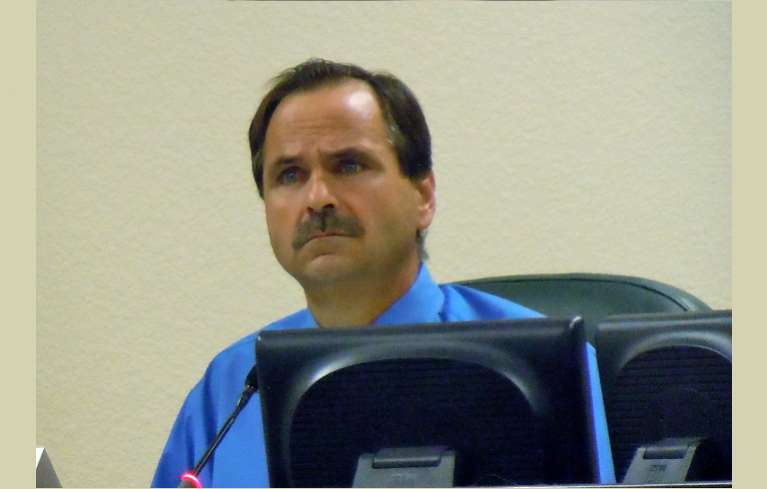
El Dorado County Supervisor Ray Nutting has been booked into jail on an arrest warrant alleging perjury and other charges.

A press release from the El Dorado County District Attorney’s office today said Nutting was arrested Tuesday on two counts of filing false documents, perjury relating to failure to disclose income and having a financial interest in a county contract and failing to recuse himself from voting.

Nutting is scheduled to be arraigned June 10 in El Dorado County Superior Court in Placerville.

Nutting has been under fire after reports surfaced that he took state money for clearing brush on his 340-acre property.

El Dorado County Supervisor Ray Nutting has been arrested. Photo/LTN file

El Dorado County Supervisor Ray Nutting has been arrested. Photo/LTN file

Several local leaders have spoken out against Nutting, whom they accuse of subverting state funds for personal use.

At issue is whether Nutting legitimately obtained taxpayer dollars for fire prevention work he did on his own Happy Valley Road property in Somerset.

Nutting has denied any wrongdoing.

The supervisor applied for the funds through the California Forest Improvement Program, which is administered by the state’s Department of Forestry and Fire Protection through local conservation agencies. Under the program, landowners with plots between 20 and 5,000 acres can seek reimbursement – usually 75 percent – for the cost of fire prevention work, such as brush clearing.

The invoices Nutting submitted show that the state paid a total of $70,000 for two projects in 2003 and 2009. A third proposal is pending and will cost just under $50,000.

CalFire spokesman Daniel Berlant noted that the program allows landowners to get paid for doing work themselves on their own property.

One controversy stems from the way Nutting applied for reimbursements. A May 2009 invoice appears to have been written by the supervisor himself, according to public records obtained by the Bee.

El Dorado County Auditor-Controller Joe Harn said he believes the invoice is invalid and violates the California False Claims Act.

As a part of the fallout from the controversy, the El Dorado County District Attorney’s Office launched its own investigation into the matter.

The state has reimbursed property owners for fire prevention work since the late 1970s, Berlant said.

Since 1999, the state has distributed about 1,000 grants for fire prevention work to various individuals. The funding source varies year to year, but most recently came from Proposition 40, a measure passed by voters in 2002 that provides local grants to protect California’s water and air.