River restoration to displace recreationists

By Kathryn Reed

A popular recreation area is about to be off-limits while the U.S. Forest Service works on rerouting the Upper Truckee River.

Sections of much of the river are being restored as land managers have the resources to do so. The end result is to make this body of water flow like it did before ranchers, loggers and others changed the natural meander.

The goal for each reach and for the entire river is that meadows will again thrive by having the water from the river flood the banks on a regular basis, thus increasing the groundwater table, providing better habit, improving the entire watershed, and particular to the reach — revegetating about 5.6 acres of floodplain and restoring 120 acres of floodplain. Ultimately, it will also mean less sediment reaching Lake Tahoe.

Forest Service personnel on Thursday night spoke about what people can expect during the four-year project on this stretch of land that is near Lake Tahoe Airport and goes into the meadow by Elks Club Road.
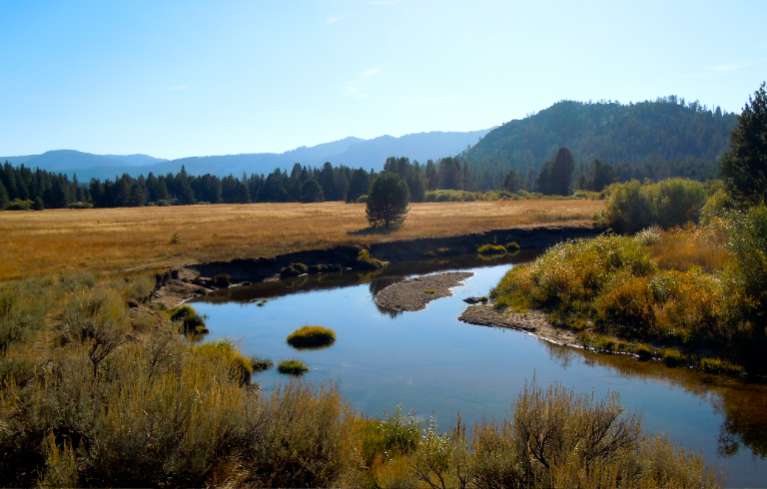
Restoring this section of the Upper Truckee River will begin in mid-June. Photo/LTN file

Restoring this section of the Upper Truckee River will begin in mid-June. Photo/LTN file

For the most part, the river will be moved farther away from the runway.

The area will be closed for safety reasons beginning June 15 and lasting until Oct. 15. Signs will be posted.

Popular biking and hiking trails nearest the river will not be accessible. A trail on the far side of the meadow will remain open.

When the project is complete, some of the user-created trails are likely to disappear because a river will occupy them or the meadow will be so wet that the trails will naturally disappear.

The Forest Service does not intend to decommission any trails. A route must be maintained because South Tahoe Public Utility District has a line in the area. It will be relocated next year.

The river will remain accessible, however there will be an area where kayakers and other boaters will have to portage because a temporary bridge will be built that they will not be able to go under. The bridge, which will be about 5,000 feet below the Elks Club bridge, will be one of the first things to be built this season. It will provide access from the Sunset Stables staging area to the meadow.

“The channel will be smaller, but the flow for rafts and kayaks will be greater,” Theresa Cody, USFS project manager and hydrologist, said of what the experience will be like when the work is completed.

For a few days fishing could be impacted as block nets are in place.

A little more than half of the 7,340 feet of new river channel will be built this season, with the remainder to be done in 2014.

While the California Tahoe Conservancy also owns part of this section of river, the Forest Service is the lead agency, and the one paying for and doing the work. How the properties connect would not allow for the project to be separated.

The actual work is costing the Forest Service $4.5 million. This money came from the Southern Nevada Public Lands Management Act.

Tree removal for the project is necessary. The plan is to use that wood for structures in the river. (The USFS and CTC also have fuel reduction projects scheduled that are not related to the river project.)

Cody said the Forest Service has gone to great lengths to make sure those structures look natural – having learned from work done on other sections of the river.

“Most of the woody material is intended to be below the low water line,” she said at the May 30 meeting.

In 2015, there will be a break in construction. This will be the summer of irrigation and making sure the vegetation has taken hold.

In 2016, the channel tie-ins will be constructed if the vegetation is intact. This will likely result in more temporary area closures.

When it’s all done, access will be as it is today – just with a “new” river and not all the same trails.

Public tours of the area are planned for Aug. 2 and Oct. 25.

More information about the project is online.



Breathing should not be taken for granted

By Mandy Kendall

How often do you think about the way you breathe? If you’re like most people, it is something we don’t have to think about … so we don’t. There is so much else going on in our lives, who has time to concentrate on breathing!? It happens without us thinking about it so why do we need to?

Well, there are many reasons to spend a little time focusing on this very important, life giving, practice. Here are just a few of them:

Our cells need oxygen — Our cells are very reliant on oxygen to perform all of their functions and produce energy. Some research has shown that cancer cells thrive in low oxygen environments, so this is another reason to keep your body flooded with oxygen.

Mandy Kendall

Mandy Kendall

Fill your lungs — Your lungs need the action of fully inflating to keep the tissue healthy and free from mucus and infections.

Aid digestion — By breathing deeply, and pushing your diaphragm down into your lower belly, you gently massage your intestines and bowel, helping with the physical act of elimination.

Detox — Your breath is one of the main pathways for toxins to be carried out of the body (that’s why they use breathalyzer tests to detect toxins like alcohol in the blood).

Lymph circulation — This is another system that helps carry toxins out of the body and relies on the respiratory system for its circulation.

Increases oxygen to the heart — The heart muscle works very hard and requires a lot of oxygen to ensure proper functioning.

Immune system — Relies on oxygen to repair cells, heal damaged tissue and fight infections.

Feed your brain — Oxygen is vitally important to keep our brain cells alive and healthy.

Keep wrinkles at bay — Oxygen rich blood helps feed your skin (the largest organ in the body) and wrinkles can be reduced by improved circulation.

Calm things down — Deep breathing relaxes the body, helps remove stress hormones from the blood, releases endorphins (happy hormones) and is a natural painkiller.

So how do we breathe better? Here are a few Qwik-e tips to get you started.

Belly pushups — Lie down and place one hand on your belly button and one hand on your ribs just below your collarbone. Then try breathing slowly, but deeply, down into your lower belly so that only the hand on your belly button moves up and down. If you feel a slight tight sensation in between your hands (around the base of your ribs) this might suggest that you’ve not been using your diaphragm that much and it’s not used to stretching down into your lower belly to allow your lungs to fully inflate. Like any muscle that isn’t used very much, it will improve with practice and use. This is great to try in the morning before you get out of bed and also last thing at night before you go to sleep.

Shoulders down — Another way of making sure you are breathing fully is to sit or stand comfortably, then just be aware of any movement in your shoulders while you are breathing. If your shoulders lift up and down, as you breathe in and out, this also suggests that you are only using a small part of your lung capacity, and also tightening shoulder and neck muscles at the same time. Try to breathe slowly and deeply into your lower belly and keep your shoulders down and relaxed. Watching yourself in the mirror helps with this at first. It’s often best to try this one sitting down first as a flush of oxygen into your body may make you a little light headed, in a good way.

Counting breaths — Counting as you breathe in and out will give you an idea of how much air you are taking in. If you can only comfortably inhale (at your normal rate) for a count of 3 or 4 that may mean you are only partially inflating your lungs. Aim to increase the length of time you breathe in, and then match that number as you breathe out. So, if you can count to 5 breathing in, count to 5 as you’re breathing out. Then see if you can take a little longer each time.

Until next time.

Mandy Kendall operates Health Connective in South Lake Tahoe, which aligns wellness seekers with their ideal wellness provider. If you have questions, would like some advice, or would like to request some Qwik-e tips on any health and well-being topic, drop her an email at connect@healthconnective.com or keep an eye out on Lake Tahoe News for regular Qwik-e tips on how to make healthy changes one Quick and Easy step at a time.


Editorial: Nutting’s excuses not good enough

Publisher’s note: This editorial is from the May 30, 2013, Sacramento Bee.

After months of speculation, El Dorado County Supervisor Ray Nutting was arrested Tuesday and charged with four felonies – most of them related to approximately $70,000 in state grants he received for clearing brush on his own land. After his arrest, Nutting posted his entire $55,000 bail in cash, money he said came from family and friends in an “unbelievable outpouring of support.”

In the criminal complaint he filed on Tuesday, El Dorado District Attorney Vern Pierson alleges that Nutting failed to report all his income on Form 700, the statement of economic disclosure all elected officials are required to fill out annually. Besides payments from the state for brush clearance, the complaint alleges that Nutting failed to disclose $26,040 in cash he deposited in his bank account in 2009, $6,803 in income for work “pushing stumps” and another $16,334 in rent money he collected.

Ray Nutting

Ray Nutting

Through his attorney, Nutting insists he did nothing wrong. “It’s all horse puckey,” David Weiner, the supervisor’s attorney, told the Bee, citing a failure to fill out paperwork. “Obviously he didn’t put some things down that some people think he should have,” Weiner told the Bee‘s editorial board. “He’s a country boy who works in the woods who happens to be a politician.”

The paperwork failure alleged in the complaint against Nutting is no small oversight. Form 700 is the principal tool state and local governments in California use to track political corruption. When an elected official fails to disclose all sources of income, it’s impossible to know when official acts – an appointment to a government post, for example, or a vote for or against a contract – serve to line the politician’s own pocket.

The final count in the criminal complaint accuses Nutting of violating state conflict of interest statutes when, as a member of the El Dorado County Board of Supervisors, he voted for contracts in which he had a financial interest. Specifically Nutting approved a series of contracts for two different local resource conservation districts worth more than $300,000. The board members of these districts sit on a joint powers authority that approved the state brush-clearing grants Nutting received.

In a long piece defending his action posted on his private website, raynutting.com, Nutting states that the El Dorado Board of Supervisors “has no involvement either directly or indirectly, in the oversight, administration or management of the grant program.” The supervisor and his attorney strongly suggest the prosecution is politically motivated, an allegation that DA Pierson dismisses as “silly.”

Nutting is a controversial figure who has accumulated his share of political enemies during his 13 years on the El Dorado board. Thus it is reassuring that his case will be prosecuted jointly by the El Dorado district attorney and the California attorney general.

But whether or not he is found guilty, he’s demonstrated a startlingly poor judgment by not recusing himself on resource conservation district contracts and failing to fully disclose income on his Form 700s.


Tahoe bears finding human garbage

By Colin Lygren, KOLO-TV

This year’s dry winter could mean an active season for black bears in higher elevations, according to wildlife officials.

Evidence of what’s to come was seen Thursday morning on Palmer Court in Incline Village.

A mom and two cubs reportedly broke trough a garage door in search of food. This is the second time the bears have broken into that house in eight days. Neighbors say the homeowners repeatedly leave garbage in the their garage.

“If it is up to us, if we move into bear country, we need to take care of this area including the animals,” said neighbor Carolyn Stark.

Years ago, bears did not see humans as a food source. But a series of drought years reduced their food supply. They discovered garbage as a food source.

Nevada Wildlife officials say dry conditions this year and last mean more bears will be in search of food.

“We are sure that we are going to have a pretty good sized nuisance bear year, because of the lack of natural foods. The bears will turn and look towards humans and human garbage as a source of food and that will create conflict,” said Nevada Wildlife spokesman Chris Healy.

In addition to garbage; compost bins, bird feeders, and pet food attract bears.

Residents in bear country are asked to take preventative measures. If bears become too comfortable with humans, they can become dangerous and are often killed by wildlife officials.


Calif. Senate OKs bill letting nurse practitioners do more

By Patrick McGreevy, Sacramento Bee

SACRAMENTO — Addressing an expected shortage of doctors in California, the state Senate approved a measure Tuesday that would allow nurse practitioners to independently perform more medical functions now within the domain of physicians.

The measure would allow nurse practitioners to have stand-alone practices to provide primary healthcare services independent of physicians including certification of disability claims, prescription of drugs and approving many treatments.

Some Democrats and Republicans opposed the measure by Sen. Ed Hernandez, D-West Covina, because of concern that it would mean a lower level of medical care.

“To allow nurse practitioners to practice without any oversight endangers the community,” said Sen. Hanna-Beth Jackson, D-Santa Barbara. Added Sen. Jim Nielsen, R-Gerber, “I have grave concerns where we are going with medicine in California.”

Sen. Roderick Wright, D-Inglewood, said the alternative for some Californians was to use the Internet to do self-diagnosis and treatment.

“We’re not talking about this person doing brain surgery,” Wright told his colleagues in arguing for SB491. “What you are talking about is providing a basic level of care, which I think they can handle.”


Settlement in casino comped meals lawsuit

By Anjeanette Damon, Las Vegas Sun

CARSON CITY — The Nevada Tax Commission signed off on a $233 million settlement with the state’s largest casino resorts to free them from paying sales taxes on the comped meals they provide their patrons and employees in exchange for the resorts dropping their lawsuit seeking a refund on back taxes they’ve already paid.

In agreeing to the settlement, which will also require the Legislature to pass a new law in the last seven days of session, the commission is essentially reversing its long held position that such free meals given to customers are subject to sales tax in order to free the state from a quarter billion dollar potential liability.

The issue has been winding its way through the court system since 2003, when a Sparks casino sued, arguing it shouldn’t be required to pay the tax on comped meals. The courts have issue conflicting opinions on the issue, which is worth millions to casinos and state government. The case is now pending before the Nevada Supreme Court.

Gov. Brian Sandoval’s staff helped broker the deal, which involves more than 150 casinos that will be giving up their refund requests in exchange for a law guaranteeing they no longer have to pay the tax through 2019. If a future Legislature were to try to implement the tax before then, the casinos could resume their lawsuits and the state would be liable for the refunds.

“I can tell you from the governor’s perspective, and from my discussions with him, the real piece is that $233 million in liability,” said his general counsel Michon Martin. “The governor indicated, and these are his words, it’s almost a quarter of a billion in liability this state is exposed to. The governor wants to make sure we resolve that liability.”

Martin said it is uncertain how the Nevada Supreme Court will rule in the case brought by Boyd Gaming and Harrah’s Casino. If the state lost, it would have to pay $233 million in refunds. If it won, it would be able to continue collecting sales tax amounting to as much as $4 million a month, or $48 million a year.

“I can tell you as a litigator for a very long time, we just can’t predict the outcome of these cases with any certainty,” Martin said. “If we lost, we just can’t tell what will happen. It would require a special session. It would require a whole host of things. It would put the state in a position that would be exceedingly difficult to recover from.”

For perspective, the refunds are almost twice what Sandoval has proposed spending on new education programs over the next two years.

The commission voted 7-1 to ratify the settlement, after minor adjustments to the language in the agreement is made.

Commissioner Craig Witt, a former dairy farmer from Minden, voted against the settlement, arguing it’s been the commission’s intent, and, he believes the court’s intent, that the sales tax be applied to free meals given to casino patrons. He said he may have voted in favor of a deal that exempted employee meals.

“Our intent, as far as the gaming card patrons, that is a taxable issue,” Witt said. “I don’t get a choice to tax ourselves in agriculture because we are not an entity or a business like gaming. We can’t afford the attorneys.

“In this case we start to look at both sides and it’s give and take and there’s no end to the gaming card abuse.”

The settlement doesn’t take effect unless the Legislature passes a law affirmatively stating that comped meals are not subject to the sales tax. No such bill has been introduced yet, with seven days left in the session. Since the issue began working its way through the court system, the Legislature has refused to clarify the law one way or the other.

Under the agreement, a handful of smaller casinos and companies that have gone out of business would be eligible for refunds of up to $5 million. The Nevada Board of Examiners would have to approve the refunds.


Garbage rate increase proposed for N. Shore

Tahoe Truckee Sierra Disposal is proposing to raise rates by 1 percent starting July 1.

There will be a public hearing on the topic on June 11 at 9am in the El Dorado County Board of Supervisors meeting room in Placerville.

Currently residents pay $24.69 for one 32-gallon gallon or $32.61 for two cans per month. The rate increase would have those fees to go $24.94 and $32.94, respectively.


Austin Healey owners to gather in South Tahoe

As the sun rises over the lake early June 24, cars will be getting their last-minute cleanup and makeup as they prepare to show the community of South Lake Tahoe that the British have once again arrived.

More than 125 Austin Healeys from California, Nevada, Oregon, Washington, Canada and farther away will be on display in the center of Heavenly Village from 10am-2pm.

Various models from 1953 to 1968 will be represented.


Summer economic travel expectations — fair

By Scott Mayerowitz and Jonathan Fahey, AP

NEW YORK — The forecast for summer travel 2013: Partly sunny.

Airlines, hotels and campgrounds are commanding higher rates and seeing more customers than a few summers ago, and luxury hotels are selling out. Local businessmen and state officials are optimistic.

But for a travel industry still stinging from the Great Recession, the best it can likely hope for is another summer of steady, but slow, recovery. The blockbuster crowds seen in 2007 have become a distant memory.

Americans’ plans for summer travel mirror the current state of the economy. Rising home prices and a soaring stock market are encouraging those at the top of the income ladder to take more lavish trips. But large segments of the population are staying close to home because wages are stagnant, rents are high and the end of the payroll tax holiday has shrunk their take-home pay.

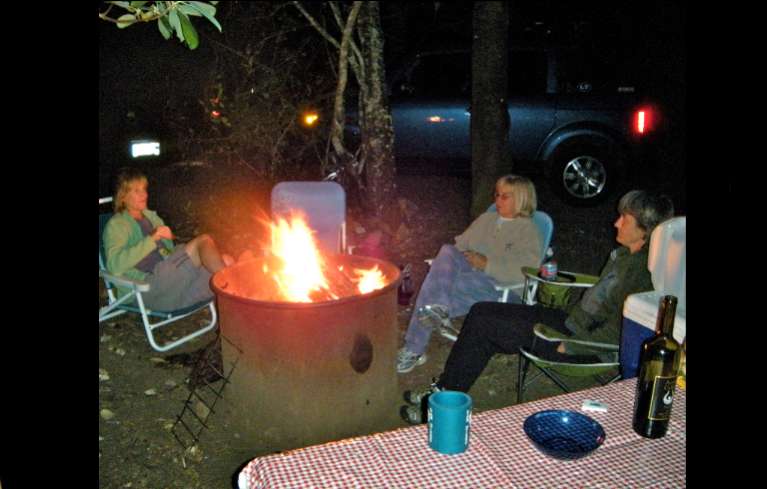
Camping is expected to continue to be popular this summer. Photo/LTN file

Camping is expected to continue to be popular this summer. Photo/LTN file

As vacationers set out this summer, here’s what they can expect:

• Gas prices about the same as last year. The national average price of gasoline was $3.66 a gallon Thursday, 2 cents higher than during last year’s Memorial Day weekend.

• More-expensive hotel rooms. The average hotel will cost $112.21, before taxes and any other add-on such as resort fees. That’s up 4.4 percent from last year’s $107.52, according to hotel research firm STR. Hotels are also expected to be slightly fuller, with occupancy rates climbing from 69.3 percent last summer to 70 percent this year.

• Packed planes, steady airfare. Airlines for America, the industry’s lobby group, expects 208.7 million people to fly, up 1 percent from last year. About 87 percent of airplane seats will be filled with paying passengers. Domestic fliers will pay $421 on average for a round trip ticket, down $6 from last summer. International fliers will pay $1,087, up $8, according to the Airlines Reporting Corp.

• Amtrak expects to meet or exceed the 8.3 million passengers it carried last summer. But the taxpayer-backed railroad wouldn’t disclose how fares compare with last summer’s average one-way ticket of $66.39.

Mike Klopp, a commercial insurance salesman in Irvine is starting to feel better about the economy. He and his wife plan to take their three kids on a vacation up the coast to Monterey in August — a trip they skipped last year.

But Klopp says local trips are the limit because they’re cheaper. Like many others, he’s not yet willing to splurge on a dream vacation.

“The kids would love to go to Hawaii, but there’s no way I’m going to do that. We’ve been hunkering down; money is tight right now,” he says.

“I’m not sold that things are better,” he says.

Other Americans likely agree. Although the unemployment rate has dropped to 7.5 percent, compared with a post-recession high of 10 percent, the Federal Reserve doesn’t see it falling below 7.3 percent this year. And economic growth still isn’t as strong as it has been after previous recessions. The economy grew at an annual pace of 2.5 percent from January to March. Economists expect the rate to slow to 2 percent from April through June, partly because of the federal budget cuts that started taking effect March 1.

Those with higher incomes never stopped traveling, but thanks to new highs in the stock market they now feel secure enough to take longer vacations.

Patrick Veling, the owner of a California real estate data analysis and consulting business, says he’s taking his “most expensive vacation ever” this year. Instead of the normal one-week vacation, he and his wife, Susan, are taking their two adult kids on a three-week vacation through northern Europe that will include a 12-day cruise. They’ll see Denmark, Norway, the Shetland Islands, Ireland and the Netherlands.

“My confidence in the economy and my business is now strong enough that my wife and I have pretty much insisted we make this trip,” says Veling.

“The improvement in confidence is all in the upper income brackets,” says Diane Swonk, chief economist at Mesirow Financial.

During the worst days of the recession, travelers mostly stayed home. Hotels desperate to fill rooms started marketing “staycations” to local families who couldn’t afford to drive or fly somewhere. Summer air travel fell by nearly 8 percent in two years, from 217.6 million passengers in 2007 to 200.3 million in 2009. Luxury hotels saw their occupancy levels plummet during that period from 72.5 percent to 59.3 percent. More than half the rooms at economy and midscale hotels sat vacant.

There has been a slow and steady climb back, but not all parts of the recovery have been equal.

Luxury hotels such as Four Seasons, Park Hyatt, Ritz-Carlton and Mandarin Oriental are filling 73 percent of their rooms on average, surpassing their pre-recession peak, according to an Associated Press analysis of data from hotel research firm STR.

But budget hotels like Days Inn, Econo Lodge and Motel 6 are still below their 10-year occupancy average, more than 3 percentage points below their peak.

The same pattern holds for fliers.

Domestic traffic is projected to grow 0.7 percent this summer, while the number of people buying more expensive international tickets will climb 2.6 percent, according to Airlines for America.

“Expect luxury travel to continue to rebound — consistent with luxury across all industries — while the rest of summer travel will be flat” as the economy still weighs heavily on middle-income families, says Adam Weissenberg, who heads the travel and hospitality consulting group at Deloitte.

But some less-expensive destinations are seeing a recovery.

Campgrounds fared well during the downturn because they are relatively affordable. Some are now doing better business than ever because the operators have retooled their facilities to entice visitors beyond the typical outdoor types.

Steve Stafford, general manager of North Texas Jellystone Park Camp-Resort in Burleson, Texas, has attracted a broader swath of people with “homesteads.” These are recreational vehicles that look like cottages. Now the camp can accommodate campers with tents, who only have to pay $32 a night for an empty patch of ground, and those who want to stay in the comfort of the largest homesteads for $209 a night.

His 37 homesteads were booked solid last year. So he is adding a dozen more, which are already booked.

The hunt for inexpensive vacations is helping companies that rent recreational vehicles, too. Traveling by RV means families don’t need to pay for hotels and can cook most of their meals. Families may not be ready to buy one — sales are only up slightly — but more are choosing to rent one this summer for as little as $100 a day, or $300 during peak weeks.

At El Monte RV, one of the country’s largest RV rental companies, summer bookings from domestic customers are up 20 to 25 percent over last year.

“It has stunned us,” says marketing director Joe Laing. “We’re looking forward to this year. We think it’s going to be a good one.”


Sheriff’s department looking for senior volunteers

Applications are being accepted for El Dorado County Sheriff’s Office S.T.A.R. Academy in the fall.

The Sept. 16-27 academy is weekdays from 8am-noon, with accompanying afternoon driver proficiency training and law enforcement support visitations.

S.T.A.R. patrols the highways and byways of El Dorado County in specially marked vehicles. They check on homes while the owners are on vacation, as well as oversee the Neighborhood Watch program and YANA (You Are Not Alone) program. S.T.A.R.s are also involved with community events, assisting with parking or traffic control as well as monitoring the area and providing a Sheriff’s Office presence.

To qualify for the S.T.A.R. program, applicants must be 50 or older, have a good driving record, no criminal history, a physical clearance from a doctor, and pass an oral interview.

Call (530) 621.7545 for more information or an application. The application deadline is July 12. Selected applicants will receive an acceptance letter with directions for an oral interview appointment time/location to be Aug. 5-9.