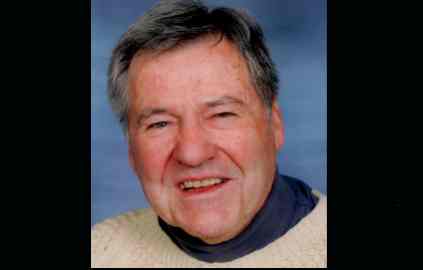
S. Tahoe storm chaser dies in Oklahoma

By Kathryn Reed

Storm chaser Carl Young of South Lake Tahoe is one of several people who died Friday in an Oklahoma tornado. He was 45.

Young worked on Discovery Channel’s defunct “Storm Chasers” series.

“We are deeply saddened by the loss of Tim Samaras (55) his son Paul (24) and their colleague Carl Young,” Discovery Channel said in a statement. “Our thoughts and prayers go out to their families.”

The network is dedicating tonight’s documentary premiere of “Mile Wide Tornado: Oklahoma Disaster” to the three men.

Carl Young of South Lake Tahoe died May 31 chasing a tornado in Oklahoma.

Carl Young of South Lake Tahoe died May 31 chasing a tornado in Oklahoma.

The three died while tracking the EF3 tornado that ripped through El Reno, Okla., on May 31. Six other people died in that tornado, too.

This is Young’s bio on the Discovery Channel website: “Although Carl is a native Californian, he was called east in 2000 after a spell working on Hollywood film crews. He decided to take off on a two month storm chasing adventure in the Great Plains hoping to catch a glimpse of a few tornadoes but ending up with over a dozen twister encounters. Experiencing the raw force of nature in Nebraska was unlike any pyrotechnic display on a high-tech Hollywood set! This inspiration led Carl to the study of tornado dynamics and ultimately a master’s degree in atmospheric science from the University of Nevada, Reno. While attending a meteorological conference, Carl met Tim Samaras who encouraged him to collect meteorological data from inside tornadoes as the principal focus of his thesis research. Every spring since 2003, Carl has headed out with Tim, and together the team has tracked down over 125 tornadoes.

“Carl’s finest moment came on June 11, 2004, near Storm Lake, Iowa. Working with Tim, they defied the odds and deployed their probes right in the path of a tornado. The six-camera video probe captured amazing footage from multiple angles while the sensor probe recorded data that revealed just how fast wind speeds are close to the ground. Since then Carl remains eternally optimistic that they can repeat the same feat despite the huge challenges for successful deployments.”

Young taught geology on occasion at Lake Tahoe Community College. He was one of the school’s distinguished alumni. He earned a bachelor’s in economics at Cal and a master’s in atmospheric science at UNR.

He worked for a while at the League to Save Lake Tahoe on the program team.

“Carl was a very good analyst and passionate about Lake Tahoe and doing the right thing to protect the environment. He had lot of integrity and concerns for things being done the right way,” John Friedrich told Lake Tahoe News. Friedrich hired Young.

Young took over as program director at the League when Friedrich left.

“Carl did lot of good for Lake Tahoe and the world. He wanted to make the world a better place and gave a lot of himself to make things better,” Friedrich said.


STHS performing arts students honored

Three performing arts students were signaled out at the annual Senior Awards ceremony May 29 at South Tahoe High School.

The Carol Joy Pace Harney Award for Outstanding Achievement in the Musical Arts went to Alyssa Ferrer; the June Marie Harney Award for Outstanding Achievement in the Performing Arts to Alec Niven and Outstanding Achievement in the Communicative Arts to Vanessa Cruz.

Ferrer has been a strong musician in orchestra for all four years of high school. She is a singer and songwriter, was a member of the Blue Bells, and was successful in the guitar class. She plans to continue to take music courses in college and plans to keep making music her whole life.

Niven has performed in every play throughout his high school years, and has earned many lead roles.

Cruz is marketing manager for the Sotanian yearbook. She plans to attend Lake Tahoe Community College next year to pursue her education.


It’s all about the water along the Rubicon

By Kathryn Reed

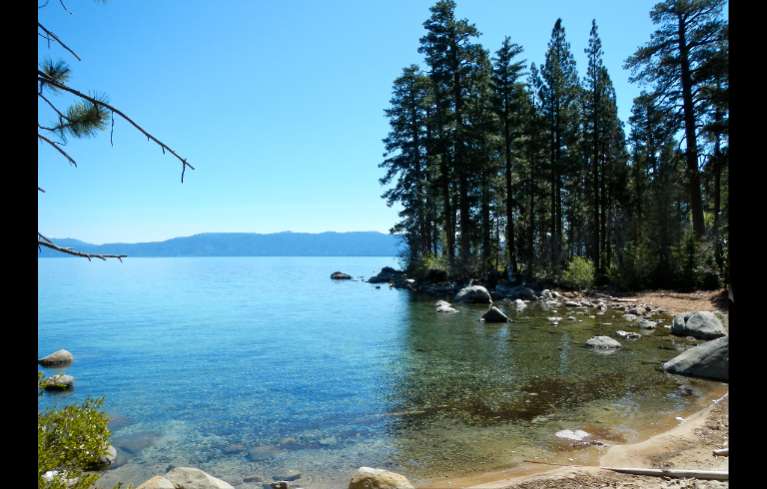
EMERALD BAY STATE PARK – It says something about a trail when the camera still comes out and the oohs and ahhs are endless even after being on it so many times.

That’s the thing about the Rubicon Trail; it never gets old. It connects Emerald Bay State Park to D.L. Bliss State Park.

It’s all about the scenery on what turned out to be a 7.5-mile one-way trek. It’s a mile down from the parking lot at Vikingsholm to the trailhead, then 4.5 miles along the water’s edge. The worst part of the hike was the end. It was an unexpected 2-mile climb from the beach to the Jeep. D.L. Bliss State Park does not open until June 15 (because of budget cutbacks), so right now it’s not possible to park closer.

Still, Sue, Brenda and I would do it all again, just like we have before.

We are still in awe of the endless hues of blue and the depths to which we can see the floor of the lake.

Plenty of photo opportunities along the Rubicon Trail. Photos/Kathryn Reed

Plenty of photo opportunities along the Rubicon Trail. Photos/Kathryn Reed

It’s calm on this particular day. The lake looks inviting, but we don’t even want to dip our toes because we know how cold it is.

A motorboat goes along the shore. Kayakers are in Emerald Bay.

A treat was discovering what we think was an osprey’s nest. Brenda pulled out her binoculars, which showed us there was movement in the nest perched on top of a dead tree.

Only a few yards down the trail and overhead we see an osprey. We guessed she was hunting for her little one.

The odd-looking snow plant is out. Otherwise, not much colorful flora. This hike really is about the water.

It’s a great early season trek, especially in heavy snow years, because it is at lake level. Plus, there are no crowds. On a weekend day in mid-May we saw a handful of other people.

And no one is in the boat-in campground.

It’s not a difficult hike, but there also aren’t a ton of places to take a break. Much of the route is flat, though there are spots with slight undulations.

Closer to the D.L. Bliss side is an offshoot trail to an old lighthouse. We opted to skip it this time. The Rubicon Point Lighthouse is the highest elevation lighthouse in the United States.

—-

Nuts and bolts:

This can be a roundtrip trek starting at either state park or a one-way if a car if left at each park.

It costs to park at each state park. Some free parking can be found near Eagle Falls on the other side of Highway 89.

From South Lake Tahoe, take Highway 89 north, through the hairpin turns, around Emerald Bay and park in the Vikingsholm lot on the right. Go down the paved trail toward the castle. Before reaching the castle, the Rubicon Trail is to the left.

Dogs are not allowed.

ngg_shortcode_0_placeholder (Click on photos to enlarge.)


Valhalla releases free summer concert schedule

Music on the Lawn is a series of free concerts throughout the summer on the Valhalla Grand Lawn.

All concerts are from noon-2pm.

Kicking off the daytime Series for Father’s Day will be the South Tahoe High School Jazz Band on June 16.

June 30: Exceeding 55 plays 1960-70s folk rock in three part harmonies.

July 7: Fabrizio will perform R&B, light jazz, country, and rock hits.

July 21: Ike and Martin are an acoustic mix.

Aug. 4: The Steve Walker Band is a trio consisting of Walker on guitar, Charlie Schofield on bass and Eric Hellberg on drums.

Aug. 25: BJ and Friends is known for its jazz/honky-tonk piano sounds.

Sept. 1: The Alan Miller Trio presents jazz standards and a few surprises.

The historic Tahoe Tallac Site is located two miles past the intersection of highways 50 and 89.


Then and now: Telephone numbers once had letters

Pages of an old phonebook.

Pages of an old phone book.

To the left is a page from the 1954 Pacific Telephone Book for Lake Tahoe (California) when calls still were placed verbally through the operator. (Think of Andy Griffith in Mayberry).

Emerald Bay is on the cover of this old phone book.

Emerald Bay is on the cover of this old phone book.

Notice the intriguing phone numbers like Homewood 2-Y-5 or Tallac 31.

All the phone listings, A-to-Z, occupied only 18 pages. Self-dialed local calling didn’t arrive until the later 1950s. Long-distance calling required operator assistance into the 1960s.

Did you know Kimball and Ludlow? Prior to today’s all-digit phone listings, KImball (54) and LUdlow (58) were the word prefixes for South Shore California and Nevada, respectively.

For example, KImball 4-6474 today is 544-6474, and LUdlow 8-6611 today is 588-6611. The change from word prefixes to all-digit occurred in the early 1960s.

Telephone book courtesy of Theresa and Darrell Eymann.

— Bill Kingman


Letter: SnowGlobe becoming a case of extortion

To the community,

SnowGlobe is stuff and nonsense because it has become a case of extortion. SnowGlobe wants guaranteed money or they threaten to take their icy ball elsewhere.

Such behavior points in one direction. They want others to shoulder the risks, which means that the relationship with the city cannot be sustained. SnowGlobe wants a one-sided deal or else.

Bill Crawford

Bill Crawford

It is written that when pecuniary interest becomes the primary goal, then the gates of hell open. They city should not allow itself to be blackmailed. That will lead to more of the same by SnowGlobe and other opportunists. For too long the city has been an easy mark for developers and their lawyers, i.e. the convention center.

And because of the hassle with SnowGlobe, this is the time to rethink whether or not it is a good fit for the community. The show is billed as a music festival. That’s debatable. Much of the sound is loud synthetic noise. But there’s no accounting for taste. It runs from A to Z. George Bernard Shaw said, “Music is the brandy of the damned.” That’s worth thinking about, especially so when it’s applied to SnowGlobe.

Bill Crawford, South Lake Tahoe


LTCC looking for distinguished alumni

Lake Tahoe Community College Foundation is seeking nominations for the distinguished alumni award.

This award is based upon alumni or a former students’ exemplary achievement in his or her life endeavor. Their accumulated academic, business and/or civic activities are also considered. It is expected that nominees attribute their success in life in some way to the knowledge and experience they gained while attending Lake Tahoe Community College.

The nomination deadline is June 14. Recipients will be selected by the LTCC Foundation board of directors and recognized on stage at LTCC’s graduation ceremony June 28.

Here is a nomination form. For more information contact Peter Bostic, at Bostic@ltcc.edu.


Celebrities signing on for Tahoe golf tourney

Future Major League Baseball hall of famers Chipper Jones and Iván Rodríguez are the latest to join the field of 80 sports legends and entertainment celebrities at the 24th annual American Century Championship.

The annual celebrity golf tournament at Edgewood Tahoe is July 16-21.

Tournament officials are not following Nike’s lead, which abandoned its affiliation with Livestrong, the charity that Lance Armstrong started. Livestrong will continue to be one of the charities the tournament will support.

Other stars who will be at this year’s tournament are: Michael Jordan, Charles Barkley, Aaron Rodgers, Stephen Curry, John Elway, Bode Miller, Ray Romano, Larry the Cable Guy, Jerry Rice, Brian Urlacher and J.R. Smith.

While Colin Kaepernick was invited, he will not be attending.

Other first-timers at this year’s tournament include former MLB All-Star Tim Wakefield, NFL Hall of Famer John Randle; former NFL Pro-Bowl wide receiver Andre Reed, former NBA All-Star Detlef Schrempf; and blue collar comedians Larry the Cable Guy and Bill Engvall.

Advance tickets are available online. Discount tickets are also being sold at 127 Raley’s, Nob Hill and Bel Air grocery store locations throughout Northern California and Nevada. During the tournament, tickets are available daily at the gate.


Barton offers twice monthly bereavement groups

Barton Hospice encourages people who have experienced the loss of a loved one or have endured a significant, life-altering event to their ongoing bereavement group called Reflections of Life and Loss.

They are the first and third Thursday of each month from 5-6pm at 2092 Lake Tahoe Blvd., Ste. 600, South Lake Tahoe.

The benefits of a bereavement group include sharing emotional connections with others when many cannot find peace with friends and family. In addition, the bereavement group will help teach attendees how to cope with certain situations. Support and bereavement groups offer people the opportunity to release emotions they may otherwise keep to themselves.

Reflections of Life and Loss can improve a participant’s mood and decrease psychological distress.

For questions or more information, please call Barton Hospice (530) 543.5581.


Study: Climate change may eliminate 82% of Calif. native fish

By Matt Weiser, Sacramento Bee

Climate change may cause the extinction of 82 percent of California’s native fish species, including iconic ones such as Central Valley salmon and Delta smelt, according to a new study.

The peer-reviewed study by fishery experts at UC Davis created a framework to measure how vulnerable numerous species are to climate change. It assesses habitat conditions, climate change projections and temperature sensitivity for the 121 native and 50 non-native fish species that inhabit California.

It found that 82 percent of the native species are at risk of extinction in the next 100 years, largely because climate change will make water temperatures too warm. For nonnative fish, which are generally more adaptable to warm water, only 19 percent are likely to die off.

A Kokanee swims to its natural death in Taylor Creek. Photos/LTN file

A Kokanee swims to its natural death in Taylor Creek. Photo/LTN file

The top 20 vulnerable native species identified include Delta smelt, Central Valley late-fall run chinook salmon, upper Klamath-Trinity River spring chinook salmon, Clear Lake hitch, Kern River rainbow trout, Central Coast coho salmon and Southern Oregon-Northern California Coast coho salmon.

Peter Moyle, lead author of the study and a UC Davis professor of fish biology, said the mix of cold-water fish species that define California’s aquatic environment are at risk. Decades hence, they could be largely usurped by invasive species such as carp, largemouth bass and green sunfish.

He said some native species could avoid extinction if changes are made to store more cold water behind existing dams and release it at times important to each species.

Also, plans to restore access above large dams for some species, such as salmon, may help. But it remains to be seen if these efforts will help enough fish to preserve entire populations.

“All the climate change projections suggest that water temperatures are going to get significantly warmer as time goes on,” Moyle said. “We’ll be making choices. Either we have these species around for the future, or we don’t.”

Options are much more limited for species such as Delta smelt, which spends its entire life well downstream from dams in the Sacramento-San Joaquin Delta. Cold water releases are unlikely to help so far downstream.

Smelt begin to experience stress when water temperatures exceed 68 degrees, Moyle said, and temperatures above 77 degrees are considered deadly.

“The prognosis for Delta smelt, frankly, is just not very good,” Moyle said. “It’s going to be really stressed.”

Delta smelt, already an endangered species, are at the vortex of a decades-long battle over statewide water supplies. The species is considered an important indicator species for the health of the entire estuary.

Jon Rosenfield, a conservation biologist at The Bay Institute, said the study’s results are not a complete surprise. That is because many of the species at issue, especially salmon and steelhead, are known to be vulnerable to climate change because they live at the southern end of their range, and are more vulnerable to warmer weather as a result.

But Rosenfield called the study “an overwhelming and historic call to action.”

“A misinterpretation that I’d be concerned about is that there’s nothing we can do, therefore we should give up: Build more dams, divert more water, because they’re all going extinct anyway,” he said. “We have the ability, and some would say the mandate, to change what needs to change to save these fish, and all the other resources that go along with them.”

The study is available .