Tickets to El Dorado County Fair given away

Toogee Sielsch is going to the El Dorado County Fair next week.

This Tahoe resident is the latest person to win tickets to the June 13-16 extravaganza in Placerville.

Lake Tahoe News in cooperation with the fair has two more pairs of tickets to give away. One pair will be given away on the news site and one on LTN’s Facebook page. Fill out a paid subscriber form to better your odds.


Nev. Legislature kind to gaming industry

By Anjeanette Damon, Las Vegas Sun

CARSON CITY — A bill to legalize online poker after Congress failed to do it? Check.

A bill to protect big casino resorts from slot machine parlors and bars with sports betting kiosks? Check.

A $233 million lawsuit settlement that eliminates a disputed tax on comped meals? Check. (Well, almost check, the bill hasn’t yet been passed by the Senate but appears poised to do so.)

“So far, it’s been an OK session,” said Pete Ernaut, lobbyist for the Nevada Resort Association, who has been at the helm of many of the industry’s legislative initiatives this year.

These days, it’s good to be a gaming lobbyist.

The state’s most powerful industry is poised to come out of this legislative session the victor in a number of key battles that it asked lawmakers and Gov. Brian Sandoval to broker for them.

The industry racked up its first win early in the session, when the Senate and Assembly unanimously passed an online poker bill that was signed immediately by Gov. Brian Sandoval.

The entire process, from hearing to signature, took seven hours. Sandoval declared it a “historic day.”

Next up, a bill that would prohibit sports betting on kiosks, an emerging technology proliferating in Las Vegas bars and taverns that big resorts saw as a threat to their bottom line.

The measure, Senate Bill 416, also imposes new requirements on so-called slot parlors such as Dotty’s, which have been offering gambling without any other real business operation.

“The nonrestricted people, they came out like bandits,” said Sen. Tick Segerblom, D-Las Vegas. “The restricted guys, they are the big losers.”

Ernaut argued at the time that hotel resorts, which are required to make significant investments, including building 200 hotel rooms, in exchange for a nonrestricted gaming license, are in danger from smaller gaming operations who aren’t subject to as many requirements. Restricted gaming licenses are supposed to be reserved for a business that offers gambling that’s “incidental” to its primary activity.

“Protection of this industry: There can’t be a higher priority of this body than getting the No. 1 industry in this state right,” Ernaut said during one of the hearings.

That rankled some lawmakers, but the sentiment was generally shared under the oft-repeated premise that what’s good for the state’s biggest industry is good for the state.

“I think the Legislature has the primary duty to meet the needs of the citizens,” said Sen. Ben Kieckhefer, R-Reno. “But a thriving gaming industry is certainly a component of that.”

“I agree that we absolutely have to look out for the well-being and viability of the gaming industry,” said Sen. Greg Brower, R-Reno. “But not at any cost. We have to strike the right balance, and I think we’ve done that.”

Senate Bill 416 passed the Assembly unanimously and the Senate with only three opposed. It’s pending Sandoval’s review.

The industry’s last task: passage of a long-fought settlement of a $233 million court case on whether casinos should pay sales tax on the free meals they comp employees and patrons.

The battle, which dates to 2003, has been the subject of lawsuits, conflicting court opinions and intense behind-the-scenes settlement negotiations. The case is now before the Nevada Supreme Court.

The result: Casinos will stop pursing $233 million in refunds on taxes they’ve already paid in exchange for lawmakers passing a law that free meals for employees and customers are not subject to the sales tax.

In the last days of the session, lawmakers introduced just that bill, which passed the Assembly unanimously and appears poised to pass the Senate.

Sandoval, whose staff helped negotiate the settlement, backs the move as a way to protect the state from a massive liability that could blow a hole in the budget if the Supreme Court ruled against the state.

Not all lawmakers are happy about the settlement.

“It’s a settlement, so I’ll probably vote for it,” Segerblom said. “But it’s really disappointing they didn’t let the court decide. That’s a huge amount of money we’ve historically made the hotels pay. To let them off the hook is really a disservice, and we should revisit it.”

But if the Legislature revisits it before 2019, the state would be in breach of contract and would be forced to pay a pro-rated portion of the $233 million back to casinos, according to the settlement.

Many lawmakers, however, think the settlement is a good deal for the state, which will no longer be under the threat of the $233 million liability.

“I don’t have a problem deeming (the meals) untaxable,” Kieckhefer said.


Mt. Rose moving forward with expansion plans

The U.S. Forest Service wants to know what the public thinks of Mount Rose Ski Area’s plans to expand.

The project area is located on Humboldt-Toiyabe National Forest and private land.

The Forest Service is proposing to authorize a special use permit boundary adjustment for 112 acres on NFS lands to create the Atoma lift and trail “pod” to the north of the Mt. Rose Highway.

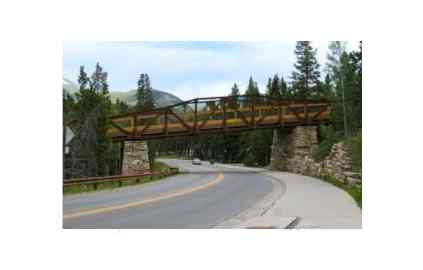
An artist's rendering of what the skier bridge over Mount Rose Highway might look like.

An artist’s rendering of what the skier bridge over Mount Rose Highway might look like.

The proposed action includes the following components:

• Construction of a skier bridge across the Mt. Rose Highway (connecting the current ski area to the new ski terrain)

• Construction of 11 new ski trails in the Atoma pod, including snowmaking and grooming

• Installation of a new chairlift to serve the Atoma pod

• Removal of the existing Atoma building and parking lot

• Construction of a snowmaking water impoundment at the westernmost portion of the existing special use permit boundary near the “Around the World” trail

• Creation of a non-significant Forest Plan Amendment to limit any further commercial development on the lands acquired by the Forest Service through the 1994 Galena Resort Land Exchange.

The full scoping notice and map packet for this project can be downloaded here.

There will be two open houses regarding the project:

• June 18 Winters Creek Lodge, 4-6pm, 21333 Highway 878, Reno.

• June 19 Humboldt-Toiyabe National Forest Supervisors Office, 4-6pm, 1200 Franklin Way, Sparks.

For more information, contact Linda Crawley at (775) 355.5377 or lcrawley@fs.fed.us. Comments will be taken until the end of June.


Tours available of almost finished animal shelter

Motorists driving between downtown Truckee and the Pioneer Trail roundabout on Donner Pass Road may not realize that they are passing by the future home of the Humane Society of Truckee-Tahoe.

The animal shelter is in its final stages of construction.

It is tucked out of sight from the main thoroughfare on a back parcel on Stockrest Springs Road.

To build awareness and satisfy the curiosity of community members ready to embrace this new facility, the HSTT is offering hard hat tours of the shelter, which are free and open to anyone. The tours will be conducted twice a week throughout the summer months. Dogs, cats and employees are expected to move in the fall.

Hard hat tours of the animal shelter will be conducted on the following days and times:

Every Tuesday from June 4 through Aug. 20 at 5pm. (The June 4 tour date is full.)

Every Friday from June 7 through Aug. 23 at 4pm. (The June 21 tour date is full.)

Saturday tours will be conducted on an as-needed basis.

To reserve a spot, call (530) 587.5948 or email steph@hstt.org.


Outrageous food at Reno, Sac minor league baseball games

By Zoe Zellers, TheDailyMeal.com

“Take me out to the ball game, take me out with the crowd, buy me some … Twinkies split down the middle, stuffed with a hot dog, and topped off with whipped cream and rainbow sprinkles with a cherry on top … It may be an edible heart attack, but I don’t care if I never get back…”

Those might not be the classic song’s original lyrics, but that’s the ballpark snack you’ll be singing about at a Battle Creek Bombers’ minor league game in Michigan. The team introduced the salty and sweet treat this year and made a round of television appearances promoting the sensational snack, which players are calling “dessert and dinner all in one.”

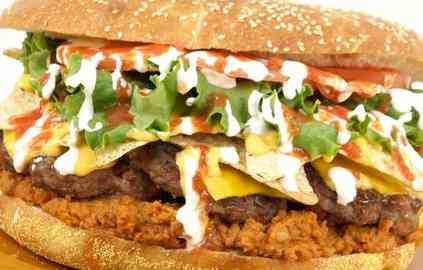
er: The Western Michigan Whitecaps fans bask in indulgence with their $20, 4,889-calorie, 4-pound specialty burger. It features five burgers (each weighs in at one third of a pound), topped with chili, cheese, chips, salsa, lettuce, and sour cream, all wedged between a giant sesame-seed bun. While you’re there, you might as well order a side of the fried Mac and Jack Cheese Bites.(Photo: Benjamin Hill)

The Western Michigan Whitecaps fans bask in indulgence with their $20, 4,889-calorie, 4-pound specialty burger. Photo/Benjamin Hill/DailyMeal

Since Hostess announced its bankruptcy this year, the world awaited the fate of America’s beloved Twinkies, which were ultimately saved by the Metropoulos brothers (the same family who brought Pabst Blue Ribbon back in the spotlight). And now, Twinkies are enjoying the limelight of being repurposed — and at baseball stadiums they have become the new hot-dog bun.

Keeping with the trend of wild ingredient repurposing, the West Michigan Whitecaps have taken America’s bacon craze to the next degree with their Bacos; the Fifth Third Ballpark in Comstock Park, Mich., serves up a twist on the traditional taco with a shell made from bacon.

And on the West Coast, this season the Sacramento River Cats have brought in the Wicked ‘Wich, one of the city’s favorite food trucks, which serves your locally sourced meat of choice topped with provolone cheese, homemade seasoned fries, and signature oil and vinegar slaw, all stuffed between fresh, thick-cut slices of bread.

Check out The Daily Meal’s countdown of the top outrageous baseball bites to find out where you can get BBQ nachos, a foot-long with 20 toppings, and a peanut-butter-and-jelly bacon burger.

1. Twinkie Dogs

The salty and sweet treat served at the Battle Creek Bombers’ minor league games in Michigan is gaining such attention from the media and fans, it’s clear Twinkies have found a new market. To assemble this insane creation, hot dogs are stuffed inside a Twinkie and topped off with the usual ketchup or mustard. For the ultimate experience, though, fans eat them with whipped cream and rainbow sprinkles with a maraschino cherry on top.

2. Bacos

The Baco, a taco served inside a bacon shell, will be served this summer at the Whitecaps games at Fifth Third Ballpark in Comstock Park, Mich. Expect taco trucks nationwide (and maybe even Taco Bell?) to catch up with this idea soon, because, really, who doesn’t love bacon?

3. The Fifth Third Burger

The Western Michigan Whitecaps fans bask in indulgence with their $20, 4,889-calorie, 4-pound specialty burger. It features five burgers (each weighs in at one third of a pound), topped with chili, cheese, chips, salsa, lettuce, and sour cream, all wedged between a giant sesame seed bun. While you’re there, you might as well order a side of the fried Mac and Jack Cheese Bites.

4. The Funnel Dog

This is the slightly tamer older sister to the Twinkie Dog. At Arvest Ballpark’s Cider Shack BBQ Pit, a juicy hot dog is battered and fried with funnel cake and coated with powdered sugar. It’s the Northwest Arkansas Naturals’ perfect marriage between two ballpark staple snacks, and at $3.50 a pop, it’s an affordable splurge. Who says you can’t teach an old dog new tricks?

5. Baseball’s Best Burger

In southern Illinois, fans flock to see the Gateway Grizzlies’ games, but the food is half the fun at this ballpark’s creative concession stands. The Grizzlies opt for a sweet and savory combo with GCS Ballpark’s “Baseball’s Best Burger” (also called “The Luther Burger” after crooner and yo-yo dieter Luther Vandross). Their juicy quarter-pound hamburger, topped with two slices of bacon and sharp Cheddar, is stuffed between a split Krispy Kreme Original Glazed grilled doughnut. The burger has been featured on Travel Channel’s Man v. Food along with the Grizzlies’ Philly cheesesteak nachos.

6. Philly Cheesesteak Nachos

The popularity of the Gateway Grizzlies’ Best Burger is challenged by the team’s sensational Philly cheesesteak nachos, a far cry from the ordinary stale chips dipped in neon yellow Cheese Whiz. These nachos are made with crisp tortilla chips loaded with slow-cooked shredded chicken, Monterey Jack sauce, and grilled green and red peppers and onions.

7. The Peanut Butter and Pepper Jelly Jalapeño Bacon Burger

Head over to The Joe to catch a Charleston RiverDog game and a serious, free-reign approach to the burger. The Joe has attracted culinary celebrities like Rachael Ray and Adam Richman with its sensational and oversized Homewrecker (daring eaters can add up to 20 toppings to this 1-pound all-beef “build-your-own” hot dog). But this season the RiverDogs have taken it to the umpteenth degree with their new peanut butter and pepper jelly jalapeño bacon burger. What a mouthful, literally. Cool down with a Firefly Moonshine margarita or try the other new kid on the block, beer shakes, available in Palmetto Espresso Porter Chocolate, Guinness Caramel, and Sweetwater 420 Strawberry flavors.

8. BBQ Nachos

Year after year the Memphis Redbirds’ AutoZone Park ranks as the nation’s only ballpark where hot dogs are not the top-selling food item. That’s because the Redbirds’ Rendezvous barbecue nachos have become a local tradition. Load salty corn tortilla chips with Rendezvous pulled pork, oozing spicy cheese sauce, and sliced jalapeños and you’ve got one happy Redbirds fan. You’ll need a Malibu rum cocktail to kill the heat.

9. Red & White Hots

This is as local of a ballpark concoction as you can get. The Rochester Red Wings’ Frontier Field serves up a combo of red and white hot dogs from Zweigle’s, the only hot dog brand served at the stadium since the ’20s. The white hot, a cheaper alternative to the red hot, was invented in the ’20s by Germans in Rochester, N.Y. This spin on the classic is made of uncured and unsmoked pork, beef, and veal mixed with mustard and other spices. Because it’s uncured, the hot dog retains a white appearance. Top off local red and white hots as you like and enjoy with a side of fried pickles.

10. Wicked ‘Wich Sandwiches with Fries and Slaw

The Sacramento River Cats change up their menu every year, and this season Raley Field welcomed the city’s Wicked ‘Wich mobile food truck, a sort of DIY local joint that features predominantly locally sourced ingredients and homemade sauces (so California). Essentially, the customer picks the meat, from pastrami to turkey to BBQ tofu to salmon and more. Then, thick-sliced, deli-style bread is loaded with your meat of choice plus Wicked ‘Wich’s signature combo of provolone cheese, fresh-cut seasoned fries piled high, and its oil and vinegar slaw — the food truck chefs strongly suggest trying it their way.

11. The Triple Play

The Renos Aces throw down with the Triple Play sandwich, which was invented in 2009 to celebrate the opening of Aces Ballpark, but has remained a favorite of fans each year. The triple-decker is made with grilled slices of Pullman bread paired with pulled pork and brisket and a heaping portion of coleslaw. The colossal sandwich is topped with a stack of barbecue meatballs, pickles, and cherry peppers and held together with skewers. Since you’re already in line, order the carnitas tacos, too.

12. Country Bob’s Chicken Sandwich

The Gateway Grizzlies’ secret sauce, for its popular chicken sandwich isn’t so secret — it’s Country Bob’s apple-chipotle sauce from Centralia, Ill. Add the all-purpose sauce, bacon, and melted provolone cheese to a hearty chicken breast and wash down the heat with a cold beer.


One man’s story about surviving a bear attack

By Dave Garshelis, Outdoor

Fatal black bear attacks on people are extremely rare. There are 700,000 to 900,000 black bears living in North America, and in recent years, they’ve killed an average of two people a year. And despite popular perception, most black bears that kill people aren’t mothers protecting their cubs, but adult males hunting in stealth. A 2011 study of bear deaths from 1900 to 2009 showed that male bears committed 92 percent of the attacks. More than 80 percent of those attacks were predatory — in other words, a bear trying to make a human into a meal. Joe Azougar almost became one of these deaths when a 316-pound male black bear locked onto him as prey at his cabin in Ontario. This is his story.

On the Saturday before Mother’s Day, I went out to my porch around 9:45am to watch geese fly away from a nearby field. I sat in a chair about 10 feet from my door, drinking a cup of coffee with one hand and petting my German shepherd, Ace, with the other. My brother had given me the 6-month-old dog a few days before. We immediately bonded. He was so intelligent. I could tell him to sit and go inside my house for a half hour, and he would stay in the same place.

Around 10am, I heard this vibration, this thunder, nearby. I thought it was one of my animals. I turned to my right and there was a black bear running at me, drooling.

Ace jumped up in the air a few feet in front of me. The animals flew into this ball of howling and biting. I frantically ran inside the house and locked the door. The dog just kept pushing the bear away from the door. He knew he was protecting me.

A physical shock took over my body and my mind. I couldn’t remember the emergency number, so I called my friend, who called 911. I called another neighbor to see if he could come help, but had to leave a message. I called his daughter and said, “Be safe, there’s a bear out there that’s big.” After about a minute, I looked outside my main window and saw the bear dragging the lifeless body of Ace into the bushes.

A minute later, the bear ran straight to the back window and smashed it with one swing. I tried making myself bigger. I banged pots and pans to scare him off. It did nothing. The bear had determination on his face.

The back window is roughly 5 feet off the ground and small, a couple feet by a couple feet. The bear growled and put his head through the window frame, then his paws, then his whole body in a big round ball of fur. Steam drifted out of his mouth. I was 3 feet away from his face.

My cabin is small, 8 feet wide by 16 feet long. With my furniture and desk, it’s more like 5 by 5 feet. I imagined him ripping me up inside my house. I thought, There’s no way I’ll make it in here.

I decided to make a run for the road, which was roughly 50 feet or so away. I thought I might have a chance there because the neighbors might show or the cops might come with guns. When I turned around, he was running after me in a straight line.

I made it to the road, but nobody was there. He ran in a circle around me, came at my right side, and threw one powerful shot to my right shoulder with his paw. I’m a big boy, 5-feet-11-inches and 240 pounds, but I landed in the ditch. All I remember is my face hitting the dirt.

He jumped on my back and started scalping me with his front teeth. I can’t describe that pain. At first, I wanted him to sink his canines in for a quick death, but then I screamed, “God protect me.” I asked God not to have my family find me on Mother’s Day in pieces in the bushes.

The bear ripped my skin to the back of my skull. My entire scalp just came off. Then he turned his mouth sideways and started chipping into my skull. I heard his teeth clicking into the bone. I saw pieces of flesh falling.

I felt his head go back. I turned to look and he was licking his teeth. I jammed my thumb into his eye, which gave me a couple of seconds to feel for the flesh of my head with my other hand. It felt so soft, I thought it was my brain. I pulled it back over my head and pressed down hard.

I covered my head like a bomb might drop from the sky, which exposed my shoulder. He just started ripping at my shoulder. I tried to reach back with my other hand and grab his face, but you can’t really fight a beast like that. It was like I was tickling him.

The main thing was, I didn’t want the bear to turn me over. I knew one bite into my organs—liver, heart, kidneys—and I would have been gone. The bear ripped my trapezius muscles. He tore my shirt off and clawed at the sides of my torso. When he started biting my side, I grabbed some dirt and rocks and threw them at him. He didn’t stop. He just kept biting and pulling.

He started to drag me out of the ditch and towards some bushes. That’s when I thought it was all over. I am going to be bear meat. While he was dragging me, my senses changed. I noticed white snowflakes falling. Everything became silent. Everything seemed so calm. I stopped fighting.

At some point, I turned my head and saw tires. I looked up and saw two angels. I think they were in a silver van. One of them was honking the horn, but I couldn’t hear it. The bear ran away. One woman covered her mouth in shock, like, “Oh my God.” They were talking, but all I heard was me saying, “Please, help me. Please, help me.”

I later found out that every year for Mother’s Day, they camp near my property. That morning, they had gone out to get Coke. When they drove back, they thought they saw a bear eating garbage — its head going in and out of trash. Since they were staying nearby, they pulled up for a closer look.

When the bear ran away, they quickly threw me in the back and drove off. One woman held my hand. She kept talking.

“You’re going to be OK.”

I kept asking for water. I’ve never felt such thirst, like I was in the Sahara desert. I didn’t care about the pain, just this thirst. It drove me mental.

“We’re getting close. There are the cops.”

I would have been dead by the time the cops got there.

At the hospital, the doctor put his hand on my chest. I asked for something for the pain, then started cursing and screaming. He kept saying, “You’re going to be OK. There’s nothing wrong with your brain. You’re going to go in the operating room. You’re going to be fine.”

Next thing I know, I hear, “Take him into X-ray.” Then I went unconscious.

When I woke, the nurse went step-by-step over the injuries. They put in over 300 stitches. The staff said I was a very lucky man, that when accidents like this happen, usually the last word used is funeral.

Expert analysis:

It is not clear whether the large male bear that attacked Joe had initially been attracted to the area by some other food source, like garbage, but it is clear that this attack was of predatory intent. Predatory attacks by black bears are extremely rare, given the number of times people and bears encounter each other. The usual recommendation of slowly walking away, or “playing dead” if a bear actually knocks you down, is effective when a bear views you as a threat, but it does not apply for a bear that has a mindset to eat you.

In an attack like this, a person should try to fight back with anything available, or kill the bear if possible. Maybe Joe would have fared better had he grabbed a large knife from his cabin, but his decision to immediately flee was justified to the extent that he had no way of knowing whether the bear would come after him, or would stay and snack on food inside the cabin. He certainly would have been killed and consumed had the bear not been scared off by the vehicle.

Dave Garshelis is a black bear biologist with the Minnesota Department of Natural Resources.


HGTV building home in Truckee to give away

Showcases house planner Jack Thomasson breaks ground at the Truckee site. Photos/HGTV

Showcases house planner Jack Thomasson breaks ground at the Truckee site. Photos/HGTV

Plans for the HGTV Dream Home 2014 are well under way in Truckee.

The HGTV Dream Home 2014 is a custom-built, fully furnished home set in the Schaffer’s Mill community, with panoramic views of the mountains.

The 18th annual HGTV Dream Home is part of a grand prize package that will be awarded in March 2014. The official HGTV Dream Home Giveaway entry period will open in December 2013. Until then, information about the home’s location and features will be available online

as it emerges.

The 3,200-square foot home, under construction by Tanamera Construction, has three bedrooms and 3½ baths on one-third of an acre. Ward-Young Architecture blends traditional and contemporary forms. The house is designed with two wings: a living wing and bedroom wing with large expanses of glass and sliding door systems to create a transparent and direct connection between indoors and outdoors.


Boys & Girls Club offers summer activities

What will your child be doing for the summer? Lake Tahoe Boys & Girls Club has programs for youth ages 5-18 that ensure they will be safe, have fun and be participating in activities that will help them retain what they learned throughout the school year.

The weekly rate is $60/child. Additional siblings receive a discounted rate. Breakfast, lunch, and a snack are provided at no additional cost.

The program operates Monday-Friday, 8am-6pm.

Go online to find out more and download a member application or stop by the club at 1100 Lyons Ave.


Bijou golf — more about fun than competition

By Kathryn Reed

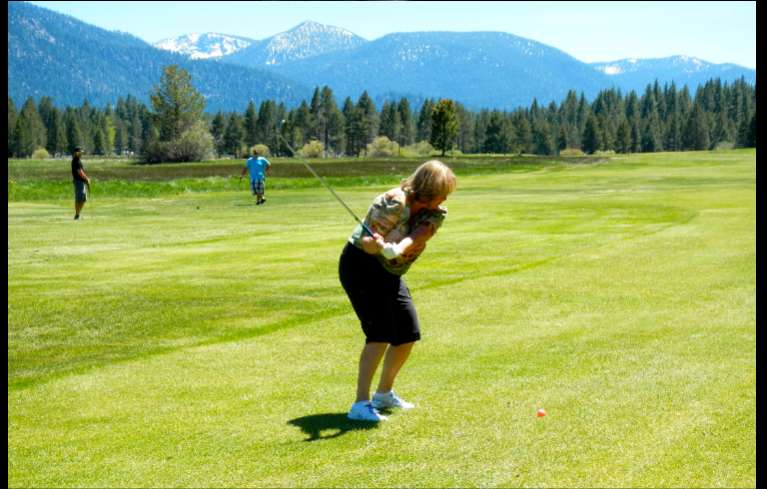
“I don’t golf, but I have golfed” is how I describe my experience with that little white ball and those odd looking clubs.

It had been at least a dozen years since I swung a club other than at putt, putt golf.

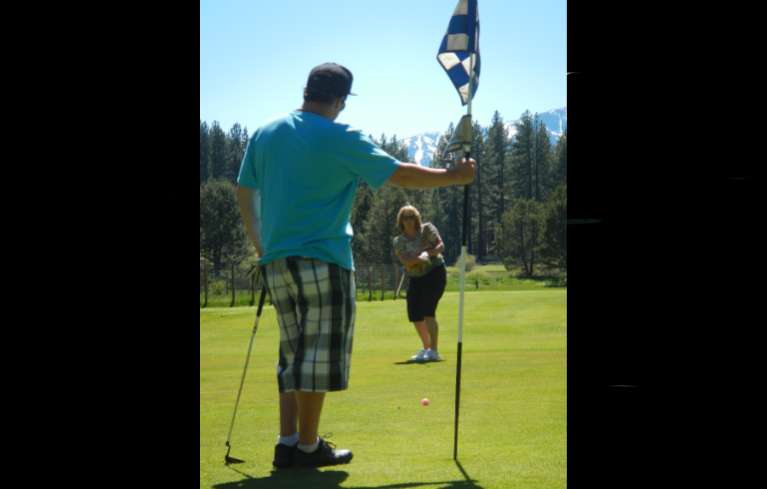
Brooke Laine putts while her son, Nik Olivares, holds the flag. Photo/Kathryn Reed

Brooke Laine putts while her son, Nik Olivares, holds the flag. Photo/Kathryn Reed

Nik and Kevin play two or three times a week at Bijou Golf Course. They are in their early 20s. Brooke plays randomly. She and I are in our late 40s. It wasn’t too embarrassing, but there was the constant question from Brooke – “Where is the flag?” My continual response was – “It didn’t matter.”

Nik tells us to sweep the grass with the club. He tells us a lot of things that at least I’m not able to implement.

When pink balls can’t be found in the rough, others bounce off fences and some are thrown farther than they are hit, well, the score isn’t perfectly kept.

On this par 32 course, the guys were in the 40s and the gals in the 50s. I did get a legitimate par (3) on hole 8.

According to Greg Ross, South Lake Tahoe parks manager, about half the people playing the course are seniors, tourists dominate in the summer and locals make up the majority in the shoulder seasons.

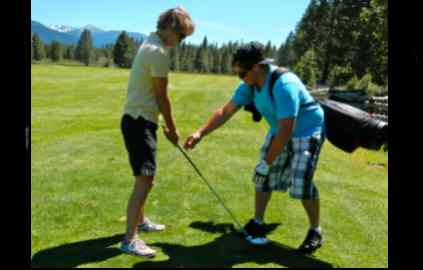
Kathryn Reed receives instruction from Nik Olivares. Photo/Brooke Laine

Kathryn Reed receives instruction from Nik Olivares. Photo/Brooke Laine

“We definitely have a niche in the market,” Ross told Lake Tahoe News.

Even though he said the number of golfers declined in the last handful of years, he said the downward adjustment in prices and the early opening this year have been good for Bijou.

The week before Memorial Day the grounds are less than perfect, though. Hole 9 is getting a new tee, which may change it from a par 4 to a par 3. The hole for No. 3 is on the fairway as crews work on the green. Some of the ground is bare in spots. The back holes are definitely in the best condition.

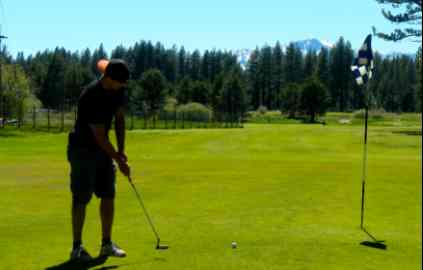
Kevin Lecuro sinks a putt. Photo/Kathryn Reed

Kevin Lecuro sinks a putt. Photo/Kathryn Reed

Despite the pristine conditions of some other courses, Bijou is very much a typical municipal golf course. And like most courses, the setting is beautiful. Snow is still visible on Freel and Jobs peaks. Looking back from No. 6 Mount Tallac distinctly stands out.

It’s a different type of walk in the woods.

—-

Notes:

• Rates, times and other info about Bijou Golf Course are online.

• Phone number – (530) 542.6097

• Address – 3464 Fairway Drive, South Lake Tahoe.


South Tahoe golf course — oldest in the basin

Bijou Golf Course first opened in the 1920s. Today a mix of locals and tourists play the 9-hole course. Photo/Kathryn Reed

Bijou Golf Course opened in the 1920s. Today a mix of locals and tourists play the 9-hole course. Photo/Kathryn Reed

By Kathryn Reed

While modern golf dates to the Middle Ages in Scotland, Tahoe’s links history isn’t quite 100 years old.

“There were kids around in the neighborhood who would get odd jobs as caddies. I did that. One time I caddied for Max Baer the fighter. He trained in the summertime with Mr. Goldman at Al Tahoe,” Knox Johnson told Lake Tahoe News.

The 88-year-old Johnson grew up on the course, but said he was never much of a golfer. Instead, he and his friends would find errant golf balls. On occasion they’d hit balls on the ninth hole after everyone had gone home.

It was the 1920s when the Bijou Golf Course first opened on land owned by Johnson’s parents – Knox William Johnson and Stella (Van Dyke) Johnson. Virgil Gilcrease of San Leandro leased the land from the Johnsons and operated the course.

Johnson and South Lake Tahoe officials say Bijou is the oldest golf course in the Lake Tahoe Basin. He believes Brockway is the second oldest and Glenbrook third.

“When it first opened there was just sand greens,” Johnson said. “The clubhouse was right where it is now.”

At the time there were living quarters above the clubhouse.

This was at a time when his family was running cattle and owned much of the land in that area. He still owns 5 acres by the clubhouse, including a house his mother had built in the 1940s. It has a view of Freel, including the No. 27 that the snow makes on the peak. “It’s our lucky number,” Johnson said.

The Bijou area was the hub of South Lake Tahoe and the place to be. Most summer nights there was a dance at Bal Bijou – at what is now the CVS drug store.

Johnson, along with his brother, Bill, and sister, Marjorie Springmeyer – who are both still alive – had to raise some money after their mother died. That is when the city of South Lake Tahoe bought the land where the golf course still resides.

Johnson says it was the late 1950s that the city took over the course. The city says it was November 1983.

He said there was talk of extending the course beyond the cemetery – other land that once belonged to the Johnsons – to make it an 18-hole course, but that never materialized. Instead, the 9-hole course remains much the way it did nearly a century ago.

“They used to irrigate it with ditches,” Johnson said. It was after World War II that the first sprinkling system was put in.

“The pipes that they used came from Perkins where steam engines were. This is where they redid the boilers for trains. They salvaged pipe from there,” Johnson explained.

Then it became possible to water the greens and some of the fairways.

In 1991, the city put in a modern irrigation system.

Today, the city continues to operate Bijou Golf Course.