Vail Resorts’ 3Q net income up; skier visits down at Heavenly, Northstar

By AP

BROOMFIELD, Colo. — Vail Resorts said Thursday its earnings rose 23 percent in its fiscal third quarter, as late spring snow helped boost skier visits to its Colorado resorts and visitors proved willing to spend on food, lessons and gear.

The Broomfield-based company reported net income of $97.6 million, or $2.66 per share, for the three months that ended April 30. That’s up from $79.5 million, or $2.17 per share, during the same period last year. Analysts had forecast earnings of $2.74 per share.

Revenue climbed 12 percent to $469.7 million.

Fewer people went to Northstar and Heavenly last season compared to the previous year. Photo/LTN file

Fewer people went to Northstar and Heavenly last season compared to the previous year. Photo/LTN file

Vail Resorts Inc. operates the Vail, Beaver Creek, Breckenridge and Keystone resorts in Colorado; Heavenly, Northstar and Kirkwood in the Lake Tahoe area; Afton Alps in Minnesota; Mount Brighton in Michigan; and Grand Teton Lodge Co. in the Jackson, Wyo., area. Last month, it announced it has reached a deal to also operate Canyons in Park City, Utah.

Excluding recently purchased Kirkwood, Afton Alps and Mount Brighton, skier visits climbed 9.1 percent from a year ago. Visits to the company’s Colorado resorts were up 11.8 percent, but Heavenly and Northstar together saw a 0.4 percent decline in skier visits after an unusually warm, dry spring, Vail Resorts said.

Visitors also were spending. Lift revenue, excluding season passes, was up 13.4 percent, dining revenue was up 13.9 percent, ski school revenue was up 11.8 percent, and retail and rental revenue was up 7.4 percent from a year ago, excluding the newly acquired resorts.

Vail Resorts reported selling roughly 138,000 season passes this spring for the 2013-14 season. Spring season pass sales through May 28 are up 18 percent in terms of units sold and up 24 percent in sales dollars from a comparable period last year. CEO Rob Katz said some of the customers include those who would normally have bought passes in the fall.

Nearly all spring pass sales will be recorded as revenue in fiscal 2014 over the course of next ski season.

For the fiscal year ending July 31, Vail Resorts said it now expects $31.5 million to $39 million in net income, down from an earlier estimate of $39 million to $49 million. It estimates $8.7 million in losses relating to the signing May 29 of its long-term lease to operate Canyons, including $2.2 million in operating losses and about $6.5 million in one-time transaction costs.



2 tickets to El Dorado County Fair available

Lake Tahoe News has two pairs of El Dorado County Fair tickets to give away. One pair will be given away on the website and the other on LTN’s Facebook page.

The fair is June 13-16.

The first person who correctly answers — Who is the South Lake Tahoe resident who most often wins awards at the fair for her knitting abilities? — wins a pair of tickets.

Just post your answer below as a comment.


DiCamillo returns to S. Tahoe as temp attorney

By Kathryn Reed

Former South Lake Tahoe City Attorney Cathy DiCamillo is back on the payroll.

She started this week as interim deputy city attorney. She will be working for Nira Feeley, who is interim city attorney until Tom Watson takes the helm July 8. Feeley will be going out on maternity leave about a week later for three months. DiCamillo will be on board that entire time. She is making more than $7,000 per month.

“With Cathy’s extensive legal background and experience, she is able to pick up any of our cases fairly effortlessly and will provide the city as well as Nira and Tom leading the City Attorney’s Office with high-level legal assistance far better than bringing in another new and temporary attorney,” City Manager Nancy Kerry told Lake Tahoe News. “For example, I know that (Wednesday) she was reviewing redevelopment/successor agency dissolution matters. As deputy city attorney her day-to-day work assignments will be directed by the interim city attorney and/or city attorney.”

The irony is that when DiCamillo worked for the city the first time she was deemed to not have enough redevelopment experience. That is when then City Manager Dave Jinkens hired outside legal counsel to help with such matters.

DiCamillo was the city attorney for about a decade before retiring in June 2009. During a 2008 closed session DiCamillo received a less than favorable evaluation by the City Council. Months later she submitted her resignation.

Previously, she had worked for attorney Lew Feldman. He is the attorney who from the get-go and to this day is representing the developers for the Chateau project. (That project will be on the June 11 City Council meeting.)

Feeley is the lead attorney on the Chateau project. Kerry said Watson is being briefed on all aspects of it so he will be “up to speed when he officially begins.”

It is not known how much DiCamillo will eventually be involved with the Chateau project. She has nothing to do with the staff report that will be presented Tuesday and she has not been assigned to that project. But she was the city attorney at the time the project was allowed to start without having a consolidated map filed or financing in place.

DiCamillo was also the city attorney when Jaye Von Klug was the city’s redevelopment manager. Von Klug is the one who spearheaded the overspending at the Heavenly Village project that required $7.2 million being “borrowed” from the general fund unbeknownst to the City Council.


Evidence room — lots of guns and marijuana

By Ted Long

We come to the end of our introduction of the sheriff’s department with an inspection and tour of the evidence room and a detailed description of a traffic stop. The evidence room is, to say he least, very crowded, mostly with guns and marijuana.

We were shown how evidence is received and processed. Great care is taken to ensure a chain of control, and availability for court.

If we could do something about the number and availability of guns, the job would be a lot easier. It all so speaks to the use of guns in crime. The legality of marijuana is also brought to question when you see the volume and the filling of our jails.

Ted Long

Ted Long

Traffic stops are not a major function of the sheriff’s office, as our instructors said on several occasions that are really the job of the Highway Patrol. However, they are expected to write some citations as a measure of “doing their job.”

The procedure has been worked out over the years. I can recall when the police stopped you, got out of the car, waked back and said hello. An effort to show your cooperation and friendliness, all designed to avoid the citation. Today you stay in the car, put your hands on the wheel while the officer approaches. Looking in the back seat, being careful not to walk between the cars and always ready for a surprise. We saw some amusing video of traffic stops, the angry driver and the dangerous one who when approached pulled a gun and shot.

The entire process of the academy was a pleasant one and informative. Our nation was founded on the principle of checks and balances and while many people think they are limited to the structure of government on the larger scale, with the executive, legislative and judicial branches, I firmly believe that the concept goes all the way to the local level. I encourage all of you to consider getting involved. It is the fact that when someone is looking it avoids most mischief, it being your children or the police.

I doubt very much that any military leader could pull off a revolt. The military is way too large and the leader is the president — a civilian. That is not true at the local level. The policeman on the beat has incredible power. He has a gun and the full force of a small army behind him and we all know that a judge is much more likely to believe him than you. It’s not the take over of the government I am concerned about it is the individual potential for abuse, the Rodney King incident at one end and the carrying out of a personal grudge at the other end. Let’s face it, even police persons are human and have emotions. Our constant “looking over the shoulder” assist them on doing the good job they intended in the first place.

Sign up for the next academy, take a ride along, show your concern and support, you will enjoy it and it helps to make our community a safe place.

Thanks for listening.

Ted Long is a South Lake Tahoe resident participating in the El Dorado County Sheriff’s Citizens Academy.


Opinion: Nevada fails to protect Lake Tahoe

By David von Seggern and Laurel Ames

Nevada Gov. Brian Sandoval on Thursday signed SB229, which repeals the 2011 legislative effort (SB271) to withdraw Nevada from the Lake Tahoe bi-state Compact. Environmental groups are calling the new law a major setback in protecting Lake Tahoe from development.

The Compact is the federally approved agreement between California and Nevada that was enacted to protect Lake Tahoe’s famed blue waters from runoff and other pollution caused by excessive development. The repeal would become null if California fails by January 2014 to meet conditions similar to what SB271 had required to prevent Nevada’s pull-out from the Compact.

The conditions include amending the Compact to require the Tahoe Regional Planning Agency to consider economic factors in land-use planning, e.g., “changing economic conditions.”

They also include California’s declaration of its support for “full implementation” of the Regional Plan Update approved by TRPA in December 2012. If California does not meet the conditions, SB271 will go back into effect.

The Sierra Club is disappointed in the new law.

While keeping Nevada in the Compact is commendable, this new legislation does not guarantee that the lake will get the protection it needs. The new law still presents California the choice of either ending the Compact or “saving” a much weakened version that places development on a par with environmental protection of the lake.

The desires of Tahoe’s developers and large corporations to keep up with the glitz of other areas, in order to compete for additional tourists, has nothing to do with assuring restoration of the lake — it’s all about increasing their bottom lines while local governments count the increased tax revenues. And those desires require reducing existing standards that are the hallmark of the TRPA – protecting the lake’s clarity, protecting the natural areas around the lake, protecting the beautiful scenery, protecting open spaces, and controlling air pollution.

Environmentalists also object to SB229’s call for California’s support for the Regional Plan update, “This new plan puts forth flawed approaches for Lake Tahoe that seriously reduce protections for the treasured mountain lake. The new plan shifts authority over future development decisions to local jurisdictions which do not have a mandate to protect the lake. The new plan also allows those towns and counties to adopt weaker pollution and development controls than otherwise required by TRPA. This would undermine the very idea behind the agency’s creation—that protecting the water quality, clean air, and natural beauty that make Tahoe so popular is a top priority, and one that must be handled at the regional level,” Earthjustice attorney Wendy Park explained.

On Feb. 11, 2013, the Sierra Club and Friends of the West Shore filed suit in federal court to block the implementation of this flawed Regional Plan Update.

The Sierra Club has a long history of activist interest in Tahoe, starting in 1969, when the TRPA was created. We are disappointed at the state of the TRPA today, and will work to undo the worst of the Regional Plan update that the Nevada governor has endorsed through SB229.

David von Seggern is with the Toiyabe Chapter Sierra Club and Laurel Ames is with the Tahoe Area Sierra Club.


U.S. receives compensation for fires in national forests

By Denny Walsh, Sacramento Bee

Federal prosecutors in Sacramento have collected $50.5 million from four companies found by investigators to be responsible for igniting two wildfires that burned more than 31,000 acres of national forest land, U.S. Attorney Benjamin Wagner announced Thursday.

The Power Fire, which ignited on Oct. 6, 2004, in the Eldorado National Forest in a remote area of Amador County, started when tree trimmers discarded cigarette butts on the floor of the forest, Wagner said.

The Whiskey Fire ignited on June 12, 2008, in the Mendocino National Forest, when Pacific Gas & Electric transmission lines contacted branches of a gray pine tree, Wagner said.

All four companies deny responsibility for the fires, Wagner said, but he noted that lawsuits filed by his office against the companies settled comparatively quickly.


State hands out money for Tahoe bus service

South Shore bus riders will benefit from some of the nearly $250 million Caltrans gave out this week to improve public transit and air quality across California.

One-hundred twenty-seven projects were awarded funds to upgrade transit services, purchase eco-friendly buses, modernize transit stations and create jobs throughout the state.

Tahoe Regional Planning Agency was awarded $1.3 million to modernize bus facilities, install fare boxes and purchase buses.

Placer County Department of Public Works was awarded $2.2 million to purchase buses.

The funding comes from Proposition 1B, the 2006 voter-approved transportation bond, which is providing $3.6 billion over a 10-year period to improve public transit in California.

— Lake Tahoe News staff report


Hackers hit Raley’s grocery stores

By KOLO-TV

WEST SACRAMENTO — The Raley’s chain of supermarkets has recently discovered that a portion of its computer network systems may have been the target of a complex, criminal cyber attack.

According to a news release, the company immediately initiated an investigation to determine whether cyber criminals may have obtained customer credit and debit card information. So far, the company has not confirmed any unauthorized access to payment card data, but its investigation remains ongoing.

Raley’s does not believe that debit PINs could have been accessed, as it does not collect Social Security or drivers’ license numbers in association with payment card transactions.

A company spokesman says a series of immediate steps has been taken to enhance the security measures already in place to protect customer data. The company is confident that customers can continue using their payment cards in its stores.

“Our customers’ peace of mind is our top priority. We take protecting our customers’ privacy seriously and sincerely regret any inconvenience that the attack on our network may have caused,” says Mike Teel, Raley’s president and CEO. “We are working around the clock to gather details to determine the extent of any possible compromise of customer information.”

Raley’s has a dedicated response team available to answer customer questions and is providing customers updates online as they become available. The company encourages customers who have used credit and debit cards at Raley’s, Bel Air, Nob Hill Foods, Food Source stores or Aisle One fuel stations to take the following steps to protect their accounts:

• Check and monitor your bank and credit card statements for evidence of unauthorized transactions;

• Contact your bank or credit card company if you identify suspicious charges; and,

• Know that cardholders are not held responsible for fraudulent charges made by unauthorized parties if reported promptly to the card issuer.

Customers can reach Raley’s dedicated response team from 7am to 10pm every day at 800.925.9989.


Additional charges filed against county supervisor

By Peter Hecht, Sacramento Bee

El Dorado County Supervisor Ray Nutting faces new legal troubles as state and local prosecutors filed four misdemeanor charges today, alleging he improperly collected money to post bail after his May 28 arrest for felony political corruption.

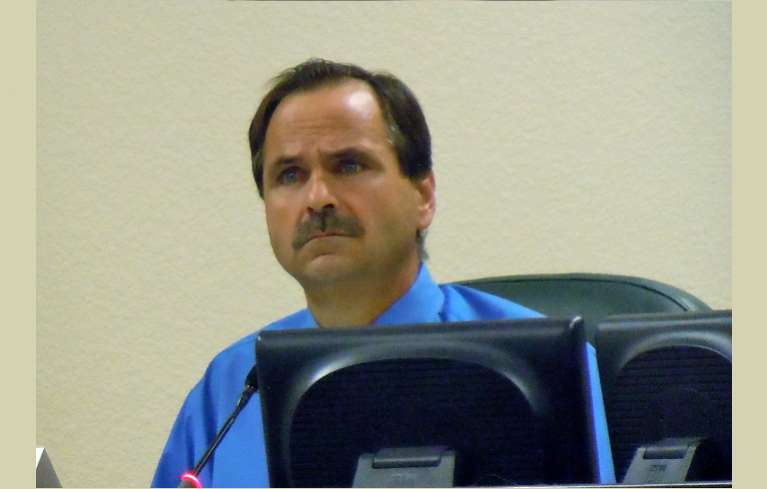
Ray Nutting

Ray Nutting

Nutting, 53, surrendered voluntarily to authorities last week after District Attorney Vern Pierson charged him with four felony counts for allegedly failing to properly disclose some $70,000 in state income received for brush clearing on his family ranch.

Now new charges, filed by Pierson and state Attorney General Kamala Harris, allege that Nutting illegally solicited bail money from two El Dorado County employees and a local construction contractor. Harris’ office is assisting in the local investigation.

Nutting’s defense attorney, David Weiner, blasted the filing of new charges and says his client has done nothing wrong.

“We will see what this fishing expedition leads to now,” Weiner said today. “He is not guilty of anything – except being a political target. It’s becoming more and more clear.”


K’s Kitchen: Pesto pizza with squash

By Kathryn Reed

We all get in ruts with things we make or want to eat. My favorite homemade pizza is Sue’s spinach pesto.

But I knew one pizza would not be enough for four – especially if that was all that was being served. Lucky for me my sister, Tami, shared the recipe below via Facebook. She posted the link from MyRecipes.com, which got it from the September 2002 issue of Cooking Light magazine.

k's kitchenIt’s a combination of ingredients that I would have never put together. It’s also a recipe that Pam, Tom, Sue and I all say is a keeper.

I used butternut squash and fontina. I was lazy and used a prepared crust instead of making my own. But I did use my own pesto. I blend up a ton in the fall and then freeze it so I have plenty on hand until the farmers’ markets start. I’m down to my last bag, so it’s a good thing it’s farmers’ market season.

I would think fresh tomatoes when in season could be substituted for the canned. But canned have more flavor than the waxy things sold in supermarkets in the winter and spring.

Pesto Pizza with Butternut Squash

6 (1/4-inch-thick) slices peeled butternut squash or pumpkin (about 1/2 pound)

2 teaspoons sugar

¾ tsp olive oil

Cooking spray

½ C (2 ounces) shredded fontina or Gouda cheese

Pizza dough

1 (14.5-ounce) can finely chopped tomatoes, drained

½ tsp dried oregano

¼ C pesto

½ C (2 ounces) grated fresh Romano or Parmesan cheese

Preheat oven to 400 degrees.

Combine first 3 ingredients in a medium bowl. Place squash mixture on a baking sheet coated with cooking spray. Bake at 400 degrees for 20 minutes or until squash is tender.

Increase oven temperature to 450 degrees.

Sprinkle fontina over dough, leaving a 1/2-inch border; top with squash mixture, tomatoes, and oregano. Drop pesto by level teaspoons onto mixture; sprinkle with Romano. Bake at 450 degrees for 20 minutes or until lightly browned.