Book changes conventional thinking about fruits, veggies

By Kemp Minifie, Epicurious

With “Eating on the Wild Side: The Missing Link to Optimum Health”, Jo Robinson has written the next “Omnivore’s Dilemma” — a book of revelations that food lovers and home cooks everywhere will be reading, recommending, quoting, and living by. Robinson may not be a household name yet, but her groundbreaking work will turn much of what you thought you knew about food upside down and inside out. Chew on this amazing fact, for starters, one of hundreds in the book: Berries have four times more antioxidant activity than the majority of other fruits, 10 times more than most vegetables, and 40 times more than some cereals.
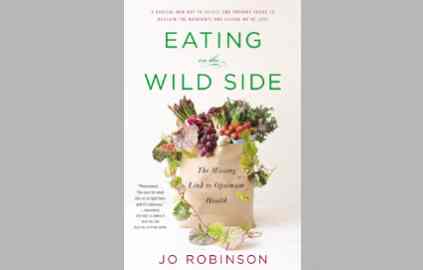
book“Eating on the Wild Side” explains the fascinating changes that have taken place in our food in the 10,000 years since man’s adoption of agriculture, and the unintended consequences of those changes. Generations of farmers, following in the footsteps of our distant ancestors, selected what plants to grow based on flavor, ease of harvest, and the simple economics of what would sell, and not on the plants’ beneficial nutrients, something they had no way of knowing until very recently. The upshot: What we eat today is actually far less nutritious than what our hunter-gatherer forebears ate.

As alarming as all this may sound, there is lots of good news here, too. Robinson, an investigative journalist and author or coauthor of several best-selling books, pored over more than 6,000 scientific studies to uncover the most nutritionally powerful foods available to us—many of which can be found in your supermarket, farmers’ market, or home garden. For instance, when it comes to apples, the Granny Smith is the most nutritious of the 12 most common varieties (surprise!).

If the mere mention of nutrients and scientific journals makes your head spin, rest assured that Robinson’s book is an entertaining read full of unforgettable stories — the kind you’re likely to repeat at cocktail parties. Each chapter ends with a clear, concise list of the take-away points, along with charts of the best varieties of each type of produce to choose at the supermarket, the farmers’ market, and from seed catalogs. It’s the new food bible for the 21st century.

We caught up with Robinson between food conferences to find out more about how to eat on the wild side. In addition, she shares two super-nutritious recipes from her book, Armenian Lentil Soup and Apple Crisp with Apple Skins.

Epicurious: In your last book, “Pasture Perfect”, you showed how beneficial it is on so many levels to confine our consumption of livestock and dairy products to animals raised on grass. What was the impetus to investigate and write about fruits, vegetables, grains, and pulses in your latest book, “Eating on the Wild Side”?

Jo Robinson: Since 2000, I’ve been investigating the nutritional differences between our present-day diet and our original diet of wild game, plants, and seafood. I spent five of those years focusing on animal products and developing the EatWild.com website. Then, I began researching fruits and vegetables so I could cover more of the food on the plate.

Epi: The information you unearthed about so many of the fruits and vegetables we take for granted is truly amazing, even shocking at times. When you started your research for the book, what did you expect to find, and what was the discovery that surprised you the most?

JR: My intuition was that wild plants were more nutritious than the plant food we eat today, but I wasn’t prepared for the extent of those differences. Some wild tomatoes, for example, have 30 times more of a heart-protective compound called lycopene than our supermarket tomatoes. The wild dandelions in our lawns have eight times more antioxidants than spinach, which we regard as a superfood. Unwittingly, we have bred a wealth of nutrients out of the human diet. We didn’t start 50 or 100 years ago, as many people assume, but 10,000 years ago when we first became farmers.

Epi: You write that the most beneficial bionutrients have a sour, astringent, or bitter taste, but that human beings are wired with a preference for sweet, starchy, and fatty foods, so that we selected plants for the qualities we like, and in the end created plants significantly deficient in the bionutrients contained in their wild ancestors. From an evolutionary biology point of view, is there a logical theory or explanation for this?

JR: There is. In the wilderness, most plants are low in sugar, starch, and fat. Our hunter-gatherer ancestors needed lots of calories to fuel their active lifestyle. Nature, obligingly, gave them taste buds that were linked to reward centers in their brains, infusing them with feel-good chemicals whenever they consumed sugary, oily, and starchy food. Today, we have the same wiring, but we’ve turned our food supply upside down. We are now awash in fat, sugar, and starch. Unfortunately, we still get blasts of dopamine when we eat dessert after a full meal.

Epi: I was amazed to learn from you that berries increase their antioxidant profile with cooking, so that canned blueberries have more phytonutrients than fresh. Does that really mean that the wild blueberries I pick in northern New Hampshire and immediately pop in my mouth aren’t as nutritious as a can of cultivated blueberries from the supermarket?

JR: Those fresh wild blueberries are likely to be better for you than canned cultivated blueberries because the wild varieties are so much higher in antioxidants. But, canned wild blueberries have more antioxidants than fresh wild blueberries, provided you drink the canning liquid. Bizarre but true. However, you get plenty of phytonutrients from fresh berries — and they taste better! I, for one, eat them fresh.

Epi: Your storage recommendations for various produce were surprisingly varied. Some fruits and vegetables need to be eaten soon after purchase while others will last longer when stored in the crisper section of the refrigerator or in plastic bags perforated with a few pinpricks. Many people tend to shop for food only once a week. If they can’t consume their produce at its optimum time, what’s the best way to deal with it?

JR: You can still shop once a week, if you like. But eat the foods that lose their nutrients most rapidly in the first two days. “Eat Me First” foods include artichokes, asparagus, broccoli, kale, leeks, lettuce, and spinach. Interestingly, they are also among the most nutritious.

Epi: Are frozen fruits and vegetables a potentially better source of phytonutrients than fresh produce that’s been picked and trucked across country?

JR: There’s a better alternative to eating frozen food or food that’s languished for days and weeks in a warehouse: Get more of your fruits and vegetables from the farmers’ market or grow it in your backyard, which is the healthiest choice of all. Join the 35 million Americans who have home gardens. If you must buy frozen food, cook it before thawing it. The thawing process destroys more bionutrients than freezing.

Epi: In your research did you find there was a difference between the phytonutrient content of organic foods versus conventionally grown ones?

JR: This is an area of research that needs much more attention. To date, some studies show that organic production enhances phytonutrient content, some show no effect, and some show that conventional production yields more bionutrients. Even though the verdict is mixed, I eat organic food and recommend that other people do as well. It reduces your intake of unwanted farm chemicals, keeps toxic chemicals out of the environment, and protects the health of farmworkers.

Epi: A surprising amount of your research seems to point toward a phytonutrient improvement for humans with cooked foods. The raw-foods enthusiasts maintain that cooking destroys beneficial enzymes. Do the benefits of cooking trump the beneficial action from the enzymes in raw food?

JR: Heat makes many bionutrients more available and potent. Cooked carrots, for example, give you twice as much beta-carotene as raw ones. But raw broccoli gives you more cancer-fighting compounds than cooked broccoli. This is not a one-size-fits-all situation. Heat does destroy enzymes, of course, but I have not researched the health effects of getting rid of them.

Epi: If people can only manage to adopt a few new practices from your book, what do you consider to be the three most important and effective ones for their general well-being?

JR: I believe that people should eat more berries — a half a cup a day is a reasonable goal — more leafy greens and reds [beet greens, red kale, red cabbage, red lettuces, and radicchio, particularly radicchio di Treviso], and eat the skins of fruits and vegetables, provided they’re organic.

Epi: Since researching and writing the book, how have you changed your diet and the way you shop and cook? Have you given up eating anything? Have you embraced certain produce, grains, or legumes that you ignored before? Are you trying to grow or forage all your food?

JR: Everything about my diet has been transformed by my research. Many of the changes are not radical. I get a big boost in nutrition simply from knowing which varieties of fruits and vegetables to buy in the store, information that I share in my book. Knowing the most healthful ways to store and prepare food is just as important. I’ve included that as well. I have a wonderful garden where I grow the most nutritious varieties of fruits and vegetables I’ve discovered.

Novasel wants to be El Dorado County supervisor

By Kathryn Reed

Sue Novasel made it official at Tuesday night’s school board meeting – she is running for El Dorado County supervisor in 2014.

“The biggest issue for people in Lake Tahoe is we need strong representation,” Novasel told Lake Tahoe News.

She said she is working on her platform.

The primary will be in June 2014, with the top two finishers squaring off in November. Official filing is not until February.

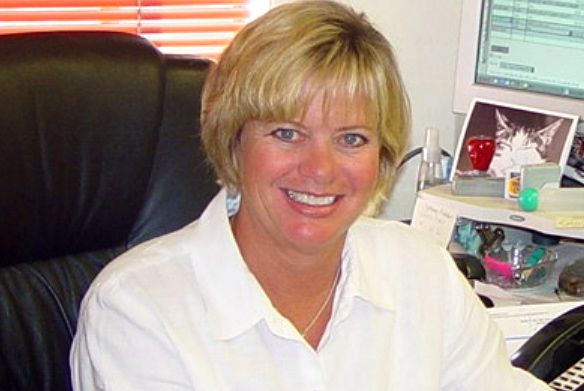
Sue Novasel is the first declared candidate for the 2014 El Dorado County Board of Supevisors. Photo/Provided

Sue Novasel is the first declared candidate for the 2014 El Dorado County Board of Supevrisors race. Photo/Provided

“I want to get the word out early because there is a lot to do,” Novasel said. She did not want to comment on the current turmoil on the board involving Supervisor Ray Nutting.

She said it’s important the next supervisor from Tahoe has a strong community background who understands the issues in the basin.

The 57-year-old is a longtime resident of Meyers and active member of the community.

She has been on the Lake Tahoe Unified School District board since 2003. Her term was supposed to end in 2015, but with the change in elections to even years, it goes to 2016. This means if elected to the full-time county seat, she would have to give up her LTUSD seat and that board would have to decide how to fill the vacancy.

Norma Santiago, who currently represents the county’s 5th District, is termed out.

What will be different in the next election is that District 5 will no longer be a Tahoe-only entity. Redistricting based on the 2010 Census has the district extending to Pollock Pines. This means it’s possible for someone outside of Tahoe to represent this area. There was a time when Tahoe had two reps in the halls of Placerville.

Novasel was instrumental with the first Meyers Community Plan, and has been part of the current one that is wending its way through the governmental process.

She is the incoming president of Soroptimist International South Lake Tahoe – with the induction being June 26.

Novasel is vice president of both the Lake Tahoe Wildlife Care board and South Lake Tahoe Wedding and Honeymoon Association. She owns Tahoe Dream Events, a wedding and event planning business.


Man found dead on S. Tahoe street

A 63-year-old South Lake Tahoe man was found late Tuesday night lying face down on the side of Lindberg Avenue near Lodi Avenue.

According to Police Chief Brian Uhler, the man had a history of heart disease and the cause of death appears to be natural.

The man’s belongings were on him and he had not been there long, Uhler said.

Police were called to the location just before midnight on June 11.

— Lake Tahoe News staff report


Hwy. 50 corridor housing boom about to begin

By Hudson Sangree, Sacramento Bee

Plans to build more than 10,000 homes across the dry, rolling foothills south of Highway 50 in Folsom are shifting into high gear in response to a housing market that has gone from “zero to 60” in a matter of months, housing experts said.

The 3,500-acre swath of cattle-grazing land that the city of Folsom annexed last year is one of the largest and most anticipated areas for residential construction in the Sacramento region. The market turnaround in the past year has renewed momentum for plans to build there.

“People were muddling through, and then we went from zero to 60, and everybody’s trying to do it at once,” said Greg Paquin, head of the Folsom-based Gregory Group, a home industry consultant.

Late last month, the New Home Co., based in Southern California, announced it had bought 431 acres of the former Russell Ranch from a partnership controlled by longtime developer Angelo K. Tsakopoulos. The price was not disclosed.

Lake Tahoe is a selling point to future home owners of what is now barren land. Photo/Paul Kitagaki Jr./Sacramento Bee

Lake Tahoe is a selling point to future home owners of what is now barren land. Photo/Paul Kitagaki Jr./Sacramento Bee

The company intends to build 900 homes on hillsides with sweeping views that extend to the Sacramento skyline, Folsom Lake and the Sierra. The goal is to start preparing the land next year and begin building by the end of 2015, said Kevin Carson, New Home’s Northern California president.

When the deal closed, Carson took the company’s two dozen employees up a gravel road to a windswept hilltop to celebrate.

“I told everyone that their children’s children’s children, when they drive to Lake Tahoe, are going to look at those hillsides,” Carson said. “It’s a very prominent location in the most desirable area in the region. From a home builder’s standpoint, it’s the absolute best location.”

The company’s plans call for homes to look west across the Central Valley to the Coast Ranges, with jogging and biking paths following natural swales and connecting to a 3-acre community and recreation center.

“We’ll be working with the topography instead of against it,” said Ashley Feeney, the company’s vice president for land and planning. On a tour of the site last week, he and Carson threaded their way among cow patties, keeping a lookout for rattlesnakes amid the rock outcroppings.

Part of the challenge of housing thousands of residents in the parched landscape has been securing a reliable water supply.

Tsakopoulos, who bought up thousands of acres of ranchland south of Highway 50 with an eye toward future development, once quipped that the area was so barren “jackrabbits carry their own lunch.”

Earlier plans called for water to be piped in from the Natomas Central Mutual Water Co., which serves farms miles away in northern Sacramento County and southern Sutter County. But the plan was expensive – buying the water and piping it to Folsom was expected to cost $250 million.

The city of Folsom has since approved a plan to provide the water from its own supply, said city spokeswoman Sue Ryan. Landowners have agreed to pay an estimated $52 million for facilities to treat and convey the water, she said.

The plan does not violate the terms of Measure W, which prohibited reducing the water available for current residents, said Folsom City Manager Evert Palmer. That’s because the city expects to cut water consumption by 20 percent in coming years under state conservation mandates. The excess supply would be diverted to the new south area, he said.

That water will help green the landscaping of more than 300 acres of parks and schools, 1,400 acres of residential development and 500 acres of commercial, industrial and office space, Ryan said. The project is expected to create 13,000 jobs.

Folsom’s growth south of Highway 50 has been considered inevitable since 2004, when residents approved Measure W, which imposed conditions on development but did not bar it from proceeding. One provision required that 30 percent of the land remain in open space.

At that time, Tsakopoulos and his investment partners controlled much of the land, but as development grew closer in recent months, buyers have snapped up major parcels.

Westland Capital Partners, based in neighboring El Dorado Hills, bought 960 acres of the former Mangini ranch from Tsakopoulos in October and closed on 760 acres of the former Carpenter Ranch from another seller in March, said Bill Bunce, the firm’s president.

Altogether, Westland could build more than 5,600 housing units on its properties along with commercial and light-industrial uses, he said.

Bunce declined to disclose the purchase prices, and the sales figures were not readily available last week from public records.

Land appraiser Dave Jarrette said he wasn’t involved in the deals, which often come with confidentiality clauses, but said he could offer an educated estimate at the selling prices. He said land in the annexation area sold for about $5,000 an acre decades ago but lately has been going for $25,000 to $50,000 an acre.

“The stuff south of 50 wasn’t selling for much 20 years ago,” Jarrette said. “Development was too far off.” Now, with site development only a year away, “it’s a near-term deal,” he said. “That’s why they paid the price.”

Paquin said Folsom, his hometown, and areas of Placer County in Roseville and Rocklin are considered prime building spots because of jobs, incomes and amenities. The houses that New Home Co. plans to build will be part of an area with good schools, family-oriented services, and miles of recreation trails, he said.

“I think south of 50 is a fantastic opportunity,” Paquin said. “It’s clearly a place where people want to live.”


Snippets about Lake Tahoe

northstar• It was announced this week that the Sprint U.S. Grand Prix (Visa Halfpipe and Slopestyle Skiing) will be at Northstar Jan. 9-12.

• Bernadette Lovato is now the district manager for the U.S. Bureau of Land Management’s Carson City office. She is responsible for 4.8 million acres of federal lands in 11 counties in western Nevada and eastern California.

• Placer County Transit Services was named 2013 Rural Transit Program of the Year by the California Association for Coordinated Transportation.

• It must have been a slow news day. The San Francisco Chronicle on June 9 had the South Shore’s loop road as the lead story.

• Dwayne Dopsie and the Zydeco Hellraisers from New Orleans will take the stage July 27 at Tahoe Donner’s Concert on the Green. For more information, call (530) 587.9400.


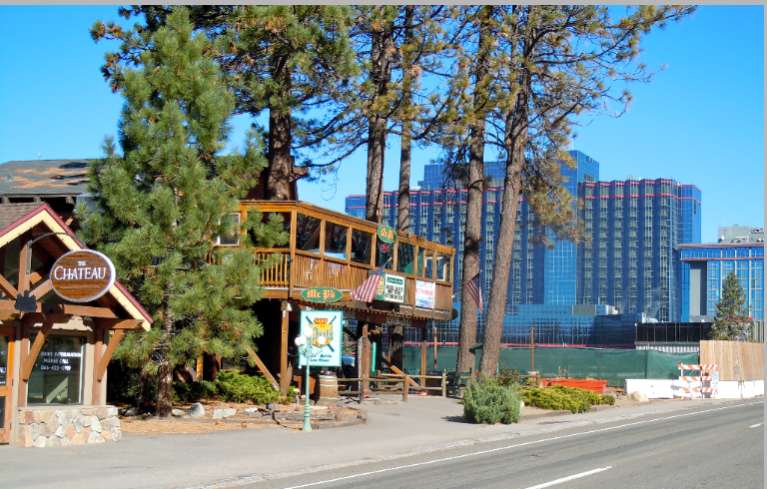
South Lake Tahoe council unanimously approves next phase of multimillion dollar Chateau project

By Kathryn Reed

While the four votes by the South Lake Tahoe City council on Tuesday concerning the Chateau project were 5-0, they did not come easily or without some reservations.

What it means is part of the concrete and rebar on the northwest corner of Highway 50 and Stateline Avenue will be covered starting next month, with completion of that phase expected next year.

SMC Contracting, which built what exists today, has been hired by the property owner to do the next phase.

“The design is based on continued vertical construction. Basically it’s a temporary roof that could be permanent,” SMC’s Joe Stewart told the council June 11.

The Chateau project is about to become a partial reality beyond rebar and concrete. Photo/LTN file

The Chateau project is about to become a partial reality beyond rebar and concrete. Photo/LTN file

The next phase is all retail along the highway from the state line to almost the existing McP’s Pub. McP’s will take over the corner location, as was originally planned.

This building was three-stories in its original concept. The top two floors were to be roughly 80 tourist accommodation units of some kind. They still will be, but in another phase of construction that today is called Phase 3.

“I think the whole building is what is best for the community,” Councilwoman Brooke Laine said.

But if that were to happen, the top two floors would be shells. Plus, it would add about another $8 million to construction costs.

The nearly $11 million project that is slated to break ground in July is called Phase 2. Phase 4 would be the convention center and high-end hotel. A stipulation is that before Phase 4 can begin, Phase 3 must be finished.

Owens Financial operating as Tahoe Stateline Ventures is developing the 27,868-square-feet of retail. No leases have yet to be signed, but discussions are under way. Owens Realty Mortgage is the sole investor of TSV, according to Lew Feldman, who represents the developer. Owens Realty Mortgage is a publicly traded REIT.

After 5½ hours of discussion June 11, the council agreed to modify the phases. This means one story instead of three will be built.

The developers had asked for 10,000 square feet of commercial floor area from the Stateline-Ski Run Community Plan to be transferred to the project. While this was always the plan, the amount was for the entire project and not just this segment. What will initially be built is about half of the total commercial floor area for the entire project.

Councilwomen Laine and JoAnn Conner initially proposed half of those 10,000 square feet be used in this phase and the remainder down the road.

Feldman said his client had no other source of CFA.

The Tahoe Regional Planning Agency has made CFAs a commodity with value instead of letting free market dictate how much can be built. The same goes with tourist accommodation units – or hotel rooms. That will likely to be an issue with future phases.

The council agreed to take CFA out of the environmental cache – which has not been tapped in the decade since the Safeway was built – along with half of the community plan CFAs. This leaves the developers needing to find 2,858-square-feet.

Owens Financial has some CFA on other parcels it owns in the project area, but had not wanted to use those for reasons that were not disclosed at Tuesday’s meeting.

Of the $11 million to construct the retail, about $2 million will be spent on stormwater (aka environmental improvements), landscaping, Highway 50 improvements and other upgrades.

Performance and construction bonds are required at a minimum of $10 million each. This means if the developer is unable to finish the project, the city would be able to trigger the bond to get the job done.

Such bonds were not required by the city before the now bankrupt Lake Tahoe Development Company (LTDC) broke ground in 2007.

Putting the developed parcels under one map was also never done. This in turn led to much of the problems that exist today – 29 parcels for one project. The six parcels that will be built on will have one map, all sides say, but the remaining parcels are owned by Owens and City National, with Randy Lane of LTDC in litigation with the McP’s parcel.

Randy Faccinto, attorney for City National, told the council his client is looking for a buyer of the property it owns and is not interested in becoming a developer.

Owens has spent about $30 million in loans on the original project, another $11 million to buy additional land and to pay back taxes.

Swanson said the project is estimated to bring in between $200,000 and $300,000 in sales and property taxes to the city each year.

On Tuesday, the council approved the design changes, commercial floor area allocations, abandonment of city owned roads that will be built on, and acceptance of the right-of-way from Caltrans.

—-

Here are renderings of the latest Chateau project.


Opinion: Civil unions are not enough

By Nathaniel Frank

As Americans await U.S. Supreme Court rulings this month on two same-sex marriage cases, June — the traditional month for weddings and pride parades — gives gay people the chance to reflect: How have their own lives and views changed since a Hawaii court ruling first thrust marriage equality onto the national stage 20 years ago? And what might a fully legal marriage mean to them?

For many gay people, including for me, the weight of this prospect has taken a while to sink in. Each time a hurdle to equality is removed, I find myself looking to the next roadblock. When the Supreme Court struck down sodomy laws 10 years ago, I applauded — but quickly lost myself in the fight to repeal “don’t ask, don’t tell.” When Massachusetts became the first state to legalize gay marriage, I was thrilled — but my eyes focused on the 49 remaining states. Even now, as the court appears poised to strike down the federal Defense of Marriage Act, I fear that the related ruling on California’s Proposition 8 could fall short of ending marriage bans in all states.

Still, an end to DOMA might finally resolve something that’s long hindered my ability to fully celebrate progress on marriage equality. It has to do with the meaning of marriage as a legal right, one fully recognized by community and country without reservation.

This symbolic and psychological meaning of marriage — its power to shape how we feel and act — has not always been apparent to many LGBT Americans. And not all of us have valued it. Indeed, in the 1970s and 1980s, when just a handful of visionaries had uttered “gay” and “marriage” in the same breath, many LGBT Americans took little note of the idea and some actively opposed it.

They were focused more on securing privacy for their scorned relationships than winning the kind of public recognition that marriage represents. Some sought to challenge what they saw as a patriarchal and confining institution rather than to join it. Others made the principled argument that marriage privileged coupling over building community, a case buttressed by the heroic webs of support formed to respond to the AIDS crisis.

In interviews I conducted for a history of the gay-marriage movement, a prominent lesbian legal activist told me she was concerned about “leaving some of our own people behind” by fixating on marriage. Such a focus meant foreclosing on a broader range of options for recognizing diverse family — and human — relationships. As another respected colleague of mine put it: “As strangers to marriage for so long, we’ve created loving and committed forms of family, care and attachment that far exceed, and often improve on, the narrow legal definition of marriage.”

But such ambivalence toward marriage began to wane as advocates recognized that the issue was ideal for spurring millions of water-cooler conversations about the equal worth of same-sex love. And over time, the idea of marriage equality not only attracted more support from straight Americans but also won over gays themselves.

Polls confirm this trend. A 2007 Hunter College poll shows that younger gay people rank marriage and parenting rights at the top of their list of policy priorities, while gays and lesbians over 65 hardly rank them at all. A Harris Interactive poll before last fall’s presidential election found that 86% of LGBT Americans under 30 “strongly support” marriage equality, while only 53 percent of LGBT seniors do.

Still, until recent years, the marriage equality fight seemed centered on the more than 1,000 rights and benefits that federal and state governments offer married couples.

But as civil unions and other arrangements emerged to plug those legal gaps, an even stronger motivation for marriage equality surfaced: gaining equal respect and recognition for taking the grown-up step of committing your life to another. And this impulse is not just the wish of a despised minority to be accepted by the majority. In my view, it’s a fundamental ingredient of what marriage is — for gays and straights alike.

The focus on concrete benefits, for all their value, downplays a crucial function of marriage: to engage our community not only in publicly celebrating our private commitments but also in enforcing them.

I came to understand this role when a straight friend of mine told me as much on the eve of her wedding. “It’s a way of enlisting my friends, family and community,” she said, “in supporting what will surely be a difficult set of commitments over time.”

Marriage is about a couple’s intimate choices, yes, but it’s also about the interplay between public recognition and private feelings and behavior. Internalizing that the people around us, and the law of the land, acknowledge our commitments can help us remain steadfast when the going gets tough.

Looked at this way, marriage is not just a commitment between two people but a shared public identity. It is freely chosen but ultimately constricts an individual’s freedom in the interest of greater goods: that of the couple and that of their community and nation.

I often hear gay people express some variety of this sentiment: “I don’t need the state’s stamp of approval for my love” or “I don’t care what straight people think of my relationship, so long as I have equal rights.” These views reflect a belief that caring about the opinions of others is a weakness. It seems disingenuous, however, to seek public recognition for our love on the grounds that our relationships are entirely private affairs.

If legal benefits were all that mattered, civil unions would have been enough. Yet separate is inherently unequal — because marriage is not just about inheritance rights and tax law but about sharing in the symbolic space of first-class citizenship. Gay people deserve the same access to the institution of marriage enjoyed by straight people because our need for support is identical to theirs. Our relationships and our communities deserve no less.

This is why having the country I love (and not just my state) recognize my relationship with the man I love matters to me. It’s also why gay support (and donations) for President Obama surged when our nation’s leader endorsed same-sex marriage last year. This change is not merely symbolic nor just rhetorical. Marriage plays a central role in tying families, and our country, together.

No court will decide if I marry Dom; he’ll decide that when I propose today. But we’ll have so much more to celebrate if the Supreme Court holds that, in the eyes of our United States, all marriages are worth defending. Sure there is more work to do, but if the court strikes down DOMA, as I think it should, it will be a moment to savor — fully and without reservation.

Nathaniel Frank, author of “Unfriendly Fire” and a visiting scholar at Columbia’s Center for Gender and Sexuality Law, is writing a book called “The Anti-Gay Mind.” This column first appeared in the Los Angeles Times.


Couple suspected of selling pot to students

William Anderson and  Makayla Hoehn

William Anderson and Makayla Hoehn

Two South Lake Tahoe residents were arrested Monday on charges related to providing marijuana to middle and high school students.

William Anderson, 30, and fiancée Makayla Hoehn, 25, are accused of furnishing marijuana to South Tahoe High School and South Tahoe Middle school students.

The school resource officer on June 10 received information that the two were selling marijuana to local schoolchildren. An investigation led to Anderson being a suspect.

Officers secured a search warrant at his Marjorie Street residence, where they said they found marijuana, methamphetamine and drug paraphernalia.

Police said Anderson admitted to selling marijuana to students and that Hoehn said she knew what was going on.

Their two small children are now in the custody of Child Protective Services.

Anderson was arrested on charges of selling marijuana to minors, possession of a controlled substance, possession of drug paraphernalia, maintaining a drug house and child endangerment. Hoehn was arrested on charges of maintaining a drug house and child endangerment.

— Lake Tahoe News staff report


Pilot survives crash landing in Truckee

By Cecilio Padilla, Fox 40

A small plane coming from Orange County crashed near Truckee Airport early Tuesday afternoon, Nevada County sheriff’s deputies say.

The three blade single prop plane left John Wayne Airport in Irvine about 11:45am. At about 1:25pm, the plane crashed about 40 feet from the Truckee Airport runway.

Despite the plane suffering heavy damage, the 62-year-old pilot is said to be OK without any injuries. The pilot’s name has not been released.

While crashing, the plane clipped a trailer. Gusty winds were reported around the time of the crash.

Nevada County authorities say the plane is a Cirrus SR22T low wing single prop.

The Federal Aviation Administration and the National Transportation Safety Board are investigating the crash.


6-car accident injures 1 in South Tahoe

One person was hurt June 11 in a six-car accident in South Lake Tahoe. Photo/Provided

One person was hurt June 11 in a six-car accident in South Lake Tahoe. Photo/Provided

A six-car pileup in South Lake Tahoe resulted in minor injuries Tuesday afternoon.

The accident occurred in one of the construction zones on Highway 50 near the Bank of America building.

Police officers told Lake Tahoe News one person was taken to Barton Memorial Hospital via ambulance, while the rest of the drivers exchanged names and insurance information so officers could respond to other calls.

 — Lake Tahoe News staff report