LTCC food-wine event benefits foundation

The Lake Tahoe Community College Foundation’s second annual Taste of Gold fundraiser is July 13 from 6-9pm at the Ledbetter Terrace and Demonstration Garden.

It’s the biggest fundraiser of the year for the foundation, with proceeds going directly to support academic programs and student scholarships and achievement.

Guests can sample wines from a number of El Dorado County wineries and small-batch microbrews, along with food from several local restaurants.

Tickets are $75 per person, and can be purchased by contacting Marty Green at (530) 541.4660, ext. 753, or foundationAssistant@ltcc.edu.


Calif. budget increases healthcare, education funding

By Chris Megerian and Anthony York, Los Angeles Times

SACRAMENTO — California lawmakers passed a budget Friday that lays the groundwork for the largest expansion of public healthcare in the country, placing the state at the leading edge of President Obama’s federal overhaul.

The budget, which the governor has until June 30 to sign, will also increase funding for schools, public universities and social services — a dramatic turnaround after years of deficits and cuts.

The Legislature approved the $96.3-billion spending plan after a relatively smooth series of negotiations between Gov. Jerry Brown and Democratic leaders that maintained much of the fiscal restraint urged by the governor.

California still faces financial problems, including the spiraling cost of public employee pensions. But lawmakers welcomed the change of fortune fueled by the improving economy and new taxes approved by voters in November at Brown’s request.

Senate budget chairman Mark Leno, D-San Francisco, called the spending plan “the most encouraging and positive budget I’ve seen in my 11 years in the Capitol.”

Lawmakers were scheduled to return to work Saturday to consider more budget-related bills, most of them involving implementation. But the bulk of the spending legislation, which takes effect July 1, now heads to the governor’s desk.

The expansion of health coverage is a core part of the budget.

The state’s public healthcare program, known as Medi-Cal, is expected to grow by 1 million enrollees and could soon cover roughly one in four Californians. Millions more people will be able to buy insurance through a state-run market.

Most of the changes will be funded with federal money. The state will pick up $196 million of the $2.1-billion tab for the Medi-Cal growth. The $381.6-million price of the state-run marketplace, called an exchange, will be almost completely funded by Washington.

Although the federal overhaul still faces opposition in many states, California was an early supporter, and Obama was in San Jose earlier this month to tout the state’s progress. Californians can begin buying health insurance through the exchange in October, and officials plan to enlarge Medi-Cal membership in January.

Drew Altman, president and chief executive of the Kaiser Family Foundation, said the success of the federal healthcare law hinges largely on the outcome in California.

“California is pace-setting, and everyone in health reform is watching very closely,” he said. “It’s hard to imagine its success until it succeeds in California.”

Many of the healthcare changes are riding on this year’s budget and a series of related bills among those lawmakers are expected to take up Saturday.

“California really couldn’t move full speed ahead” until the budget passed, said Chris Perrone, a director at the California HealthCare Foundation. “It clears the path to a lot of work that needs to happen.”

That work includes computer upgrades to process new patients and outreach efforts to ensure that more people enroll in health plans.

Healthcare was one of the final sticking points in budget negotiations this year. Brown insisted on allowing the state to scale back its coverage if federal money is reduced.

The issue was resolved Monday afternoon, when the governor met in his office with Assembly Speaker John A. Pérez, D-Los Angeles, and Senate leader Darrell Steinberg, D-Sacramento. The three agreed that the state would stop the Medi-Cal expansion if federal funding dropped below 70 percent of the cost in the next four years.

Steinberg said the expansion “only works if it continues to be a true partnership.”

The budget includes a controversial plan to redirect county healthcare money to other state programs. Brown has said counties won’t need the funds to care for the poor because they will soon be covered by the state or by private insurance. But county officials and activists say there will still be millions of uninsured Californians.

Republicans were sidelined during budget negotiations, and the final spending plan represents a series of compromises between Brown and the Democratic leaders, whose party holds supermajorities in both houses of the Legislature.

In addition to the $96.3 billion in general fund spending, the budget includes $42 billion from accounts funded by dedicated taxes and fees, $7 billion from bond funds and $87.6 billion in federal money. Almost $1.1 billion will be held in reserve.

The governor was able to include a slightly modified version of his K-12 education plan, which will shift some money from wealthy schools to districts with larger numbers of students who are poor or are learning English. The measure received bipartisan support.

But Brown backed off a plan to tie some higher education funding to changes he wanted state universities to make, such as improving their graduation rates and freezing tuition for four years, when university officials and key lawmakers balked. The UC and CSU systems each receive $250 million more than last year.

Brown persuaded Democratic lawmakers to use his more conservative revenue estimates to help limit spending in the upcoming fiscal year. But he accommodated some new spending pushed by Steinberg and Pérez: hundreds of millions of dollars in future funding for welfare grants, mental health care, college tuition aid, dental care for poor adults and other programs.

Much of that spending won’t start until next spring or summer, giving the economy more time to recover. There could also be raises next year for roughly 95,000 employees in California’s largest state worker union.

Republicans said the new spending would be unsustainable, especially after Brown’s tax hikes begin expiring in 2017.

“With this budget, we have positioned ourselves perfectly to repeat the mistakes of the past,” said Assemblyman Jeff Gorell, R-Camarillo.

Assembly Budget Chairman Bob Blumenfield, D-Woodland Hills, said poor Californians needed the help.

“Our duty is to prioritize where we can spend the public’s money for the greatest good,” he said.


TRTA plans slew of summer hikes

With the start of the summer hiking season upon us, Tahoe’s peaks, wildflowers, and vistas are beginning to beckon.

The Tahoe Rim Trail Association is leading several free guided hikes this summer. They are for all abilities and ages (shorter hikes are most appropriate for kids).

You must register in advance. Online registration is now required for all TRTA programs and can be completed on the TRTA website.

Summer hikes:

· June 25: Tahoe Mt. Festival Full Moon Hike (TRTA members only)

· June 29-30: Segment Backpacking Overnight – Big Meadow to Echo Summit (TRTA members only)

· July 6: Page Meadows Birding Hike with TINS

· July 10: Wildflower Hike – Page Meadows/Ward Canyon (TRTA members only)

· July 14: Wildflower Hike – Meiss Meadow (TRTA members only)

· July 17: Wildflower Hike – Barker Pass (TRTA members only)

· July 20: Deuter and Tahoe Mountain Sports Pack Testing Trek

· Aug. 3: Birds, Views, and Falls Hike with TINS

· Aug. 14: Deuter and Tahoe Mountain Sports Pack Testing Trek

· Aug. 18: Van Sickle Bi-State Park Hike

· Aug. 20th: Peak of the Rim Full Moon Hike (TRTA members only)

· Aug. 24-25: Backpacking 101 – Gray Lake

· Sept. 7: Tahoe Meadows to Lake Tahoe/Diamond Peak Vista Point

· Sept. 19: Full Moon Hike (TRTA members only)

· Sept. 20: Peak of the Rim Full Moon Hike (TRTA members only)

· Sept. 21: Mark Twain Hike

For more detailed hike descriptions and information about what to bring to hikes, go online.


Snippets about Lake Tahoe

• Chili cooks are invited to enter the Cowboys and Cornbread competition July 21 at the El Dorado County Fairgrounds. More info is online.

• Nicki Bluhm and the Gramblers will be opening for the Steve Miller Band at the Lake Tahoe Outdoor Arena at Harveychilis on June 22.

• Bill Schroeder of Carson City is now a master flight instructor emeritus. This makes him one of the most experienced flight instructors in the world.

• Christina Frohlich has taken over Gallanty Physical Therapy in South Lake Tahoe.

• CW and Mr. Spoons will bring the Western ragtime guitar and “wonder bucket” for a concert on the South Lake Tahoe library lawn on Aug. 14 at 6pm. Bring a picnic dinner. Concert is free.


LTVA not ready to pay to bring SnowGlobe back

While New Year’s Eve is still more than six months away, in the event planning world that can feel like tomorrow. Even so, a decision has yet to be made as to whether SnowGlobe will return to the South Shore.

Potentially paying the promoter $75,000 was on the June 13 Lake Tahoe Visitors Authority’s board agenda.

“The board feels that we can’t make a decision regarding funding without the promoter having a venue secured,” LTVA Executive Director Carol Chaplin told Lake Tahoe News. “We understand that he has been speaking with the city in regards to maintaining  the long-term integrity of the field, but until an agreement is reached in that front, we are in a neutral position.”

South Lake Tahoe City Manager Nancy Kerry told LTN talks are still under way with the promoter.

The three-day music festival has been said to be a money maker for the region for the last two years. And while the city and Lake Tahoe Community College have charged for access to the community ball fields adjacent to the college and for other costs, the promoter now wants to be paid to come to town.

A drop dead date for when a decision needs to be made has not been disclosed.

— Lake Tahoe News staff report


Fireworks to light up South Lake Tahoe

NBC’s “Today Show” recognized South Lake Tahoe’s Lights on the Lake Fireworks display as one of the country’s top Fourth of July weekend celebrations. The American Pyrotechnics Association rates South Shore’s Fourth of July fireworks celebration as one of the top five displays in the nation.

The show is scheduled to begin at 9:45pm July 4. The fireworks are visible from all over town.


Divided Sky keeps the beat alive in Meyers

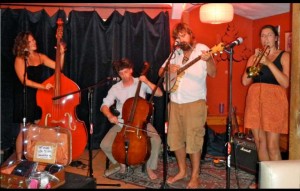
The New Thoreaus play at Divided Sky on June 8. Photos/Kathryn Reed

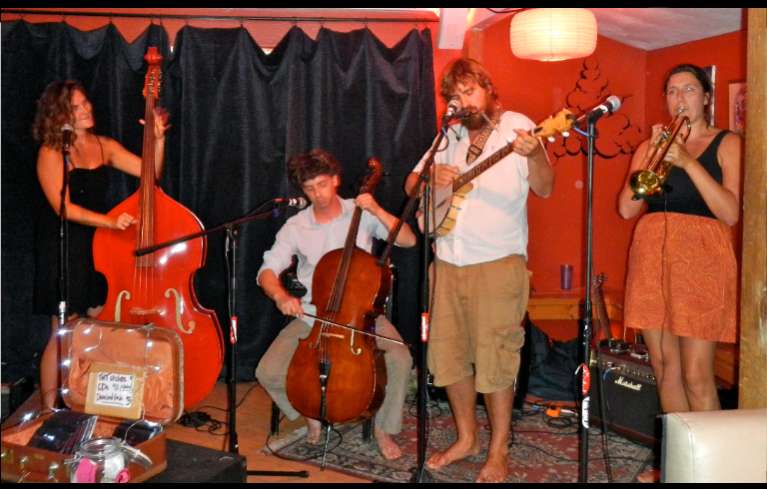
The New Thoreaus play at Divided Sky on June 8. Photos/Kathryn Reed

By Susan Wood

MEYERS – They say music is the universal language.

If that’s indeed true, then Divided Sky would be understood by many to be a unifying business in the Tahoe region. The restaurant-bar located above the Downtown Café west of South Lake Tahoe has brought in several musical acts during the 10-plus years it has been open, and it shows no signs of slowing down.

“We have not survived off our music, but people associate us with music,” owner Brian Levy told Lake Tahoe News. “Every year we feel a little busier. Fortunately, people took to it right off the bat.”

Levy admits milestones in years one, three and then 10 prompted him to evaluate the business, which began with three staffers. Now eight people work there.

“We thought: Well, we made it to one year, then three. Then, we felt established at 10 years,” he said.

But there’s no letting the guard down. He believes in “keeping the game up.”

The customer base on a given weekend night may range significantly from 20 to 100 people for the after-dinner bands, which often take the small stage around 9 or 10pm. (Hint: get there at a decent hour to be assured a seat. Or, stand in the middle of the room and sway with others.)

Small, nightclub lights are strung around the room. By the time a band takes the stage, dinner tables are moved to make room for those who want to dance or stand. A curtain is hung behind the band to give it that cozy look – and keep the neon lights from being a distraction.

The bar is busy and some of the conversations in the booths are so focused the music serves as background for a locals’ gathering. The place has Meyers written all over it.

The locals’ joint has developed such a reputation that bands seek it out to play there. Levy will get at least a few emails a week from prospective bands looking to simply cash in on the small bar cover at the door. It averages $5 to $10. It appears the venue is small enough for startup bands with no fan base.
Divided Sky owner Brian Levy mixes music, food and drinks into a successful business in Meyers.

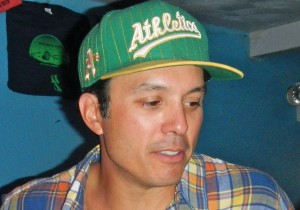
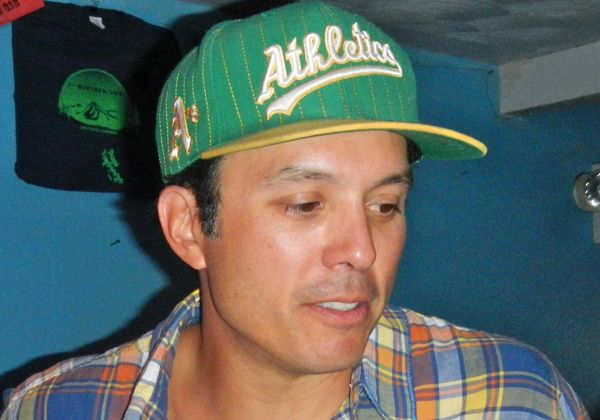
Divided Sky owner Brian Levy mixes music, food and drinks into a successful business in Meyers.

These bands now have other venues to play in around town like Lakeview Commons on Thursday night. And, Levy notes this.

“Now we have the luxury of sorting through them. The bands will play for the door – enough to pay for their gas,” Levy said. One band went quasi professional. ALO – known to cater to the hippie-beatnik circuit – got its start at Divided Sky and now plays larger arenas.

“We’re waiting for the day Bob Dylan comes in to play,” Levy joked.

Stranger things have happened. Legendary singer-songwriter Van Morrison spent years popping in to small pubs in San Francisco.

“These aren’t the bands making a living of this, but it’s what they love to do,” Levy said.

Indeed, this is how guitar-banjo player Ian Patton may characterize his band that played there this month.

The New Thoreaus, as in writer Henry David, consist of a group of special education teachers from Oakland who play music when they’re out of school for the summer. As English majors, the band of five members values reading. There’s one philosophy major.

A barefoot Patton, who leads the indie-folk band with a bluegrass twist, returned to the South Shore with his wife, stand-up bass player Lauren Hernig. While they played into the hours of the night, their daughter, 2-year-old Izola, was being babysat by his father who still lives in Tahoe.

Levy could relate. His parents were in town to witness his baby (the business) thriving.

Patton told Lake Tahoe News he fondly recalls going to Divided Sky when he lived here seven years ago. He and his wife enjoyed seeing Victor Barnes Insurgent Bluegrass. A year later, his band formed in Oakland. Now, bluegrass has experienced a resurgence – with “Mumford and Sons” and “Lumineers” leading the airwaves.

“It’s great to hear that type of music on the radio. Now you can hear bluegrass on four different stations (in the Bay Area),” he said. Still, he admits the band aims for an original sound, with a chance to make its own path.

Like Levy, Patton and the rest of the New Thoreaus are enjoying relative success these days. The band has a debut album, “Neon Americana”, just released this year.

“When we started, I didn’t think we’d get this far,” Patton said.

In the meantime, the band seeks to remember its roots. To Patton, that means coming back to Tahoe, where he met his wife and developed a love of music.

“(Divided Sky) has a sentimental place in my heart. It’s where I always wanted to play,” Patton said.

The music venue’s success has not gone unnoticed. The Meyers Community Alliance, which is responsible for a genuine revival of the western South Shore enclave, has gotten in on the act.

“There are many ways to build a community. The easiest way is through music,” said Josh Welch of the Alliance.

Apparently, the strategy has worked for Divided Sky, according to longtime Tahoe resident Julie Threewit.

“The Divided Sky is one of the reasons we are lucky to call Meyers home. It is one of my favorite places to see live music,” Threewit said, also mentioning local bands that have either gotten their start there or made it part of their concert circuit. They are Blue Turtle Seduction – a Tahoe favorite, Huckle, Wisebirds, Trespassers, Delta Nove and more recently Birds of Chicago. “As we travel, we look for the local bar that feels like the Divided Sky; the place where locals meet to visit, eat and hear great music – where visitors feel comfortable and welcome. Brian (Levy) told us if we did that, we’d always feel like we were home.”

And more events are on tap for all to experience those homespun values.

Divided Sky is hosting a mountain bike festival on Aug. 18 – with demonstrations, a shuttle, beer garden and a stage where bands can play.


Opinion: California budget isn’t really balanced

By Dan Walters, Sacramento Bee

Gov. Jerry Brown blunted the expansionist tendencies of his fellow Democrats in writing a new state budget, but that doesn’t mean it’s the “balanced” spending plan that he and other Capitol politicians are claiming.

They define “balanced” as the state’s having enough revenue to pay for the 2013-14 budget’s appropriations. However, their budget ignores some very real obligations that, if recognized, would put the state many billions of dollars in the red.

Moreover, many of the commitments the budget does make – such as a sharp increase in school spending – could bite back later in the decade because they are financed from the temporary sales and income tax increases that voters passed last year.

Dan Walters

Dan Walters

It’s important to remember both of those points because the politicos are already patting themselves on the back, such as Assembly Speaker John A. Pérez’s self-appraisal, “a tremendous achievement,” or Senate President Pro Tem Darrell Steinberg’s claim: “Ho-hum, another on-time, balanced budget. This is the third year in a row.”

The obligations being ignored include the California State Teachers’ Retirement System’s declaration that it needs $4.5 billion more per year to maintain solvency, and more than $50 billion in unfunded liabilities for state retiree health care.

Both of those debts – that’s what they truly are – are growing by millions of dollars each day, as is the $10 billion that the state has borrowed from the federal government to prop up its insolvent Unemployment Insurance Fund.

A big chunk of the temporary tax increase is going to schools, as required by the state constitution. Some repays debts owed to the schools and some finances the governor’s overhaul of how state aid is distributed, giving more to districts with large numbers of poor and/or English-learner students.

Indirectly, by shifting a portion of the sales tax to counties, the state is giving them more than $5 billion a year to finance another Brown priority, a so-called realignment of low-level felons into county jails and supervision.

What happens when the temporary taxes run out in a few years? How will the big boost in school money and realignment be financed then? Implicitly, the budget assumes that either the extra taxes will be made permanent or the economy will be booming again.

Meanwhile, Brown’s fellow Democrats have only temporarily abandoned plans for rolling back earlier reductions in health and welfare programs. If revenues spike upward later in the year, they said, they’ll try again, arguing that welfare grants, home-aide assistance and other “safety net” services are life-and-death issues for the poor and infirm.

Within a few months, Brown may face this dilemma – whether to pay debts and build reserves or expand spending that others in his party seek.


Glut of coffee beans on market

By Alexandra Wexler and Leslie Josephs, Wall Street Journal

When coffee prices climbed to multi-year highs in 2011 on a scarcity of high-quality beans, farmers revved up investments in their plants, adding fertilizer, pruning trees and planting more productive varieties.

But the buzz didn’t last long. The result was a glut of beans that has sent prices to the lowest level in nearly four years.

Welcome to the coffee bust.

Cycles of boom and bust have long defined the coffee market, with Brazil, which at present supplies one-third of the world’s beans, at the epicenter.

When coffee prices plunged during the Great Depression, Brazilians burned it on land and threw some of it out to sea.

“They tried to make roads out of coffee beans, make it into asphalt,” said Mark Pendergrast, author of Uncommon Grounds: The History of Coffee and How It Transformed Our World, referring to other coffee busts. Brazilians even “tried to make plastic out of it.”

While prices for other agricultural commodities like corn and cotton also rise and fall based on supply and demand, arabica-coffee trees take at least three years to grow, so the production response to high prices is often more gradual.

The last coffee bust was in 2001, when prices dropped to almost 40 cents a pound, about a third of the current price. It was so bad that it is still known in the coffee world as “The Crisis.” Farmers ripped trees out of the ground and skipped applications of pesticides and fertilizer on those left standing.

But this time, the coffee bust has come in the wake of rapid economic growth in Latin America, where most of the world’s arabica beans are grown. That has proved both a blessing and a curse for farmers.

Much of that decade-long growth was fueled by rising global demand from China for the region’s rich mineral and agricultural resources. The inflow of cash has enabled big coffee-growing countries in Latin America, like Brazil and Colombia, to support farmers when prices are low and control supplies that hit international markets.

“The (Colombian) government has never had the revenue it has had today,” said Mauricio Galindo, head of research at the International Coffee Organization.

But economic growth has also spurred inflation, and the cost of production has climbed as well.

“It’s worse than ever,” said Christian Wolthers, president of Fort Lauderdale, Fla.-based coffee importer Wolthers America. Wolthers started his career in Brazilian coffee four decades ago. “It becomes worse because you have inflation and you have increased prices for all coffee management tools and products,” including fertilizer, he said.

But prices may soon find a low point, investors and analysts say.

“While harvest pressure will likely weigh on prices in the short term, we continue to expect a rebound in the space in the second half of 2013,” Chris Narayanan, head of agricultural commodities research at Societe Generale GLE.FR +1.08%, said in a note. He sees expectations for lower supplies in the coming season boosting the price of arabica coffee to $1.57 a pound in the fourth quarter of the year.


Mountain bike group to work on S. Tahoe trail

TAMBA is having a trail day on the Cold Creek Trail in South Lake Tahoe on Sunday.

Meet at the High Meadow dirt road parking area on June 16 at 9am (off Pioneer Trail near Sierra House School). It will be necessary to ride or hike because the gate will be closed. Bring your bike and helmet.

Bring long-sleeves, pants, gloves, and water. Snacks, tools, lunch, and post-work barbecue and beers will be provided.