Puppet show part of library summer series

Douglas County Public Library is hosting “I Dig Dinosaurs,” a puppet show presented by the Dragon Theater Puppets.

The event is at the C.V.I.C. Hall (1602 Esmeralda Ave. in Minden) on June 25 at 4pm. Puppeteers will take people back in time to see dinosaurs.

This program is presented as part of the Summer Reading program and funded by the Friends of the Douglas County Public Library.

For more info, call (775) 782.9841.


Study: Social networking dominates smartphone, tablet use

By Dawn C. Chmielewski, Los Angeles Times

A new report from Nielsen examines a fast-evolving segment of the media landscape: viewing on smartphones and tablets.

Consumers are taking advantage of their portable devices to watch videos, access news and information, check sports, engage in social networking and shop. The time devoted to social networking dwarfs that of streaming video or accessing sports, Nielsen found in its cross-platform report for June.

Smartphone users spent 9 hours and 6 minutes a month on social networks — say, posting status updates on Facebook, tweeting their thoughts to followers on Twitter or checking-in on Foursquare. Apple iPad users devoted 3 hours and 41 minutes a month to social networks.

By comparison, smartphone users spent about 1 hour and 15 minutes a month streaming video on the device, and around 1 hour and 11 minutes engaged in sports, Nielsen reported. IPad users invested more time watching video on the device’s larger screen — about 1 hour and 48 minutes a month, (with 50 minutes on sports), Nielsen found.

Peak usage of these mobile devices coincides with TV’s prime time: with iPad app usage cresting at 9pm, Nielsen found.

Time invested in mobile apps surpasses usage of the mobile Web on smartphones and tablets.

Nielsen found smartphone users spent about 87 percent of their “app/Web” time engaged in mobile apps, with just 13 percent of that time on the Web, the researchers found. The same trend is true of iPad users, who spent 76 percent of their time using mobile apps, according to Nielsen.

U.S. viewers seemed to find more time for entertainment in the first quarter of the year: TV viewing rose, compared with the same time a year earlier, as did the amount of time-shifted TV viewing of previously recorded programs, and viewing of video via the Internet and on a mobile phone.

Only the time spent using a game console fell in the first three months of the year, Nielsen found.

Nielsen drew its mobile device research from a panel of 5,000 smartphone and 1,300 iPad users, whose browser and app activity was electronically measured in March.


Then and now: Map of yesteryear a bit outdated

map I guesstimate this map to be dated about 1961, issued by the then-chamber of commerce.

Notice the Y was still a Y. Tahoe Keys is naked. Al Tahoe Boulevard didn’t exist, nor much of Pioneer Trail.

And some of those planned streets represented by dashes never happened.

mapThe map to the left from the Lake Tahoe South Shore Chamber of Commerce shows the increase of roads and places to play.

— Bill Kingman


South Lake Tahoe restaurateur judges State Fair wine competition

By Evan Williams

SACRAMENTO – The announcements, introductions and instructions have been dispensed with. You wait patiently at your table and the sound of faintly tinkling glassware grows louder as carts laden with wine glasses, each filled with 2 ounces and labeled with a numerical code, begin to parade into the hall. The glasses are lined up in front of you with great care by the stewards. Your panel assistants have provided you with pencils, water, palate cleansers, and a large spit bucket because there is no swallowing. Your clerk provides you with the scoring sheets and now your job begins.

You, and the other three judges on your panel, combined with the other 68 judges in attendance now must determine the good, the bad and the ugly from the nearly 3,000 wines submitted to the California State Fair Wine Competition.

Let the fun begin!
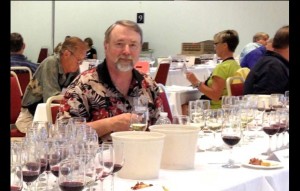
South Lake Tahoe's Evan Williams at the 2013 California State Fair wine judging. Photo/Provided

South Lake Tahoe’s Evan Williams at the 2013 California State Fair wine judging. Photo/Provided

Well, actually, we try to make it fun and lighthearted, but it really is pretty serious business, and surprisingly taxing – not physically, but mentally.

I am always mindful that some very hardworking winemaker has poured their blood, sweat and tears into the wine I am about to examine. But I must try to fairly and objectively evaluate this wine and, to the best of my ability, score it in a way that will hopefully aid the retail purchaser looking for good quality and value in their wine purchase.

I’ve been judging wines since the late 1980s and have worked this competition since 2001. In that time I’ve seen an evolution in the process from the old “retain or eliminate” format through the “Peterson Method” (named for Dr. Richard Peterson, this is an evaluation process I personally favored, but which could result in the daunting prospect of having as many as 80 to 100 wines on the table at once) and now back to lower volume flights. New this year were computerized entries with a wireless terminal at each panel; greatly helping the clerks in their jobs and expediting the scoring process.

It is the nature of wine competitions that, with few exceptions, the super-premium producers do not submit their wines for judging, nor would it make any sense for them to do so. First, they sell out every vintage, so they really have no need to promote any further. Secondly, they are in a no-win situation. If they win a gold medal, people would say, “Sure they won a gold, look at the price they charge!” And if they don’t win a gold, even harsher criticism befalls them, “Look at the price they charge for those wines and they can’t even get a gold!”

So what you have at these events are primarily two categories of producers. The high-volume vintners hope they can benefit from having their less expensive wines favorably scored so they are able to market them as good quality wines and a great value. Then there are the smaller and/or newer producers who have limited marketing dollars and staff, but are able to capitalize on good competition results in press releases and in their tasting rooms, and don’t all those pretty ribbons and medals look nice on the wall?

Becoming a judge

What does it take to become a wine judge? Well, you need to taste a great deal of wine! As a buyer for the last 35 years, I am fortunate to have wine show up at my door on a frequent basis. And I do try to taste everything. But it’s important also to know what you are tasting, as well, and to be able to identify faults, flaws and additives. And that’s where experience, and the UC Davis Advanced Tasting Seminar, comes in.

This is a fundamental, yet fairly intensive wine class that will give you a sound basis for evaluating wines, covering most of the more common defects you might encounter in wines and allow you to test your sensory evaluation capabilities. Then a prospective judge must pass the Sensory Evaluation Exam, as administered by UC Davis, after which the fair officials will accept your application to be a judge.

The California State Fair Wine Competition is the only one that requires all judges to be credentialed.

Starting the process

In professional wine judging (and in the restaurant business, too), there is the problem of inherent differences in individual palates, a phenomenon which was documented in some groundbreaking work by Tim Hanni, MW, who was invariably puzzled as to how two people could taste the same wine and have such remarkably divergent opinions about it (and how this leads to sometimes emotional disagreements on judging panels). In his research, Hanni discovered that it really just boils down to genetics.

Some people are born with significantly more papillae on their tongues than other people, and there’s not a thing to be done about it. Those with the most papillae are referred to as “hyper-sensitive” and comprise roughly 25 percent of the population. (There is actually a small subset of this group called “sweet tasters” who are quite literally are the proverbial “sweet tooths”.) Then there are the approximately 50 percent in the middle who are called “sensitive” and then there are the remaining 25 percent who have the least amount of papillae on their tongues and are known as “tolerant” tasters.

The tolerant tasters typically enjoy hot and spicy foods, big, tannic red wines, martinis and single malt scotches along with IPA beers and cigars. The hyper-sensitive tasters are always trying to mask bitter; bitter is their mortal enemy. They drink their cream “with a little coffee in it”, usually sweetened heavily. They cannot tolerate grapefruit or artificial sweeteners such as may be found in diet sodas, and given their preference, will gravitate toward white and even dessert style wines. They also are big on salty snacks, and you might think that a contradiction for the “hyper-sensitive” to be salt hounds but again, it is all in the effort to mask bitterness.

Typically, the “hyper-sensitive” will have a more heightened olfactory (and even auditory) sense, as well. The nose is really where most of the heavy lifting of wine appreciation takes place. The tongue is a relatively crude instrument, detecting sweet, sour, salty and bitter, as well as “umami”, another discovery for which Hanni is credited.

“Umami” is a term used to describe the savory sensation of most meat proteins. In the aforementioned “Peterson Method” a taster could evaluate larger flights of wines by first relying purely on the nose to begin to differentiate and then rank the wines into groupings, again based solely on the bouquet and aroma of the wine. (I found this to work well for me.) In a large flight you might spend an hour or more establishing a ranking based on the nose before you even begin to taste a single wine. With rare exceptions, an attractive smelling wine will be pleasant in the mouth as well, but evaluation obviously requires wines be tasted for acidity, sweetness, flavors, mouth-feel and finish.

Then the rankings are further adjusted after tasting to allow to best wines to ascend to the top.

It’s no great surprise that most chefs are “hyper-sensitive”, as am I, and I have a nose like a bloodhound, which can be a curse at times. My wife, on the other hand, is “tolerant” (some may say she would have to be to live with me) so we complement each other nicely. She eats all the hot food and drinks the Grey Goose and I eat the M&Ms and drink the Chardonnay. (I am still able to evaluate and score big, reds but it’s not what I would generally choose to do. Given my druthers I usually opt for whites and frequently end up judging Chardonnays, something a great many judges find boring and tedious, but a long day of Petite Sirahs and Zinfandels will absolutely scorch my palate).

Working together

This year my gracious panel mates were Carol Shelton, owner-winemaker of Carol Shelton Wines and the “Queen of Zinfandel”; Chris Macias, food and wine writer for the Sacramento Bee; and David Crippen, director of winemaking for Renwood Wines, right in our own backyard of Amador.

We enjoyed fairly good consensus and more than our share of laughs. It really helps if things don’t get too tense on a panel. But what happens when you get a “hyper-sensitive”, two “sensitives” and a “tolerant” on a panel? You end up all over the map and it can get to be a very trying scenario. There’s a certain amount of “horse trading” which goes on in every panel, and you just have to give up some ground sometimes in hopes of getting some back later. Everyone will push for their favorite wines and if you don’t help out a little, you won’t get any love back when it’s your turn to push your favorites. So you have to go along to get along. Usually it’s a pretty equitable process.

It was a time of change for the California State Fair Wine Competition this year as longtime (26 years) chief judge G.M. “Pooch” Pucilowski has moved on and was replaced by Sacramento Bee food and wine writers and venerable judges, Mike Dunne and Rick Kushman.

Many new judges appeared this year as well. Transitions are always fraught with little glitches and this was no exception. But it seems the event is in capable hands and will go forward fairly seamlessly. Kem Pence keeps a steady hand on the proceedings and the staff and volunteers (over 100). They always go above and beyond the call of duty to see to it that things go smoothly. It is a big event with a lot of moving parts, and I am always impressed with the fluidity with which it runs.

The “Continuing Education” Judge’s Seminar this year was an outstanding presentation on oak flavoring products as produced by Oak Solutions Group, and how this is such a remarkable asset for the winemaker to have in their “tool kit” to not only save money on very expensive oak barrels, but customize flavors and toast levels with more than 100 different oak profiles from which to choose. As a self-confessed “oak whore” this is really cool stuff, and perhaps a topic for another piece.

Evan Williams is the owner of Evan’s American Gourmet Cafe and Cantina restaurants in South Lake Tahoe.



Boathouse Theater to be home to live music

The South Shore’s Boathouse Theater will be full of live music throughout the summer.

The evening concerts begin at 7:30pm and tickets are $18 for each show.

July 8: Z.O.O.M. (a.k.a. Zydeco On Our Mind) is Zydeco, blues and jazz with captivating melodies and intense rhythms.

July 10: AFRO-CUBAN-FUNK Band (ACF) bring a blend of funk-infused world music dance grooves.

July 22: Joni Morris, a Tribute to Legendary Ladies of Country is known for her tribute to Patsy Cline. She will also perform hit songs by Kitty Wells and Tammy Wynette, along with other classic hits.

July 29: Solid Air is an original Americana folk-rock music group.

July 31: Jonathan Smart on classical guitar.

Aug. 5: Bill Mize is a Tennessee fingerstyle guitarist and composer.

Aug. 7: Local soft rock musician Devin Wright.

Aug. 14: Anna Helwing and Electra Schmidt perform on with classical vocal/piano.

Aug. 15: Irish, Scottish folk band Men of Worth.

For more details and tickets, go online or call (530) 541.4975.


Opinion: California needs more water storage

By Dianne Feinstein

Flying over California recently on my way back to Washington, I was dismayed to see how bone-dry the state is so early in the summer season.

There was virtually no snowpack. Lakes and reservoirs are circled with rings of barren, dry soil. And plumes of smoke from forest fires dot the skies, something that will worsen as the fire season progresses.

The message is clear: We must do more to prepare for increasingly harmful dry years by capturing more water in wet years. In short, California needs a lot more water storage – and we need it now.

The dire state of affairs was confirmed by David Hayes, outgoing deputy secretary for the Department of the Interior, at a recent budget hearing. Despite a promising start to the water year, Hayes testified, “This is the driest January-through-April period in California’s history in the last 100 years.”

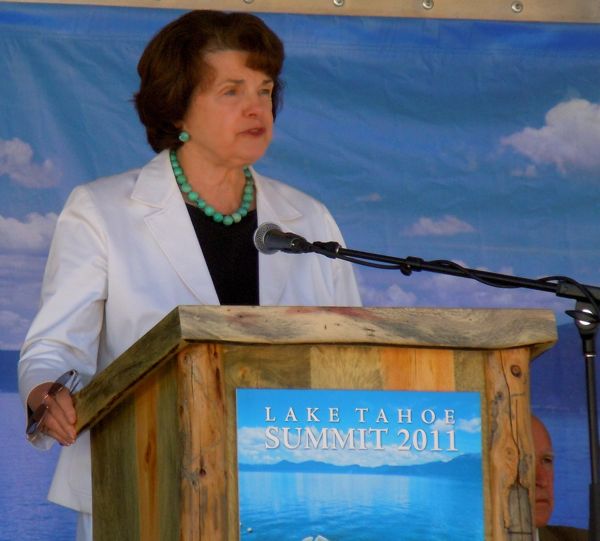
Dianne Feinstein

Dianne Feinstein

Farmers, of course, are acutely aware of the situation. Water allocations for some of the largest South-of-Delta Central Valley Project irrigation districts stand at just 20 percent of their contract amount. Declining reservoir levels suggest that next year will be even worse.

Complicating matters are pumping restrictions mandated by the Endangered Species Act. Despite being found scientifically deficient by a federal court and the National Academy of Sciences, these restrictions continue to have a negative effect on water supplies throughout the state.

The Bureau of Reclamation is putting together a plan to address this year’s water shortages based on water transfers that could increase the water supply for South-of-Delta contractors to the equivalent of a 40 percent allocation.

These one-time patches, however, are not an adequate solution. Absent state action, it is my view that we may be faced with the possibility of more far-reaching changes, such as modifications to the Endangered Species Act.

Expanding and improving California’s water storage capacity is long overdue. The last time we saw significant state and federal investments in our water storage and delivery system was in the 1960s, when the state’s population stood at 16 million. Today, that same system supports 38 million individuals and will need to support 50 million by 2050.

If we don’t take significant and rapid action, I fear California is at risk of becoming a desert state.

The need for additional storage is hardly a revelation. More than a decade ago, legislation passed that authorized the Bureau of Reclamation to do feasibility studies on expanding or building four reservoirs: Shasta, Sites, Los Vaqueros and Temperance Flat.

A draft feasibility report on raising Shasta Dam was completed last year. It found that raising Shasta Dam by 18.5 feet – at a cost of $1.1 billion – would yield up to 133,000 acre-feet of new water.

Good news, but the eight years it took to complete the draft study was entirely too long. Even worse, final feasibility studies aren’t scheduled to be completed by the Bureau of Reclamation until late 2016.

Building or expanding these four reservoirs would result in hundreds of thousands of acre-feet of additional water storage, benefit urban and rural communities and increase the pool of water available for releases that benefit fish species. Waiting a decade or more for these studies is unacceptable. The Bureau of Reclamation must complete these studies, and they must do so now.

California’s Legislature also must do its part by updating the long-anticipated water bond and ensuring that it includes adequate funding for water storage.

The current water bond, which was approved by the Legislature in 2009 and scheduled for the November 2010 ballot, has been repeatedly postponed.

The bond includes $3 billion to improve state, regional and local surface storage; groundwater storage; modernizing reservoir operations; and conveyance to improve interregional system operations. But with an overall cost of $11.14 billion, it will be difficult to win voter support.

With only three months left in the session, it is important the Legislature work to craft a scaled-back bond that provides robust water storage funding.

Because the full benefits of expanded storage capacity can’t be realized without the ability to move additional water supplies, it is also vital to complete the Bay Delta Conservation Plan. This long-term state and federal effort to restore the Sacramento-San Joaquin Delta is essential if we are to acquire the regulatory approvals necessary for new water transportation infrastructure.

As chairman of the Senate subcommittee that funds the Bureau of Reclamation, I have done what I can to address California’s water challenges.

Over the past few years, the Senate has approved bills that permit additional water transfers, authorize and expedite groundwater banking plans, require drought management plans and set a deadline to complete the Bay Delta Conservation Plan.

But there is still a lot of work to be done, particularly in the area of water storage. I will continue to urge the Bureau of Reclamation and the state to move as fast as possible to approve plans and funding to allow us to bank more water in wet years for the increasingly dry years.

Although California is getting drier, plans are in place to move us in the right direction. But it will take a commitment from federal, state and local stakeholders to get us there. There is no time to waste.

Sen. Dianne Feinstein, D-Calif., chairs the Appropriations subcommittee on energy and water development. This column first appeared in the Sacramento Bee.


Snippets about Lake Tahoe

fire• A $2.7 million federal grant is allowing Tahoe Douglas Fire Protection District to fully staff the Zephyr Cove station.

• The Lake Tahoe aquatic invasive species watercraft inspection program received a silver Anvil award from the Public Relations Society of America.

• El Dorado County search and rescue is having a fundraiser June 19 starting at 5pm at Riva Grill in South Lake Tahoe. The cost is $18 for an all you can eat buffet and music by Deep Fried Mojo. Wet Woody’s will be $5.25 ea.

• Here is the El Dorado-Tahoe roadwork schedule for the week from Caltrans.

• There will be a Trout Creek Pocket Park and Creek restoration community meeting June 25 from 5:30-7pm at the intersection of Bridge and Jibboom streets in Truckee.


Record fine in El Dorado County mine case

By Don Thompson, AP

SACRAMENTO — State regulators imposed a record $11 million fine Thursday on the operators of a renegade gold mine in the Sierra foothills east of Sacramento.

Owners of the Big Cut Mine south of Placerville previously ignored more than $1 million in fines from the state Mining and Geology Board, and board executive officer Stephen Testa said he doubts the state can collect on this one.

But the board also plans to seek a court injunction to halt mining while it sues over the property owners’ repeated failure to correct violations of the states’ Surface Mining and Reclamation Act.

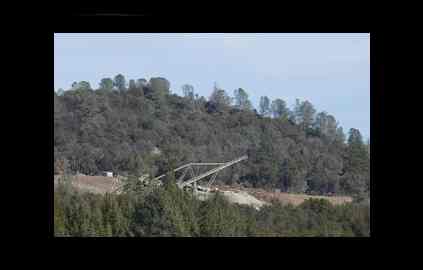
In this Wednesday, Jan. 25, 2012, file photo, mining equipment sits at the Big Cut Mine near in Placerville, Calif. The state Mining and Geology Board is considering levying a $2.5 million fine against the operators of a renegade gold mine in the Sierra foothills east of Sacramento. (AP Photo/ Rich Pedroncelli, File) Read more here: http://www.sacbee.com/2013/06/13/5495635/record-11m-fine-for-illegal-california.html#storylink=cpy

Mining equipment sits at the Big Cut Mine near in Placerville in January 2012. Photo/Rich Pedroncelli/AP

Regulators say the miners have continued to scrape valuable ore from a ridge about 45 miles east of the state capital even though two of the operators also face criminal charges in El Dorado County. Joseph Hardesty and Rick Churches have another court appearance set for Friday. State agencies and county prosecutors say the ongoing mining operations are illegal, have polluted a nearby creek and threaten to collapse 150-year-old mining tunnels.

Testa had recommended the board impose a $2.5 million penalty, more than enough to cover his agency’s expenses and the estimated cost of cleaning up the site.

But the board voted 6-0 to impose the entire $11 million penalty allowed by law, based on two years of multiple violations at a maximum penalty of $5,000 per violation per day. It’s the largest penalty every imposed by the board, Testa said.

“It sends a message to something that you don’t see very often, and that is a party that just ignores everybody and just does what it wants to do,” Testa said.

The miners sent no representatives to the board meeting, did not contest the fine, and their attorney, William Brewer of San Diego, did not return a telephone message. Hardesty has previously contended that he has a historic right to operate the mine over the objections of state and local authorities.

“They have local legal troubles, they have state legal troubles, they just seem to be of the mindset that laws don’t apply to them,” said Don Drysdale, a spokesman for the state Department of Conservation.

The price of gold has fallen considerably to $1,400 an ounce, down from more than $1,600 an ounce when the Associated Press published stories about the mine in February 2012.

Yet regulators say the mine’s operators have apparently decided that the fortune to be made outweighs the threat of fines. The owners have ignored $850,000 in penalties and multiple cease-and-desist orders over the last three years, expanding what officials say is an unpermitted and illegal surface mining operation.

Aside from the recent fines, the owners never paid more than $220,000 in penalties levied a decade ago, despite losing an appeal in court.

By the time investigators used a search warrant to inspect the property again in November, the operation 1.5 miles south of Placerville had spilled beyond the 150-acre site’s southern boundary onto about 2.6 acres owned by the El Dorado Irrigation District.

Despite the earlier orders, the operators had increased the size of an ore processing plant, dug several additional water retention ponds, brought in multiple pieces of heavy mining equipment, and installed a truck scale and water pipelines.

“This is a case of an egregious, ongoing, total and intentional failure on the part of the owners/operators to comply with … regulations and local county laws,” Testa said in a report to his board.


Artists to work at South Shore historic site

The annual Valhalla Arts, Music and Theatre Festival’s artist-in-residence program begins June 19.

Artists will be on hand on scheduled dates in the Viking Room from 11am-4pm at the Valhalla Grand Hall.

Here’s the line-up of artist appearances:

June 19-26: Addie Chernus — a creative silk artist for 20 years.

July 3-10: John Holland has been in the mural business for more than 30 years.

July 31-Aug. 6: Lyn Twitchell is an artist from the Carson Valley and she works primarily in oil and watercolor.

Aug. 8-18: Kit Knight is an award-winning painter.

Aug. 21-28: Millicent Meng will feature paintings of recognizable objects such as Tahoe area landscapes.

Aug. 28-Sept 4: Dee Meyer.

For more details, call (530) 541.4975.

The historic Tahoe Tallac Site is located two miles past the intersection of highways 50 and 89.


Western Nevada College exhibit features space art

A colorful exhibition of space photography is on display at the Western Nevada College Main Art Gallery through Aug. 23.

The collection contains several dozen large photographs of Earth’s moon, planets in the solar system and their moons, and colorful nebulae.

The 2-foot long images are the creations of John Dykes, a Western Nevada Astronomical Society member and Jack C. Davis Observatory volunteer. His works are printed on thin metal plates that enhance the colors.

Copies of the photographs may be ordered, with the proceeds to help support the observatory.

The gallery is located in the Bristlecone Building on the Carson City campus.

Exhibition hours are Monday-Friday, 8am-9pm and Saturday, 8am-5pm.