Flynn brothers still searching for their mom

By Stephen Baxter, Santa Cruz Sentinel

SANTA CRUZ — The voice of Deanna Brooks, a 70-year-old Santa Cruz antiques dealer, came to her son in a dream last week.

Brooks has been missing since August 2012, the day she was expected to drive from her home on Berkeley Way in Santa Cruz to her mother’s home in San Diego County.

“The dream was a phone call and I was talking to her,” said Stirling Flynn, Brooks’ oldest son.

“Her voice was so clear. I said ‘Do you know you’re missing?’ And she said, ‘I am? I’m at 1230 Benson Avenue in Santa Cruz.’ ”
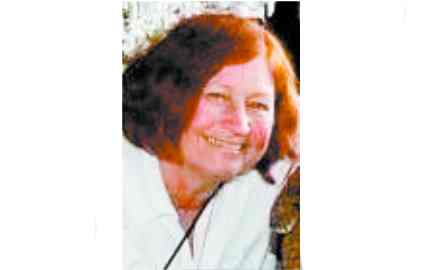
Deanna Brooks

Deanna Brooks

Flynn, a 51-year-old who grew up in the Santa Cruz Mountains and now lives in Georgia, hadn’t heard of Benson Avenue. After he woke from his dream on June 12, he immediately looked up the address online.

Benson Avenue is near Thurber Lane, but the address does not exist. One of Stirling Flynn’s relatives was in Santa Cruz on Saturday and went to the street, but found nothing.

“It made me miss her,” Flynn said of the dream.

This week marked nearly nine months since Brooks was last seen. Santa Cruz Deputy Police Chief Steve Clark said there were no new leads.

Brooks was last seen Aug. 24, 2012, the day she planned to drive her gold Chrysler PT Cruiser to Southern California.

The car has not been found, and her bank account has remained idle since her disappearance, police said. Clark said police have monitored her finances since the case began.

“I just can’t imagine that she disappeared without a trace,” Clark said.

He and other authorities believe Brooks might have driven off a highway as she drove south.

Taylor Flynn, Brooks’ 49-year-old son who lives in Lake Tahoe, said he shared that belief. He and other family members searched highways for hundreds of miles in the weeks after Brooks was reported missing.

The brothers talked to pilots of small planes, several law enforcement agencies and ordinary residents as they distributed fliers.

Taylor noted that Brooks’ neighbor on Berkeley Way said she talked to Brooks the morning she was supposed to leave. Brooks, a diabetic, said she wasn’t feeling well and went inside.

Brooks’ PT Cruiser was gone that evening, hours after she originally intended to leave.

Taylor Flynn said he believed Brooks died in a car crash.

“Everyone has their gut feeling,” Taylor Flynn said Tuesday. “I think she probably drove off the road somewhere. She left later than anyone thought she would leave. It would have been dark.”

Brooks is about 5 feet 3 inches with brown hair and green eyes. She uses a walker.

In part because of the publicity about Brooks’ case — and the fact that Taylor wrote about it in his Tahoe Mountain News publication — Taylor said people often ask him about his mother’s case.

“I have a feeling my mom is in a good place,” he said.

Santa Cruz police ask anyone with information to call investigations at (831) 420. 5820 or the anonymous tip line at (831) 420.5995.



Suspect in Robbers Fire rearrested

By Ed Fletcher, Sacramento Bee

The Placer County District Attorney’s office announced Tuesday that the man who reportedly started the 2,630-acre Robbers Fire has been rearrested and will stand trial on charges of arson causing great bodily injury and arson of an inhabited dwelling stemming from the July 11, 2012, incident.

Bryon Craig Mason, who admitted to throwing an illegal firework into a remote swimming hole, was released in March after Placer Superior Court Judge Colleen Nichols ruled there was insufficient evidence to hold him to stand trial on the two counts of arson, as well as the enhancements. The judge ordered the defendant released from custody.

The DAs office said Tuesday that it used the grand jury process to secure an indictment last week.

The court allows prosecutors to prove there is enough evidence to warrant a trial through a judge or the grand jury process. Mason is scheduled to be arraigned June 20.


More people = more impacts on environment

By Julie Cart, Los Angeles Times

A federal report looking at trends in population growth, travel patterns and land use and their impact on the environment is predictably sobering.

With the U.S. population expected to grow 42 percent from 2010 to 2050, the report from the federal Environmental Protection Agency offers a glimpse into the crowded world we’re in now and how planners of the future might make decisions with less environmental harm.

Among the findings of the current situation: imperiled water supply with at least 850,000 acres of lakes, reservoirs, and ponds and 50,000 miles of rivers and streams soiled by stormwater runoff. Although vehicle emissions standards are more strict, that has been offset by a 250 percent increase in vehicle miles traveled since 1970.

In the same vein, transportation is responsible for 27 percent of domestic greenhouse gas emissions.

The report is an update of the agency’s 2001 study and suggests strategies such as clustering development around existing centers and near public transportation, encouraging mixed-use developments and designing streets that welcome bikers and pedestrians.


Letter: Gardnerville group helps at Bread & Broth

To the community,

Bread & Broth would like to thank St. Gall Catholic Church’s Faith Sharing Group from Gardnerville for sponsoring the June 10 Adopt A Day of Nourishment.

As part of their ministry, the Faith Sharing Group wanted to help those in need and chose to support Bread & Broth’s efforts to provide a hot and nutritious dinner to the hungry of the South Lake Tahoe community.

After the dinner’s guests were served, one member of the Faith Sharing Group, Claudi Broquist, wrote, “the experience, for me, was very humbling. To see all these people, of all ages and backgrounds come together for food and friendship was amazing to me. I wanted to ‘hug’ them all.”

Fellow group members Bill Broquist, Barb and Don McRoberts, Jack Stemplinger, Sue Ewald, Lea Morgan and St. Gall’s Father Paul McCollum joined Claudi in helping the B&B volunteers provide a hearty, well balanced meal at the evening’s dinner.

The Faith Sharing Group members were a very hard working group and thanks to their help, the B&B volunteer crew had the hall and kitchen cleaned up in record time. Bread & Broth is very fortunate and grateful to St. Gall’s Faith Sharing Group and all our sponsors who have over the past 24 years supported our efforts to feed those in need every Monday at St. Theresa Church’s Parish Hall and the South Lake Tahoe Community Presbyterian Church on Friday’s for the last four years.

If you would like to support Bread & Broth’s program, please contact me at (530) 542.2876 or carolsgerard@aol.com.

Carol Gerard, Bread & Broth


China may add life to Calif. dairy industry

By Susanne Rust and Serene Fang, Center for Investigative Reporting

A growing demand for milk and cheese in China has the potential to bring California’s beleaguered dairy industry back to life – and with it, renewed concern about its damaging effects on the environment.

As China’s middle class grows, so does its appetite for dairy products such as milk, cheese and yogurt. U.S. government data show that Chinese demand for dairy products is growing rapidly. Imports of skim milk powder grew by 49 percent in 2012 over the previous year and are expected to increase an additional 18 percent this year.

California’s dairy industry has gone through hard times over the past five years. According to the California Department of Food and Agriculture, more than 300 dairies in the state have gone out of business since 2007.

Feed prices have skyrocketed – the result of competition with the biofuels industry, a severe drought in the Midwest, and increased shipping and transportation costs, according to UC Davis agricultural economist Leslie Butler.

Now the industry sees hope for a potential market in China, said Ross Christieson, a consultant for the California Milk Advisory Board, a trade group for the state’s roughly 1,600 dairy farmers.

“China has been going through a major economic growth boom over the last 20 years, and that has fueled consumption of dairy products,” he said. “We know a lot of these markets will grow ten- or twentyfold over the next few decades. By being there now, we can be at the start of the growth.”

But this possibility, given the toll California’s large dairy farms are having on air and water quality in the Central Valley, is making many environmentalists nervous.

“Definitely, there’s a carrying capacity for dairy, and it’s air quality,” said Brent Newell, legal director for the Center on Race, Poverty and the Environment, an environmental justice organization that focuses mostly on the San Joaquin Valley. “You can’t keep sticking more dairies in the San Joaquin Valley in order to export cheese to China.”

California is the nation’s largest dairy-producing state. It produced nearly 42 billion pounds of milk in 2011, 21 percent of the nation’s total output, according to the Dairy Institute of California.

That success has been attributed largely to the state’s model for dairy farming, which maximizes the number of cattle per farm while minimizing the need for on-site food production.

“The traditional dairy-farm model in the rest of the country is one where dairy farmers grow a considerable amount of their own feed,” said Bill Schiek, an economist with the Dairy Institute, a dairy processors trade group. In California, he said, dairy operators don’t grow grain or hay on site but bring it in. “It’s a very specialized operation.”

But it’s a model that environmental scientists say has wreaked havoc on air and water quality. Critics and scientists point to studies showing that the dairy industry, with roughly 1.8 million head of cattle, is the single largest contributor of smog-forming volatile organic compounds in the San Joaquin Valley.

Government and academic research indicates that gases emitted from fermented feed, cattle and cattle waste combine with other free-floating particles in the air to form smog.

The dairies also have been implicated in the pollution of groundwater. Research has shown that nitrogen produced by cattle waste can seep through soil into groundwater, contaminating water sources and, in some cases, making the water undrinkable.

For instance, dairy manure, which is the largest source of animal waste in California, accounts for more than 200,000 tons of nitrogen every year, much of which ends up in groundwater, according to research by Thomas Harter, a hydrologist at UC Davis.

Nearly 10 percent of public wells in California have more nitrogen than the government deems acceptable, according to the UC Davis study.

Newell of the Center on Race, Poverty and the Environment said the poor bear the brunt. “It is fundamentally unfair and unjust to burden low-income communities in the San Joaquin Valley with all of this pollution,” he said.


Cycling event has something for all riding levels

The fifth annual Alta Alpina Challenge: Riding the Wild Sierra is June 29. It is for cyclists of all abilities.

How long is the ride? For those looking for some family fun with the kids there are 15- and 20-mile routes in scenic Diamond Valley. For those cyclist wanting more, there are other options, all starting in Turtle Rock Park in Markleeville.

The Wild Sierra Metric is 64 miles with 5,000 feet of climbing. Wild Sierra Century is 110 miles and 11,000 feet of climbing. The 5 Pass Challenge has 135 miles and 16,000 feet.

To really get your heart pumping, there is “The World’s Toughest Double Century” with 198 miles and 20,300 feet of climbing.

There is also the option to “Build Your Own Ride” by selecting your own route.

Included in the ride are ample, well-stocked rest stops with lots of goodies. Sag support, lunch and a post-ride dinner are provided, along with a frame-ready rider number “bib” that documents your accomplishment with a colorful sticker for each pass completed.

Alta Alpina Cycling Club is sponsoring the event.

For more information, contact Mel Maalouf at (775) 450.3886, president@altaalpina.org or Michael Bayer at 877.845.2453 or challenge@altaalpina.org.


Relay for Life returning to South Shore

The annual Relay for Life on the South Shore is Aug. 10 from 11am-11pm.

The event is at Kahle Community Park in Stateline.

Money raised goes to the American Cancer Socity. The ACS gives out gas cards locally and supplies wigs to nearby cancer centers.

The ACS is the largest private donor to cancer research.

To donate or find out more info, go online.


Grego starts El Dorado supervisor campaign

By Kathryn Reed

Gerri Grego has all the paperwork filled out with the state and is ready to start campaigning for a race voters won’t go to the polls for until a year from now.

The South Lake Tahoe resident wants to be the next El Dorado County supervisor who represents the basin in Placerville.

“While I enjoy and look for consensus, I don’t have to have it. I am pretty independent,” Grego told Lake Tahoe News. “If it’s possible for me to accomplish something, I will go for it. There is more than one way to accomplish things.”

The 60-year-old served on the city’s Planning Commission from March 2007 to February 2011. During that time the commission tackled the city’s General Plan and medical marijuana ordinance before the City Council took up those issues.

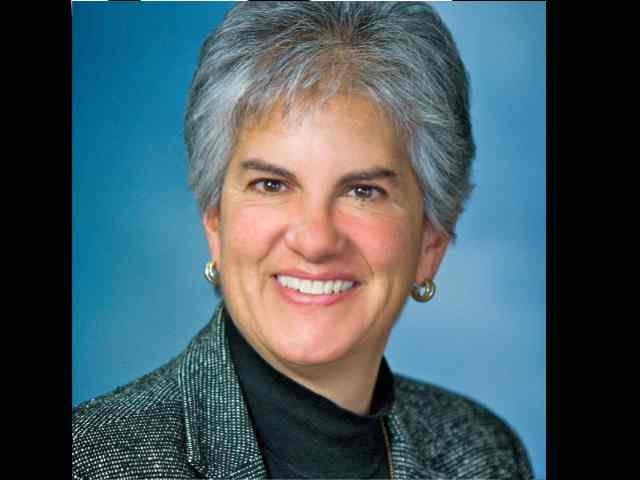
Gerri Grego is vying to be an El Dorado County supervisor. Photo/Provided

Gerri Grego is vying to be an El Dorado County supervisor. Photo/Provided

Grego worked on the General Plan before being appointed to the commission. It was her work on the 56-acre project – which in part is now Lakeview Commons – that launched her civic involvement.

“I am one of those trouble-shooting people,” she said. “ I will come up with things that need to be accomplished and come up with different ways to accomplish that goal and work until I get it done.”

Being an analytical thinker is one of the strong traits she would bring to the full-time job, Grego said. “I have the ability to cut through the junk.”

Supervisor Norma Santiago is being termed out after eight years. The election will be in June 2014, with a run-off between the top two vote getters that November if no one receives more than 50 percent of the vote. Sue Novasel is the other declared candidate.

Grego is also part of the Lake Tahoe Sustainability Collaborative that was formed by the Tahoe Regional Planning Agency.

“I certainly see the advantage to a sustainable community. It is where the economy, environment and people work in harmony to the benefit of all,” Grego said, adding that she would like to bring that philosophy to the county level.

She is the city’s appointee to the El Dorado County Commission on Aging.

The senior center is an area she wants to keep working on. Grego was instrumental in getting the commission to write a letter to the county saying it’s time for mental health to find a place other than at the senior center to call home.

“I would like to explore the idea of the seniors being given the deed of the property or the city. That would certainly show support for seniors and the program,” she said.

Grego, who is married to former Councilman Bruce Grego, has been the resort manager of the Beachcomber Inn for the last 15 years. Her boss knows if she is elected, a new manager will need to be found.


Opinion: Funding will be Tahoe’s next major challenge

By Joanne Marchetta

The goal of a restored Lake Tahoe is a shared vision for many organizations. This goal unites TRPA with the work of the public and private sectors, the community and property owners, and businesses and environmental groups to name just a few.

Achieving restoration takes collective will and, to be frank, substantial investment. Repairing what happened before is a critical part of the strategy to return Lake Tahoe to its famed clarity and restore the full range of ecosystem functions.

Our legacy land use impacts are significant: three-quarters of Tahoe’s marshes have been developed and 90 percent of existing homes and businesses were built without environmental design.

Joann Marchetta

Joann Marchetta

TRPA recognizes that plans and regulations are mere frameworks; without more, they won’t restore an entire ecosystem. Correcting past harms requires capital as well as vision. There has already been substantial investment in restoration projects under the collaborative Lake Tahoe Environmental Improvement Program (EIP). More than 540 acres of marsh and meadow land have been restored. Stormwater infiltration measures, which are critical to reducing the fine sediment going into the lake, have been installed by thousands of properties owners and hundreds of miles of roadways have been retrofitted for erosion control by public agencies.

Still, TRPA and EIP partner agencies have more to do and core funding strategies that have underpinned the restoration so far are coming to a close.

TRPA’s central role in part is to use the best scientific information to direct funding for the greatest environmental benefit, but we also need to persuade myriad funding sources it is worth investing in Tahoe’s restoration and protection. While we’ve successfully secured funds in the past, there is a new fiscal reality today. Restoration has come from a mosaic of resources that reflects the broad importance of Lake Tahoe. Of the $1.6 billion invested in the EIP from 1997 to 2011, 32 percent came from federal partners, 46 percent from the two states, and 22 percent from in-basin agencies and private property owners.

Lake Tahoe’s spectacular environment supports a $5 billion regional economy, so it has never been difficult to connect environmental investments to the prosperity of the region. What is changing today is the broader political and economic landscape in which public funding will be less reliable and in which a broader range of sources are needed and some new ones must be cultivated.

Rather than being daunted by the challenging funding climate, TRPA is inspired by new findings that show these investments are paying off.

According to reports published by UC Davis, the decline of lake clarity has stabilized and in 2012 the average annual clarity measurement was the best it has been in 10 years. With more than 60 percent of TRPA’s environmental targets in attainment or showing improvement, now is the time to push on, but progress depends on new and continued sources of funding.

Besides promising data on the restoration efforts, an updated Regional Plan is now in effect that is more supportive of public-private partnerships and encourages private investment in environmental gains. Under the Regional Plan, local government area plans are coming online that will make Tahoe’s town centers more bikeable and walkable, new incentives are available for private restoration of sensitive land, and improvements in the permit process for homeowners will encourage environmental upgrades such as stormwater best management practices (BMPs) to the region’s many older buildings.

TRPA is not leaving public funding stones unturned either. Our congressional leaders are actively working to reauthorize the Lake Tahoe Restoration Act which will help secure additional federal funding for the lake. There are state bond initiatives authorized or planned along with other possible appropriations.

However, support could increasingly come from crowd funding and private endowments such as the Tahoe Fund. The Tahoe Fund is a non-profit founded in 2010 to become a major source of private funding for environmental projects. The fundraising efforts have so far raised nearly $1 million and supported key projects. The Tahoe Fund is also a prominent supporter of Lake Tahoe’s greatest source of crowd funding — the Lake Tahoe license plate programs of both states. Simply by signing up for an attractive license plate, people in the furthest reaches of either state can become proud financial supporters of the EIP.

Regardless of the challenges that we face in the fight to save Lake Tahoe, the solutions cannot come from one source, one agency or one group. We all have a role to play and I encourage you to look for your opportunity to invest – if not your money, then yourself – in Lake Tahoe’s continued restoration.

Joanne Marchetta is executive director of the Tahoe Regional Planning Agency.


Liberty Utilities awards scholarships

Liberty Utilities launched a high school and community college scholarship program this year for students living within the utility’s service territory.

The winners are:

South Lake Tahoe High School – Sean Doyle

North Tahoe High School – Camille Joubert

Lake Tahoe Community College – Gina Niceforo.

Each high school senior received $250, and the community college student received $500.