Carson area experiencing swarm of temblors

The Nevada Seismological Laboratory has located 122 earthquakes in a continuing sequence of activity located on the southeastern edge of Carson City.

“It’s not unusual to see earthquake sequences similar to this in the Northern Nevada area,” Graham Kent, director of the Nevada Seismological Lab at the UNR, said in a statement. “Based on the historical record of earthquakes in the region, as earthquakes sequences progress, the probability of larger events that could be felt or that could potentially cause damaging ground shaking increases. We’re working with state emergency managers and are watching this closely so citizens can be informed and prepared.”

This most recent activity began on June 1 at 11:15pm. The largest events of the sequence have been one magnitude 2.9 and two magnitude 2.8 events. The most recent of these occurred at 8:06am June 20. Each of the larger events has been followed by numerous small earthquakes, some too small to be pinpointed, but nonetheless observed on the local seismic network.

“The activity is occurring about 5.5 miles below ground,” said Ken Smith, network administrator and associate director at the Nevada Seismological Lab. “This sequence of events is noteworthy and of concern in that it may be associated with the northern extent of the Genoa Fault Zone, a large range-bounding fault system capable of earthquakes of Magnitude 7 and larger. We cannot forecast or predict how this particular sequence of earthquakes will evolve, or if there will be larger events.”

Large damaging earthquakes are always possible anywhere in the Northern Nevada area.

Earthquake activity in the Carson City area will continue to be closely monitored and additional information will be issued as necessary to ensure public safety.


Man accused of growing pot on USFS property

A two-week investigation by El Dorado County sheriff’s deputies ended with the arrest of a 21-year-old Mexican national on drug charges.

On June 21, the West El Dorado Narcotics Enforcement Team along with the Mountain and Valley Marijuana Investigations Team entered a suspected marijuana grow operation on U.S. Forest Service land north of Stumpy Meadows Lake, east of Georgetown.

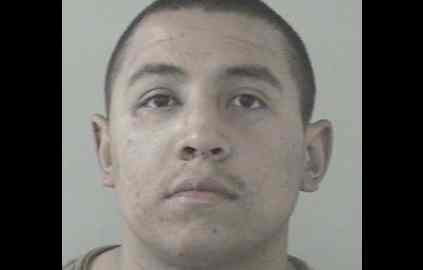
Omar Ruiz Talauera was booked into the county jail on charges of resisting an officer, cultivation of marijuana and possession for sale of marijuana.

Omar Ruiz Talauera

Omar Ruiz Talauera

Deputies said the suspect was dressed in camouflage and attempted to flee.

Deputies said the operation created extensive resource damage to the area. Thousands of square feet of timber had been clear cut to accommodate the illegal growing operation. The tops of the stumps that were left behind, were painted green in an apparent attempt to avoid detection by law enforcement aircraft. Several empty bags of fertilizer and trash were found in and about the garden area, which was directly above the Rubicon River, a tributary of the Middle Fork of the American River, eventually leading to the North Fork of the American River and into Folsom Lake.

— Lake Tahoe News staff report


AAA: Fewer July 4th travelers than a year ago

Not as many people in the U.S. are expected to travel during the upcoming Fourth of July holiday compared to 2012.

AAA is projecting 40.8 million Americans will venture at least 50 miles from home during the holiday, a 0.8 percent decrease from the 41.1 million people who traveled in 2012.

Much of this has to do when the Fourth falls — on a Thursday. When it was on a Wednesday last year, more people opted to take the whole week off.

Decade-high travel volume occurred in 2007 when 42.3 million Americans traveled and the holiday also fell on a Wednesday.

The Independence Day holiday travel period is defined as July 3-7.

Highlights from the 2013 AAA Independence Day travel forecast include:

  • Eighty-four percent of travelers (34.4 million) to travel by automobile, a decrease of 0.7 percent from 34.7 million last year
  • Holiday air travel expected to increase slightly to 3.07 million from 3.06 million in 2012
  • Independence Day holiday travel volume is expected to remain above the 13-year average of 38.9 million for this holiday
  • The largest share of travelers (32 percent) will depart July 3, with July 7 the most popular date of return
  • The average traveler is expected to travel a round-trip distance of 613 miles and spend $747

This year 46 percent of intending travelers plan to begin their trip prior to the start of the holiday travel period (July 3-7), compared to 65 percent last year. The largest share of travelers (32 percent) on a single day will depart on July 3 and the largest share will return on July 7 (38 percent).

Approximately 34.4 million people (84 percent) plan to drive to their destination, a decrease of 0.7 percent from the 34.7 million who drove last year.

 — Lake Tahoe News staff report


Health problems tied to sleep deprivation

By Jane E. Brody, New York Times

Think you do just fine on five or six hours of shut-eye? Chances are, you are among the many millions who unwittingly shortchange themselves on sleep.

Research shows that most people require seven or eight hours of sleep to function optimally. Failing to get enough sleep night after night can compromise your health and may even shorten your life. From infancy to old age, the effects of inadequate sleep can profoundly affect memory, learning, creativity, productivity and emotional stability, as well as your physical health.

According to sleep specialists at the University of Pittsburgh School of Medicine and Western Psychiatric Institute and Clinic, among others, a number of bodily systems are negatively affected by inadequate sleep: the heart, lungs and kidneys; appetite, metabolism and weight control; immune function and disease resistance; sensitivity to pain; reaction time; mood; and brain function.

Poor sleep is also a risk factor for depression and substance abuse, especially among people with post-traumatic stress disorder, according to Anne Germain, associate professor of psychiatry at the University of Pittsburgh. People with PTSD tend to relive their trauma when they try to sleep, which keeps their brains in a heightened state of alertness.

Germain is studying what happens in the brains of sleeping veterans with PTSD in hopes of developing more effective treatments for them and for people with lesser degrees of stress that interfere with a good night’s sleep.

The elderly are especially vulnerable. Timothy H. Monk, who directs the Human Chronobiology Research Program at Western Psychiatric, heads a five-year federally funded study of circadian rhythms, sleep strength, stress reactivity, brain function and genetics among the elderly.

“The circadian signal isn’t as strong as people get older,” he said.

He is finding that many are helped by standard behavioral treatments for insomnia, like maintaining a regular sleep schedule, avoiding late-in-day naps and caffeine, and reducing distractions from light, noise and pets.

It should come as no surprise that myriad bodily systems can be harmed by chronically shortened nights.

“Sleep affects almost every tissue in our bodies,” said Dr. Michael J. Twery, a sleep specialist at the National Institutes of Health.

Several studies have linked insufficient sleep to weight gain. Not only do night owls with shortchanged sleep have more time to eat, drink and snack, but levels of the hormone leptin, which tells the brain enough food has been consumed, are lower in the sleep-deprived while levels of ghrelin, which stimulates appetite, are higher.

In addition, metabolism slows when one’s circadian rhythm and sleep are disrupted; if not counteracted by increased exercise or reduced caloric intake, this slowdown could add up to 10 extra pounds in a year.

The body’s ability to process glucose is also adversely affected, which may ultimately result in Type 2 diabetes. In one study, healthy young men prevented from sleeping more than four hours a night for six nights in a row ended up with insulin and blood sugar levels like those of people deemed prediabetic. The risks of cardiovascular diseases and stroke are higher in people who sleep less than six hours a night. Even a single night of inadequate sleep can cause daylong elevations in blood pressure in people with hypertension. Inadequate sleep is also associated with calcification of coronary arteries and raised levels of inflammatory factors linked to heart disease. (In terms of cardiovascular disease, sleeping too much may also be risky. Higher rates of heart disease have been found among women who sleep more than nine hours nightly.)

The risk of cancer may also be elevated in people who fail to get enough sleep. A Japanese study of nearly 24,000 women ages 40 to 79 found that those who slept less than six hours a night were more likely to develop breast cancer than women who slept longer. The increased risk may result from diminished secretion of the sleep hormone melatonin. Among participants in the Nurses Health Study, Eva S. Schernhammer of Harvard Medical School found a link between low melatonin levels and an increased risk of breast cancer.

Children can also experience hormonal disruptions from inadequate sleep. Growth hormone is released during deep sleep; it not only stimulates growth in children, but also boosts muscle mass and repairs damaged cells and tissues in both children and adults.

During sleep, the body produces cytokines, cellular hormones that help fight infections. Thus, short sleepers may be more susceptible to everyday infections like colds and flu. In a study of 153 healthy men and women, Sheldon Cohen and colleagues at Carnegie Mellon University found that those who slept less than seven hours a night were three times as likely to develop cold symptoms when exposed to a cold-causing virus than were people who slept eight or more hours.

Some of the most insidious effects of too little sleep involve mental processes like learning, memory, judgment and problem-solving. During sleep, new learning and memory pathways become encoded in the brain, and adequate sleep is necessary for those pathways to work optimally. People who are well rested are better able to learn a task and more likely to remember what they learned. The cognitive decline that so often accompanies aging may in part result from chronically poor sleep.

With insufficient sleep, thinking slows, it is harder to focus and pay attention, and people are more likely to make poor decisions and take undue risks. As you might guess, these effects can be disastrous when operating a motor vehicle or dangerous machine.

In driving tests, sleep-deprived people perform as if drunk, and no amount of caffeine or cold air can negate the ill effects.

At your next health checkup, tell your doctor how long and how well you sleep. Be honest: Sleep duration and quality can be as important to your health as your blood pressure and cholesterol level.


‘Talking drum’ performance in South Tahoe

Norbert Yao’s energetic performances are filled with cultural details about his homeland, Cote d’Ivoire or the “Ivory Coast” of western sub-Saharan Africa.

He learned to play the “talking drums” — djembe and dundun — from family and community members in Africa.

He will be performing July 12 at 2pm at the South Lake Tahoe library for free.

The library is at 1000 Rufus Allen Blvd.


Dance-techno concert at MontBleu

Bass Camp Lake Tahoe 2013 is described as a multimedia-charged concert with dance heavyweights Excision featuring The Executioner Video & Lighting, Installation, Adventure Club, Seven Lions, The M Machine, AndDrop! and Fiasko Danielswill.

The concert is July 20 at MontBleu in Stateline. The show begins at 4pm.

Tickets are $35.

The massive audio-visual-techno set will feature projector video-mapping that displays 420-square-foot true-3D digital animation screen that arrives with plenty of bass and all the beat. Excision will perform a live set that will simultaneously sync 100,000 watts of audio meshed with animated video.


Snippets about Lake Tahoe

brooks bar• Golf.com has named Brooks’ Bar at Edgewood Tahoe the fifth best 19th hole in the country.

• After traveling 450 miles across the Nevada backcountry, Samantha Szesciorka, her horse Sage, and her dog Bells are headed for home June 22 at about 1pm. The trail ends at the foot of Toll Road in south Reno, where the pavement ends.

• The U.S. Forest Service Lake Tahoe Basin Management Unit will begin work on the Upper Truckee River Reach 5 restoration project on June 24.

• Carson Valley Inn is having a bridal fair Aug. 4 from 3-6pm.

• Barton Health grant proposals will be accepted through June 28. Go online for more info.


Initial Greenway Bike Path phase coming in ’14

Planned bike trails on the South Shore. Map/CTC

Planned and existing bike trails on the South Shore. Map/CTC

By Kathryn Reed

The significance of a stretch of bike trail cannot be measured in its length.

Such is the case with the initial phase of the South Tahoe Greenway Trail that is slated to be built next summer. It will be less than a half-mile and comes with a construction price tag of about $500,000.

The money to build what is being called Phase 1A is in hand and was allocated at Thursday’s California Tahoe Conservancy board meeting.

In 2008, the CTC was projecting the entire 9.2-mile trail would cost $20 million to build.

While that entire project that has been on the books since 2002 is still on the drawing board, it is now being cobbled together, but in a way that is designed to attract future funding.

“We strategized how we were going to phase this carefully so we could attract additional funding,” Sue Rae Irelan, with the CTC, told Lake Tahoe News after the meeting. “If you can make transportation an argument, there will be bike funding available.”

This initial phase is in a heart of a community that relies heavily on walking and biking as its modes of transportation.

Today, grant dollars go to entities that also have a proven track record. The CTC has built numerous bike trails on the California side of the basin.

The Greenway Trail has been Irelan’s baby since the get-go.

“It’s just going to feel so wonderful to ride this first section of trail,” Irelan said.

It will be 10-feet wide, with 2-foot shoulders, meet ADA requirements and have a grade of less than 5 percent.

The entire project is now three phases. And within phase 1 are three phases. Phase 1A is 0.47 miles linking the Bijou neighborhood to the edge of Bijou Meadow. It will be ready to ride at the end of the 2014 construction season.

Phase 1B hooks up at the meadow and connects to Bijou Community Park and crosses Al Tahoe Boulevard to connect to Lake Tahoe Community College and the community ball field.

Phase 1C connects on the other side of 1A and goes to Ski Run Boulevard.

All of Phase 1 is 3.62 miles. The Tahoe Regional Planning Agency has issued a permit for the entire phase.

Phases 2 and 3 include going to Meyers in one direction and Van Sickle Bi-state Park in the other.

Phases 1B and 1C may cost more because they involve boardwalks to cross stream environmental zones. But the extent of those crossings is up in the air with the TRPA Regional Plan update not classifying all SEZ areas the same. And with coverage for bike trails not part of the equation, that, too, could drop the price.

This will be a CTC owned trail. Usually the state agency is a funding pass-through of sorts to other entities. This means the CTC also needs to figure out how to pay for maintenance and operation costs.

Irelan at the June 20 meeting told the board because CTC is not eligible for voter approved Measure R funds for bike trail maintenance it’s possible an agreement with the city will be worked out so the local government could use Measure R dollars for the Greenway.

That topic has not been discussed by the Measure R board, which consists of a city rep, El Dorado County member and Tahoe Paradise Park person.

Also at the Thursday board meeting, the board allocated up to $350,000 for the remainder of the Sawmill bike path to be finished in 2014.


Time to audition for Missoula Children’s Theatre

Auditions for Missoula Children’s Theatre production of “Blackbeard the Pirate” are July 8 at South Tahoe Middle School multipurpose room from 10am-noon.

Those auditioning should arrive at 10am and plan to stay for the full two hours. Some of the cast members will be asked to stay for a rehearsal immediately following the auditions.

Auditions are free. If cast, there is a $50 per child fee to participate in this weeklong theater experience. A limited number of scholarships are available by calling Peggy Thompson at (530) 542.3632.

Approximately 60 roles are available for local students. All students entering grades 1-12 may audition. No advance preparation is necessary.

Rehearsals will be Monday through Thursday, 10am-2:30pm. The performances are scheduled for July 12 at 3pm and 6pm at Lake Tahoe Community College’s Duke Theatre.

For more information, call Tahoe Arts Project at (530) 542.3632.


Opinion: Conservancy turning public land into paychecks

Publisher’s note: The following was read into the record June 20 at the California Tahoe Conservancy meeting by Tahoe Vista resident Ellie Waller and was subsequently submitted to Lake Tahoe News.

From a recent email from [CTC worker] Bruce Eisner [it] stated, “A small number of Conservancy’s ‘asset lands’ are in residential areas….”

Of particular concern on just the North and West Shore:

1.47 acres 8644 Speckled, Kings Beach

1.38 acres 359 Chipmunk St., Kings Beach

9.21 acres off Ward Creek, West Shore

And what I’m personally concerned about, as I live in Tahoe Vista ( as do you [board Chairman] Larry [Sevinson]) are 5.76 acres on Queens Way and 14.56 acres above Estates Drive (my actual neighborhood ) adjacent to the North Tahoe Regional Park. This 15-acre property is public lands accessible and utilized all year-round for hiking, biking, cross county and skate skiing and access to the balance of the North Tahoe Regional Park and Forest Service lands. CTC staff stated, “In the case of the 14 acre parcel, 15,000 sq. ft. of potential land coverage remains to support construction of a home in the event the parcel is ever marketed and sold under the Asset Lands Program Guidelines.”

From the guidelines: “Managing the Conservancy’s properties is a complex task. Aside from their sheer numbers and small sizes – most are no bigger than 1/3 of an acre – parcels are often scattered throughout already-developed areas, creating the potential for conflicts between open space and residential uses. The Conservancy’s Property Management Program was adopted in September 1986 and guides land management of Conservancy-owned lands. In contrast, these Program Guidelines will provide direction regarding the circumstances and considerations for land that is considered for transfer from Conservancy ownership.”

Where is the 15,000 square feet potential for building on this lot located as not to conflict with the open space and public accessibility?

Any future potential sale similar to the parcels you are currently offering for sale (Sherman/Glenwood) would limit the public’s existing access. How is limiting this public access justified? The 9.21 acres off Ward Creek (West Shore) — the public heavily uses this parcel for hiking, ski skating, cross country skiing and access to the balance Forest Service lands. How is limiting this public access justified?

If these properties are sold as an individual ownership one house, one guest house, will they be restricted from fencing in the property for public access? These properties are beautiful forested lands that should be maintained for public access as the original CTC mission used to state.

This leads me to the program itself. It doesn’t seem to be very well thought out. Easements are not in the same category as the other lots and would be better served by Conservancy ownership and more cost effective than full fee title ownership. The public has been led to believe the Conservancy lots are just that — lots to be maintained in perpetuity as open space. The Queens Way 6-acre lot is a prime example of why homeowners purchased in that neighborhood having a large open forested area across from their homes.

The program needs to be re-visited. At the very least, homeowners in the vicinity of the proposed properties for sale should be noticed several months before, not just 10 days before the potential sale and should have the right to comment about your proposed sales activities.

In a recent article by the executive director it stated: “Under the guidelines, we will consider selling parcels only where they are not needed to achieve our conservation or recreation goals, or where state ownership is no longer necessary to achieve the goals of the original acquisition. The Conservancy may also consider selling a small number of other parcels in South Shore, including several parcels along U.S. Highway 50 in the Meyers commercial core area that we purchased for a visitor center that is no longer planned, and a couple of highly urbanized parcels at the “Y.”

“Sales of these commercially-zoned parcels would not only provide revenue to the Conservancy to invest in high priority projects and programs, but would support the development of sustainable, walkable and bikeable town centers. In the west and north shore, the Conservancy has purchased several developable parcels to acquire land coverage for mitigation purposes or for bike trails or other projects. At this time, we have no plans to sell or exchange any of these parcels. In any future sales or exchanges, any sensitive areas on these parcels would also be permanently protected.”

“We also acquired a parcel at the corner of Coon Street and State Route 28 in Kings Beach for the sole purpose of generating revenue to support ongoing maintenance of Conservancy parkland adjacent to Kings Beach State Recreation Area”.

These comments should be fully discussed and vetted at a public hearing.

From the asset land guidelines: Consistency with Conservancy’s Enabling Legislation

These Program Guidelines for Conservancy Asset Lands are consistent with the Conservancy’s enabling legislation.

• The Conservancy is authorized under Government Code Section 66907 to “select and acquire real property or interests therein in the name of and on behalf of the State, for the purposes of protecting the natural environment.”

• Pursuant to Government Code Section 66907.1, “the Conservancy may acquire interests in land by means of land exchanges.”

• Government Code Section 66907.2 provides for the Conservancy to “accept and hold real property or any interest herein acquired through gift, exchange, donation or dedication.”

• Pursuant to Government Code Section 66907.8, “notwithstanding any other provision of law, the Conservancy may . . . sell, exchange, or otherwise transfer any real property or interest therein, or option acquired under this title to local public agencies, State agencies, Federal agencies, nonprofit organizations, individuals, corporate entities or partnerships for management purposes pursuant to terms and conditions approved by the Conservancy.”

Please explain “management purposes” versus building in town centers and recreation areas.