K’s Kitchen: Toppings for corn on the cob

By Kathryn Reed

Corn on the cob cooked on the barbecue is a summertime ritual.

And now is the peak season in California for these kernels of goodness. But that doesn’t mean you won’t find them at farmers’ markets most of the summer. And, yes, there is plenty at grocery stores – but farm fresh makes a world of difference.

When buying them, always peel the husk back a little to look at the ear to see if the kernels look good. Some say white corn is sweeter, while yellow has more of a corn taste.

I don’t husk them until I’m ready to use the ears. And keeping them in the fridge will also seal in the moisture.

Normally a little butter is all I put on corn, but last weekend we tried two spreads. I liked them equally, but Sue preferred the red pepper concoction. They are totally different. It would make more sense not to serve them at the same time unless you have a large group. Each recipe would be good on four ears.

Mayo may be substituted for the veganaise.

It takes about 8 minutes for corn to cook on the grill. Be sure to turn it as it cooks.

cornFeta and Mint Spread

2 T (generous) crumbled feta

1 T unsalted butter

2 T mint, minced

1 T lime juice

Combine all ingredients with a fork. Spread on cooked corn.

 Spicy Red Pepper Spread

 ¼ C (heaping) roasted red pepper (from a jar)

2 T veganaise

2 cloves garlic

½ medium lemon, juiced

¼ tsp paprika

¼ tsp kosher salt

Dash red pepper flakes

Blend all ingredients in blender. Spread on cooked corn.


Skimpier health plans could be costly

By Michelle Andrews, NPR

People are worried about being able to pay for health insurance. So the insurance industry and a group of Democratic senators have proposed offering cheaper, skimpier “copper plans” on the health law’s marketplaces that could draw in people who were unhappy with the cost of available plans.

But consumer advocates and others who study the insurance market suggest that there may not be a big demand for these plans and that they could expose people to unacceptably high out-of-pocket costs if they got sick.

“It’s a false promise of affordability,” says , project director at Georgetown University’s Center on Health Insurance Reforms. “If you ever have to use the plan, you won’t be able to afford it.”

Coverage through the Affordable Care Act is divided into five types of plans that require different levels of cost-sharing. Platinum plans pay 90 percent of medical expenses, on average; gold plans, 80 percent; silver plans, 70 percent; and bronze plans, 60 percent. Tax credits to help pay premiums are available for people with incomes up to 400 percent of the federal poverty level ($46,680 for an individual in the 2015 plans). In addition, a catastrophic plan is available, mainly to people younger than 30; it covers only limited services before the deductible is met and isn’t eligible for subsidies.

Read the whole story


Free outdoor concert at Valhalla

Valhalla’s first of four family friendly, free concerts on the Grand Lawn begin July 6 with the Empty Wallets.

The Empty Wallets are an Americana rock band driven by guitar and mandolin, with roots rising from the classic rock of the 1960s and 1970s. Their original Americana is intertwined with the blues, rock, soul, and country rock of the era.

Songwriters, guitarists, vocalists Paul Swagart and Matt Semonsen are joined by bassist Paul Griley and percussionist Robert Mills.

This free show runs from 11am to 1pm. Bring lawn chairs and a picnic.

Valhalla is located at the Tallac Historic Site located two miles past the intersection of highways 50 and 89 next to Camp Richardson.


Community college students need 4 years to graduate

By Jason Song, Los Angeles Times

About half the students enrolled in California’s community colleges take more than four years to graduate, double the traditional two-year commitment, a study released Tuesday found.

Of the nearly 64,000 who received a single associate degree in the 2012-13 academic year, the median student took 4.1 years, the nonprofit Campaign for College Opportunity said.

“We’re all talking about a college affordability crisis,” said Michele Siqueiros, executive director of the group that examined the graduation rates of the 2012-2013 graduates. “And time is part of that crisis.”

State community college officials said that nearly 80,000 students received an associate degree in the 2012-13 year, but some may have earned additional certificates or degrees. The study only examined students who earned an associate’s degree.

Read the whole story


Historic Nevada County bridge to be restored

By Vanessa Ochavillo, Sacramento Bee

Nevada County’s Bridgeport Covered Bridge – the longest surviving single-span covered bridge in the country – will be restored to survive at least another century.

A three-year fight for funding, launched by members of a grass-roots campaign committee known as Save Our Bridge, ended June 20 when Gov. Jerry Brown approved $1.3 million for the bridge’s restoration in the state’s final budget. The funding effort included the submission of more than 500 letters and emails to the governor the week before the budget was signed.

The 208-foot wooden bridge stretching over the South Yuba River is warped. Years of wear and tear have caused a dangerous deformation: Joints have come undone, and tension rods have exceeded their capacity to hold the bridge together.

Read the whole story


Snippets about Lake Tahoe

blood drive• There will be a blood drive Aug. 4 from noon-6pm at Lake Tahoe Resort Hotel in South Lake Tahoe.

• Fireworks of all sizes and types are illegal in unincorporated areas of Placer County.

• The Attic, Barton’s thrift store in South Lake Tahoe, will bring out a large selection of clearance priced holiday items from July 7-24.

• Austin’s House recently received a donation of $50,000 from Patty Clark, founder of the Austin Kirby Foundation.

• Lake Tahoe Visitors Authority has created a dedicated email for reporting firework debris — TeamFireworks@LTVA.org.


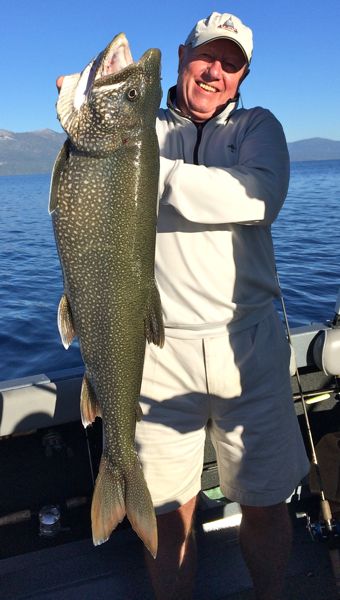
Massive mackinaw caught at Lake Tahoe

Alan Steel has a whopper of fishing story to tell about Lake Tahoe. Photo/Joby Cefalu

Alan Steel has a whopper of fishing story to tell about Lake Tahoe. Photo/Joby Cefalu

Alan Steel of Greenwich, Conn., reeled in this 23-pound mackinaw from Lake Tahoe this morning.

He was out on the lake early July 2 with Mile High Fishing Charter. Capt. Joby Cefalu was at the helm.

— Lake Tahoe News staff report


Conflicting reports on care at Barton Hospital

By Kathryn Reed

Mixed messages are being sent to Barton Health regarding its care for hospital patients.

“The Joint Commission is the major governing body for hospitals across the nation. They have invited us to share best practices on one of our safety measures because of our good work here,” Monica Sciuto, spokeswoman for Barton, told Lake Tahoe News. The invite came last week.

But it came on the heels of the Centers for Medicare & Medicaid Services announcing Barton Memorial Hospital is one of 761 hospitals with a high rate of patient harm.

Analysts looked at rates of infections in patients with catheters in major veins and their bladders, blood clots, bedsores and accidental falls. A score of 1 to 10 was given; with the higher number meaning the hospital had a greater rate of patient harm. Barton scored a 10.

Barton has not been officially notified about the analysis and findings.

“Barton can challenge the findings if the data presented does not seem correct. If we are notified, we will have the opportunity to validate the data and look at every case to make sure it is correct,” Clint Purvance, Barton’s chief medical officer, told Lake Tahoe News.

The goal of the feds is to quash the occurrences of people getting sicker or acquiring a new medical problem while hospitalized. Hospitals with a score of 7 or higher will receive fewer reimbursements from Medicare.

“It is our understanding that some adjustments in the measures may be made for smaller hospitals and for hospitals in rural areas because of the small patient population sizes and the large effect just a few events makes to their scores,” Purvance said.

He went on to say, “To give you a sense of scale, our daily hospital census averages 20-21 patients per day versus a larger, urban hospital who may have upward of 600 patients per day at their facility. As an example, when one patient suffered from a Foley catheter urinary tract infection, this gave us a 17 percent rate on the report. In larger hospitals, one event like this would be a small drop in the bucket.”

On the positive side, in October, Barton received the highest recognition in the American Hospital Association’s Partnership for Patient campaign. The South Lake Tahoe hospital was selected as a mentor hospital by the Centers for Medicaid & Medicare Services.

This is the same group that six months later released the unflattering report.

Part of the problem is different data are used. The negative results come from infections during the 12-month period from July 2012 through June 2013. The California Hospital Association uses current data. Final data, used for the penalty phase, will include Jan. 1, 2012, to Dec. 31, 2013, according to Purvance.

Barton posts patient safety information online. Here are some examples:

• Catheter associated urinary tract infections in 2013 – zero

• Ventilator associated pneumonias since 2010 – zero

• Central line associated blood stream infections since January 2012 – zero

• Falls with injuries since January 2012 – zero.

Barton admits in 2008 it was considered average for the number of “adverse events”. A commitment to patient safety and training employees led to a turnaround.

Today, Barton spends more than $1 million a year on staffing for patient safety and quality initiatives including a quality management team, patient safety officer and chief medical officer. In 2008, that dollar amount was $100,000.



Editorial: Conservation is a group effort

Publisher’s note: This editorial is from the the June 21, 2014, Sacramento Bee.

It’s looking like a long, hot summer – and it’s going to be even more parched if Californians don’t get with the program.

State officials reported last week that residents and businesses are falling woefully short of the 20 percent water conservation goal in Gov. Jerry Brown’s emergency drought declaration in January that he reinforced in April. The statewide reduction was a pitiful 5 percent between January and May, compared with the same period the preceding three years.

Among the state’s 10 water regions, the Sacramento Valley leads the way with 10 percent savings, but then again it has further to go than many areas to be water-efficient. Residents in Sacramento, El Dorado, Placer and Yolo counties are stepping up, reducing their combined water use by 18 percent from February through May, compared with the average for 2012 and 2013.

Read the whole story


Kubby to be chairman of medical-recreational marijuana startup

By Russell Contreras, AP

ALBUQUERQUE, N.M. — A Nevada-based startup that plans on selling medical and recreational marijuana products named former New Mexico governor and U.S. Libertarian presidential candidate Gary Johnson as its CEO and president, the company announced Tuesday.

The announcement came as Cannabis Sativa Inc. said it had acquired marijuana research business Kush while company officials work to navigate changing state laws on marijuana and potential challenges from the federal government, which still views marijuana as a controlled substance.

Steve Kubby

Steve Kubby

In addition, Cannabis Sativa announced Tuesday it named Kush’s founder, Steve Kubby of South Lake Tahoe, as its chairman.

Kubby was the 1998 Libertarian Party nominee for California governor.

Johnson said he hoped to expand Cannabis Sativa into a major marijuana business and intends to work out of New Mexico to help develop products that are legal in states like Colorado and Washington.

“I generally believe this is changing the planet for the better,” said Johnson, who will be paid $1 a year and receive equity in the company. “It also is a bet on the future … We think we have the creme de la creme of marijuana products.”

Johnson, who owned a construction company that helped build Intel Corp.’s Rio Rancho, N.M., plant before entering politics, said the company will make marijuana-based oils aimed at helping children with epilepsy. The two-term governor also said it will make cough drop-like products for recreational use.

“Couple of things hit you when you try the product. One is, wow, why would anybody smoke marijuana given this is an alternative?” Johnson said. “And then secondly, it’s just very, very pleasant. I mean, very pleasant.”

The company still is working to determine what its limitations are under federal law, which is in conflict with Colorado and Washington, Johnson said.

However, Johnson said he’s betting more states and the federal government eventually will allow recreational use of marijuana.

“I think in 10 years, for the most part, the U.S. will legalize marijuana,” Johnson said. “And what the U.S. does, so does the world.”