Music camp in Tahoe for grades 8-12

UNR is putting on the 57th Lake Tahoe Music Camp July 21-27 at the Nevada State 4-H Camp in Stateline.

Each year, nearly 200 students in grades 8-12 participate in a week of music activities, rehearsals, team building exercises and recreation time, all on the shores of beautiful Lake Tahoe.

The camp is filled with jazz and classical music workshops, clinics, performances, mentoring and instruction with award-winning University faculty, guest conductors, professional chamber singers and jazz musicians and more.

This year, the guest star of the camp is conductor Paula Crider, past president of the National Band Association and a member of the prestigious American Bandmaster’s Association in which she was only the third woman to have been honored as a member, will conduct the Lake Tahoe Music Camp Symphonic Band. She will also provide musical insight and direction to all students, serving as a role model for young musicians by teaching them the importance of being active citizens in their community and active participants in music groups at their schools.

A new addition to the camp is a team-building dance activity. Students will learn fun and simple moves to include in the mid-week lip-sync and end-of-the-week dance event.

For students looking to continue music as a major or minor at the university level, Lake Tahoe Music Camp provides leadership skills and is staffed with musicians and music majors who teach lessons, music classes and provide mentorship throughout the week.

For more info, go online.


Camp near Kyburz evacuated; fire at 160 acres

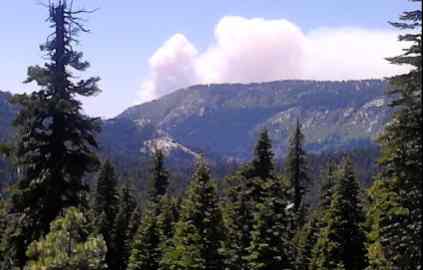
Smoke rises from a wildfire in Kyburz on July 8. Photo/Ty Robben

Smoke rises from a wildfire near Kyburz on Highway 50 on July 8. Photo/Ty Robben

Updated 11:05pm

Fire officials have revised the earlier estimate of number of acres burned in the Kyburz Fire. It is 160 acres.

A music camp in the area has been evacuated. The nearly 100 people left on their own and not to a shelter.

Updated 9pm:

The Kyburz Fire has consumed 600 acres as it moves north into timberland. There is zero containment.

This is the same area of the Fred’s Fire that burned 4,302 acres in 2004, and the much more devastating Cleveland Fire of 1992 that destroyed 41 homes and several outbuildings, and charred 22,485 acres.

The Kyburz Fire has destroyed one outbuilding. No other structures are threatened.

Laura Hierholzer, spokeswoman for the U.S. Forest Service, said because of those previous fires what is burning now is much smaller trees in the Eldorado National Forest.

Updated 8:25pm

The fire has grown to 50 acres.

Highway 50 is open to controlled traffic in various sections through the American River canyon.

Six air tankers, five helicopters, 13 engines, six hand crews and five water tenders were helping fight the blaze.

A plume of smoke from the Kyburz Fire could be seen from as far away as Cave Rock Monday night.

—-

Highway 50 near Kyburz is closed in both directions because of a wildland fire.

It is believed that a trailer lost a wheel and sparked the blaze that was first reported at 12:41pm July 8.

The fire is on the south side of the highway. It has consumed at least 5 acres.

Traffic is being held in Meyers on the east and at Sly Park Road on the west side. There is no estimate on when the highway will be open.

“The fire started in a rural section of the highway between White Hall and Kyburz. It is spreading east,” Caltrans officials said in a press release.

No evacuations have been ordered, but a nearby music camp has been notified of the blaze.

Wind is fanning the flames.

The U.S. Forest Service is the lead agency.

— Lake Tahoe News staff report


Sierra Club ready to put on summer event

The Tahoe Area Sierra Club’s annual Summer Party is July 17 at Regan Beach in South Lake Tahoe from 5-8pm.

The sunset party will include an exhibit by local photographer Jon Paul, music and a silent auction. Gourmet food will be served along with select wine from Naked Wines.

The annual summer party is the largest fundraising event of the year for the local Sierra Club.

The $35 tickets available at Aspen Hollow Nursery, Lake of the Sky Outfitters, Emerald Bay Nursery and League to Save Lake Tahoe. Tickets at the event will be $40.


Pedestrian dies from injuries sustained July 4

A Sparks man has died from the injuries he sustained while walking to see the fireworks at Donner Lake on July 4.

Leonard Richard Whitlow, 46, was reportedly hit by bicycle rider Petra Bakker-Borhani, 24, of Truckee on Donner Pass Road along Donner Lake.

Whitlow died at Renown Medical Center in Reno, Truckee police announced July 8.

Bakker-Borhani was initially arrested on charges of driving under the influence. More charges are likely.

Anyone with information about the collision is asked to call (530) 550.2335 or email rwomack@townoftruckee.com.

— Lake Tahoe News staff report


RV, USFS truck collide in Meyers

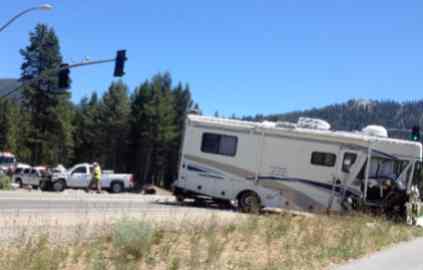
An RV was in an accident July 8 in Meyers with a USFS truck. Photo/Brad Perry

An RV was in an accident July 8 in Meyers with a USFS truck. Photo/Brad Perry

Updated 8:41pm:

An 87-year-old Pleasant Hill man told officials he didn’t hear the lights and sirens.

A U.S. Forest Service captain was making a left on Highway 50 from Pioneer Trail in Meyers on a red light to get to the fire in Kyburz, but the RV didn’t yield and the two vehicles collided when they reached the intersection at the same time.

No names have been released.

CHP officers are still investigating the accident.

—-

A U.S. Forest Service truck on its way to the fire in Kyburz was involved in a collision with an RV Monday afternoon.

The accident occurred at 1:44pm July 8 at the intersection of Highway 50 and Pioneer Trail in Meyers.

According to Jeff Gartner with the California Highway Patrol, one person was taken to Barton Memorial Hospital for evaluation.

A witness said he saw firefighters help a woman, who appeared to be OK, out of the front window of the RV.

The Forest Service truck, according to the witness, had lights and sirens on when it entered the intersection on the red light. The RV was towing a vehicle and swerved into a ditch.

The CHP said details would be forthcoming.

— Lake Tahoe News staff report


State of emergency declared in Douglas County

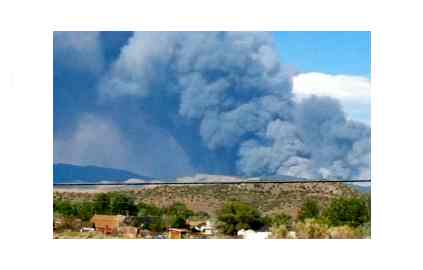
A huge plume of smoke rises July 7 from the Bison Fire. Photo/Sharon Resnikoff

A huge plume of smoke rises July 7 from the Bison Fire. Photo/Sharon Resnikoff

Updated 8:42pm:

The Bison Fire is at 21,337 acres and 25 percent containment.

Authorities say the threat to the 20 buildings is diminishing.

Douglas County commissioners declared a state of emergency. This allows the county to request additional state resources and assistance, as well as federal assistance, should the governor deem a state of emergency.

Updated 2:35pm:

Crews are gearing up for another wind event this afternoon and fire activity similar to yesterday.

The Bison Fire has grown to 17,000 acres.

No injuries have been reported, but the fire ran through the Slater Mine area destroying several old structures.

The following road closures for non-residents are in place for:

· Pine Nut Road at the intersection of Out-R-Way

· East Valley at Grandview

· Sunrise Pass at Coyote Rocks

· Brunswick Canyon

· Mexican Dam

· Sunrise Pass at Artesia Road.

Other voluntary evacuation notice remain in effect for about 20 structures in the area.

—–

Projected containment of the Bison Fire has been pushed back to July 14 because winds have hampered firefighting efforts.

Crews report progress was made overnight. However, Sunday’s winds dropped the containment of the Douglas County blaze to 15 percent.

The fire was extremely active on the northeast side on the afternoon of July 7 and into the evening. It is burning in the Pine Nut mountains.

The fire started from a lightning strike on July 4.

No injuries have been reported, but the fire ran through the Slate Mine area destroying several old structures. The number of structures destroyed is not known at this time.

Pine Nut Road remains closed to non-residents at the intersection of Out-R-Way. A voluntary evacuation notice remains in effect for about 20 structures in the area.

Officials are asking people to stay out of the area.

— Lake Tahoe News staff report


Raspberry bars good enough for athletes

By Kathryn Reed

Refueling is always a good thing to do after an athletic endeavor. The tennis team I was on earlier this season had no problem doing this – at least at home matches.

It is the home team’s responsibility to provide the food after the match.

k's kitchenIn previous leagues I played in it was oranges, bananas and water. Not so with the bunch.

While fruit and water are available, what this group puts out is almost like a gourmet buffet.

I have not made the recipe below, so I don’t know the difficulty, if any, involved, but I can tell you they are yummy. Maybe they should be served at Wimbledon instead of strawberries and cream.

Carel brought these raspberry bars twice. They were devoured. The original recipe is from Scott Peacock, contributing editor to Better Homes and Gardens.

Fresh Raspberry Bars

1 C unsalted butter (2 sticks) cut into 1-inch chunks

¼ C packed light brown sugar

½ tsp kosher salt

2 C unbleached all-purpose flour

softened butter (for brushing sides of foil)

¾ C seedless raspberry jam or preserves

1 pint (2 cups) fresh raspberries

Half 8 ounce package cream cheese, softened

4 ounces goat cheese (chevre) or 4 oz. cream cheese

½ C granulated sugar

1 T unbleached all-purpose flour

1 large egg

1 egg yolk

2 T finely shredded lemon peel (zest)

2 T freshly squeezed lemon juice

½ tsp pure vanilla

Powdered sugar

Preheat oven to 350 degrees. Line a 13x9x2-inch baking pan with a 24-inch-long sheet of aluminum foil, leaving extra foil extending over ends (use these later to lift bars from pan); set aside. In a large bowl beat the butter with an electric mixer on medium to high speed until it just begins to blend and soften slightly, about 30 seconds.

Add brown sugar and salt, beat on low speed until incorporated, 30 seconds to 1 minute. You’re not trying to cream it, you’re just mixing it in. With mixer off, add the 2 cups flour. Beat on low speed until flour is incorporated. Increase speed to medium, mix until ingredients form an even, cohesive dough.

Break dough into small chunks and distribute in prepared pan; with your fingers press dough into an even layer. Bake 20 minutes or until dough has begun to puff and is just set. Cool on wire rack 5 minutes.

Lightly brush exposed sides of foil with softened butter to keep filling from sticking. Spread jam evenly over crust.

Sprinkle evenly with raspberries.

With a lemon zester, remove peel from lemon, making sure to avoid bitter white pith.

In a large bowl beat cream cheese and goat cheese with an electric mixer on medium to high speed for 30 seconds. Mix in granulated sugar and 1 tablespoon flour until blended. With mixer running, add egg, egg yolk, lemon zest, lemon juice, and vanilla. Beat until smooth.

Pour custard batter evenly over berries. Tilt pan back and forth to distribute evenly. Bake at 350 degrees F for 25 to 30 minutes or until barely set. Transfer to a wire rack until completely cool, about 1 hour; cover and transfer to refrigerator. Chill 2 hours. Top will crack slightly as it cools.

Use foil to lift the bars from pan. With a knife or metal spatula, support the sides of the bars while you gently peel the foil downward and away from sides of the bars.

Cut into long bars, peel foil from bottom, and transfer to cutting boars using side of a long knife or spatula. Cut into 24 squares

Sprinkle very lightly with powdered sugar.


Phone-charging kiosks become public gathering areas

By Joshua Brustein, Bloomberg Businessweek

Urban designers take note: If you want to create modern-day public squares that encourage strangers to cross paths, try offering outlets at which passers-by can plug in their phones.

AT&T has begun installing solar-powered phone-charging stations on locations around New York City. The thin towers are topped by solar panels and contain batteries to collect energy for nighttime use.

The company bought 25 charging stations priced around $8,000 each from Goal Zero, a solar-power company that worked with the design consultancy Pensa on the devices. AT&T began installing them a few weeks ago and was hoping to have them all up and working by this month.

In a pilot project last summer, Pensa said it was able to persuade people to congregate in a vacant plot of asphalt in Brooklyn’s Dumbo neighborhood. The designers believe that once you build these things, people will come.

“We’re looking to create something that complements its surroundings and invites people to hang out and recharge. We have also found that where people gather, opportunities develop for street vendors and retail, and neglected urban areas come alive,” says Marco Perry, co-founder of Pensa.

If you needed proof of our addiction to mobile communications, pay attention to the places where people can charge their smartphones.

Bartenders, for instance, will often agree to charge customers’ phones behind the bar – so long as they’ll sit there and buy drinks while they do so. A company called GoCharge has also installed charging stations in dozens of New York bars, paid for by advertisers.

At Brooklyn’s new Barclays Arena, crowds tether themselves to phone-charging stations in the concourse, watching the Nets play basketball on television screens while they’re paying to be there in person.

Last year, when the city faced widespread power failures in the wake of Hurricane Sandy, available outlets in ATM kiosks, coffee shops, and the odd adapters yoked to bicycle-powered generators helped sustain desperate crowds.

Creating mini-public spaces to feed popular demand for wireless communication became part of New York’s attempt to reinvent its pay phones.

Last year, after the city turned several pay phone stations into wireless hotspots, officials found that people who connected to the networks stayed in place for more than half an hour. The winning design in a contest the city ran earlier this year to reimagine pay phones included a Wi-Fi hotspot, while rival designs called for charging stations to be built-in.

The city renegotiates the franchises for its pay phones next fall. Don’t be surprised if, in the years to come, they’re the most popular places in town.


Inmates cleanup in county fair culinary categories

Since 2007, El Dorado County inmates in the South Lake Tahoe Jail have amassed more than 70 first, second, and third place ribbons at the county fair. This year was no exception.

The inmates in the culinary arts program earned 31 ribbons: 12 firsts, 11 seconds, and six thirds.

In 2007 the El Dorado Sheriff’s Department formed a partnership with the Lake Tahoe Community College to expand the college’s existing culinary arts program to the sheriff’s Tahoe jail. Every year the inmates test their quality by entering the El Dorado County Fair in the Baking and Fiery Fair categories.

The inmates develop not only cooking and baking skills, but pride and life skills as well, which leads to an improved chance of not returning to jail. Many of the inmates quickly find jobs, not only in restaurants, but also gain employment due to the work ethic and skills learned in the program.

Some of the inmate County Fair winners for 2013 were:

Justin Bozarth: Third Place Cranberry Orange Bread, Macaroons

Joseph Genobaga: Third Place Cinnamon Rolls, Pros & Cons Cake

Robert Nieri: Third Place Grandma’s Cookies, Golden Honey Granola Bar

David Martinez: First Place Raspberry Swirl Coffee Cake

Agripino Meza: First Place Fibulas Fig Preserves

Derek Bond: First Place Banana Nut Bread, Chocolate Cream Pie, Second Place Spicy cookie

Chris Hunter: First Place Pumpkin Bread, and Second Place Bundt Cake

Hollee Johnson: First Place Lemon Bread, and Second Place Cinnamon Rolls, Coffee Cake, Meringue Mushrooms, with Third Place- Caramel Popcorn

Ben Sharp: First Place Florentine Cookies, and Second Place Zucchini Bread Pecan Bars.


Nature’s East Coast classroom may benefit Tahoe

By Patricia Craig, Penn State

UNIVERSITY PARK, Pa. — Matt Hurteau spends a lot of time climbing trees. The assistant professor in the Department of Ecosystems Science and Management in the College of Agricultural Sciences, joined Penn State in July 2011, filling an Earth Systems Ecologist position jointly funded by PSIEE and the college.

“The position asked for someone who worked across disciplinary boundaries to tackle the kinds of questions I’m interested in,” Hurteau said. “And the thing that was abundantly clear to me when I came to Penn State was that ‘interdisciplinary work’ was not just an idyllic vision. It was reinforced that I was expected to work interdisciplinarily, which really piqued my interest.”

At the base of Hurteau’s work is the concept of carbon sequestration, particularly in forest systems. When trees photosynthesize, pulling in carbon dioxide from the atmosphere, they assimilate the carbon into wood.
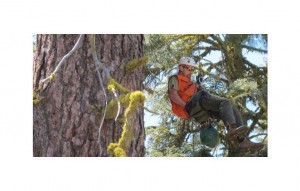
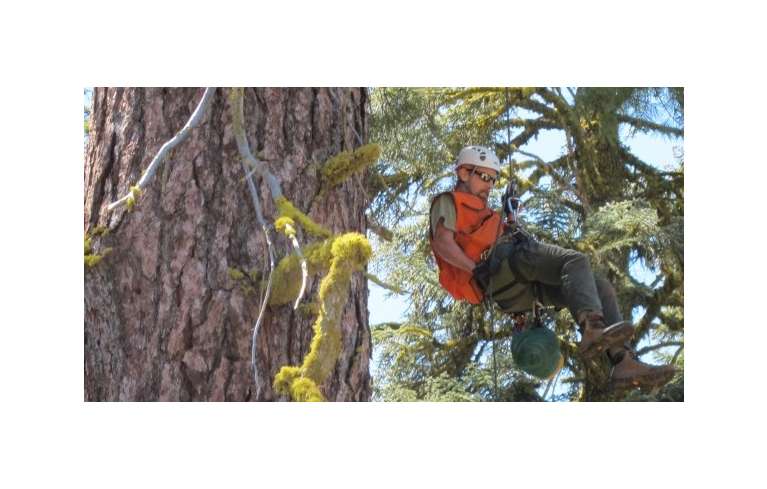
Matt Hurteau, assistant professor in the Department of Ecosystems Science and Management, rappelled down a sugar pine. Image: Penn State

Matt Hurteau rappells down a sugar pine.
Photo/Penn State

“In fact,” Hurteau said, “about half of all annual accumulated growth ring mass is carbon.” That carbon comes directly from carbon dioxide, therefore if we can encourage trees to grow more each year through an ecologically based approach, they can pull in and store more carbon from the atmosphere.

Hurteau leads the Earth Systems Ecology Lab, which includes a team of both undergraduate and graduate researchers and postdoctoral scholars. The two main undertakings of the lab are forest-based climate change mitigation and adaptation.

“The quality of people I have in my lab is absolutely integral to the work we – undergraduates, graduates and post-docs – are excited about what we are doing that really makes this fun,” said Hurteau.

One of his lab’s current projects is modeling the carbon implications of ecologically based forest management. Funded by the U.S. Department of Defense Strategic Environmental Research and Development Program (SERDP), Hurteau and his colleagues are working across three military installations to link a growth-and-yield model with a process-based model to quantify the carbon trade-offs between a range of forest management strategies.

“As the fifth largest landowner in the country, the Department of Defense has a lot of threatened and endangered species on their properties. We’re running model simulations to look at what could happen with regards to a number of different things: providing optimal habitat for a specific threatened or endangered species, changing forest structure as to minimize wildfire risk or sequestering as much carbon as possible.”

In another project funded by the U.S. Department of Agriculture’s Integrated Approaches to Climate Adaptation and Mitigation in Agroecosystems Program, the lab is investigating climate change mitigation and adaptation in fire-prone forests under different climate scenarios. Hurteau said this research is particularly interesting because he is coupling the data with different variables, including future wildfire modeling and emissions modeling. The lab is also partnering with the Desert Research Institute to present their findings to stakeholders and natural resource managers in the Lake Tahoe area.

“One of the biggest rewards to this kind of work is doing research that has societal relevance,” Hurteau said. “While I always want to push the envelope on our understanding of things, I also try to step back and look at these problems in the context of the questions being asked now by the people in decision-making positions. How can we better inform them with the information we generate from this work?”

Beginning with his undergraduate studies, Hurteau has been thoroughly immersed in scientific research. At Northern Arizona University, he studied different Native American uses of fire for land management, specifically focusing on the Kaibab Paiute Indian Reservation in northern Arizona.

“I wanted to get a degree in something that would allow me to focus my attention on the natural world” Hurteau said.

And that is exactly what he did. After a stint with a pharmaceutical company, where he used vacation time to go backpacking, Hurteau went back to school and graduated with a bachelor’s degree in Forestry from Northern Arizona University in 2001 and a doctorate in ecology from UC Davis in 2007.

As a graduate student at Davis, Hurteau focused his research on forest systems, where he looked at understory plant communities in mixed conifer forests. Hurteau explained he was investigating “how changes in climate and changes in nitrogen deposition from pollution in California coupled with prescribed burning would influence understory plant diversity and productivity in that system.”

Beyond his research, Hurteau said he thoroughly enjoys teaching, especially at the undergraduate level. Last fall, he taught his first undergraduate class: Forestry 201, Global Change and Ecosystems.

“We really seek to link the physical and natural worlds together,” Hurteau said, “and do so by focusing on the connections between our climate and terrestrial ecosystems.”

“I thoroughly enjoyed teaching that class. I had a really diverse group of students. Most of them weren’t from the sciences – a lot were in business or economics. And that challenges me even further to make sure my students have a firm grasp on the information,” he continued.

“At the end of the day, I want students to gain an appreciation for the complexities that are in the natural world, an understanding for how these things are interlinked, an appreciation for the fact that humans are such a dominant force on the planet – we can change and are changing the climate system – and ultimately to think critically about every piece of information they get.”