Shooting suspect behind bars

Gary Wilson

Gary Wilson

Update 6:35pm:

Shooting suspect Gary Wilson turned himself in to law enforcement about 3:45 this afternoon..

He faces attempted murder with use of a deadly weapon and other charges.

But was expected to be set this evening at between $100,000 and $500,000.

Douglas County officials are looking for a man who they say is armed and dangerous that they believe was involved in a shooting July 11.

The shooting occurred about 2:15pm Thursday in the Topaz Ranch Estates area.

The suspect has been identified as Gary Wilson. Wilson is described as a white male adult, 44, approximately 5-feet-10 and 180 pounds. He has brown hair and blue eyes. He was last seen wearing blue jeans and no shirt.

The victim sustained a non-life threatening gunshot wound in the shoulder.

Anyone with information regarding the whereabouts of Wilson is asked to call (775) 782.5126. Or call Secret Witness at (775) 782.7463. A reward is being offered for his capture.

 — Lake Tahoe News staff report


El Dorado County taking comments on development

Prompted by resident concerns over proposed housing developments, the El Dorado County Board of Supervisors is asking the public for additional feedback. Supervisors are considering a new policy to guide evaluation of large, privately initiated developments that would require a change to the county’s General Plan.

The county’s Community Development Agency presented a draft policy to the Board of Supervisors at a special workshop on June 27. The new policy would require an “initiation” hearing before the Board of Supervisors for projects that increase the density of residential development beyond what is currently allowed in the General Plan.

Major issues under consideration include whether the policy should apply to all projects requiring a change to the General Plan in addition to residential, and whether the policy should apply to pending projects. Thirteen projects have been submitted to the county which add a combined total of approximately 6,000 new residential units.

The Board of Supervisors directed staff to make the policy available for public comment for 30 days ending Aug. 2. A final decision is expected sometime in September.

Additional information and a copy of the proposed policy is available online.


Study: Estrogen helps females respond better to stress

By Melissa Pandika, Los Angeles Times

In the battle of the sexes, a new study places females in the lead — concluding that they respond better to repeated stress thanks to estrogen.

“It’s kind of a popular view that males and females respond differently to stress,” said University at Buffalo neuroscientist and study co-author Zhen Yan. “Our study offers the molecular mechanism.”

Yan’s group found that young female rats stressed out by a week of periodic physical restraint showed no impairment in their ability to remember and recognize objects they had been shown a few hours earlier. Young males exposed to the same stress conditions fared worse on the short-term memory test.

But when the researchers manipulated estrogen levels in the brain, female rats respond to stress like males and vice-versa.

The study, published Tuesday in the journal Molecular Psychiatry, focused on a region of the brain known as the prefrontal cortex, which is “like a CEO,” Yan explained, controlling high-level executive functions such as memory, planning and decision-making.

The team looked at the activity of receptors in the prefrontal cortex that bind with an amino acid called glutamate, which is involved in the completion of memory and planning tasks. Glutamate receptors comprise the majority of receptors in that part of the brain, Yan said.

In 2012, the team reported that male rats exposed to repeated stress lost glutamate receptors in their prefrontal cortex region, resulting in impaired performance on a number of memory tasks.

When the researchers later examined female rats as a control, they saw that females exposed to the same stress showed enhanced cognition and memory. Other animal studies have produced similar results.

Yan’s group suspected that the female sex hormone estrogen might have a protective effect against stress. It “was kind of an intuitive guess,” she said.

For the current study, the scientists physically restrained young male and female rats, placing them in a small cylindrical compartment for two hours a day over a roughly one-week period. The experiment was intended to mimic the challenging — but not dangerous or life-threatening — stress that humans face day-to-day, Yan said.

As expected, the prefrontal cortex of young males exposed to restraint stress showed a loss of glutamate receptors. In contrast, the prefrontal cortex of young females exposed to the same stress showed no change in glutamate receptor numbers.

To test the animals’ short-term memory, the researchers showed the rats two identical objects, followed by a second pair an hour later. Three hours later, they presented the rats with one object from each pair. Spending more time exploring the object from the first pair indicated that the animal remembered it from four hours prior. A preference for the more novel object from the second pair signified impaired short-term memory.

Female rats performed better on the memory test than their male counterparts. But when male rats were injected with the female hormone estradiol, they showed increased glutamate transmission, and the restraint stress had no effect on their ability to recognize objects. And when the researchers suppressed one type of estrogen receptor in the female rats’ brains, their performance suffered.

It’s still not clear exactly how estrogen protects against stress — for example, whether estrogen is affecting stress hormone release or directly affecting the glutamate receptor. Yan said her group plans to pursue this question in future research.

The study offers a scientific explanation for what has been mainly anecdotal evidence of women being better able to cope with stress than their male counterparts, Yan said.

“It’s not that there’s no reason,” she said, adding that the study might also shed light on sex differences in mental disorders.

Yan cautioned that her group’s results are based on rat studies. Still, the findings may hold relevance for humans since many cellular functions are conserved between the two species, she said.


Study: Americans living longer, but are less healthy

By Ron Winslow, Wall Street Journal

Americans are living longer than they did two decades ago, but they are losing ground on key measures of health to people in other developed nations, a study shows.

The findings, from the most comprehensive analysis of the health of the U.S. population in more than 15 years, show progress in reducing death rates, adjusted for age, across a variety of diseases. But death rates from illnesses associated with obesity, such as diabetes and kidney disease, as well as neurological conditions like Alzheimer’s disease, are on the rise.

Meanwhile, the number of years of living with chronic disability, an indicator of quality of life, rose for the average American in the past 20 years, partly reflecting increased longevity.

Despite gains in longevity, Americans are living the extra years “not necessarily in good health,” said the researchers, led by Christopher Murray, director of the Institute for Health Metrics and Evaluation at the University of Washington in Seattle.

The study was published Wednesday by JAMA, the Journal of the American Medical Association. Murray also presented the results, along with separate reports on physical activity and obesity in counties across the U.S., at a White House event hosted by first lady Michelle Obama as part of her campaign against childhood obesity.

Murray said the U.S. has also made important headway against such problems as strokes; certain cancers, including colon and breast cancers; and HIV, the virus that causes AIDS. “It’s important to recognize that there are some areas where we do well,” he said.

With annual health-care outlays in the U.S. totaling nearly 18 percent of gross domestic product, according to federal data, outside experts cast the study’s findings in economic terms.

“Despite a level of health expenditures that would have seemed unthinkable a generation ago, the health of the U.S. population has improved only gradually and has fallen behind the pace of progress in many other wealthy nations,” said Harvey V. Fineberg, president of the Institute of Medicine, in an editorial accompanying the report. The IOM advises the government on health matters.

In every measure examined, including life expectancy and quality of life, Fineberg said, the U.S. ranking fell among the 34 members of the Organization for Economic Co-operation and Development, a think tank for developed countries.

Michael Roizen, chief wellness officer at the Cleveland Clinic in Ohio, said the findings put the U.S. at a disadvantage in the global job market. But he said much of the problem could be addressed by better diet, smaller food portions, increased physical activity, quitting smoking and better management of stress. “They are things we totally have control over,” he said.”It’s a matter of us getting serious about this.”

The analysis was based on data for 291 diseases and 67 risk factors for disease, as well as a variety of government-sponsored health surveys. It included data from 187 countries, making it one of the most ambitious efforts undertaken to assess the disease burden not only in the U.S. but around the world.

In the U.S., life expectancy rose three years to 78.2 years in 2010 from 75.2 in 1990, researchers found. But the nation’s ranking among OECD countries fell to 27th from 20th 20 years earlier.

A doctor examines a patient in Miami earlier this year. Life expectancy in the U.S. rose three years to 78.2 years in 2010 from 75.2 in 1990.

Moreover, people were in good health, or without short- or long-term disabilities, for just 68.1 of those years on average, the report found. The gap of 10.1 years between total life span and a healthy life span rose from 9.4 years in 1990, and the U.S. ranking for a healthy life span fell to 26th from 14th two decades ago.

Despite progress on cardiovascular disease and some cancers, the lead causes of premature death in the U.S. remained heart disease, lung cancer and strokes. Leading contributors to disability were lower-back pain and other disorders of muscles, nerves and joints, as well as depression and anxiety.

While many chronic disabling conditions play only a limited role in premature death, they are major drivers of health-care costs, Dr. Murray said. “We are not very good at preventing them or curing them and only mildly good at treating them.”

Researchers also found that poor dietary habits have overtaken smoking as the most important risk factor associated with years of life lost to disability and to premature death.

Findings from the county studies presented at the White House show a substantial increase in physical activity, including in Kentucky, a state that traditionally has trailed in healthy living habits. But over 20 years, he said, not one county in the U.S. reduced the burden of obesity among its residents.

For Sister Donna Hawk, who left a job as a hospital chaplain at the beginning of this year, the link between longer life and potential disability came into focus when she recently turned 70. Her father died just before turning 70, having had two open heart surgeries, and other family members had similar problems. She herself has seven stents in her heart, and had been overweight.

“So I’m thinking in their older age, they weren’t as healthy as they wanted to be,” she said. “I feel like I have a few good years ahead of me and I wanted to take care of myself in such a way that I could enjoy myself.”

She has lost 25 pounds in the past year, partly through a program at the Cleveland Clinic. She has improved her cholesterol, has started a plant-based diet and has begun exercising regularly.

“I’m not ready to go yet,” she said.



Dessert and breakfast — cobbler with fresh fruit

By Kathryn Reed

I’m a big fan of leftovers – the whole cook once, eat multiple times thing.

Usually my dinner extras become lunch. But what I really love is when dessert becomes breakfast.

So it is this week with the peach-blueberry cobbler I made over the weekend. The guests left and in the fridge were two “extra” servings. Breakfast.

k's kitchenConsidering some of things people consume for breakfast – doughnuts, sugary cereals and the like – cobbler isn’t so bad. I can also justify most things I want to eat, so maybe I’m not the best one to take advice from. For instance, the vanilla ice cream on top gave me my calcium for the day.

The recipe is from a 2007 issue of Cooking Light magazine.

Besides being super tasty, it is easy to make.

I used peaches from the farmers’ market, but had to get the blueberries from the grocery store because if the market had the berries, I shopped too late.

I did not peel the peaches nor did I use the cooking spray or turbinado sugar.

Peach-Blueberry Cobbler

Filling

½ C granulated sugar

2 T all-purpose flour

½ tsp grated lemon rind

¼ tsp salt

3 C chopped peeled peaches (about 2 pounds)

2 C fresh blueberries

1 T fresh lemon juice

Cooking spray

Topping:

1 1/3 C all-purpose flour

1/3 C granulated sugar

½ tsp baking powder

¼ tsp salt

3 T chilled butter, cut into small pieces

2/3 C low fat buttermilk

1½ T turbinado sugar

Preheat oven to 400 degrees.

To prepare filling, combine first 4 ingredients in a large bowl. Add peaches, blueberries, and juice. Spoon mixture into an 8-inch square baking dish coated with cooking spray. Bake at 400 degrees for 15 minutes.

To prepare topping, lightly spoon 1 1/3 cups flour into dry measuring cups; level with a knife. Combine flour, 1/3 cup granulate sugar, baking powder, and ¼ teaspoon salt, stirring with a whisk. Cut in butter with a pastry blender or 2 knives until mixture resembles coarse meal. Add buttermilk; stir just until moist.

Remove dish from oven; drop dough onto peach mixture to form 9 rounds. Sprinkle dough evenly with turbinado sugar. Bake at 400 degrees for 25 minutes or until bubbly and golden.


Kyburz Fire fully contained

The Kyburz Fire was completely contained Thursday, a day sooner than originally expected.

U.S. Forest Service personnel repeatedly changed the number of acres that were burned. The latest total is 572 acres.

The blaze began Monday afternoon when a vehicle on Highway 50 lost a wheel and that sparked the fire.

The fire took out a shed and an outhouse in the Eldorado National Forest.

— Lake Tahoe News staff report


Missing woman may be in South Lake Tahoe

El Dorado County sheriff’s deputies are looking for a young woman who was last seen July 6 at 7am.

Elise Hays

Elise Hays

Elise Hays, 20, has a developmental disorder and has only physically and mentally developed to the age of 12.

She left her residence in Pollock Pines last Saturday morning. She is possibly in the South Lake Tahoe area.

Deputies said Hays has been known to take up residency with homeless subjects in the past.

She is 4-feet-6-inches, 80 pounds, with blonde hair and blue eyes.

If anyone sees her, call 911 or contact Detective Troy Morton at (530) 642.4712 with information regarding her whereabouts.

— Lake Tahoe News staff report


All restrictions lifted in Bison Fire

Updated 7:25pm:

The Bison Fire is at 91 percent containment.

Firefighters working the Bison Fire in Douglas County have started mopping-up and are conducting fire-line rehab.

All evacuations and road closures have been lifted. One old mining structure was consumed by the fire.

Crews will continue to extinguish the hot spots on the north and southeast edges of the fire that has been burning in the Pine Nut mountains since July 4 when lightning struck.

As of this morning, the 24,136-acre blaze is 80 percent contained. Full containment is expected on Sunday.

Personnel have been pulled off this blaze are being deployed to other fires in the country. One firefighter twisted a knee and another had issues with breathing.

The cost, to date, of fighting the Bison Fire is $5,657,204.

— Lake Tahoe News staff report


Pet psychic event benefits SPCA

The SPCA of Northern Nevada presents a workshop with famed local pet psychic Terri Jay.

Learn to communicate with all pets in this one day intensive workshop. Participants will receive Jay’s ebook “Intuitive Messenger Bootcamp”.

Online registration is required.

The event is Aug. 18 from 9am-4pm at 4950 Spectrum Blvd., Reno.

Cost is $99 for one and $179 for two people.


2-time breast cancer survivor conquers Mt. Shasta

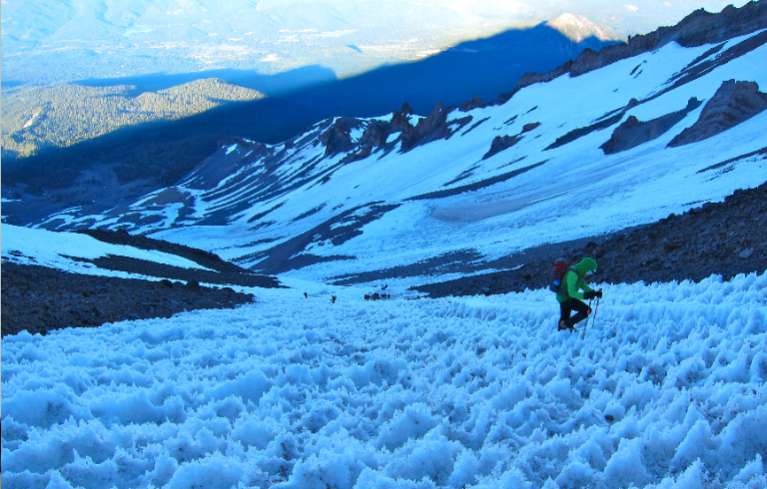
Linda Kazmar climbs Avalanche Gulch after sunrise June 22. Photo/Jeff Kazmar

Linda Kaczmar of South Lake Tahoe climbs Avalanche Gulch on Mount Shasta after sunrise June 22. Photos/Jeff Kaczmar

By Kathryn Reed

Today will be Linda Kaczmar’s last reconstructive surgery. It is one of many milestones for her in 2013.

It was not a decision she thought she would have to make again. When she went through all the breast cancer treatments 10 years ago she believed she was done with oncology wards.

But a lump in the same breast, discovered by a self-exam – like the first – that also didn’t show up on an X-ray, was enough to get her to see her doc.

It was back. And this time she was going in for a double mastectomy.

However, Kaczmar wasn’t about to let cancer get in the way of plans she had already made.

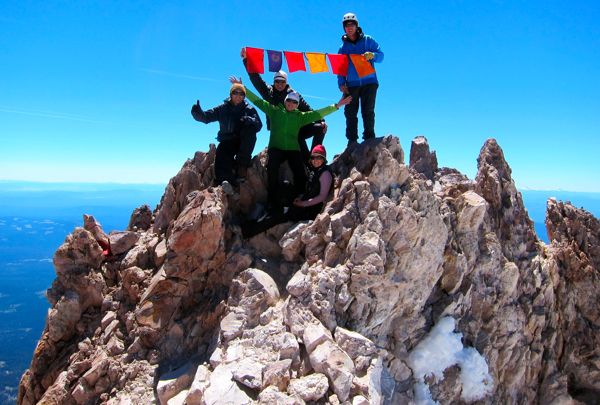
 At the summit -- 14,179 feet.  Jeff Kaczmar, from left, Steve Bannar, Linda Kaczmar, Chris Kozlowski, and John Dayberry (standing). Photo/Jeff Kazmar


At the summit — 14,179 feet. Jeff Kaczmar, from left, Steve Bannar, Linda Kaczmar, Chris Kozlowski, and John Dayberry (standing).

Before the January diagnosis she decided that same month to climb Mount Shasta – again. On the first attempt 10 years ago she didn’t summit. Her friend Chris Kozlowski said absolutely she would be alongside her on the trail this time. Then Stella Ortega joined in on the training.

And so began the South Lake Tahoe women’s – Quest for Shasta, 3 Girls and a Mountain.

Kaczmar credits her doctors at UC San Francisco for arranging their schedules to work with her training and desire to conquer the 14,179-foot mountain.

On June 21 (the summer solstice) – what had become an expedition of three girls and three guys – reached Helen Lake base camp at 10,000 feet. Ortega was not feeling well the next day and ended her quest there.

The others headed out about 2:30am June 22 with headlamps on. Soon those were put in packs and the five were walking under the light of the super moon.

The men along on the ascent were Kaczmar’s 28-year-old son Jeff, Steve Bannar – who two years ago performed knee replacement surgery on Kaczmar, and John Dayberry.

All five had their own stories about why they wanted to climb this mystical mountain that is the No. 1 Earth chakra. But the overriding reason was to accompany Kaczmar on her path to the top.

“The mountain was good to me that day. She helped me summit,” Kaczmar told Lake Tahoe News. She is the first to admit the climb was not easy – “it was very, very hard.” After all, it was 7,000 vertical feet.

At one point Bannar gave her a stern pep talk. Her son spoke words of encouragement. Kozlowski knew their training would pay off.

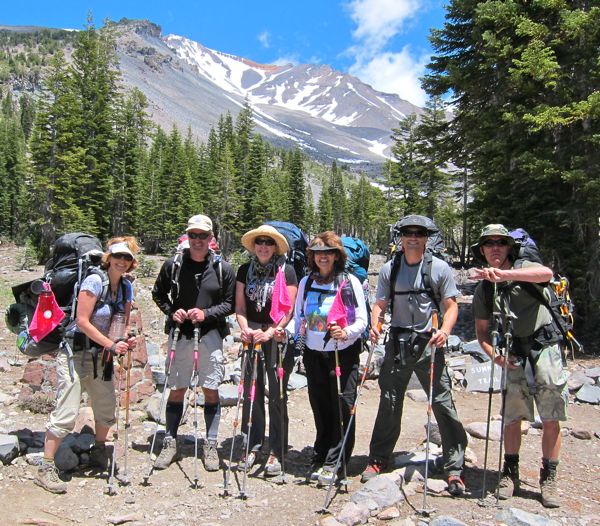
Going to base camp, from left,  Chris Kozlowski, Steve Bannar, Linda Kaczmar, Stella Ortega, Jeff Kaczmar and John Dayberry.

Going to base camp, from left, Chris Kozlowski, Steve Bannar, Linda Kaczmar, Stella Ortega, Jeff Kaczmar and John Dayberry.

“She was really struggling. We both agreed it was more than just us there. There’s a lot of energy on that mountain,” Dayberry said. “We had those discussions about heavy power points like Cave Rock and other sacred places. You have to tap into that. You gain healing and you gain energy from that and you go with that.”

Then, about 500 feet from the top they came across a woman “stuck” on the trail, saying she couldn’t make it. Bannar said, “Oh yes, you can” and took her pack. Kaczmar told her about being a two-time breast cancer survivor and she was going to the top and pulled the woman along. The woman, in her 20s, was there for her brother’s girlfriend who was diagnosed with breast cancer.

This Northern California mountain calls to many who have been touched by cancer. It’s the spirituality of the peak, the energy it emits. When Kaczmar was on the mountain 10 years ago she was with a group from the Breast Cancer Fund.

This time the fivesome did the climb without a guide.

A woman on the first expedition told Kaczmar, “It isn’t about the summit, it’s the journey on the mountain.”

And while today that is true for all of them, the Champagne Kozlowski popped open at the top flowed just as freely as the congratulatory hugs. There was something powerful about summiting – an accomplishment that the healthiest of climbers can be proud of.

Kaczmar turns 60 in November. The next adventure for this two-time cancer survivor is to have a voyage of some kind with her younger son who was not able to make the Shasta Climb.