Conservationists score with court’s biomass ruling

By Tennille Tracy, Wall Street Journal

WASHINGTON — A federal appeals court on Friday put pressure on the Environmental Protection Agency to move quickly on a rule that addresses carbon-dioxide emissions from power plants that burn timber and agricultural waste to generate electricity.

The U.S. Court of Appeals for the District of Columbia Circuit struck down an EPA rule postponing greenhouse-gas standards for new biomass power plants, but it didn’t specify a timetable for the agency to act. The court said the EPA had failed to justify its reasons for the delay.

The ruling comes just weeks after President Obama unveiled a broad new plan to address climate change, targeting mostly emissions from power plants that burn coal or natural gas.

Friday’s decision could also have a direct impact on a handful of new facilities that recently obtained permits or are in the process of getting them now.

“Our industry needs regulatory certainty so that biomass resources can be utilized to their fullest extent,” said Bob Cleaves, president of the Biomass Power Association.

EPA spokeswoman Enesta Jones said the agency “will review the decision to determine any next steps.”

At issue is the EPA’s 2011 decision to postpone a greenhouse gas rule for “biogenic” sources of carbon dioxide—that is, emissions that come from materials other than fossil fuels.

The EPA said at the time it needed three years to study these emissions because their net effect on the environment is difficult to calculate. Part of the equation, the agency says, is figuring out much carbon dioxide trees and other biological materials absorb from the atmosphere before being decomposed or burned, emitting carbon dioxide back into the atmosphere.

Biomass power plants are one large source of these emissions, but landfills, ethanol producers and other facilities also emit carbon dioxide.

The industry says biomass plants are far better for the environment than facilities that burn fossil fuels, but critics disagree.

Kevin Bundy, senior attorney with the Center for Biological Diversity, the group that sued the EPA, said the emissions still needed to be addressed. “There has been a huge push over the last few years to build these wood-fired power plants, under the theory that it’s clean power,” Bundy said. “Our real concern is that this rush to build these plants will actually make the climate problem worse.”


All-day workshop all about lavender

Students learn about lavender in a workshop at Campie's Lavender. Photo/Western Nevada College

Students learn about lavender in a workshop at Campie’s Lavender. Photo/Western Nevada College

The Western Nevada College Specialty Crop Institute is offering a value-added lavender workshop Aug. 19, 9am-4:30pm at the Carson City campus.

It will include a lavender farm tour. Cost is $35 for those registering by Aug. 12, $45 afterward. Lunch is included. Seating is limited, and registration is required.

The workshop will begin at Campie’s Lavender Patch in Stagecoach where owner Mike van Camp will demonstrate the distillation process for lavender essential oil and hydrosol. Following the farm tour, a classroom lecture at the WNC Carson City campus will focus on the benefits of developing value-added products and identifying the best varieties to grow.

Featured speakers include farmers van Camp and Elizabeth Inman of Purple Adobe Lavender Farm in New Mexico. Inman has grown lavender commercially for almost a decade.

For information/registration contact Ann Louhela at (775) 423.7565, ext. 2260 or ann.louhela@wnc.edu.


Is ingesting sugar like consuming a toxin?

By Ferris Jabr, Scientific American

Our very first experience of exceptional sweetness — a dollop of butter cream frosting on a parent’s finger; a spoonful of strawberry ice cream instead of the usual puréed carrots — is a gustatory revelation that generally slips into the lacuna of early childhood. Sometimes, however, the moment of original sweetness is preserved.

A YouTube video from February 2011 begins with baby Olivia staring at the camera, her face fixed in rapture and a trickle of vanilla ice cream on her cheek. When her brother Daniel brings the ice cream cone near her once more, she flaps her arms and arches her whole body to reach it.

Considering that our cells depend on sugar for energy, it makes sense that we evolved an innate love for sweetness. How much sugar we consume, however — as well as how it enters the body and where we get it from in the first place — has changed dramatically over time. Before agriculture, our ancestors presumably did not have much control over the sugars in their diet, which must have come from whatever plants and animals were available in a given place and season.

Around 6,000 BC, people in New Guinea began to grow sugarcane, chewing and sucking on the stalks to drink the sweet juice within. Sugarcane cultivation spread to India, where by 500 BC people had learned to turn bowls of the tropical grass’s juice into crude crystals. From there sugar traveled with migrants and monks to China, Persia, northern Africa and eventually to Europe in the 11th century.

For more than 400 years, sugar remained a luxury in Europe — an exotic spice — until manufacturing became efficient enough to make “white gold” much more affordable. Christopher Columbus brought sugarcane to the New World in 1493 and in the 16th and 17th centuries European powers established sugarcane plantations in the West Indies and South America.

Sugar consumption in England increased by 1,500 percent between the 18th and 19th centuries. By the mid-19th century, Europeans and Americans had come to regard refined sugar as a necessity. Today, we add sugar in one form or another to the majority of processed foods we eat — everything from bread, cereals, crunchy snacks and desserts to soft drinks, juices, salad dressings and sauces—and we are not too stingy about using it to sweeten many raw and whole foods as well.

By consuming so much sugar we are not just demonstrating weak willpower and indulging our sweet tooth — we are in fact poisoning ourselves according to a group of doctors, nutritionists and biologists, one of the most prominent members of which is Robert Lustig of UC San Francisco, famous for his viral YouTube video “Sugar: The Bitter Truth.”

A few journalists, such as Gary Taubes and Mark Bittman, have reached similar conclusions. Sugar, they argue, poses far greater dangers than cavities and love handles; it is a toxin that harms our organs and disrupts the body’s usual hormonal cycles. Excessive consumption of sugar, they say, is one of the primary causes of the obesity epidemic and metabolic disorders like diabetes, as well as a culprit of cardiovascular disease. More than one-third of American adults and approximately 12.5 million children and adolescents in the U.S. are obese. In 1980, 5.6 million Americans were diagnosed with diabetes; in 2011 more than 20 million Americans had the illness.

The argument that sugar is a toxin depends on some technical details about the different ways the human body gets energy from different types of sugar. Today, Americans eat most of their sugar in two main forms: table sugar and high-fructose corn syrup. A molecule of table sugar, or sucrose, is a bond between one glucose molecule and one fructose molecule — two simple sugars with the same chemical formula, but slightly different atomic structures. In the 1960s, new technology allowed the U.S. corn industry to cheaply convert corn-derived glucose intro fructose and produce high fructose corn syrup, which despite its name is almost equal parts free-floating fructose and glucose: 55 percent fructose, 42 percent glucose and three percent other sugars. Because fructose is about twice as sweet as glucose, an inexpensive syrup mixing the two was an appealing alternative to sucrose from sugarcane and beets.

Regardless of where the sugar we eat comes from, our cells are interested in dealing with fructose and glucose, not the bulkier sucrose. Enzymes in the intestine split sucrose into fructose and glucose within seconds, so as far as the human body is concerned sucrose and high-fructose corn syrup are equivalent. The same is not true for their constituent molecules. Glucose travels through the bloodstream to all of our tissues, because every cell readily converts glucose into energy. In contrast, liver cells are one of the few types of cells that can convert fructose to energy, which puts the onus of metabolizing fructose almost entirely on one organ. The liver accomplishes this primarily by turning fructose into glucose and lactate. Eating exceptionally large amounts of fructose taxes the liver: it spends so much energy turning fructose into other molecules that it may not have much energy left for all its other functions. A consequence of this energy depletion is production of uric acid, which research has linked to gout, kidney stones and high blood pressure.

The human body strictly regulates the amount of glucose in the blood. Glucose stimulates the pancreas to secrete the hormone insulin, which helps remove excess glucose from blood, and bolsters production of the hormone leptin, which suppresses hunger. Fructose does not trigger insulin production and appears to raise levels of the hormone grehlin, which keeps us hungry. Some researchers have suggested that large amounts of fructose encourage people to eat more than they need. In studies with animals and people by Kimber Stanhope of UC Davis and other researchers, excess fructose consumption has increased fat production, especially in the liver, and raised levels of circulating triglycerides, which are a risk factor for clogged arteries and cardiovascular disease. Some research has linked a fatty liver to insulin resistance—a condition in which cells become far less responsive to insulin than usual, exhausting the pancreas until it loses the ability to properly regulate blood glucose levels. Richard Johnson of the University of Colorado Denver has proposed that uric acid produced by fructose metabolism also promotes insulin resistance. In turn insulin resistance is thought to be a major contributor to obesity and Type 2 diabetes; the three disorders often occur together.

Because fructose metabolism seems to kick off a chain reaction of potentially harmful chemical changes inside the body, Lustig, Taubes and others have singled out fructose as the rotten apple of the sugar family. When they talk about sugar as a toxin, they mean fructose specifically. In the last few years, however, prominent biochemists and nutrition experts have challenged the idea that fructose is a threat to our health and have argued that replacing fructose with glucose or other sugars would solve nothing. First, as fructose expert John White points out, fructose consumption has been declining for more than a decade, but rates of obesity continued to rise during the same period. Of course, coinciding trends alone do not definitively demonstrate anything. A more compelling criticism is that concern about fructose is based primarily on studies in which rodents and people consumed huge amounts of the molecule — up to 300 grams of fructose each day, which is nearly equivalent to the total sugar in eight cans of Coke — or a diet in which the vast majority of sugars were pure fructose. The reality is that most people consume far less fructose than used in such studies and rarely eat fructose without glucose.

On average, people in America and Europe eat between 100 and 150 grams of sugar each day, about half of which is fructose. It’s difficult to find a regional diet or individual food that contains only glucose or only fructose. Virtually all plants have glucose, fructose and sucrose — not just one or another of these sugars. Although some fruits, such as apples and pears, have three times as much fructose as glucose, most of the fruits and veggies we eat are more balanced. Pineapples, blueberries, peaches, carrots, corn and cabbage, for example, all have about a 1:1 ratio of the two sugars. In his New York Times magazine article, Taubes claims that “fructose … is what distinguishes sugar from other carbohydrate – rich foods like bread or potatoes that break down upon digestion to glucose alone.”

This is not really true. Although potatoes and white bread are full of starch — long chains of glucose molecules — they also have fructose and sucrose. Similarly, Lustig has claimed that the Japanese diet promotes weight loss because it is fructose-free, but the Japanese consume plenty of sugar — about 83 grams a day on average — including fructose in fruit, sweetened beverages and the country’s many meticulously crafted confectioneries. High-fructose corn syrup was developed and patented in part by Japanese researcher Yoshiyuki Takasaki in the 1960s and ’70s.

Not only do many worrying fructose studies use unrealistic doses of the sugar unaccompanied by glucose, it also turns out that the rodents researchers have studied metabolize fructose in a very different way than people do — far more different than originally anticipated. Studies that have traced fructose’s fantastic voyage through the human body suggest that the liver converts as much as 50 percent of fructose into glucose, around 30 percent of fructose into lactate and less than one percent into fats. In contrast, mice and rats turn more than 50 percent of fructose into fats, so experiments with these animals would exaggerate the significance of fructose’s proposed detriments for humans, especially clogged arteries, fatty livers and insulin resistance.

In a series of meta-analyses examining dozens of human studies, John Sievenpiper of St. Michael’s Hospital in Toronto and his colleagues found no harmful effects of typical fructose consumption on body weight, blood pressure or uric acid production. In a 2011 study, Sam Sun—a nutrition scientist at Archer Daniels Midland, a major food processing corporation—and his colleagues analyzed data about sugar consumption collected from more than 25,000 Americans between 1999 and 2006. Their analysis confirmed that people almost never eat fructose by itself and that for more than 97 percent of people fructose contributes less daily energy than other sugars. They did not find any positive associations between fructose consumption and levels of trigylcerides, cholesterol or uric acid, nor any significant link to waist circumference or body mass index (BMI).

And in a recent BMC Biology Q&A, renowned sugar expert Luc Tappy of the University of Lausanne writes: “Given the substantial consumption of fructose in our diet, mainly from sweetened beverages, sweet snacks, and cereal products with added sugar, and the fact that fructose is an entirely dispensable nutrient, it appears sound to limit consumption of sugar as part of any weight loss program and in individuals at high risk of developing metabolic diseases. There is no evidence, however, that fructose is the sole, or even the main factor in the development of these diseases, nor that it is deleterious to everybody.”

To properly understand fructose metabolism, we must also consider in what form we consume the sugar, as explained in a recent paper by David Ludwig, Director of the New Balance Foundation Obesity Prevention Center of Boston Children’s Hospital and a professor at Harvard. Drinking a soda or binging on ice cream floods our intestines and liver with large amounts of loose fructose. In contrast, the fructose in an apple does not reach the liver all at once. All the fiber in the fruit—such as cellulose that only our gut bacteria can break down—considerably slows digestion. Our enzymes must first tear apart the apple’s cells to reach the sugars sequestered within.

“It’s not just about the fiber in food, but also its very structure,” Ludwig says. “You could add Metamucil to Coca Cola and not get any benefit.”

In a small but intriguing study, 17 adults in South Africa ate primarily fruit—about 20 servings with approximately 200 grams of total fructose each day—for 24 weeks and did not gain weight, develop high blood pressure or imbalance their insulin and lipid levels.

To strengthen his argument, Ludwig turns to the glycemic index, a measure of how quickly food raises levels of glucose in the blood. Pure glucose and starchy foods such as Taubes’s example of the potato have a high glycemix index; fructose has a very low one. If fructose is uniquely responsible for obesity and diabetes and glucose is benign, then high glycemic index diets should not be associated with metabolic disorders—yet they are. A small percentage of the world population may in fact consume so much fructose that they endanger their health because of the difficulties the body encounters in converting the molecule to energy. But the available evidence to date suggests that, for most people, typical amounts of dietary fructose are not toxic.

Even if Lustig is wrong to call fructose poisonous and saddle it with all the blame for obesity and diabetes, his most fundamental directive is sound: eat less sugar. Why? Because super sugary, energy-dense foods with little nutritional value are one of the main ways we consume more calories than we need, albeit not the only way. It might be hard to swallow, but the fact is that many of our favorite desserts, snacks, cereals and especially our beloved sweet beverages inundate the body with far more sugar than it can efficiently metabolize. Milkshakes, smoothies, sodas, energy drinks and even unsweetened fruit juices all contain large amounts of free-floating sugars instantly absorbed by our digestive system.

Avoiding sugar is not a panacea, though. A healthy diet is about so much more than refusing that second sugar cube and keeping the cookies out of reach or hidden in the cupboard. What about all the excess fat in our diet, so much of which is paired with sugar and contributes to heart disease? What about bad cholesterol and salt? “If someone is gaining weight, they should look to sugars as a place to cut back,” says Sievenpiper, “but there’s a misguided belief that if we just go after sugars we will fix obesity — obesity is more complex than that. Clinically, there are some people who come in drinking way too much soda and sweet beverages, but most people are just overconsuming in general.” Then there’s all the stuff we really should eat more of: whole grains; fruits and veggies; fish; lean protein. But wait, we can’t stop there: a balanced diet is only one component of a healthy lifestyle. We need to exercise too — to get our hearts pumping, strengthen our muscles and bones and maintain flexibility. Exercising, favoring whole foods over processed ones and eating less overall sounds too obvious, too simplistic, but it is actually a far more nuanced approach to good health than vilifying a single molecule in our diet—an approach that fits the data. Americans have continued to consume more and more total calories each year — average daily intake increased by 530 calories between 1970 and 2000 — while simultaneously becoming less and less physically active.

Here’s the true bitter truth: Yes, most of us should make an effort to eat less sugar — but if we are really committed to staying healthy, we’ll have to do a lot more than that.




Mix of local, out-of-town bands playing in Kings Beach

The North Tahoe Business Association’s weekly Music on the Beach free concert series is under way at the Kings Beach State Recreation Area every Friday from 6-8:30pm through Aug. 30.

On July 19, Tracorum will take the stage.

The Bay Area band has released three studio albums to date – the 2006 “Rock n Soul,” 2011’s “The Lesson,” and 2013’s “Tricked,” released in January and already in rotation on over 150 college and AAA radio stations.

Local band Mojo Green will showcase their heavy horn funk and soul play on July 26.

New this year at Music on the Beach, food is available from Souper Wagon and Cable Car Ice Cream. The North Tahoe Business Association, producers of the music series, also have Sierra Nevada beer, wine and non-alcoholic beverages available for purchase. Attendees are invited to bring their own low-back beach chairs and blankets.

For more information, call (530) 546.9000.


Mountain biking part of Heavenly’s epic plans

Heavenly wants its summer activities to rival what it offers guests in the winter.

Beyond what the South Shore ski resort is already embarking on, it has submitted plans to the U.S. Forest Service and Tahoe Regional Planning Agency to create Epic Discovery – the same type of summer adventure Vail Resorts has planned for Vail and Breckenridge in Colorado.

Epic Discovery is designed to connect kids and families with the national forests. “Learning through play” is the theme, much like the philosophy of the ski and snowboard learning centers.

Heavenly's GM, Pete Sonntag, talks about changes coming to the resort for summer fun. Photo/LTN file

Heavenly’s GM, Pete Sonntag, talks about changes coming to the resort for summer fun. Photo/LTN file

Heavenly will contribute 1 percent of all summer lift ticket and activity revenue to the Nature Conservancy for forest and watershed restoration projects.

Below are some of the plans in the works and new proposals for Epic Discovery:

· Mid-Station Zipline Canopy Tour: An interpretive zipline canopy tour in the area between the gondola mid-station and the top station to the east of the gondola alignment.

· East Peak Zipline Canopy Tour: A multi-stage guided zipline canopy tour will begin near the top of Big Easy chairlift and end with a zip over East Peak Lake, near the base of Dipper Express chairlift.

· Sky Meadows Zipline Canopy Tour: It will begin near the top of Tamarack Express chairlift and end near the base of Sky Express chairlift.

· Sky Cycle Canopy Tour: Located in the area between the gondola top station and the Mid-Station Observation Deck, the Sky Cycle Canopy Tour will allow visitors to traverse the area by pedaling individual bicycle-like devices that are suspended from a cable in the air.

· Sky Meadows Ropes Course: A self-guided ropes course consisting of a series of platforms and rope walkway-bridges will be located between Sky Deck and the base of Sky Express chairlift.

· Forest Flyer: The Forest Flyer allows guests on individual sleds to descend on a raised track through the forest and natural rock formations. Located north and west of the existing tubing hill, the Forest Flyer will utilize gravity for the descent while giving riders full control of their speed.

· East Peak Lake Water Activities: Water-oriented activities on and around the existing East Peak reservoir will include kayaking, canoeing and fishing.

· Hiking Trails: New hiking trails will connect the top of Tamarack Express chairlift to the top of the gondola and Tamarack Lodge, continuing down to East Peak Lodge, approximately 3 miles.

· Ridge Run Lookout Tower and Observation Deck: A new observation tower will be developed near the existing Ridge Run Overlook. Resembling a historic Forest Service Fire Lookout Tower, it will offer views of High Meadows and Freel Peak, as well as Lake Tahoe. The existing picnic deck adjacent to the top of Sky Express chairlift will be rebuilt.

· Mountain Bike Park: Dipper Express, Comet Express and Tamarack Express will serve as access points to the Mountain Bike Park in the East Peak Basin area, offering eight to 10 total miles of trails ranging in difficulty from beginner through expert.

· Mountain Excursion Tour: A Mountain Excursion Tour will connect all three activity centers via motorized 4×4 vehicles, at the top of the Gondola, East Peak Lodge, and Sky Meadows, and will offer guided tours to various locations around the upper mountain.

· Interpretive Learning: Interpretive Discovery Zones will be integrated throughout the experience, sharing the area’s rich natural environment and cultural history with guests using fun and informative learning techniques.

— Lake Tahoe News staff report


2 men accused of strong armed robbery being sought

South Lake Tahoe police are looking for these two men.

South Lake Tahoe police are looking for these two men.

Two suspects are being sought in the beating of a South Lake Tahoe man that occurred behind Whiskey Dick’s bar.

About 2am July 10 the 25-year-old said he was accosted by two men and then had his skateboard, which worth more than $200, stolen from him. The confrontation, according to officers, started in the bar. Then the victim left. But the suspects followed him and him allegedly beat him outside.

The victim, whose name has not been released, said he was punched more than 10 times.

He last saw the two men going east through the meadow toward William Avenue.

The first suspect is described as a Hispanic male, 5-foot-6 to 5-foot-8, age 30 to 35, heavy-set build, wearing backward black baseball cap. He is smoking a cigarette in the photo.

The other suspect is a white male, with scruffy beard, age 30-35, wearing gray hooded sweat shirt.

 — Lake Tahoe News staff report


Some people are mosquito magnets

By Lisa Collier Cool, Healthline

If you feel as if every mosquito in a 50-mile radius has you locked in its sights, while your friends are rarely bitten, you could be right. Up to 20 percent of us are highly alluring to mosquitoes—and scientists have discovered some surprising reasons.

“Both your metabolism and your unique body chemistry — which is as distinctive as a fingerprint — play an important role in determining whether or not you’re a mosquito magnet,” says University of Florida entomology professor Phil Koehler. “Also, there’s evidence that your degree of attractiveness to mosquitoes can change over time.”

Here are some intriguing discoveries about why some of us are particularly tasty targets for the tiny vampires:

In their quest for a meal, mosquitoes are nearly twice as likely to land on people with type 0 blood than those with type A, according to a Japanese study. Indeed, the biting pests consider type 0 more delectable than any other blood type, the researchers reported. Most people secrete substances that allow mosquitoes to identify blood type before they bite.

Swigging just one bottle of beer can significantly boost your risk of being bitten, according to a study published in Journal of the American Mosquito Control Association. The researchers reported that, “Mosquito landing on volunteers significantly increased after beer ingestion compared with before ingestion.”

The tiny bloodsuckers are 500 times more active when the moon is full, reports the American Mosquito Control Association (AMCA). Overall, the highest risk times for mosquito bites are dusk and dawn, with the females of some species migrating up to 40 miles in pursuit of a meal. (Male mosquitoes don’t bite.)

The pungent aroma of dirty feet is apparently irresistible to mosquitoes, as a brave scientist, Bart Knols, discovered when he sat in a lab in his underwear to find out which parts of the body the pests are most likely to target. He found that 75 percent of the bugs homed in on his feet, but after he washed them with deodorant soap, the mosquitoes bit randomly. His team also reported that stinky cheeses, such as Limburger — which has the same odoriferous compound responsible for foot odor—also draws mosquitoes.

Moms-to-be get bitten about twice as often as women who aren’t pregnant, increasing their risk for bug-borne diseases, according to a study conducted in Gambia. The researchers hypothesized that since women in the later stages of pregnancy exhale 21 percent more volume, mosquitoes were drawn in by the moisture and carbon dioxide in their breath. They also found that pregnant women’s abdomens are nearly 1 degree warmer, which may cause more volatile substances — released in sweat and attractive to mosquitos—to be present on their skin. Not only do several other studies have similar findings, says Koehler, but “there’s also evidence that women are more attractive to mosquitoes during certain phases of the ovulation cycle.” Studies have mixed results as to whether men or women are more likely to get bitten, he adds.

Both the carbon dioxide we exhale and substances in sweat, such as lactic acid, help mosquitoes home in on their prey. As a result, Koehler reports, “You’re more likely to be bitten if you’re running or exercising than when you’re at rest, since you’re breathing harder and sweating more.” In fact, physical activity ups risk for bites by as much as 50 percent, according to AMCA.

Dark-colored clothing can increase your risk of falling victim to the little bloodsuckers, compared to lighter-colored garments, says Koehler. In one study comparing the appeal of various hues to mosquitoes, the researchers reported the following results: black (most attractive); red (very attractive); grey and blue (neutral); khaki, green, light khaki, and yellow (less attractive).


Nutting not shying away from public

By Laura Cole, CBS-13

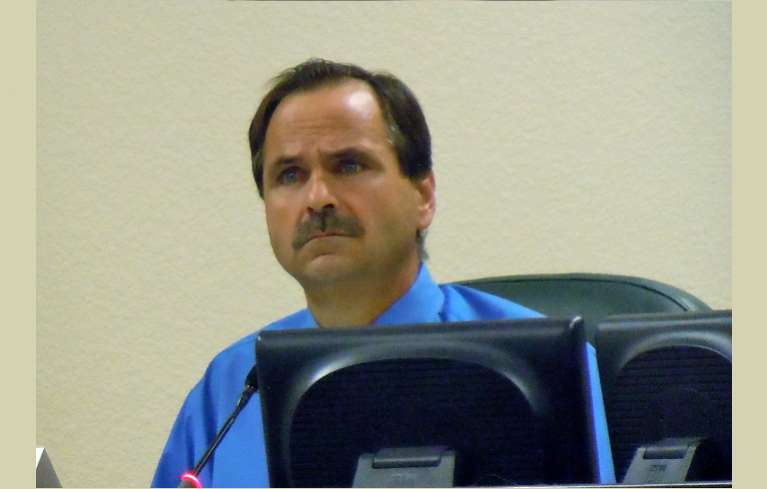
The El Dorado County supervisor who is facing criminal charges had his first town hall since his arrest on Wednesday.

While the topic of the night was land-use issues, Ray Nutting’s recent arrest and investigation into perjury and conflict of interest charges were also on the menu.

He walked away from CBS13’s camera, but eventually came back.

Ray Nutting

Ray Nutting

“I voted for the man,” said Janet Maynard. “I still think he should step down for the good of the community.”

He’s also facing charges of filing false documents, all of which stem from taxpayer dollars Nutting received for work he’s done clearing brush and trimming trees on his own land, as well as other income he didn’t report on state financial-disclosure forms.

But despite the charges, many at the meeting support Nutting.

“I think he’s innocent until proven guilty, and carry on like you’ve been doing until something else happens,” Skip Kelly said.

“Only an idiot would convict a person before trial,” said Richard Johnson.

But others worry about what his votes as a county supervisor could cost taxpayers.

“Every time he votes on something, if he doesn’t clear up his personal agenda with these legal issues, this is all going to come back to the county as cost,” said Sam Teresi.

Nutting’s response: “I plan on being exonerated by September and there will be no problems.”

At this point, he remains on the board, but recuses himself from voting on any financial matter on advice from county counsel.

His arraignment is scheduled for later this month.


Hotels providing alternative to airport-airline food

By Nancy Trejos, USA Today

Hotels are taking your takeout orders.

A number of hotels across the country are offering gourmet meals for guests to take with them on their airplane rides home. They are packaged to fit in a carry-on and abide by the Transportation Security Administration’s 3.4-ounce maximum for liquids.

Hotels says the meals are popular with guests who don’t want to rely on airport concessions that often serve fatty fare or airlines that serve hardly anything at all unless passengers pay.

Hotel restaurants offer guests an alternative to airport food. Photo/Hotel Bel-Air, Los Angeles

Hotel restaurants offer guests an alternative to airport food. Photo/Hotel Bel-Air, Los Angeles

Some examples:

• At the Hotel Bel-Air, in Los Angeles, Wolfgang Puck and his team have designed a “Meals on the Move” menu that can be made-to-order right before guests take off for Los Angeles International Airport. Items include Thai Style Chicken Salad, Lobster Cobb Salad, and Santa Monica Farmers Market Fruit Bowl. The menu is posted in all rooms on iPads; costs range from $14 to $34.

• The Four Seasons Boston has a “For Your Trip Home” menu located on the reverse side of the pre-order breakfast menu that guests hang on their doors before bed. Offerings vary from “The Classic” featuring fresh mozzarella with basil and tomatoes, a Cobb salad and a slice of apple pie to the “Sky High” with American Spoonbill caviar with toast points and accompaniments. Prices range from $25 for the Breakfast On the Go to $120 for the “Sky High.”

• The Four Seasons Seattle has a “Want It To Go, Let Us Know” menu with a la carte items such as cheese with crackers, charcuterie with olive rosemary bread, a hard-boiled egg and nut butter and jelly sandwiches. The items are boxed, wrapped and bagged. Prices range from $2 to $8.

• Kimpton’s Hotel Monaco in Denver has a “Breakfast with Wings” menu with such options as fresh fruit, Greek yogurt and a granola parfait and steel cut oats, ranging in price from $7 to $10.

“We really just wanted to offer something more convenient, affordable, healthy and better quality than what they can get at the airport,” says Josh Mayo, general manager of Panzano, the restaurant at the Hotel Monaco in Denver. “We have many guests leaving the hotel early to catch a flight and they don’t have time to stop for the most important meal of the day, so we thought we could help them out with that.”

The hotels package the items so they can get through security. For instance, the liquid offerings at the Four Seasons Seattle are each 3 ounces. The Hotel Bel-Air makes sure liquids are extremely small and that salad dressing is in a sealed container on the side.

“We make sure that we package all items properly so that we protect the integrity of each dish, but also ensure that our guests will be able to take these boxes on the plane,” says Stephane Lacroix, director of Food and Beverage at the Hotel Bel-Air.

Hotels say the meals are increasing in popularity as airlines cut back on free pretzels and charge passengers for boxes of cheese and crackers.

The Hotel Monaco gets about three requests for meals-to-go each day. The Hotel Bel-Air has sold about five to 10 meals each week since starting the service about a month ago. “We expect the demand to increase during the busy summer season,” Lacroix says.

Maryam Wehe, senior vice president at Applied Predictive Technologies, which does hotel consulting, says the takeout meals can be a way to make a hotel stay more memorable.

“Offering meals-to-go can provide hotels with several opportunities, such as differentiating their brand from other hotel brands,” she says. “Furthermore, providing branded meals extends a positive guest hotel experience beyond checkout as long as guest expectations are managed carefully for meals to go versus in-hotel dining.”

Pamela Sievers, a home furnishings sales representative in Thousand Oaks, Calif., says she’d be willing to pay for a hotel takeout meal rather than rely on airport food.

“If one encounters delays and food concessions begin to close or run out of food, one can really be stuck,” she says.


Snippets about Lake Tahoe

placer county• Placer County’s property tax assessment increased by 6.1 percent this year.

• Find out what Courtney Blann of South Lake Tahoe has to say about being a ski instructor.

• Ocean Minded lead the way regarding the Race the Lake of the Sky Cleanup/National Summer Cleanup Initiative. About 50 volunteers collected approximately 250 pounds of trash. The cleanup was during the 14.3-mile stand up paddle race June 30.

• The South Lake Tahoe Fire Department has been awarded the technology innovation award by IPCR, the company the department uses to create patient care reports electronically. The owner of IPCR will speak at the July 16 City Council meeting at 9am.