Backlash to Calif. digital license plate plan

By Melody Gutierrez, Sacramento Bee

California license plates could get a high-tech makeover with a digital screen and wireless capabilities as part of a Senate bill making its way through the Legislature.

Senate Bill 806 authorizes the Department of Motor Vehicles to create a pilot program at no cost to the state with as many as 160,000 cars testing the digital plates patented by San Francisco-based Smart Plate Mobile. The state hopes the technology will improve efficiencies in vehicle registrations and potentially save the DMV some of the $20 million spent each year in postage for renewals.

Read the whole story


Champagne cork popping — another celebrity sport

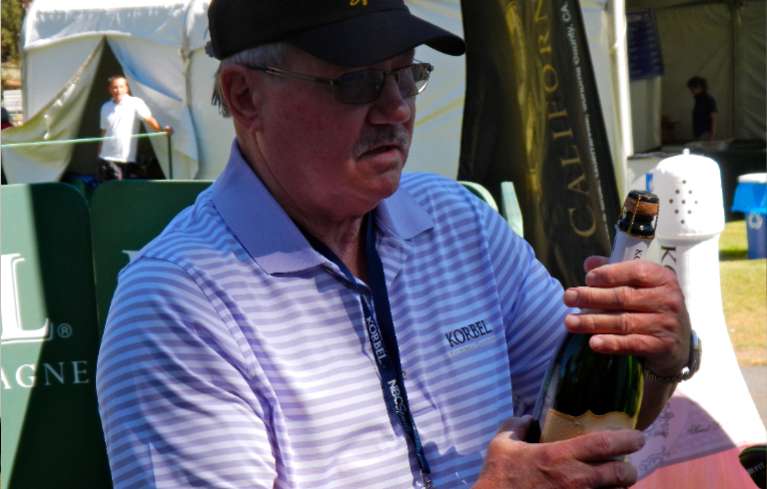
Korbel Champagne owner Gary Heck watched a lot of bubbly get sprayed July 17 at the media cork popping contest. Photo/Kathryn Reed

Korbel Champagne owner Gary Heck watched a lot of bubbly get sprayed July 17 at the media cork popping contest. Photo/Kathryn Reed

By Kathryn Reed

STATELINE — Celebrity golfers will be able to put down their clubs briefly on Thursday and trade them for a bottle of Champagne.

Between the 17th and 18th holes they can test their ability at how far they can shoot a Champagne cork. The one who wins will be able to select a charity for Korbel Champagne to write a $5,000 check to.

Shane Battier with the Miami Heat on Wednesday demonstrated how it is done by hitting the fence. The contenders from the media who followed him didn’t fare as well. However, Tom Selissero with USA Today popped his cork 81 feet to win the Korbel golf bag and a couple clubs.

Korbel owner Gary Heck advised me to keep my thumb on the cork as I shook the bottle. He said I could shake it as long as I wanted. Then he told me at what angle to shoot. As a rookie to this sport, I came in seventh out of 33 with a 65-foot shot.

Heck was taking the wire off the all the bottles and giving pointers to whomever asked.

The Sonoma County sparkling wine company has created two drinks that it will be serving at the various concession stands throughout the American Century Championship golf tournament at Edgewood Tahoe from now through Sunday.

Having only sampled one – the Korbel Sparkling Eagle – I can recommend it. The melon flavor comes through without being too overpowering.

Korbel Sparkling Eagle

4 ounces Korbel Brut

1 ounce melon liqueur

1 ounce lemonade

Mix all ingredients in a rocks glass. Garnish with one jumbo cherry.

Korbel Long Drive

3 ounces Korbel Brut or Extra Dry

2 ounces lemonade

1 ounce blue Curacao

Into a tall glass, pour Korbel Brut or Extra Dry. Add lemonade, blue Curacao and ice.


Snippets about Lake Tahoe

curtis fong• The 11th annual Tour de Tahoe – Bike Big Blue – Ride to Cure Diabetes is Sept. 8. This ride is limited to 2,000 riders. Online registration is open.

• Stanley Miller the now executive chef at the Ritz-Carlton at Northstar.

• The rededication of the children’s memorial in South Lake Tahoe will be Aug. 10 at 6pm.

• North Tahoe Regional Park in Tahoe Vista may be getting a dog park. The North Tahoe Public Utility District is expected to vote on the idea Aug. 13 at 9:30am at the North Tahoe Event Center.

• Tim Cashman has been elected chair of the Tahoe Fund board. The board has been expanded to include Bill Rock and Scott Gillespie.


12 states challenge EPA over ‘sue and settle’ practices

By Fox News

Oklahoma Attorney General Scott Pruitt and the attorneys general of 11 other states sued the Environmental Protection Agency Tuesday, demanding that the agency turn over documents the states allege will show the agency cooperates with environmental groups as part of a “sue and settle” legal strategy to develop regulations.

The lawsuit, filed in U.S. District Court in Oklahoma City, alleges that binding consent decrees between the EPA and environmental groups that have sued the agency over the years have led to new rules and regulations for states without allowing their attorneys general to defend their interests and those of its businesses and consumers.

“The EPA is picking winners and losers, exhibiting favoritism, at the expense of due process and transparency,” Pruitt said in a statement. “They are manipulating our legal system to achieve what they cannot through our representative democracy. The outcomes of their actions affect every one of us by sticking states with the bill and unnecessarily raising utility rates by as much as 20 percent.”

Besides Oklahoma, the attorney generals of Alabama, Arizona, Georgia, Kansas, Michigan, Nebraska, North Dakota, South Carolina, Texas, Utah and Wyoming are parties to the lawsuit.

EPA’s press secretary in Washington, D.C., Alisha Johnson, denied allegations that the agency cooperates with environmental groups to develop regulations.

“We have no input or control over what parties sue us or what issues they focus on,” Johnson said.

Pruitt said as many as 40 lawsuits have been filed against EPA over the years by such environmental groups as Greenpeace, Defenders of Wildlife, WildEarth Guardians and the Sierra Club that have led to consent decrees, “sometimes on the same day the lawsuit is filed,” that include terms and conditions that go beyond statutory guidelines approved by Congress.

“I would look at that very suspect and say: ‘What’s going on?'” Pruitt said. “The EPA is picking winners and losers. These cases affect Oklahoma’s ability to do its job.”

Johnson said EPA does not enter into legal settlements that give the agency new or additional authority.

“An outside entity cannot compel us to take action we were not already compelled to take by law,” she said.

The states’ lawsuit seeks to enforce federal Freedom of Information Act guidelines involving the states’ request for letters, emails and any other correspondence between the EPA and environmental organizations before they sue the agency. The attorney generals want to analyze the documents to determine the nature of EPA’s legal strategy concerning environmental groups.

In one instance, the lawsuit says the states made a FOIA request to EPA in February seeking records about the agency’s negotiations with environmental groups that led to binding consent decrees concerning state implementation plans for the EPA’s regional haze guidelines under the Clean Air Act.

Pruitt is challenging regional haze guidelines for Oklahoma in federal court. Utility officials have said the regulations could cause electricity rates to rise 13 percent to 20 percent in three years.

“It’s a regulation-through-litigation type of initiative,” Pruitt said. “And we are not even a party to that litigation. That’s a troublesome thing.”

The states also asked the agency to waive any fees for collecting the information, a request the agency denied. In a May 31 letter to Pruitt’s office, the agency said the states’ FOIA request “fails to adequately describe the records sought.”

“EPA’s denial of the states’ FOIA request is consistent with their apparent protocol to avoid compliance with FOIA by telling requesters that their FOIA request is overbroad,” the lawsuit alleges.

“Ninety-two percent of the time EPA grants fee waiver requests from noncommercial requesters who are supportive of EPA’s policies and agendas, but denies a majority of fee waiver requests from noncommercial requesters who are critical of EPA,” the complaint states.

Pruitt said a majority of the states’ requests for information have been rejected.

“We are deserving of information from the EPA,” the attorney general said. “They’ve routinely said no, period.”

Johnson said FOIA rules require that requesters describe the records they want so they can be located with a reasonable amount of effort.

The Associated Press contributed to this report.


Adult diseases becoming common in kids

By Alexandra Sifferlin, Time

Diabetes, obesity and elevated blood pressure typically emerge in middle-age, but more young children are showing signs of chronic conditions that may take a toll on their health.

The latest report on the trend, from researchers at Harvard Medical School found that children and adolescents are increasingly suffering from elevated blood pressure. Published in the American Heart Association journal Hypertension, the study showed a 27% increase in the proportion of children aged 8 years to 17 years with elevated blood pressure over a thirteen-year period.

The scientists compared over 3,200 children involved in the National Health and Nutrition Examination Survey (NHANES) III in 1988-94 to over 8,300 who participated in NHANES in 1999-2008. The national survey records health, eating and lifestyle behaviors of the volunteers. More kids in the recent survey were overweight, with larger waistlines than those in the previous cohort. And the children with body mass index (BMI) readings in the top 25 percent of their age group were two times more likely to have elevated blood pressure than the kids in the bottom 25 percent.

The kids did not have diagnosed hypertension, which requires a threshold of 140-90, but elevated blood pressure — anything above 120-80 — at such young ages could prime them for hypertension later. “High blood pressure is dangerous in part because many people don’t know they have it,” said lead study author Bernard Rosner, a professor of medicine at Harvard Medical School in a statement.

The results are only the latest to reveal the first signs of chronic conditions that normally don’t occur until middle-age, in children and teens.

Earlier this year, the American Academy of Pediatrics released its first guidelines for type 2 diabetes, sometimes called adult-onset diabetes, among kids. Pediatricians are not typically trained to treat this form of the disease; they are more familiar with type 1.

What’s driving today’s children to develop these diseases before their time? Obesity may be play a major role in many of these conditions, from diabetes to blood pressure and joint problems, says experts. “When I was in residency we didn’t learn too much about obesity or type 2 diabetes. Type 2 diabetes happened to adults. Every once in a while you had a type 2 diabetes case. Now, those are the norm. We see type 2 diabetes happening in children and teenagers all the time now,” says Dr. Dyan Hes, a New York City pediatrician and obesity specialist and founder of Gramercy Pediatrics. Hes is unaffiliated with the Hypertension study.

The list of symptoms and diseases that Hes now sees among her young patients could just as easily apply to patients who are decades older — high blood pressure, type 2 diabetes, pre-diabetes, worsening asthma symptoms, sleep apnea, joint pain, and swelling in the brain caused from being morbidly obese.

And to treat these conditions, more young children are taking medications for longer periods of time, so the long term health consequences of that trend is starting to worry many pediatricians. “It is creating youth who are disabled or medicated. They can’t participate in regular sports that other kids do. They are taking medicine at such young ages. So many of these medicines have bad side effects,” says Hes. “Medicines are expensive so it is a huge burden to the health care system. You have kids going to cardiologists or orthopedic doctors for joint pain.”

Dr. Pamela Singer of the division of pediatric nephrology at the Children’s Hospital at Montefiore Medical Center in New York says an estimated 60% of referrals to her division are for elevated blood pressure. “In the past, children with hypertension tended to be those with underlying conditions such as renal disease, or those with specific vascular or genetic abnormalities,” she says. “However, now the vast majority of hypertension that we are seeing is “adult-type” hypertension, related in large part to diet and lifestyle. That’s not just true for hypertension, but also for other diseases classically thought of as “adult diseases,” such as type 2 diabetes, which are becoming more common in the pediatric population. These conditions may all be interrelated – obesity, elevated blood pressure, high cholesterol, insulin resistance – and physicians and researchers are trying to elucidate those relationships.”

Eating a healthy diet, for example, is not just about food itself but the food environment, which is constructed around cultural, social and economic factors that determine the diversity of food choices and the accessibility of these options. In the recent study, the researchers found that kids with the highest sodium intake were 36% more likely than kids who consumed less salt to have elevated blood pressure, and over 80 percent of the kids ate more than 2,300 milligrams of sodium a day. The American Heart Association currently recommends people consume 1,500 milligrams of sodium a day, but that may be a challenge for those who don’t have access to fresh fruits and produce and rely on processed or fast food, which tend to be higher in salt.

Hes is hopeful that recent efforts by the USDA to make school lunches and food environments healthier will have some effect on worrisome health trends among students. In June, the agency announced that by next school year, schools nationwide will provide healthier snacks in vending machines that are low in fat, sodium and salt.

“I wish they would have a soda tax, but they don’t. They made tobacco prohibitively expensive and that’s why smoking has gone down. The need to make sugary drinks and snacks more expensive too,” she says. Hopefully the next cohort of children won’t show the same increase in adult diseases, and more youngsters can enjoy a childhood free of medications and disease symptoms.


Dry California sends state into drought

By Brian Hickey, KCRA-TV

Record dry and warm weather across California has put the state in a severe drought, according to the National Weather Service.

Earlier this week the California State Water Resources Board issued a “Notice of Surface Water Shortage for 2013.”

The document warned that some water rights holders may see their diversion cut off by late summer and fall.

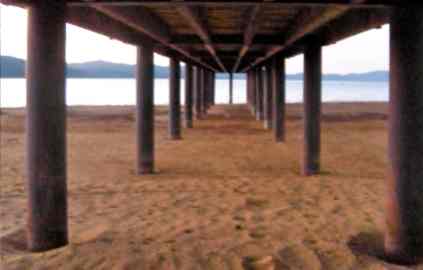
If dry conditions continue, piers in Tahoe may not have water them like what happened in 2009. Photo/LTN file

If dry conditions continue, piers in Tahoe may not have water under them like what happened in 2009. Photo/LTN file

The dire warning comes after California saw its driest winter in nearly 90 years.

The dry weather marks the second year in a row the state saw below-average precipitation.

Reservoirs across the state are at 80 percent of average for the time of year.

The State Water Resources Control Board warned that the lowest priority water rights holders may face restrictions by the end of the summer.

Some water rights holders in the Sacramento River watershed are already facing restrictions because flows in the river are from stored water and not natural sources.

The water board issued the notice to warn farmers of possible shortages as they begin planning what and how many winter crops they will plant.

Along with the notice, an attached two-page document offered water conservation tips for growers including recycling irrigation water, minimizing the length of planted rows, and using sprinkler systems when winds are calm.


Race benefits Squaw, Alpine athletic teams

The Squaw Valley Alpine Meadows Foundation hosting its first fundraiser Aug. 24 to raise scholarship funds to support athletes on the Squaw Valley and Alpine Meadows snow sports teams.

The Alpine 2 Squaw 10K Challenge consists of a 10K run from Alpine Meadows to Squaw Valley. The challenge is open to runners and walkers, as well as to dogs for those who register in the “Pets and People” category. All proceeds from the race will benefit SAF as well as the Humane Society of Truckee Tahoe.

The Alpine 2 Squaw 10K Challenge will start in the Alpine Meadows parking lot and will follow the U.S. Forest Service fire road until it joins up with the Western States trail. Following the final descent down Squaw’s Red Dog Face, the race will finish at the base of KT-22.

Registration for the 10K Challenge is $30 at the early bird rate (valid though Aug. 9), or $40 starting Aug. 10. Day of race registration is $50. Pet registration is $5, with all proceeds benefiting the Truckee Tahoe Humane Society. Registration is online.


Loop road proponents ready to meet about relocation

The Tahoe Transportation District is trying to figure what it will take to relocate people after acquiring their property so the loop road on the mountain side can be put in near the state line on the South Shore.

A meeting about the relocation assistance plan and a community impact assessment will be July 25 from 5-7pm at Lake Tahoe Resort Hotel in South Lake Tahoe.

One purpose of the gathering is to inform people who would be impacted by the proposed road alignment of their rights as a property owner or renter.

The loop road is what transportation officials want to build behind the east part of South Lake Tahoe, and Harrah’s and MontBleu. This would be the new Highway 50. The current highway would become city streets through what is called the tourist core of the South Shore.

For more info, contact Alfred Knotts at (775) 589.5503 or aknotts@tahoetransportation.org.


McGraw flexes his music muscle in Tahoe

Tm McGraw belts out a hit during his July 16 show at Harveys. Photos/Kathryn Reed

Tm McGraw belts out a hit during his July 16 show at Harveys. Photos/Kathryn Reed

By Kathryn Reed

STATELINE – Tim McGraw knows how to get women to scream – and he doesn’t even have to sing. Tight jeans, biceps flexing and that smile are all it takes.

He was showing off his muscles at Anytime Fitness in Zephyr Cove before his concert Tuesday night at Harvey’s outdoor arena. But he clearly didn’t use up all of his energy.

Oh, and there were plenty of hoots and hollers for his music as well.

Tim McGraw walks through an aisle to get to the stage.

Tim McGraw walks through an aisle to get to the stage.

McGraw knows this stage well – with July 16 being his third time to the Lake Tahoe venue. He played here in 2002 – the inaugural year of the concert series – and in 2010.

With a nearly nonstop two-hour-plus show, the three-time Grammy winner did not disappoint.

Country music has long been a favorite among fans in and around Lake Tahoe. Merle Haggard, Johnny Cash, Loretta Lynn and others used to easily fill Harrah’s South Shore Room.

“In the last 15 years country has crossed over to rock. It’s the new rock in a way because there is so much production involved and so many electric guitars. It veered away from traditional country,” Harveys-Harrah’s entertainment guru John Packer told Lake Tahoe News.

McGraw’s stage set up proved this to be true. The video playing behind him at times was of the audience, other times of him larger than life, sometimes scenery, or special effects to go with the music. The eight-member band, while featured in solos, blended in well in what looked like glass cubicles for the grand piano, keyboard and drums.

Each year the Harveys Outdoor Concert Series tries to have three country acts. Packer said with the right show, the series could handle four, but he doesn’t want it to become a country-only venue.

On a few songs, Tim McGraw plays guitar.

On a few songs, Tim McGraw plays guitar.

“Over the years the venue has developed a reputation to be a great place to play and really good audiences, which any artist responds to a good crowd,” Packer said.

Tuesday was no exception. Much of the audience was singing right along with McGraw. This is more typical of country fans than those of other genres. They even know the B side.

As one fan put it, most country is pretty easy to memorize.

McGraw held the mic into the audience during several songs because they knew the lyrics as well as he did.

Packer said in the 1960s and ’70s country had a more regional following, whereas now it’s widespread with American country being an international sensation.

Country fans are loyal and will travel great distances to see someone they like.

McGraw showed his appreciation from the start by walking through the audience to get to the stage. Then he sat down on the stage, singing to the swooning women. Mostly, though, he was a bundle of energy who rarely paused for a sip of water.

“What is fun about the country acts is they bring up-and-coming bands. If they are really strong, they end up the following year or two as the headliner,” Packer said.

Kip Moore, who opened for McGraw, had plenty of fans in the audience and likely gained some new ones. The Georgia-native said he doesn’t get to the West often, so he promised to sign autographs after McGraw was done until the last person left. The line was long as he was starting.

Tim McGraw has no problem connecting with the Lake Tahoe audience.

Tim McGraw has no problem connecting with the crowd.

In 2010, Lady Antebellum opened for Tim McGraw – the same year the trio took home several Grammys. Last year Lady Antebellum headlined in Tahoe.

Sugar Land and Miranda Lambert used to be opening acts, too, but have both headlined at Harveys.

The Band Perry opens for Rascal Flatts on Friday and that group is already the lead act at some venues.

But the venue, while popular, isn’t going to get the artist who only wants a stadium-size crowd to play to. The Harveys venue seats about 7,000, depending on how it’s configured. For a general admission show with no chairs it can hold about 10,000 people.

—-

Upcoming country concerts:

• July 19 – Rascal Flatts with The Band Perry

• Aug. 30 – Brad Paisley with Chris Young, Lee Brice

• More information may be found online.


Letter: Invitation to S. Tahoe labyrinth

To the community,

Last year Unity at the Lake built a labyrinth next to our sanctuary and annex at 1195 Rufus Allen Blvd., across from the South Lake Tahoe Recreation Center playground. This labyrinth was lovingly created by our spiritual community for our greater Lake Tahoe community to use and enjoy.

Walking the labyrinth is a walking meditation. It is an experience of mindfulness, inviting you to let go of your regular mental chatter and expand your heart awareness. Walking this mystical path is a personal pilgrimage to spiritual wholeness.

We welcome everyone to take advantage of our labyrinth. All we ask is that you come in peace and leave everything the way you found it. We are in the process of installing a welcoming bench on which to rest and reflect before and after your walk. There are brochures available at the site with more information.

The Revs. Stew and Hillary Bittman, Unity at the Lake spiritual leaders