Fedora Bandit going to prison for 9 years

David Griffith Osborne — aka the Fedora Bandit — was sentenced today to nine years in prison, to be followed by three years of supervised release, for three counts of armed bank robbery.

The 75-year-old former Carson City resident earlier this year pleaded guilty to several bank robberies.

He robbed:

  • Bank of the West, 2160 Lake Tahoe Blvd., South Lake Tahoe, Feb. 18, 2010;
  • Bank of the West, 200 Bear Street, Kings Beach, March 9, 2010;
  • Bank of the West, 34 East Gridley Road, Gridley, April 26, 2010;
  • American River Bank, 9750 Business Park Drive, Rancho Cordova, June 3, 2010;
  • Chase Bank, 6669 Clark Road, Paradise, June 29, 2010.
  • Bank of the West, 736 Taylorville Road, Grass Valley, December 22, 2009 and March 31, 2010.

Osborne will be required to pay $55,929 in restitution for the robberies.

In each of his seven robberies, Osborne wore a hat, sunglasses, a fake mustache and goatee, and demanded money while brandishing a firearm. Osborne was identified on surveillance images, and after the June 29, 2010, robbery of the Paradise Bank, his DNA was recovered from an abandoned bicycle that he used as a getaway vehicle.

Osborne also confessed to the seven armed robberies and also admitted that he had robbed a Bank of the West branch on 2976 North Carson St. in Carson City.

— Lake Tahoe News staff report


Studying Tahoe may help with Antarctic exploration

By Mike TeSelle, KCRA-TV

Gordon Seitz, an earthquake expert with the California Geological Survey, expressed excitement about a first-of-its-kind exploration that took place below the surface of Lake Tahoe on Thursday.

“Oh yeah, there’s not too many chances to get that new discovery,” Seitz said.

Seitz said a specially designed submarine, equipped with a high definition camera, is being used to take the first close-up video ever recorded of the submerged section of Tahoe’s most active fault line.

“The west fault runs along the entire west side of the lake,” Seitz said.

Researchers from Northern Illinois University and the California Geological Survey are using a floating platform to control the submarine which will dive to depths more than 1,000 feet.

“We hope to use this information to learn more about future earthquake hazard and to learn about potential tsunami activity that could be triggered by a shift,” Seitz said.

Thursday’s mission was also proving as a test for a potentially bigger first in underwater exploration, Seitz said.

If the Tahoe mission is successful, Northern Illinois University researchers plan to drill a 3,000-foot-deep hole in an Antarctic ice shelf to drop the submarine into an aquatic environment that has never been explored before, Seitz said.

“They are focused on how climate change is impacting the ice shelf to see if it will detach as the ocean warms,” Seitz said.

For now, Seitz is eager to see what the Tahoe mission reveals.

“We know we’ll learn something. We just won’t know what that is until we get our eyes on the bottom of the lake,” said Seitz.


Snippets about Lake Tahoe

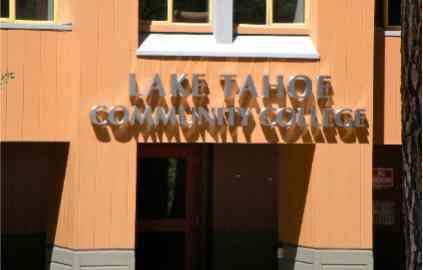
ltcc• Even though Lake Tahoe Community College staged the “Laramie Project” in March 2010, in November will be “The Laramie Project: 10 Years Later”. Plus, the college will screen the documentary “Matthew Shepard is a Friend of Mine” on Oct. 12, the 15th anniversary of Matthew Shepard’s murder.

• A 25,000-square-foot Ross Dress for Less is going in west of downtown Placerville.

• David Defanti is now the assistant director of the El Dorado County Community Development Agency.

• The Brews, Jazz and Funk Fest returns to the Village at Squaw Valley Aug. 10-11.

• Northstar has added freeskier David Wise of Reno to its pro team.


Time for students to register at LTUSD

It’s time for children entering kindergarten in the Lake Tahoe Unified School District in August to be registered at their local school.

Parents are to register their children at their designated elementary school. Boundaries are available online or a map may be picked up at the Education Center (1021 Al Tahoe Blvd.).

To be eligible for enrollment a child must be 5 years of age on or before Oct. 1.If your child was born in the months of October or November and will be 5 before Dec. 2, he or she qualifies for the two-year transitional kindergarten program.

South Tahoe Middle School registration begins Aug. 12.

South Tahoe High School registration will be Aug. 13-15.

School starts Aug. 26.


A lesson in cooking via the farmers’ market

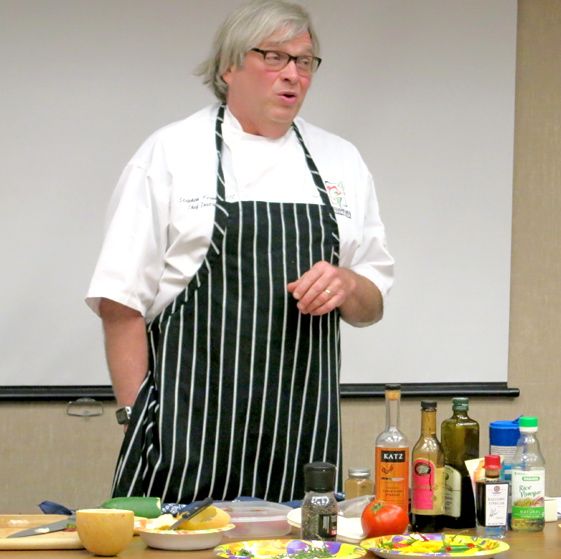
Chef Steve Fernald demonstrates cooking with food from the farmers' market. Photos/Jessie Marchesseau

Chef Steve Fernald demonstrates cooking with food from the farmers’ market. Photos/Jessie Marchesseau

By Jessie Marchesseau

Bright red tomatoes, dark green zucchini, sunshine yellow squash and purple sweet peppers were among the fresh produce adorning the table at chef Steve Fernald’s fresh cooking demonstration at the South Lake Tahoe Library on Tuesday.

“They say you eat with your eyes first. People either accept or reject a meal based on how it looks,” said Fernald, culinary arts instructor at Lake Tahoe Community College.

The demonstration was designed to show people how to create simple, tasty summer dishes with fresh ingredients from local farmers’ markets. Fernald suggests starting out by choosing the most colorful options at the market and practicing what he calls “cooking on the fly,” meaning creating dishes in your head as you shop for ingredients. He also described how he took the time to talk to the vendors, learning the differences between varieties of tomatoes and peppers, even discovering new items like melons he had never heard of before.

Mediterranean salad

Mediterranean salad

In addition to the fresh produce, Fernald purchased at the farmers’ market earlier that day, the table also displayed a selection of vinegars, olive oil, salts, fresh herbs and dried spices. From this arsenal, Fernald created two dishes: a savory Mediterranean salad and a sweet strawberry chili salsa which he served with homemade crunchy almond cookies.

Starting with the basics, the chef explained the importance of having a variety of textures and tastes in each dish. For example, a combination of crunchy and chewy or sweet and salty is more interesting to the palate than one solitary flavor or texture.

Another essential aspect of cooking, especially in uncooked dishes such as these, is often overlooked: cutting. He explained how size and shape should be considered for the specific preparation, and for uncooked food, small or thin pieces create the most surface area for flavor in your mouth.

Since the event was sponsored by the Barton Foundation, Fernald wanted to create dishes that maximized the flavor while keeping fat content low. One of the ways he achieved this was by using high-quality, high-flavor ingredients. Fernald explained how the gourmet apple cider vinegar, 18-year-old balsamic vinegar and rich olive oil on the table have bolder flavors – meaning you don’t have to use as much of them.

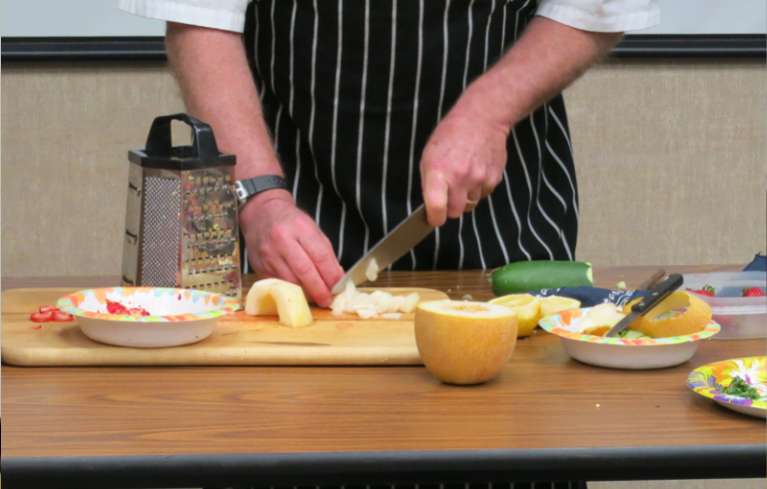
After the quick culinary lesson, the chef began his preparation. First was the Mediterranean salad for which he thinly sliced zucchini and summer squashes, then lightly salted them just enough to bring out the flavor, but not break down the tissues. Then he carefully cut sweet peppers and cucumbers, removing the seeds from both. All of this was tossed with a splash of rice vinegar and a light sprinkle of sugar, not for sweetness, but to encourage the vegetables to release their juices. Next came the chopped tomatoes with seeds left in for added texture, a drizzle of olive oil and, finally, a handful of freshly torn thyme.

Steve Fernald leaves the LTCC classroom to give a public cooking demo.

Steve Fernald leaves the LTCC classroom to give a public cooking demo.

The result was a simple dish exploiting the bright flavors of a summer harvest. Crunchy sweet peppers contrasted with soft ripe tomatoes and the fresh thyme left me thinking of my own little herb garden at home.

The next dish Fernald dreamed up was a little more off the beaten path, but no less delicious. Tiny little chili peppers were diced and tossed with a sweet apple cider vinegar. Then in went ripe red strawberries from Watsonville, sliced as thin as he could possibly get them, a sprinkle of sugar and just a pinch of salt. Next were tiny cubes of a melon Fernald discovered at the market just that morning (which he could not even remember the name of), fresh lemon juice and lemon rind. A quick drizzle of balsamic vinegar finished off this sweet and spicy combination.

To balance the heat of the dish, Fernald served it piled on crunchy almond cookies. The result was what one of the tasters in the room called “a party in your mouth.” The sweet flavor of strawberries gave way to a heat that notably cooled your face and urged you to take another bite. This dish had several people, myself included, going back for seconds.

Fernald also took the opportunity to pay homage to renowned chef and restaurateur Alice Waters of Chez Panisse in Berkeley. Waters and Chez Panisse are credited with pioneering the farm to table movement in the early 1970s by serving entirely locally sourced food.

Waters’ vision helped define American cuisine and is a large-scale example of what chef Fernald demonstrated: creating delicious, healthy food using fresh, local ingredients.

“You can tell the difference in not just the tomatoes,” Fernald said of the food from the local farmers’ market, “but in pretty much everything.”


Injury puts Barkley on the sidelines at ACC

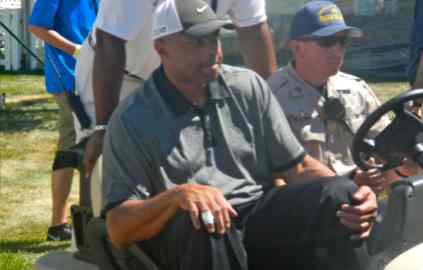
Charles Barkley hurt his shoulder and is unable to play in the Tahoe celebrity golf tournament. Photo/LTN file

Charles Barkley hurt his shoulder and is unable to play in the Tahoe celebrity golf tournament. Photo/LTN file

Perennial fan favorite Charles Barkley has pulled out of the American Century Championship golf tournament.

An injury forced the withdrawal. He was lifting weights and felt something snap. Barkley tried to play on Wednesday, but his right shoulder said no.

Barkley had played at the Edgewood Tahoe event since 1993.

But he’s not leaving. Barkley is now the unofficial ambassador for the three-day tournament that starts today in Stateline.

— Lake Tahoe News staff report


2-day class about mental health first aid

Barton Health is partnering with El Dorado County to offer a free mental health first aid training for the South Lake Tahoe area.

Participants will develop skills and knowledge to help connect individuals in crisis with appropriate professional, peer and self-help care. The training is intended for people with a general interest in mental health issues, people who have frequent contact with the public and anyone who may be in a position to provide help to individuals experiencing distress due to stressful situations, trauma or crisis.

The Mental Health First Aid training series will be at Barton University: Aug. 26-27 from 8:30am-4:30pm at 1111 Emerald Bay Road, Room 101.

To be certified in mental health first aid, participants must attend both days of this free training. Registration is required. Seating is limited. To register for the training or for more information, contact Stephanie Carlson atStephanie.carlson@edcgov.us or (530) 621.6315.


All-day class about Nevada pot laws

Northern Nevadans can get educated on marijuana laws on July 20.

Faculty from the Cannabis Career Institute will be putting on classes about dispensary laws and growing.

Cost is $249 for the daylong session at the Hampton Inn Suites, 10599 Professional Circle, Reno.

More info is online.


College grad rate between whites, minorities narrows

By Katherine Mangan, Chronicle of Higher Education

The graduation gap between minority and white college students is slowly narrowing, and the campuses having the most success aren’t necessarily the wealthiest or most selective, according to a new report by the Education Trust.

“Colleges that decide student success is the No. 1 priority have been able to move the needle even with decreasing levels of state support,” the report’s author, Joseph Yeado, a higher-education research and policy analyst for the Education Trust, said Wednesday.

But “while the trends are moving in the right direction at the national level,” he said, “they’re moving at far too slow a pace.”

The report, based on data from the U.S. Department of Education, notes that, from 2009 to 2011, the number of Hispanic undergraduates at four-year colleges shot up 22 percent, while enrollment grew 8.5 percent for black students and 2.7 percent for white students. Six-year graduation rates for all three groups improved: by 4.7 percent for Hispanic students and by 2 percent for black and white students.

Gaps remained, though. Graduation rates for Hispanic students were 11.1 percentage points below those of white students, while the gap between black and white students was 22.2 percentage points.

Michael Dannenberg, director of higher-education and education-finance policy for the Education Trust, said student demographics don’t have to dictate outcomes.

“What individual colleges do often can make all the difference in the world between a student graduating or leaving with a pile of debt and no degree,” he said in a written statement. “Demography is not destiny, and what colleges do matters.”

The report singles out the colleges it considers leaders and laggards in closing graduation gaps.

Among those with the most impressive gains, the University of North Carolina at Greensboro saw graduation rates for black students jump to 60.1 percent in 2011 from 52.3 percent in 2010. Graduation rates for black students have been equal to or higher than the rates for white students for more than a decade, the report notes.

In an interview, David H. Perrin, provost and executive vice chancellor at Greensboro, cited the campus’s “culture of nurturing and support for students,” including extensive tutoring and help with writing and computer literacy. Minority students also benefit, he said, from learning communities that bring students together to study topics like sustainable entrepreneurship or to help them zero in on majors.

The report also singles out the State University of New York at Stony Brook, where Hispanic students graduate at a slightly higher rate than their white classmates. The rate for Hispanic students jumped to 66.5 percent in 2011 from 58.1 percent in 2010.

Among the colleges that the report says show “disturbingly large gaps in graduation rates” are the University of Akron, where it says the rate for white students climbed to 43.4 percent in 2011 while the rate for black students fell to 9.8 percent.

Akron’s chief diversity officer, Lee Gill, said in an e-mail on Wednesday that the graduation rate for black students climbed to 16.9 percent in 2012 and that the university had “completely revamped our enrollment strategy, strengthened our mentoring and advising programs, and significantly expanded our learning communities (with their proven strategies of increasing African-American graduation rates).”

At Michigan State University, the percentage of white students graduating in 2011 grew to 80.9 percent, while the percentages of black and Hispanic students graduating dropped to 55.4 percent and 61.5 percent respectively, according to the report.

A spokesman for Michigan State said in an e-mail on Wednesday that the university’s graduation rates are “consistently higher than would be predicted based on our students’ demographic data” but that it remains committed to raising success rates for all students.

The report points out, however, that colleges with similar demographics can have starkly different outcomes on closing graduation gaps. Success, it says, “isn’t predicated on tonier demographics or more selective admission standards.”

Nevada lacking in wildfire prevention funds

By Andrew Doughman, Las Vegas Sun

Call it the Jerry Maguire theory of budgeting.

At a time when large wildfires have charred wide swathes of land in both Northern and Southern Nevada, the state’s forestry division faces millions of dollars of cuts in federal fire prevention grants and has little recourse but to go to Congress and repeat the line from the famous Hollywood movie: Show me the money!

Nevada’s ability to prevent wildfires faces further pressure as the federal agencies that control nearly 90 percent of the land in Nevada prepare to cut their fire prevention budgets and as a state nonprofit agency that once informed communities about fire safety and brought millions of dollars into the state for fire prevention has gone bankrupt.

For now, the state forestry division’s budget dropped from $18.8 million during the last fiscal year to $6.9 million for the fiscal year that started this month.

The state largely relies on U.S. Forest Service grants to mitigate fire risks, but much of the mitigation money technically doesn’t exist without a federal budget, which Congress may approve in September.

The pages of the state budget literally show blank white space where the grant dollars should be. No federal budget means no money for Nevada.

The threat of a potential federal government shutdown over disagreements about what the nation should spend in 2014 leaves state officials without a clear idea of what they can spend on fire mitigation.

“We don’t know if our budget has been reduced,” said David Prather, a deputy administrator at the Nevada Division of Forestry. “As long as they’re having their budget battles in the Capitol, we just have to wait and see what the fallout is. Really, that’s one of those things that’s beyond our control.”

Senate Majority Leader Harry Reid, D-Nev., indicated Wednesday that he’d support more money for fire prevention, perhaps allaying concerns that federal budgets for fire prevention will decrease in the coming years.

Reid said climate change is to blame for the increasing severity and prevalence of Western wildfires.

“I mean you can’t deny it, it’s here,” he said. “Why do you think we’re having all these fires? … We should be spending a lot more on prevention, and that means thinning some of these forests.”

In addition to the uncertainty around prevention funds, a statewide nonprofit agency that brought millions of dollars to the state for fire prevention and helped study wildland fire risks and mitigations has filed for bankruptcy amid findings that it misspent federal stimulus money.

It was the Nevada Fire Safe Council that first alerted Nevada to the “extreme” fire risks in the Spring Mountains around Mount Charleston, where the Carpenter 1 fire has burned more than 28,000 acres to date.

“It was an organization that promoted fire-safe planning in local communities, kind of at the local level,” said Sheila Anderson, senior research specialist at Resource Concepts, Inc., a consulting company that the Nevada Fire Safe Council retained to study fire risks in Nevada communities a decade ago. “They formed chapters all over the state.”

After the council’s demise, no other organization has stepped forward to bring in the millions of dollars of grants, partner with communities to promote fire-prevention education, and fund risk studies.

Read the whole story