Curry takes the lead into final day of ACC

Fans stake out a spot to seek autographs. Photo/LTN

Fans stake out a spot to seek autographs. Photo/LTN

One round is left in the annual American Century Celebrity golf tournament at Edgewood Tahoe.

After two days, Stephen Curry, guard with the Golden State Warriors, has the lead. He is one point ahead of Chris Chandler and Jeremy Roenick.

This tournament uses the Stableford scoring system. The person with the highest score wins.

Here are the Sunday pairings.


S. Lake Tahoe man stabbed to death

A 28-year-old South Lake Tahoe man was stabbed to death early Saturday morning and the suspect is at-large.

The name of the deceased is being withheld pending notification of family.

The confrontation occurred about 3:30am July 20 near the Americana Village on Pioneer Trail. By the time officers arrived, the victim had been transported to Barton Memorial Hospital by family. He died from multiple stab wounds to his torso.

Police said the suspect was walking west on Pioneer Trail when he encountered a group of three men, including the victim, near the Americana. A confrontation occurred between the suspect and this group of men, which turned into a physical fight. During the fight the suspect used an edged weapon to stab the victim in the side.

The suspect fled the area without being identified other than being a white male in his 20s.

Police say this is not gang related.

— Lake Tahoe News staff report


Thieves, vandals striking Liberty Utilities

Thieves and vandals have been targeting Liberty Utilities.

“We recently had a situation where the thief attempted to steal copper wiring and in the process, cut into some live lines,” Sam Rohn with Liberty Utilities said in a statement. “At the very least, the vandal received a significant electrical shock, but could have been hurt much worse.”

The crimes have have caused short-term power outages, add to operating expenses and can leave the criminal injured, utility officials say.

Anyone who sees suspicious activity or has information about vandalism, should call local law enforcement or Liberty Utilities at 800.782.2506.

Rohn noted that Liberty Utilities has increased security measures at undisclosed locations.


PUC: NV Energy should refund customers’ money

By Andrew Doughman, Las Vegas Sun

In an unprecedented move, two state agencies are arguing that NV Energy should refund its customers a total of about $14.6 million.

The state’s Bureau of Consumer Protection and staff at the Public Utilities Commission of Nevada say the utility basically earned too much money last year, so it should give some of it back to you, the ratepayer.

Both agencies filed testimony Wednesday arguing the company should refund the money.

The regulated monopoly has what’s called an authorized rate of return, but it’s possible it could earn a profit beyond what’s allowed by the PUC.

Last year, when the company reported $322 million in record profits, it also collected $14.6 million in energy efficiency charges.

Read the whole story


2-day Placer County supes meeting in Tahoe

Placer County Board of Supervisors will have one of its thrice annual meetings in the Lake Tahoe area July 22.

The meeting will begin at 4pm at the Tahoe City Public Utility District offices, 221 Fairway Drive, in Tahoe City. The board will receive a report from the North Lake Tahoe Resort Association on the past winter’s marketing efforts and what is going on with summer. The TCPUD will also present a report to the Board on operations and future plans for the Tahoe City Golf Course.

At 5pm, the TCPUD will host a reception at the Golf Course Clubhouse, 251 North Lake Blvd., Tahoe City.

The July 23 meeting will have a venue change with the meeting beginning at 9am at the Resort at Squaw Creek in Olympic Valley. At this meeting, staff from the county’s Community Development Resource Agency will present two information items, one on the status of the Tahoe Basin Community Plan Update efforts and the other on the Truckee River Corridor Access Plan.


Tahoe bear cub surgery a success

Lake Tahoe Wildlife Care vet Kevin Willitts performed surgery on a bear cub Friday.

The 6-month-old cub was rescued by BEAR League volunteers, Truckee police and animal control officers near Truckee after it climbed a tree after having been hit by a car about a week earlier.

The cub had two broken legs. He is expected to fully recover at LTWC near South Lake Tahoe.

— Lake Tahoe News staff report


Lack of water threatens energy production

By Sandra Postel, National Geographic

When we flip on a light, we rarely think about water. But electricity generation is the biggest user of water in the United States.

Thermoelectric power plants alone use more than 200 billion gallons of water a day – about 49 percent of the nation’s total water withdrawals.

Large quantities of water are needed as well for the production, refining and transport of the fuels that light and heat our homes and buildings, and run our buses and cars. Every gallon of gasoline at the pump takes about 13 gallons of water to make.

And of course hydroelectric energy requires water to drive the turbines that generate the power. For every one-foot drop in the level of Lake Mead on the Colorado River, Hoover Dam loses 5 to 6 megawatts of generating capacity – enough to supply electricity to about 5,000 homes.

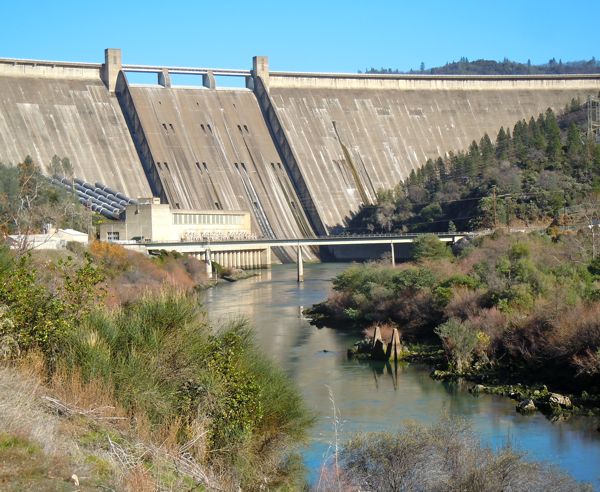
Shasta Dam allows for water storage via Shasta Lake. Photo/LTN

Shasta Dam allows for water storage via Shasta Lake. Photo/LTN

In short, energy production is deeply dependent on the availability of water. And, as a report released last week by the U.S. Department of Energy makes clear, as climate change brings hotter temperatures, more widespread and severe droughts, and lower river and lake levels, the nation’s energy supply is becoming more vulnerable.

Consider these examples from the DOE report:

In September 2010, Lake Mead dropped to levels not seen since the drought of 1956; as a result, the Bureau of Reclamation cut Hoover Dam’s generating capacity by 23 percent.

In 2009, NV Energy abandoned plans for a 1,500 megawatt coal-fired power plant that would have used more than 7.1 million gallons of water per hour.

Extreme drought in the fall of 2011 led the city of Grand Prairie, Texas, to ban the use of municipal water for hydraulic fracturing in order to save the city’s dwindling drinking water supply.

In 2007, 2010 and 2011, the Tennessee Valley Authority had to reduce power output from its Browns Ferry Nuclear Plant in Alabama because the temperature of the river into which the plant discharges was high enough to raise ecological risks.

In summer 2012, low snowpack in the Sierra Nevada curtailed California’s hydroelectric generating capacity by 8 percent.

At the Martin Lake Steam Electric Station in Texas, drought so reduced the level of its cooling pond that cooling water had to be piped in from another water source eight miles away.

One particularly interesting figure in the report compares the water requirements of seven different types of electric power facilities – nuclear, coal, biopower, natural gas combined-cycle, concentrated solar, photovoltaic solar and wind. The last two come out as by far the most water-conserving electricity sources. In contrast to the 20,000-60,000 gallons per megawatt-hour needed for nuclear and coal plants with “once-through” cooling systems, PV solar and wind require only negligible quantities.

Of the one hundred coal-fired power plants deemed to be most vulnerable to water shortages, most are located in the southeastern states of Alabama, Florida, Georgia, North Carolina and South Carolina. In these states, water for cooling may be constrained by low river flows, high water temperatures or both – forcing utilities to cut back on power generation.

On balance the study’s findings make a strong case for a more rapid shift to renewable energy sources to shore up the nation’s energy security in the face of climate change.

If there’s a call to action in the DOE assessment, it’s this: If, by 2050, the United States could get 80 percent of its electricity from renewable sources – with nearly half coming from water-thrifty wind and solar photovoltaic generation – then total water consumption in the U.S. power sector would decline by about half.

Given the projections for climate-related disruptions to the water cycle, there is little time to waste in making this transition.

Sandra Postel is director of the Global Water Policy Project, Freshwater Fellow of the National Geographic Society, and author of several books and numerous articles on global water issues.


No early signs to alert people to kidney disease

By New York Times

Kidney disease doesn’t get the attention, funding or concern associated with cancers of the breast or prostate. But it actually kills more Americans – 90,000 a year – than both malignancies combined.

Even when it is not fatal, the cost of treating end-stage kidney disease through dialysis or a kidney transplant is astronomical, more than fivefold what Medicare pays annually for the average patient over age 65. The charges do not include the inestimable costs to quality of life among patients with advanced kidney disease.

Much is known about who faces the greatest risks of developing chronic kidney disease and how it can be prevented, detected in its early stages, and treated to slow or halt its progression. But unless people at risk are tested, they are unlikely to know they have kidney disease; it produces no symptoms until it is quite advanced.

Perhaps no one knows this better than Duane Sunwold, 55, a culinary arts instructor at Spokane Community College in Spokane, whose compromised kidney function was not uncovered until a blood pressure crisis landed him in the hospital. A physician assistant found that abnormal amounts of protein were spilling out in his urine.

Sunwold, then only 43, was referred to a nephrologist, who diagnosed a condition called minimal-change disease: damage to the tiny blood vessels within the kidney that filter wastes from the blood to make urine. Protein is not supposed to be among those wastes. Although Sunwold’s personal physician was treating him for high blood pressure, a leading cause of kidney failure, the doctor never checked to see how well his vital organs were functioning.

Such a lapse is not uncommon. Kidney disease often is not on the medical radar, and in as many as three-fourths of patients with risk factors for poor kidney function, physicians fail to use a simple, inexpensive test to check for urinary protein.

This fact has turned Sunwold into a proselytizer with a potentially lifesaving message for 26 million Americans who have kidney disease (many of whom don’t yet know it) and an additional 76 million at high risk of developing it: Make sure your doctor checks the protein level in your urine at least once a year.

After his diagnosis, Sunwold brought all his risk factors under control and succeeded in improving his kidney function. He offers tips and recipes online for good kidney health, which are also good for the heart, diabetes and weight control.

A study published in April online in the American Journal of Kidney Disease demonstrated how common lifestyle factors can harm the kidneys. Researchers led by Dr. Alex Chang of Johns Hopkins University followed more than 2,300 young adults for 15 years. Participants were more likely to develop kidney disease if they smoked, were obese or had diets high in red and processed meats, sugar-sweetened drinks and sodium, but low in fruit, legumes, nuts, whole grains and low-fat dairy.

Only 1 percent of participants with no lifestyle-related risk factors developed protein in their urine, an early indicator of kidney damage, while 13 percent of those with three unhealthy factors developed the condition, known medically as proteinuria. Obesity alone doubled a person’s risk of developing kidney disease; an unhealthy diet raised the risk even when weight and other lifestyle factors were taken into account.

Overall, the risk was highest among African Americans; those with diabetes, high blood pressure or a family history of kidney disease; and those who consumed more soft drinks, red meat and fast food.

In commenting on the study, Dr. Beth Piraino, president of the National Kidney Foundation, said, “We need to shift the focus from managing chronic kidney disease to preventing it in the first place.”

Which is exactly the approach Sunwold has adopted. “I had been feeling like I had the flu – bone-tired, exhausted all the time,” he said. “I’m now a wannabe vegan. Meat makes up less than 5 percent of my diet. In just two weeks after changing my diet to one that is plant-based, I really felt much better.”

He also swims laps every day and maintains his 6-foot frame at 180 pounds. His kidney function, which is now normal, is checked every three months, and he religiously takes medication to control his blood pressure.

Dr. Leslie Spry, director of the Dialysis Center of Lincoln in Nebraska and another online proselytizer for a kidney-healthy lifestyle, noted that people with high blood pressure, Type 2 diabetes or obesity who manage to avoid a heart attack or stroke remain at risk for kidney disease, which he likened to the third rail.

Having just one risk factor raises the chances of developing kidney disease from 1 in 10 to 1 in 3, Spry said.

A family history of kidney disease is not the only genetic risk. In addition to African Americans, Latinos, Asian Americans and American Indians are more likely than white Americans to develop kidney disease.

“People can’t change their genetics,” Spry said. “But I wouldn’t have to work so hard if they didn’t smoke, reduced their salt intake, ate more fresh fruits and vegetables, and increased their physical activity. These are things people can do for themselves. They involve no medication.”

He also urges everyone with any risk factor for kidney disease to be screened annually with inexpensive urine and blood tests. That includes everyone 65 and older, for whom the cost is covered by Medicare. Free testing is also provided by the National Kidney Foundation for people with diabetes.

The urine test can pick up abnormal levels of protein, which is supposed to stay in the body, compared with the amount of creatinine, a waste product that should be excreted. The blood test, called an eGFR (for estimated glomerular filtration rate), measures how much blood the kidneys filter each minute, indicating how effectively they are functioning.

Anyone found to have kidney disease should be referred to a nephrologist, a specialist who can work with the family physician to control the disease.

Two medications commonly used to treat high blood pressure can often halt or delay the progression of kidney disease in people with diabetes: angiotensin-converting enzyme (ACE) inhibitors and angiotensin receptor blockers (ARBs). Careful control of blood sugar levels also protects the kidneys from further damage.



Kids need to learn early about managing money

By Karen Cheney, CNN Money

As they regularly remind us, teens know everything. Money is no exception.

In a recent Capital One 360 poll, 87 percent of 12- to 17-year-olds reported knowing at least an average amount about managing finances. Or not. That study also found that 24 percent of them think a debit card is used to borrow cash.

And a Charles Schwab poll found that fewer than a third of teens understand how credit card interest works and four in 10 can’t budget.

Parents’ money talks with high schoolers tend to start and end with “How much do you need?”

“The more you teach your kids before they go off on their own, the better prepared they are,” says Daniel Hebert of Jump$tart, a coalition promoting financial literacy.

The most critical skills to impart:

Managing on a limited budget

The key word is limited. “Teens need to know that money is finite,” says Anton Simunovic, founder of ThreeJars.com, a money-management site for kids.

How to build the skill. Figure out what you’re spending for junior’s clothing, entertainment, and gifts for friends. “Then give that amount to your kid and let him pay for those things,” says Jayne Pearl, author of a series of books on kids and money.

Set teens up with a checking account and debit card, and when they mess up, resist the urge to bail them out.

“It is important to make them responsible for their financial actions while the consequences are not serious,” says Jeffrey Arnett, a psychology professor at Clark University and co-author of “When Will My Grown-Up Kid Grow Up?”

Paying yourself first

“You want to get your child in the habit of putting something aside,” says Stephanie Bell, spokesperson for Junior Achievement USA.

A good goal is to stash 10 percent of every allowance, paycheck, and birthday check. And nothing provides better motivation than an understanding of how money makes money — a.k.a. compound interest.

Use an online calculator to show your teen how compounding works, says Beth Kobliner, author of Get a Financial Life. (Try the Simple Savings Calculator at Bankrate.com.) You might also sweeten the pot by offering to match her with, say, $25 for every $100 she banks.

Just 9 percent of college kids pay their credit cards off every month, a study in the International Journal of Business and Social Science found. Help your child understand the value of being in that minority.

The next time you pay with plastic in your child’s presence, point out that it’s borrowed money and that compounding works against you when you carry a balance. Later, show her your bill, specifically the box illustrating how long it will take to pay off and how much it will cost if you fork over only the minimum.

Make sure she understands, too, that you’re “graded” on your use of credit; regularly paying late, for example, could result in a higher rate on a car loan. When she’s ready for her own card — around age 21 — “ask for a $500 limit,” says Hebert. Well prepared as your child may be, it never hurts to use training wheels the first time out.


Sting snares illegal contractors in South Tahoe

By KCRA-TV

A California state agency conducted a sting operation in Sacramento, South Lake Tahoe and in other parts of the state and arrested 79 people on suspicion of contracting home improvement projects without licenses or violating other standards.

In Sacramento, 11 people were arrested on suspicion that they were contracting without a license. Two of those arrested were taken to jail, one on illegal substance possession and another for drug paraphernalia and having an arrest warrant. In South Lake Tahoe, 12 were arrested.

The Department of Consumer Affairs’ Statewide Investigative Fraud Team conducted the stings on Wednesday and Thursday, posing as homeowners seeking bids for home improvement projects, including painting, landscaping, flooring and fencing.

The Contractors State License Board found many of the contractors through ads on Craigslist.org.

Mark Crosson, a homeowner in El Dorado Hills, knows the pitfalls that can come with hiring an unlicensed contractor.

Crosson told KCRA 3 Friday that he can no longer find his contractor, a man who failed to start a waterfall in Crosson’s backyard, even after he was already partially paid. It was too late by the time Crosson realized that the work the man did on a stone walkway was shoddy.

“Between what I contracted him for, I’m out $1,500, and it’s going to cost me at least another $2,500 to get all the work done correctly,” Crosson said. “I mean, you know, this is small-time stuff, but when it’s not done correctly, it’s going to cost you twice as much if you’re using an unlicensed contractor.”

When authorities with the CSLB contacted the contractors, some of them were found to be requesting excessive down payments or issuing stop orders without authorization in addition to offering services without a license, the department said.

In one instance, one worker drove away in his truck once authorities identified themselves. Another worker asked authorities to not give him a notice to appear because it would violate the terms of his parole.

One man failed to show for an appointment on day 1 of the sting because he was arrested the night before at a casino.

His wife called an investigator and rescheduled for the second day of the sting. Both showed up to give a bid, but while in the back yard, they left abruptly.

One suspect gave a bid of $3,300 for landscaping, including $500 for each sprinkler valve.

“Unlicensed, illegal activity that puts homeowners at risk and legitimate contractors at a competitive disadvantage will not be tolerated,” the department said in a news release.

Everyone arrested was given a notice to appear in court, and may face misdemeanor charges of contracting without a license. The penalty for a conviction is up to six months in jail and a fine of up to $5,000. The stings occurred in Sacramento, South Lake Tahoe, Artesia, Fresno, Long Beach, Oxnard and Redding.

KCRA’s Sharokina Shams contributed to this report.