1 hurt, 1 arrested at fight at Lakeview Commons

An altercation at Lakeview Commons late Sunday afternoon sent one person to jail and another to the hospital.

Zachariah Libby of South Lake Tahoe was arrested July 21 on assault with a deadly weapon charges and child endangerment.

Police told Lake Tahoe News the initial investigation shows that Libby punched another man for “entirely unprovoked reasons.”

The victim was holding a 4-year-old child when he was hit. The child was not injured. The adult, whose name has not been released, was taken to Barton Memorial Hospital. The extent of his injuries is not known.

The deadly weapon charge is for Libby’s fist, “which has caused some potential for inflicting great bodily injury,” police said.

The investigation is ongoing.

— Lake Tahoe News staff report


Tolliver wins ACC in 3-hole playoff

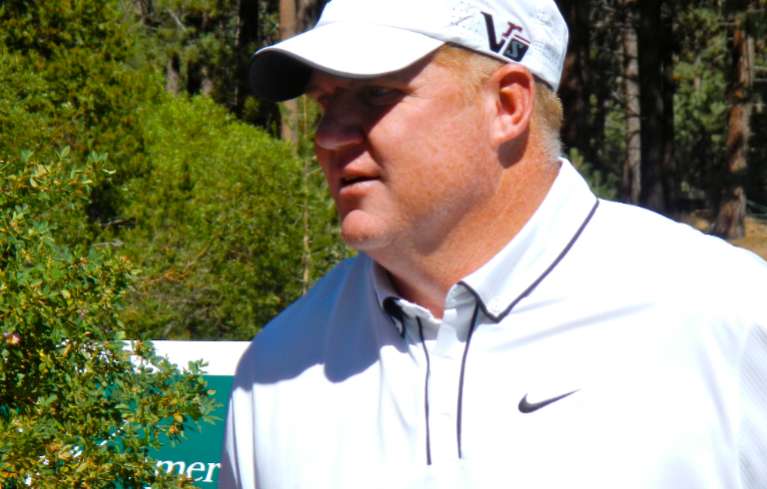
Billy Joe Tolliver on July 21 won his fourth ACC tournament. Photo/LTN

Billy Joe Tolliver on July 21 won his fourth ACC tournament. Photo/LTN

It took a three-hole playoff Sunday to determine the winner of the American Century Championship golf tournament.

Two former NFL quarterbacks Mark Rypien and Billy Joe Tolliver vied for the title, with Tolliver coming out on top on the third hole. Each has won the celebrity golf event before – Rypien in 1990 and Tolliver in 1996, 2005 and 2010.

“He is pretty good around the greens. He is pretty good with the wedges. He is just streaky with the putter. But when he is good with the putter, he contends, and he did that this week,” Roger Maltbie with the Golf Channel said of Tolliver.

This is first time since the tournament went to the Stableford scoring in 2003 that a playoff was necessary and the first time in the 24-year history that a playoff needed more than one hole.

Rypien finished second last year, too.

 — Lake Tahoe News staff report


Reid, Heller working together on online poker

By Karoun Demirjian, Las Vegas Sun

Just a year ago, Nevada Sen. Harry Reid was busy making it his mission to prove that Nevada Sen. Dean Heller was inept at the delicate art of culling votes for Internet poker legislation.

Now that there’s no Shelley Berkley candidacy to defend, though, Reid can’t stop singing praises for Heller’s prowess in reviving the online gaming debate.

“This was a very, very good hearing,” Reid said of a meeting Heller ran this morning in the Commerce Committee’s Subcommittee on Consumer Protection.

“I helped him prepare for this,” Reid said.

But just because Reid and Heller are all smiles doesn’t mean online poker has a clear path through Congress.

While there is near-universal concern about the security of online gambling, not everyone believes that online poker should get a special carve-out if Congress tries to walk back the Obama administration’s 2011 interpretation of the 1961 Wire Act.

Read the whole story


El Dorado Savings posts quarterly gains

El Dorado Savings Bank posted second quarter gains last week.

The Placerville-based company’s profits ending June 30 of nearly $2.17 is an increase of about 2 percent from the same period in 2012.

An increase in interest rates on new investments and more loans being written what the company attributes the gains to.

— Lake Tahoe News staff report


Children’s book author to talk in Tahoe

Kate Parkhurst will share her new children’s picture book, “The Invasion of the Cavity Creatures” at the South Lake Tahoe library on July 27.

This story illustrates the importance of oral hygiene. The characters take readers on an adventure through Tongue Town as they fight off the Cavity Creatures that have invaded their precious Molar Mountains.

The free event put on by Friends of the Library is at 11am at the South Lake Tahoe Library, 1000 Rufus Allen Blvd., South Lake Tahoe.

Books will be available for purchase.


Placer County museums to be free for a weekend

Nineteen Placer County local museums from Roseville to North Lake Tahoe will participate in the 6th annual Heritage Trail on Aug. 10-11.

The event captures the county’s history with exhibits and activities.

Admission is free on this special weekend and the museums will be open from 10am until 4pm.

Six of the 19 museums are in south Placer County. Another six are in Auburn and close enough together that visitors can walk to all six. The remaining museums are in the county’s mountain communities.

Bus tours that visit several museums each day are available both days. Buses depart from and return to Auburn. Tickets for the bus tours are $10 per day and required reservations can be made by calling (530) 889.6500. The bus tours have sold out in previous years.

Here’s a list of the participating museums.


Barton offers monthly bereavement groups

Barton Hospice encourages people who have experienced the loss of a loved one or have endured a significant, life-altering event to their ongoing bereavement group called “Reflections of Life and Loss.”

Sessions are the first and third Thursday of each month from 5-6pm at 2092 Lake Tahoe Blvd., Suite 600, South Lake Tahoe.

The benefits of a bereavement group include sharing emotional connections with others when many cannot find peace with friends and family. In addition, the bereavement group will help teach attendees how to cope with certain situations. Support and bereavement groups offer people the opportunity to release emotions they may otherwise keep to themselves.

“Reflections of Life and Loss” can improve a participant’s mood and decrease psychological distress. For questions or more information, call Barton Hospice (530) 543-5581.


Then and now: Lake Christopher — from wet to dry

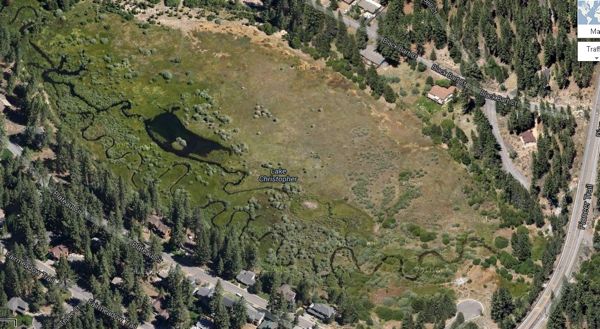
Lake Christopher was a man-made 55-acre reservoir at South Tahoe near the southwest corner of Black Bart Road and Pioneer Trail. I’m told that in the late 1950s the lake was 4- to 50feet deep, was fed by Cold Creek (that road sign exists today), and that it had lots of fish.

A decade later, its water level had dropped significantly while the lake became home to countless frogs.

On land owned originally by the Johnson family, its adjacent forest area was developed into today’s Meadow Lakes subdivision when that section of Pioneer Trail became a paved road in the 1960s. As the result of a stream and meadow restoration project, the lake was dry by the mid-1980s.

Lake Christopher existed approximately from 1955-1984, as best as I can determine, yet remains listed today on some guides and maps “for good fishing”.

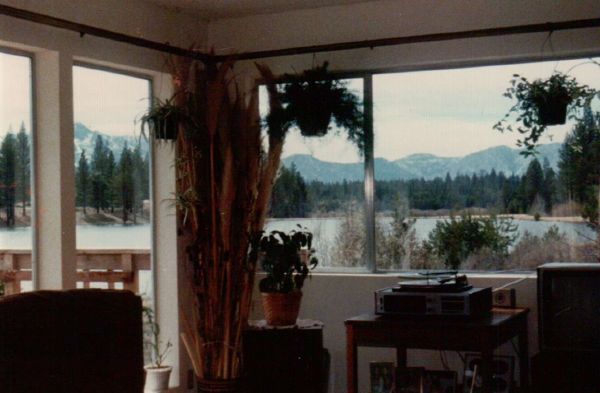
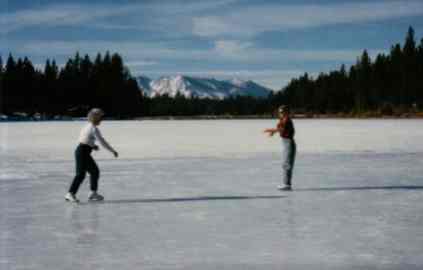
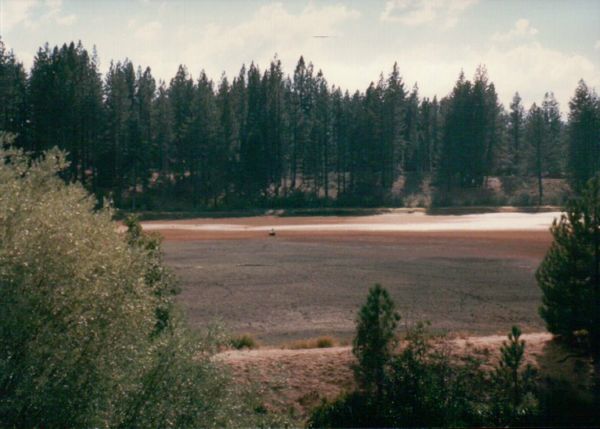
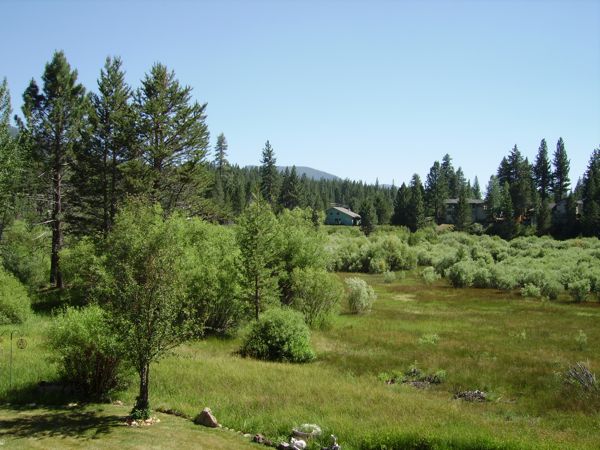
old-1The first four photos provided by Nancy Ticknor all look in the same direction toward Mt. Tallac.

Photo No. 1 shows her living room window lake view in 1977.

No. 2 shows wintertime ice skating on Lake Christopher.

No. 3 is the lake drying up due to stream and meadow restoration in 1984.

No. 4 shows today’s meadow at the same location.

No. 5 is a Google aerial view.

— Bill Kingman

old

old-3PENTAX Imageold-5


Glacier Park’s majesty slowly melting away

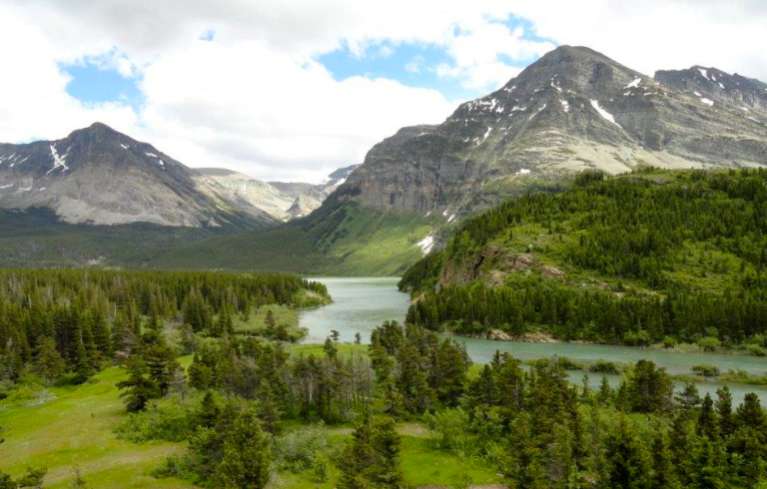
Many Glacier Valley  Photos/Robert S. Wood

Many Glacier Valley
Photos/Robert S. Wood

By Robert S. Wood

GLACIER NATIONAL PARK – It was shocking to learn that the last of famous Glacier Park’s hundreds of glaciers will be dead and gone in as little as seven years. With an extra month of summer on our hands, it seemed a good time to go up and have a look at the mere 25 moving ice fields that remain in the park. My wife Deanne and I were also curious to see how the northern Rockies stack up against our home mountain turf of Tahoe, Desolation and Yosemite.

Cruising the Web, then following up by phone, we discovered that would-be visitors customarily make Glacier reservations a year in advance at the few big old lodges inside the park. All we could unearth on short (two week) notice were three nights at Lake McDonald on the southwestern side of the pass and five nights at Many Glaciers — now more aptly nicknamed “Few Glaciers”– on the northeastern side.

But we were warned that snowplows were still working on Logan Pass and it wasn’t scheduled to open until the day we arrived.

It was a gamble, but nothing else was available this year. Basically, the short summer season up in northern Montana’s high Rocky Mountains is just July and August, as snow returns in September. At least we’d see the peaks at their prettiest, under a full mantle of snow. So we booked the rooms starting June 21 and consulted our maps, wondering how best to sample and hike a million-acre park, called the “Crown of the Continent,” in just nine days — some of it still under snow.

Snowmelt on towering Triple Divide Peak, we learned, can drain to the Pacific, the Arctic and the Gulf of Mexico.

Further research revealed that four of Glacier’s lakes offered inexpensive boat trips in ancient launches that ended at multiple wilderness trailheads on the lake’s far shore — and all of them were just beginning operation — reminding us of boat access to Desolation Wilderness via the Echo Lakes water taxi.

So we pre-booked trips on three of these launches to form the core of our park explorations, hoping we could get over the snowy pass to reach them. Otherwise, we’d have to circle around outside the park. We also allotted half a day to visiting Glacier’s adjoining sister park just across the Canadian border. Jointly the two comprise the Waterton-Glacier International Peace Park, the first of its kind.

Our next consideration was how to get to Glacier from Tahoe. Highway maps revealed that it looked like three days driving — each way. That would double the length of the trip, with all the substantial attendant costs of gas, motels and food. But air connections on Delta turned out to be excellent, so we decided to spare the old Subaru and fly and rent a car, arriving fast and fresh. Using past accumulated air miles — even with a $350 Dollar rental car bill — for us it was also cheaper.

After spending the night in Reno, we took a 6:30am flight to Salt Lake City, then transferred to a flying cigar that took us to Kalispell, Mont. There we got upgraded to a new Subaru and were driving into the park before noon, with the afternoon still before us. At the visitor center we learned that Logan pass had just opened and people were happily skiing and snowboarding on the high trails of the famous “Going to the Sun” pass road. Though the pass was a mere 6,600 feet in elevation, it commonly was buried under 50 feet of snowpack — quite a change from the central Sierra.

The detailed one-page park trail map, with good directions, revealed a nearby network of forest trails that looked inviting, part of it ascending the booming McDonald River above the misty lake, so we dropped our bags at our cabin and hit the trail, hoping to get in a walk before threatening clouds unloaded. The thick forest was primarily Englemann spruce and so mossy (and muddy from recent rain) that it reminded us more of Muir Woods in the coastal redwoods than the Sierra, with Spanish moss festooning conifers. The other Glacier forest trees are Arctic fir, quaking aspen and the familiar lodgepole pine. Spectacular wildflowers, featuring the white plume of native Bear Grass, emerged just days after the snow melted.

The thundering river, dwarfing most Sierra streams, was bank-to-bank white water. At every trailhead was a sign solemnly warning “You are entering Grizzly Bear country” mentioning danger, no guarantee of safety, and that hikers had been killed by bears, etc. Many of our fellow walkers wore little bells in hopes of warning wandering bears of their presence. Startling or surprising Grizzlies was severely warned against. Other hikers made a practice of frequently yelling variations of “Hear bear, bear, bear” and loudly clapping their hands.

Returning to our cabin by the lakeshore just before it started raining, we found ourselves in one of six tiny cubicles with paper-thin walls and two single beds jammed against the walls. No radio, TV, WiFi, phone, frig or microwave, just a basin, toilet and steel stall shower. Primitive, but functional. Apparently we were lucky to have it on short notice. We spent the rainy evenings visiting in the lodge by the blazing fire.

The next day we took the No. 1 rated wilderness hike in our area — along with probably 100 other visitors. From a vast jammed parking lot we mounted a boardwalk leading through mossy groves and up a splashing creek past beautiful waterfalls to Avalanche Lake in a snowy cirque, where we ate our lunch on the beach, passing several tame deer on the way. Hikers on the beach with a spotting scope claimed to see a grizzly and bighorn sheep high on the distant snowfields, but we couldn’t see them.

After completing the 5-mile roundtrip walk with 500-foot elevation gain, we decided it might be smart to drive up to Logan Pass on Going to the Sun road, since it was a fine afternoon with big cumulus clouds in baby blue sky. But there was a 90 percent chance of rain forecast for the day we were scheduled to drive it.

The drive was absolutely gorgeous on the narrow two-lane road with no shoulders, but numerous turnouts. We stopped often to take pictures and savor the dramatic alpine vistas before reaching the pass and its 8-foot deep drifts. The peaks of Glacier are not high, only six of them top 10,000 feet, but timberline is only 6,000 to 7000 feet, so the country looks like 12,000 to 14,000 feet in the Sierra.

Unlike the Sierra’s long rounded ridgelines, the Glacier peaks jut straight up in individual cliff-faced blocks of dark rock that soar steeply. Big cirques open between them, often containing as many as three glaciers. A distinctive cross-hatched pattern of snow etches the flat faces of these dark steep pyramids, anvils and glacially-carved aretes.

When the park opened a hundred years ago, there were more than 150 certified glaciers, often three or five on a single mountain. By 1967 the number had dropped to 50; and now only 25 remain active and alive. Living glaciers are moving bodies of ice that creep downhill due to their weight on steep rock and the forces of gravity. When more ice melts in the summer than is replaced by winter snow, the glacier loses needed weight and grinds to a halt, becoming a dead glacier, a mere motionless ice field.

Once we had moved to the many Glaciers Motor Lodge on the drier northeast side of the pass, we were ready for our three boat-assist hikes. We found our way to the docks at the end of the roads and climbed aboard ancient classic motor launches, not unlike the graceful historic varnished wooden yachts that plied Tahoe waters a century ago. On the northeast side of the park the country was much drier, as in the eastern Sierra. The boat trips, except on stormy days, were on serene narrow lakes that often yielded reflections of the surrounding peaks, unlike rarely reflective larger Tahoe.

Enclosed launches held 20 to 40 trippers, a majority of whom were prepared to hit the trail at the far end of the lake. Each trip offers several trail hikes, one of which is usually led by a boat captain or a park ranger. Mostly the trails lead to backcountry lakes, waterfalls, glaciers or glacier viewpoints. Walkers like us allergic to group hikes had other trails to choose from. Even on the dry side of the mountain, the country was wetter and more lush than on the west side of the Sierra crest, with little bare ground. We were well satisfied by our decision to take narrated boat trips to trailheads for hikes into more remote parkland, where the country was wilder and the chances of seeing animals was greater.

While in Glacier we saw grizzly and black bear, bighorn sheep, mule deer, moose, mountain goats and marmots, but none of the elusive wolves, mountain lions and wolverines. Park Service scopes in the parking lot helped visitors spot wildlife high on the cliffs above. We joined others by driving slowly at dusk along the park roads, when big animal viewing was at its best. Campers were always ready with tall tales of the giant grizzly that just crashed through their camp. Though black bears were vastly far more common, the sightings reported were somehow always of massive threatening grizzlies.

One day we took an open-roofed, vintage 1936 Red Bus touring north through the prairie across the Canadian border into Waterton Peace Park to the stately Prince of Wales Hotel, on a half day amusingly narrated trip. I had to go to Canada to get Mexican beer, which went well with Canadian style featuring a fried egg on top. The dramatic view across the lake from the hotel was similar to the famous one at Lake Louise in the Canadian Rockies, less than two hours away to the north.

Accommodations in the park are nothing likes those in the Sierra. Gigantic stately old hotels, not unlike the Ahwahnee in Yosemite Valley, built 80 to 100 years ago by the railroad, supply most of the park beds, with small spare basic rooms. Hotels are built around a huge cavernous lobby featuring a giant fireplace, with rustic, handsome old-fashioned dining rooms, where waiting in line was common. The menus seemed as old as the hotels, poor, dated and expensive, limited and identical. We soon grew sick of the park food and lack of choice, and were happy to drive east out of the park to eat our dinner at the cafes and roadhouses on the edges of the rolling green prairie. Park Café, Two Sisters and Luna’s are recommended.

The dividing line between steep and forested mountains and treeless rolling green prairie was sharp, distinct and delightful. On our return three-hour trip to the Kalispell airport, we were happy to circle east around the park through the Blackfoot reservation’s empty prairie, where Indians once lived off the teeming buffalo, and down the booming Flathead River, instead of driving back over busy Logan Pass.

Overall, our Glacier visit was a huge success, despite rain on five consecutive days and some clouds and wind. We loved the sheer soaring snow-etched cliffs, deep slender lakes, the abundant wildlife, big rivers, historic hotels, launches and buses, the country quiet and lack of glitz, though it’s clear that America is “loving its parks to death.” And it was fun to compare beautiful Glacier to our familiar Sierra home and take a last look at the park’s handsome, but dying glaciers before the last of them are gone.

Robert S. Wood and his wife spend half the year in Lake Tahoe and the other half in Sedona. He is the author of a dozen books, including the original trail guide to Desolation Wilderness.

ngg_shortcode_0_placeholder (Click on photos to enlarge.)


Opinion: Fiscal good news from Sierra Nevada College

By Lynn Gillette

Since Sierra Nevada College’s 2013 fiscal year just ended on June 30, I wanted to share some of the highlights of what we have accomplished during the past year.

At a time of significant change in higher education, I am proud to lead a nonprofit institution committed to academic excellence and student achievement. We have benefited enormously from a dedicated board of trustees composed of 30 community-based individuals, who have worked diligently under the leadership of our board Chair Wayne Prim and our Vice-Chair Atam Lalchandani.

Academic Excellence – A key strategic priority is to continue to increase academic rigor.

We received exceptional reports from our accreditor, the Northwest Commission on Colleges and Universities, and were granted permission to expand our academic offerings, including a master of fine arts in creative writing.

The cutting-edge Holman Arts & Media Center is on track to open in fall 2013 and will transform how we teach critical thinking and analysis to our students, shape the future of the arts at SNC, and connect with the community.

We successfully launched our low-residency MFA in creative writing; this brings renowned authors such as Kelle Groom, Téa Obreht, Brian Turner, Patricia Smith, and Colum McCann to our campus and our community.

We launched a master of education with a Ron Clark Academy specialization. This program educates teachers in the approach and techniques utilized by the Ron Clark Academy, which has received national and international accolades for its impressive results in teaching middle school students in Atlanta.

We redesigned our Core 101 class to introduce all incoming students to active learning and our culture of learning in order to ensure that they are fully prepared for a rigorous learning environment based on complete student engagement and advance preparation.

Capstone courses have been implemented in every major; a capstone course is a senior-level requirement that integrates and pulls together all prior coursework.

Fifteen student research projects were given at four research fairs and competitions across the country, including the National Conference on Undergraduate Research, which promotes undergraduate student research and creative activity undertaken in partnership with faculty and other mentors.

We have re-engineered our curriculum to require demonstrated proficiency in four critical skills viewed as essential for success: written communication, oral communication, critical thinking, and visual literacy. These initiatives cut across and are common to every discipline and major at SNC.

Our women and men’s alpine ski teams once again won the U.S. Collegiate Ski and Snowboard Association team national championships, bringing the women’s championships to 18 over the past 24 years and the men’s to 17 over the past 24 years. The men’s snowboard team has won all seven national championships since they were formed in 2006. The cumulative grade point average for all members of the ski and snowboard teams is 3.6 and this year, the highest overall GPA was held by the men’s alpine ski team with an average of 3.9. English Chair June Saraceno received the Nevada Humanities Outstanding Teaching of the Humanities Award; Business Department Chair Kendra Wong was selected Nevada’s Center for Entrepreneurship and Technology 2013 Faculty Adviser of the Year.

We continue to place our graduates in top graduate schools. For example: Logan Lape at Parsons The New School For Design; Lauren Upton at University College London; Jason Paladino at UC Berkeley School of Journalism; and 2012 Valedictorian, Zaira Perez at the Elliot School of International Affairs, George Washington University.

One of SNC’s 2012 valedictorian candidates, Andrew Gauthier, was recognized as the Valedictorian for his graduating class in the postgraduate diploma in hospitality management program at the Glion Institute of Higher Learning. Located in Switzerland, Glion Institute is ranked No. 2 among schools for international hospitality management in the world.

An SNC student team, Pure Ski Experience, placed second in the undergraduate division of the Donald W. Reynolds Tri-State Business Plan competition, beating teams from Nevada, Arkansas and Oklahoma, and was the only Nevada team to place. In addition, SNC had three of the six team finalists for the Nevada statewide competition. The team’s cumulative winnings were $39,500. Pure Ski Experience’s three team members are all Olympic athletes majoring in global business management and ski business and resort management.

We have approved the expansion of our athletic program; men and women’s lacrosse launches in fall 2014, to be followed by cross country running and soccer.

New initiatives in alumni and parent programming, including our first major homecoming weekend in spring 2013, have transformed the way we reach out to these constituencies. By strengthening the connection between alumni, parents and SNC and expanding networking, we are increasing opportunities for both current students and graduates.

Strategic Partnerships – A key priority is to leverage our core strengths to increase program opportunities through strategic partnerships and to expand our national and international reach.

We partnered with Middlebury College to bring their innovative MiddCORE Immersion program to Sierra Nevada College. Thirty-six students from colleges around the U.S., including schools such as Middlebury, SNC, Brown, and Stanford, convened on our campus for the intensive four-week program which also brought together an impressive array of mentors from around the country, as well as from here in Incline Village.

We partnered with Vail Resorts to enhance the talents and opportunities of Vail staff and SNC students, including a speaker series featuring Vail leadership on our campus, training from our faculty for Vail’s staff, and internship and career opportunities for SNC students and graduates. It will take our ski business and resort management program to a new level.

We partnered with ChinaCast to bring students from Chinese universities to SNC. Four full-time students came in the spring and we expect eight to ten more full-time students in fall 2013. The program is a 1+3 program where the students will study their first year at a Chinese university, and complete their remaining three years at SNC. In addition, 25 senior level students from China will be here for two weeks in late July.

We developed new relationships with local businesses to place both interns and recent graduates. IT Convergence, a firm with worldwide offices, has hired six members of the class of 2013 and wants to employ twenty student interns in the coming academic year.

We have expanded our relationship with SummerFest and once again world-renowned artists will perform classical music on our campus, benefiting both the community and the region.

Financial Stability – A fundamental tenet of our financial policy is that operating revenues will exceed operating expenses.

For FY 2013, we will have a positive operating margin with operating revenues exceeding operating expenses. It will exceed the FY 2012 operating margin by approximately $1 million and exceed the average operating margins of FY 2007-FY 2011 by $4 million.

We hit our $2 million FY 2013 goal for fundraising, and this does not include the Holman Arts & Media Center that was booked in FY 2012.

In the fall, we had the highest undergraduate enrollment in our history with a student headcount of 553.

The most recent data shows our default rate on student loans is 4.1 percent, compared to 9.1 percent nationally and 9.5 percent in Nevada. This is a result of our work with our students to ensure that they borrow responsibly and also reflects their post-graduation employment success.

For the first time, our freshmen retention rate rose above the national average to 78 percent.

We continue to increase undergraduate enrollment during the summer. For the summer of 2013, undergraduate credit hours have more than doubled, increasing by 120 percent. Moreover, undergraduate credit hours have increased 449 percent since the summer of 2008.

We have strengthened the senior leadership team with two extraordinary hires in finance (Sue Johnson) and development (Dino Hernandez).

Although this list is far from exhaustive, it is an impressive array of accomplishments. More than anything, it is a testament to what we have all done together – Board, faculty, staff, students, alumni, parents, donors, and community members. I look forward to providing you with an equally impressive list of our successes in FY 2014 and I invite you to continue to be a vital and integral part of our unrelenting quest for greatness.

Lynn G. Gillette is president of Sierra Nevada College.