Snippets about Lake Tahoe

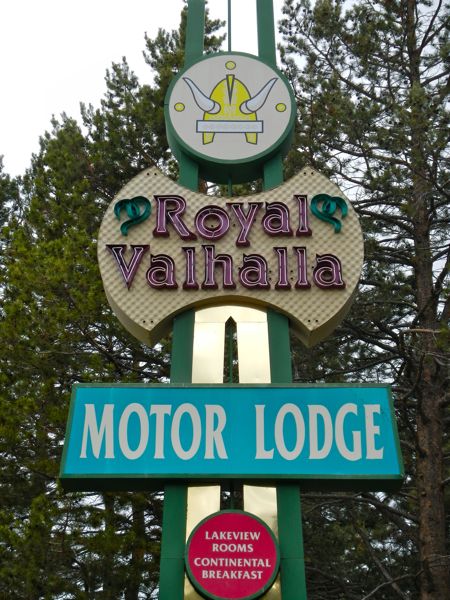
hotel sign• The old Royal Valhalla sign is being given away by the owners who have transformed the South Lake Tahoe property into the Landing Resort & Spa. Inquiries should be directed to information@thelandingresortandspa.com.

• The annual League to Save Lake Tahoe fashion show fundraiser is Aug. 3 at a private Incline Village home. For tickets, call (530) 541.5388.

• George W. Bush was at a dinner at Harveys in Stateline during the celeb golf tourney.

• Genoa’s main street dedication is July 27 from 10am-1pm. The flyer has more info.

• The national real estate search site Estately recently released an article titled 13 Best U.S. Cities for Mermaids to Live. Despite not being a city or beside the sea, Lake Tahoe came in 10th place.


LTUSD tackling safety issues at school sites

By Kathryn Reed

Changing how a desk faces, putting a defensive item on a teacher’s desk, playing over worst-case scenarios in one’s head to know what to do just in case – those are some of the basic security measures being taken in Lake Tahoe Unified School District.

More substantive things are being done as well, and many are being implemented in coordination with local law enforcement.

LTUSD’s school board was given an update on security within the district at the July 23 meeting.

Landscape modifications, window treatments, cameras, front entrance control, barriers to stop a vehicle from ramming a structure, signage – those are some of the easier items to tackle.

Another component to this is the technology needs of the district. The phone system is the same one Lake Tahoe Community College had that failed earlier this year and temporarily stopped voice communication. But the district’s data delivery is even more antiquated, so that is a higher priority.

Al Frangione, who is leading the development of the security plan for the district, said the technology piece would cost $1.5 million to do what he wants. There is about half of that dollar amount left from the Measure G facilities bond that could go toward IT.

Tuesday was about getting information, not for the board to make a decision on how to go forward.

What is happening

After the December 2012 fatal school shooting in Connecticut, a federal unfunded mandate came out saying the FBI needed to do some extensive training with local law enforcement to deal with school shootings or another crisis that would threaten students and staff.

Last week the El Dorado County Sheriff’s Department used a West Slope school for a rigorous training.

LTUSD has been looking at how prepared it is in case there is a threat at a school.

“We looked at what are the threats and vulnerabilities and how do you rectify it,” Frangione told the board.

What isn’t public record is what all the weaknesses are so they cannot easily be exploited.

“The key thing is to get people to think about what they would do, especially by staff, so they can make a difference,” FBI Agent Chris Campion said.

Staff will be receiving training before school starts next month and more intensive training will follow.

“It’s probable staff is the first responders whether we like it or not,” Frangione said.

A collaborative approach is being used, with multiple agencies involved in what is called REACT – Regional Emergency Action Crisis Team. But it was also noted that many of the groups don’t regularly train together so each one might have a different set of protocols when it comes to dealing with an emergency.

With the South Shore being so small and staffing minimal, one department could not handle something like a Sandy Hook mass shooting.

Looking at prevention

Collaboration is also needed when it comes to various entities talking about what they perceive as a potential threat. It’s not about profiling a student, or even an employee or parent, but instead putting pieces together.

The goal would be to try to get an individual help or defuse a situation before it became deadly.

Superintendent Jim Tarwater pointed out that in the last eight years he has found that parents are more difficult to reach.

El Dorado County sheriff’s Lt. Pete Van Arnum spoke of how when he was with South Lake Tahoe Police Department in the 1990s he was the school resource officer at South Tahoe Middle School. It was at a time when gangs were infiltrating the school, and students and staff felt intimidated.

He said he’s talked to teachers and that same feeling is coming back to STMS.

“Some kids are taking control again at the middle school,” Van Arnum said. “It needs to be two pronged. You need to be tough, but you need to care.”

He said building trust and relationships with students could help change how they behave. Programs like Police Activities League, after school boxing, weekend backpacking trips and a day on the slopes helped the kids bond with law enforcement and change the direction of their lives.

Today there is no officer at the middle school. And those programs are a thing of the past.


Letter: Environmental analysis lacking for ski resort summer plans

To the community,

The applicant should include the Forest Flyer coaster amenity in the Northstar Mountain Master Plan EIR, and not as a separate mitigated negative declaration.

When individually considered, this amenity will not be subjected to potential cumulative effects as an additional recreational activity along with several new ski lifts, additional residential housing, etc., in the NMMP. The NMMP EIR will examine both project and program level components, identify feasible mitigation measures and will evaluate the project’s potential to contribute to cumulative impacts. Why is this any different than erecting a ski lift?

This is a new amenity that does not currently exist in or nearby the Tahoe region and has never been analyzed before or codified by Placer County. Calling this an accessory use and not truly defining how a recreational amenity, which is defined by applicant and county as like a ski tower/lift, is not adequately analyzing the impacts or defining this as an accessory use. If this amenity is not expected to generate more visitors, thus additional revenue, then it would not be built.

The first phase of Vail Resort’s Epic Discovery includes approximately $25 million to transform the summer experience at six of its mountain resorts (Vail, Beaver Creek, Breckenridge, Keystone, Heavenly and Northstar). Plans for each mountain include a selection of ziplines, rope courses, signature climbing walls, Forest Flyers, summer tubing, expanded hiking and mountain biking trails and education centers. Each of these new activities will capitalize on the existing summer visitation at each resort and leverage existing infrastructure, creating the opportunity for high-impact and high-return projects.

Comments related to the initial study and checklist: previous environmental document, CEQA Section 15168 relating to program EIRs indicates that where subsequent activities involve site-specific operations, the agency would use a written checklist or similar device to document the evaluation of the site and the activity, to determine whether the environmental effects of the operation were covered in the earlier program EIR.

The following documents serve as program-level EIRs from which incorporation by reference will occur: Placer County General Plan EIR and Martis Valley Community Plan EIR. Neither document should be considered as environmental impact analysis for a Forest Flyer, as neither document envisioned or discussed this specific amenity called a Forest Flyer, so the two documents are not applicable and cannot be used as tiered environmental analysis.

In the FAQ section of the Northstar Master Plan, it is stated: “How do the proposed project improvements move Northstar in the direction of more of a destination resort than a day ski area? The proposed project improvements will provide resort guests with a wider, more diverse array of terrain offerings and recreational activities, facilitating an improved and extended vacation experience for the destination and day use guest.”

I attended the NTRAC meetings. The split vote for recommendation did not include a discussion on environmental impacts as stated in the staff report.

At Heavenly, ziplines, Skycycle Canopy Tour, Forest Flyer, Observation Tower, Rope course and more is planned. What’s next for Northstar? The Northstar Master Plan is not ready for prime time. Sorry — this doesn’t lend credence to allow piecemeal planning for mountain amenities.

I’ll close with one of my favorite comments from the Breckenridge Peak 6 EIR.

“Our national forest is not an amusement park. The unique features of ‘nature’ should be preserved and promoted and the ‘man-made’ impact mitigated. I support many of the proposed resort expansions, but cannot support zipline tours or elevated rail flyers that exist primarily to provide an adrenaline rush (speed, height, etc.) to amuse or entertain visitors. These types of ‘rides’ are mechanical, commercial, amusement activities and do not further the goals of natural appreciation or environmental sensitivity. Neither are they location-dependent — they can be found anywhere in the U.S. Save our national forests. And promote the ‘inherent’ beauty and values that exists in nature and the “human-powered” recreational activities that will nurture our next generation earth stewards.”

Ellie Waller, Tahoe Vista


Highway patrol focusing on I-80 from SF to NJ

By Gary Richards, San Jose Mercury News

In the first crackdown of its kind, highway patrol officers from the Bay Area to New Jersey will join forces in an effort to prevent any fatalities on the 2,909 miles of Interstate 80 from Wednesday though July 31.

“For an entire week, that would be amazing,” said Jaime Coffee, a spokeswoman for the California Highway Patrol. “I don’t know if it has happened before.”

Someone dies in a collision every eight days on I-80 in California.

Of those fatalities, 30 percent involved the failure to wear a seat belt, 27 percent are alcohol-related, 22 percent are speed-related and 4 percent are attributed to distracted driving.

From 2001 to 2011, there were more than 77,842 collisions, or an average of 21 crashes each day, and 498 people or nearly 50 a year killed on I-80 in the state.

The latest push, dubbed the “I-80 Challenge,” was organized by the Iowa State Patrol after research identified an increase in traffic fatalities during the summer vacation period on the nation’s main east-west route.

For California, summer also means heavier than usual traffic from San Francisco to Reno and Lake Tahoe. Agencies in Utah, Iowa, Illinois, Ohio and the more heavily populated eastern part of the country also say a surge in traffic can lead to more mayhem this time of year.

While I-80 is a key link between the East Coast and West Coast, it often bottlenecks down to two lanes each way. And in less-populated areas, drivers often go too fast in their haste to reach vacation destinations.

“Speeders, sleepy drivers, too much traffic — those are my big worries,” said James Delgado, of San Jose, who makes several trips each summer to Reno and Lake Tahoe. “It would be good to see a few more CHP cars out there, too.”

Coffee said the CHP will focus on drivers not wearing seat belts, those going too fast for conditions and anyone who has been drinking.

“Much of this will be educational,” Coffee said. “We’re just trying to get the word out about being safe this time of year.”


Cyclists riding cross country to raise awareness about cancer

Twenty-two students from the University of Illinois called the Illini 4000 Bike America Team will be in South Lake Tahoe this week.

The team has been cycling from New York City to San Francisco each summer since 2007 raising hope, funds, and awareness for cancer research.

The 2013 Bike America Team aims to raise more than $150,000.

More info is online.


Study: Skipping breakfast not a healthy idea

By Mary MacVean, Los Angeles Times

Even Elmo knows that breakfast is the most important meal of the day in his world, but there hasn’t been enough scientific evidence for the federal government to recommend it for grownups.

Still, it sounds like it might be a wise move to stock up on oatmeal and the like. In an article released Monday in the journal Circulation, researchers found that men who skipped breakfast had a 27 percent higher risk of coronary heart disease than men who ate their morning meal – though we imagine that big daily plates of bacon and pancakes with syrup are not the ideal.

The researchers also found, using a large ongoing study of mostly white men, that those who ate late at night had a 55 percent higher risk of coronary heart disease. They didn’t find an association with the number of times a day a person ate.

Those associations were true — if somewhat less so — when other habits and conditions that would cause coronary heart disease were factored in, said the researchers, from Harvard University and Brigham and Women’s Hospital.

Snacking and skipping breakfast are common among Americans, the researchers noted. And such habits have been associated with weight gain, high blood pressure and diabetes, they wrote.

So they looked at the Health Professionals Follow-up Study, an ongoing look at 51,529 men who are questioned every two years about their health and habits.

The men who did not eat breakfast were younger, more often single and more likely to smoke and less active than the other men. The late-night snackers were also more likely to smoke and to have hypertension and sleep less than seven hours a night, the researchers wrote.

But the quality of the men’s diets was on average very high.

“The timing of the meal may be directly responsible for the metabolic effects that may lead to CHD, or alternatively, eating habits may be a proxy for specific foods more likely to be consumed at breakfast or late at night such as breakfast cereals high in dietary fiber and fortified micronutrients like folate or late-night snack foods high in calories,” the researchers wrote.

They said they would like to see additional studies looking at women and ethnic groups.


Class to focus on native plants, good bugs

Get Wild in Your Garden: Native Plants and Beneficial Insects is the name of the lecture being hosted by the Lake Tahoe Master Gardeners.

The free event is July 29 at 5:30pm at Lake Tahoe Community College’s demonstration garden.

Learn how to welcome wildlife and beneficial insects through the use of native plants.

Novice and experienced gardeners are welcome.


S. Tahoe homicide victim ID’d; suspect on the run

The man accused of killing 28-year-old South Lake Tahoe resident Julian Acevedo Salvador remains at large.

South Tahoe officers now say the fight early July 20 was just between the two men. It started with an argument, escalated to a fistfight and ended with Salvador being killed.

Detectives are continuing to collect evidence and information.

“Because the suspect is still unidentified and at large, and there are many witness and potential suspect interviews pending, it is important that specific details regarding the precise nature of how this event unfolded remain unreleased to the public at this time,” police said in a statement.

The name of the assailant is unknown. He is described as a white male in his mid-20s, about 5-feet-8inches, with weight proportionate to height.

— Lake Tahoe News staff report


Study: Gene mutation linked to obesity

By Elizabeth Lopatto, Bloomberg

A genetic mutation linked to obesity in mice can cause weight gain without overeating, a discovery researchers at Boston Children’s Hospital say suggests the gene may govern how the body uses energy.

Mice altered to silence the gene, called Mrap2, had to be underfed by 10 percent to 15 percent to keep their weight gain as low as normal mice, according to the study released yesterday in the journal Science. An analysis of 500 people found the equivalent human gene mutation in four people with severe, early onset obesity.

The mutant mice grew to twice the normal size and the weight gain was exaggerated further when they ate a high-fat diet. The finding suggests the body’s mechanisms for energy use and weight gain among some obese people may be different than among skinnier peers.

“These mice aren’t burning the fat, they’re somehow holding onto it,” Joseph Majzoub, the chief of endocrinology at Boston Children’s Hospital and a study author, said in a statement.

Of the 500 obese humans whose genes were sequenced, the four people with the mutation had become obese at an early age. Only one had a mutation that totally disabled the gene. That suggests the mutation induced in the mice is responsible for less than 1 percent of the obese population.

Obese people have too much body fat, which increases the risk of diabetes, heart disease, stroke, arthritis, and certain cancers, according to the National Institutes of Health. Obesity is calculated using body mass index, which is measured by height and weight. A person with a BMI higher than 30 is considered obese. That means a person who stands 5 foot 9 inches is obese if he or she weighs 203 pounds or more.


Wine for Dummies more than a book

By Venessa Wong, Bloomberg Businessweek

In 1995, John Wiley & Sons first published “Wine for Dummies,” an instructional book for aspiring oenophiles produced in the same format as the rest of the books in the popular yellow-and-black-jacketed reference series.

Other titles include “Personal Finance for Dummies,” “Auto Repair for Dummies,” and (a personal favorite) “Raising Chickens for Dummies.”

But the “For Dummies” brand has taken its Wine 101 education a step further. It’s licensed a Wines for Dummies wine, complete with labels bearing the same design as the books.

The Dummies wines were introduced in May by Vision Wine & Spirits, a New Jersey wine importer and marketer. They cost about $10 a bottle and come in four varieties: Chardonnay and Cabernet Sauvignon from California, and Pinot Grigio and Chianti from Italy.

“Wines for Dummies is intended for everyday consumers, regardless of experience or budget, to enjoy without anxiety or the knowledge of fancy wine lingo,” said Vision Wine & Spirits Managing Director Dan Lasner in a release. “With this new brand, consumers will spend less energy worrying about which wine to choose and more energy enjoying them.”

Even in a wine-savvy state like California (where the Dummies brand is scheduled to hit shelves this fall), it’s not as crazy a move as it may seem at first glance.

Americans love their wine – especially the affordable stuff – and unit sales in the U.S. were up 4 percent in the 52 weeks ended June 16, according to data compiled by Bloomberg. The top-selling brand was Barefoot Wine, which is owned by E&J Gallo Winery, the mega-winemaker behind other popular, low-cost brands such as André and Carlo Rossi.

There’s also evidence that Americans are interested in actually becoming knowledgeable about wine. The “Wine for Dummies” book is now in its fifth edition, with more than 1 million copies in print. It remains a best-seller, according to Wiley.

Wines for Dummies wine is available in 15 states (Maryland, Florida, Indiana, New Jersey, New York, Alabama, Colorado, Delaware, Kentucky, Mississippi, Ohio, Pennsylvania, South Dakota, West Virginia and Wyoming). By September, it will be in another 10 to 15 states, including California, Michigan, Arizona and Massachusetts.

Mark Tucker, marketing director for Vision Wine & Spirits, says distributors in New Jersey sold 2,100 cases to more than 500 stores and restaurants in the state during the first month. The brand is in Wegmans supermarkets and will soon be sold in Dollar General stores.

The Dummies reference series, which launched in 1991, has expanded beyond books before. It has a licensed product line that includes electronics, videos, home improvement tools and musical instrument starter packs.