Arsonists can start at an early age

Arson killed more than 800 people in 2012 and was the largest single cause of fire damage to property.

Of all the fire damage to schools, arson or other suspicious fires cause almost 75 percent. Many of these fires are started by people under the age of 18.

The key to stopping “young fire-setters” is to find them and help them early. Anyone who knows of a person setting fires should report the activity to the fire or Police department.

The South Lake Tahoe Fire Department urges everyone to be especially careful and alert during this period of dry weather.

— Sallie Ross-Filgo, SLTFD


Tallac Site — Tahoe from more than a century ago

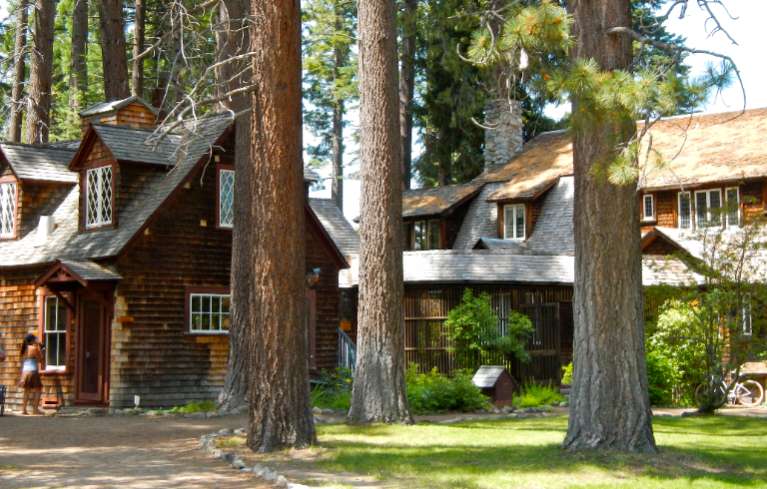
The kitchen at the Pope estate, left, was separate from the main house for fear of fire. This was customary during that era. Photos/Kathryn Reed

The kitchen at the Pope estate, left, was separate from the main house for fear of fire. This was customary during that era. Photos/Kathryn Reed

By Kathryn Reed

CAMP RICHARDSON – Do you have what it takes to work for the wealthy on a seasonal basis along the shore of Lake Tahoe?

A new tour this summer at the Tallac Historic Site is designed to give visitors a glimpse into what it was like to be part of the hired help at the estates.

“The Servant’s Tour is from the perspective of the servants. They act like you are there for a job,” Tami Africa, who works for the U.S. Forest Service at the Tallac Site, told Lake Tahoe News. She said visitors find out what was expected of people who worked for the Popes.
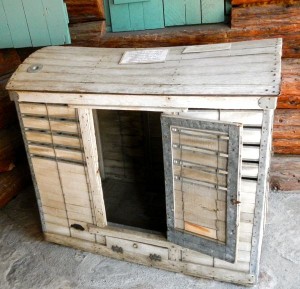
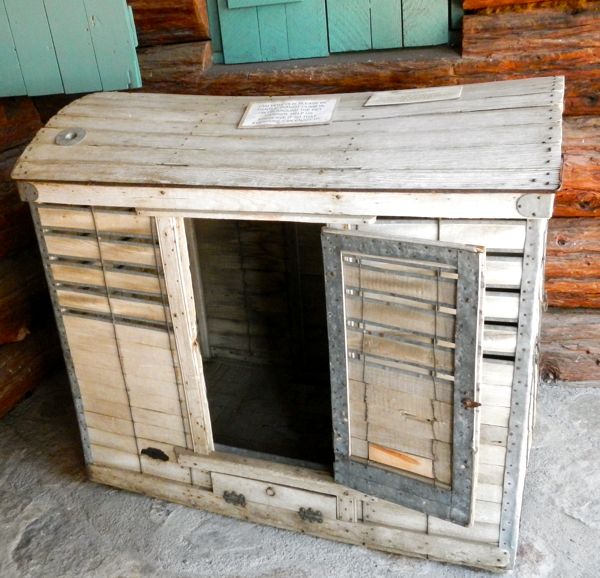
Pets in 1880 came via these carriers.

Pets in 1880 came via these carriers.

While it’s the maid or butler who gives the tour of the Pope estate, other servants at the time would have included a nanny, tutor, cooks, gardeners, blacksmith, seamstress and others.

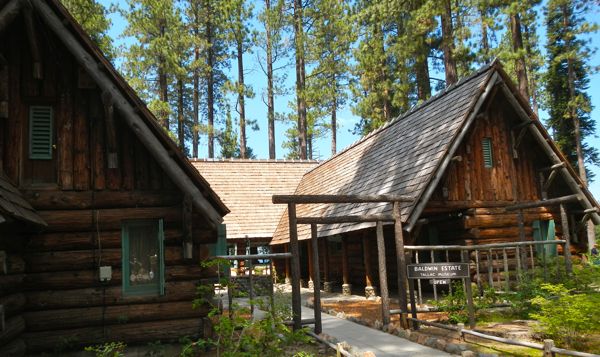
The Pope, Baldwin and Heller estates make up the Tallac Historic Site on the South Shore near Camp Richardson. The 150 acres have been on the National Register of Historic Places since 1986.

While the site is open year-round to meander through, the buildings are only open seasonally.

These sprawling lakefront compounds were summer homes for wealthy San Franciscans in the late 1800s and early 1900s.

At one time Lucky Baldwin, who was the first president of the Pacific Stock Exchange, had 8,000 acres on the South Shore. He also owned more than 50,000 acres in Southern California.

He came into the Tahoe property in 1880, and developed what was there into a resort that included a hotel and outbuildings that could house 250 people. Remnants of the tennis court still exist. And long before men with the name of Harrah and Gross built casinos in Stateline, Baldwin has his own in Tahoe – in California.

What is now the museum at the Baldwin property was the home Dextra Baldwin, granddaughter of Lucky Baldwin, had built in 1920 when she was 19. Her bedroom has been turned into a gift shop. Another room is devoted to the Washoe Indians who before the wealthy arrived called the shore of Lake Tahoe their home.
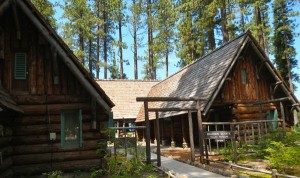
The main house on the Baldwin estate.

The main house on the Baldwin estate.

But even the expanse of the kitchen and what are now antiques prove these were people with money who could afford a 5,000-square-foot home.

The Pope house remains more like it would have been nearly a century ago. (Tours are available.) George Tallant built it in 1894, with George Pope acquiring it in 1923. It is the largest of the three estates. The main house is also more ornate than the others.

Walter Heller built Valhalla in 1924. Today it is better known as the Grand Hall – which is used for weddings and other events that Tahoe Tallac Association puts on.

The TTA also uses the old boathouse on the property as a theater for summer performances.

Today the U.S. Forest Service owns the Tallac Historic Site. A cadre of volunteers keeps it running and helps maintain the grounds.

Things to know:

• Baldwin Museum is open daily through Sept. 2 from 10am-4pm, then Thursday-Sunday from Sept. 5-Oct. 6 from noon-4pm.

• Pope tours run daily through Sept. 2 except Wednesdays. Times are 11am, 1pm and 2:30pm. Cost is $8 for adults and $3 for children.

• Servant’s Tour is weekends at 3pm and Wednesdays at 11am and 2:30pm until Sept. 1. Cost is $5.

• The Tallac Site is 2½ miles north of the Y in South Lake Tahoe on Highway 89.


Big 5 posts quarterly gains

Big 5 Sporting Goods Corp. this week announced that its second-quarter net income increased.

The South Lake Tahoe store is one of two to open this past quarter. Revenue from stores that were open for a year or longer increased 4.4 percent for the quarter ending June 30. This quarter the company plans to open four stores and close one.

The retailer’s net income increased to $6.1 million. That is up from $2.6 million for the same quarter in 2012. Revenue in the same time period was up $239.9 million compared to $226.6 million a year ago.

— Lake Tahoe News staff report


Opinion: Red-light camera controversy growing

By Dan Walters, Sacramento Bee

One of San Diego Mayor Bob Filner’s first acts this year – before he became preoccupied with other affairs – was to end the use of cameras to catch motorists running red lights, labeling them “the San Diego version of a traffic trap.”

It was the latest in a string of recent setbacks for the devices, indicating that they may be on the way out of California.

Redflex Traffic Systems has dominated the red-light camera industry, claiming they improve safety and persuading cities and counties to install them in return for a share of fines, typically about $500 each.

However, critics say the cameras mostly snag motorists who don’t come to a complete stop before making turns, rather than those running through intersections, and therefore aren’t the lifesavers that boosters claim. Opponents have also accused cities of setting yellow lights at camera- protected intersections on minimal times to ensnare more motorists.

Read the whole story


Politicians hear from fire experts about challenges

By Clare Foran, National Journal

In a forum convened Tuesday by the Bicameral Task Force on Climate Change, a panel of experts on climate, wildfires, and forestry met with task force co-chairs Rep. Henry Waxman, D-Calif., Sen. Sheldon Whitehouse, D-R.I., and other lawmakers to discuss the impact of climate change on wildfires.

“We’ve been experiencing wildfire activity that is different and more dangerous,” Waxman said in his opening statement, calling recent fires some of the “largest and most intense … we’ve seen.”

Panelists cited a number of reasons for wildfire flare-ups, including land-use patterns and insect activity. But the discussion kept circling back to climate change.

“Scientists tell us these changes are not just random variability,” Waxman said. “Bigger and more-intense fires are one of the red flags of climate change.”

Climate-change expert William Sommers, a researcher at George Mason University’s EastFIRE Laboratory, agreed. Sommers cautioned that rising levels of atmospheric carbon dioxide will only worsen wildfires in decades to come. “If current greenhouse-gas emission trends are not sharply reversed in the immediate future, we will see observed trends in wildfire risk accelerate,” he warned.

Waxman and Whitehouse asked firefighting and forestry experts for policy recommendations to help mitigate the situation.

Panelists, including Santa Fe, N.M., Fire Chief Erik Litzenberg and Rick Swan, director of supervisory personnel and health and safety for the California Department of Forestry Firefighters, cited budget cuts as a major stumbling block in efforts to combat wildfires, and called for increased funding for park services and firefighters.

“We are seeing a dramatic increase in the number of fires, especially in California,” Swan said. “But we are not seeing the same increase in staffing levels and funding.”

Litzenberg called on lawmakers to increase funding for the federal Volunteer Fire Assistance Grant program, noting that volunteers frequently serve as the first line of defense against wildfires.

Waxman and Whitehouse promised to consider the recommendations, but acknowledged that cutbacks due to sequestration would make funding increases difficult to achieve, at best.

Nevertheless, Waxman stressed that Congress cannot ignore the link between climate change and wildfires. “It’s going to continue to get worse and … this isn’t the only problem that we’re facing because of climate change,” he said. “We’ve got to wake up the American people and their representatives and we’ve got to deal with this issue.”


Company using cannabis in pharmaceuticals

By Carol Matlack, Bloomberg Businessweek

Medicinal marijuana advocates contend that smoking pot helps relieve pain and alleviate nausea. British drug company GW Pharmaceuticals is betting that medicine made from cannabis can also treat maladies as diverse as diabetes, colitis and epilepsy.

GW is the only pharmaceutical group in the world that sells a prescription medicine derived from marijuana plants, as opposed to synthetic equivalents. The drug, a nasal spray called Sativex, has been approved by regulators in eight countries – Italy, most recently – to treat spasms associated with multiple sclerosis. A request for U.S. Food and Drug Administration approval is pending.

Taking aim at a potentially much bigger market, the company plans to start second-stage clinical trials of a cannabis-based drug that has showed promise in treating Type 2 diabetes. The drug, with the tongue-twisting name of tetrahydrocannabivarin-9, improved patients’ production of insulin and helped lower blood-sugar levels between meals.

An estimated 371 million people worldwide suffer from Type 2 diabetes. Patients taking the cannabis-based drug “could potentially be controlled on oral therapy for a longer period of time and wouldn’t need to take injections,” says Mike Cawthorne, a GW consultant who is director of metabolic research at the University of Buckingham.

GW Pharma, with $52.2 million in annual sales, is literally betting the farm on cannabis: Its entire drug pipeline is derived from pot that it grows at an undisclosed location in southeastern England.

By contrast, other companies developing pot-based medicines have used synthetic versions of chemicals that are either identical or similar to those found in the plant.

While the idea of using a living plant might have some marketing appeal, in fact GW Pharma has to “purify the chemicals so much, that it’s almost incidental that they’re using cannabis as the source,” says Sam Fazeli, chief pharmaceutical analyst for Bloomberg Industries in London.

Though the diabetes drug has the potential to be GW’s first blockbuster, it also faces big regulatory hurdles. One is the possibility that it could block receptors in the body that ordinarily trigger pleasurable sensations and increased appetite often associated with pot smoking.

French drugmaker Sanofi developed an antiobesity drug called Acomplia that acted by blocking these receptors, but had to pull it from the market after it caused heightened rates of depression and suicide.

Diabetes, though, is just one of many diseases that GW is targeting. It’s developing a pot-based medication to treat inflammation in ulcerative colitis, and is working with Otsuka Pharmaceutical of Japan on a drug that could treat epilepsy. The company also is carrying out further studies on the multiple sclerosis drug Sativex that could lead to its use for treating pain in cancer patients.

And no, patients taking these medicines won’t get a buzz. Of an estimated 60 chemical compounds in marijuana, only one will get you high. GW is working with the other 59.


West Nile virus found in parts of N. Nevada

Mosquitoes carrying the West Nile virus are buzzing around Northern Nevada.

Officials found the virus in Douglas County test pools. Infected mosquitoes have been found in Carson City, and Washoe and Lyon counties.

While there is no human vaccine for West Nile, horses can be vaccinated.

The best prevention for people is to apply a dose of bug juice and/or wear clothing that covers skin to avoid being bitten.


Sub exploring Tahoe sputters with mechanical problems

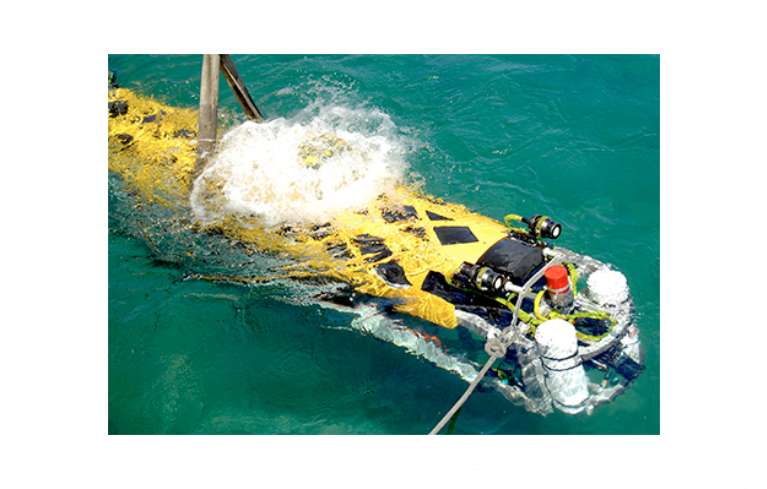
The remotely operated vehicle’s vertical thrusters are tested. Its two lights, high definition video camera and two ballast tanks can be seen at its bow. Photo credit: Ross Powell, NIU

The remotely operated vehicle’s vertical thrusters are tested when it was put into Lake Tahoe in early July.
Photo/Ross Powell/Northern Illinois University

By Rosanna Xia, Los Angeles Times

An unmanned submarine set to dive more than 1,000 feet to scour the bottom of Lake Tahoe didn’t quite make it all the way.

During shallower test dives earlier this month, the submarine encountered complications with a few of its motors, said Gordon Seitz with the California Geological Survey. The engineers who created the vessel considered the problems serious enough that they didn’t want to risk diving it all the way to the bottom of the lake, he said.

The 28-foot-long, 2,200-pound submarine, designed to explore beneath the ice shelves of Antarctica, was diving Lake Tahoe in its first test run. Seitz and his team hoped to capture valuable data and high-definition images of an earthquake fault along the lake’s bottom that scientists have wondered about for years.

Since 1998, when the West Tahoe fault was first put on the map, engineers have tried various ways to decipher the underwater fault, which they estimate — based on shore studies — is capable of producing a magnitude 7.1 to 7.4 earthquake and tsunamis up to 30 feet high every 2,500 to 4,000 years.

The last massive temblor was about 4,000 years ago, and scientists say now is the time to get better data.

“I wouldn’t say the earthquake’s overdue. But if it happened tomorrow, I wouldn’t be surprised,” said Seitz, who is leading the Lake Tahoe study. “It’s urgent enough that we want to look at it and figure it out.”

Read the whole story


Snippets about Lake Tahoe

lake valley• Lake Valley Fire’s Battalion Chief Andrew Kaufer has retired. Taking his place is David Hekhuis, who has spent the last 23 years at Tahoe Douglas Fire.

• Don “the Baker” Ewing is recovering well after his recent surgery and hopes to return to full-time work soon. Cakes by the Lake has remained opened for business as usual during his absence.

• A slew of enviro groups, led by the Tahoe Regional Planning Agency, want people to take this survey.

• Moody’s Investors Service has given Douglas County its third highest bond rating of Aa2 or very strong.

• Paul Reese, who founded the Lake Tahoe 72-miler and Clarksburg Country Run, was inducted into the Sacramento Running Association’s inaugural hall of fame class. Reese died in 2004.


LTCC wants to know what the community wants

Lake Tahoe Community College is creating its vision of what its future could look like. To do this, officials are asking for the community’s input.

On Sept. 20 at 10am on the college campus there will be a visioning session. It is open to everyone.

RSVP to Julie Booth at Booth@ltcc.edu, or call (530) 541.4660, ext. 210.