2-day dance workshop at LTCC

Lake Tahoe Dance Connection is putting on a two-day workshop for people to learn to dance from pros.

Top professionals from around the country will be at Lake Tahoe Community College on Aug. 16-17 teaching ballet, contemporary, tap, jazz, and hip hop. Instructors include Chip Abbott, Maia Wilkens, Michael Levine, Tyler Critelli, Stacey Printz, Maia Wilkens Michael Levine, Tyler Critelli, and Stacey Printz,

The weekend features 12 hours of instruction.

To register or for more info, call 530.541.4660, ext. 717.


Zephyr Cove Library putting on science program

Mad Science is coming to the Douglas County Zephyr Cove branch July 15 from 1:30 to 2:30pm.

This family program encourages scientific. Children will watch chemistry and physics experiments, including booming balloons, bungee jumping “pets,” and a rainbow created by a rainbow maker. All ages are welcome.

The library is located at 233 Warrior Way in Zephyr Cove. For more info, call 775.588.6411.


Opinion: Wilderness Act faces midlife crisis

By Christopher Solomon, New York Times

You won’t hear it on your summer hike above the bird song and the soft applause of aspen leaves, but there’s a heresy echoing through America’s woods and wild places. It’s a debate about how we should think about, and treat, our wilderness in the 21st century, one with real implications for the nearly 110 million acres of wild lands that we’ve set aside across the United States.

Fifty years ago this September, Congress passed the Wilderness Act, which created a national system of wilderness areas. Wilderness has been called the “hard green line” for the act’s uncompromising language: Man will leave these places alone. As the law’s drafter and spiritual father, Howard Zahniser, put it, “we should be guardians, not gardeners.”
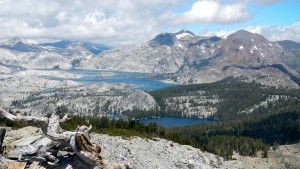
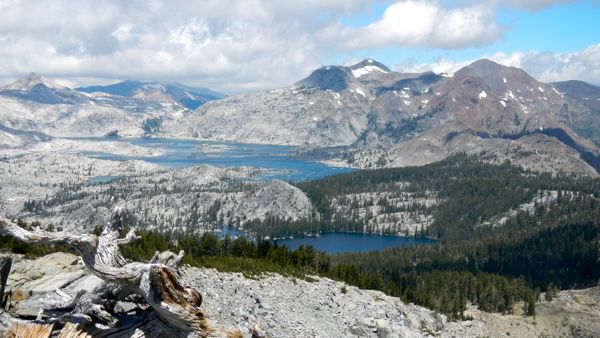
Views from Ralston Peak in Desolation Wilderness. Photo/LTN file

Views from Ralston Peak in Desolation Wilderness. Photo/LTN file

At 50, however, the Wilderness Act faces a midlife crisis.

We now know that, thanks to climate change, we’ve left no place unmolested and inadvertently put our fingerprints on even the most unpeopled corners of the planet. This reality has pushed respected scientists to advocate what many wilderness partisans past and present would consider blasphemy: We need to rethink the Wilderness Act. We need to toss out the “hands-off” philosophy that has guided our stewardship for 50 years. We must replace it with a more nuanced, flexible approach — including a willingness to put our hands on America’s wildest places more, not less, if we’re going to help them to adapt and thrive in the diminished future we’ve thrust upon them.

A great example is Joshua Tree National Park in Southern California, most of which lies within the 595,000-acre Joshua Tree Wilderness. Up to 90 percent of the park’s namesake trees could disappear by century’s end, according to models that factor in expected warming. Should we let that happen as nature’s atonement for our mistake? Or should park managers instead intervene in some way — relocating trees to higher elevations to promote their survival, for instance, or finding or creating a hybrid species that can withstand the hotter temperatures and combating exotic grasses that increase the threat of fires?

Such questions didn’t exist in 1964 when President Lyndon B. Johnson signed the Wilderness Act. Then, the nemesis of wilderness was America’s unchecked appetite — for land, roads, mines, timber — that gnawed away even at the boundaries of government-sanctioned “primitive areas.” Wilderness advocates craved permanence, in the form of legislation that took decision making away from capricious bureaucrats and political appointees.

Read the whole story


NTPUD helping customers conserve water

In response to the governor’s drought declaration, North Tahoe Public Utility District board of directors voted to put into effect the Stage 1 conservation measures for voluntary water reduction.

California adopted the 20 by 2020 Plan which requires all water purveyors achieve a 20 percent reduction in water use per-capita by 2020. The district has been working toward this requirement with changes such as low flow nozzles on sewer line cleaning trucks, replacing a washing machine with a low flow version, adding sensors to mains to detect leaks more quickly, all new water meters that are installed also help detect leaks on the customer’s side of the service, and staff has been reviewing irrigation settings at park facilities.

Early this year, the district’s water production was tracking in the correct direction. However, May 2014 water use was higher than May 2013.

“The district is required to report monthly to the state of California on our progress,” NTPUD officials said in a statement. “Remember, no matter how much you water your driveway, it still won’t grow. So, please check the spray direction on your irrigation and eliminate excess run-off.”

The district is providing conservation supplies for residents to help save water. Items such as a moisture meter for indoor and outdoor plants, shower timer, dish squeegee, water wheel with conservation tips, hose nozzle, drip counter, shower/faucet flow meter, and leak detection dye tabs are all available to help find ways around to conserve water.

All North Tahoe Public Utility District customers are welcome to pick up these items free of charge at the district offices.


Snippets about Lake Tahoe

sltpd• South Lake Tahoe Police Department is hosting a free ABC licensee training July 18 from 10am to 2pm at Lake Tahoe Airport. RSVP to Officer Barry Rider at 530.542.6100 or Brider@cityofslt.us.

• Wanderlust brings together the world’s leading yoga teachers, top musical acts and disc jockeys, renowned speakers, top chefs and winemakers, and much more on July 18-20 at Squaw Valley.

• “As You Like It” is the play being performed this summer at the Lake Tahoe Shakespeare Festival at Sand Harbor.

• The Tahoe Truckee Fly Fishers will host the 30th annual barbecue and fundraiser at Truckee River Regional Park on Aug. 9 from 11am-4pm. Tickets are on sale now for $20 or buy them at the event for $25. Noted worldwide fly fisher Jamie Lyle will conduct two casting clinics starting at 11am. Tickets and more info are available online.

• UNR’s Zeb Hogan chronicles his travels on NatGeo WILD’s “Monster Fish” starting July 7 at 9pm. Episodes air every Monday for six weeks.


Stewart Indian School offers little-known U.S. history

By Susan Winlow, Daily Republic

CARSON CITY — A strong wind bullied through the Carson Valley last weekend. It whistled and pushed itself through the trees, which isn’t too difficult since you can see a lone tree from 10 miles away.

Sand, dirt and knee-deep brushy stuff is the norm in this high desert.

However, that terrain changes as you turn into the parking lot of the historic Stewart Indian School, situated on 240 acres on the Stewart Indian Colony (reservation) three miles southeast of Carson City on Snyder Avenue. The central part of the large campus – operational from 1890 to 1980 – is a treed oasis, punctuated by the unique stone masonry that makes up most of the buildings. About 60 stone buildings, according to Nevada Indian Commission information, were built over a 16-year period starting in 1919 by students learning stone masonry from their teachers, who included Hopi stone masons.

The government-mandated school’s original goal was to train and educate Native American children and assimilate them into white society. School curriculum offered some reading, writing and math, but focused on vocational training in the trades such as agriculture and the service industry. It opened with 37 students from the Washoe, Paiute and Shoshone tribes and by 1919, 400 students called the school home during the school year. As the student population rose, more buildings were built.

Sherry Rupert, the executive director of the Nevada Indian Commission, created the Stewart Indian School Trail in September 2008 with several purposes, she said.

“First is to preserve those precious memories and oral histories of the school,” she said. “Second is to bring awareness to this widely unknown history of the Native American boarding schools.”

Rupert rethought her sentence and added, “unknown to the public.”

Read the whole story


EDSO deputy hurt in crash on West Slope

By KCRA-TV

An El Dorado County sheriff’s deputy was injured in a vehicle crash near Highway 50, a spokesman for the department said Saturday.

The deputy was hit at about 11:20pm Friday at the intersection of El Dorado Hills Boulevard and the eastbound Highway 50 onramp, investigators said.

Read the whole story


Art, wine and music at Squaw Valley Village

Squaw Valley will hosts the 13th annual Art, Wine and Music Festival on July 12-13.

It includes a variety of regional artwork, fine California wines and musical favorites.

The event supports Disabled Sports USA Far West.

The exhibition features artwork that spans the mediums, including paintings, photography and jewelry.

The festival features local flamenco guitarist Milton Merlos, Sacramento-based flamenco guitarists from Flamenco del Oro, and the transglobal rhythms of Yolo Mambo.

Entrance to the festival is free and open to all ages.


Truckee Relay for Life looking for teams

The American Cancer Society Relay for Life of Truckee is from 9am July 19 to 9am July 20 at Truckee High School.

Register a team online or by calling 800.227.2345.

There will be a Carnival theme in the afternoon. Each year the event offers entertainment from local bands including the Deckheads.

Former and current cancer patients, those who have lost a loved one to cancer, families, businesses, faith-based and civic organizations, and anyone wanting to make a difference in the fight against cancer is invited to take part in this exciting team event.

Last year the community raised more than $60,000 with 25 teams, and 47 cancer survivors.


Then and now: Same location, different businesses

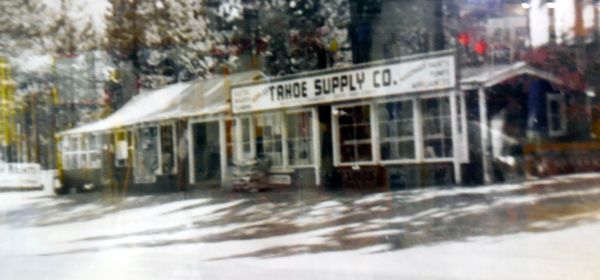
 #1 (courtesy of Nel's) is captioned "Founded in 1946."  Nel's has re-located several times since then.

This is  captioned “Founded in 1946.” Nel’s has relocated several times since then. Photo/Nel’s Hardware

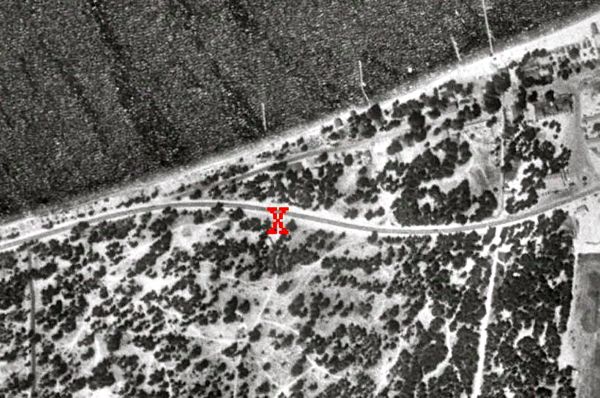
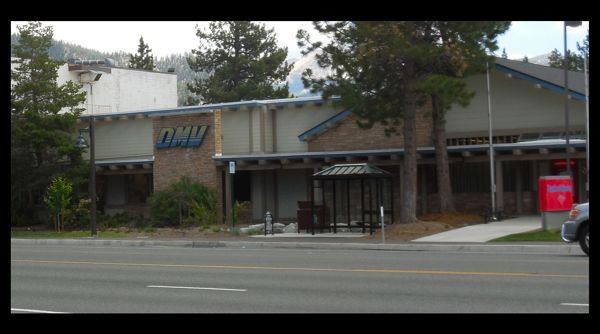
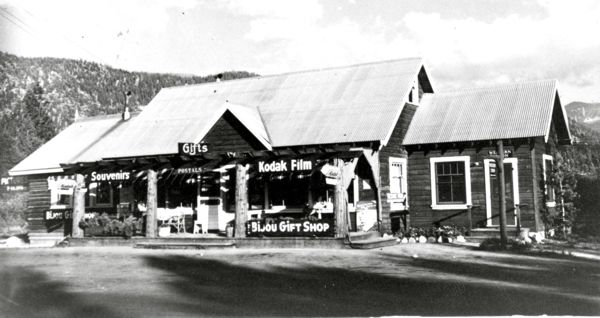
According to Nel’s Tahoe Supply and long-time (since 1947) local resident Dave Wakeman, these photos depict the same Highway 50 location in South Lake Tahoe.

#4 (U S Geological Survey) is an aerial view of Bijou dated December 31, 1939, with a red X to locate the site.

This U.S. Geological Survey aerial is of Bijou dated Dec. 31, 1939, with a red X to locate the site.

#3 (me) is today's DMV and Bank of America, the building erected in the 1960s.

Today’s DMV and Bank of America building was erected in the 1960s. Photo/Bill Kingman

#2 (Lake Tahoe Historical Society) of the Bijou Gift Shop is approximately 1950.

 Bijou Gift Shop in approximately 1950. Photo/Lake Tahoe Historical Society


— Bill Kingman