3 fires buring in Eldorado National Forest

By Sacramento Bee

Firefighters were kept busy Sunday battling three fires in the Eldorado National Forest.

The Kentucky Fire started at 11:45am Sunday off Blacksmith Flat Road. Five engines, one helicopter and one hand crew or roughly 40-plus firefighters have been working on the blaze, which had consumed 2 acres by mid-day Sunday.

“It is zero percent contained, but they were able to get a hose lane around half the fire,” said Laura Hierholzer, fire information officer for the Eldorado National Forest.

“They are able to get water out to half the fire, so it’s not progressing.”

 Read the whole story


Gold rush-era discards may have new use today

By Tracie Cone, AP

SACRAMENTO — Across the West, early miners digging for gold, silver and copper had no idea that one day something else very valuable would be buried in the piles of dirt and rocks they tossed aside.

There’s a rush in the U.S. to find key components of cellphones, televisions, weapons systems, wind turbines, MRI machines and the regenerative brakes in hybrid cars, and old mine tailings piles just might be the answer. They may contain a group of versatile minerals the periodic table called rare earth elements.

“Uncle Sam could be sitting on a gold mine,” said Larry Meinert, director of the mineral resource program for the U.S. Geological Survey in Reston, Va.

The USGS and Department of Energy are on a nationwide scramble for deposits of the elements that make magnets lighter, bring balanced hues to fluorescent lighting and color to the touch screens of smartphones in order to break the Chinese stranglehold on those supplies.

They were surprised to find that the critical elements could be in plain sight in piles of rubble otherwise considered eyesores and toxic waste. One era’s junk could turn out to be this era’s treasure.

Read the whole story


Grass-fed dairy cows changing the flavor of milk

By Mary Ladd, KQED-TV

School is almost back in session, and the consumption and purchase of milk will rise predictably, according to Mike Griffin, the California Pool Manager for Organic Valley.

The company is the country’s largest dairy cooperative headquartered in Wisconsin and it recently marked its 25th anniversary. Organic Valley has a substantial number of farmer members in California and all the milk sold in California is produced by cows that reside in-state.

Last year, Organic Valley launched an organic grassmilk product line, which consists of milk from cows fed a 100 percent grass diet. This milk is produced in Humboldt County, which has an exceptionally long grass season. When fresh grass is not available, the cows are fed dry forages like hay.

Jim Regli, his wife, Susan, and their seven children are in the Organic Valley cooperative, and their farm has been in the family for several generations. The decision to try producing grassmilk made sense when Regli analyzed it: “We already had cows on pasture. The economics looked like we’d get a stable pay price with grassmilk.”

Stability may be a draw even if this is the first wave of grassmilk production.

Before joining Organic Valley, the Reglis were a part of the Humboldt Creamery, which went bankrupt. Regli saw in grassmilk “a perfect opportunity. I always wanted to do this and saw the economics as a way to be more profitable. Our grain bill was huge and grain prices continue to go up. Buying alfalfa pellets for the grass is half or two-thirds the cost of what our grain bill was.”

Savvy grocery shoppers who are comfortable seeking out items like grass-fed beef, biodynamic wine and similar smaller batch items may want to keep a look out for this new product which shows signs of being a new trend. Look for the picture of an adorable and sweet looking brown Jersey cow in the dairy section and you’ve found it: organic grassmilk, which gets its name from the food source and has a suggested retail price of $5.49 for a half gallon.

Not surprisingly, Whole Foods Markets nabbed first mover status for grassmilk, with an assist from the Northern California farmers in the Humboldt County of Ferndale that are a part of Organic Valley. Eleanor Bertino, who organized a media tour of Organic Valley, said “Most organic milk drinkers want their milk from grass-fed cows but demand outpaces supply.”

With beef, flavor and the animal’s health are among the reasons a consumer is willing to pay more for a grass-fed product. The theory there is that buying grass-fed beef gives eaters a meal without antibiotics and added hormones, and many find the meat flavor to be slightly sweeter and more nuanced with grass. In a similar fashion, the theory is that Organic Valley cows grazing on grass grown in quality soil will produce higher quality grassmilk. Griffin said that even the sweetness via the sugar levels of the grass can be measured with a field tool called a refractometer, to make sure the grass is appealing to the cows. These cows simply won’t eat or touch the grass when the refractometer says the sugar levels are too low in the grass.

Organic Valley Grassmilk is from Jersey cows, which are known to produce milk that is higher in fat — expect a natural richness and subtle sweetness. The nutrients in grassmilk come from the cow’s ability to process the grass and forage on the dairy farm, which means there are naturally occurring omega-3s, conjugated linoleic acid (CLA) and calcium in each sip. Grassmilk is not raw milk. Organic Valley says the milk is minimally pasteurized and non-homogenized — which is likely for good reason: raw milk has it’s share of proponents but is not even close to being mainstream (raw milk folks operate clandestine operations in some states to receive and distribute the product). Without pasteurization milk can harbor bacteria along the lines of Campylobacter, Listeria, and E. coli.

When I sampled the grassmilk it had an old-fashioned and even wholesome feel brought on by a sweeter and richer taste than my usual 1 percent cow’s milk or experiments with way-too-watery rice milk. Grassmilk reminded me of sneaking tastes while making butter in school when I was an East Bay youngster. The small buttery bits (you could honestly call some of them chunks) in grassmilk may at first be a surprise since they float to the top and are clearly visible. Take time to savor the bits, though, because they offer hints of sweet butter and even clotted cream. Dipping scones, thick cookies or other breakfast-y baked goods are a natural fit with grassmilk but it also tastes good with cereal or the other ways you routinely drink milk.
People opting for digital media over TV

By Elise Hu, NPR

It’s finally happening, folks. This year, the average time Americans spend with digital media each day will surpass traditional TV viewing time. That’s according to eMarketer’s latest estimates of media consumption among adults.

The average adult will spend more than five hours per day online and on non-voice mobile activities (read: texting, apps, games). That’s compared to an average four hours and 31 minutes each day of TV watching.

Daily TV time will actually be down slightly this year, while digital media consumption will be up nearly 16 percent. If you were curious, Netflix and Hulu viewing is considered digital media consumption, so all that binge watching of “”Mad Men on Netflix is clearly pumping up the digital media averages. But that doesn’t mean traditional TV is dead.

Read the whole story


Housing market improving in El Dorado, Placer counties

By Hudson Sangree, Sacramento Bee

The first six months of 2013 brought a remarkably fast recovery to the regional real estate market.

Figures from DataQuick, a San Diego real estate information firm, show median single-family home prices jumping anywhere from 15 percent to 50 percent across much of the four-county Sacramento region.

There were a few exceptions, mainly in the region’s most sought-after residential areas. The college town of Davis, the leafy neighborhoods near downtown Sacramento, and the upscale foothill communities of Granite Bay and El Dorado Hills held their value better in the crash, LePage said. Those areas saw more moderate price increases during this year’s rebound, he noted.

In Sacramento County, the number of homes on the market that were foreclosures dropped from 41 percent in the first half of 2012 to 16 percent in the first half of this year. El Dorado, Placer and Yolo counties also saw the percentage of foreclosures on the market drop by more than half.

Read the whole story


Comstock water system subject of tour

Former backcountry ranger and amateur historian Cheryl Surface will lead a tour of Spooner’s backcountry on Aug. 9.

She will share accounts of the people involved with the Comstock’s critical water source, the Marlette Water System, and histories of Red House, Hobart Reservoir, Marlette Lake and the Flume Trail. Space is limited to 12 people. Call (775) 684.2717 reserve a spot. Cost is $20. This is for adults only. No pets allowed.

Bring lunch, water, a light jacket, a camera and comfortable shoes for walking at stops along the SUV tour.

The tour is from 9am-4pm. Meet at Spooner Lake Park’s upper parking lot.


Free environmental science day for kids

Children are invited to spend Aug. 10 with scientists to learn about the unique ecology, function, restoration and preservation of Lake Tahoe.

Children’s Environmental Science Day will be at the Tahoe Center for Environmental Sciences in Incline Village.

The 14th annual Children’s Environmental Science Day is a free event sponsored by the UC Davis Tahoe Environmental Research Center.

More than 40 interactive science activities hosted by organizations around the region will be available for children ages 6 and up. The day will include interactive science demonstrations by UC Davis scientists, local agency and nonprofit organization staff, and AmeriCorps members. Hands-on activities are designed for the whole family.

Visitors will get up close and personal with fish and microscopic zooplankton from Lake Tahoe, learn about native species in the Tahoe basin, and test the water quality of a stream, along with many other science-based games and activities.

The Tahoe Center for Environmental Sciences is located on the Sierra Nevada College campus at 291 Country Club Drive in Incline Village.

For more information, call (775) 881.7560.


Spaghetti feed benefits adults with disabilities

The Kiwanis Aktion Club community spaghetti feed is Aug. 8 from 6-8pm.

The fundraiser benefits the Kiwanis Aktion Club, the only community-service club for adults living with disabilities. It provides members an opportunity to develop initiative and leadership skills in serving their communities, while enabling their integration into society.

The event is at the South Lake Tahoe Senior Center, 3050 Lake Tahoe Blvd.

The cost is $8 per person or $25 for a family.


Then and now: Al Tahoe area used to be hopping

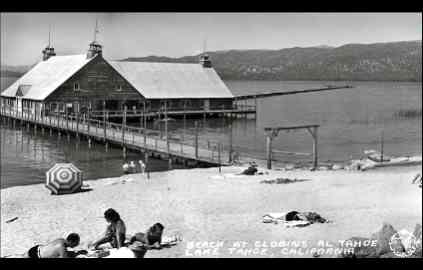
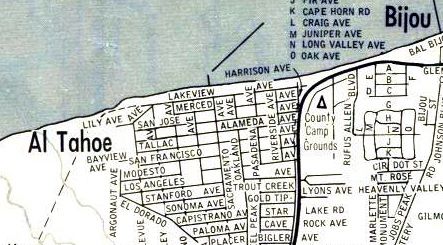
oldmapThe top of the 1960’s local map (courtesy of Theresa and Darrell Eymann) depicts a pier and breakwater extending zigzag on the lake from the end of Sacramento Avenue in Al Tahoe. This is where Frank Globin built an overwater chalet and dance pavilion in the summer of 1929 on the Lake Shore Park Pier (photo from Pomona Public Library Frasher Fotos Collection).

1929 was during a record-setting low water level, making construction easy on the dry shoreline.

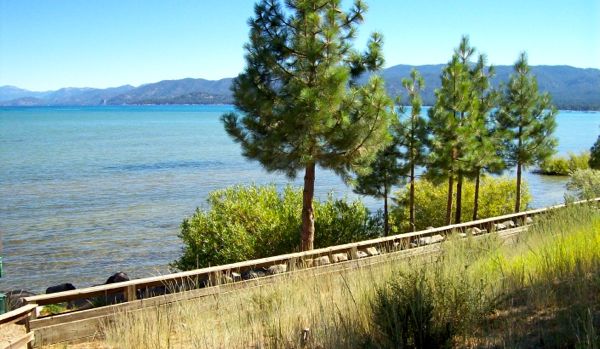
Today people know this area are Regan Beach. Photo/Bill Kingman

Today people know this area as Regan Beach. Photo/Bill Kingman

Extending diagonally from the chalet and pavilion was a long breakwater and pier built by Al Sprague which served the Steamer Tahoe. Sprague was the land owner and developer who named “Al Tahoe” after himself.

The chalet and dance pavilion were razed in the early 1960s along with Globin’s historic Sacramento Avenue hotel which had been mostly destroyed by fire.

— Bill Kingman


Illegal trails cropping up in Lake Tahoe Basin

By Kathryn Reed

A new bike trail is going in at Carnelian Bay. Trees are being felled, berms created and gap jumps installed.

And whoever is creating this trail on U.S. Forest Service property could wind up in jail and having to pay a fine.

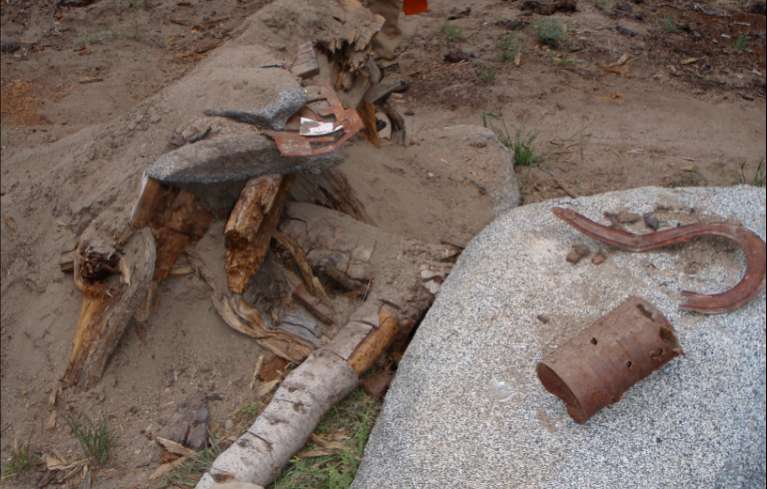
Cultural resources have been disturbed in the process of creating this unauthorized trail, which found on the South Shore several years ago.

Cultural resources like these were unearthed in the process of creating this unauthorized trail on the South Shore several years ago. Photos/Provided

“When we have to obliterate unauthorized trails, it takes crews away from building other projects,” Cheva Heck, USFS spokeswoman, told Lake Tahoe News.

This is one of a few trails that has been discovered this summer in the Lake Tahoe Basin. Others are near Tahoma and Cave Rock. The Carnelian Bay trail is the most destructive because trees have been cut down. It was about a half mile long when crews discovered it.

While the feds don’t have any suspects at this time, surveillance has been set up.

“I would rather have the Forest Service spend its limited trail budget on new trails than destroying illegal trails that are perhaps causing resource damage,” Kevin Joell, president of Tahoe Area Mountain Bike Association, told Lake Tahoe News.

TAMBA has been working with the Forest Service to create trails throughout the Lake Tahoe Basin. While working through the government process can take time, the end result is a trail built to current standards that takes safety and other issues into consideration.

“If someone has the energy to build trails, if we can harness that, we can talk to them on a peer level to find out what they want and explain what it would take to do it legally,” Joell said.

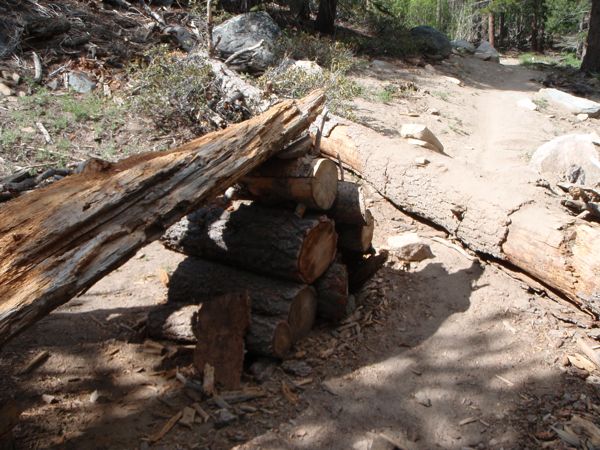
Illegal trails are not built to safety or other standards.

Illegal trails are not built to safety or other standards.

The problem with illegal trails is that they can cause erosion problems, disturb cultural resources and not be safe.

The illegal trails are often built near an existing trail but do not directly tie into it. This is so it won’t be detected so easily. It’s by word of mouth that the illegal trail is discovered. It might require carrying a bike or a bit of cross country.

“We want people to work with us if they want to make trails,” Heck said.