Health care costs affecting public unions

By Kate Taylor, New York Times

Cities and towns across the country are pushing municipal unions to accept cheaper health benefits in anticipation of a component of the Affordable Care Act that will tax expensive plans starting in 2018.

The so-called Cadillac tax was inserted into the Affordable Care Act at the advice of economists who argued that expensive health insurance with the employee bearing little cost made people insensitive to the cost of care. In public employment, though, where benefits are arrived at through bargaining with powerful unions, switching to cheaper plans will not be easy.

Cities including New York and Boston, and school districts from Westchester County, N.Y., to Orange County are warning unions that if they cannot figure out how to rein in health care costs now, the price when the tax goes into effect will be steep, threatening raises and even jobs.

“Every municipality with a generous health care plan is doing the math on this,” said J.D. Piro, a health care lawyer at a human resources consultancy, Aon Hewitt.

But some prominent liberals express frustration at seeing the tax used against unions in negotiations.

“I think it was misguided all along,” Robert B. Reich, the former labor secretary, said in an email. When the law was being written, he said, he worried that the tax was “a blunt instrument that could too easily become a bargaining chit for cutting back benefits of workers.”

“Apparently, that’s what it’s become,” Reich, who is a professor of public policy at UC Berkeley, said.

Under the tax, plans that cost above a certain threshold in 2018 — $10,200 annually for individual plans and $27,500 for family plans, with slightly higher cutoffs for retirees and those in high-risk professions like law enforcement — will be taxed at 40 percent of their costs in excess of the limit. (The thresholds will rise with inflation after 2018.)

Read the whole story


Construction vehicle hits cyclist in S. Tahoe

Updated 3pm:

Donovan Boling, 25, of South Lake Tahoe is the cyclist who was injured.

—-

A bicyclist was seriously injured early this morning in South Lake Tahoe after a construction truck hit him.

Names, ages and hometowns of the individuals involved have not been released.

A Calstar helicopter landed on Highway 50 to transport the cyclist to Renown Medical Center in Reno.

“It looks like the impact launched the bicyclist several feet,” police Lt. Brian Williams told Lake Tahoe News.

A helmet has not been found. The bike did not have a headlight or reflectors on the wheels or pedals. There was a single red reflector on the bike.

The driver of the large truck is working for a contractor hired by Caltrans to do work on Highway 50. He told officers he was going east on the highway in the right lane about 3:15am Aug. 6 near Wildwood Avenue when he felt something. He backed into the other lane, looked around and saw the bleeding cyclist and bike in the road.

The driver estimated he was going about 25 mph.

Officers are at the scene this morning trying to figure out what direction the cyclist was traveling.

— Lake Tahoe News staff report


Lettuce, other crops increasing in price

By David Pierson, Los Angeles Times

Heavy rains and persistent heat in the Eastern U.S. have devastated that region’s lettuce crop. So buyers are turning to America’s salad bowl: California.

Growers in the Golden State are seeing wholesale prices for their leafy greens and other vegetables soar because of demand on the other side of the nation.

Iceberg lettuce is leading the charge, with shipments going for double the price of a year ago at about $22 for a standard carton of 24 heads, according to the U.S. Department of Agriculture.

Prices for broccoli, cauliflower and spinach are also on the rise.

Read the whole story


Snippets about Lake Tahoe

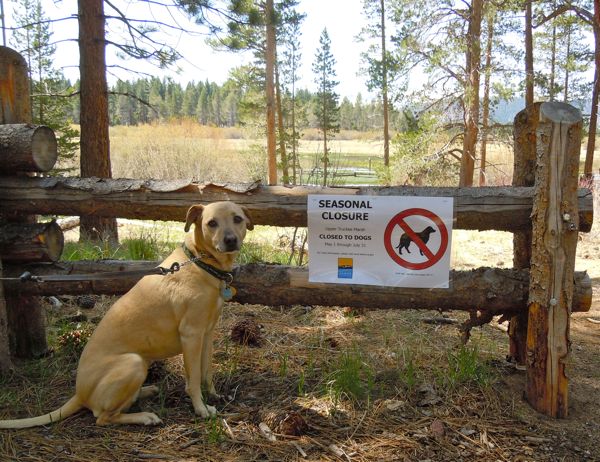
aj-1• The seasonal dog ban at the Upper Truckee Marsh – aka Barton Meadow – is over.

• There will be a public hearing before the Truckee Planning Commission on Aug. 20 at 6pm about the Tahoe Donner Association marina facility improvement project. The meeting is at council chambers, 10183 Truckee Airport Road.

Sunset magazine’s August issue has a spread on Tahoe – talking to three “experts”. But two of them are from Truckee. Someone should tell Sunset that Truckee is not in the Lake Tahoe Basin.

• Check out Jack Durst’s recap of Hot August Night’s in South Lake Tahoe:


Vineyard managers expect early grape harvest

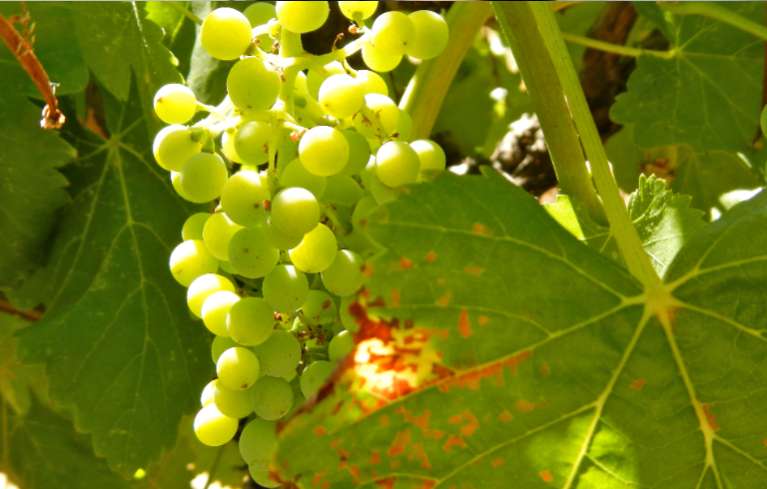
The wine grape harvest is expected to be early this year in El Dorado County. Photos/Kathryn Reed

The wine grape harvest is expected to be early this year in El Dorado County. Photos/Kathryn Reed

By Kathryn Reed

PLACERVILLE – Coming off one of the warmest Julys on record, a June that saw several triple digit days and an August that has a forecast for the 80s later this week – being a winemaker can cause one’s head to spin or the need to open another bottle to take off the edge.

No one said growing grapes was easy. Mother Nature makes sure of that.

But with all the heat that has been absorbed by the grapes in El Dorado County, it’s looking like the harvest will be early this year. And that means some of the white varietals will be picked this month.

What the end result will be remains to be tasted.

The last time temps were like this was in 2007. And oenophiles remember that year for California wines – especially the reds. There are not enough positive superlatives for many of those bottles.

Wine is big business throughout the state. In 2012, the grapes were worth $3.2 million, which became $34 billion worth of wine.

Debbi Bogen, tasting room manager for Fenton Herriott Vineyards in Placerville, told Lake Tahoe News, “This is going to be a phenomenal harvest. Everything is perfect. The grapes are looking fantastic.”

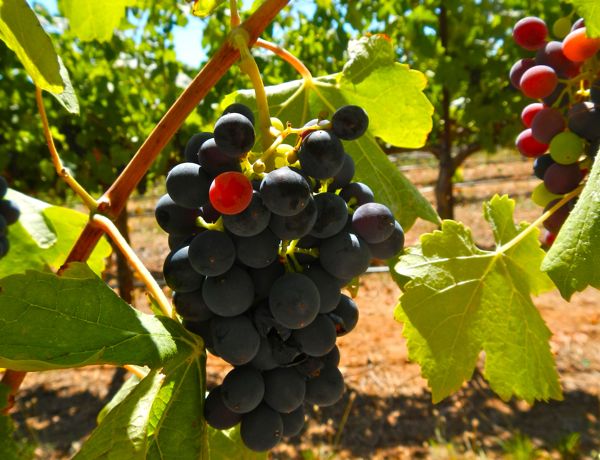
Veraison is already occurring. This is the “onset of ripening” when the grapes begin to turn red.

Veraison -- when grapes turn red -- is happening at Fenton Herriott and other vineyards.

Veraison — when grapes turn red — is happening at Fenton Herriott and other vineyards.

Vineyard managers will soon start to use a refractometer to check the brix – or sugar content – of the grapes. It must be at a certain degree for optimum flavor. The brix changes. So one day a vineyard might be ready to pick and the next it isn’t.

With the slope and elevation variations of many vineyards in the county, it means the harvest can be staggered. It already is when it comes to varietals. And depending who grows what where, the “normal” time to harvest already varies.

Mari Wells Coyle, winemaker with David Girard Vineyards in Placerville, said it could be the third week of August when the first grapes are picked.

“The warm weather is helping grapes that grow in this climate,” Coyle told Lake Tahoe News.

But too much heat can be a problem. That stops the grapes from continuing to ripen.

Diane Stading, co-owner of Auriga Wine Cellars in Placerville, said there were seven days in June when the mercury topped 100 degrees, with one day hitting 114.

“The heat has not been nice to us. They won’t take up water when it’s 100-plus degrees,” Stading said while pouring wine on Saturday.

She said this could lead to there being no canopy to protect the grapes, which causes the grapes to be burned by the sun and shrivel like a raisin.

Auriga typically starts harvesting at the end of September, but this year it’s more likely to be early next month.

At Narrow Gate they’ve been known to pick a vineyard twice if clusters don’t come in evenly. While it’s twice the work, their philosophy is quality is of the utmost importance. The Viogner was picked in stages last year.

Besides dealing with the heat this summer, the valley that Narrow Gate sits in in Placerville sustained a major frost on May 24 that overall damaged 35 percent of its vines. It took out at least 50 percent of the Primitivo.

Most vintners point to 2010 and 2011 as being difficult years because of the coolness that delayed the ripening process.

Two years ago Fenton Herriott was wrapping up its harvest as snow was falling.

If the grapes crack they are useless because mildew can ruin the fruit.

With the harvest expected to be early, it also means a lot of bottling is going on now to free room for the next vintage to begin its fermentation process.


Workshop about providing flexible work environment

Business owners, employers and human resource managers and practitioners who need to leverage the talents and skills of today’s increasingly diverse, aging, and multi-generational workforce can learn how flexible work arrangements drive employee engagement and profitability to the bottom line at “When Work Works –Workforce flexibility as a Key Business Strategy”.

The workshop is Aug. 12 from 9-11am at the Chateau at Incline Village, 955 Fairway Blvd.

At this seminar sponsored by the North Lake Tahoe and Truckee Donner Chambers of Commerce in partnership with the Sierra Human Resources Association, participants will learn how flexible work arrangements such as job sharing, flexible scheduling, phased retirement, and telecommuting can drive employee engagement productivity and retention.

Attendees can also expect to examine case studies of companies that have won the national Sloan Award for Business Excellence in Workplace Flexibility for their innovative programs and learn about new resources and opportunities from speaker Cassidy Neal, the Society for HR Management’s workplace flexibility program specialist.

For more information about the workshop or to register, call Laura Moriarty of SHRA, at (530) 573-0224 or Deanna Frumenti of the North Lake Tahoe Chamber/CVB/Resort Association at (530) 581.8764 or Patricia Barrett at (530) 587.8808. Laura@tahoetrainingpartners.com.


Letter: Gore needs to know another side of Tahoe

Publisher’s note: This letter was sent to Al Gore today and reprinted with permission.

Dear Vice President Gore,

It is with a great sense of urgency and concern that we collectively write this letter to you. It is relatively well understood in the Basin that the primary environmental and citizen-action nonprofit organizations are the Sierra Club, Friends of the West Shore, North Tahoe Preservation Alliance, Friends of Lake Tahoe, and the North Tahoe Citizen Action Alliance. The Sierra Club and the Friends of the West Shore are currently plaintiffs in a lawsuit, which we support, against the Tahoe Regional Planning Agency (TRPA). The League to Save Lake Tahoe, formerly a member of our group, is absent from the list because most of us no longer consider them an ally in terms of keeping Tahoe blue.

Our primary effort here to convince you that your selection as the keynote speaker at the Tahoe Summit is designed by its sponsors as additional “greenwashing” of their plans for the Tahoe basin. Contrary to their promises, the urbanization through densification of several centers in the Tahoe basin will exacerbate environmental degradation, especially with inadequate measures to reverse the current decline in water quality.

Your presence, essentially, is, we are very sad to report, environmental “window dressing” by the chamber of commerce type of organizations that support the TRPA’s Regional Plan update (RPU) that is currently being challenged in court. The association of your prestige would lend credence to their planned resort boom and further their relentless campaign. We know you are familiar with this type of politics and have witnessed it throughout your career. The best description of how the ski resort development industry operates is chronicled in the Hal Clifford’s critically acclaimed book “Downhill Slide”.

We hope that this cautionary note will prompt you to look more deeply at the whole truth regarding the environmental status of Lake Tahoe, the incorrect underlying assumptions of the RPU, and how their economic promises are replete with miscalculations. We believe it is important that your remarks may be properly tempered and include that those of us who value Lake Tahoe as one of the few “Outstanding National Resource Water” under the Clean Water Act, oppose the RPU since it will environmentally and economically degrade the region.

A very sustained public relations campaign by the TRPA, ski resort industry developers, chambers of commerce, gaming interests, local governments, and select federal and state agencies have focused on half-truths, significant omissions of “inconvenient truths,” and other ploys of deception to manipulate public opinion. Each stands to earn terrific revenues in the short term resulting from over-expansion cloaked with the pleasing environmental rhetoric of “smart growth.” Indeed, we, too, support “smart growth principles” but also understand that they don’t, can’t, and won’t work at Tahoe because the region lacks the requisite conditions for their success. Tourists and visitors do not enroll their children in local schools or behave as year-round residents in their shopping habits or work schedules. Since roadway and utility infrastructure is currently at capacity, increased densities carry excessive costs and environmental impacts.

The desire of your sponsors is, essentially, to have your speech writer(s) lace your comments with their talking points, slogans, myths, and stereotypes thereby endorsing their validity. Such terms have emotional appeal and have evolved due to the lure of federal dollars for metropolitan areas.

If your speech uses terms such as “environmental redevelopment,” “building sustainable communities,” “improved clarity,” “compact, hi-density development,” “culture of cooperation,” “livable, walkable villages,” and so on, then you will have endorsed false claims such as the notion that people will ride a bike in the middle of winter at Tahoe to buy groceries. These terms divert attention from the real causes and parties responsible for environmental damage to Lake Tahoe.

Few people are aware, for example, that throughout the basin heavily contaminated unfiltered stormwater runoff from roadways and parking lots is dumped directly into the lake.

Sadly, here as elsewhere, while the scientific and environmental community knows the truth, the agencies and their consultants are locked into funding mechanisms based upon theories that require the perpetuation of an illusion replete with false claims that ultimately become perceived as reality. Again, we know that you are all too familiar with such phenomena.

Sophisticated propagandists in support of resort planning that delivers high profits to distant owners and destroys local businesses have already done a relatively good job at selling inapplicable planning principles to many of your colleagues. They are already on the wrong side of history politically, environmentally, and economically. Not unlike Gov. [Jerry] Brown’s comment at the summit two years ago about the problem at Tahoe being one of “squaring the circle,” while few readers will understand this analogy, need we mention Samantha Power’s analysis of an avoidable debacle that you are personally well aware of? You do not want to join those who have been duped with false claims and who will sadly acknowledge years from now that “they simply didn’t get it” at the time.

We would be delighted to meet with you or your staff to provide substantive evidence, which can also be found in the legal complaint, in support of our position.

Sincerely,

Roger Patching, president Friends of Lake Tahoe

David McClure, president North Tahoe Citizen Action Alliance

Ann Nichols, president North Tahoe Preservation Alliance


Nevada has money for fuels reduction projects

The Nevada Division of Forestry is seeking applications for the State Fire Assistance grant program. About $1 million from the National Fire Plan will be available for projects statewide.

The purpose of this funding is to mitigate risk of wildfires in wildland urban interface areas. Funds can be used for costs associated with implementing on-the-ground hazardous fuels reduction projects, information and education relating to wildland urban interface

issues and homeowner and community action projects. Projects must be implemented on state and/or private lands located in Nevada. Projects on federal lands are not eligible.

Applications must be submitted on the approved form available on the Nevada Division of Forestry website. The site also contains a detailed description of the criteria and instructions for eligibility and the scoring criteria that will be used to rank applications.

Applications must be received no later than 5pm Aug. 23. For more information, call (775) 684.2511.


Park putting on birdhouse building program

Washoe Lake State Park is putting on a birdhouse building program on Aug. 17.

Participants will assemble and decorate a birdhouse using a kit provided by the park.

The program is limited to 15 participants, so call to reserve a spot — (775) 687.4319.

The event is from 9-11am.

Meet at Washoe Lake State Park’s equestrian area pavilion. The park is five miles north of Carson City.

There is no charge for the program, but there is a $7 per vehicle entry fee.


NDOW kills ‘problem’ Glenbrook bear

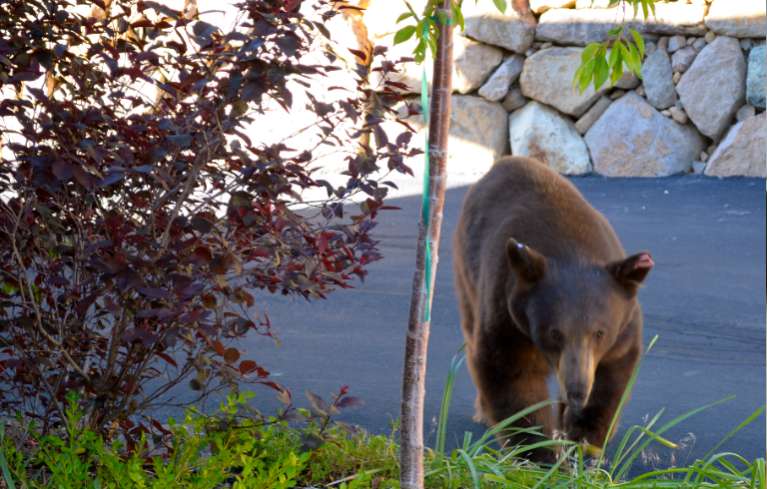
This bear was killed Aug. 5 by Nevada wildlife officials. Photo/Provided

This bear was killed Aug. 5 by Nevada wildlife officials. Photo/Provided

Nevada Department of Wildlife officials today killed a 3-year-old male black bear they said was a threat to public safety.

The bear had initially been caught in Glenbrook on June 24. A tag was put in its ear so it could be identified in the future if it caused problems. It was released in the Mount Rose area.

It was photographed by a homeowner in the south Reno area on June 28.

“One person in that Galena neighborhood tried to shoo the bear away from his house but the bear actually tried to follow him during this encounter,” NDOW biologist Carl Lackey said in a statement. “This kind of behavior shows a level of habituation to humans that can be very dangerous.”

By Aug. 4 it was back in Tahoe causing problems. It was seen again Sunday near the Glenbrook golf course, which is where it was trapped.

Glenbrook has been dealing with bear issues for much of the summer.  This particular bear had been reported as the one that had broken into an outbuilding and was implicated in the death of a goat, according to Lackey.

But not everyone believes killing bears is necessary.

The BEAR League on its Facebook page says, “Soon there will be no bears left in Nevada, thanks to NDoW and especially Carl Lackey.”

This is the third bear NDOW has killed this year for what it calls public safety reasons. In that same time period 22 bears have been handled and released.

“We will see more and more bears searching for food. It is the responsibility of people living in bear country to not attract the bears by poorly handling garbage or leaving other attractants like bird and pet food available,” Lackey said.

— Lake Tahoe News staff report