SLTPD seek potential witness to clerk’s death

A second person of interest is being sought in the Aug. 6 murder of a gas station clerk in South Lake Tahoe.

suspectThe man pictured here was one of the last customers to interact with the clerk prior to him being shot to death. Police say there is nothing to indicate the man is a suspect, but hope he may have seen something that would lead to the capture of the assailant.

The unidentified patron appears to be Caucasian, with a couple days beard growth, tattoos on both forearms, Spitfire flat bill ball cap, Metal Mulisha T-shirt, and black pants. The man was driving a dark colored early 1990 Ford single cab pickup, and the cab has a rear sliding window.

El Dorado County sheriff’s deputies and the FBI are assisting in the investigation.

Anyone with information is asked to call the South Lake Tahoe Police Department at (530) 542.6100 or Secret Witness at (530) 541.6800.


S. Tahoe bike park subject of meeting

For the last two years TAMBA and the South Lake Tahoe BMX Association have been in talks with South Lake Tahoe officials about creating bike park in Bijou Community Park.

After initially getting the green light to move forward, there have been many hurdles.

The city would like the bike park be included in a Park, Trails, and Recreation Master Plan currently being completed by an independent consultant.

There is a focus group meeting open to the public on Aug. 22 from 7-8:30pm at Lake Tahoe Airport.


Study: 18% of premature deaths linked to obesity

By Melissa Healy, Los Angeles Times

The death toll of the nation’s obesity epidemic may be close to four times higher than has been widely believed, and all that excess weight could reverse the steady trend of lengthening life spans for a generation of younger Americans, new research warns.

More than 18 percent of premature deaths in the United States between 1986 and 2006 were associated with excess body mass, according to a team of sociologists led by a Columbia University demographer. That estimate, published online Thursday in the American Journal of Public Health, is far higher than the 5 percent toll widely cited by researchers.

The new figures do not reflect newly discovered facts about obesity’s effects on health. Rather, they emerged after the researchers applied a finer-grained approach to examining obesity across the U.S. population.

Using historical survey data, the study authors toted up differences in excess weight status across different gender, ethnic and age groups. They combined that data with existing “mortality risk” statistics to estimate how many Americans over age 40 who died during that 20-year period did so because of weight-related causes.

Read the whole story


Sunscreen should be reapplied throughout the day

By Mandy Kendall

Are you really protecting yourself against the sun?

We may be most of the way through the summer but it is never too late to make sure we are protecting ourselves correctly in the sun.

Mandy Kendall

Mandy Kendall

Here are some common mistakes people make when it comes to spending time in the sun:

I don’t burn, so I don’t need sunscreen — Apparently one of the most common sunscreen misdemeanors is not wearing any. By now we should all know that too much time in the sun can increase the risk of skin cancer (the most common of all cancers) and early skin aging. Tanning quickly and never burning is not an indication that you are immune to the dangers of the sun.

I have a high SPF number lotion, so I’m protected — SPF (Sun Protection Factor) only applies to protection against UVB rays that cause sunburn. In order to protect yourself against the skin-damaging UVA rays as well you will need to make sure your lotion has the words ‘broad spectrum’ somewhere on the bottle.

I’m going to finish up last year’s sun tan lotion before I buy a new bottle — The active ingredients in sunscreen deteriorate over time and lose their ability to protect our skin. Also an open bottle can grow germs as the preservatives in the lotion lose their efficacy too. Check storage instructions on the bottle as well. Heat often degrades sunscreen meaning lotion kept in the glove compartment or your beach bag may become ineffective over time.

I have sunscreen in my moisturizer — Many facial moisturizers have an SPF in them, however we often don’t wear enough, or re-apply it enough, to make it effective. Experts suggest applying a sunscreen under your makeup for best protection.

I only need a dab of lotion — The rule of thumb for the amount of lotion you should be using is about a shot glass full of sunscreen to cover the whole body. Obviously, some bodies are larger than others but it is generally agreed that there is no such thing as too much sunscreen.

I put sunscreen on this morning, so I’m protected all day — The active ingredients in sunscreen are good for about two hours, less if you’re sweating or swimming. Re-apply often and let it soak in for a few minutes before you dive back in the water.

It’s OK, I put on waterproof sunscreen — Recently changed FDA rules no longer allow the words “waterproof”, “sweat proof” or “sun block” on sunscreen bottles. Instead, manufacturers can only claim, based on testing, that their product is water resistant for either 40 or 80 minutes. After that you need to reapply.

It’s not sunny today, so I don’t need sunscreen — UV rays easily penetrate haze, fog and cloud meaning it doesn’t have to be warm and sunny to cause skin damage. UVA rays, responsible for skin aging, can cause damage through thick clouds and also glass.

How much SPF do I need? — Skin experts generally recommend an SPF of at least 30. However, that doesn’t mean that SPF 60 is twice as protective. SPF 30, when applied properly, can block out around 96 percent of sunburn causing rays. As the SPF number increase you only see a small increase in protection, around 98 percent with SPF 50 and under 99 percent with SPF 75. The strength of SPF does not change how often you need to reapply or how long you can be in the sun.

I’m re-applying new, high SPF sunscreen so I’m good to stay in the sun — Sunscreen can’t block out 100 percent of the sun’s damaging rays so you should also protect yourself in other ways with hats, sunglasses and protective clothing to minimize the damage. Just because you don’t burn doesn’t mean you’ve protected your skin. Once you’ve tanned, you’ve damaged your skin.

If I wear sunglasses at all, I just buy a cheap pair — Not protecting your eyes in the sun exposes you to a greater risk of cataracts, macular degeneration and skin cancer on the eyelids (which makes up 10 percent of skin cancers). Cheap sunglasses may not provide much, if any, protection against UV rays. Look for a pair that blocks 99 percent of UVA and UVB rays. If you’re not sure your sunglasses are protecting you enough, you can take them to an eye doctor who should be able to scan the lenses to measure the protection they offer.

Sunburn happens

Aloe Vera has anti-inflammatory and antioxidant properties to help soothe and heal sunburn. Pharmacies will have many varieties but try to look for the highest percentage of aloe possible, or better still cut the end off an aloe leaf and wipe the gel directly on the burn. The piece can be kept in the fridge for further applications.

A spoonful of honey not only helps the medicine go down, it is also is hailed amongst other things as a healer of sunburn. Many studies have shown that its antibacterial and anti-inflammatory properties can help to heal wounds so can be used as an effective sunburn reducer.

Until next time.

Mandy Kendall operates Health Connective in South Lake Tahoe, which aligns wellness seekers with their ideal wellness provider. If you have questions, would like some advice, or would like to request some Qwik-e tips on any health and well-being topic, drop her an email at connect@healthconnective.com or keep an eye out on Lake Tahoe News for regular Qwik-e tips on how to make healthy changes one Quick and Easy step at a time.


Letter: A shared interest to improve Lake Tahoe

To the community,

It has been 17 years since President Bill Clinton and Vice President Al Gore stood on the shores of Lake Tahoe and issued a challenge. They urged the frequently fractious perspectives in the region to come together in support of the restoration of Lake Tahoe. They incentivized their challenge with a renewed federal commitment to the Lake.

The states of California and Nevada, Washoe Tribe, regional agencies, local governments, business and community leaders, science community, and many residents and property owners responded to this challenge by shaping and supporting the Lake Tahoe Environmental Improvement Program (EIP). Widely recognized as a national model, this innovative multi-sector approach to restoration continues to serve as a framework for the investments necessary to achieve and maintain adopted environmental threshold standards.

Community leaders with diverse perspectives remain committed to the EIP through the Lake Tahoe Partnership, a network of private sector entities, and community and nonprofit organizations that advocate in support of the EIP. The partnership works closely with the Tahoe Regional Planning Agency, state, federal, local government, and other partners to ensure a unified message as we seek federal, state, local and private funding.

During the period of 1997 through 2012, $1.69 billion was invested in the EIP. Nearly 414 projects have been completed and 194 are in progress or currently in planning, including:

• Improving erosion control measures on 628 miles of roadways.

• Treating 54,248 acres of hazardous fuels.

• Restoring 15,896 acres of wildlife habitat, including 1,509 acres of stream environmental zones.

• Adding 2,579 linear feet of shoreline for public access.

• Creating 136 miles of bike and pedestrian routes.

Since 2009, the Lake Tahoe Aquatic Invasive Species Program has conducted approximately 29,000 watercraft inspections, performed over 10,000 watercraft decontaminations, and treated more than 24 acres of weeds and Asian clam infestations in Lake Tahoe.

Last year, the collaborative commitment to Lake Tahoe was renewed again with adoption of the Regional Plan update. Thousands of people contributed ideas and feedback during the years of meetings, workshops, seminars, and public hearings that led to plan approval. The TRPA is implementing the plan update with widespread support from environmental and business groups, local governments, partner agencies, and the community at large. As part of this effort, California Gov. Jerry Brown and Nevada Gov. Brian Sandoval demonstrated great leadership in recommitting their states to Lake Tahoe.

Recently, Sen. Dianne Feinstein introduced the Lake Tahoe Restoration Act of 2013, cosponsored by Senate Majority Leader Harry Reid, Sen. Dean Heller, and Sen. Barbara Boxer. This legislation renews the federal commitment to Lake Tahoe. As the largest land owner and manager at the Lake, the federal government’s continued leadership and investment is essential to our collaboration.

We know it is our shared responsibility to help protect the unparalleled experiences Lake Tahoe offers, including public access to clean water, fresh air, healthy forests, mountains and streams, and pure drinking water. We understand that additional public and private investments are needed to address new water clarity standards, threats from invasive species and catastrophic wildfire, and the challenge of improving near shore clarity. We recognize that Tahoe is a diverse community where people live, work, and recreate. It is and will remain a national and international destination. We can and should use this vision as a call to action to help protect the lake. Policies and plans must support the revitalization of Tahoe’s economy, including the replacement of aging infrastructure built long before contemporary environmental regulations.

This in itself will achieve significant environmental benefits for the lake.

The Lake Tahoe Partnership embraces the updated vision for Lake Tahoe’s protection that has emerged over recent years as we face the challenges of the 21st century. We are solution oriented and proud of our successful track record in support of the EIP. As we approach the 2013 Lake Tahoe Summit and Mr. Gore once again joins us, we renew our commitment to the shared responsibility of protecting one of America’s most treasured, clear and pure lakes for current and future generations.

B Gorman, Lake Tahoe South Shore Chamber of Commerce

Darcie Goodman Collins, League to Save Lake Tahoe

Andrew Strain, Heavenly Mountain Resort

Amy R. Berry, Tahoe Fund

Steve Teshara, Sustainable Community Advocates

Sandy Evans Hall, North Lake Tahoe Chamber/VCB Resort Association

Nancy J. Gibson, Lake Tahoe Basin Management Unit

Bob Larsen, Lahontan Regional Water Quality Control Board

Joanne Marchetta, Tahoe Regional Planning Agency

Cindy Gustafson, Tahoe City Public Utility District

Darrell Kizer, Washoe Tribe of Nevada and California

Tom Greene, Tahoe Prosperity Center

Jim Lawrence, Nevada Division of State Lands

Carl Hasty, Tahoe Transportation District



American Fire consumes 3 outbuildings, 9,726 acres

Three outbuildings have been destroyed in the 9,726-acre American Fire.

Containment is at 37 percent.

Officials said on Friday the fire crossed the Foresthill Divide Road into the Whisky Hill area. Extensive spotting and rolling took place.

The cause of the blaze in the Tahoe National Forest is still under investigation. The fire has been burning since Aug. 10.

The Tahoe National Forest issued a closure order for the fire area. The Placer County Sheriff’s Office has closed the Foresthill Divide Road beginning at China Wall OHV Staging Area, which is northeast of Foresthill.

— Lake Tahoe News staff report


Multiple running events at Kirkwood

Kirkwood Mountain Resort is the setting for the 33rd annual Kirkwood 5K/10K Adventure Trail Run on Aug. 31.

There will be 1.5 mile fun run for kids at 9am. The 5K and 10K will start after the fun run.

Run At A Higher Level is presented by the Tahoe Mountain Milers Running Club and the Kirkwood Volunteer Fire Department.

Race registration forms are available at: CV Sports in Carson City; Kahle Community Park in Stateline; South Lake Tahoe Recreation Center; Reno Running Company; or by calling (775) 588.2864.

Race day registration will be at the Kirkwood Main Lodge beginning at 8am.

Race day registration is $40 for the 5K/10K which includes a chance to win a ski pass. There is also a special Youth Club category for participants of cross country and track teams. The fee is $10 and does not include a T-shirt or a chance to win the ski pass. Kids Fun Run is $10 and does not include a T-shirt or a chance to win the ski pass.


Rider to retell experience of 450-mile solo horseback

This summer, one woman, one horse, and one dog began at the Utah border and journeyed across Nevada – up and over 14 mountain ranges, ending in Reno one month later.

Along the way they battled wild weather, wild animals, and wild terrain – in an effort to encourage wild horse adoption.

Local equestrienne Samantha Szesciorka will give a detailed presentation on her 450-mile solo horseback ride on Aug. 24 at 4pm at the Wilbur D. May Museum at Rancho San Rafael Regional Park in Reno.

Cost is $5.


Guidelines help keep high school athletes alive

By Deborah Franklin, NPR

For all the benefits of exercise and teamwork to the heart and head, high school athletes still lead the nation in athletics-related deaths. And it doesn’t have to be that way, sports medicine specialists say.

Many student deaths from head and neck injuries, heat stroke, sudden heart trouble and exertion-related sickle cell crises can be prevented, according to a scrum of leading sports doctors, athletic trainers, research physiologists and high school administrators who have endorsed a detailed set of guideline for keeping high school athletes safe.

“The idea was to create something that schools could almost use as a checklist,” says Douglas Casa, who helped shape the consensus guidelines published in the August issue of the Journal of Athletic Training. Casa, who led a similar effort to produce conditioning guidelines for college athletes in 2012, is a sports physiologist at the University of Connecticut in Storrs, and chief operating officer of UConn’s Korey Stringer Institute.

Read the whole story


Inequity in pay begins with childhood chores

By Soraya Chemaly, Salon

Gender as an organizing principle for how we value labor appears to have depressingly early, yet unsurprising, roots. Boys, on average, spend two fewer hours doing household chores per week than girls do (they play two hours more). And if they live in households where children are compensated for doing chores, boys make and save more money.

Year after year, studies repeatedly confirm these patterns. The problems women face with unequal pay and housework duties actually start in childhood.

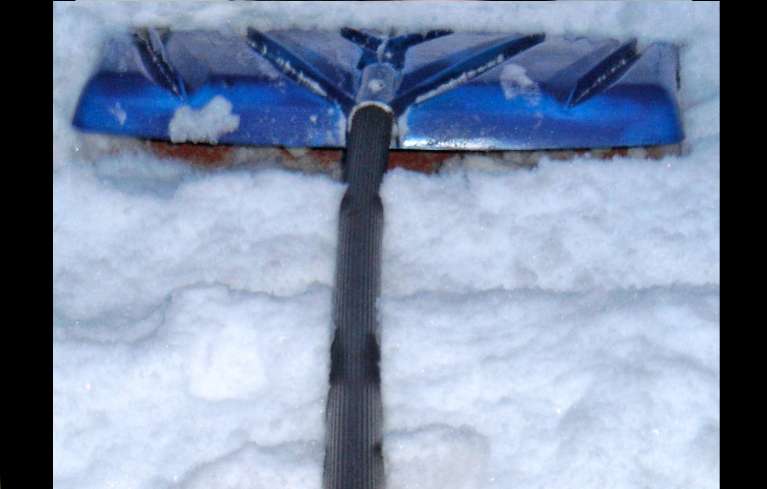
Shoveling snow might garner a higher wage for kids. Photo/LTN file

Shoveling snow might garner a higher wage for kids. Photo/LTN file

A 2009 study conducted by University of Michigan economists found a two-hour gender disparity in responsibilities per week in a study of 3,000 kids. That same year, Highlights magazine, a children’s publication, surveyed its readers and found that 75 percent of girls had chores, while just 65 percent of boys did. This disparity in chores and free time continues into adulthood all over the world.

According to the Organisation of Economic Co-operation and Development, men “report spending more time in activities counted as leisure than women. Gender differences in leisure time are wide across OECD countries.”

The fact that boys’ chores appear to be more profitable makes the childhood chore gap even more disturbing. Turns out, parents tend to value the work that boys typically do more highly than the work girls do. A website that helps parents teach children how to earn, spend and save responsibly, pktmny, found “significant divides based on gender, age and the nature of the task being undertaken by each child,” according to Louise Hill, COO of the company.

For example, mowing the lawn generally garners higher allowance wages than folding laundry. Shoveling a snow-covered driveway might yield more cash in hand than emptying the dishwasher.

Read the whole story