Barton on cutting edge with surgeries

No longer are multiple incisions necessary for hysterectomies or gall bladder removal.

Barton Memorial Hospital last week performed its first single-site hysterectomies. This means it is the first hospital in Northern California and Northern Nevada to offer the single-site surgery for both procedures. It has been doing gall bladders for more than a year.

Gynecologist John Missanelli and members of Barton’s da Vinci surgical team on Aug. 15 performed the specialized surgery through the belly button.

This means one scar for women. Until now, hysterectomies often left multiple, visible scars.

“Our physicians are among a very small group of surgeons in the region who have received training to perform this type of advanced surgery,” Clint Purvance, Barton’s chief medical officer, said in a statement.

Purvance told Lake Tahoe News only the da Vinci allows for this single-site surgery for these two procedures – no other medical device can do so. Surgeons enter the body via the bellybutton.

In addition to fewer scars, this technique may reduce pain, involves less loss of blood, allows for a faster recovery and shorter hospital stay.

— Lake Tahoe News staff report


Recyclers opposing plastic bag bans

By Laura Moss, Mother Nature Network

From Los Angeles to Nantucket, Mass., plastic and paper bag bans are on the rise across the nation.

Some ordinances prohibit single-use carryout bags, while others attach a fee to such bags, but an unlikely group is fighting against such bans: recyclers.

On Aug. 5, the Institute of Scrap Recycling Industries, a trade group that represents scrap recyclers, came out against bag bans and fees. The organization announced a new policy that will “promote a market-based system for the trade of recyclable materials without restrictions or interference.”

“ISRI members that recycle paper and plastic bags are quite concerned that policymakers are banning bags and creating fees without considering the real impact on the recycling industry,” ISRI President Robin Wiener said in a statement.

“Rather than bans and fees that take away jobs and increase costs to consumers, policy makers should take advantage of the great economic and environmental opportunities associated with responsibly recycling these bags,” she said.

Read the whole story


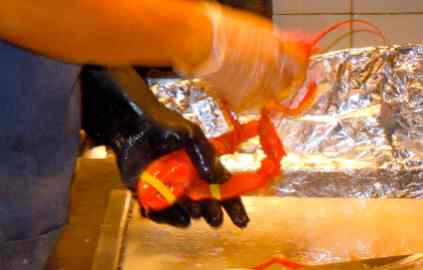
Lobster — from fertilizer to delicacy

By Megan Willett, Business Insider

It’s time to eat all of the fresh lobster, seafood, and summer fare we can before Labor Day.

But here’s something to think about while downing every lobster roll in sight before summer’s end — our beloved shellfish was once a throw-away food.

Lobster is everywhere in Boston. Photo/LTN file

Lobster is everywhere in Boston. Photo/LTN file

Back when the first European settlers reached North America, they wrote that lobsters were so plentiful that piles up to two feet high would wash ashore in Massachusetts Bay Colony.

Instead of this leading to epic clam bakes with buckets filled with butter, the colonists were embarrassed by these unsightly “cockroaches of the sea.”

In fact, lobsters were so plentiful and undesirable that they were commonly used as fertilizer and fish bait by Native Americans and colonists alike.

Their abundance also meant colonists had easy access to protein during bad seasons or harvests, so lobster quickly garnered a reputation as the poor man’s meal. They were fed to prisoners, apprentices, and slaves as a way to save money.

Read the whole story


Vegan hiker sets PCT speed record

By Mercy for Animals

On Aug. 8, Josh Garrett — a dedicated vegan and proud Mercy For Animals member — smashed the previous held world record for through-hiking the grueling Pacific Crest Trail, a 2,655-mile trek from Mexico to Canada, with an official time of 59 days, 8 hours, 14 minutes.

But Garrett, a Santa Monica College track coach and exercise physiology instructor, didn’t just shatter records; he also broke barriers by raising awareness of farmed animals and funds for Mercy For Animals along his incredible journey.

We caught up with Garrett before he set out on his mission drive adventure to get the scoop on his heroic hike.

MFA: What made you decide to embark on this hike?

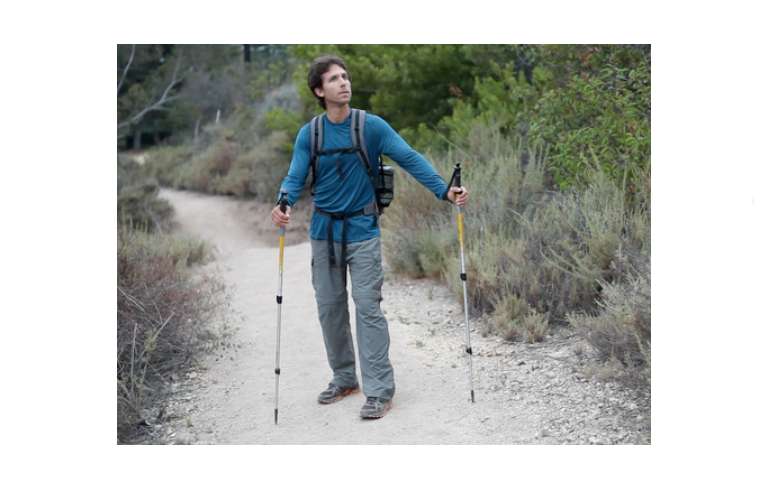
Josh Garrett set a speed record this month for the Pacific Crest Trail. Photo/Provided

Josh Garrett set a speed record this month for the Pacific Crest Trail. Photo/Provided

I hiked the Pacific Crest Trail back in 2009 and it was one of the greatest experiences of my life. About a year ago, I met John Mackey, the CEO of Whole Foods. He is an avid hiker, who has section hiked the Big Three trails (Appalachian, Continental Divide, and Pacific Crest). When we talked about the Pacific Crest Trail, he was really surprised, I guess impressed, to learn that I had hiked it in 88 days.

We got to talking and he had this idea that with the right support, I could probably break a hiking record. He asked me if I wanted to give the Pacific Crest Trail record a shot. I had mixed feelings. I loved the idea of the challenge, but didn’t want to let anybody down if I didn’t make it. And I was nervous. Hiking the trail was uncomfortable enough — painful sometimes — even when I wasn’t trying to do it within any particular time limit. But, I went vegan about eighteen months ago, and have become more and more concerned about what’s happening to the animals.

Suddenly it hit me that I could use this hike as a way to get the word out on their behalf. So I teamed up with Mercy For Animals and now this is so much more than a personal quest.

Read the whole story


Placer County offering Community Awareness Academy

Placer County Sheriff’s Office’s eight-session Community Awareness Academy is Sept. 4-30.

Classes are Monday and Wednesday nights from 6-9 at the department’s headquarters, 2929 Richardson Drive, Auburn.

To register or for more info, contact Kim Rivera at (530) 889.6922 or krivera @placer.ca.gov.


American Fire growing, but at slower rate

The American Fire is spreading at a much slower rate. It has grown to 12,950 acres and remains at 45 percent containment.

This fire is burning in the area of the 2008 Westville Fire north of the Foresthill Divide Road into the Whisky Hill area. However, it is also burning in steep and hazardous terrain as well as timber fuels that have not burned in several decades, according to officials. Consumption of heavy fuels continues to contribute to the heavy smoke in the surrounding areas.

An emergency closure order is in place for portions of the Tahoe National Forest within and adjacent to the American Fire.

The cause of the fire that started Aug. 10 remains unknown.

— Lake Tahoe News staff report


Incline may require bear-resistant trash cans

Incline Village has delayed making a decision on whether bear-resistant garbage cans will be mandatory.

Waste Management Inc. representatives will give a presentation Sept. 25 to the Incline Village General Improvement District board.

Nevada Department of Wildlife officials said of the 237 human-bear conflicts in Northern Nevada in 2012, 22 percent were in Incline Village.

The number of conflicts is on the rise. Much of it has to do with bears getting into garbage. This is also causing more human-human conflicts when traps are set and bears are killed.

Each of the 4,200 single-family homes in Incline may have to pay $250 for the containers.

— Lake Tahoe News staff report


Then and now: Camp Rich’s pier, boats change

Boats at Camp Richardson looked a little different in 1946 than they do today. Photo/Pomona Public Library Frasher Fotos Collection

Boats at Camp Richardson looked a little different in 1946 than they do today. Photo/Pomona Public Library Frasher Fotos Collection

The 1946 black-and-white photo, above, shows the early Camp Richardson pier as viewed from the center of the Camp Rich beachfront.

Camp Richardson 1959My 1959 color slide, left, shows the pier viewed from the other side, at the west edge of Camp Rich bordering the Valhalla site. Camp Richardson then still was operated by family member Sis Richardson Knisley, years before selling to the U.S. Forest Service in about 1970.

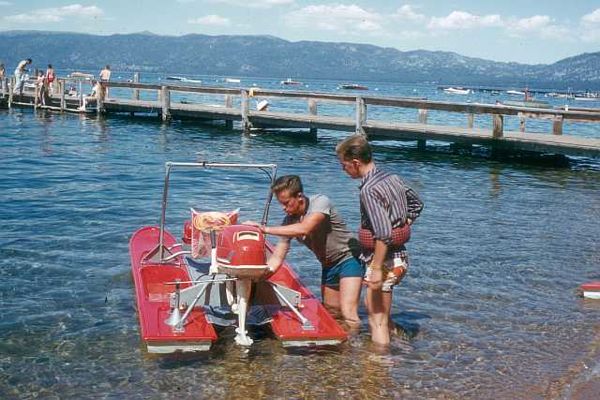
The rental shack seen at the right had kayaks, paddleboards, and something very new. Personal watercraft as we know them today were yet to come, but my 1959 photo, below, shows their infancy. Camp Rich 1959 power skiThat is me at the Camp Rich pier rentals receiving instruction on how to straddle over a gasoline can on two plastic pontoons strapped together with a 25-horsepower outboard motor. Standing and gripping the cross-bar, I’d lean left or right to steer this craft. Do you think anything like this could be allowed today? I made several treks from Camp Rich to Emerald Bay circling Fannette Island and back, and I’m still here.

Camp Rich 2013All the above is gone now, evidenced by this photo, left, which I took this month from the same vantage point as 1959.

— Bill Kingman


Dogs gather for play day in S. Lake Tahoe

Bear's humans help find the treat on the cup. Photos/Kathryn Reed

Bear’s humans help him find the treat under the correct cup. Photos/Kathryn Reed

By Kathryn Reed

A whole lot of sniffing was going on Saturday on Ski Run Boulevard in South Lake Tahoe. And plenty of tail wagging, too.

It’s a good bet many of the dogs who attended the second annual Dawgs on the Run on Aug. 17 weren’t going to need dinner. Every booth seemed to have treats, and then there were also the food contests.

One event had owners put the handle of a spoon in their mouth. Their dog was practically in their face licking off the peanut butter on the other end.
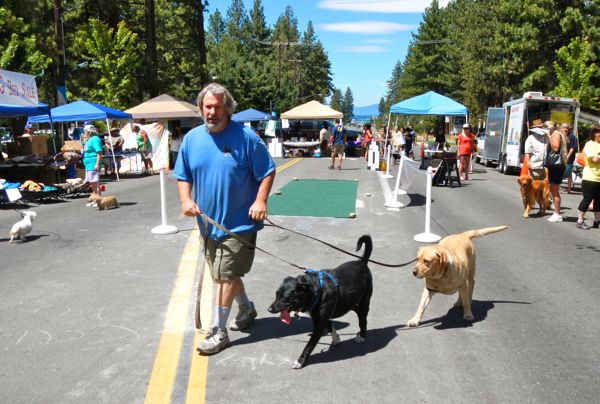
Howie Nave take Mo and Brody to Dawg on the Run on Aug. 17.

Howie Nave takes Mo and Brody to the various booths at Dawgs on the Run in South Lake Tahoe on Aug. 17.

And if being up-close-and-personal with your dog wasn’t enough, for a buck a boxer would give you seemingly endless kisses. The money went to a rescue foundation.

“The primary purpose is to educate people about how to be better pet owners and be responsible,” Mireya Ortega, one of the organizers, told Lake Tahoe News.

Lake Tahoe Humane Society along with dog boarders, dog trainers and dog groomers all had information to give out.

But Ortega also knew to get people to listen and to attend it had to be fun. That’s why it turned into a canine carnival of sorts.

Other activities included bobbing for tennis balls, playing dead, agility course, best costume, best trick and karaoke for dogs.

Kisses worth more than a dollar.

Kisses worth more than a dollar.

There was a dog treat contest with Après Win’s Tahoe Kokanee Krunch Dog Treats the winner. (See recipe below.) Nepheles entered Peanut Butter and Bacon, Apple-Cheddar, and Puppy Pumpkin Molasses doggie treats.

Five testers, all on four legs, decided the winning treat. The four treats were placed in front of each judge. The treat that the dogs went to first was the winner. The Kokanee won 3-2.

Tahoe Kokanee Krunch Dog Treats by Après Wine

2 medium Kokanee, pan-fried, filleted and finned, skins on (or substitute one 15-ounce can of salmon)

¼ C chicken broth (omit if using canned salmon)

2 C flour

2 eggs

Parchment paper and cooking oil spray

Preheat oven to 350 degrees. If using canned salmon, open but don’t drain. Put salmon and juices into a large mixing bowl.

Crack and add two eggs. Flake Kokanee, including skin and mix in with the eggs and broth.

Take the flour and mix it into the salmon-egg-broth mixture. You may add more or less flour than recommended to get a consistency similar to human biscuit dough.

Line a baking sheet with parchment paper and spray with no-stick cooking oil. Dump the dough onto the sheet. Sprinkle some flour on top of the dough and flour your hands to keep the dough from sticking as you press it flat.

Press the dough out until it about ¼ inch thick. For moist Kokanee Krunch, make it thicker. For crunchy treats, make it thinner. You don’t need to make perfect corners, as this will later be broken into small pieces for the dog. Just flatten it out into any shape. With a knife, makes lines in the dough about the size of small treats so it will be easier to break.

Place the baking sheet in the center of the oven. Cook for 25-35 minutes, depending on whether your dog prefers moist or crunchy treats.

Use a spatula to lift your treat off the parchment before cooling, otherwise it may stick. You can let it cool on a rack or in the cookie sheet.

Once cooled, divide into desired portions, bag and freeze.


Fire safety more critical as people age

By Teri Mizuhara

There are an estimated 75 million baby boomers in the United States who began turning 65 at the rate of one every 10 seconds in 2011. They make up 13 percent of the U.S. population.

Boomers have redefined what a senior is. They are physically active, healthier, focused on their futures with the same passion and energy they had 30 or 40 years ago. Life is good until you talk about seniors and their risk of injury or death due to fire.

Hard facts:

• If you are between the ages of 65 and 74, your risk of dying in a fire is two times that of the general population.

• If you are between the ages of 75 and 84, your risk of dying in a fire is three times that of the general population.

• If you are 85 years or older, your risk of dying in a fire is 4.4 times that of the general population.

• In 2007, seniors represented 13 percent of the population, but were 30 percent of those were killed in fires.

As we age, our vision, hearing, sense of smell-taste, and even our response to pain change. We may have mobility challenges, and because of medications, our mental and physical abilities can be affected.

The fix:

Think about what you are doing. So often we do things by rote or autopilot; we do it the way we have been doing it for decades or longer. We don’t focus our attention on what we do every day and that is where trouble can occur.

Here are some pointers:

• Never leave food cooking on the stove, in the oven, or on the barbecue because cooking fires are the No. 1 cause of house fires. If you must leave, take a timer (they are now made with belt clips or lanyards) or your cooking implement such as a spoon or spatula with you to remind yourself you left food cooking.

• If you smoke, do so outside and have a pail of water or sand to put out your cigarette or cigar. Never smoke in bed or sitting on a sofa or recliner; the risk of falling asleep is too great.

• If you are on oxygen therapy, do not smoke. Last year in Oroville a woman caught herself on fire because she was smoking while on oxygen. People living nearby heard her screams and found her fully engulfed in flames.

• If you use space heaters, make sure they are in good working condition and those flammable materials such as curtains or blankets are a minimum of 3 feet away.

• Do not burn candles or incense, they are too easily forgotten and can quickly cause a deadly fire. There are battery-operated candles and fragrance sticks that do not require fire and they can be found at local discount dollar stores.

• Make sure your smoke detectors and carbon monoxide alarms are placed properly in your home (bedrooms, hallways and on every level) and that they are replaced every 10 years. They should be linked and there are detectors for those that have vision or hearing issues. Remember to have your smoke detector and carbon monoxide alarm batteries once a year.

Taking a minute or two to seriously consider what you are doing, the risks associated with that activity and maybe changing the way you do it, could be lifesaving. Finding a fresh approach to an old habit may not only make that activity safer, but it may also breathe some new life into something you took for granted.

Seniors are a treasured population and we need to help keep them safe. With a little time and energy, we can all make sure that is a reality.

Teri Mizuhara is with the El Dorado-Amador unit of CalFire.