Flash flood watch issued for Lake Tahoe

A flash flood watch has been issued for the Lake Tahoe Basin from 2-10pm today.

The National Weather Service in Reno says Truckee, Reno, Carson City and the Carson Valley are also under the same watch for Aug. 21.

Thunderstorms like the one that rolled through South Lake Tahoe on Aug. 20 will return. That storm dumped nickel-size hail that covered city streets to make it look like it had snowed in mid-August.

Hail 1-inch in diameter could fall today. Waves on Lake Tahoe may reach 3 feet.

Recent wildfire burn scars and locations near steep terrain are prone to flash flooding and debris flows. Flooding of streets and intersections in urban areas with poor drainage may also occur, warns the Weather Service.

— Lake Tahoe News staff report


Human-caused American Fire still growing

Tahoe National Forest officials believe a person started the 15,738-acre American Fire, but what’s not known is if it was deliberately set.

Forest Supervisor Tom Quinn at a public meeting on Tuesday said a late model pickup was in the area and two men were hitchhiking out of the area. The investigation is ongoing.

The blaze is 63 percent contained, with full containment expected on Sept. 1.

On the extreme south end, firefighters will begin building a very steep hand line today, which descends to the river. The west side of the fire was relatively inactive. Mop-up is occurring in this area, which involves checking the interior of the fire.

The fire is burning in steep terrain about 10 miles from the town of Foresthill. Smoke continues to mar the air in the Placerville, Truckee and Reno areas.

 — Lake Tahoe News staff report


Santiago travels extensively on taxpayers’ dime

By Kathryn Reed

El Dorado County Supervisor Norma Santiago likes to travel – at least based on the expenses she accrues.

For the 2012-13 fiscal year, Santiago had $12,755.99 worth of travel expenses that the county reimbursed her for.

The next highest figure was $1,509.33. That was for Supervisor Ron Mikulaco. However, only $637.80 was accrued after he was sworn in. He and Supervisor Brian Veerkamp have expenses for a conference that first-time supervisors attend after being elected but before being seated.

But these figures don’t necessarily reflect anyone’s total travel bills. Many elected officials sit on other boards where those agencies would foot the bill. And then sometimes special interest groups pick up some of the costs.

Norma Santiago travels more than any other El Dorado County supervisor. Photo/Kathryn Reed

Norma Santiago travels more than any other El Dorado County supervisor. Photo/Kathryn Reed

The latter was the case for Santiago when she went on a trip in July 2012 to Santa Fe, N.M. Several West Slope chambers of commerce went to the Urban to Rural Connection conference. The cost was $2,100 per person just for the four-day seminar. On documentation from the July 30, 2013, Board of Supervisors meeting handwritten is “$1,000 previously paid by 3rd party sponsor.”

But a sponsor or any monetary gift must be documented on what’s called Form 700. Santiago has not done so.

Supervisor Ray Nutting had a criminal complaint filed against him by the district attorney in part for not filing a Form 700 for money he received. District Attorney Vern Pierson did not return a phone call.

Santiago was not available for comment.

In addition to the questionable funds, Santiago violated county policy by asking for reimbursement after the fact and then months after the trip occurred.

On the July 30 Board of Supervisors’ consent agenda was an item to reimburse Santiago for her July 2012 trip to Santa Fe and her March 2013 trip to the National Association of Counties meeting in Washington, D.C. The board approved them 5-0.

The 2013 trip had been preapproved by the board, while the 2012 one had not.

Santiago traveled on the county’s dime to Washington a month later for the Capitol-to-Capitol event. That cost $4,104.10.

Judi McCallum, Santiago’s assistant, defended her boss, saying that she is the most sought after supervisor in El Dorado County for study missions, especially economic ones.

“They are excited to have Norma along. It translates to opportunities and action here,” McCallum told Lake Tahoe News.

She added, “Sometimes access is everything and she is always knocking on doors.”

McCallum pointed out how access helped Meyers keep its speed limit below what Caltrans originally wanted it raised to.

But something like that would require a phone call, maybe a trip to Marysville where the Caltrans district office is, or at best a trip to Sacramento. It really had nothing to do with spending taxpayer dollars, but more to do with Santiago just doing her job as a county supervisor.

McCallum said Santiago has been able to bring back dollars to the county – not just spend them. But she did not have specifics to share.



Labor Day weekend expected to be full of travelers

People are expected to be on the move Labor Day weekend.

AAA Travel projects 34.1 million Americans will venture 50 miles or more, a 4.2 percent increase from the 32.7 million people who traveled last year. The anticipated increase in holiday travel is predominantly due to increased consumer spending and the improving housing market.

“AAA is forecasting a lift in Labor Day travel this year due to the increasingly positive economic outlook and optimism in the housing market,” said AAA President and CEO Robert L. Darbelnet. “For many Americans, their home is also their biggest asset, as home prices improve in many parts of the country more families are feeling comfortable about traveling this Labor Day holiday.”

Some predictions by AAA:

• Eighty-five percent of travelers (29.2 million) will travel by automobile, an increase of 4.3 percent from 28 million last year

• Holiday air travel expected to increase nearly 3 percent to 2.61 million.

• The largest share of travelers (46 percent) will depart on Aug. 30.

• That Monday is the most popular date of return for holiday trips with 43 percent planning to return that day.

• The average traveler is expected to travel a round-trip distance of 594 miles and spend $804.


Opinion: Lake Tahoe on the path to recovery

By Joanne Marchetta

In a stream not far from the stage on which a group of Tahoe’s most staunch legislative supporters gathered on Monday for the 17th annual Lake Tahoe Summit, fish are swimming freely in a naturalized channel after a roughly 50-year hiatus. Incline Village residents have reported seeing the fish navigating clear, cold pools in Third Creek miles upstream from its inlet to Lake Tahoe. Trout, minnows and Tahoe’s own land-locked salmon have returned after completion of a multi-agency restoration project spearheaded by Incline Village General Improvement District that targeted multiple fish barriers and eroding banks. The project restored the stream bed and floodplains to near-natural conditions, and pedestrian bridges were installed to reduce the informal creek crossings that were causing bank erosion.

With all the discussion and news about the Lake Tahoe Restoration Act and coverage of a historic Lake Tahoe Summit event this year at Sand Harbor, I wanted to give you the big picture of the plan to restore Lake Tahoe by describing how just one exemplary project has improved the ecosystem.

Joanne Marchetta

Joanne Marchetta

While there have been many environmental successes of which we can be proud, there is still work to do and residents and property owners are going to play an increasingly important role.

The Third Creek restoration project is just one of more than 400 environmental projects that have been completed basinwide since 1997, the year that TRPA and basin partners chartered the new environmental investment strategy for Tahoe – the Lake Tahoe Environmental Improvement Program. The program is one of the most comprehensive regional scale restoration efforts in the nation.

The EIP as we call it was first imagined soon after the first Regional Plan was adopted by the Tahoe Regional Planning Agency in the 1980s. We saw that regulations alone were not achieving the ambitious environmental targets set for Tahoe. Most of the environmental damage comes from an outdated transportation network, the tens of thousands of existing homes and businesses built without water quality controls and the loss of 75 percent of Tahoe’s marshes to development.

To restore Lake Tahoe’s land, air and water will take more than growth control and design standards for new buildings.

This recognition and the need for urgent action galvanized support to charter the first Lake Tahoe Summit in 1997. Then President Bill Clinton and Vice President Gore convened here with state and local leaders and the heads of more than 50 organizations to create a collaborative partnership of the public and private sectors. Under the EIP, hundreds of projects have been completed improving water quality, reducing hazardous fuels, improving air quality though transportation and bike trail improvements, along with scenic and recreation enhancements. With each project, whether it be one property owner installing stormwater infiltration and erosion control measures or the opening of a new bikeway, there comes an instant recapturing of environmental glory.

On a spectator-packed hillside at Nevada’s Sand Harbor State Park, some distance south of the pure, cold pools of Third Creek, about 1,000 people gathered Aug. 19 to help mark the accomplishments of this truly ambitious program. On stage were many of the same leaders who helped usher in the first EIP — Gore, and Sens. (Harry) Reid, and (Dianne) Feinstein among others.

Top officials from myriad agencies like the EPA, U.S. Forest Service, and U.S. Army Corps of Engineers joined local leaders like myself not only to mark the 15th anniversary of the Lake Tahoe EIP, but also to recommit our efforts to the successful completion of the program.

After nearly $1.7 billion of investment from the public and private sectors since that first Tahoe Summit the alarming decline in lake clarity has flattened and the average clarity is now the best it has been in 10 years. However, we know we are not done and there are significant challenges ahead. While much of the investment in the past 15 years has been in public restoration projects, private sector investments in erosion control and stormwater best management practices are still needed on approximately 25,000 properties. TRPA has improved regulations to encourage more home improvements and has created regulatory incentives that will bring sensitive land restoration with redevelopment.

Join us in answering Al Gore’s call to action – become actively engaged and discover your part to ensure that Lake Tahoe’s waters run clear, our forests are healthy, and we leave a legacy of conservation and cooperation for those who come after us.

Joanne Marchetta is the executive director of the Tahoe Regional Planning Agency.


Agents tracking down illegal guns in Calif.

By Richard Gonzales, NPR

In California, officials are ramping up a unique program that identifies and seizes guns from people who are prohibited from keeping them. Under state law, a legally registered gun owner loses the right to own a firearm when he or she is convicted of a crime or becomes mentally ill.

Last year, state agents seized nearly 2,000 firearms, but implementing the gun seizure program is a painstaking job. In a recent operation, a caravan of four unmarked trucks traversed the bedroom communities of San Francisco’s East Bay. The trucks carry nine state agents wearing bulletproof vests and armed with .40-caliber Glock pistols and Tasers. They’ll spend the next six hours looking for illegal guns, explains Special Agent Kisu Yo of the California Department of Justice.

Yo’s team will visit the homes of 11 people who are considered Armed and Prohibited Persons, people on the so-called APPs list. They are all people who at one time purchased firearms legally, but have since run afoul of the law, Yo says. “Such as maybe a felony conviction, mental health commitment, they received a restraining order, domestic violence restraining order — some type of a misdemeanor conviction that prohibits them from possessing firearms.”

Beginning In 2007, California officials began collecting names from court records, medical facilities and lists of known or wanted criminals, then cross-referenced them against the federal instant criminal background check system for gun-buyers. The list is updated every day.

Read the whole story


Poll: Half of Californians have difficulty paying health insurance

By David Siders, Sacramento Bee

Half of California voters say they are paying more for health care than they were a year ago, and the same percentage of voters say their health care costs are hard to afford, according to a new Field Poll.

Fifty percent of California voters say the amount they pay for their family’s health care has increased in the past year, while 41 percent of voters say they are paying about the same, according to the poll. Just 5 percent of registered voters say their health care costs declined.

The poll, sponsored by the nonprofit California Wellness Foundation, comes as the state prepares for major changes under the federal health care overhaul next year, including a requirement that nearly all Americans have health insurance or pay a penalty.

Read the whole story


Anderson wins slopestyle season opener

By USSA

CARDRONA, New Zealand — X Games champion Jamie Anderson of South Lake Tahoe persevered through fog and a nine-hour comp day Aug. 19 to pick up a season opening slopestyle victory at the FIS Snowboard World Cup in Cardrona, part of the New Zealand Audi Quattro Games.

Anderson, who also won the Sprint U.S. Grand Prix World Cup at Copper Mountain last January, scored a huge 94.75 on her first of two runs and was able to take a victory lap for the win.

Anderson was the only American in the finals on Sunday. Continual postponements of women’s qualifying heats and finals pushed the event until late afternoon Monday.

Her win was vital in the United State’s quest to maximize quota spots for the Olympic debut of slopestyle snowboarding in Sochi.

Weather forced cancellation of the men’s competition after U.S. Snowboarding’s Eric Willett of Breckenridge, Colo., won his heat with the second highest score. Slopestyle snowboarding will make its Olympic debut in Sochi.

Action resumes next weekend with the opening halfpipe event of the FIS Snowboard World Cup.


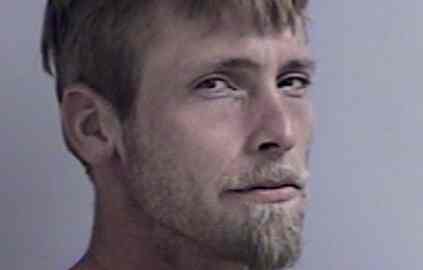
Parolee accused of skinning raccoon in S. Tahoe

A parolee and registered sex offender was arrested Monday in South Lake Tahoe with blood on his hands from allegedly skinning a raccoon in the middle of town.

Police officers said Kevin Burroughs, 37, ran from them when they approached him in the city owned open lot across from Sno-Flake Drive-In on Harrison Avenue.

Kevin Burroughs

Kevin Burroughs

Burroughs ran, but was subsequently caught at the baseball fields next to South Tahoe Middle School.

The knife has not been recovered.

The dead raccoon was disposed of by Lake Tahoe Wildlife Care.

Burroughs had a felony warrant for being a parolee at-large.

He was booked on a Fish and Wildlife Department charge of possessing a creature unlawfully taken, and penal code charges of resisting arrest, failing to register as a sex offender, a sex registrant on school grounds and parolee at-large.

— Lake Tahoe News staff report


Learn about Tahoe wildflowers

Lake Tahoe Community College English teacher and wildflower enthusiast Lisa Berry will give a lecture and slides show about flowers on Sept. 18.

She will examine Tahoe’s unique wildflower habitats, the best specimens of 2013, and the top 25 wildflowers every local should know.

The free event is at 7pm at the college’s board room.