California celebrating its rich viticulture history

Publisher’s note: The following is California Gov. Jerry Brown’s proclamation declaring September California Wine Month.

By Jerry Brown

The first vineyard in Spanish California was not planted within the area that would become our state, but rather at the short-lived Misión San Bruno in what is now the Mexican state of Baja California Sur. The Italian Jesuit priest Eusebio Francisco Kino established this mission in 1683 at the beginning of his long career exploring and proselytizing in the region that would become the Southwestern United States.

Although a drought caused him to abandon San Bruno less than two years after its establishment, the vines that Padre Kino planted — optimistically, perhaps — speak to the great cultural and religious significance of grapes and wine in the Mediterranean cultures that produced our state’s first European settlers.
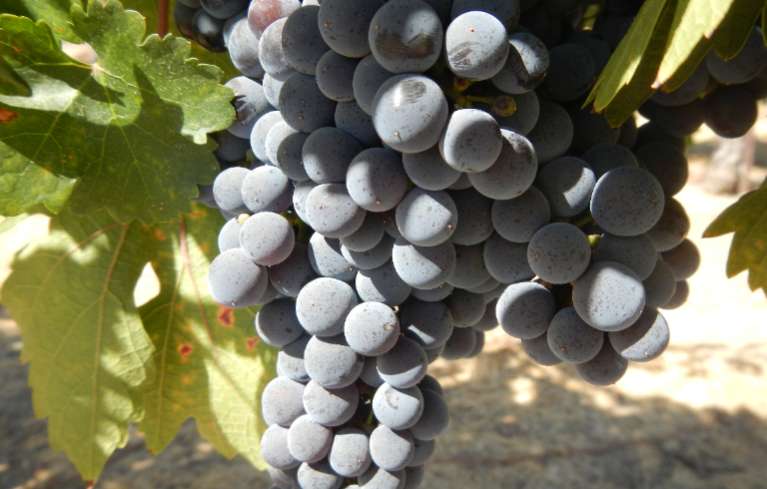
Grapes are being harvested in California this time of year. Photo/LTN file

Grapes are being harvested in California this time of year. Photo/LTN file

In 1768, King Carlos III expelled all Jesuits from New Spain, and administration of the Baja California missions passed to the Franciscan order. That same year, the Catalan Franciscan friar Junípero Serra, beatified by Pope John Paul II in 1988, embarked on his historic expedition to Alta California and established the first mission in the future Golden State at San Diego in 1769. While there is some dispute as to when and where the first vines were planted, it is clear that California viticulture was flourishing by the late 1770s. The first winery was established at Mission San Gabriel during this period.

Nearly all grapes grown in California at the time were of a hardy, disease-resistant strain that came to be known as the “mission grape,” a mainstay of the early commercial industry that is still used in some fine California wines and sherries today.

In the 19th century, Americans and Europeans arriving in California expanded viticulture beyond the missions and brought grape varietals and winemaking traditions from various parts of the Old World.

The “good pirate” Joseph Chapman, who was captured in a raid on Monterey in 1818 and settled in California after his release from prison, founded the territory’s first commercial vineyard in Los Angeles in 1824.

The Frenchman Jean-Louis Vignes was first to introduce French vines in the 1830s, and his products quickly surpassed the mission-grape wines in quality.

However, much of the credit for the amazing diversity of Vitis vinifera grapes grown in our state today goes to the Hungarian Count Agoston Haraszthy, who introduced scores of varietals that may have included Zinfandel, one of the most iconic California wine grapes. Haraszthy was the founder of the Buena Vista Winery — the oldest winery in the state that still makes wines — in Sonoma in 1857.

The first cultivated grapevines in Napa Valley are thought to have been planted in 1836 by the early settler George Calvert Yount, in the area that would come to be called Yountville. Noticing a large number of native Californian grapes growing on his property, Yount decided to try his hand at viticulture, setting in motion the chain of events that led to the establishment of one of the world’s most acclaimed wine-growing regions. Some of the best-known names in the valley today date back to this era, beginning with Charles Krug, a former employee of Haraszthy, who is credited with founding the first commercial winery in Napa Valley in 1861.

By then, the Gold Rush and subsequent population booms had created a large market for wine within the young state. As the quality of our industry’s products improved, foreign markets took note, setting California on the path to becoming one of the world’s top exporters of wine. A Frenchman, Capt. Gustave Niebaum, founded the Inglenook Winery in Rutherford in 1879 to produce the state’s first Bordeaux, and 10 years later these wines won gold medals at the World’s Fair of Paris. By the turn of the 20th century, California wines were already world-renowned and had won medals at numerous European and other international competitions.

The greatest setback in the development of our modern wine industry occurred during the federal prohibition of alcohol from 1920 to 1933. Much of the diversity and quality that the industry’s founders had built was lost during this period as growers replaced wine varietals with table grapes. Others shipped concentrated products for the home production of grape juice, accompanied by “warnings” detailing the steps one would avoid if one did not wish the product to ferment into wine.

The industry also returned to its religious roots, in a way, as shipments of sacramental wine increased substantially under the new laws. Some California vintners were able to remain in continuous operation by shifting production to this market.

After the repeal of Prohibition, the industry did not recover quickly. The majority of Americans drank beer or spirits, and fine wine was still the province of high society on the one hand and, on the other, ethnic and religious groups that maintained their Old World traditions. Even as the industry made great technical strides and the quality of some California wines became superb in the mid-20th century, the bulk of sales were still of low-quality fortified wines.

It is a testament to the pioneering efforts of industry leaders like Robert Mondavi that today, the number of Americans identifying wine as their alcoholic beverage of choice is on a par with the number who choose beer. Our public universities have also played a prominent role in advancing the science and technology that have helped make wine one of the Golden State’s most successful and beloved industries.

This month, millions of tourists will come to our state from around the world to sample our vintages and enjoy the many other attractions that our several distinct wine regions have to offer. I hope that many Californians will join me in raising a glass to the pioneers, beginning with Padre Kino, who helped bring this amazing bounty to California, and the many diligent and innovative workers today who help the industry continue to thrive.



Variety of ages compete in races at Kirkwood

Kirkwood was full of runners young and old on Aug. 31. Eight children participated in the two Kid’s Fun Runs. Alexander Slezak, 6, won the half mile race in 4:46, Madeleine Walbrun, 6, was second in a close 4:49, while 3-year-old Kipton Walbrun ran his heart out to a cheering crowd at the finish line in 5:43.

In the 1-mile event, Ethan Mulhair, 10, edged out his competition by a second in 9:26. Caitlyn Clark, 9, was second in 9:27. Third place went to Aaron Wiebe, 10, in 9:59.

The 5K was won by 12-year-old Cody Proctor in 25:39. Second place went to 70-year-old Duane Baker in 26:01. H e also was the first master’s runner. Third place went to Cody’s father, Jason Proctor, 50, in 26:28.

Women’s honors went to Hailey Brown, 27, in first place, 28:07. Second was Logan Bigley, 12, in 28:26 and third place went to Christine Fabi, 42, in 28:30. Fabi was also the first master’s runner.

The older guys showed up again this year. Cy Ryan, 81, was the oldest competitor in all the races. Christine Powell-Millar, 67, was the oldest female. Duane Baker, 70, and Glenn Millar, 74, also participated in the 5K.

The 10K Adventure Run also went to the young and the old and the women. Andie VonEschen, 17, blazed through the challenging mountain course in 52:32 followed by second place finisher Chloe Glare, 32, in 55:49. Third place went to Jeff Williams, 34, in 56:37. Third place in the women’s division was Kristin VonEschen, 48, in 58:07. She was also the master’s winner. Men’s master’s winner was Michael Sharp, 55, in 56:57.

The Kirkwood runs were sponsored by the Tahoe Mountain Milers Running Club and the Kirkwood Volunteer Fire Department.

The next running club event is the Kokanee Trail Runs on Oct. 6 at the snow park on Taylor Creek.


Lecture all about low back pain issues

Doctors Michael Fry and Peter Costa will give a lecture titled Back Pain: Prevention & Treatment on Sept. 19 from 6-7pm.

The free talk is at Lake Tahoe Community College, Room A208, South Lake Tahoe.

Attendees will find out what treatment options are available for low back pain, learn why back pain may be associated with leg pain, why surgery may or may not be right for you, and what exercises you can do that can help strengthen your back and relieve your pain.

For more info, call (530) 543.5537.


Snippets about Lake Tahoe

zephyr• Zephyr Cove Marina is selling boat fuel again after not doing so for the past two years. The station opens daily at 9am.

• Discover powerful strategies to strengthen your leadership and communication skills at Trade Up! Presented by The Institute for Women’s Leadership. The event is Oct. 4 from 9am-5pm at the Sierra Arts Gallery in Reno. All proceeds benefit Zawadisha, a local nonprofit whose mission is to empower, entrust, and expand opportunities for women. For more info or to register, go online.

• Cal Neva, Frank Sinatra’s old place, is going to be gutted, with the goal to reopen in December 2014.

• Ironman Lake Tahoe needs volunteers for the Sept. 22 event. For more info, contact Sean Sweeney at laketahoe@ironmanvolunteers.com.

• Ruffwear Doggone Van Tour is stopping by Dog Dog Cat (4000 Lake Tahoe Blvd., Suite C-17, South Lake Tahoe) on Sept. 14 from 1:30-4pm.


LTUSD, California ready to be rid of NCLB

By Kathryn Reed

It might not matter that Lake Tahoe Unified School District didn’t do well on the latest round of standardized tests.

On Sept. 4 the governor’s office, state Superintendent of Public Instruction Tom Torlakson, legislative leaders and the California Teachers Association agreed to amend Assembly Bill 484 so any school district could opt into the computer-based Common Core test this school year instead of just the 20 percent of the state’s schools that were selected to be part of the trial.

“AB484 shows California’s commitment to implementing Common Core standards and helping every student succeed,” Evan Westrup, a spokesman for Gov. Jerry Brown, said in a statement.

While there is supposed to be one more year of testing under the federal mandated No Child Left Behind, California wants to end it one year earlier. This is because nationwide the move in education is to implement Common Core standards. People no longer see relevance to NCLB. That mandate called for all students to be at a proficient level by 2014. It has not happened. And most educators never believed it would in part because the numbers included special education and English learners, as well as it’s unrealistic to believe everyone would ever be at a proficient level.

Only 14 percent of California schools made it to that level on the 2013 tests. Statewide, schools dropped two points on the Academic Performance Index to 789. The target is 800.

Lake Tahoe Unified followed the state’s pattern by having all but one school lose ground compared to 2012. And even then that school did not make the 800 goal.

Lake Tahoe Unified API scoresSchool      2012 score         2013 score

STHS                     762                     753

STMS                     809                    789

Bijou                      697                    720

Magnet                  941                     929

Sierra House         835                      804

Tahoe Valley          814                      786

Source: LTUSD

Part of the problem with the NCLB tests is that they didn’t track a grade level. The results for this year’s third-graders are compared to last year’s. This doesn’t allow for measuring a class’ progress. Schools and districts were then penalized or rewarded for backward or forward movement that wasn’t ever comparing apples to apples.

“It is unfortunate that officials in Washington continue to enforce a program they have acknowledged is deeply flawed and that paints schools with the same broad brush,” Torlakson said in a statement of NCLB.

The U.S. Department of Education is going to have to approve California’s desire to abandon NCLB because it’s supposed to be in effect through the end of the school year.

Lake Tahoe Unified started Common Core this school year.

“Common Core is a national objective where industry and colleges were saying they are having kids not coming in with critical skills they need,” LTUSD Superintendent Jim Tarwater told Lake Tahoe News. “The government came up with Common Core standards across the nation.”

What Tarwater likes about Common Core is that it teaches critical and strategic thinking, has students reach conclusions based on understanding the concept instead of rote memorization.

LTUSD is ahead of the curve compared to many districts because for years it has been incorporating technology into everyday school life. Students have computers in their classrooms and most have Netbooks to take home.

Part of Common Core is that tests would be online. The idea this could cut down on cheating (no taking pictures of test questions and texting friends) and it puts students in the digital age, which is where the professional world is.

The new test is called Measurement of Academic Performance and Progress. This year schools could voluntarily take the test. It will be mandatory for the 2014-15 school year. And for the first three years a paper and pencil version will be devised.

California budgeted $1.25 billion this year to help school districts train teachers, acquire materials and upgrade their computer systems.

LTUSD is using the money at each school site for teacher training called Shared Decision-Making. Some of the money is also being used for instructional material for math that will be for 2014-15.


Sharilyn Nelson — 1939-2013

Sharilyn Silver Nelson was a starter and a joiner who made things happen no matter where she lived.

She was active in many Truckee area organizations until her death on Aug. 31. She was 73.

Sharilyn was born Nov. 12, 1939, in Salt Lake City. This is where she spent the bulk of her childhood.

Sharilyn Nelson

Sharilyn Nelson

She learned to ski at age 6 and was still on the slopes into her 70s. Skiing became a family activity for the Nelsons when they lived in the Bay Area. And it continued when Sharilyn and husband Chris moved to Truckee in 1995. Eventually their grandchildren became their skiing partners.

The home Sharilyn and Chris built was featured one year on the Truckee-Tahoe Home Tour.

Sharilyn met her future husband at a Laundromat near the University of Utah campus where they were both students. She earned a bachelor’s in education in 1961. And they were married a year later.

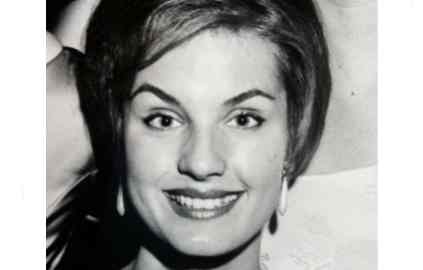
While in college, Sharilyn was a drum majorette, in the homecoming court and crowned the engineering queen. She did a bit of modeling right after college.

In addition to her exterior beauty, it is her inner beauty that family and friends remember most. She was one of the most selfless people anyone could ever know.

Teaching first grade in Salt Lake City and Las Vegas were her first career jobs. When the family of five moved to Concord in 1971, Sharilyn taught music and early childhood development at Diablo Valley College in Pleasant Hill.

She was also a concert pianist and always had a grand piano that she would play at home. When the windows were open neighbors could hear the music she created as her hands gracefully caressed the ivory.

The love of music was something the couple shared through the years.

Sharilyn would later enter the business world as a recruiter for temporary and full-time positions, mostly in finance and high tech.

She started a number of clubs in Tahoe Donner – Bridge Club, Gourmet Group, Book Club, and Senior Alpine Ski Club (with husband Chris). At Sugar Bowl Ski Area she volunteered as a mountain host. She was also involved with fundraising and scholarship awards with the American Association of University Women and the Chi Omega Sorority at University of Utah.

She always said one of her main goals was to ensure her three children earned college degrees. They did, with one earning an advanced degree.

In 2012, Sharilyn was preceded in death by her husband, Chris. They had been married for nearly 50 years.

Survivors include son Matt Nelson of Truckee, daughters Courtney Nelson Murrell (Mark) of Truckee and Kimberly Nelson Eilian (Kevin) of New York City, grandchildren Gavin and Megan Murrell and Jerome Eilian, and sister Michelle Silver Whitmore of Park City, Utah.

In lieu of flowers, donations may be sent to the Truckee-Donner branch of the American Association of University Women, P.O. Box 1326, Truckee, CA 96160. Please make check payable to AAUW CA Special Projects Fund or (AAUW CA SPF), with Tech Trek — Truckee Donner branch or (TT-TD branch) on the memo line. Tech Trek was Sharilyn’s signature endeavor—math and science camps/education for girls.

An open house will be at the family home in Truckee on Sept. 22 from noon-4pm.


Opinion: Where is the empathy in children?

By Arlie Hochschild

Are the ideas on offer to reform America’s schools really the best we can come up with?

Texas has embraced reforms, for example, that call for increasing the number of charter schools and eliminating some of the exams required to graduate from high school, including one in world history. Iowa Gov. Terry Branstad just signed an education reform bill allowing parents who home school their kids to teach driver’s education. And 30 state legislatures have introduced bills authorizing some K-12 teachers to carry loaded guns to school.

But nobody seems to be talking about reforms addressing what President Obama, in a 2006 speech, called an “empathy deficit.”

Research suggests that there is such a deficit and that it is rising. In a review of 72 studies of American college students, University of Michigan psychologist Sara Konrath and her co-researchers compared students enrolled in the years from l979 to 2009. The 2009 students, they discovered, were 40% less likely to agree with the statements “I sometimes try to understand my friends better by imagining how things look from their perspective” and “I often have tender, concerned feelings for people less fortunate than me.” Over the same three decades, other researchers have found a growing proportion of college students who agree with the statement, “I will never be satisfied until I get all that I deserve,” and who feel they show “leadership ability.”

Arlie Hochschild is the author of, among many other books, “The Outsourced Self: Intimate Life in Market Times” and “So How’s the Family? and Other Essays.”

Read the whole story


Restaurants rethinking automatic tip for large parties

By Julie Jargon, Wall Street Journal

An updated tax rule is causing restaurants to rethink the practice of adding automatic tips to the tabs of large parties.

Starting in January, the Internal Revenue Service will begin classifying those automatic gratuities as service charges—which it treats as regular wages, subject to payroll tax withholding—instead of tips, which restaurants leave up to the employees to report as income.

The change would mean more paperwork and added costs for the restaurants—and a potential financial hit for waiters and waitresses who live on their tips but don’t always report them fully.

Darden Restaurants Inc., owner of Olive Garden, LongHorn Steakhouse and Red Lobster, has long included automatic 18 percent tips on the bill for parties of eight or more at its more than 2,100 restaurants, but is experimenting with eliminating them because of the IRS ruling, said a spokesman.

The chain in July stopped automatic tips at 100 restaurants in four cities, where it is testing a new system in which the restaurants include three suggested tip amounts, calculating for the customer the total with a 15 percent, 18 percent or 20 percent tip on all bills, regardless of party size. Diners can opt to tip more or less than the suggested amounts, or to not tip. Depending on how patrons react and how well the new software system works, Darden may switch to such suggested tips at all of its restaurants. A spokesman said the company will decide by year-end.

Read the whole story


Original artwork sought for skis

For six years, G3 has put on the SkiGraphiks Contest that seeks original artwork, the best of which ends up gracing the topsheets of a custom ski.

It has been renamed SheGraphiks for this fall because the contest will focus on encouraging male and female skiers to submit their designs, one of which will be used on a custom version of the new women’s specific Empress 115. The contest is in partnership with Backcountry Babes, an organization founded to empower women through outdoor recreation.

The deadline to enter is Sept. 30. For details on how to enter, go online.


Western event at S. Tahoe Moose Lodge

There will be a Western Roundup on Sept. 7 at the Moose Lodge in South Lake Tahoe.

The event is from 1-6pm.

There will be a dinner, dancing, live music, and more.

For more info and pricing, call (530) 541.1632. The lodge is at 861 Eloise Ave.