U.S. consumers won’t know if chicken is from China

By Maria Godoy, NPR

Here’s a bit of news that might make you drop that chicken nugget midbite.

Just before the start of Labor Day weekend, the U.S. Department of Agriculture quietly announced that it was ending a ban on processed chicken imports from China. The kicker: These products can now be sold in the U.S. without a country-of-origin label.

For starters, just four Chinese processing plants will be allowed to export cooked chicken products to the U.S., as first reported by Politico. The plants in question passed USDA inspection in March. Initially, these processors will only be allowed to export chicken products made from birds that were raised in the U.S. and Canada. Because of that, the poultry processors won’t be required to have a USDA inspector on site, as the New York Times notes, adding:

“And because the poultry will be processed, it will not require country-of-origin labeling. Nor will consumers eating chicken noodle soup from a can or chicken nuggets in a fast-food restaurant know if the chicken came from Chinese processing plants.”

That’s a pretty disturbing thought for anyone who’s followed the slew of stories regarding food safety failures in China in recent years. As we’ve on The Salt, this year alone, thousands of dead pigs turned up in the waters of Shanghai, rat meat was passed off as mutton and — perhaps most disconcerting for U.S. consumers — there was an outbreak of the among live fowl in fresh meat markets.

Read the whole story


Crews tally damage from Calif.’s 3rd largest fire

By Tracie Cone, AP

Scientists are assessing the damage from a massive wildfire burning around Yosemite National Park, laying plans to protect habitat and waterways as the fall rainy season approaches.

Members of the federal Burned Area Emergency Response team were hiking the rugged Sierra Nevada terrain Saturday even as thousands of firefighters still were battling the four-week-old blaze, now the third-largest wildfire in modern California history.

Federal officials have amassed a team of 50 scientists, more than twice what is usually deployed to assess wildfire damage. With so many people assigned to the job, they hope to have a preliminary report ready in two weeks so remediation can start before the first storms, Alex Janicki, the Stanislaus National Forest BAER response coordinator, said.

Team members are working to identify areas at the highest risk for erosion into streams, the Tuolumne River and the Hetch Hetchy Reservoir, San Francisco’s famously pure water supply.

Read the whole story


Class to offer understanding of tax codes

There have been more than 1,300 federal and state tax code changes in the past year. For those who want to know more and how they apply to their lives and the lives of others, H&R Block in South Lake Tahoe is offering an income tax course.

The class, along with a job fair is Sept. 11 in South Lake Tahoe. Recruiters for the classes and jobs will be at the Emerald Bay Road office between 10am and 4pm.

The course teaches the skills necessary to become a professional tax preparer and is helpful for people who want to better understand their own taxes.

To enroll, call (916) 284.9600.


Autumn Fest celebrates changing seasons

Celebrate the changing of the seasons and community wellness at Autumn Fest on Sept. 21.

The day will be filled with family fun including: local music, wellness talks and activities, fall family portraits, food, produce, pumpkin patch, kids crafts, and more.

This free event benefits the Lake Tahoe Community College Demo Garden.

The 11am-4pm event is at the garden.


Poets to share their work at LTCC

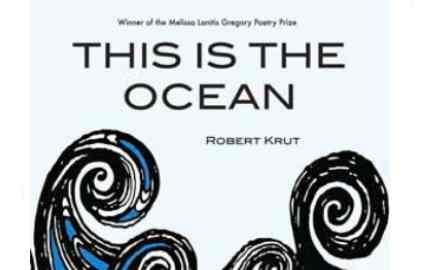
Bona Fide Books will launch poet Robert Krut’s award-winning collection “This Is the Ocean” with a reading and book signing on Oct. 11 at 7pm.

The free event is part of the Lake Tahoe Community College’s Writers’ Series.

bookKrut’s second collection, “This Is the Ocean” claimed the Meyers publisher’s 2012 Melissa Lanitis Gregory Poetry Prize, offered annually in honor of the local artist who died in 2009.

“The themes and images in this book really got under my skin,” Kim Wyatt, publisher of Bona Fide Books, said in a press release. “It reads like cinema, or like a dream, and it made me see things in a new way.”

Krut is the author of “The Spider Sermons” (BlazeVox, 2009). His poems have appeared widely in print and online. He teaches at UC Santa Barbara in the Writing Program and College of Creative Studies.

Patricia Smith will also read at the event. She is a nationally acclaimed writer, poet, performer and is a distinguished visiting professor and writer-in-residence at Sierra Nevada College in Incline Village.

Books will be available for signing and purchase. “This Is the Ocean” will also be available through Bona Fide Books, select stores and online beginning Oct. 11.

Lake Tahoe Community College is located at 1 College Drive in South Lake Tahoe. For more information, contact Kim Wyatt at editor@bonafidebooks.com.


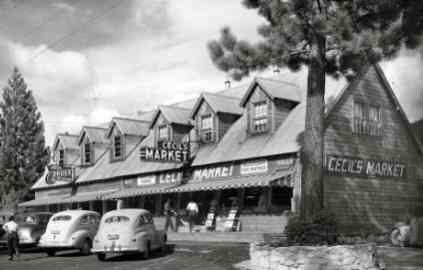
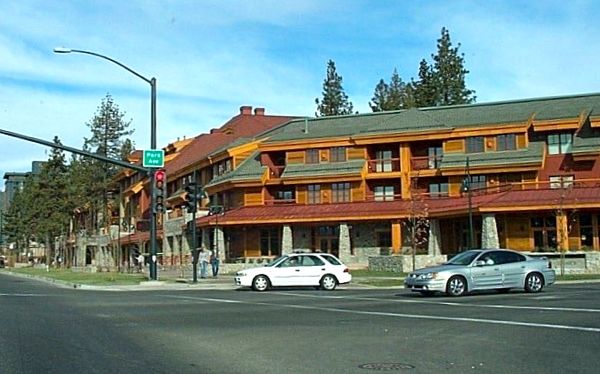
Then and now: Cecil’s Market a cornerstone of Tahoe

Cecil's Market in 1947. Photo/Lake Tahoe Historical Society

Cecil’s Market in 1947. Photo/Lake Tahoe Historical Society

The landmark Cecil’s Market on Highway 50 near Stateline existed from the 1930s to 2001.

Today the market is located in the succeeding Heavenly Village complex.

The dirt driveway adjacent to the right of the original Cecil’s led to Jack Van Sickle’s Stateline Stables, also serving as the entrance to the original Tahoe Drive-In Theater until 1956.

newThe driveway later became Park Avenue. That section of which now is named Heavenly Village Way at the stoplight where Cecil’s stood for so long (2002 photo by me).

— Bill Kingman


Presidio caters to the comforts of civilians

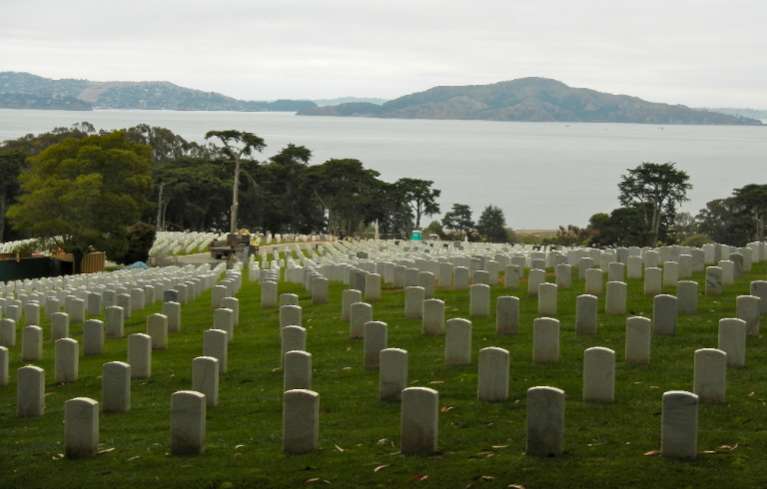
The national cemetery at the Presidio with Angel Island in the San Francisco Bay. Photos/Kathryn Reed

The national cemetery at the Presidio with Angel Island in the San Francisco Bay. Photos/Kathryn Reed

By Kathryn Reed

SAN FRANCISCO – Who slept here? What were their communal meals like? What were there conversations? If only walls could talk.

The Inn at the Presidio used to be where single officers would reside when this was an Army base. Today it is upscale lodging for civilians.

Since the Army left in 1994 the entire Presidio has slowly been evolving into a neighborhood of its own in San Francisco, historical landmark and recreation destination. The Presidio is a national park site within the greater Golden Gate National Recreation Area.

(The Presidio Trust manages most of the Presidio. The trust is not within the Department of Interior like the National Park Service so officials differentiate the Presidio by referring to it as a “park site.”)

The 22-room inn opened in 2012 and is the first lodging – other than camping – within the 1,491-acre park.

The three-story brick building built in 1903 is on the National Registrar of Historic Properties. The white columns along the front porch give it a Southern feel.

A sense of history fills the inn without its feeling old and musty. Adding an authentic charm, some of the décor came from the salvage yard. Walking in one notices the display of bugles. Old photographs transport you to another era.

Despite its age, the renovation is modern without being over the top. An eye toward today’s traveler with the appropriate lighting, a desk for those needing to do a bit of work and enough outlets for gadgets make it contemporary.

Warm colors, soft fabrics and a plush robe have guests collapsing onto the comfortable couch or bed.

Each night wine, cheese and other snacks are put out. Dreaming Tree, the Geyserville winery in which musician Dave Matthews is a partner, is the featured wine. We share conversation around an outdoor fire pit with a woman from El Dorado Hills on a repeat visit, a woman moving back to San Francisco wanting to relax before unpacking, and a family of four from Texas on their first trip to The City.

Cookies and milk are available for the younger crowd. A few families are staying at the inn. Some of the rooms have couches that fold into a bed.

To take off the chill from the evening and morning fog we turn on the gas fireplace. Reclining on the couch or sitting in the chair by the fire we finish off a glass of wine we brought up from the evening reception.

It’s hard not to feel at home. The empty mantel above the fireplace made me have thoughts of adding personal items. But then I might not have left.

The bathroom is plenty large enough for two to use at the same time, though the tub is ordinary in size. It’s doubtful any soldier ever bathed in this exact tub based on the newness of the fixtures. And why change the plumbing? After all, a bachelor in the Army would have no need for an oversized tub.

In the morning we sit at the long communal table as we eat what is more of a traditional European continental breakfast.

The staff is unobtrusive, yet accommodating.

From the shared balcony part, of the western tower of the Golden Gate Bridge is visible. Expanding from the front of the inn are myriad buildings that once bustled with men and women in uniform.

The Presidio has been home to three armies dating to 1776 – Spain, Mexico and the United States. The U.S. Army occupied the site from 1846-1994.

The only negative of the inn is how early trucks arrive. Both mornings at about 5:30 that annoying beep-beep-beep of a truck backing up woke us up. We heard others complain about it as well.

Rooms start at $195 per night. But two of the nice things about pricing at the inn are parking is $6 per night and the taxes are much less, being on federal land so guests aren’t paying The City’s hotel tax.

Things to do

One of the best things about the inn is the proximity to trails. Out the back door is the Ecology Trail that leads to Inspiration Point and Mountain Lake. The lake, which is one of two natural lakes in The City, is being rehabbed.

We end up walking about seven of the 24 miles within the park. (Some of the trails allow mountain bikes.)

We connect with the Bay Area Ridge Trail that takes us through a massive eucalyptus grove where artist Andy Goldsworthy’s Spire is located. His third piece of art in the park is slated to be installed this fall.

Most of the trees in the Presidio are not native. Still, as ones die off some non-native trees are being replanted to keep with the historical nature of the area that people are accustomed to. There are, however, 300 native plant species in the park. And more than 300 bird species call the Presidio home.

Walking along it’s peaceful, even when we’re by a road. The traffic is so light.

With eight scenic and historic overlooks, it’s hard to keep walking. Instead we just want to absorb the surroundings. Breathtaking is an understatement. At one point we are halfway between Baker Beach and the Golden Gate Bridge. This has us seeing the bridge looking into the bay instead of out to the ocean, which is the common view.

Concrete bunkers are artifacts from days gone by when the military had weapons at the ready to attack anyone who might invade.

Those iconic towers scratch the blue sky. A day without fog. We opt not to walk the 1.7 miles across the bridge, but instead get on the Presidio Promenade.

This leads us past the national cemetery. Row after row of white tombstones bring back memories of Arlington National Cemetery. It is a stark reminder of what this plot of land was originally used for.

Around the bend is Crissy Field. This area has been completely renovated. It would be hard to know it was once an airstrip. This was the military’s first Air Coast Defense Station on the Pacific Coast.

Presidio Trust

The Presidio Trust was established in 1998 to be the caretaker of the Presidio after the Army left. A nonprofit board, staff of 340 and army of volunteers run the operation much like this were a city unto itself.

This is the first year the Presidio Trust has not received a subsidy from the federal government to keep it functioning.

Most of the money comes from rent collected from the 3,000 people who live in one of the 1,200 houses. Housing that was for soldiers is available to anyone. It ranges from apartment style to a seven-bedroom house that used to be the home of a general that goes for about $15,000/month.

The trust brings in about $5 million a year from Lucas Films, which opened a 23-acre digital arts campus in 2005.

Rehabbing old buildings, bringing in commercial entities, attracting the public and creating easier access from the Golden Gate Bridge are all ongoing endeavors of the trust. At the forefront is preserving the historical integrity of the buildings and the land.

The trust is balancing the need to refurbish buildings while keeping the historical nature of them. It also means dealing with current building codes and seismic standards.

When the Army pulled out there were those who wanted to keep the base’s golf course just for military use – something about needing it for national security reasons. That argument didn’t have legs and the course is open to the public.

One of the bunkers on the grounds has been transformed into storage for wine. Collectors and restaurants rent the storage facility.

Talks are under way with a chef – whose name is not being disclosed – about creating a fine-dining restaurant.

More tourist accommodations are likely in the future, too. It’s the trust that runs the Inn at the Presidio. And the response to it has been greater than expected.

ngg_shortcode_0_placeholder (Click on photos to enlarge.)


Letter: LTCC apologizes for press release

To the community,

As the director of College Advancement and Community Engagement for Lake Tahoe Community College, I would like to apologize for the poorly written press release, Insight Into Russian Language, Culture and Politics that I released Sept. 3.

I gave the false impression that LTCC instructor Maria Mircheva would be discussing “homosexual behavior” in her Russian I Conversational class. That was totally incorrect.

Since politics is a topic of conversation for the class, I was implying that the class might have a conversation on the new Russian law that recently passed.

TheGlobalEdition.com wrote, “A High Court in Moscow confirmed [Aug. 22] the decision of the city’s authorities to ban the existence of gays in the Russian capital for the next hundred years”.

Russian 141 focuses on vocabulary, idiomatic expressions and Russian customs. To imply “homosexual behavior” would be a topic of discussion was purely wrong and inappropriate and I apologize to anyone who may have been offended by the misstatement.

Sincerely,

Peter Bostic, public affairs officer Lake Tahoe Community College


Landline phones becoming antiques

By Jeffrey Sparshott, Wall Street Journal

About one-third of U.S. households have ditched landline phones, driven by younger Americans relying on their cellphones, new Census Bureau data showed Thursday.

Just under 71 percent of households had landlines in 2011, down from a little more than 96 percent 15 years ago. Cellphone ownership reached 89 percent, up from about 36 percent in 1998, the first year the survey asked about the devices.

The youngest households are abandoning landlines in droves. About two-thirds of households led by people ages 15 to 29 relied only on cellphones in 2011, compared with 28% for the broader population.

Read the whole story


Important to keep employees engaged

By Trevor Wilson

An alarming Gallup poll published earlier this year is still sending shockwaves throughout the business community: Most American workers either hate their jobs or don’t care one way or the other about them.

Less than a third of Americans are actively engaged in their work, meaning they’re passionate about it, enthusiastic and energetic. They’re consistently productive, and high performing.

Gallup estimates the 20 million who are “actively disengaged” – openly negative and unhappy have a staggering effect on the economy, costing the United States $450 billion to $550 billion each year in lost productivity.

To engage the 70 percent of non-committal or “actively disengage” employees, business managers need to change how they view human capital.

Engaging employees is an issue I’ve been working on for more than two decades, and there is a solution. I call it human equity — the unique assets each individual brings to the workplace that are often unrecognized. Recognizing and leveraging your own human equity, as well as that of your employees, addresses not only the incredible waste of human capital illustrated in the recent poll, but also related concerns business leaders share, including the constant need for innovation. These challenges are not unique to the United States.

There is a reason why executive royalty, such as Warren Buffet and former General Electric CEO Jack Welsh sought talent beyond traditional criteria like knowledge and skills, which are also important.

Here is a method for uncovering valuable intangibles in employees; I call it the SHAPE V Talent model:

Strengths: Consider strength as defined by the 1999 Gallup StrengthsFinder study, which includes “consistent near-perfect performance in an activity.” The study identifies 34 qualities, which can be innate and, unlike skills, are not learned. Individual employees and managers should not force a square peg into a round hole; if an employee’s near-perfect, near-effortless strength is in research and analysis, but not so much in data management, managers should allocate this resource accordingly.

Heart: Have you ever wondered what comes first, whether you’re good at something because you like it, or you like it because you’re good at it? The chicken-or-egg question aside, what matters is the passion one has for a talent. This includes activities a worker would do even if he or she didn’t have to do it on the job. If a talented manager won the lottery and decided to quit his job, for example, he might be inclined to manage people in a local political campaign or take the helm of his son’s baseball team.

Attitude: There are three general attitudes an employee might have, according to a branch of study in positive psychology. First, there are those who approach their work as a job, who seek only a paycheck and benefits. The second group includes those with a career perspective who seek advancement. The third group views their work as a calling and deeply connects with what they do every day.

Personality: In 2009, nearly $500 million was spent on personality testing in North America alone. A reliable test isn’t valuable in so much as it reveals differences among workers, which are most likely already apparent. The value of these tests is in showing how and where differences lie. Understanding differences can lead to an appreciation for how and why coworkers perform and improve the synergy of teams.

Experience: Who is the person you’re sitting next to at work; who is she when she’s not making business-to-business calls, scheduling meetings or troubleshooting technical problems? How does her race, religion, economic background, family situation and overall lifestyle influence – or not influence – her work life? More important, how might her life beyond work offer diversity of thought in the workplace? Life experience should not be overlooked when assessing talent.

Virtue: Value in action, that’s virtue. Candor, temperance, courage – these traits preempt problems like public scandals, harassment and discrimination and foster a positive moral pragmatism among coworkers and practical wisdom among leaders. With social media continuing to expose bad behavior and employee morale revealed to be at a stunning low, this is a significant quality in the on-going search for the best talent.

Trevor Wilson is the CEO of TWI Inc. and creator of the human equity management model. He is the global diversity, inclusion and human equity strategist who regularly speaks at corporate functions.