Ex-cop Poland to spend 18 mos. in prison

Former South Lake Tahoe police Officer Johnny Poland is going to prison for 18 months.

The sentence came down Wednesday. Poland must turn himself in to the Bureau of Prison on Nov. 6.

Poland had pleaded guilty in May to one count of obstruction of an official proceeding. The maximum sentence he could have received was 20 years behind bars.
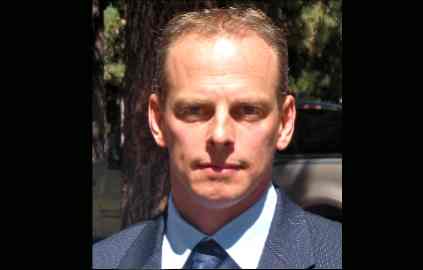
Former South Tahoe Officer Johnny Poland receives 18-month sentence. Photo/LTN file

Former South Tahoe Officer Johnny Poland receives 18-month sentence. Photo/LTN file

The 45-year-old has been on the other side of the law since June 2007 when he was initially fired by the local police department because of an incident in November 2006 at South Tahoe High school.

He fought that termination and was reinstated in fall 2009.

A federal investigation began in November 2011, at which time Poland was put on paid administrative leave. He was indicted at the beginning of this year.

Poland started with SLTPD in 1998. He resigned after admitting guilt and his position has since been filled.

“Mr. Poland ended his career in law enforcement by abusing his position of trust at every turn,” U.S. Attorney Benjamin Wagner told the court. “When faced with the consequences of his misdeeds, he then attempted to influence witnesses who were called to testify against him. Such behavior cannot be tolerated. Mr. Poland stands in contrast to the other outstanding men and women in law enforcement who conduct themselves with dedication and honor every single day.”

Court documents, on June 29, 2011, Poland interfered with a federal investigation of a South Lake Tahoe gang member. Poland persuaded the gang member’s girlfriend to conceal and destroy evidence. In October and November 2011, Poland tampered with this witness in an investigation into his own conduct as well as the conduct of the gang member. Poland instructed another witness to conceal and destroy evidence rather than provide it to federal authorities. Poland admitted that he corruptly attempted to alter, destroy, mutilate, and conceal evidence material to an official proceeding.

— Lake Tahoe News staff report



Calif. on verge of changing environmental law

By Adam Nagourney, New York Times

SACRAMENTO — A landmark law that has been a symbol of California’s tough environmental philosophy for more than 40 years is facing an unlikely challenge from Democrats, including Gov. Jerry Brown, who contend that regulations protecting the environment have been abused and are thwarting legitimate development.

With the Legislature moving toward adjournment this week, prospects of weakening the law, known as the California Environmental Quality Act, seem stronger than in recent memory, lawmakers said. Brown called rewriting the law “the Lord’s work,” and the effort has won widespread support from newspaper editorial boards.

State Sen. Darrell Steinberg, the Democratic leader, said Tuesday that he was confident that his proposed changes to the law would win legislative approval this week and be sent to Brown.

Read the whole story


More funny money business with State Parks

By Jon Ortiz, Sacramento Bee

State investigators have found unreported cases of an illicit program that let state parks employees trade leave time for cash and, despite extreme media and government scrutiny, “still has not done enough to prevent such practices from occurring,” according to an audit released Tuesday.

The 43-page report sampled operations at five park districts within the $574 million Department of Parks and Recreation and found a budgeting system so disorganized that district administrators make an educated guess at how much money they’ll receive when the fiscal year starts each July. They reset their budgets, sometimes several months later, when they find out how much money they have.

Expenditure tracking also is so poor that four of the five districts had their own systems for watching their expenses.

Read the whole story


Learn about women’s health issues

Women’s Health Issues: Understanding Your Options is the title of an Oct. 2 lecture to be given by Dr. John Missanelli and physical therapist Chris Kozlowski.

The free event is from 6-7pm at Kahle Community Center in Stateline.

People learn about pelvic prolapse, strengthening exercises, uterine fibroids, endometriosis and other health concerns, along with treatment options including robotic daVinci surgery.

For more info, call (530) 543.5537.


Snippets about Lake Tahoe

california capitol• The California Senate on Sept. 10 voted 37-0 to approve SB630, which ratifies the Tahoe Regional Planning Agency’s bi-state Compact. It is now on Gov. Jerry Brown’s desk.

• Sweetwater String Band will be at Divided Sky in Meyers on Sept. 21 at 9pm. No cover charge.

• Tahoe Rim Trail Association is having an open house Sept. 26 from 4-6pm at 128 Market St., Suite 3E, Stateline.

• Tahoe Regional Planning Agency has a new website.


LTCC needs more students to balance budget

By Kathryn Reed

When classes start Sept. 23 at Lake Tahoe Community College officials hope to see a lot more students than last year. The budget the board approved Tuesday night is banking on it.

Enrollment dropped dramatically last school compared to the previous year. The 2013-14 budget is calling for 1,750 fulltime equivalent students.

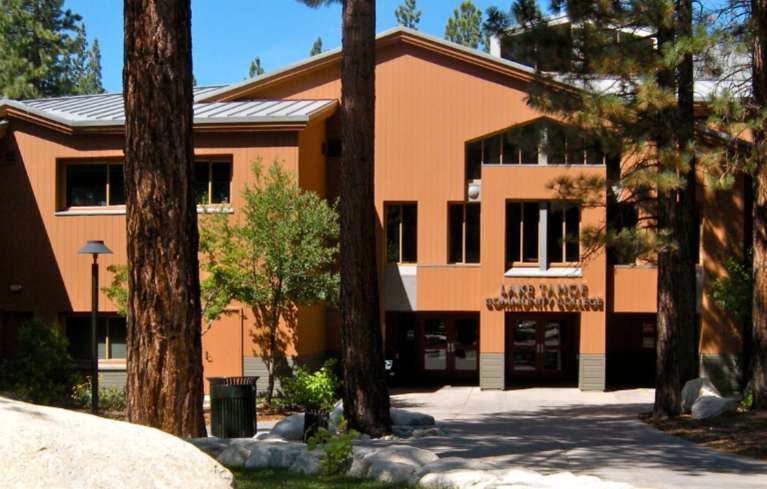
Lake Tahoe Community College's financing are not quite on solid ground. Photo/LTN file

Lake Tahoe Community College’s finances are not quite on solid ground. Photo/LTN file

“Until we know the FTES, the budget is only as good as the assumptions it was built on,” LTCC President Kindred Murillo told Lake Tahoe News.

FTES history:

• 2008-09 – 1,935

• 2009-10 – 2,021

• 2010-11 – 1,834

• 2011-12 – 1,819

• 2012-13 – 1,530.

Between 2008 and 2010 the college had a dramatic drop in the number of Lake Tahoe Basin residents attending the college. This is based on a study done by ZIP codes. In 2008-09, 5,925 basin residents took classes at LTCC, while in 2012-13 that number was 3,766.

People keep moving out of the area, fees increased, the number of classes declined, the state changed how it calculates FTES, the good neighbor policy with Nevada went away – those are some of the reasons for the decline in numbers.

Online classes have helped increase the enrollment for people living outside the basin.

While Sept. 10 was the public hearing on the budget, no one showed up.

The board has discussed the budget extensively, with a tentative budget presented at the June 25 board meeting, lots of talk at the Aug. 23 retreat and then again at a study session on Sept. 5.

The college is taking $403,408 out of reserves to balance its budget.

In Murillo’s summary of the budget she wrote, “The major goal of the budget development process has been to create a budget that more accurately reflects the fiscal outlook, knowing that it does not benefit students or the college if the organization does not have a true picture of the budget when making decisions.”

Murillo has been working to establish a realistic budget since she came to the college. The previous practice had actual expenses coming at about $1 million less than projected. She and Jeff DeFranco, vice president of administrative services, have strived to make the budget more factual.

“There’s no longer fluff,” Murillo said. “It’s as close to real as you can get.”

A potentially fluctuating number is what the college pays out in health and welfare benefits. The agreement with all bargaining units for that segment of their contracts expires Nov. 30.

The college pays for the entire premier health plan for each employee. This comes to $17,350 annually per employee.

(Murillo and two board members have opted for the school to pay for the standard plan for them.)

It is the college’s desire to have all employees go to the standard plan. A committee has been formed to come up with a proposal that would be presented to Murillo who would in turn bring it before the board.

The board on Tuesday agreed to set aside $10,000, if need be, to have a consultant compare the current options available to LTCC through the health and welfare joint powers authority it belongs to to others in the state.

In other action:

• The college has tentatively set June 7 as the date to celebrate its 40th anniversary.


Editorial: Don’t rush water bond talks

Publisher’s note: This editorial is from the Sept. 5, 2013, Modesto Bee.

With dry conditions igniting fires statewide and reservoirs dropping ever lower, state lawmakers should be thinking about water. The good thing – they are. They are thinking about a 2014 water bond.

Both chambers have produced legislation to rescind and scale back the bloated $11.14billion water bond that, if left unchanged, would head to the ballot in 2014 and face certain defeat. The total amounts would be $5.6billion in the Senate version vs. $6.5billion in the Assembly bill. Both would invest in clean drinking water, an issue that has risen in priority – particularly in the San Joaquin Valley – since the Legislature originally approved a bond proposal. Both have pots of money for water storage and watershed projection.

There are differences between these two pieces of legislation, both in substance and the process that produced them. Senate Bill 42, by Sen. Lois Wolk, D-Davis, was drafted following several stakeholder meetings, including ones with Wolk’s constituents in the Sacramento-San Joaquin Delta. As a result, it includes $500million in proposed investments in Central Valley Flood Protection Plan projects, a priority for flood-threatened Delta and Sacramento residents. It also gives the Legislature more control over how storage money is spent, a priority for many environmental groups.

Read the whole story


Land bordering El Dorado, Amador counties protected from development

By Bill Lindelof, Sacramento Bee

A conservation group has purchased more than 1,000 acres of Cosumnes River canyon land from a Sacramento developer, protecting the rural property from development.

The American River Conservancy completed the purchase of 1,059 acres of land from Angelo K. Tsakopoulos for $4.8 million on Aug. 29. The purchase of the land protects another 1.5 miles of river canyon from residential development on the North and Main forks of the Cosumnes River, immediately east and west of Highway 49 in El Dorado and Amador counties, according to a press release from the conservancy.

The lands are in the southern part of the 7,868-acre El Dorado Ranch, historically known as the Cook ranch. Tsakopoulos purchased the ranch from the McCuen family in 2005.

Read the whole story


Young artists needed for radon poster contest

University of Nevada Cooperative Extension is looking for Nevada students to showcase their artistic talents and promote radon awareness by entering the 2014 Nevada Radon Poster Contest.

The contest is open to all children ages 9 to 14 who are enrolled in public, private, territorial, tribal, Department of Defense and home schools. Children can also enter through a sponsoring club, such as an art, computer, library, reading, science, scouting, youth or 4-H club.

The poster contest is part of the Nevada Radon Education Program and is sponsored by University of Nevada Cooperative Extension, the Nevada Division of Public and Behavioral Health, Kansas State University and the U.S. Environmental Protection Agency.

Posters should convey some of these important messages: 1) What is radon? 2) Where does radon come from? 3) How does radon get into our homes? 4) Radon can cause lung cancer, and 5) Test your home for radon. Posters will be judged on content accuracy, visual communication of the topic, reproducibility and originality. They can be created with crayon, markers, paint, collage, pencil, photographs or computer graphics.

There is no fee to enter, but each child is limited to one entry. Entries must be received by Oct. 31 at the Washoe County Office of Cooperative Extension, 4955 Energy Way, Reno, 89502-4105.

Cash prizes for the top five entries are $75 for first place, $60 for second, $45 for third and $25 for fourth and fifth place.


Increasing number of Nevadans going hungry

By Catherine Van, KOLO-TV

Too many Nevadans are going hungry.

According to a study done by the U.S. Department of agriculture, Nevada is ranked No. 8 in the nation low food insecurity.

The percentage of households in Nevada that faced food insecurity jumped from 9 percent to 16 percent in 10 years, which is the largest increase in the nation. Local charities are even feeling the impact.

Food insecurity is a struggle that 3-year-old Maya and her mother, Trinity face every week. Trinity has a part-time job at a retail store, but with a child to raise on her own, bills start to add up and she’s worried she can’t feed her family.

“I would just like to be able to have her eat a good meal, a good three meals every day,” she said. “I’m worried she’s not getting enough of nutritional things.”

She spends about $40-$50 a week on groceries, but sometimes health falls on the wayside.

“It’s almost cheaper to like get stuff off the dollar menu.”

She’s one of more than 300,000 Nevadans dependent on food stamps or Supplemental Nutritional Assistance Programs.

Read the whole story